2735 Results for "

Complexes

" in MedChemExpress (MCE) Product Catalog:
Products (2735)

2735 Results for "Complexes" in MCE Product Catalog:

Cat. No.: HY-183826
CAS No.: 2841473-91-2
Target:  

Autophagy

Research Areas:  

Infection Cancer

ATG5 PPI-IN-4 is an autophagy inhibitor targeting ATG5, with an IC50 of 12.78 μM against ATG5-ATG16L1 and an IC50 of 12.00 μM against ATG5-TECAIR. ATG5 PPI-IN-4 blocks the protein interactions between ATG5 and ATG16L1, as well as between ATG5 and TECAIR, disrupts the assembly of the ATG12-ATG5-ATG16L1 ternary complex, inhibits the lipidation modification of LC3/ATG8, and ultimately downregulates cellular autophagy levels. ATG5 PPI-IN-4 can be used in autophagy-related research, such as studies on infection and cancer .
loading...
    loading...
Cat. No.: HY-184389
Research Areas:  

Inflammation/Immunology

PROTAC HDAC6 degrader 10 is a highly efficient, safe and selective HDAC6 PROTAC degrader with a pIC50 of 8.75 and a pDC50 of 9.2 in BEAS-2B cells. PROTAC HDAC6 degrader 10 recruits cereblon to form a ternary complex with HDAC6, thereby achieving the degradation of HDAC6. PROTAC HDAC6 degrader 10 significantly induces hyperacetylation of α-tubulin without affecting the acetylation of H3, and achieves sustained HDAC6 knockdown in mouse lung tissues. PROTAC HDAC6 degrader 10 exhibits high bioavailability after subcutaneous administration in mice. PROTAC HDAC6 degrader 10 enables the study of HDAC6 pharmacology via chemical knockdown of HDAC6 in vitro and in vivo, and can be used for research on pulmonary diseases .
loading...
    loading...
Cat. No.: HY-187168
CAS No.: 2407654-72-0
Research Areas:  

Cancer

KAT2A degrader-1 is a molecular glue degrader targeting KAT2A, with a DC50 of 89 nM in Kelly cells. KAT2A degrader-1 recruits KAT2A to cereblon (CRBN) in a degron-independent manner, forms a ternary complex with KAT2A and CRBN, and drives the polyubiquitination and proteasome-dependent degradation of KAT2A. KAT2A degrader-1 reduces the level of histone H3 lysine 9 acetylation (H3K9Ac). KAT2A degrader-1 induces antiproliferative effects in acute myeloid leukemia cells, while enhancing KAT2A-CRBN dimerization activity and eliminating the targeting effect on GSPT1. KAT2A degrader-1 can be used for research related to acute myeloid leukemia .
loading...
    loading...
Cat. No.: HY-187810
Synonyms: LC-04-118
Research Areas:  

Cancer

dWBP4-1 (LC-04-118) is a CRBN-dependent molecular glue degrader targeting WBP4. dWBP4-1 binds to the IMiD site of CRBN via its glutarimide ring, induces the formation of the CRBN-WBP4 ternary complex (EC50 = 224 nM), and mediates the rapid degradation of WBP4 through the G-loop dependent ubiquitin-proteasome pathway, a process that can be rescued by MLN4924 (HY-70062), Lenalidomide (HY-A0003) or Bortezomib (HY-10227). dWBP4-1 causes almost no perturbation at the transcriptome and alternative splicing levels, exhibits no obvious cytotoxicity, and produces no hook effect. dWBP4-1 can be used for the construction of chemical genetic protein degradation platforms and research related to acute T-lymphoblastic leukemia .
loading...
    loading...
Cat. No.: HY-208742
CAS No.: 2414418-56-5
ZNL-02-096 is a selective Wee1 PROTAC degrader. ZNL-02-096 binds to CRBN and Wee1 to form a ternary complex, inducing CRBN- and proteasome-dependent ubiquitination and proteasomal degradation of Wee1. ZNL-02-096 inhibits recombinant PLK1 with an IC50 of 102 nM, but does not induce its degradation in cells. ZNL-02-096 induces G2/M phase arrest, Apoptosis, transient integrated stress response, upregulation of ATF4, and phosphorylation of GCN2. ZNL-02-096 reduces Tyr15 phosphorylation of CDK1. ZNL-02-096 can be used in research related to ovarian cancer, acute lymphoblastic leukemia, triple-negative breast cancer, multiple myeloma, and pancreatic ductal adenocarcinoma .
loading...
    loading...
Cat. No.: HY-B2004R
CAS No.: 130000-40-7
Thifluzamide (Standard) is the analytical standard of Thifluzamide. This product is intended for research and analytical applications. Thifluzamide is a fungicide that inhibits fungal respiration by blocking the ubiquinone-binding site in mitochondrial complex II. Thifluzamide exhibits significant activity against Basidiomycota pathogens (such as Rhizoctonia cerealis, Ustilago and Puccinia genera) and is commonly used in studies on wheat sharp eyespot. Thifluzamide displays a dual mechanism in regulating lipid metabolism: it reduces fatty acid synthase activity to inhibit endogenous fatty acid synthesis, and increases carnitine palmitoyltransferase-I activity to accelerate fatty acid β-oxidation, thereby reducing total cholesterol and triglyceride levels in the liver. Thifluzamide also induces hepatotoxicity in zebrafish models and carries a risk of developmental toxicity. Thifluzamide inhibition of Rhizoctonia cerealis may result in low to moderate levels of drug resistance, leading to the generation of stable drug-resistant mutants .
loading...
    loading...
Cat. No.: HY-P0277
CAS No.: 168635-85-6
Synonyms: CEA peptide
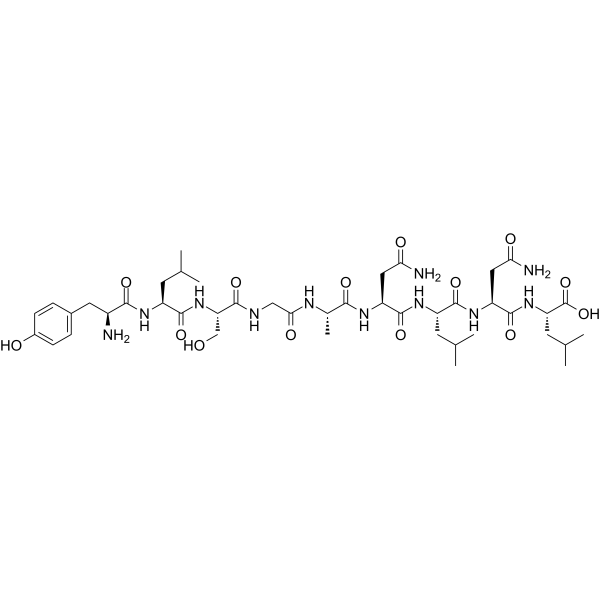
Carcinoembryonic antigen peptide 1 (CEA peptide) is a 9-amino acid HLA-A0201-binding cytotoxic T lymphocyte (CTL) epitope peptide derived from carcinoembryonic antigen (CEA). The IC50 of Carcinoembryonic antigen peptide 1 binding to HLA-A0201 is 2 μM. Carcinoembryonic antigen peptide 1 binds to HLA-A0201 to form a peptide-MHC I complex, which is recognized by the T cell receptor (TCR) of CAP1-specific CD8 + CTLs, thereby inducing antigen-specific T cell activation, IFN-γ production, and CTL-mediated lysis of target cells. Carcinoembryonic antigen peptide 1 is used in research on CEA-specific CTL responses and colorectal cancer .
loading...
    loading...
Cat. No.: HY-P10868
CAS No.: 2056232-82-5
Synonyms: RLS-0071
Pegtarazimod (RLS-0071) is a dual-target anti-inflammatory peptide that exerts its effects by simultaneously regulating the complement system and neutrophil-associated inflammatory pathways. Pegtarazimod reduces ROS production both in vitro and in vivo, and decreases the level of neutrophil elastase, a marker of neutrophil extracellular traps (NETs), in vivo, thereby alleviating inflammatory responses. Pegtarazimod significantly improves the survival rate of mice in multiple in vivo models of acute graft-versus-host disease (aGVHD). Pegtarazimod inhibits the activation of the C1 complex, reduces the herpes zoster-like spread of herpes simplex virus type 1 skin infection, and improves the survival rate of infected mice . Pegtarazimod can be used in research related to acute graft-versus-host disease, acute pulmonary diseases, and skin herpes simplex virus type 1 infection .
loading...
    loading...
Cat. No.: HY-P11490
Target:  

MDM-2/p53

Research Areas:  

Inflammation/Immunology Cancer

DPMI-ω is a dual-specificity d-peptide antagonist of oncogenic proteins MDM2 and MDMX. DPMI-ω, upon fabrication on gold nanoparticles, efficiently traverses tumor cells and kills them by reactivating the p53 signaling pathway. DPMI-ω can disrupte the p53-MDM2/MDMX complex. DPMI-ω can inhibit B16 melanoma growth and induce cells G0/G1 phase arrest. DPMI-ω can augment the efficacy of immunotherapy by expanding CD3 +/CD8 + cytotoxic T cells and suppressing CD4 +/CD25 + regulatory T cells companied with anti-PD1 antibody. DPMI-ω can be used for research of melanoma .
loading...
    loading...
Cat. No.: HY-P992209

Research Areas:  

Cancer

Anti-CD318/CDCP1 Antibody (25A11) is an anti-CDCP1 antibody. Anti-CD318/CDCP1 Antibody (25A11) drives the internalization of antibody-CDCP1 complexes, inhibits cancer cell migration and invasion, and blocks downstream migration/invasion signaling pathways. When conjugated with saponin, Anti-CD318/CDCP1 Antibody (25A11) mediates the killing of prostate cancer cells. When conjugated with saponin, this antibody acts as an immunotoxin to inhibit the growth and metastasis of primary prostate tumors in mouse xenograft models. Anti-CD318/CDCP1 Antibody (25A11) is applicable to prostate cancer-related research .
loading...
    loading...
Cat. No.: HY-P992275

Target:  

γ-secretase

Research Areas:  

Neurological Disease Cancer

Anti-Nicastrin Antibody (A5226A) is a monoclonal antibody against Nicastrin and an inhibitor of γ-secretase. Anti-Nicastrin Antibody (A5226A) recognizes the fully glycosylated mature presenilin enhancer in the active γ-secretase complex and inhibits its activity via competition for substrate binding. Anti-Nicastrin Antibody (A5226A) abrogates the growth of cancer cells dependent on γ-secretase activity. Anti-Nicastrin Antibody (A5226A) serves as an imaging tool to visualize the endocytic trafficking of active γ-secretase, and also acts as a detection reagent to evaluate the endocytic efficiency of γ-secretase. Anti-Nicastrin Antibody (A5226A) can be used in studies related to non-small cell lung cancer, T-cell acute lymphoblastic leukemia and Alzheimer's disease .
loading...
    loading...
Cat. No.: HY-P992426

Target:  

Tau Protein

Research Areas:  

Neurological Disease

NS101 is an anti-FAM19A5 antibody with an IC50 of 0.2 nM and a Kd of 111 pM, as well as blood-brain barrier permeability. NS101 binds to key amino acid residues of FAM19A5, thereby blocking the interaction of LRRC4B and disrupting the FAM19A5-LRRC4B complex. NS101 increases the dendritic spine density in hippocampal neurons and the prefrontal cortex, normalizes the dendritic spine elimination rate, elevates the frequencies of mEPSC and fEPSP, and promotes the transport of brain-derived FAM19A5 into the peripheral circulation. NS101 improves cognitive function in mouse models of Alzheimer's disease. NS101 can be used for research on Alzheimer's disease. The recommended isotype control is human IgG1 kappa (HY-P99001) .
loading...
    loading...
Cat. No.: HY-P992524
Target:  

CD3

Research Areas:  

Cancer

PF-07260437 is a bispecific monoclonal antibody targeting B7-H4 and CD3, with Kd values of 63.5 nM and 66.75 nM against human and cynomolgus monkey CD3, respectively. PF-07260437 simultaneously binds B7-H4 on tumor cells and the CD3ε subunit in the T cell receptor complex, forming a tumor cell-bispecific antibody-T cell trimer. This process establishes an immune synapse and initiates non-MHC-dependent T cell activation, proliferation, and release of cytotoxic molecules such as granzyme B to kill tumor cells. PF-07260437 can be used in research related to advanced or metastatic breast cancer, ovarian cancer, and endometrial cancer .
loading...
    loading...
Cat. No.: HY-W009708R
CAS No.: 28588-75-2
Bis(2-methyl-3-furyl)disulfide (Standard) is the analytical standard of Bis(2-methyl-3-furyl)disulfide. This product is used for research and analytical applications. Bis(2-methyl-3-furyl)disulfide is a meat flavor characteristic aroma compound that can bind to oral mucin. Bis(2-methyl-3-furyl)disulfide can interact with oral mucin through hydrogen bonds, hydrophobic interactions, and van der Waals forces to form a stable spontaneous 1:1 complex, and the interaction intensity varies with pH. Bis(2-methyl-3-furyl)disulfide helps to produce unique meat aroma and flavor, and its binding to oral mucin will change the perception of aroma.
loading...
    loading...
Cat. No.: HY-W035133
CAS No.: 14527-51-6
Synonyms: 5,10,15,20-Tetra-p-tolyl-21H,23H-porphine
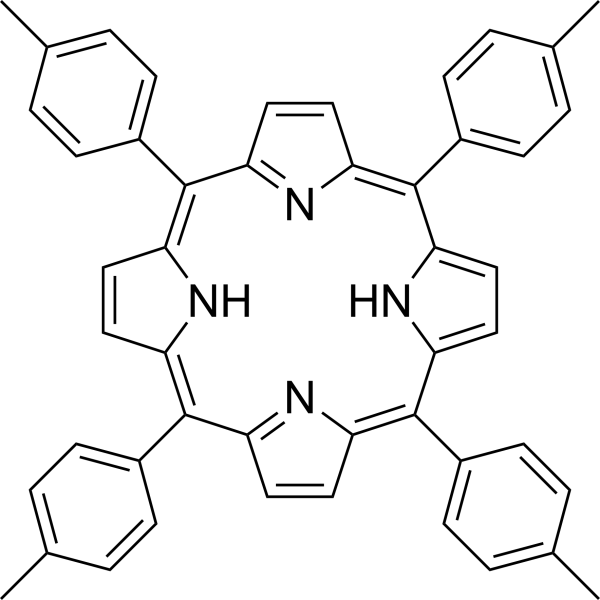
5,10,15,20-Tetrakis(p-tolyl)porphyrin (TTP) is an organic compound belonging to the class of porphyrins, a cyclic molecule composed of four pyrrole rings linked together. TTP is a synthetic porphyrin commonly used as a sensitizer for dye-sensitized solar cells and a catalyst for organic reactions. Due to its unique structure, TTP has a series of interesting properties, including at specific wavelengths and its potential as a catalyst for various chemical reactions. In dye-sensitized solar cells, TTPs help convert sunlight into electricity by absorbing photons and transferring electrons to the semiconductor layer of the device. In organic chemistry, TTP is often used as a catalyst for various organic compounds in reactions such as oxidation and reduction. Its ability to selectively bind certain substrates makes it a useful tool for synthesizing complex molecules and studying their properties.
loading...
    loading...
Cat. No.: HY-W1113135
CAS No.: 2828447-14-7
Research Areas:  

Others

Carboxymethyl-β-cyclodextrin sodium salt is a negatively charged β-cyclodextrin derivative, as well as a metal ion chelator and solubilizing reagent. Carboxymethyl-β-cyclodextrin sodium salt forms stable aqueous complexes with Ba 2+, Ca 2+, Cd 2+, Ni 2+, Pb 2+, Sr 2+, and Zn 2+ ions. Carboxymethyl-β-cyclodextrin sodium salt derived hydrogel carriers support oral insulin delivery via paracellular permeation across Caco-2 monolayers and produce sustained hypoglycemic effects in diabetic mice. Carboxymethyl-β-cyclodextrin sodium salt can be conjugated onto folate-modified BSA nanoparticles to boost folate receptor-mediated endocytosis, elevate intracellular anticancer drug uptake and trigger cell apoptosis. Carboxymethyl-β-cyclodextrin sodium salt can be utilized for chiral separation in capillary electrophoresis, development of nanoscale drug carriers and nucleic acid transfection research .
loading...
    loading...
Cat. No.: HY-W599279
CAS No.: 2761170-84-5
ABS-752 is an orally active prodrug targeting CRBN-modulating molecular glue with selectivity in protein degradation. ABS-752 preferentially degrades GSPT1 and induces cytotoxicity through this degradation, while it also degrades NEK7, SALL4 and CK1α, with weaker degradation potency against CK1α. As a prodrug, ABS-752 requires metabolic activation to ABT-002 to form the active complex; VAP-1 mediates its conversion to an aldehyde intermediate. ABS-752 induces cell death, reduces cell viability, and exhibits antitumor activity, leading to regression and inhibition of tumor growth. ABS-752 shows no cytotoxicity in primary human hepatocytes. ABS-752 can be used in the research of hepatocellular carcinoma .
loading...
    loading...
Cat. No.: HY-W998347
CAS No.: 2922884-90-8
ABS-752 hydrochloride is an orally active prodrug targeting CRBN-modulating molecular glue with selectivity in protein degradation. ABS-752 hydrochloride preferentially degrades GSPT1 and induces cytotoxicity through this degradation, while it also degrades NEK7, SALL4 and CK1α, with weaker degradation potency against CK1α. As a prodrug, ABS-752 hydrochloride requires metabolic activation to ABT-002 to form the active complex; VAP-1 mediates its conversion to an aldehyde intermediate. ABS-752 hydrochloride induces cell death, reduces cell viability, and exhibits antitumor activity, leading to regression and inhibition of tumor growth. ABS-752 hydrochloride shows no cytotoxicity in primary human hepatocytes. ABS-752 hydrochloride can be used in the research of hepatocellular carcinoma .
loading...
    loading...
Cat. No.: HY-L071
594 compounds

Alkaloids are a large and complex group of cyclic compounds that contain N. About 2,000 different alkaloids have been isolated. Important alkaloids include morphine, strychnine, atropine, colchicine, ephedrine, quinine, and nicotine. Alkaloids are useful as diet ingredients, supplements, and pharmaceuticals, in medicine and in other applications in human life. They showed anti-inflammatory, anticancer, analgesics, local anesthetic and pain relief, neuropharmacologic, antimicrobial, antifungal, and many other activities. Alkaloids are also important compounds in organic synthesis for searching new semisynthetic and synthetic compounds with possibly better biological activity than parent compounds.

MCE designs a unique collection of 594 alkaloids that all come from natural products. MCE Alkaloids Library is a useful tool for drug discovery that can be used for high throughput screening (HTS) and high content screening (HCS).

Cat. No.: HY-L210
2,023 compounds

Rheumatoid Arthritis (RA) is a autoimmune disease characterized by persistent joint inflammation. The pathology of RA includes immune cell infiltration, synovial lining proliferation, pannus formation, and the destruction of joint cartilage and bone, which is highly disabling. Due to long-term chronic inflammation, RA not only severely affects the quality of life of patients but can also damage multiple organs, leading to lung diseases, cardiovascular diseases, and malignant tumors. The pathogenesis of RA is complex, involving genetic, environmental, and immune factors. With the advancement of high-throughput screening technology, screening for compounds targeting JAK, CCR, MEK, MMP targets may contribute to the development of more effective drugs against Rheumatoid Arthritis (RA).

MCE has collected 2,023 small molecule compounds with definite or potential anti-rheumatoid arthritis activity. This library is of significant value for researching the anti-RA drugs.

