287 Results for "

Distribution

" in MedChemExpress (MCE) Product Catalog:
Products (287)

287 Results for "Distribution" in MCE Product Catalog:

Cat. No.: HY-158821B
Target:  

TGF-beta/Smad

Research Areas:  

Neurological Disease

ISTH0036 sodium scrambled negative control is the sequence scrambled negative control of ISTH0036 sodium (HY-158821A). ISTH0036 sodium is a phosphorothioate LNA-modified antisense oligonucleotide gapmer that selectively targets and downregulates TGF-β2 mRNA. ISTH0036 sodium suppresses TGF-β2 expression, reduces choroidal neovascularization and vascular leakage, inhibits fibrosis, blocks epithelial-to-mesenchymal transition, and inhibits angiogenesis while promoting bleb survival. ISTH0036 sodium exhibits long-lasting, dose-dependent ocular tissue distribution and target engagement in rabbit and non-human primate eyes. ISTH0036 sodium can be used for the study of various ocular disorders, such as glaucoma and neovascular retinal diseases.
loading...
    loading...
Cat. No.: HY-158821C
Research Areas:  

Neurological Disease

FAM labled ISTH0036 sodiumis a FAM labled ISTH0036 sodium (HY-158821A). ISTH0036 sodium is a phosphorothioate LNA-modified antisense oligonucleotide gapmer that selectively targets and downregulates TGF-β2 mRNA. ISTH0036 sodium suppresses TGF-β2 expression, reduces choroidal neovascularization and vascular leakage, inhibits fibrosis, blocks epithelial-to-mesenchymal transition, and inhibits angiogenesis while promoting bleb survival. ISTH0036 sodium exhibits long-lasting, dose-dependent ocular tissue distribution and target engagement in rabbit and non-human primate eyes. ISTH0036 sodium can be used for the study of various ocular disorders, such as glaucoma and neovascular retinal diseases.
loading...
    loading...
Cat. No.: HY-158821D
Research Areas:  

Neurological Disease

Cy3 labled ISTH0036 sodium is a Cy3 labled ISTH0036 sodium (HY-158821A). ISTH0036 sodium is a phosphorothioate LNA-modified antisense oligonucleotide gapmer that selectively targets and downregulates TGF-β2 mRNA. ISTH0036 sodium suppresses TGF-β2 expression, reduces choroidal neovascularization and vascular leakage, inhibits fibrosis, blocks epithelial-to-mesenchymal transition, and inhibits angiogenesis while promoting bleb survival. ISTH0036 sodium exhibits long-lasting, dose-dependent ocular tissue distribution and target engagement in rabbit and non-human primate eyes. ISTH0036 sodium can be used for the study of various ocular disorders, such as glaucoma and neovascular retinal diseases.
loading...
    loading...
Cat. No.: HY-183665
CAS No.: 76778-24-0
Target:  

Dopamine Receptor

Research Areas:  

Neurological Disease

GBR-13119 is a blood-brain barrier-permeable inhibitor of the presynaptic dopamine uptake system. GBR-13119 binds to dopamine uptake sites with high selectivity, without being affected by other neurotransmitter reuptake inhibitors. GBR-13119 exhibits a lipophilic systemic distribution profile with extremely low defluorination in rats, while it shows a differential characteristic of slow striatal washout in the brain of primates. GBR-13119 can serve as a PET tracer to achieve visualized imaging of the striatum in primates, and can reflect MPTP-induced dopaminergic neuron degeneration through reduced uptake. GBR-13119 can be widely applied to studies related to Parkinson's disease and dopaminergic neuron degeneration .
loading...
    loading...
Cat. No.: HY-W041308R
CAS No.: 64359-81-5
Synonyms: Kathon 930 (Standard)
DCOIT (Standard) (Kathon 930 (Standard)) is the analytical standard of DCOIT (HY-W041308). This product is intended for research and analytical applications. DCOIT (Kathon 930) is an isothiazolinone biocide and environmental pollutant that directly binds to G protein α subunits, with KD values of 0.92 mM and 0.4 mM for Gαs and Gαi, respectively. Binding of DCOIT to Gαi enhances the interaction between Gαi and mitochondrial calcium uniporter (MCU), alters the subcellular distribution of intracellular Ca 2+, and activates PKC/MEK/ERK signaling. DCOIT upregulates CYP19a transcription and aromatase activity, thereby disrupting steroid hormone homeostasis. DCOIT is used in studies of reproductive endocrine disruption and environmental toxicology .
loading...
    loading...
Cat. No.: HY-W747060
CAS No.: 2724427-09-0
Synonyms: Benzyl Paraben-13C6
Benzyl 4-hydroxybenzoate- 13C6 (Benzyl Paraben- 13C6) is the 13C-labeled Benzyl 4-hydroxybenzoate (HY-W013482). Benzyl 4-hydroxybenzoate is a prominent material. Benzyl 4-hydroxybenzoate can be used as an excipient, such as bacteriostatic agent, preservative. Pharmaceutical excipients, or pharmaceutical auxiliaries, refer to other chemical substances used in the pharmaceutical process other than pharmaceutical ingredients. Pharmaceutical excipients generally refer to inactive ingredients in pharmaceutical preparations, which can improve the stability, solubility and processability of pharmaceutical preparations. Pharmaceutical excipients also affect the absorption, distribution, metabolism, and elimination (ADME) processes of co-administered drugs .
loading...
    loading...
Cat. No.: HY-175321
Research Areas:  

Cancer

PROTAC c-Met degrader-6 is an orally active c-Met PROTAC degrader with DC50 values of 0.52 nM (EBC-1) and 0.45 nM (Hs746T), respectively. PROTAC c-Met degrader-6 induces potent targeted degradation of c-Met via the ubiquitin-proteasome system by bridging the target protein c-Met and the Cullin-CRBN E3 ubiquitin ligase to form a ternary complex, thereby inducing tumor cell cycle arrest and apoptosis. PROTAC c-Met degrader-6 can be used in the research of various MET-driven cancers (such as gastric cancer, liver cancer, non-small cell lung cancer, etc.) .
loading...
    loading...
Cat. No.: HY-18658B
CAS No.: 1638193-48-2
Synonyms: NVP-HDM201 succinate; HDM201 succinate
Target:  

MDM-2/p53

Research Areas:  

Cancer

Siremadlin (NVP-HDM201) succinate is an MDM2 inhibitor and cell cycle regulator. Siremadlin succinate blocks the p53-binding pocket of MDM2, inhibits MDM2-mediated ubiquitination and degradation of p53, thereby activating the p53 pathway in p53 wild-type cells. Siremadlin succinate can be used in the research of cutaneous melanoma .
loading...
    loading...
Cat. No.: HY-19215
CAS No.: 149394-65-0
Synonyms: PNU-96988
Target:  

HIV HIV Protease

Research Areas:  

Infection

U-96988 (PNU-96988) is a non-peptide HIV-1 protease inhibitor with a Ki value of 38 nM. U-96988 is also effective against HIV-2 protease. U-96988 exhibits an IC50 for HIV-1IIIB of 5 μM. U-96988 can be used for research on HIV infection .
loading...
    loading...
Cat. No.: HY-W015050
CAS No.: 610-49-1
Synonyms: 1-Aminoanthracene
1-Anthramine (1-aminoanthracene) is a fluorescent general anesthetic. potentiates GABAergic transmission with Kd = 0.1 mM, for binding to the general anesthetic site in horse spleen apoferritin (HSAF). 1-Anthramine fluorescence is enhanced when bound to HSAF. 1-Anthramine potentiates chloride currents elicited by GABA. 1-Anthramine can reversibly inhibit the movement of Xenopus laevis, with an EC50 value of 16 μM .
loading...
    loading...
Cat. No.: HY-W560099
CAS No.: 7745-89-3
Research Areas:  

Others

3-Chloro-4-methylaniline hydrochloride is an orally effective avicide. 3-Chloro-4-methylaniline hydrochloride causes death in avian species. 3-Chloro-4-methylaniline hydrochloride induces pericardial deposits in birds post-mortem .
loading...
    loading...
Cat. No.: HY-101810
CAS No.: 82989-25-1
Purity:  99.50%
Synonyms: TO 188; Tazalest; Tazanol
Target:  

Calcium Channel PKC

Research Areas:  

Inflammation/Immunology

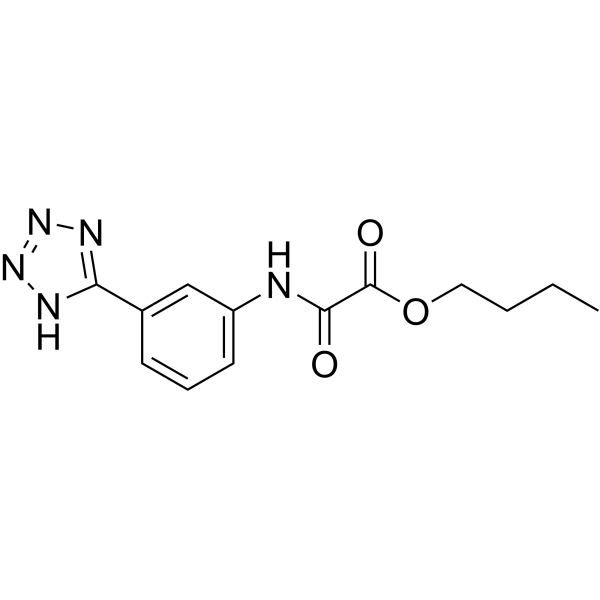
Tazanolast (TO 188) is an orally active selective mast cell stabilizer. Tazanolast prevents the elevation of intracellular calcium concentration, inhibits calcium uptake and Protein kinase C translocation, without directly inhibiting phospholipase C. Tazanolast inhibits ozone-induced airway hyperresponsiveness to Methacholine in guinea pigs, as well as passive cutaneous anaphylaxis, Schultz-Dale reaction, experimental asthma, passive cutaneous anaphylaxis in rats, and increased cutaneous vascular permeability in rats. Tazanolast does not alter airway responsiveness in sham-exposed guinea pigs, cell distribution in bronchoalveolar lavage fluid after ozone exposure, type II-IV allergic reactions, or histamine release from atopic leukocytes. Tazanolast can be used in research related to allergic diseases .
loading...
    loading...
Cat. No.: HY-124211
CAS No.: 189-55-9
Purity:  ≥98.0%
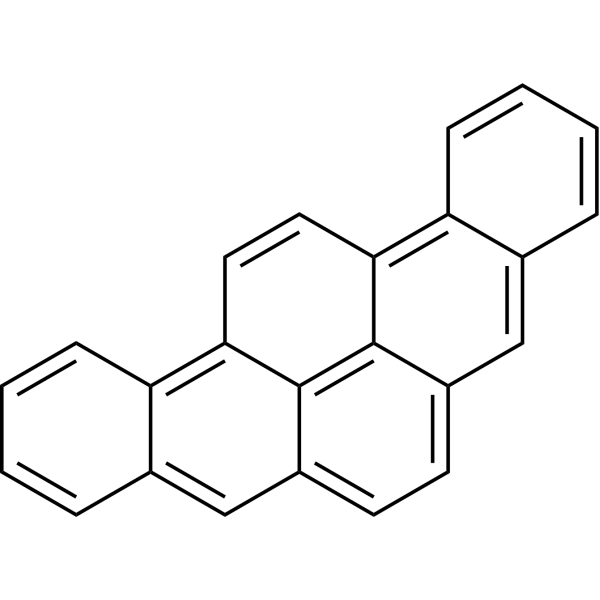
Dibenzo (a,i) pyrene is a polycyclic aromatic hydrocarbon and also a carcinogenic ligand of the TCDD (Ah) receptor. Dibenzo (a,i) pyrene binds to the TCDD (Ah) receptor in rat liver. Dibenzo (a,i) pyrene induces DNA adduct formation and upregulates the protein levels of p53 and p21 WAF1 in diploid lung fibroblasts. Dibenzo (a,i) pyrene alters the cell cycle distribution of diploid lung fibroblasts, increasing the proportion of cells in the S phase, decreasing the proportions of cells in the G0/G1 and G2/M phases, and causing S phase delay/arrest. Dibenzo (a,i) pyrene is applicable for cancer research .
loading...
    loading...
Cat. No.: HY-150087
CAS No.: 2365532-65-4
Ctrl-CF4-S2 is a chemically modified control probe of the copper probe Copper Fluor-4 (CF4, HY-150086), in which two of the four thioether ligands in CF4 (HY-150086) are replaced with methylene groups. CF4 (HY-150086) is a fluorescent probe used for detecting the presence and distribution of copper ions, whereas Ctrl-CF4-S2 does not respond to copper ions. This allows it to eliminate background signals from copper, thereby helping to determine whether the signals from CF4 (HY-150086) accurately reflect the dynamic changes of copper ions in biological systems
loading...
    loading...
Cat. No.: HY-156045B
CAS No.: 12774-36-6
Cross-linked dextran G 150 is a hydrophilic gel based on molecular size exclusion and targeted for the separation of macromolecules. Cross-linked dextran G 150 functions through the gel permeation mechanism, where the cross-linked structure forms a three-dimensional network with specific pore diameters, achieving separation based on the molecular volumetric flow. Cross-linked dextran G 150 can be used to regulate the distribution coefficient of permeating solutes and maintain the permeation balance, such as in gel filtration chromatography for the purification and analysis of biological macromolecules like proteins and nucleic acids. Cross-linked dextran G 150 can also be used as a gel filtration filler (particle size range: 40-120 μm; spherical protein separation range: 5-300 kDa) .
loading...
    loading...
Cat. No.: HY-156045C
CAS No.: 9041-36-5
Cross-linked dextran G 200 is a hydrophilic gel based on molecular size exclusion and targeted macromolecular separation. Cross-linked dextran G 200 works through the gel permeation mechanism, and the cross-linked structure forms a three-dimensional network with a specific pore size, achieving separation based on the molecular hydrodynamic volume. Cross-linked dextran G 200 can be used to adjust the osmotic solute distribution coefficient and the ability to maintain osmotic equilibrium, such as in gel filtration chromatography for purification and analysis of biomacromolecules such as proteins and nucleic acids . Cross-linked dextran G 200 can also be used as a gel filtration filler (particle size range: 40-120 μm; globular protein separation range: 5-600 kDa) .
loading...
    loading...
Cat. No.: HY-160184
CAS No.: 524699-85-2
Target:  

COX

COX-1-IN-5 (example 13, compound PS13) is a potent and selective COX-1 inhibitor (COX-1 IC50 = 1 nM, COX-2 IC50 > 0.1 μM) exhibiting >1000-fold selectivity over COX-2. COX-1-IN-5 possesses strong anti-inflammatory, antipyretic, analgesic, antithrombotic, anti-cancer activities. COX-1-IN-5 can be used for COX-mediated diseases research, such as inflammatory conditions and pain. COX-1-IN-5 radiolabeled with 11C can be used as a selective PET tracer for whole‑body imaging of COX‑1 distribution and target engagement in vivo .
loading...
    loading...
Cat. No.: HY-176074
Research Areas:  

Others

U-46619 Glycine methyl ester has a modification at the C-1 position of U-46619, which uniquely alter its binding properties to the TP receptor or any of the PGH2-metabolizing enzymes. U-46619 is a stable analog of the endoperoxide PGH2. U-46619 is also an agonist of TP receptor. U-46619 can change the shape of platelet, aggregation and contraction of vascular smooth muscle. U-46619 Glycine methyl ester can be studied in research to explore the inhibition of various enzymes in the arachidonic acid metabolic pathway. U-46619 Glycine methyl ester can also act as a lipophilic prodrug form of U-46619 that alters its distribution and pharmacokinetic properties .
loading...
    loading...
Cat. No.: HY-D0932R
CAS No.: 85-83-6
Synonyms: Solvent Red 24 (Standard); C.I. 26105 (Standard)
Sudan IV (Standard) (Solvent Red 24 (Standard)) is the analytical standard of Sudan IV (HY-D0932). This product is intended for research and analytical applications. Sudan IV is an agonist of the aryl hydrocarbon receptor (AhR) that activates downstream signaling pathways and induces CYP1A1 expression. Sudan IV promotes CYP1A1 gene transcription by activating AhR-ARNT heterodimers and binding to exogenous response elements (XREs) on DNA, thereby enhancing drug metabolizing enzyme activity. Sudan IV can be used to study the toxicity mechanisms of industrial dyes and the effects of interactions with serum proteins (such as bovine serum albumin (BSA)) on their distribution in vivo. Sudan IV is a fat-soluble diazo dye that can be used to stain lipids, triglycerides, and lipoproteins on frozen sections.
loading...
    loading...
Cat. No.: HY-W331198
CAS No.: 122454-29-9
Target:  

Insecticide Ferroptosis

Research Areas:  

Infection

Tralopyril is an orally active, blood-brain barrier-penetrating antifouling insecticide and endocrine disruptor. By interfering with the thyroid hormone system and mitochondrial oxidative phosphorylation, Tralopyril downregulates the transcription of genes such as TRHR, Nkx2.1, TRα and induces ferroptosis. Tralopyril disrupts amino acid, energy and lipid metabolism, exhibits significant skeletal and reproductive toxicity, and causes developmental damage. Tralopyril has a long half-life in vivo and wide tissue distribution, posing potential risks to aquatic organisms and human health. Tralopyril shows species specificity in in vitro liver microsomal metabolism, exerts lethal effects on target insects and laboratory animals, and is commonly used in studies of chlorfenapyr poisoning and related toxic mechanisms .
loading...
    loading...

