3074 Results for "

modulating

" in MedChemExpress (MCE) Product Catalog:
Products (3074)

3074 Results for "modulating" in MCE Product Catalog:

Cat. No.: HY-115857
CAS No.: 872874-00-5
Target:  

GABA Receptor

Research Areas:  

Neurological Disease

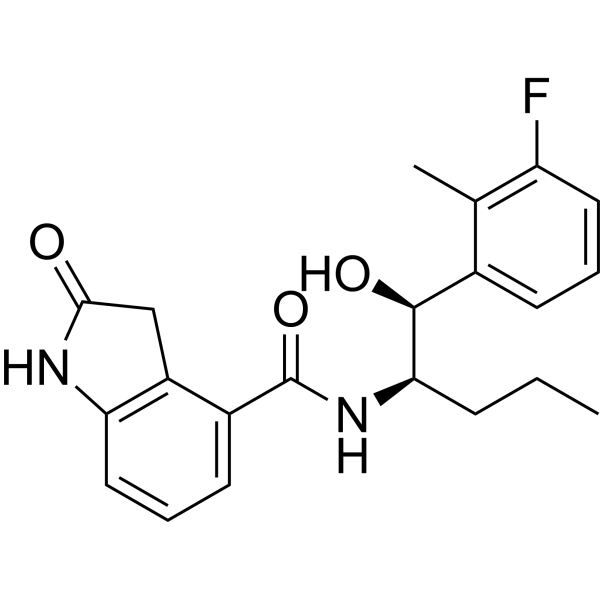
SH-053-S-CH3-2'F is a selective positive allosteric modulator that produces mild to partial agonistic activity at α(1) GABA(A) receptors. SH-053-S-CH3-2'F showed anxiety-relieving effects at a dose of 30 mg/kg. SH-053-S-CH3-2'F completely avoids the memory impairment commonly caused by benzodiazepine site agonists. SH-053-S-CH3-2'F shows strong selectivity at GABA(A) receptors, which could potentially be used to develop more selective anti-anxiety drugs .
loading...
    loading...
Cat. No.: HY-119514
CAS No.: 423744-89-2
BC12 is a barbituric acid derivative and a phosphodiesterase 7 (PDE7) inhibitor, with an IC50 of 0.77 μM against human targets. BC12 inhibits the enzymatic activity of PDE7, but this activity is not the driver of its immunomodulatory effects on T lymphocytes. BC12 blocks the upregulation of IL-2 transcription in activated T cells. BC12 modulates the transcriptional response of T cells upon stimulation, exerting anti-inflammatory and pro-stress effects. BC12 inhibits the proliferation of primary mouse T cells and the IL-2 secretion of human peripheral blood T lymphocytes. BC12 exerts immunosuppressive and immunomodulatory effects on T lymphocyte function. BC12 can be used in research related to T lymphocyte-mediated diseases .
loading...
    loading...
Cat. No.: HY-121183
CAS No.: 132562-26-6
Synonyms: RP 52891
Target:  

Potassium Channel

Research Areas:  

Cardiovascular Disease

Aprikalim (RP 52891), a potassium channel opener (KCO), activates ATP-sensitive K+ (KATP) channels in guinea pig ventricular myocytes. Using patch-clamp techniques, it was found that aprikalim enhances KATP channel activity more effectively in Mg-NDP solution compared to standard solutions. In Mg-NDP solution, aprikalim reduced the sensitivity of KATP channels to ATP, increasing the concentration of ATP required to inhibit channel activity by half (K1) from 56 μM to 180 μM. However, this effect diminished over time. Aprikalim's ability to activate KATP channels in Mg-NDP solution suggests potential therapeutic implications in modulating cardiac excitability and may relate to changes in channel protein enzymatic activity under experimental conditions .
loading...
    loading...
Cat. No.: HY-123489S
CAS No.: 203805-98-5
Synonyms: THDOC-d3
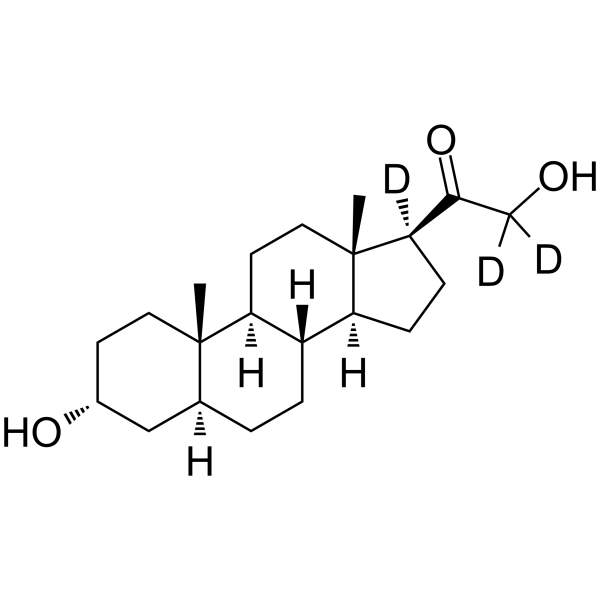
3α,21-Dihydroxy-5α-pregnan-20-one-d3 is the deuterium labeled 3α,21-Dihydroxy-5α-pregnan-20-one. 3α,21-Dihydroxy-5α-pregnan-20-one (THDOC), an endogenous neurosteroid, is a positive modulator of GABAA receptors. 3α,21-Dihydroxy-5α-pregnan-20-one potentiates neuronal response to low concentrations of GABA at α4β1δ GABAA receptors in vitro.
loading...
    loading...
Cat. No.: HY-12403R
CAS No.: 51833-78-4
Synonyms: TXA127 (Standard); Angiotensin (1-7) (Standard); Ang-(1-7) (Standard)
Talfirastide (Standard) is the analytical standard of Talfirastide. This product is intended for research and analytical applications. Angiotensin 1-7 (Ang-(1-7)) is an endogenous heptapeptide from the renin-angiotensin system (RAS) with a cardioprotective role due to its anti-inflammatory and anti-fibrotic activities in cardiac cells. Angiotensin 1-7 inhibits purified canine ACE activity (IC50=0.65 μM). Angiotensin 1-7 acts as a local synergistic modulator of kinin-induced vasodilation by inhibiting ACE and releasing nitric oxide. Angiotensin 1-7 blocks Ang II-induced smooth muscle cell proliferation and hypertrophy and shows antiangiogenic and growth-inhibitory effects on the endothelium. Angiotensin 1-7 shows anti-inflammatory activity .
loading...
    loading...
Cat. No.: HY-124057
CAS No.: 1137233-79-4
Target:  

nAChR

Research Areas:  

Neurological Disease

RO5126946 is a selective, orally active α7 nAChR allosteric potentiator with EC50 values of 0.06 μM (hα7 nAChR) and 770 nM (α7 nAChR), and it crosses the blood-brain barrier. RO5126946 enhances synaptic transmission and positively modulates GABA-ergic responses by increasing peak current, slowing current decay, and elevating the frequency of spontaneous inhibitory postsynaptic currents, without affecting the recovery of receptors from the desensitized state. RO5126946 not only enhances subthreshold nicotine effects and improves associative learning, but also does not interfere with the original pro-cognitive effects of nicotine. RO5126946 can be used to study cognitive impairments associated with diseases such as Alzheimer's disease and schizophrenia .
loading...
    loading...
Cat. No.: HY-133240
CAS No.: 1109241-72-6
trans-AzoTAB is a photoresponsive potassium/sodium/calcium channel modulator and DNA-binding agent. trans-AzoTAB undergoes trans-cis isomerization driven by light, with variable polarity and DNA affinity. trans-AzoTAB also enhances voltage-gated potassium currents and inhibits sodium and calcium currents in cardiomyocytes, thereby reducing spontaneous electrical activity and excitation conduction velocity. In addition, trans-AzoTAB induces compaction and frozen conformation of λ-phage DNA, and non-sequence-dependently inhibits transcription and translation processes in the dark; its activity can be reversed and restored by visible light after activation with ultraviolet irradiation. trans-AzoTAB can serve as a probe for two-photon optical regulation of myocardial excitability, and is used to construct photoresponsive interfacial polymer structures .
loading...
    loading...
Cat. No.: HY-134222A
CAS No.: 16354-58-8
Purity:  ≥98.0%
Synonyms: N-Acetyl-L-serine
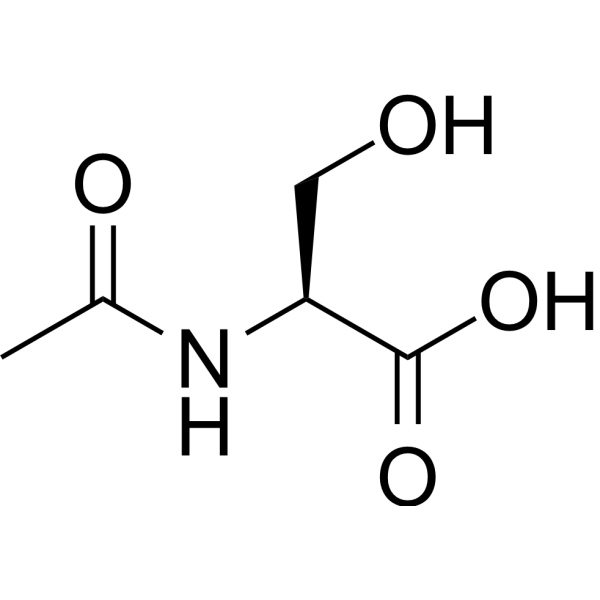
N-Acetylserine (N-Acetyl-L-serine) is a complement pathway modulator targeting activated third complement protein (C3b) and an amino-terminal residue (an N-terminal acetylation modification group). N-Acetylserine reacts with the exposed thioester group of C3b via its hydroxyl group, thereby blocking the covalent binding of glycerol to this thioester group. N-Acetylserine widely exists in soluble proteins of mammalian cells (accounting for approximately 80% of such proteins). N-Acetylserine has a blocking property that prevents direct Edman sequencing of proteins; deblocking is achievable through trifluoroacetic acid-catalyzed N→O acetyl migration followed by β-elimination. N-Acetylserine is suitable for sequencing of proteins with N-terminal acetylserine modification .
loading...
    loading...
Cat. No.: HY-134800
CAS No.: 692744-81-3
Target:  

ATF6 IRE1 PERK

Research Areas:  

Infection

IBT21 is an endoplasmic reticulum stress inhibitor that binds to unfolded or misfolded proteins and prevents their aggregation. IBT21 inhibits UPR activation of the ATF6, IRE1 and PERK branches under ER stress, with IC50 values of 0.24 μM, 0.33 μM, and 0.46 μM, respectively. IBT21 protects cells from ER stress-induced death and mutant prion protein (protein toxin)-induced growth inhibition. IBT21 exhibits chemical chaperone activity distinct from UPR modulators, does not affect protein translation, moderately reduces DTT (HY-15917)-induced ER stress, and fails to inhibit the heat shock response. IBT21 is useful for research related to prion diseases .
loading...
    loading...
Cat. No.: HY-134858
CAS No.: 2406205-61-4
Purity:  99.77%
Synonyms: A1AT modulator 1
Target:  

Serpin Ser/Thr Protease

Research Areas:  

Metabolic Disease

GSK716 (A1AT modulator 1) is an orally active Z α1-antitrypsin (Z-A1AT) inhibitor with a pIC50 of 8.3. GSK716 binds a cryptic Z α1-antitrypsin pocket, stabilizes monomeric folding intermediates, blocks polymerization, and increases monomer secretion. GSK716 acts on select sensitive α1-antitrypsin variants but fails to affect resistant variants. GSK716 can be used for the research of α1-antitrypsin deficiency and α1-antitrypsin deficiency-associated liver disease .
loading...
    loading...
Cat. No.: HY-136190
CAS No.: 667427-75-0
Purity:  99.78%
Target:  

TRP Channel

Research Areas:  

Neurological Disease

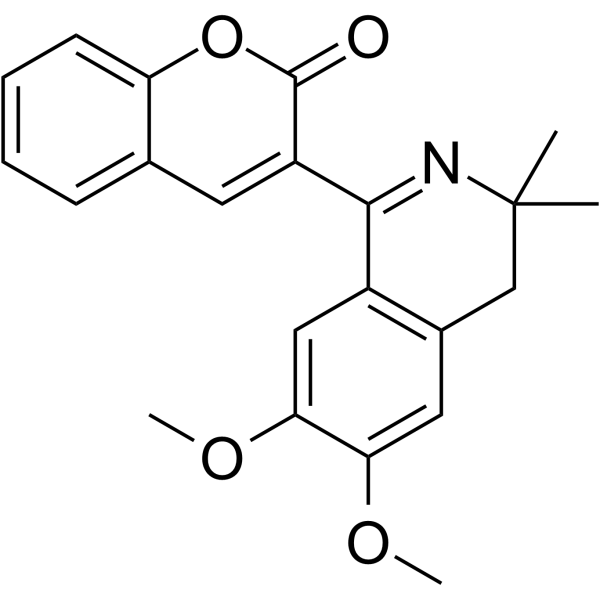
TRPC6-PAM-C20 is a selective positive allosteric modulator (PAM) of TRPC6 channels. TRPC6-PAM-C20 is a potent enhancer of channel activation, enabling low basal concentrations of DAG to induce activation of the ion channel. TRPC6-PAM-C20 induces increases in intracellular Ca 2+ concentrations ([Ca 2+]i) in TRPC6-expressing HEK293 cells with an EC50 of 2.37 μM. TRPC6-PAM-C20 can be used as a valuable tool to selectively exaggerate TRPC6-dependent signals .
loading...
    loading...
Cat. No.: HY-13757AR
CAS No.: 10540-29-1
Purity:  99.76%
Synonyms: ICI 47699(Standard); (Z)-Tamoxifen(Standard); trans-Tamoxifen (Standard)
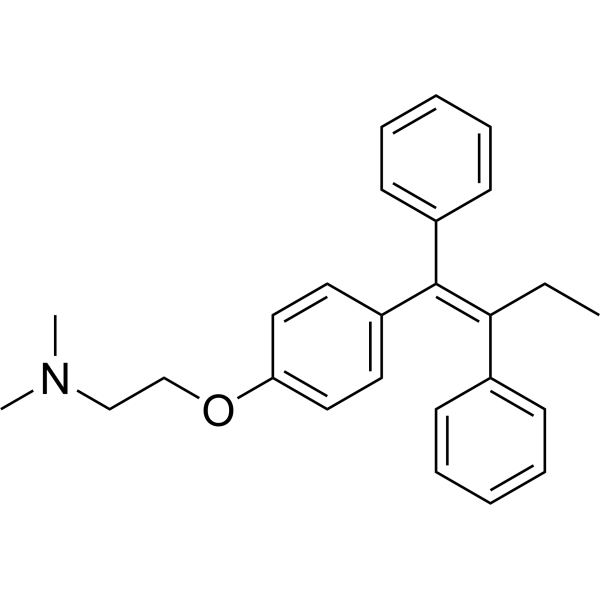
Tamoxifen (Standard) is the analytical standard of Tamoxifen (HY-13757A). This product is intended for research and analytical applications. Tamoxifen (ICI 47699) is an orally active, selective estrogen receptor modulator (SERM) which blocks estrogen action in breast cells and can activate estrogen activity in other cells, such as bone, liver, and uterine cells . Tamoxifen is a potent Hsp90 activator and enhances the Hsp90 molecular chaperone ATPase activity. Tamoxifen also potent inhibits infectious EBOV Zaire and Marburg (MARV) with IC50 of 0.1 μM and 1.8 μM, respectively . Tamoxifen activates autophagy and induces apoptosis . Tamoxifen also can induce gene knockout of CreER(T2) transgenic mouse .
loading...
    loading...
Cat. No.: HY-142117
CAS No.: 149091-92-9
Research Areas:  

Others

Adenophostin A is an IP3 receptor (inositol 1,4,5-trisphosphate receptors) modulator and Ca 2+ releaser, with an IC50 of 1.3 nM, an EC50 of 1.4 nM, and a Ki of 0.18 nM in rats, and an IC50 of 0.95 nM in humans. Adenophostin A activates IP3 receptors, stimulates Ca 2+ release from intracellular stores and microsomes, inhibits the binding of [ 3H]IP3 to plasma membrane receptors, and activates chloride channels. Adenophostin A resists phosphorylation and dephosphorylation by IP3 metabolic enzymes to maintain its activity, and increases cytoplasmic [Ca 2+] levels via calcium mobilization from the endoplasmic reticulum of vascular smooth muscle cells. Adenophostin A is applicable to research related to hemorrhagic shock .
loading...
    loading...
Cat. No.: HY-155811
CAS No.: 2377187-09-0
Purity:  99.85%
Target:  

iGluR

Research Areas:  

Neurological Disease

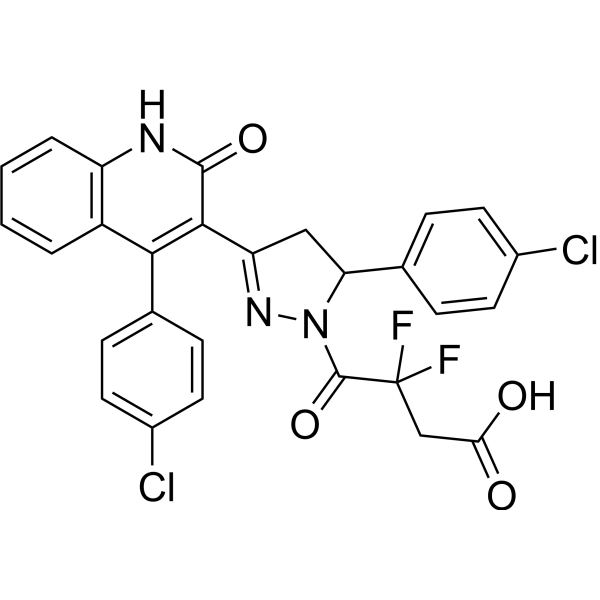
DQP-997-74 (compound 2i) is a selective negative allosteric modulator of N-methyl-d-aspartate receptor (NMDAR), specifically targeting GluN2C/D (IC50: 0.069 μM and 0.035 μM), with blood-brain barrier penetrability. Where DQP refers to dihydroquinoline-pyrazoline. DQP-997-74 acts synergistically with the agonist glutamate to exhibit time-dependent enhanced potency in inhibiting hypersynchronous activity driven by high-frequency excitatory synaptic transmission. DQP-997-74 reduces the number of epileptogenesis in a murine model of tuberous sclerosis complex (TSC)-induced epilepsy. DQP-997-74 can be used for research on NMDAR-related neurological diseases .
loading...
    loading...
Cat. No.: HY-155887
CAS No.: 474922-26-4
Synonyms: DSPE-PEG-NH2, MW 3400 ammonium
Target:  

Liposome

Research Areas:  

Cancer

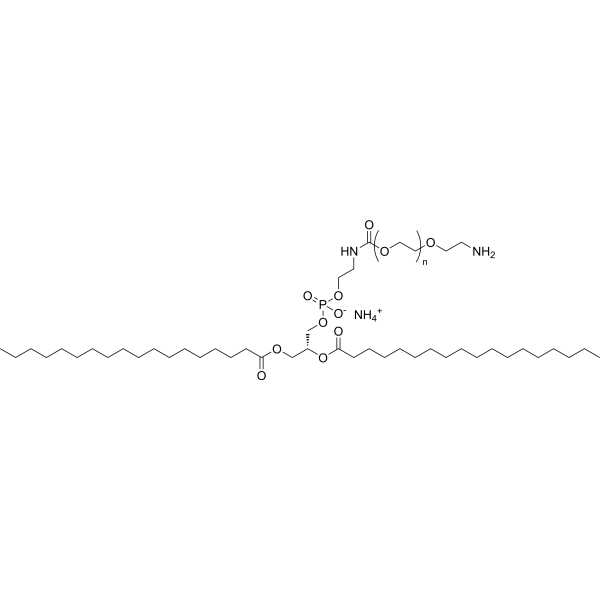
DSPE-PEG-Amine (DSPE-PEG-NH2), MW 3400 ammonium is an amino-functionalized PEGylated phospholipid. It serves not only as a key component for preparing σ receptor-targeted liposomes (such as anisamide-modified lipids) but also as a starting material for synthesizing click chemistry- and tumor-targeted lipids including DSPE-PEG-DBCO (HY-155788) and DSPE-PEG2000-TCO (HY-170704). DSPE-PEG-Amine, MW 3400 ammonium effectively modulates the ζ potential of nanoparticles, enables complexation with nucleic acids or proteins to protect DNA from nuclease degradation, and supports ligand conjugation on the nanoparticle surface. It is used in studies related to DU-145 tumors, breast cancer, and other relevant research .
loading...
    loading...
Cat. No.: HY-159647
CAS No.: 2892065-45-9
Research Areas:  

Cancer

PLX-4545 is an orally active, selective molecular glue degrader targeting IKZF2. Through a molecular glue mechanism, PLX-4545 binds to CRBN, recruits IKZF2 to form a ternary complex, and promotes its ubiquitination and proteasomal degradation. This further converts inhibitory regulatory T cells (Treg) into effector-like T cells, enhances CD8 + T cell responses, and modulates the Teff:Treg balance. PLX-4545 also increases the production of the inflammatory cytokine IL-2 and reduces the suppressive activity of Treg. PLX-4545 can be used in cancer immunotherapy research, and exhibits a synergistic effect when combined with immune checkpoint inhibitors such as anti-PD1 .
loading...
    loading...
Cat. No.: HY-16622A
CAS No.: 1005407-76-0
Target:  

LPL Receptor

Research Areas:  

Others

GSK1842799, an alkyl-substituted biaryl amino alcohol, is a selective S1P1 modulator developed for multiple sclerosis (MS). Upon phosphorylation, GSK1842799-P exhibited subnanomolar S1P1 agonist activity with over 1000-fold selectivity over S1P3. The compound showed good oral bioavailability, rapid in vivo conversion to GSK1842799-P, and significant lymphocyte count reduction at 0.1 mg/kg. It matched FTY720 efficacy at 3 mg/kg in the mouse EAE model and achieved comparable plasma levels to FTY-720 phosphate in cynomolgus monkeys. With favorable ADME, PK/PD properties, and toxicology, GSK1842799 advanced to further clinical development .
loading...
    loading...
Cat. No.: HY-168758
CAS No.: 567-72-6
Target:  

GABA Receptor

Research Areas:  

Neurological Disease

Delta3,5-cholestadien-7-one is an oxysterol and a negative allosteric modulator of GABAA receptors. Delta3,5-cholestadien-7-one reduces GABA-induced currents in HEK cells expressing α1β1γ2 or α4β3γ2 subunit-containing GABAA receptors with IC50 values of 1.5 and 1 µM, respectively. Delta3,5-cholestadien-7-one reduces GABA-induced depolarization of peptidergic and non-peptidergic nociceptors, C-LTMRs, and cold thermosensors in isolated mouse dorsal root ganglion (DRG) neurons .
loading...
    loading...
Cat. No.: HY-170448
PROTAC AR Degrader-9 is a topically applicable androgen receptor (AR) PROTAC degrader. PROTAC AR Degrader-9 recruits Cereblon (CRBN) E3 ubiquitin ligase to induce AR ubiquitination and proteasomal degradation in human dermal papilla cells (HDPCs) with a DC50 of 262.38 nM. PROTAC AR Degrader-9 possesses excellent skin retention, modulates androgenetic alopecia (AGA)-related downstream paracrine factors including TGF-β1 and β-catenin, promotes hair regeneration in mice. and exhibits favorable skin pharmacokinetics profiles with minimal systemic exposure. PROTAC AR Degrader-9 can be used for the study of androgenetic alopecia (AGA) .
loading...
    loading...
Cat. No.: HY-174215
CAS No.: 3063511-09-8
Target:  

Tau Protein

Research Areas:  

Neurological Disease

TAU-IN-3 (Compound 2) is an orally active TAU inhibitor. TAU-IN-3 inhibits the expression of MAPT exon 10 DDPAC mutant gene in HeLa cells (IC50: 0.6 µM). TAU-IN-3 reduces the 4R/3R MAPT mRNA ratio in HeLa cells transfected with WT or DDPAC minigenes. TAU-IN-3 inhibits the insertion of endogenous MAPT exon 10 and the production of 4R tau protein in cells. TAU-IN-3 modulates tau splicing in htau mice and improves the associated behavioral phenotypes. TAU-IN-3 can be used to study neurodegenerative diseases .
loading...
    loading...

