3417 Results for "

mSWI/SNF complex

" in MedChemExpress (MCE) Product Catalog:
Products (3417)

3417 Results for "mSWI/SNF complex" in MCE Product Catalog:

Cat. No.: HY-181000
CAS No.: 3074520-74-1
Research Areas:  

Cancer

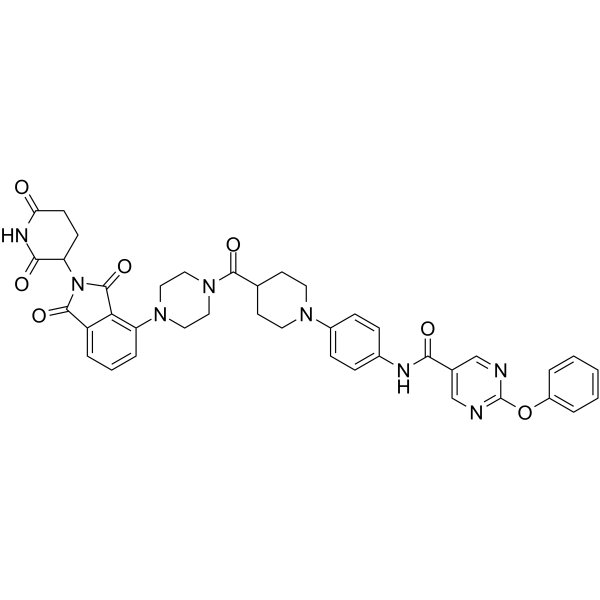
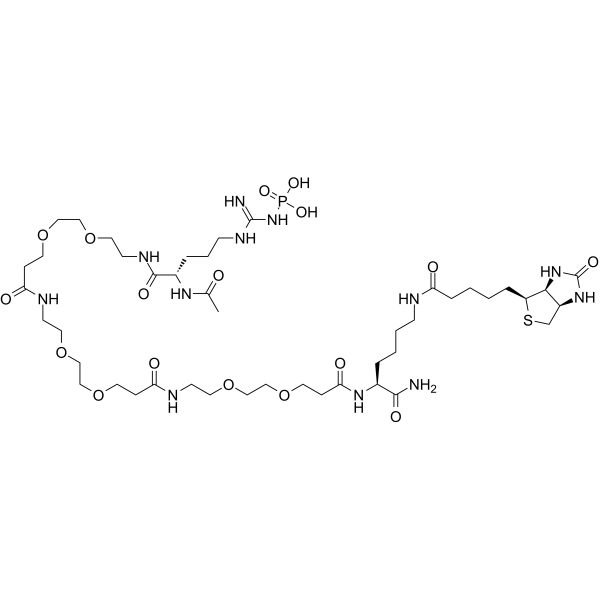
PROTAC PLK1 Degrader-3 (Compound DD-1) is a PLK1 PROTAC degrader based on the N-deglycosylation pathway, with a Kd value of 2.2 μM. The cell penetration ability of PROTAC PLK1 Degrader-3 is limited and a higher concentration is required to achieve significant degradation effects. PROTAC PLK1 Degrader-3 can be used for research on non-small cell lung cancer .
loading...
    loading...
Cat. No.: HY-182577
CAS No.: 2154350-81-7
Research Areas:  

Cancer

CFT-743, a PROTAC-based heterobifunctional degrader and BET inhibtor, is a degrader of BRD4 bromodomain 1 (BD1) with a DC50 of 4.3 nM. CFT-743's antitumor activitiy is dependent on BET degradation and can be attenuated by Pomalidomide (HY-10984), which is a CRBN binding molecule. CFT-743 induces ubiquitination of BRD4 BD1. CFT-743 can be used for cancer research .
loading...
    loading...
Cat. No.: HY-184482
CAS No.: 1019642-47-7
Synonyms: BPC-Sia-LacNAc-N3
Target:  

Drug Intermediate

Research Areas:  

Cancer

CD22L-N3 (BPC-Sia-LacNAc-N3) is a pharmaceutical intermediate that can be used to synthesize CD22-specific trisaccharide ligands. CD22L-N3 is applicable to the research of B-cell lymphoma .
loading...
    loading...
Cat. No.: HY-187136
CAS No.: 3004503-11-8
Research Areas:  

Others

EZH2-IN-13-CO-C9-COOH is a target protein ligand-linker conjugate. EZH2-IN-13-CO-C9-COOH can be used to synthesize PROTAC NUCC-0226272 (HY-157844) .
loading...
    loading...
Cat. No.: HY-187195
Research Areas:  

Cancer

Abd141 is a dual PROTAC degrader of ATR and Aurora kinase A (AURKA), with DC50 values of 97.7 nM and 6.7 nM, respectively. Abd141 inhibits the proliferation of acute lymphoblastic leukemia cells. Abd141 can be used in the research of acute lymphoblastic leukemia .
loading...
    loading...
Cat. No.: HY-187992
Research Areas:  

Others

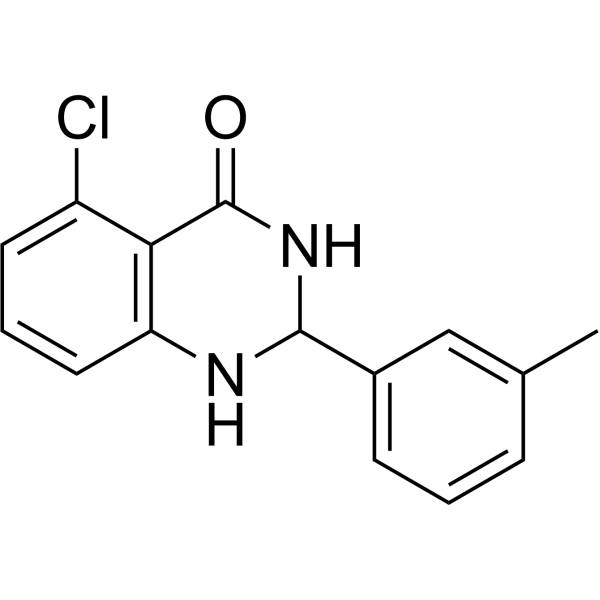
SDH-IN-48 is a succinate dehydrogenase (SDH) inhibitor, with an IC50 of 0.056 μM against porcine SDH. SDH-IN-48 binds to the SDH active pocket through multiple non-covalent interactions. SDH-IN-48 can be used in related research on rice sheath blight disease .
loading...
    loading...
Cat. No.: HY-N16435
CAS No.: 77-16-7
Plumericin is an anti-inflammatory, antioxidant, and antibacterial agent. Plumericin reduces Apoptosis, promotes Nrf-2 and inhibits NF-κB and AhR activation, blocks STAT3 signaling. Plumericin inhibits Mycobacterium tuberculosis growth. Plumericin can be used for the research of chronic kidney disease, vascular diseases, inflammatory bowel diseases, peritonitis, and tuberculosis .
loading...
    loading...
Cat. No.: HY-W250199
CAS No.: 27252-75-1
Synonyms: n-Octyl-oligo-oxyethylene
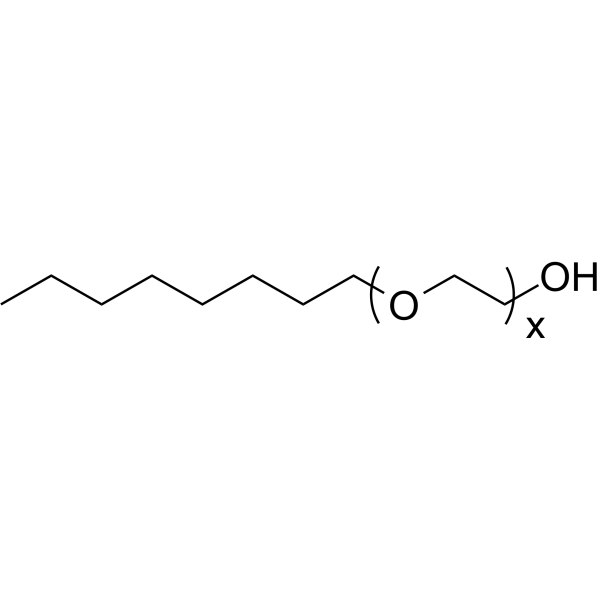
Polyethylene glycol monooctyl ether (n-Octyl-oligo-oxyethylene) is a nonionic detergent and separating agent. Polyethylene glycol monooctyl ether is commonly used as a reagent for solubilization and stabilization of membrane proteins, a mild detergent for cell lysis, a component of ELISA blocking agents, and an additive for protein refolding .
loading...
    loading...
Cat. No.: HY-W727481
CAS No.: 1253429-01-4
Target:  

Parasite Insecticide

Research Areas:  

Infection

Cyetpyrafen is a pyrazole insecticide/acaricide with broad-spectrum insecticidal activity. Cyetpyrafen binds to DhelOBP4 (Ki = 4.95 μM) and DhelOBP21 (Ki = 5.51 μM) to mediate olfactory recognition in *Cryptolaemus montrouzieri*. Cyetpyrafen induces dose-dependent electroantennogram responses in *Cryptolaemus montrouzieri* and exhibits repellent effects on the species. Cyetpyrafen has bioaccumulative properties, is rapidly and passively absorbed by the roots of lettuce and rice, reaches a steady state within 24 h, preferentially accumulates in roots, and shows limited xylem/phloem translocation .
loading...
    loading...
Cat. No.: HY-Y0260
CAS No.: 13790-39-1
Target:  

Cholinesterase (ChE)

Research Areas:  

Neurological Disease

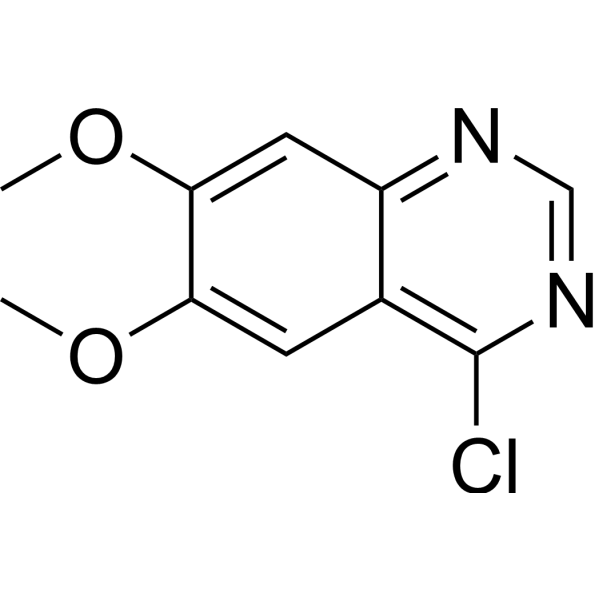
4-Chloro-6,7-dimethoxyquinazoline is a quinazoline derivative. 4-Chloro-6,7-dimethoxyquinazoline exhibits a significant interaction with the AChE protein (as demonstrated by molecular docking analysis). 4-Chloro-6,7-dimethoxyquinazoline is applicable to research related to Alzheimer's disease .
loading...
    loading...
Cat. No.: HY-10499R
CAS No.: 892546-37-1
Synonyms: BIM-46187 (Standard)
PH-064 (Standard) is the analytical standard of PH-064 (HY-10499). This product is intended for research and analytical applications. PH-064 (BIM-46187) is an orally active inhibitor of the heterotrimeric G-protein complex. PH-064 inhibits SERT activity and attenuates shear stress-induced Akt phosphorylation. PH-064 has potent anti-hyperalgesia activity. PH-064 inhibits G protein-coupled receptor-dependent tumorigenesis. PH-064 can be used in the study of pain (e.g., inflammatory pain, neuropathic pain), GPCR-dependent tumors, and inflammatory lung injury .
loading...
    loading...
Cat. No.: HY-120155
CAS No.: 206862-30-8
Target:  

Sigma Receptor iGluR

Research Areas:  

Neurological Disease

MS-377 is a selective and orally active sigma-1 receptor ligand (Ki=73 nM) with weak affinity for sigma-2 receptor (Ki=6900 nM) and no affinity for any other receptors including dopamine, serotonin, PCP site, glutamate, γ-aminobutylic acid, adenosine, adrenergic receptors, etc. (Ki: >10 μM). MS-377 indirectly modulates the NMDA receptor ion-channel complex. MS-377 is a antipsychotic agent. MS-377 inhibits PCP-induced behaviors by inhibition of the increase in dopamine and serotonin release in the rat medial prefrontal cortex. MS-377 can be used for research of schizophrenia .
loading...
    loading...
Cat. No.: HY-126192
CAS No.: 566169-93-5
Purity:  ≥95.0%
Synonyms: PiB; 6-OH-BTA-1
Pittsburgh Compound B (PiB) is a blood-brain barrier-permeable, specific deposition PET tracer that binds to Aβ(1-40) fibrils with a Ki value of 678.4 nM. Through click chemical modification (a clickable Pittsburgh Compound B derivative is prepared by introducing a PEG3 linker and an alkynyl group at the 6-hydroxy site of Pittsburgh Compound B, followed by covalent conjugation with azide-labeled fluorescent dyes or affinity tags via copper-catalyzed azide-alkyne cycloaddition (CuAAC)), Pittsburgh Compound B and its conjugates can be used for fluorescence imaging, ultrastructural studies, and enrichment and characterization of Aβ complexes. Pittsburgh Compound B is applicable to Alzheimer's disease research .
loading...
    loading...
Cat. No.: HY-129179S
Synonyms: APG-2575-d8; Bcl-2/Bcl-xl inhibitor 1-d8
Target:  

Bcl-2 Family Apoptosis

Research Areas:  

Cancer

Lisaftoclax-d8 is the deuterated-labeled Lisaftoclax (HY-129179). Lisaftoclax is an orally active, selective BCL-2 inhibitor with a Ki of < 0.1 nM against human BCL-2. Lisaftoclax selectively binds to BCL-2, disrupts the BCL-2:BIM complex, and antagonizes the antiapoptotic function of BCL-2. Lisaftoclax induces BAX/BAK-dependent, caspase-mediated apoptosis, upregulates the pro-death proteins BIM and Noxa, and downregulates mitochondrial respiratory function and ATP production. Lisaftoclax can be used in the research of hematological malignancies including chronic lymphocytic leukemia, multiple myeloma, and diffuse large B-cell lymphoma .
loading...
    loading...
Cat. No.: HY-139972
CAS No.: 2761281-50-7
Purity:  99.42%
PROTAC (H-PGDS)-7 is a selective, linker-free H-PGDS PROTAC degrader with a DC50 of 17.3 pM. PROTAC (H-PGDS)-7 binds to CRBN and forms a ternary complex with H-PGDS, inducing the degradation of H-PGDS via the ubiquitin-proteasome system through polyubiquitination and proteasomal degradation processes. PROTAC (H-PGDS)-7 inhibits the upregulated expression of TNFα, IL-1β, TGFβ1 and CD11b in mice with cardiac hypertrophy models. PROTAC (H-PGDS)-7 can be used in studies related to Duchenne muscular dystrophy and allergic diseases .
loading...
    loading...
Cat. No.: HY-151532
CAS No.: 2819989-61-0
Purity:  99.75%
Research Areas:  

Cancer

PBRM1-BD2-IN-5 is a potent PBRM1 Bromodomain inhibitor with Kd values of 1.5 μM and 3.9 μM for PBRM1-BD2 and PBRM1-BD5, respectively, and an IC50 value of 0.26 μM for PBRM1-BD2. PBRM1-BD2-IN-5 reduces the binding of full-length PBRM1 within the PBAF complex in cell lysates to acetylated histone peptide. PBRM1-BD2-IN-5 can be used to research anticancer .
loading...
    loading...
Cat. No.: HY-151662
CAS No.: 122590-77-6
Synonyms: N3-TFBA
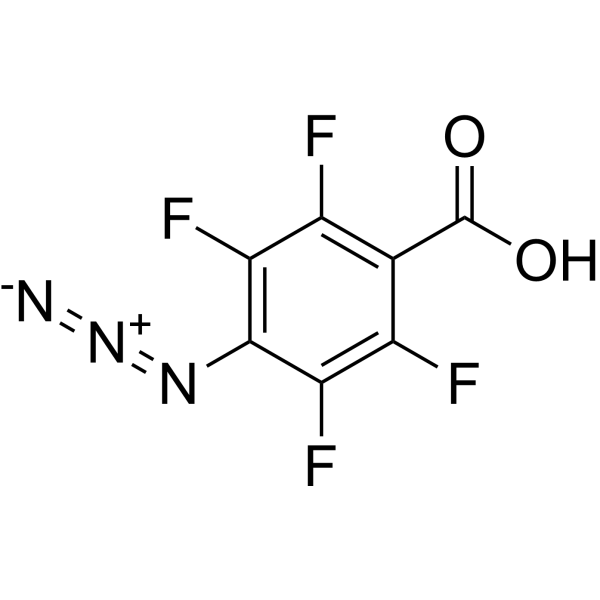
4-Azido-2,3,5,6-tetrafluorobenzoic Acid (N3-TFBA) is a click chemistry reagent containing an azide group. 4-Azido-2,3,5,6-tetrafluorobenzoic Acid is a complex with FAM-labeled DNA probe. 4-Azido-2,3,5,6-tetrafluorobenzoic Acid can be used as versatile photoaffinity labeling agents to probe biological receptors. It contains an azide group and can undergo copper-catalyzed azide-alkyne cycloaddition (CuAAc) with molecules containing alkyne groups. It can also undergo ring strain-promoted alkyne-azide cycloaddition (SPAAC) with molecules containing DBCO or BCN groups.
loading...
    loading...
Cat. No.: HY-152154
CAS No.: 3035008-40-0
Purity:  99.41%
Synonyms: Nampt degrader-2
Target:  

PROTACs NAMPT

Research Areas:  

Cancer

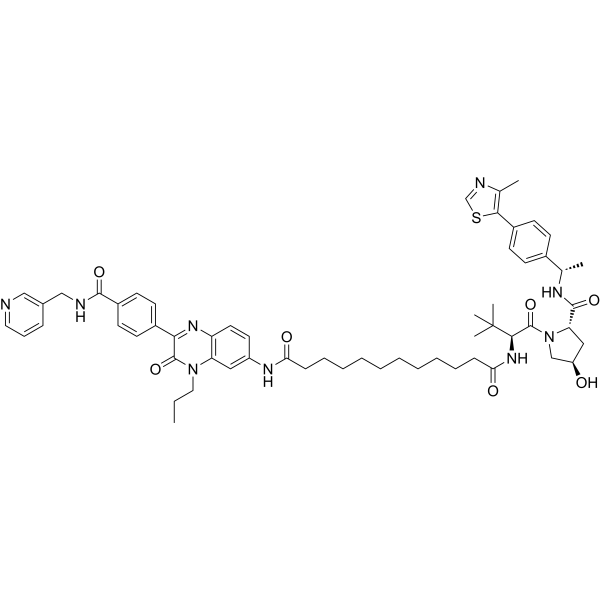
PROTAC NAMPT Degrader-30 is a PROTAC degrader targeting nicotinamide phosphoribosyltransferase (NAMPT), with a DC50 of 8.4 nM in A2780 cells. PROTAC NAMPT Degrader-30 binds to the VHL E3 ligase and forms a ternary complex with NAMPT, which induces ubiquitination and subsequent proteasomal degradation of NAMPT, thereby inhibiting the enzymatic activity of NAMPT. PROTAC NAMPT Degrader-30 reduces intracellular NAD + levels and suppresses tumor cell proliferation. PROTAC NAMPT Degrader-30 exhibits a fluorescence turn-on response to the NAMPT protein, enabling real-time visualization of the NAMPT degradation process in living cells. PROTAC NAMPT Degrader-30 is applicable for research on ovarian cancer .
loading...
    loading...
Cat. No.: HY-153575
Target:  

PROTACs Bacterial

Research Areas:  

Infection

BacPROTAC-1 is a BacPROTAC degrader that induces the degradation of the target protein mSA by recruiting ClpC/ClpC1. BacPROTAC-1 binds to mSA, Bacillus subtilis ClpCNTD and Mycobacterium smegmatis ClpC1NTD with Kd values of 3.9, 2.8 and 0.69 μM, respectively. BacPROTAC-1 forms a ternary complex between the substrate and ClpC, promotes ClpC reassembly and activation, and induces ATP-dependent degradation of mSA and mSA fusion model substrates via the ClpCP or ClpC1P1P2 protease system. BacPROTAC-1 can be used in studies on bacterial targeted protein degradation, bacterial protein homeostasis and antibacterial target discovery .
loading...
    loading...
Cat. No.: HY-158405
CAS No.: 2923674-83-1
Synonyms: MAV-104
Target:  

14-3-3 Protein SARS-CoV

Research Areas:  

Infection Inflammation/Immunology

PAV-104 (MAV-104) is a host-targeted, pan-respiratory viral assembly inhibitor. PAV-104 targets a small subset of the host protein 14-3-3 within a transient multi-protein complex. PAV-104 inhibits SARS-CoV-2 replication by blocking post-entry viral assembly/budding through interaction with viral nucleocapsid (N) protein and interference with its oligomerization. PAV-104 is orally active in cats and shows favorable pharmacokinetic properties in rats. PAV-104 can be used for the study of COVID-19 and other respiratory viral infections, including Feline Infectious Peritonitis (FIP) .
loading...
    loading...

