398 Results for "

ATP binding

" in MedChemExpress (MCE) Product Catalog:
Products (398)

398 Results for "ATP binding" in MCE Product Catalog:

Cat. No.: HY-P80772A
Synonyms: p-pg; PGP; ABCB1; MDR1; PGY1; Multidrug resistance protein 1; ATP-binding cassette sub-family B member 1; P-glycoprotein 1; CD antigen CD243

Host:  

Rabbit

Application:  

WB, IHC-P

Reactivity:  

Human

loading...
    loading...
Cat. No.: HY-182037
Research Areas:  

Cancer

Multi-target kinase-IN-9 is a multi-target enzyme inhibitor with antiproliferative and antiangiogenic activities, and exhibits remarkable selectivity against hepatocellular carcinoma cells. By broadly binding to the active sites or ATP-binding regions of multiple key enzymes including DNA polymerase β, Pyruvate Kinase M2 (PKM2), Multi-target kinase-IN-9 comprehensively disrupts DNA repair and replication, glycolysis, chromatin dynamics and transcriptional programs, and blocks the self-renewal of cancer stem cells. Multi-target kinase-IN-9 induces genomic instability, lysosomal dysfunction and autophagic flux impairment, thereby triggering tumor cell death, effectively inhibiting tumor proliferation, invasion, metastasis and angiogenesis, and significantly reducing tumor volume in xenograft models. Multi-target kinase-IN-9 is applicable to hepatocellular carcinoma-related research .
loading...
    loading...
Cat. No.: HY-182383
CAS No.: 1209002-42-5
Target:  

CDK Apoptosis

Research Areas:  

Cancer

VMY-1-101 is a fluorescent cyclin-dependent kinase (CDK) inhibitor, with an excitation of 410 nm and emission of 512 nm. VMY-1-101 competitively inhibits ATP binding to CDKs. VMY-1-101 induces G2/M cell cycle arrest in human breast cancer cells. VMY-1-101 induces modest apoptosis in human breast cancer cells. VMY-1-101 blocks proliferation of human breast cancer cells, including multidrug resistance-positive cells, and is not a substrate for p-glycoprotein. VMY-1-101 localizes to the cytoplasm of human breast cancer cells. VMY-1-101 shows increased binding to human breast cancer tissue compared to fluorophore alone. VMY-1-101 can be used for the research of breast cancer .
loading...
    loading...
Cat. No.: HY-106005R
CAS No.: 1314883-11-8
Research Areas:  

Infection

MMV390048 (Standard) is the analytical standard of MMV390048 (HY-106005). This product is intended for research and analytical applications. MMV390048 is a representative of a new chemical class of Plasmodium PI4K inhibitor (Kdapp=0.3 μM). MMV390048 binds to the ATP binding site of Plasmodium PI4K and does not bind to other P. falciparum and human kinases apart from human PIP4K2C, thus alleviating potential kinase-mediated safety concerns. MMV390048 is an antimalarial agent .
loading...
    loading...
Cat. No.: HY-11079R
CAS No.: 944261-79-4
A-803467 (Standard) is the analytical standard of A-803467 (HY-11079). This product is intended for research and analytical applications. A-803467 is a potent and selective tetrodotoxin-resistant Nav1.8 sodium channel blocker (IC50=8 nM). A-803467 has shown significant anti-nociception in neuropathic and inflammatory pain models. A-803467 enhances the chemosensitivity of conventional anticancer agents through interaction with the ATP-binding cassette subfamily G member 2 (ABCG2) transporter .
loading...
    loading...
Cat. No.: HY-111930R
CAS No.: 331467-03-9
Research Areas:  

Cancer

5-Iodo-indirubin-3'-monoxime (Standard) is the analytical standard of 5-Iodo-indirubin-3'-monoxime (HY-111930). This product is intended for research and analytical applications. 5-Iodo-indirubin-3'-monoxime is a potent GSK-3β, CDK5/P25 and CDK1/cyclin B inhibitor, competing with ATP for binding to the catalytic site of the Kinase, with IC50s of 9, 20 and 25 nM, respectively .
loading...
    loading...
Cat. No.: HY-173432
CAS No.: 3111845-07-6
Target:  

ACSL Family Ferroptosis

Research Areas:  

Neurological Disease Cancer

LIBX-A401 is a selective long-chain acyl-CoA synthetase 4 (ACSL4) inhibitor with a human IC50 values of 0.38 μM and a Kd of 0.72 μM. LIBX-A401 binds to ACSL4 in an ATP-dependent manner, stabilizes the C-terminal domain, alters the fatty acid gate region, and interacts with residues A329 and Q302 within the fatty acid binding site. LIBX-A401 exhibits anti-ferroptosis properties in cells. LIBX-A401 can be used for the researches of cancer and parkinson's disease .
loading...
    loading...
Cat. No.: HY-DY1043
CAS No.: 730931-46-1
ER-Tracker dye is a derivative of BODIPY series dyes coupled with Glibenclamide (HY-15206) , highly selective binding to the endoplasmic reticulum, non-toxic to cells at low concentrations, this type of dye is an environmentally sensitive probe, and formaldehyde treatment can still retain part of the fluorescence, with high fluorescence life, good extinction coefficient and other characteristics. Glibenclamide is an atp-dependent K + channel blocker (Kir6, KATP) and CFTR Cl-channel blocker that binds in the endoplasmic reticulum. ER-Tracker is not suitable for staining cells after fixation .
Solvent and concentration: DMSO: 1 mM
loading...
    loading...
Cat. No.: HY-N11784
CAS No.: 99694-86-7
Triptolidenol, a traditional Chinese medicine, is an epoxy diterpene lactone that can be isolated from Tripterygium wilfordii. Triptolidenol has anti-inflammatory and anticancer activities. Triptolidenol significantly inhibits tumor cell proliferation and migration, arrests cell cycle arrest at S phase and induces apoptosis by activating the cytochrome c/caspase cascade signaling pathway. Triptolidenol disrupts NF-κB/COX-2 pathway by inhibiting IKKβ at ATP-binding sites. Triptolidenol can be used for chronic nephritis and kidney cancer like clear cell renal cell carcinoma (ccRCC) research .
loading...
    loading...
Cat. No.: HY-W014118
CAS No.: 101-86-0
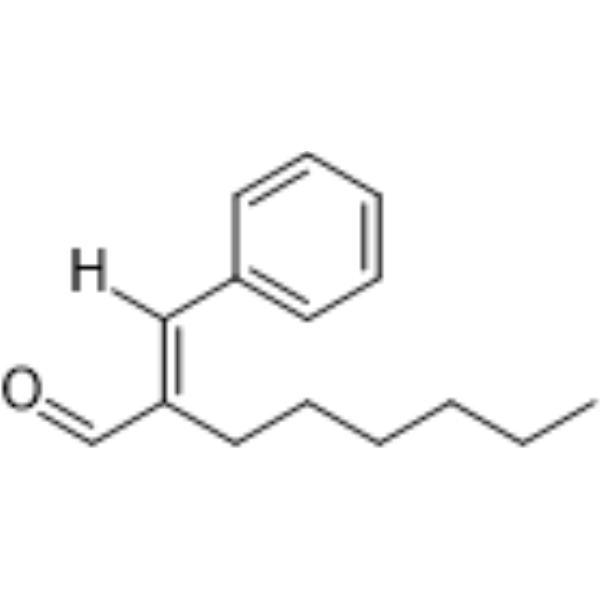
α-Hexylcinnamaldehyde is an O-acetyltransferase (OAT) inhibitor. α-Hexylcinnamaldehyde inhibits OAT-mediated bioactivation of nitroarene mutagens, exerts antimutagenic activity through demutagenic and bioantimutagenic mechanisms, and interferes with ATP-binding cassette (ABC) transporter function to reduce substrate efflux. α-Hexylcinnamaldehyde alters membrane permeability, fluidizes phospholipid membranes, exerts antioxidant effects, and enhances the antiproliferative effect of Doxorubicin on human cancer cells. α-Hexylcinnamaldehyde can be used in the research of colorectal adenocarcinoma, T-cell leukemia, and multidrug-resistant cancers .
loading...
    loading...
Cat. No.: HY-P83773
Synonyms: ABC 35 antibody ABC35 antibody ABCC 7 antibody ABCC7 antibody ATP binding cassette sub family C member 7 antibody; cAMP dependent chloride channel antibody; cAMP-dependent chloride channel antibody; CF antibody; CFTR antibody; CFTR/MRP antibody; CFTR_HUMAN antibody; Channel conductance controlling ATPase antibody; Channel conductance-controlling ATPase antibody; Cystic fibrosis transmembrane conductance regulator (ATP-binding cassette sub family C, member 7) antibody; Cystic fibrosis transmembrane conductance regulator antibody; Cystic Fibrosis Transmembrane Regulator antibody; dJ760C5.1 antibody; MRP 7 antibody; MRP7 antibody; TNR CFTR antibody

Host:  

Rabbit

Application:  

WB, IHC-P, IP, IF-Tissue

Reactivity:  

Human

loading...
    loading...
Cat. No.: HY-159520
CAS No.: 2731294-23-6
Synonyms: Ofirnoflast; HT-6184
Ofirnoflastum (Ofirnoflast) is an orally active first-in-class allosteric NEK7 inhibitor with an IC50 of 46 nM. Ofirnoflastum binds an allosteric site adjacent to NEK7’s ATP-binding pocket, induces conformational shifts, disrupts NEK7-NLRP3 binding, blocks NLRP3 inflammasome assembly, spares NEK7’s physiological functions, and suppresses caspase-1, caspase-8, NF-κB, and TNF activity. Ofirnoflastum reduces pro-inflammatory cytokine production, suppresses ASC specks, IL-1β release, pyroptotic cell death, and leukemic burden, induces apoptosis and erythroid differentiation, restores hematopoiesis, and improves outcomes in colitis models. Ofirnoflastum can be used for the research of myelodysplastic syndromes, chronic myelomonocytic leukemia, and acute myeloid leukemia .
loading...
    loading...
Cat. No.: HY-182281
Target:  

FLT3 STAT Akt ERK Apoptosis

Research Areas:  

Cancer

FLT3-IN-41 is a highly potent FLT3 inhibitor. The IC50 values of FLT3-IN-41 against human FLT3-ITD and FLT3-WT are 3.16 nM and 294.7 nM, respectively. By binding to the ATP-binding pockets of FLT3-ITD and FLT3-WT and forming hydrogen bonds with hinge region residues and Phe830, FLT3-IN-41 inhibits the STAT5, Akt and Erk signaling pathways. FLT3-IN-41 induces G2/M phase arrest and promotes apoptosis in FLT3-ITD-positive acute myeloid leukemia cells, exhibiting significant antiproliferative activity. FLT3-IN-41 serves as a valuable tool for the study of acute myeloid leukemia .
loading...
    loading...
Cat. No.: HY-107779R
CAS No.: 1392429-79-6
Target:  

Reference Standards Raf

Research Areas:  

Cancer

BI-882370 (Standard) is the analytical standard of BI-882370 (HY-107779). This product is intended for research and analytical applications. BI-882370 is a potent and selective RAF Kinase inhibitor that binds to the ATP binding site of the Kinase positioned in the DFG-out (inactive) conformation of the BRAF Kinase. BI-882370 (BI 882370) inhibits the oncogenic BRAFV600E-mutant, the WT BRAF and CRAF Kinases with IC50s of 0.4, 0.8, and 0.6 nM, respectively. BI-882370 also inhibits SRC family Kinases .
loading...
    loading...
Cat. No.: HY-108662R
CAS No.: 56583-49-4
Synonyms: 2,2'-Pyridylisatogen tosylate (Standard)
PIT (Standard) is the analytical standard of PIT (HY-108662). This product is intended for research and analytical applications. PIT (2,2'-Pyridylisatogen tosylate) is a selective and non-competitive antagonist of P2Y1 receptor with an IC50 value of 0.14 μM for human P2Y1 receptor. PIT antagonizes P2Y1 receptor signaling without affecting nucleotide binding. PIT is an irreversible antagonist of responses to ATP at metabotropic purinoceptors (of the P2Y family) in some smooth muscles. PIT can be used for the research of chronic bronchitis and asthma .
loading...
    loading...
Cat. No.: HY-122658
CAS No.: 373370-73-1
Synonyms: MB-1
Research Areas:  

Metabolic Disease

MitoBloCK-1 (MB-1) is an inhibitor that blocks the import of substrates that use the TIM22 import pathway. MitoBloCK-1 inhibits import by preventing binding of substrate to tim9/10 complex to the substrate, thus the substrate failed to be reach the TIM22 translocon. MitoBloCK-1 inhibits protein import of TIM22 substrates into mitochondria. MitoBloCK-1 attenuates the import of the carrier proteins including the ADP/ATP and phosphate carriers. MitoBloCK-1 also inhibits the import of an additional carrier protein, PiC, and the outer membrane protein Tom40 .
loading...
    loading...
Cat. No.: HY-164399
CAS No.: 1799802-29-1
Target:  

HSP EGFR CDK Akt

Research Areas:  

Cancer

SST0116CL1 is a HSP90 inhibitor (IC50: 0.21 μM). SST0116CL1 binds to the ATP binding pocket of Hsp90, and interferes with Hsp90 chaperone function thus resulting in client protein (EGFR, CDK4 and AKT) degradation. SST0116CL1 induces degradation of Her2 in BT-474 cell (IC50: 0.2 μM). SST0116CL1 has antiproliferative activity and inhibits tumor growth. SST0116CL1 can be used for the study of leukemia, gastric and ovarian carcinoma .
loading...
    loading...
Cat. No.: HY-DY1026
ER-Tracker dye is a derivative of BODIPY series dyes coupled with Glibenclamide (HY-15206) , highly selective binding to the endoplasmic reticulum, non-toxic to cells at low concentrations, this type of dye is an environmentally sensitive probe, and formaldehyde treatment can still retain part of the fluorescence, with high fluorescence life, good extinction coefficient and other characteristics. Glibenclamide is an atp-dependent K + channel blocker (Kir6, KATP) and CFTR Cl-channel blocker that binds in the endoplasmic reticulum. ER-Tracker is not suitable for staining cells after fixation. Ex/Em=587/615 nm .
Solvent and concentration: DMSO: 1 mM
loading...
    loading...
Cat. No.: HY-P85599
Synonyms: ATP dependent DNA helicase II 80 kDa subunit; ATP dependent DNA helicase II 86 Kd subunit; ATP dependent DNA helicase II; ATP-dependent DNA helicase 2 subunit 2; ATP-dependent DNA helicase II 80 kDa subunit; CTC box binding factor 85 kDa; CTC box-binding factor 85 kDa subunit; CTC85; CTCBF; DNA repair protein XRCC5; Double strand break rejoining; FLJ39089; G22P2; KARP 1; KARP1; Ku 80; Ku autoantigen 80kDa; Ku80; Ku86; Ku86 autoantigen related protein 1; KUB 2; KUB2; Lupus Ku autoantigen protein p86; NFIV; Nuclear factor IV; Thyroid lupus autoantigen; Thyroid-lupus autoantigen; TLAA; X ray repair complementing defective repair in Chinese hamster cells 5; double strand break rejoining; X-ray repair complementing defective repair in Chinese hamster cells 5; double-strand-break rejoining; X-ray repair cross-complementing protein 5; Xray repair complementing defective repair in Chinese hamster cells 5; XRCC 5; XRCC5; XRCC5_HUMAN.

Host:  

Mouse

Application:  

WB, ICC/IF, IP

Reactivity:  

Human, Monkey

loading...
    loading...
Cat. No.: HY-116755
CAS No.: 55837-29-1
Synonyms: CR 605
Research Areas:  

Neurological Disease

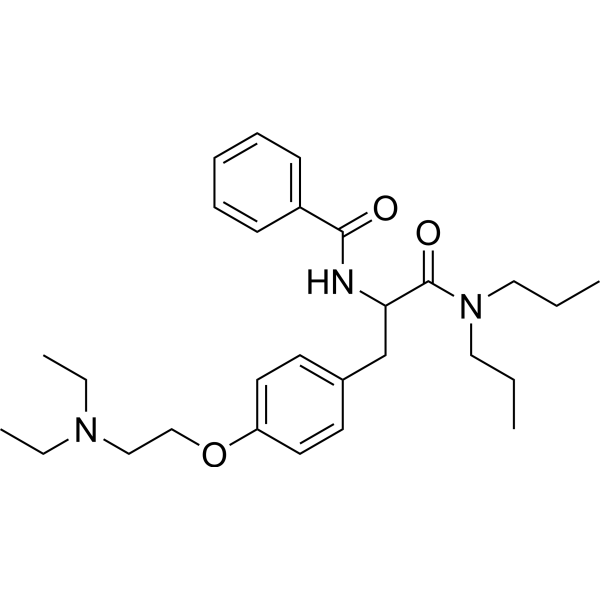
Tiropramide (CR 605) is a tyrosine derivative with antispastic properties. Tiropramide hydrochloride inhibits phosphodiesterase activity involved in cAMP catabolism in rabbit colon homogenates. Tiropramide relaxes smooth muscle in rabbit isolated colon. Tiropramide can be used for the research of irritable colon and biliary dyskinesia .
loading...
    loading...

