368 Results for "

limb perfusion method

" in MedChemExpress (MCE) Product Catalog:
Products (368)

368 Results for "limb perfusion method" in MCE Product Catalog:

Cat. No.: HY-DY1119
CAS No.: 186205-37-8
Target:  

Fluorescent Dye

Research Areas:  

Others

Cy2 Iodide (solution) is a CY dye. CY, short for Cyanine, is a compound consisting of two nitrogen atoms connected by an odd number of methyl units. Cyanine compounds have the characteristics of long wavelength, adjustable absorption and emission, high extinction coefficient, good water solubility and relatively simple synthesis . CY dyes are of en used for the labeling of proteins, antibodies and small molecular compounds. For the labeling of protein antibodies, the combination can be completed through a simple mixing reaction. Below, we introduce the labeling method of protein antibody labeling, which has certain reference significance .
Solvent and concentration: DMSO: 10 mM
loading...
    loading...
Cat. No.: HY-E70289
Synonyms: Bovin B4GALT1 (Y289L)
Target:  

Glycosyltransferase

Research Areas:  

Cancer

Bovin beta-1,4-galactosyltransferase 1 (Y289L) (Bovin B4GALT1 (Y289L)) is a mutated form of bovine-derived galactosyltransferase with a mutation at the Y289L genetic site. Bovin beta-1,4-galactosyltransferase 1 can label O-GlcNAcylated proteins with an N-azidoacetylgalactosamine (GalNAz) group. This labeling method allows for the specific, unbiased, and global labeling of O-GlcNAcylated proteins. After labeling, the appended azide group can react with a wide variety of alkyne-modified chemical probes, facilitating multiple downstream analyses .
loading...
    loading...
Cat. No.: HY-112624K
CAS No.: 9004-54-0
Synonyms: Dextran 5; Dextran D5; Dextran T5(MW 4500-5500)
Dextran T5 (MW 5,000) is a sulfated polysaccharide anti-apoptotic and autophagic agent. Dextran T5 (MW 5,000) has sulfated groups and interacts with cell membranes by mimicking endogenous glycosaminoglycans, inhibiting the mitochondrial apoptotic pathway and delaying DNA fragmentation to exert anti-apoptotic activity. Dextran T5 (MW 5,000) also promotes the conversion of LC3-I to LC3-II and the formation of autophagosomes to activate the autophagic pathway. Dextran T5 (MW 5,000) can prolong the survival cycle of CHO cells and increase the production of recombinant erythropoietin (EPO). The Dextran series of compounds are also natural polysaccharide drug carriers that can be connected to drugs through covalent bonding methods such as ester bonds, amide bonds or click chemistry, or self-assembled to form carriers such as nanoparticles and hydrogels. Dextran is biodegradable and biocompatible, and can achieve targeted delivery and controlled release of drugs. Dextran derivatives can prolong drug half-life, increase local concentration and reduce immune clearance activity. The Dextran series of compounds are also natural polysaccharide drug carriers that can be connected to drugs through covalent bonding methods such as ester bonds, amide bonds or click chemistry, or self-assembled to form carriers such as nanoparticles and hydrogels. Dextran is biodegradable and biocompatible, and can achieve targeted delivery and controlled release of drugs. Dextran derivatives can prolong the half-life of drugs, increase local concentrations, and reduce the activity of immune clearance .
loading...
    loading...
Cat. No.: HY-183764
COX-2/5-LOX-IN-8 is an orally active dual COX-2/5-LOX inhibitor, with an IC50 of 6.30 μM against sheep-derived COX-2 and an IC50 of 8.09 μM against 5-LOX. COX-2/5-LOX-IN-8 acts as a membrane stabilizer that stabilizes erythrocyte membranes against hypotonicity-induced hemolysis. COX-2/5-LOX-IN-8 functions as a protein stabilizer that inhibits heat-induced denaturation of bovine serum albumin. COX-2/5-LOX-IN-8 reduces paw swelling, improves hind limb weight-bearing function, decreases serum levels of pro-inflammatory cytokines (TNF-α, IL-1β, IL-6, CRP), and lowers serum levels of cartilage degradation biomarkers (COMP, MMP-3, CTX-II). COX-2/5-LOX-IN-8 can be used in the research of osteoarthritis .
loading...
    loading...
Cat. No.: HY-173390
CAS No.: 2059099-03-3
Research Areas:  

Others

BCN-E-BCN is a strained cycloalkyne-based probe designed for detecting protein sulfenylation, the primary intermediate in protein oxidation. This structurally constrained cycloalkyne compound specifically recognizes sulfenic acid groups formed during thiol oxidation, while remaining completely unreactive toward other oxidative states (such as free thiols, sulfinic, or sulfonic acid groups). Researchers can leverage its efficient conjugation with azide-bearing tags through copper-free click chemistry to amplify detection signals. Compared to conventional detection methods, BCN-E-BCN demonstrates superior reaction kinetics and enhanced sensitivity. With these advantages, BCN-E-BCN shows great promise as an effective tool for protein oxidation research .
loading...
    loading...
Cat. No.: HY-W010361
CAS No.: 10581-12-1
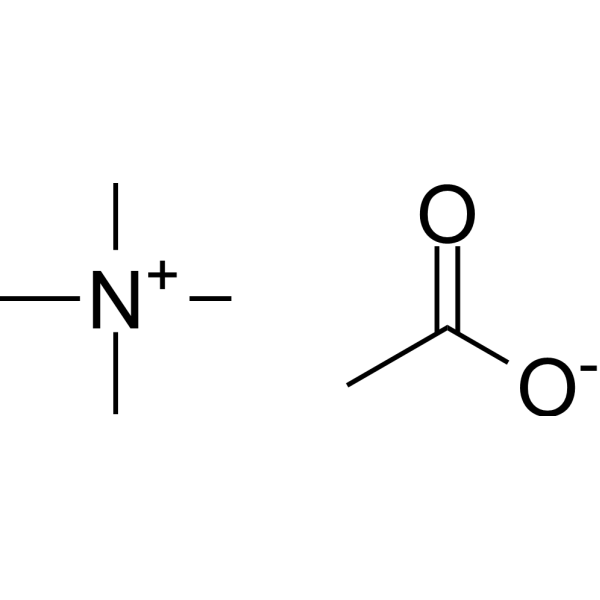
Tetramethylammonium acetate is an organic compound commonly used as a phase transfer catalyst in organic synthesis reactions, especially those involving charged species or polar reagents. It can facilitate the transfer of reactants between two immiscible phases, such as water and organic solvents, by forming stable ion pairs. Additionally, Tetramethylammonium acetate has been used to prepare a variety of organic compounds, including esters, amides, and carboxylic acids. Due to its unique physicochemical properties, it has also been investigated for its potential use in developing new materials such as ionic liquids and liquid crystals. "x" in the formula represents the number of water molecules in the crystal structure, which can vary depending on the preparation method.
loading...
    loading...
Cat. No.: HY-178114
CAS No.: 3065966-31-3
Research Areas:  

Cancer

SKLB-0124 is a selective PRMT6 degrader based on a hydrophobic labeling (HyT) method. SKLB-0124 is a selective PRMT6 degrader with DC50s of 15.4 μM and a 16.4 μM in HCC827 and MDA-MB-435 cells. SKLB-0124 does not degrade PRMT1 or PRMT8. SKLB-0124 exhibits an IC50 on PRMT6 of 1.6 μM. SKLB-0124 induces proteasome dependent degradation of PRMT6 and significantly inhibits the proliferation. SKLB-0124 effectively induces apoptosis and cell cycle arrest. SKLB-0124 can be used for the studies of lung cancer and breast cancer .
loading...
    loading...
Cat. No.: HY-184634
OA Coated Fe3O4 Nanoparticles (Oleic acid-modified iron(III) oxide nanoparticles) were prepared using a high-temperature pyrolysis method. Oleic acid was added as a surfactant to a solution containing an iron precursor. Oleic acid not only helps control the growth of nanoparticles but also forms a stable coating on the particle surface. The solution containing the iron precursor and oleic acid was heated to a high temperature, typically around 300°C, to promote the thermal decomposition of the iron precursor. At high temperatures, the iron precursor decomposes to produce iron atoms, which aggregate to form magnetic nanoparticles. During pyrolysis, the iron nanoparticles react with oxygen in the air to form iron(III) oxide (Fe3O4).
loading...
    loading...
Cat. No.: HY-L0115V
10,091 compounds

ASINEX has elaborated a library of diverse macrocycles using an effective tool box of synthetic methods. The resulting scaffolds are novel, tremendously diverse, medchem-relevant, macrocyclic frameworks.

Macrocyles tend to be larger than traditional screening molecules which make them perfect discovery tools for targets with shallow or extended binding sites. At the same time, their unique character based on restricted flexibility and ability to form intra-molecular hydrogen bonds allows for design approaches effectively optimizing properties such asaqueous solubility and membrane permeability. Many of these macrocycles have been tested for aqueous and DMSO solubility with cut-offs applied at 10 mM in DMSO and 50 µM in PBS (pH 7.4) followed by PAMPA permeability assay.

Cat. No.: HY-117845
CAS No.: 122535-63-1
Synonyms: LL-E19085α
Citreamicin alpha (LL-E 19085-alpha) is an antibiotic whose in vitro antimicrobial activity against 429 clinical isolates of Gram-positive cocci has been tested by the agar dilution method. These microorganisms included 313 strains of Staphylococci and 116 strains of Streptococci. The in vitro activity of Citreamicin alpha was compared with that of ampicillin, amoxicillin, ceftriaxone, erythromycin, and vancomycin. For Staphylococci, the MIC values of Citreamicin alpha ranged from 0.12-4.0 μg/ml, and for Streptococcus pyogenes of the genus Streptococcus, it was 0.03-0.12 μg/ml. However, enterococci were relatively resistant, requiring 2.0 μg/ml of the agent to inhibit 64% of the 62 tested strains. The in vitro activity of this antibiotic was much better than that of ampicillin, amoxicillin, ceftriaxone, and erythromycin, but comparable or slightly inferior to that of vancomycin.
loading...
    loading...
Cat. No.: HY-135752
CAS No.: 99827-19-7
Target:  

Bacterial

Research Areas:  

Infection

Carbendazim mixture with flusilazole is a fungicide used to control sooty mold caused by Botrytis narcissicola. The disease is the most common foliar disease of daffodils (Narcissus cultivars) in the UK and causes significant losses in bulb and flower production. Carbendazim mixture with flusilazole was found to be effective in reducing lesion size and significantly reducing symptoms of secondary sooty mold after spraying when used in combination with several other fungicides. In field trials in Cambridgeshire and Lincolnshire, a spraying program using this fungicide mixture was effective in controlling sooty mold. In addition, alternating four to six sprays using two or three fungicides with different modes of action not only reduced disease damage but also increased bulb production. The study discusses the selection of appropriate fungicides and control methods that may reduce the number of spraying applications.
loading...
    loading...
Cat. No.: HY-N1442R
CAS No.: 633-96-5
Synonyms: Orange II (Standard); D&C Orange NO. 4 (Standard)
Acid orange 7 (Standard) is the analytical standard of Acid orange 7 (HY-1442). This product is intended for research and analytical applications. Acid Orange 7 (Orange II; D&C Orange NO. 4) is an azo dye widely used in the textile, food and cosmetic industries. Acid Orange 7 is mainly used as a colorant by combining with fibers and other substances through azo bonds. Acid Orange 7 has a maximum absorption wavelength at 484-485 nm, and the concentration is measured using a UV-visible spectrophotometer. Acid Orange 7 is difficult to degrade and has a certain degree of toxicity. Acid Orange 7 is often used to study various sewage treatment technologies and photocatalytic degradation reactions, and to evaluate the removal effects of different treatment methods on organic pollutants .
loading...
    loading...
Cat. No.: HY-W750212
CAS No.: 2734676-29-8
Synonyms: Orange II-13C6; D&C Orange NO. 4-13C6
Acid Orange 7- 13C6 (Orange II- 13C6) is the 13C-labeled Acid orange 7 (HY-N1442). Acid Orange 7 (Orange II; D&C Orange NO. 4) is an azo dye widely used in the textile, food and cosmetic industries. Acid Orange 7 is mainly used as a colorant by combining with fibers and other substances through azo bonds. Acid Orange 7 has a maximum absorption wavelength at 484-485 nm, and the concentration is measured using a UV-visible spectrophotometer. Acid Orange 7 is difficult to degrade and has a certain degree of toxicity. It is often used to study various sewage treatment technologies and photocatalytic degradation reactions, and to evaluate the removal effects of different treatment methods on organic pollutants .
loading...
    loading...
Cat. No.: HY-Y1219C
CAS No.: 112926-00-8
Silica gel, high-purity grade, 220-440 mesh is a low-density, high-surface-area, high-purity inert additive that can be used to prepare chromatographic column sieve plates based on the sol-gel method. Silica gel, high-purity grade prevents DNA degradation by absorbing water from plant leaves, and is suitable for the preservation of field-collected samples for subsequent DNA extraction, restriction endonuclease digestion, PCR amplification and gene sequencing. It can also be reused after being saturated with water. Silica gel, high-purity grade can provide a non-toxic, inert aquatic environment for embedded cells, allowing nutrients, oxygen and metabolic waste to diffuse freely and blocking external pollution, thereby maintaining the activity of fibroblasts and epithelial cells .
loading...
    loading...
Cat. No.: HY-Y1219D
CAS No.: 112926-00-8
Silica gel, high-purity grade, 35-70 mesh is a low-density, high-surface-area, high-purity inert additive that can be used to prepare chromatographic column sieve plates based on the sol-gel method. Silica gel, high-purity grade prevents DNA degradation by absorbing water from plant leaves, and is suitable for the preservation of field-collected samples for subsequent DNA extraction, restriction endonuclease digestion, PCR amplification and gene sequencing. It can also be reused after being saturated with water. Silica gel, high-purity grade can provide a non-toxic, inert aquatic environment for embedded cells, allowing nutrients, oxygen and metabolic waste to diffuse freely and blocking external pollution, thereby maintaining the activity of fibroblasts and epithelial cells .
loading...
    loading...
Cat. No.: HY-Y1219E
CAS No.: 112926-00-8
Silica gel, high-purity grade, 130-270 mesh is a low-density, high-surface-area, high-purity inert additive that can be used to prepare chromatographic column sieve plates based on the sol-gel method. Silica gel, high-purity grade prevents DNA degradation by absorbing water from plant leaves, and is suitable for the preservation of field-collected samples for subsequent DNA extraction, restriction endonuclease digestion, PCR amplification and gene sequencing. It can also be reused after being saturated with water. Silica gel, high-purity grade can provide a non-toxic, inert aquatic environment for embedded cells, allowing nutrients, oxygen and metabolic waste to diffuse freely and blocking external pollution, thereby maintaining the activity of fibroblasts and epithelial cells .
loading...
    loading...
Cat. No.: HY-Y1219H
CAS No.: 112926-00-8
Silica gel, high-purity grade, 200-400 mesh is a low-density, high-surface-area, high-purity inert additive that can be used to prepare chromatographic column sieve plates based on the sol-gel method. Silica gel, high-purity grade prevents DNA degradation by absorbing water from plant leaves, and is suitable for the preservation of field-collected samples for subsequent DNA extraction, restriction endonuclease digestion, PCR amplification and gene sequencing. It can also be reused after being saturated with water. Silica gel, high-purity grade can provide a non-toxic, inert aquatic environment for embedded cells, allowing nutrients, oxygen and metabolic waste to diffuse freely and blocking external pollution, thereby maintaining the activity of fibroblasts and epithelial cells .
loading...
    loading...
Cat. No.: HY-Y1219I
CAS No.: 112926-00-8
Silica gel, high-purity grade, 70-230 mesh is a low-density, high-surface-area, high-purity inert additive that can be used to prepare chromatographic column sieve plates based on the sol-gel method. Silica gel, high-purity grade prevents DNA degradation by absorbing water from plant leaves, and is suitable for the preservation of field-collected samples for subsequent DNA extraction, restriction endonuclease digestion, PCR amplification and gene sequencing. It can also be reused after being saturated with water. Silica gel, high-purity grade can provide a non-toxic, inert aquatic environment for embedded cells, allowing nutrients, oxygen and metabolic waste to diffuse freely and blocking external pollution, thereby maintaining the activity of fibroblasts and epithelial cells .
loading...
    loading...
Cat. No.: HY-L198
140 compounds

Unlike the 20 natural amino acids commonly found within living organisms, non-natural amino acids are synthesized through chemical or biosynthetic methods, thereby being endowed with unique chemical properties or biological activities. In drug development, these amino acids can be utilized to design novel pharmaceutical molecules that may exhibit superior pharmacological characteristics, such as increased selectivity, improved pharmacokinetic profiles, or reduced toxicity. In biomedical research, uon-natural amino acids can act as biological markers or probes for investigating biological processes like cell signaling, protein conformation, and protein-protein interactions. In addition, non-natural amino acids can also be used in the field of agriculture to develop new pesticides, plant growth regulators and so on.

Cat. No.: HY-L0107V
13,236 compounds
Natural products are small molecules produced naturally by any organism including primary and secondary metabolites. Nowadays, new drugs based on Natural products are successfully applied to treat tumors, viral and bacterial diseases, and nervous disorders. In response to the current drug discovery demand, we created this natural product-like compound library with 13,236 in-stock synthetic compounds similar to natural ones. The library was designed by 2D fingerprint similarity filtering, chemical descriptor-based and natural-likeness scoring selection. These compounds are useful tools for high throughput screening (HTS) and high content screening (HCS) programs.

