383 Results for "

cortex

" in MedChemExpress (MCE) Product Catalog:
Products (383)

383 Results for "cortex" in MCE Product Catalog:

Cat. No.: HY-183101
CAS No.: 2163787-60-6
Target:  

iGluR NADPH Oxidase

Research Areas:  

Neurological Disease

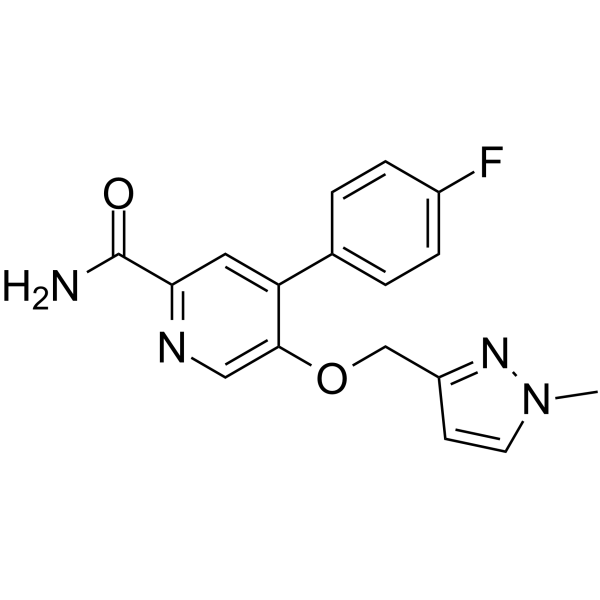
AMPAR modulator-12 is a blood-brain barrier-permeable AMPAR positive allosteric modulator. AMPAR modulator-12 reduces NOX-1 expression, enhances AMPAR-mediated currents, promotes excitatory postsynaptic transmission and restores AMPAR function. AMPAR modulator-12 enhances excitatory and inhibitory synaptic transmission, reduces burst firing in the lateral habenula after withdrawal, and produces rapid and sustained antidepressant-like effects. AMPAR modulator-12 is applicable for the research of depression .
loading...
    loading...
Cat. No.: HY-A0095AS
CAS No.: 2748630-46-6
Synonyms: BIMT-17-d4 hydrochloride; BIMT-17BS-d4 hydrochloride
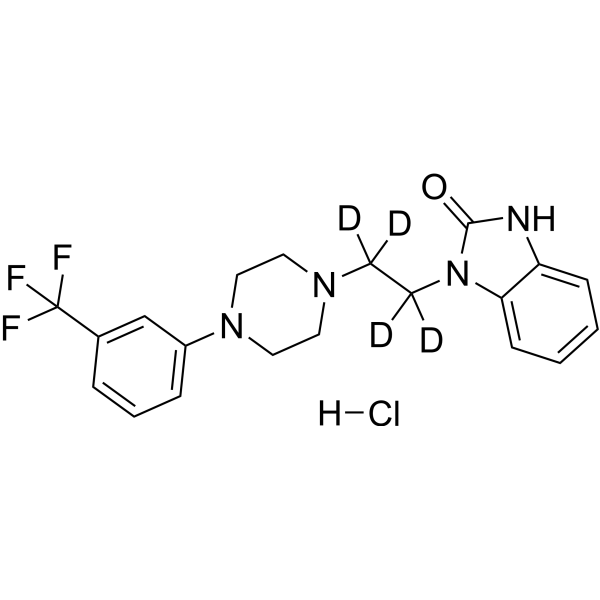
Flibanserin-d4 (BIMT-17-d4; BIMT-17BS-d4) hydrochloride is the d4-labeled Flibanserin hydrochloride (HY-A0095B). Flibanserin hydrochloride is an orally active serotonin 5-HT1A receptor agonist and 5-HT2A receptor antagonist with Ki values of 1 nM and 49 nM, respectively. Flibanserin hydrochloride binds to dopamine D4 receptors with an Ki value of 4-24 nM. Flibanserin hydrochloride shows anti-depression and anti-anxiety effect, can be used to hypoactive sexual desire disorder (HSDD) research - .
loading...
    loading...
Cat. No.: HY-A0095B
CAS No.: 147359-76-0
Synonyms: BIMT-17 hydrochloride; BIMT-17BS hydrochloride
Flibanserin (BIMT-17) hydrochloride is an orally active serotonin 5-HT1A receptor agonist and 5-HT2A receptor antagonist with Ki values of 1 nM and 49 nM, respectively. Flibanserin hydrochloride binds to dopamine D4 receptors with an Ki value of 4-24 nM. Flibanserin hydrochloride shows anti-depression and anti-anxiety effect, can be used to hypoactive sexual desire disorder (HSDD) research - .
loading...
    loading...
Cat. No.: HY-A0095C
CAS No.: 1231148-54-1
Synonyms: BIMT-17 salicylate; BIMT-17BS salicylate
Flibanserin (BIMT-17) salicylate is an orally active serotonin 5-HT1A receptor agonist and 5-HT2A receptor antagonist with Ki values of 1 nM and 49 nM, respectively. Flibanserin salicylate binds to dopamine D4 receptors with an Ki value of 4-24 nM. Flibanserin salicylate shows anti-depression and anti-anxiety effect, can be used to hypoactive sexual desire disorder (HSDD) research - .
loading...
    loading...
Cat. No.: HY-A0095R
CAS No.: 167933-07-5
Synonyms: BIMT-17 (Standard); BIMT-17BS (Standard)
Flibanserin (Standard) is the analytical standard of Flibanserin. This product is intended for research and analytical applications. Flibanserin (BIMT-17; BIMT-17BS) is an orally active serotonin 5-HT1A receptor agonist and 5-HT2A receptor antagonist with Ki values of 1 nM and 49 nM, respectively. Flibanserin binds to dopamine D4 receptors with an Ki value of 4-24 nM. Flibanserin shows anti-depression and anti-anxiety effect, can be used to hypoactive sexual desire disorder (HSDD) research - .
loading...
    loading...
Cat. No.: HY-A0095S
CAS No.: 2122830-90-2
Synonyms: BIMT-17-d4; BIMT-17BS-d4
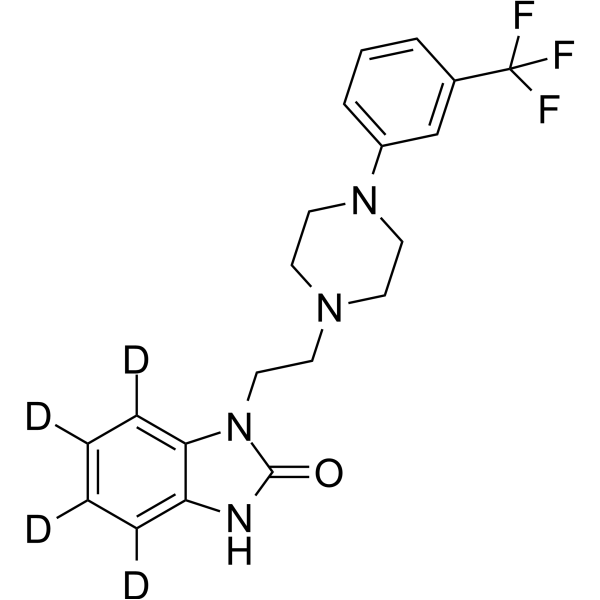
Flibanserin-d4 (BIMT-17-d4; BIMT-17BS-d4) is the d4-labeled Flibanserin (HY-A0095). Flibanserin is an orally active serotonin 5-HT1A receptor agonist and 5-HT2A receptor antagonist with Ki values of 1 nM and 49 nM, respectively. Flibanserin binds to dopamine D4 receptors with an Ki value of 4-24 nM. Flibanserin shows anti-depression and anti-anxiety effect, can be used to hypoactive sexual desire disorder (HSDD) research - .
loading...
    loading...
Cat. No.: HY-Y0282
CAS No.: 7647-15-6
Synonyms: NSC 77384; Sanibrom 40
Research Areas:  

Neurological Disease

Sodium bromide (NSC 77384; Sanibrom 40) is a GABA-ergic system modulator that crosses the blood-brain barrier, and it effectively reduces and blocks epileptiform discharges. Sodium bromide exerts significant anticonvulsant effects by enhancing GABA-ergic inhibitory functions, such as increasing the amplitude of inhibitory postsynaptic currents and paired-pulse inhibition. Sodium bromide specifically enhances stimulation-induced extracellular alkalosis without affecting baseline pH or subsequent acidosis processes. Sodium bromide exhibits species-specific pharmacokinetic characteristics, competes with chloride ions for renal tubular reabsorption sites, and serves as a marker for extracellular fluid volume. Sodium bromide can be used in the research of epilepsy and related neurological diseases .
loading...
    loading...
Cat. No.: HY-134483
CAS No.: 851375-22-9
Target:  

5-HT Receptor

Research Areas:  

Neurological Disease

5-HT7/5-HT2A receptor antagonist 1 is a high-affinity, orally active, brain-penetrant 5-HT7 and 5-HT2A receptor ligand having a pKi = 8.1 at both receptors. 5-HT7/5-HT2A receptor antagonist 1 behaves as an antagonist in an in vitro functional assay for 5-HT2A and as an inverse agonist in an in vitro functional assay for 5-HT7. 5-HT7/5-HT2A receptor antagonist 1 blockade of 5-Carboxamidotryptamine (5-CT) (HY-135555) induced hypothermia in rats, and blockade of 2,5-dimethoxy-4-iodoamphetamine (DOI) induced head-twitches in mice. 5-HT7/5-HT2A receptor antagonist 1 occupied 5-HT2A receptor binding sites in the frontal cortex of the rat brain. 5-HT7/5-HT2A receptor antagonist 1 can be used for the study of Neurological diseases .
loading...
    loading...
Cat. No.: HY-30004R
CAS No.: 22059-21-8
1-Aminocyclopropane-1-carboxylic acid (Standard) is the analytical standard of 1-Aminocyclopropane-1-carboxylic acid. This product is intended for research and analytical applications. 1-Aminocyclopropane-1-carboxylic acid is an endogenous metabolite. In the presence of low concentrations (1 μM) of glutamate, 1-Aminocyclopropane-1-carboxylic acid acts as a small molecule agonist of NMDA receptors with an EC50 of 0.7-0.9 μM. At high concentrations (10 μM) of glutamate, 1-Aminocyclopropane-1-carboxylic acid acts as a competitive antagonist of NMDA receptors with an EC50 of 81.6 nM. 1-Aminocyclopropane-1-carboxylic acid exerts neuroprotective activity by moderately activating NMDA receptors to prevent neuronal cell death in ischemic animal models. Additionally, 1-Aminocyclopropane-1-carboxylic acid is an antagonist of NMDA receptors, inducing blood pressure reduction and antioxidant effects in stroke-prone hypertensive rats. 1-Aminocyclopropane-1-carboxylic acid enhances object recognition memory and cognitive flexibility dependent on the prefrontal cortex, but does not affect impulsivity nor exhibit an antipsychotic-like profile. 1-Aminocyclopropane-1-carboxylic acid shows promise for research in the field of neurotoxicity. .
loading...
    loading...
Cat. No.: HY-113232S
CAS No.: 1276197-31-9
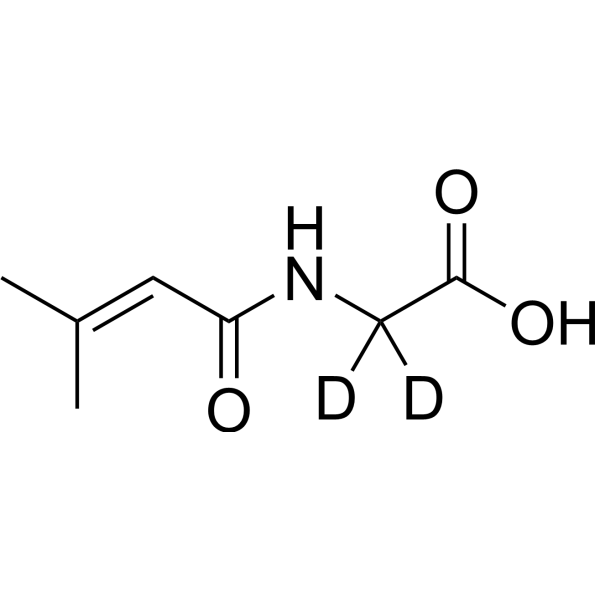
3-Methylcrotonylglycine-d2 is the deuterated-labeled 3-Methylcrotonylglycine (HY-113232). 3-Methylcrotonylglycine is an organic acid conjugate associated with leucine catabolism that inhibits respiratory chain complex II-III, mitochondrial creatine kinase, and synaptic membrane Na +, K +-ATPase. 3-Methylcrotonylglycine increases reactive oxygen species levels to mediate oxidative damage, while inhibiting mitochondrial electron transport, reducing tricarboxylic acid cycle flux, and interfering with intracellular energy transport and neuronal ion homeostasis. 3-Methylcrotonylglycine is a neurotoxic metabolite that accumulates in the metabolic pathway of 3-methylcrotonyl-CoA carboxylase deficiency. 3-Methylcrotonylglycine can be used in studies related to 3-methylcrotonyl-CoA carboxylase deficiency .
loading...
    loading...
Cat. No.: HY-114246
CAS No.: 1351185-54-0
Synonyms: ONC1-13B
Research Areas:  

Cancer

Varilutamide (ONC1-13B) is an orally active androgen receptor (AR) inhibitor. Varilutamide shows a rat AR IC50 of 7.9 μM, inhibits DHT-stimulated PSA expression and prostate cancer cell proliferation, suppresses tumor growth and PSA expression and weakly induces lower CYP3A activity. Varilutamide can be used for the research of castration-resistant prostate cancer and prostate cancer .
loading...
    loading...
Cat. No.: HY-D3567
Target:  

Fluorescent Dye

Research Areas:  

Others

AF647 Cadaverine is a far-red fluorescent polarity tracer. AF647 Cadaverine possesses a primary amine group that enables covalent labeling of carboxylic acids via carbodiimide activation or covalent labeling of glutamine residues through transamidation, rendering it applicable for bioconjugation, cell imaging, and blood-brain barrier permeability assays (Ex/Em = 651/670 nm) .
loading...
    loading...
Cat. No.: HY-120717
CAS No.: 2009052-76-8
Target:  

mGluR Cytochrome P450

Research Areas:  

Neurological Disease

VU6001966 is a brain-penetrant and selective mGlu2 receptor inhibitor. VU6001966 blocks mGlu2 receptor activity, counteracts LY379268 (HY-103558)-mediated blood-brain barrier protection and inflammatory cytokine dampening in microglia under inflammatory conditions. VU6001966 enhances antidepressant effects when combined with Scopolamine (HY-N0296). VU6001966 can be used for the research of major depressive disorder .
loading...
    loading...
Cat. No.: HY-183910
CAS No.: 90685-01-1
Pitrazepin is a GABAA receptor antagonist and glycine receptor antagonist. Pitrazepin blocks synaptic GABA action, induces neuronal bursting and reduces inhibitory postsynaptic potentials. Pitrazepin can be used in research on depression and psychosis .
loading...
    loading...
Cat. No.: HY-183944
CAS No.: 214348-10-4
BN80933 is a selective neuronal nitric oxide synthase (nNOS) inhibitor with a rat Ki of 0.92 μM. BN80933 inhibits lipid peroxidation, and blocks hypoxia-induced lactate dehydrogenase elevation and delayed 8-epiprostaglandin F2α elevation. BN80933 can be used for the research of stroke, and traumatic brain injury .
loading...
    loading...
Cat. No.: HY-P12182
Target:  

Fluorescent Dye

Research Areas:  

Others

Mca-KKVAPYPME-Dap(Dnp)-NH2 is a fluorescent peptide substrate. Mca-KKVAPYPME-Dap(Dnp)-NH2 can be used to report ATP-dependent protease activities, such as those of the 26S Proteasome or ClpP protease .
loading...
    loading...
Cat. No.: HY-182701
CAS No.: 149685-89-2
5-HT3 antagonist-7 (Compound 7e) is a competitive and selective 5-HT3 receptor antagonist. 5-HT3 antagonist-7 inhibits 5-HT-induced contractions in guinea pig ileum and guinea pig thoracic aorta. 5-HT3 antagonist-7 prevents 2-methyl-5-HT-induced vomiting episodes in ferrets .
loading...
    loading...
Cat. No.: HY-B2167R
CAS No.: 6217-54-5
Synonyms: DHA (Standard); Cervonic acid (Standard)
Docosahexaenoic acid (Standard) is the analytical standard of Docosahexaenoic acid. This product is intended for research and analytical applications. Docosahexaenoic Acid (DHA) is an omega-3 fatty acid abundantly present brain and retina. It can be obtained directly from fish oil and maternal milk. In Vitro: Docosahexaenoic acid (DHA) is essential for the growth and functional development of the brain in infants. DHA is also required for maintenance of normal brain function in adults. The inclusion of plentiful DHA in the diet improves learning ability and memory . DHA is an essential requirement in every step of brain development like neural cell proliferation, migration, differentiation, synaptogenesis. The multiple double bonds and unique structure allow DHA to impart special membrane characteristics for effective cell signaling. Many development disorders like dyslexia, autism spectrum disorder, attention deficit hyperactivity disorder, schizophrenia etc. are causally related to decreased level of DHA . DHA is a potent RXR ligand inducing robust RXR activation already at low micro molar concentrations. The EC50 for RXRα activation by DHA is about 5-10 μM fatty acid . In Vivo: Docosahexaenoic acid administration over 10 weeks significantly reduces the number of reference memory errors, without affecting the number of working memory errors, and significantly increases the docosahexaenoic acid content and the docosahexaenoic acid/arachidonic acid ratio in both the hippocampus and the cerebral cortex . DHA treatment exerts neuroprotective actions on an experimental mouse model of PD. There is a decrease tendency in brain lipid oxidation of MPTP mice but it does not significantly .
loading...
    loading...
Cat. No.: HY-W018475
CAS No.: 144034-80-0
Synonyms: MK 462 free base
Target:  

5-HT Receptor

Research Areas:  

Neurological Disease

Rizatriptan (MK 462 free base) is an orally active 5-HT1B/5-HT1D receptor agonist, with BBB permeability. Rizatriptan exerts significant anti-migraine effects by constricting intracranial and extracranial blood vessels and inhibiting neuropeptide release. Rizatriptan exhibits species- and tissue-specific metabolic characteristics; for example, it undergoes oxidative deamination mainly by MAO-A in the liver of brown rats, so co-administration with MAO-A inhibitors is prohibited. Rizatriptan may also exacerbate nitroglycerin-induced cutaneous allodynia, prolong the duration of central sensitization, and increase anxiety-like behavior and active drug-seeking behavior in mice. Rizatriptan has been widely used in studies related to migraine and medication-overuse headache .
loading...
    loading...
Cat. No.: HY-W182790
CAS No.: 150985-54-9
Synonyms: LSL 60101
Garsevil (LSL 60101) is a biphasic, selective imidazoline I2 receptor (I2-IR) ligand, with a pKi of 9.03 and a Ki of 0.9 nM at the high-affinity site, and a pKi of 5.25 and a Ki of 5.6 nM at the low-affinity site. Garsevil is applicable to research related to Alzheimer's disease .
loading...
    loading...

