110 Results for "

DNA damage response

" in MedChemExpress (MCE) Product Catalog:
Products (110)

110 Results for "DNA damage response" in MCE Product Catalog:

1
1 Cited Publications
Cat. No.: HY-120084
CAS No.: 2052301-24-1
Purity:  99.20%
Research Areas:  

Cancer

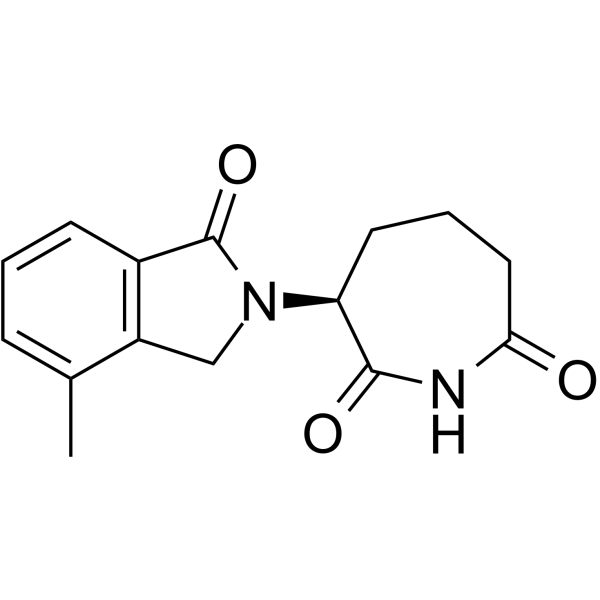
BTX161, a Thalidomide (HY-14658) analog, is a molecular glue degrader targeting CK1α. BTX161 recruits CK1α and the CK1α-FAM83 complex to the Cul4ACRBN E3 ligase complex, thereby driving ubiquitination and proteasomal degradation. BTX161 reduces FAM83G abundance through CK1α-FAM83G co-stability, slightly decreases FAM83H levels, but has no effect on the expression of FAM83B. BTX161 activates DNA damage response (DDR) and upregulates Wnt target genes including MYC. BTX161 can be used in research related to colorectal cancer, type b myelomonocytic leukemia and acute myeloid leukemia .
loading...
    loading...
Cat. No.: HY-157941
CAS No.: 2267316-76-5
Purity:  99.89%
Synonyms: ART0380
Research Areas:  

Cancer

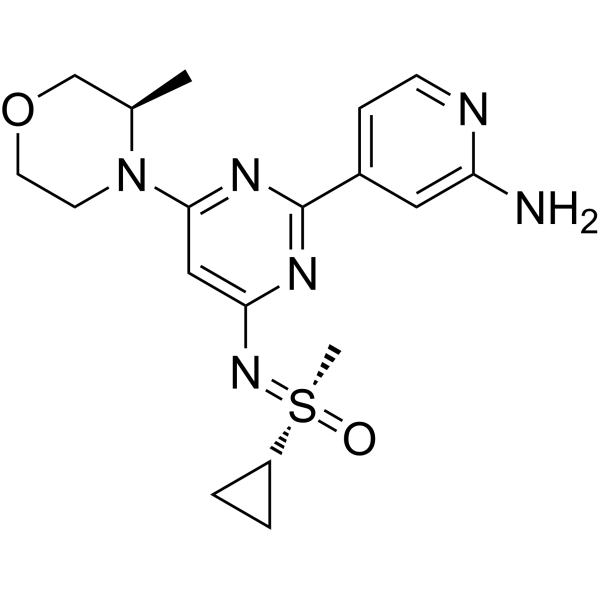
ART0380 is a potent, selective and orally active ATR kinase inhibitor. ART0380 potently inhibits human ATR-ATRIP complex with an IC50 of 51.7 nM. ART0380 binds the ATP pocket of the ATR-ATRIP complex, blocks ATR-dependent Chk1 serine 345 phosphorylation, and induces cell cycle disorder and DNA damage. ART0380 demonstrates potent and selective antitumor activity in preclinical models with varying types of ataxia-telangiectasia mutated (ATM) gene aberrancy. ART0380 can be used for the research of cancer, such as colorectal cancer and prostate cancer .
loading...
    loading...
Cat. No.: HY-168162
CAS No.: 3053716-46-1
Target:  

PROTACs CDK

Research Areas:  

Cancer

ZLC491 is an orally active PROTAC degrader that selectively targets CDK12/CDK13 and exhibits certain oral bioavailability. ZLC491 induces cereblon- and proteasome-dependent selective degradation of CDK12 and CDK13. ZLC491 inhibits the transcription and expression of long genes, and mainly acts on a subset of DNA damage response genes. ZLC491 inhibits the proliferation of various triple-negative breast cancer cells. ZLC491 can be used in research related to triple-negative breast cancer .
loading...
    loading...
Cat. No.: HY-138155
CAS No.: 730960-98-2
Purity:  99.90%
Target:  

DNA/RNA Synthesis

Research Areas:  

Cancer

NSC15520 is a small molecular inhibitor of Replication Protein A (RPA). NSC15520 specifically recognizes the RPA N-terminal DNA binding domain (DBD), and blocks the interaction of RPA with p53 or RAD9. NSC15520 also inhibtis helix destabilization of a duplex DNA (dsDNA) oligonucleotide, involves in DNA replication, DNA repair, DNA recombination, and DNA damage response signaling .
loading...
    loading...
Cat. No.: HY-164891
CAS No.: 2839138-44-0
Target:  

Molecular Glues

Research Areas:  

Others

EM12‑FS is a selective covalent molecular glue degrader of NTAQ1 that binds to CRBN with an IC50 of 256 nM. EM12‑FS covalently modifies the His353 residue of CRBN via chemical modification, reshapes the surface conformation of CRBN protein, selectively recruits NTAQ1 to form a ternary complex, and mediates the degradation of NTAQ1 protein in a CRL4 CRBN E3 ubiquitin-proteasome pathway-dependent manner. EM12‑FS can be used in cancer-related research .
loading...
    loading...
Cat. No.: HY-158345
CAS No.: 2821804-13-9
Purity:  98.01%
Research Areas:  

Cancer

PROTAC ATM degrader-1 is a ATM PROTAC degrader with a KD value of 1.17 nM. PROTAC ATM degrader-1 triggers DNA damage response, cell cycle arrest, and apoptosis in cancer cells via the ubiquitin-proteasome-dependent degradation pathway. PROTAC ATM degrader-1 can be used for research on colorectal cancer .
loading...
    loading...
Cat. No.: HY-153339
CAS No.: 891894-69-2
Purity:  98.85%
Research Areas:  

Cancer

E235 is an expression regulator of activates transcription factor 4 (ATF4). E235 reduces cell viability by activating integrated stress response (ISR) and DNA damage response signals. E235 has anti-proliferative activity and can be used for tumor research .
loading...
    loading...
Cat. No.: HY-N9487
CAS No.: 4221-98-1
Synonyms: (-)-α-Phellandrene
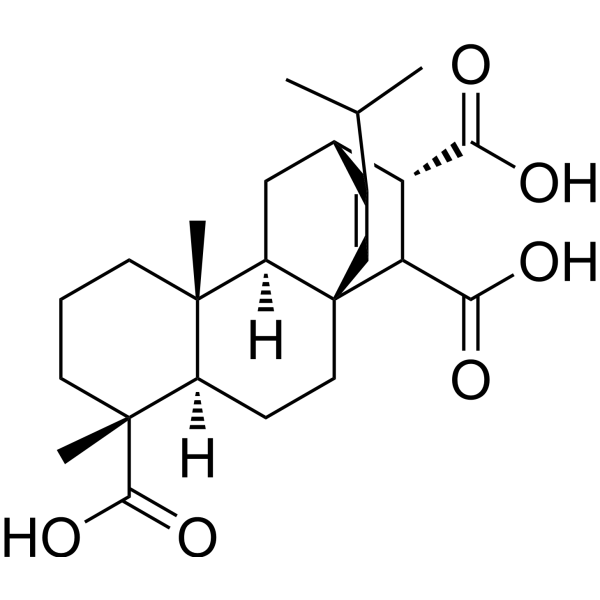
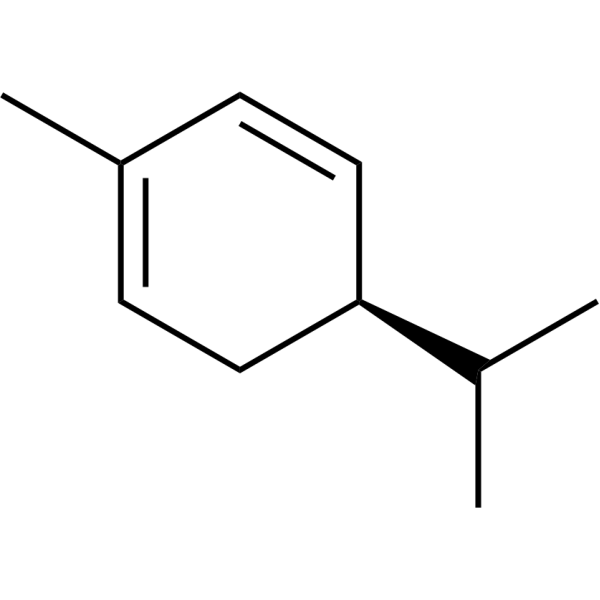
(R)-(-)-α-Phellandrene ((-)-α-Phellandrene) is an the (R)-(-)-stereoisomer of α-phellandrene. α-phellandrene is an orally active cyclic monoterpene that attenuates inflammatory response, and induces DNA damage .
loading...
    loading...
Cat. No.: HY-178208
Research Areas:  

Cancer

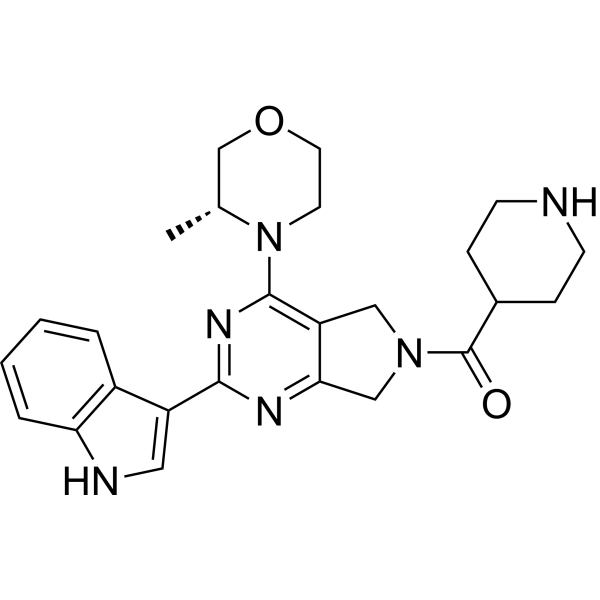
MDOLL-0286 is a selective Poly(ADP-ribose) Glycohydrolase (PARG) (ARH3) inhibitor with an IC50 of 2.3μM. MDOLL-0286 can inhibit ARH3’s poly-ADP-ribose hydrolytic activity on cellular substrates. MDOLL-0286 can inhibit DNA damage response. MDOLL-0286 can be used for the research of cancer .
loading...
    loading...
Cat. No.: HY-164496
CAS No.: 1161826-19-2
Target:  

DNA/RNA Synthesis

Research Areas:  

Neurological Disease Cancer

KL-50 is an orally active N3-(2-fluoroethyl) imidazotetrazine DNA alkylating agent with selectivity for MGMT-deficient cells. KL-50 introduces a 2-fluoroethyl group at the O6 position of guanine, forming O6-(2-fluoroethyl) guanine (O6FEtG) lesions and further generating DNA interstrand crosslinks (ICLs). KL-50 induces DNA double-strand breaks, activates ATR-CHK1 and ATM-CHK2 DNA damage responses, and causes cell cycle arrest and micronucleus formation. KL-50 can be used for glioblastoma and DNA damage response research .
loading...
    loading...
Cat. No.: HY-W011425
CAS No.: 6419-19-8
Synonyms: Nitrilotris(methylenephosphonic acid)
Research Areas:  

Cancer

NTPO (Nitrilotris methylenephosphonic acid) is a DNA damage inducer, causing genomic DNA damage and fragmentation, activating ATR-mediated cell cycle checkpoints. The DNA damaging effects of NTPO are abrogated by base excision repair (BER) but not nucleotide excision repair (NER) .
loading...
    loading...
Cat. No.: HY-135782
CAS No.: 15720-01-1
Research Areas:  

Cancer

iso-ADP ribose is the small-molecule ligand for protein nucleic acid modification, comprising parts of two consecutive ADP-ribosyl units within the PAR chain. iso-ADP ribose specifically binds WWE, FHA and OB-fold domains, enabling PAR-dependent functional responses like ubiquitylation and supporting DNA damage signaling and repair. iso-ADP ribose can be used for cancer research .
loading...
    loading...
Cat. No.: HY-168556
Research Areas:  

Cancer

YJ9069 is a CDK12/CDK13 PROTAC degrader. YJ9069 induces proteasome-dependent degradation of CDK12 and CDK13, and inhibits serine 2 phosphorylation of RNA polymerase II (RNA polymerase II). YJ9069 triggers gene length-dependent transcription elongation defects, reduces the expression of DNA damage response genes, and induces DNA damage, cell cycle arrest and apoptosis. YJ9069 inhibits tumor growth in prostate cancer models. YJ9069 can be used for the research of prostate cancer, Ewing sarcoma and breast cancer .
loading...
    loading...
Cat. No.: HY-151883
CAS No.: 2923433-95-6
Purity:  98.28%
Target:  

Apoptosis MDM-2/p53

Research Areas:  

Cancer

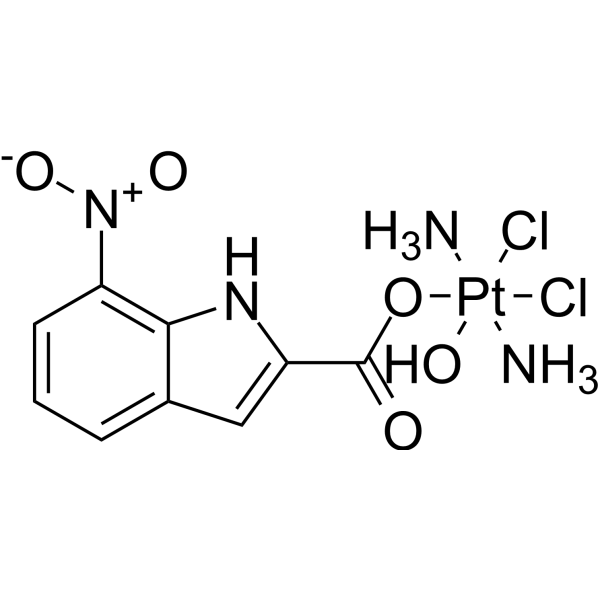
APE1-IN-2 (compound AP1) is a Pt(IV) proagent, targeting a critical BER protein, apurinic/apyrimidinic endonuclease 1 (APE1). APE1-IN-2 shows anticancer activity. APE1-IN-2 induces intracellular accumulation of platinum and activates DNA damage response and apoptosis signals .
loading...
    loading...
Cat. No.: HY-173059
CAS No.: 3029608-57-6
Target:  

CDK

Research Areas:  

Cancer

CDK12/13-IN-3 (Compound 12b) is the orally active inhibitor for CDK that inhibits CDK12 and CDK13 with IC50 of 107.4 nM and 79.4 nM. CDK12/13-IN-3 inhibits the phosphorylation of Ser2 on the CTD of RNA polymerase II, induces DNA damage, and downregulates the gene expression of DNA damage response (DDR). CDK12/13-IN-3 exhibits antiproliferative activity against multiple cancer cells with IC50 of nanomolar levels. CDK12/13-IN-3 exhibits antitumor effect in mouse models, exhibits good pharmacokinetic properties with an oral bioavailability of 53.6% .
loading...
    loading...
Cat. No.: HY-155801
CAS No.: 216014-14-1
CRX 527 is a TLR4 agonist. CRX 527 activates the MyD88-dependent, TRIF-dependent, and TRAF6/NF-κB signaling pathways downstream of TLR4, mimics lipid A, and regulates antigen processing and presentation by dendritic cells. CRX 527 stimulates innate immune responses and enhances vaccine efficacy. CRX 527 maintains the structural integrity of hematopoietic tissues, spleen and intestine, alleviates radiation-induced damage, preserves intestinal homeostasis, and inhibits apoptosis, inflammatory responses, oxidative stress and DNA damage. CRX 527 can be used in the research of acute radiation syndrome, melanoma, HPV-related tumors and intracerebral hemorrhage .
loading...
    loading...
Cat. No.: HY-146565
CAS No.: 2823369-81-7
Purity:  99.74%
Target:  

DNA-PK

Research Areas:  

Cancer

DNA-PK-IN-8 is a highly potent, selective and orally active DNA-dependent protein kinase (DNA-PK) inhibitor with an IC50 value of 0.8 nM. DNA-PK-IN-8 exhibits synergistic antiproliferative activity against a series of cancer cell lines and significantly suppresses HL-60 tumor growth, when using in combination with Doxorubicin .
loading...
    loading...
Cat. No.: HY-135782A
Research Areas:  

Cancer

iso-ADP ribose TEA is the small-molecule ligand for protein nucleic acid modification, comprising parts of two consecutive ADP-ribosyl units within the PAR chain. iso-ADP ribose TEA specifically binds WWE, FHA and OB-fold domains, enabling PAR-dependent functional responses like ubiquitylation and supporting DNA damage signaling and repair. iso-ADP ribose TEA can be used for cancer research .
loading...
    loading...
Cat. No.: HY-177780
Research Areas:  

Cancer

Cyclin K degrader 2 is a molecular glue degrader of Cyclin K. By bridging CDK12 and DDB1, the receptor of the CRL4 E3 ligase, Cyclin K degrader 2 specifically induces the targeted degradation of Cyclin K within the CDK12-Cyclin K complex. Cyclin K degrader 2 can be used in studies related to acute myeloid leukemia .
loading...
    loading...
Cat. No.: HY-144435
Target:  

ATM/ATR

Research Areas:  

Cancer

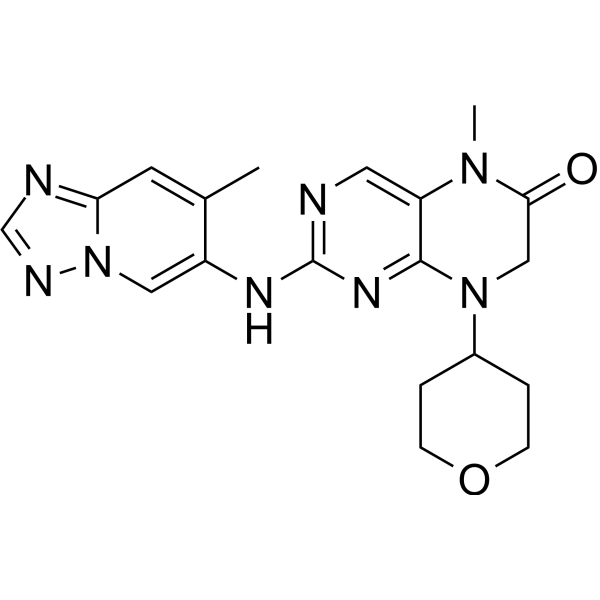
ATR-IN-11 (Compound Hit01) is a potent inhibitor of ataxia telangiectasia and Rad3-related (ATR) kinase. ATR kinase is a key regulating protein within the DNA damage response (DDR), responsible for sensing replication stress (RS). ATR-IN-11 is a promising lead compound for subsequent agent discovery targeting ATR kinase. ATR-IN-11 has the potential for the research of cancer disease .
loading...
    loading...

