37 Results for "

Repression

" in MedChemExpress (MCE) Product Catalog:
Products (37)

37 Results for "Repression" in MCE Product Catalog:

Cat. No.: HY-122959
CAS No.: 73793-68-7
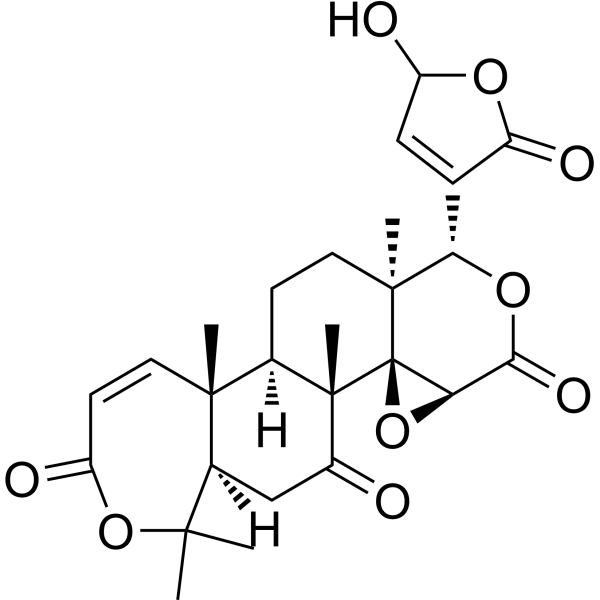
Kihadanin B is a citrus limonoid that can be purified from the peels of immature Citrus unshiu. Kihadanin B suppresses adipogenesis through repression of the Akt-FOXO1-PPARγ axis in 3T3-L1 adipocytes .
loading...
    loading...
Cat. No.: HY-132822A
CAS No.: 259657-09-5
Synonyms: SBP-101 hydrochloride
Target:  

Drug Derivative

Research Areas:  

Cancer

Ivospemin (SBP-101) hydrochloride is an antineoplastic spermine analog. Ivospemin hydrochloride has shown efficacy in slowing pancreatic and ovarian tumor progression in vitro and in vivo. Ivospemin hydrochloride shows modest induction of polyamine catabolism, but stronger repression of ornithine decarboxylase activity. Ivospemin hydrochloride is promising for research of cancers .
loading...
    loading...
Cat. No.: HY-P10543
CAS No.: 857026-08-5
Target:  

BCL6

Research Areas:  

Cancer

SMRT peptide is one of the co-repressors of BCL6 BTB domain interaction. SMRT peptide binds to the BTB domain of BCL6 and enhances the transcriptional repression function of BCL6. SMRT peptide can be used to study protein-protein interactions .
loading...
    loading...
Cat. No.: HY-14353
CAS No.: 928035-84-1
Target:  

LXR

GSK-9772 is a Liver X Receptor (LXR) modulator of the N-phenyl tertiary amine class (NPTAs) with high affinity for LXR β ligand (IC50=30 nM). GSK-9772 has anti-inflammatory activity by binding to LXR, specifically by interacting with the region associated with the transcriptional repression function of the receptor, thereby inhibiting the expression of pro-inflammatory genes. GSK-9772 can be used in the study of inflammatory and neurodegenerative diseases .
loading...
    loading...
Cat. No.: HY-P4272
CAS No.: 21866-90-0
Target:  

Inhibitory Antibodies

Research Areas:  

Others

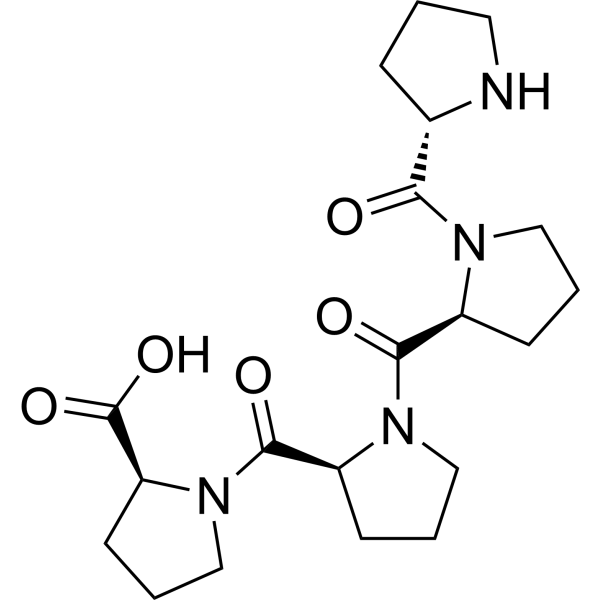
Tetraproline is a fragment sequence in tristetraprolin (TTP). Recruitment of the 4EHP-GYF2 cap-binding complex to tetraproline motifs of tristetraprolin promotes repression and degradation of mRNAs with AU-rich elements .
loading...
    loading...
Cat. No.: HY-P10566
Target:  

BCL6

Research Areas:  

Cancer

BCOR(498-514), biotinylated is the minimal BCL6 binding domain with an KD value of 1.32 µM. BCOR(498-514), biotinylated blocks BCL6-mediated transcriptional repression and kills lymphoma cells .
loading...
    loading...
Cat. No.: HY-162796
Research Areas:  

Cancer

TS-2 is a fluorescent ligand of c-Myc G4 with anticancer activity. TS-2 inhibits the growth of cancer cells and induces apoptosis of cancer cells by targeting the c-MYC oncogene promoter G4, causing transcriptional repression of the c-Myc oncogene .
loading...
    loading...
Cat. No.: HY-P10111
CAS No.: 951011-30-6
Synonyms: H3(1-15)K9me3
Target:  

Inhibitory Antibodies

Research Areas:  

Inflammation/Immunology Cancer

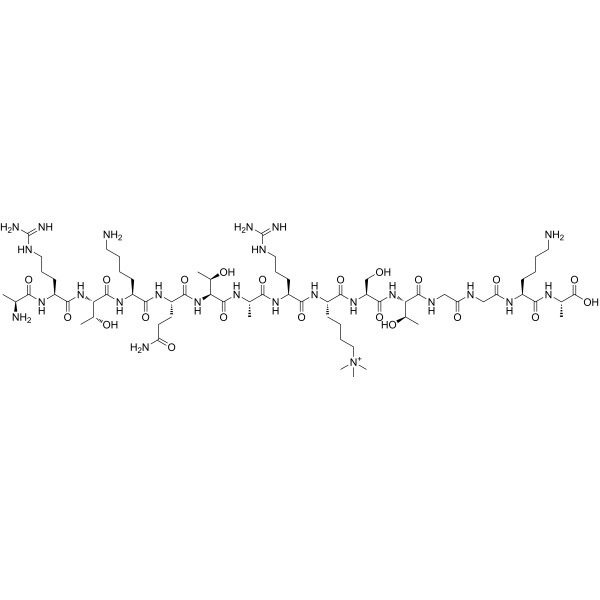
Histone H3K9me3 (1-15) (H3(1-15)K9me3) is a histone posttranslational modification (PTM) that has emerged as hallmark of pericentromeric heterochromatin. Trimethylation of histone H3 at lysine 9 is associated with gene repression, prevents transcription factor binding .
loading...
    loading...
Cat. No.: HY-P704059
Purity:  ≥ 90%, as determined by reducing SDS-PAGE.
Synonyms: rev; Protein Rev; ART/TRS; Anti-Repression transactivator; Regulator of expression of viral proteins
Species:  
Virus
Source:  
E. coli
loading...
    loading...
Cat. No.: HY-128562
CAS No.: 315702-79-5
Target:  

Estrogen Receptor/ERR

Research Areas:  

Others

CS-1-69 is an MBD2 ligand analog that does not bind to individual NuRD components MBD2 or HDAC1, but binds robustly to the assembled NuRD complex (MBD2, HDAC1, and MT1A) in a dose-responsive manner. CS-1-69 attenuates Transcriptional Repression via Active Chemical Epigenetic Reprogrammin (TRACER)-mediated strogen receptor (ER) inhibitory activity .
loading...
    loading...
Cat. No.: HY-14415R
CAS No.: 1254944-66-5
SR8278 (Standard) is the analytical standard of SR8278 (HY-14415). This product is intended for research and analytical applications. SR8278 is a REV-ERBα antagonist and inhibits the REV-ERBα transcriptional repression activity with an EC50 of 0.47 μM. SR8278 is used to regulate the metabolism in organisms and study biological rhythm. SR8278 also can be used for the research of Duchenne muscular dystrophy and Alzheimer's disease .
loading...
    loading...
Cat. No.: HY-180886
Research Areas:  

Cancer

ZD-1-186 is a non-degradative, covalent-dependent molecular glue that targets BCL6 and BRD9. ZD-1-186 inhibits the transcriptional output of MYC, relieves the repression of canonical BCL6 target loci (including CDKN1A (p21)), and mediates the selective recruitment of BRD9 to BCL6. ZD-1-186 can be used for research on diffuse large B-cell lymphoma .
loading...
    loading...
Cat. No.: HY-124660A
CAS No.: 2089056-09-5
Target:  

Endogenous Metabolite

Research Areas:  

Others

A-395N serves as a control probe for A-395, a highly potent and selective chemical probe targeting the polycomb protein EED, a key player in Polycomb repressive complex 2 (PRC2) responsible for transcriptional repression via histone H3K27 methylation. While A-395N bears structural similarities to A-395, it demonstrates no pharmacological activity in biochemical or cellular assays, making it an ideal control compound.
loading...
    loading...
Cat. No.: HY-180944
CAS No.: 667889-47-6
Target:  

REV-ERB

Research Areas:  

Neurological Disease

BE2012, SR8278 (HY-14415) derivative, is a potent and selective REV-ERBα/β Antagonist with EC50 values of 0.285 and 0.346 μM. BE2012 binds to the ligand-binding domain (LBD) of REV-ERB, preventing the receptor from recruiting co-inhibitory factors and thereby releasing the transcriptional repression on downstream target genes. BE2012 can upregulate the expression of myogenic transcription factors Myf5 and Myod, promoting muscle regeneration and repair in acute muscle injury micemodels .
loading...
    loading...
Cat. No.: HY-184500
CAS No.: 2923223-81-6
Research Areas:  

Cancer

TNG917 is a potent, selective EHMT1/2 inhibitor with oral activity. TNG917 reduces H3K9me2-mediated transcriptional repression, restores interferon-stimulated gene expression, promotes the secretion of T-cell chemokines such as CXCL10, and converts immunologically cold tumors into T-cell inflamed tumors. TNG917 is applicable to studies on immunologically cold tumors, colorectal cancer, anti-tumor immunity, interferon signaling pathways and epigenetic immune escape .
loading...
    loading...
Cat. No.: HY-P811175
Synonyms: GRF1, GRLF1, KIAA1722, P190A, p190ARHOGAP, ARHGAP35, Rho GTPase-activating protein 35, Glucocorticoid receptor DNA-binding factor 1, Glucocorticoid receptor Repression factor 1, Rho GAP p190A, GRF-1, p190-A

Host:  

Rabbit

Application:  

WB, IHC-P

Reactivity:  

Human, Mouse, Rat

loading...
    loading...
Cat. No.: HY-138794G
CAS No.: 2417089-74-6
XL177A GMP is XL177A (HY-138794) produced by using GMP guidelines. GMP small molecules works appropriately as an auxiliary reagent for cell therapy manufacture. XL177A is a covalent USP7 inhibitor that blocks the deubiquitinase activity of USP7. XL177A destabilizes non-canonical PRC1 complexes or KDM6A and reduces chromatin deposition of H2AK119Ub, thereby relieving the repression of neuronal differentiation programs. Meanwhile, XL177A also regulates the ELOF1-UVSSA-USP7-nuclear β-catenin axis, decreasing the transcription levels of related proteins and the accumulation of nuclear β-catenin. XL177A exerts antiviral effects by reducing the expression levels of coronavirus receptors, and exhibits inhibitory activity against APC-mutated colorectal cancer cells, neuroblastoma, and coronaviruses including SARS-CoV-2 variants. XL177A is mainly used in studies related to colorectal cancer, neuroblastoma, and coronavirus infections .
loading...
    loading...

