93 Results for "

conduction

" in MedChemExpress (MCE) Product Catalog:
Products (93)

93 Results for "conduction" in MCE Product Catalog:

Cat. No.: HY-143481
CAS No.: 2756250-30-1
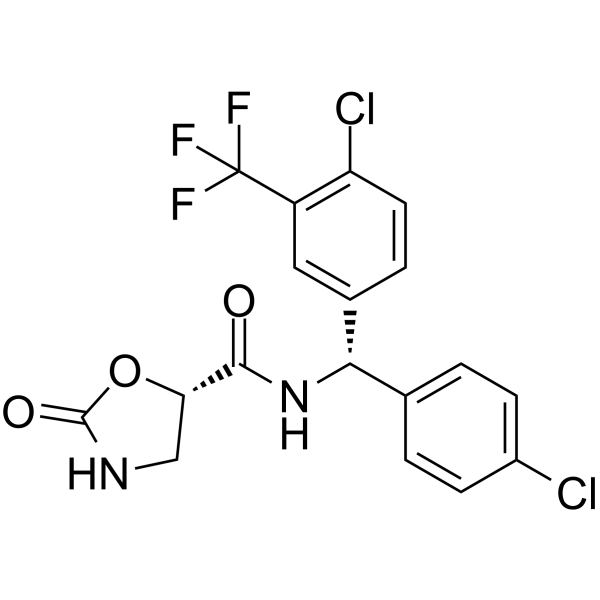
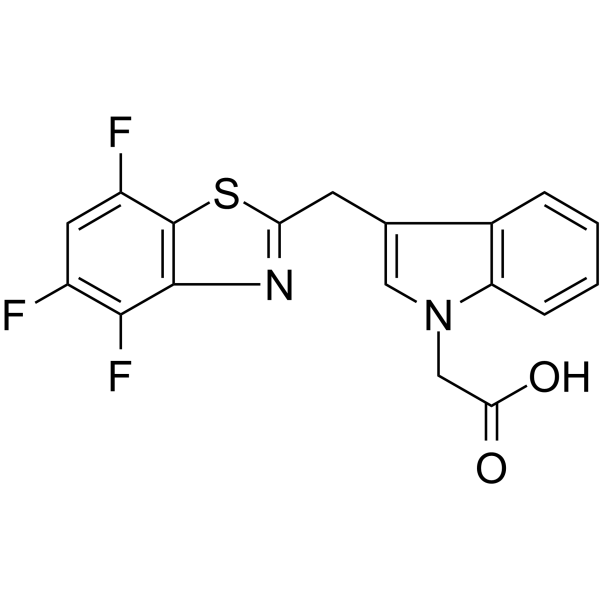
Nav1.8-IN-2 (compound 35A) is a Nav1.8 voltage-gated sodium ion inhibitor with an IC50 of 0.4 nM (HEK 293 cells). Nav1.8-IN-2 inhibits the activity of Nav1.8 voltage-gated sodium ion channels, mediates sodium ion influx in excitable cells, and is associated with the initiation and conduction of action potentials. Nav1.8-IN-2 can be used for research related to pain, cough, itching, etc .
loading...
    loading...
Cat. No.: HY-45509
CAS No.: 1208070-53-4
Synonyms: RAD150
Target:  

Androgen Receptor

Research Areas:  

Neurological Disease

TLB 150 Benzoate (RAD150) is a nonsteroidal androgen receptor modulator with an IC50 value of 0.13 μM. TLB 150 Benzoate spontaneously cyclizes under physiological conditions to form RAD 179, resulting in a persistent, reversible, and slow neuronal conduction blockade. TLB 150 Benzoate can be used for research on neurological diseases .
loading...
    loading...
Cat. No.: HY-B1440
CAS No.: 985-13-7
Ethaverine hydrochloride is a Papaverine derivative and vasodilator. Ethaverine hydrochloride inhibits Phosphodiesterase, Tyrosine hydroxylase, and MAO-B. Ethaverine hydrochloride blocks L-type Ca 2+ channels, reduces intracellular Ca 2+ levels, inhibits platelet adhesion and aggregation, regulates cardiac conduction and heart rate, and increases peripheral and cerebral blood flow. Ethaverine hydrochloride alters cochlear microcirculation, intracochlear Po2, CM potential, and EP in guinea pigs, and induces transient hypotension. Ethaverine hydrochloride is used in the research of peripheral vascular diseases .
loading...
    loading...
Cat. No.: HY-A0236
CAS No.: 37640-71-4
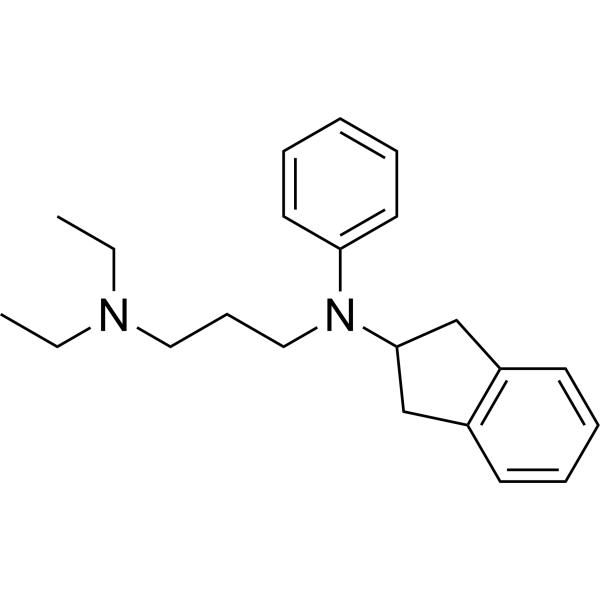
Aprindine is an Ib-class anti-arrhythmic agent. Aprindine mainly exerts its effect by blocking sodium channels (INa), thereby reducing the excitability and conduction velocity of cardiac muscle cells. Aprindine significantly inhibits delayed potassium currents, which helps to prolong the atrial effective refractory period (AERP) and inhibit the occurrence of atrial fibrillation. Aprindine can also regulate intracellular calcium ion concentration by inhibiting Na +/Ca 2+ exchange current (INCX), thereby further stabilizing cardiac electrical activity. Aprindine can be used for the study of atrial fibrillation (AF) and ventricular arrhythmias .
loading...
    loading...
Cat. No.: HY-W276164
CAS No.: 1120-04-3
Synonyms: Sodium stearyl sulfate
Sodium octadecyl sulfate (Sodium stearyl sulfate) is a long-chain alkyl sodium sulfate that functions as an emulsifier, crosslinking agent, and regulator. Sodium octadecyl sulfate has high safety, with a LD50 greater than 3.00 Gm./Kg for both intraperitoneal injection in mice and oral administration in rats. Sodium octadecyl sulfate enhances continuous contraction of the gastrocnemius muscle in frogs and boosts intestinal smooth muscle activity in albino rats. However, Sodium octadecyl sulfate exerts no significant effect on isolated tortoise myocardium and does not alter the conduction function of frog sciatic nerves. Sodium octadecyl sulfate can also be used to coat the surface of starch aggregates, promote crosslinking and increase aggregate size through hydrophobic and electrostatic interactions, and further form a coexistent B-V type crystalline structure with acid-hydrolyzed gelatinized starch, thereby effectively modifying the structure and surface properties of high-starch systems .
loading...
    loading...
Cat. No.: HY-A0236A
CAS No.: 33237-74-0
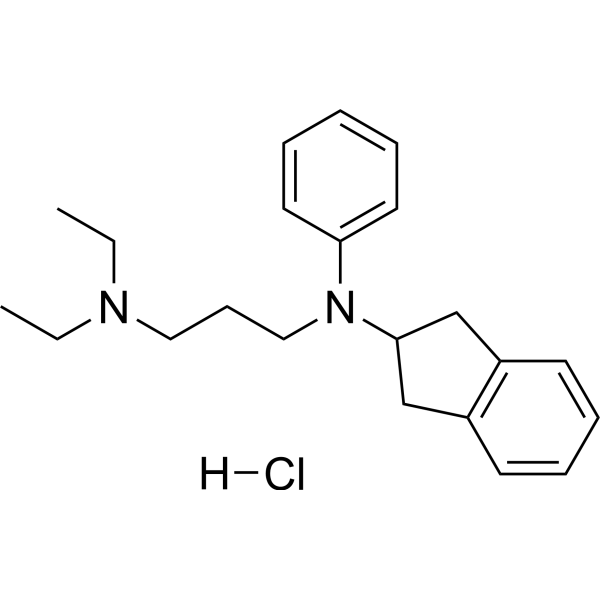
Aprindine hydrochloride is an Ib-class anti-arrhythmic agent. Aprindine hydrochloride mainly exerts its effect by blocking sodium channels (INa), thereby reducing the excitability and conduction velocity of cardiac muscle cells. Aprindine hydrochloride significantly inhibits delayed potassium currents, which helps to prolong the atrial effective refractory period (AERP) and inhibit the occurrence of atrial fibrillation. Aprindine hydrochloride can also regulate intracellular calcium ion concentration by inhibiting Na +/Ca 2+ exchange current (INCX), thereby further stabilizing cardiac electrical activity. Aprindine hydrochloride can be used for the study of atrial fibrillation (AF) and ventricular arrhythmias .
loading...
    loading...
Cat. No.: HY-Z6848
CAS No.: 27262-46-0
Target:  

Sodium Channel

Research Areas:  

Neurological Disease

(R)-(+)-Bupivacaine hydrochloride is a voltage-gated sodium channel inhibitor. (R)-(+)-Bupivacaine hydrochloride can selectively block the voltage-gated sodium channels on nerve cell membranes, inhibit the influx of sodium ions, and thus prevent the generation and conduction of nerve impulses, exerting local anesthetic activity. (R)-(+)-Bupivacaine hydrochloride can be used in research of acute pains .
loading...
    loading...
Cat. No.: HY-W741940
CAS No.: 508-93-0
Evomonoside is a type of cardiac glycoside compound. Evomonoside exhibits significant in vitro anticancer activity, especially having nanomolar inhibitory concentrations against gastric cancer cell lines. Evomonoside has typical cardiac toxicity risks, including arrhythmias and conduction abnormalities. Evomonoside can be used for research on gastric cancer .
loading...
    loading...
Cat. No.: HY-B1343A
CAS No.: 511-45-5
Target:  

Cholinesterase (ChE)

Research Areas:  

Neurological Disease

Pridinol is an orally active, blood-brain permeable, muscarinic acetylcholine receptor (mAChR)-directed muscle relaxant. Pridinol reduces the conduction of impulses to spinal motor neurons and exerts muscle relaxant activity. Pridinol inhibits skeletal muscle contractures in diseases of both central and peripheral origin and can be used in research in the field of musculoskeletal diseases .
loading...
    loading...
Cat. No.: HY-176248
CAS No.: 14394-26-4
Dimephosphon is an anti-inflammatory agent with antihistamine and antiserotonin activities. Dimephosphon helps maintain the conduction function of the spinal cord and reduces the excitability of spinal motor neurons in the area surrounding the lesion. Dimephosphon directly activates lymphatic vessel movement and improves lymphatic circulation. Dimephosphon can be used for the study of inflammatory edema, acute spinal cord injury and lymphatic circulation disorders .
loading...
    loading...
Cat. No.: HY-113738
CAS No.: 99434-90-9
ADN-138 is an aldose reductase inhibitor. ADN-138 reduces sorbitol levels in diabetic nerves and results in significant increases in MNCV and Na +, K +-ATPase in the nerves. ADN-138 can be used in the research of diabetic nerve complications .
loading...
    loading...
Cat. No.: HY-174845
CAS No.: 3024470-62-7
Target:  

Sodium Channel

Research Areas:  

Neurological Disease

Nav1.8-IN-20 (Compound I) is an orally active and potent voltage-gated sodium channel Nav1.8 inhibitor with an IC50 value of 14 nM. Nav1.8-IN-20 blocks the generation and conduction of action potentials in peripheral nociceptive neurons, exerting analgesic effects. Nav1.8-IN-20 is promising for research of various pain types such as acute pain, chronic pain, inflammatory pain, and neuropathic pain .
loading...
    loading...
Cat. No.: HY-B1343R
CAS No.: 6856-31-1
Pridinol mesylate (Standard) is the analytical standard of Pridinol mesylate (HY-B1343). This product is intended for research and analytical applications. Pridinol mesylate is an orally active, blood-brain permeable, muscarinic acetylcholine receptor (mAChR)-directed muscle relaxant. Pridinol mesylate reduces the conduction of impulses to spinal motor neurons and exerts muscle relaxant activity. Pridinol mesylate inhibits skeletal muscle contractures in diseases of both central and peripheral origin and can be used in research in the field of musculoskeletal diseases .
loading...
    loading...
Cat. No.: HY-B0516A
CAS No.: 23964-58-1
Synonyms: Hoe-045 free base
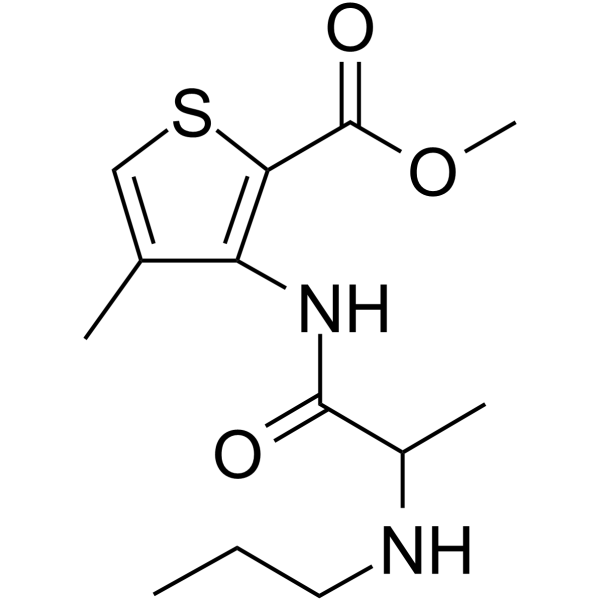
Articaine (Hoe-045) is a selective inhibitor of voltage-gated sodium channels (such as rNav1.4, hNav1.7, and rNav1.8), with an IC50 of 15.8 μM for open-state Na + channels, and IC50 of 40.6 μM and 378 μM for inactivated and resting-state Na + channels, respectively. Articaine exerts local anesthetic activity by inhibiting Na + influx to block nerve impulse conduction, and can also inhibit NF-κB activation and NLRP3 inflammasome pathways, exhibiting anti-inflammatory function. Articaine can be used in the study of dental local anesthesia and inflammatory-related diseases (such as acute kidney injury) .
loading...
    loading...
Cat. No.: HY-W017455
CAS No.: 579-66-8
Research Areas:  

Others

2,6-Diethylaniline is an orally active toxic substance. 2,6-Diethylaniline serves as a monomer for the deposition of plasma-polymerized 2,6-diethylaniline films .
loading...
    loading...
Cat. No.: HY-118833
CAS No.: 25360-99-0
Target:  

Calcium Channel

Research Areas:  

Cardiovascular Disease

RAC 109 is a local anesthetic. RAC 109 reduces ventricular conduction velocity and myocardial contractility in rabbits in a stereospecific manner (EC50=30 μM) .
loading...
    loading...
Cat. No.: HY-106198
CAS No.: 245116-90-9
Purity:  99.50%
Synonyms: IDD-676
Target:  

Aldose Reductase

Research Areas:  

Metabolic Disease

Lidorestat (IDD-676) is a potent, selective and orally active aldose reductase inhibitor with an IC50 of 5 nM. Lidorestat can be used for chronic diabetes complications. Lidorestat also improves nerve conduction and reduces cataract formation .
loading...
    loading...
Cat. No.: HY-105485
CAS No.: 105346-34-7
Target:  

Aldose Reductase

FR-62765 is a derivative of WF-3681. FR-62765 can significantly inhibit the accumulation of sorbitol in the sciatic nerve and the decrease of motor nerve conduction velocity in the tail of diabetic neuropathy rats, which can be used in the research of diabetic neuropathy .
loading...
    loading...
Cat. No.: HY-106819A
CAS No.: 105668-70-0
Target:  

Sodium Channel

Research Areas:  

Cardiovascular Disease

AN-132 phosphate is an antiarrhythmic agent. AN-132 phosphate can inhibit Sodium Channel. AN-132 phosphate can prolong atrioventricular conduction time, decrease sinus rate and reduce the force of papillary muscle contraction. AN-132 phosphate can be used for the research of cardiovascular disease .
loading...
    loading...
Cat. No.: HY-B0563AR
CAS No.: 132112-35-7
Ropivacaine (hydrochloride monohydrate) (Standard) is the analytical standard of Ropivacaine (hydrochloride monohydrate). This product is intended for research and analytical applications. Ropivacaine hydrochloride monohydrate is a potent sodium channel blocker and blocks impulse conduction via reversible inhibition of sodium ion influx in nerve fibrese . Ropivacaine is also an inhibitor of K2P (two-pore domain potassium channel) TREK-1 with an IC50 of 402.7 μM in COS-7 cell's membrane . Ropivacaine is widely used for regional anesthesia and neuropathic pain management in vivo .
loading...
    loading...

