100 Results for "

constipation

" in MedChemExpress (MCE) Product Catalog:
Products (100)

100 Results for "constipation" in MCE Product Catalog:

Cat. No.: HY-108741
CAS No.: 467426-54-6
Purity:  99.93%
Target:  

Guanylate Cyclase

Research Areas:  

Inflammation/Immunology Cancer

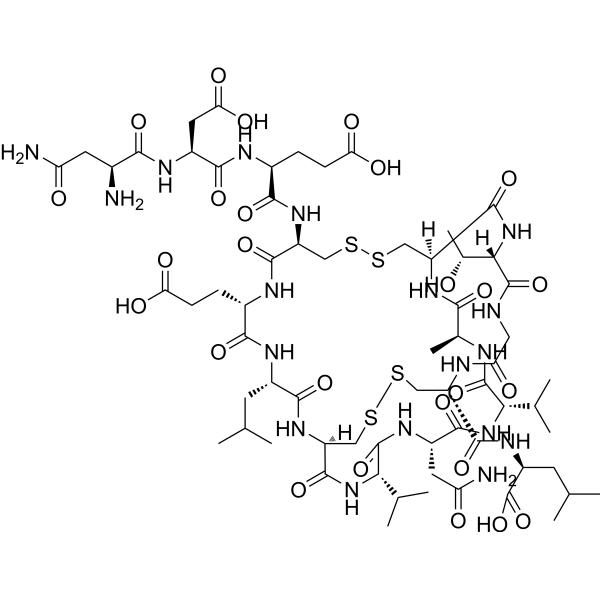
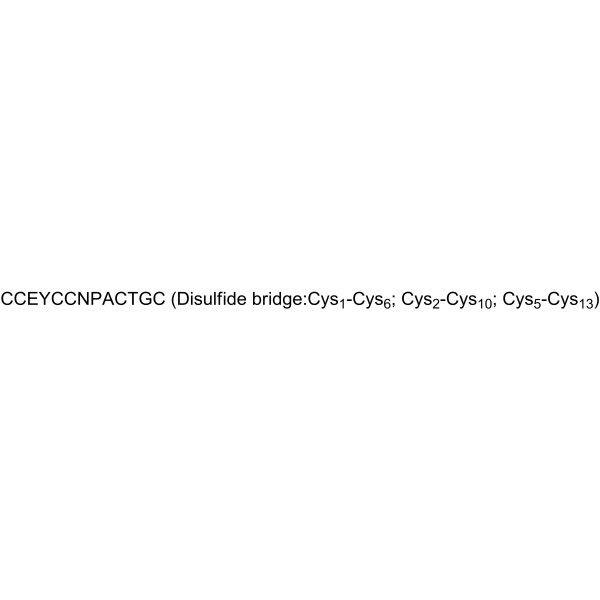
Plecanatide, an analogue of Uroguanylin, is an orally active guanylate cyclase-C (GC-C) receptor agonist. Plecanatide activates GC-C receptors to stimulate cGMP synthesis with an EC50 of 190 nM in T84 cells assay. Plecanatide shows anti-inflammatory activity in models of murine colitis .
loading...
    loading...
Cat. No.: HY-N7104
CAS No.: 585-86-4
Synonyms: D-Lactitol
Target:  

Bacterial

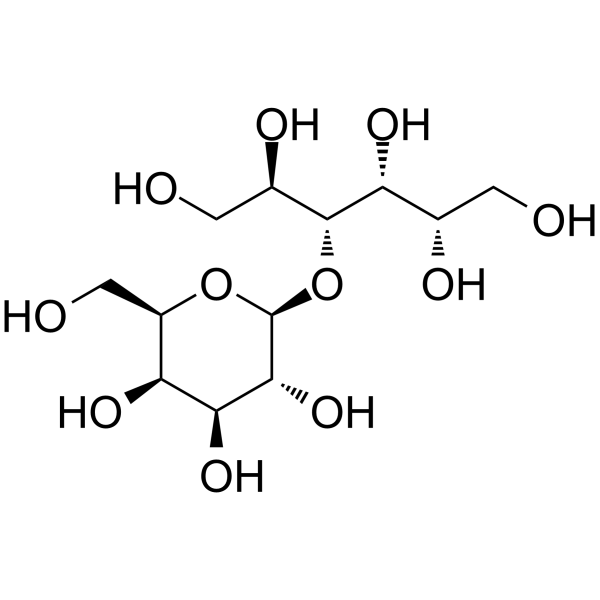
Lactitol (D-Lactitol) is a non-absorbable disaccharide and Bacterial regulator. Lactitol reduces the populations of Bacteroides, Clostridium, coliforms and Eubacterium, while increasing the populations of Lactobacillus and Streptococcus. Lactitol can be used in the research of portosystemic encephalopathy and chronic constipation .
loading...
    loading...
Cat. No.: HY-154659
CAS No.: 9003-97-8
Research Areas:  

Others

Polycarbophil is an orally active hydrophilic polymer. Polycarbophil achieves bioadhesion through hydrogen bonding between carboxyl groups and mucosal surfaces, and prolongs compound retention time and regulates compound release through swelling properties. Polycarbophil relieves constipation and diarrhea .
loading...
    loading...
Cat. No.: HY-B1389
CAS No.: 81025-04-9
Synonyms: D-Lactitol monohydrate
Target:  

Bacterial

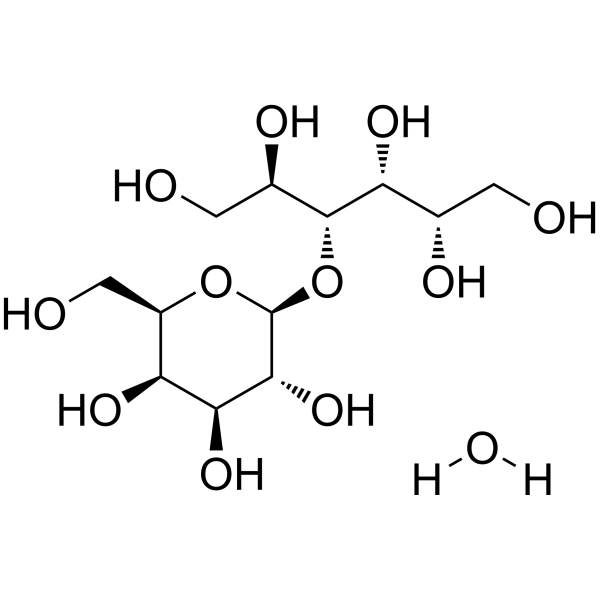
Lactitol monohydrate (D-Lactitol monohydrate) is a non-absorbable disaccharide and Bacterial regulator. Lactitol monohydrate reduces the populations of Bacteroides, Clostridium, coliforms and Eubacterium, while increasing the populations of Lactobacillus and Streptococcus. Lactitol monohydrate can be used in the research of portosystemic encephalopathy and chronic constipation .
loading...
    loading...
Cat. No.: HY-107929
CAS No.: 37286-92-3
Synonyms: Poly(styrenesulfonic acid) calcium salt
Target:  

Potassium Channel

Research Areas:  

Metabolic Disease

Calcium polystyrene sulfonate (Poly(styrenesulfonic acid) calcium salt) is an orally active potassium-lowering agent. Calcium polystyrene sulfonate binds potassium in the distal colon in exchange for Ca 2+. Calcium polystyrene sulfonate can be used for the research of hyperkalemia in chronic kidney disease .
loading...
    loading...
Cat. No.: HY-B0326
CAS No.: 26750-81-2
Target:  

Drug Derivative

Research Areas:  

Endocrinology

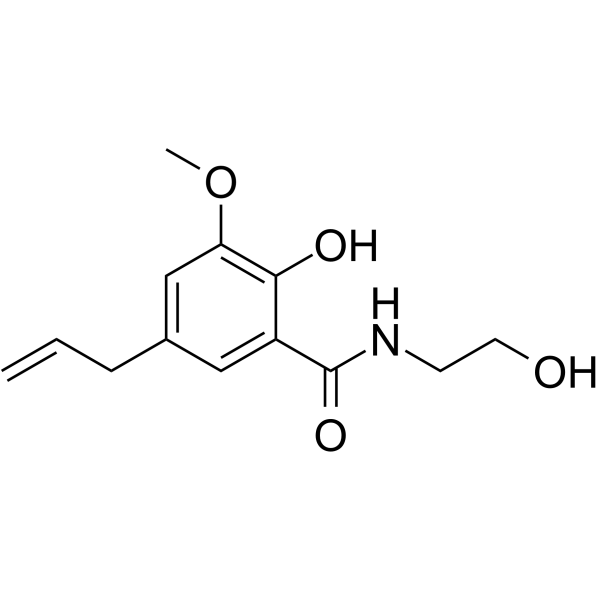
Alibendol can be taken orally. It has anti-spasmodic properties and promotes bile secretion, making it useful for research on digestive system issues like indigestion, nausea, vomiting, and constipation .
loading...
    loading...
Cat. No.: HY-N12326
CAS No.: 1350028-90-8
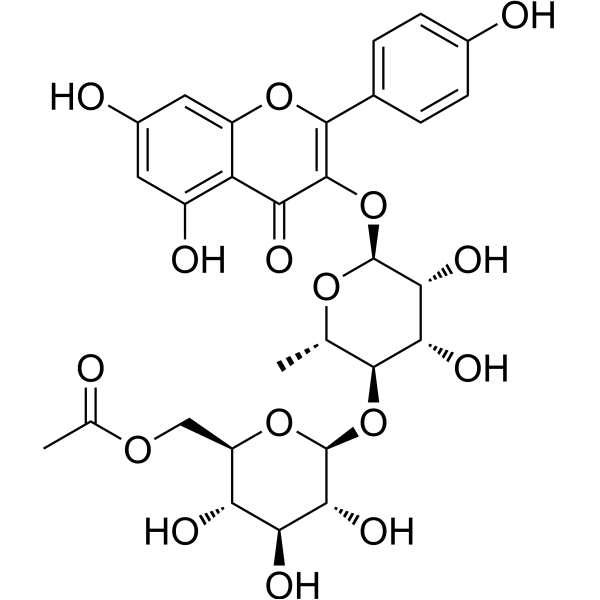
Multiflorin A is an orally active active ingredient of traditional herbal laxative, Pruni semen. Multiflorin A inhibits aromatase enzyme activity with an IC50 of 15.5 μM. Multiflorin A also inhibits quinone reductase 2 (QR2) and COX-2 enzyme. Multiflorin A has purgative activity and reduces postprandial blood glucose in mice. Multiflorin A modulates intestinal glucose transporters, tight junction proteins, and aquaporins, reshapes gut microbiota, and alters faecal metabolites. Multiflorin A can be used for the research of constipation and diabetes .
loading...
    loading...
Cat. No.: HY-108741A
CAS No.: 1075732-84-1
Purity:  99.51%
Target:  

Guanylate Cyclase

Research Areas:  

Inflammation/Immunology Cancer

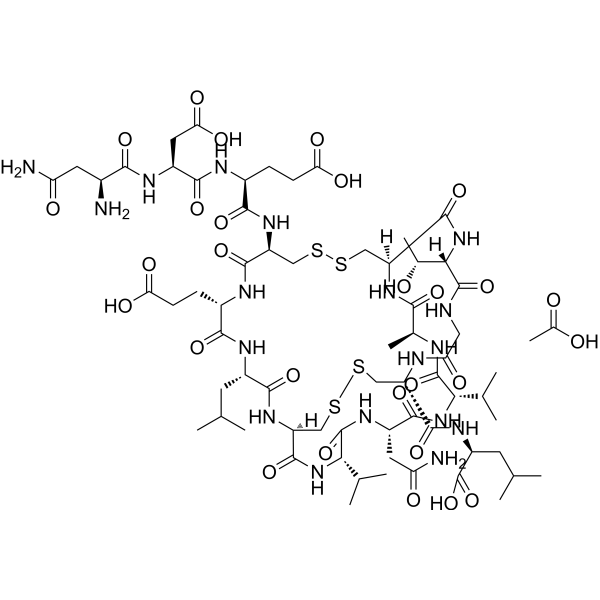
Plecanatide acetate, an analogue of Uroguanylin, is an orally active guanylate cyclase-C (GC-C) receptor agonist. Plecanatide acetate activates GC-C receptors to stimulate cGMP synthesis with an EC50 of 190 nM in T84 cells assay. Plecanatide acetate can be used for the research of chronic idiopathic constipation, and it also shows anti-inflammatory activity in models of murine colitis .
loading...
    loading...
Cat. No.: HY-154636
CAS No.: 8012-95-1
Research Areas:  

Endocrinology

Liquid Paraffin is a petroleum-derived mixture of saturated hydrocarbons and an orally active fecal lubricant. Liquid Paraffin is widely used in studies of constipation and fecal incontinence in children through its lubricating effect and the osmotic effect generated by its conversion to hydroxy fatty acids. Liquid Paraffin has high safety, is non-carcinogenic, and does not affect fat-soluble vitamin levels with long-term use. Liquid Paraffin does not cause abdominal pain or electrolyte disorders, but may lead to lipoid pneumonia and granulomas caused by rectal administration. Liquid Paraffin can also be used as a phase change material for thermal energy storage, or combined with nanoparticles to form a protective boundary film to reduce mechanical wear .
loading...
    loading...
Cat. No.: HY-B1132
CAS No.: 3485-62-9
Synonyms: Ro 2-3773
Target:  

mAChR

Research Areas:  

Neurological Disease

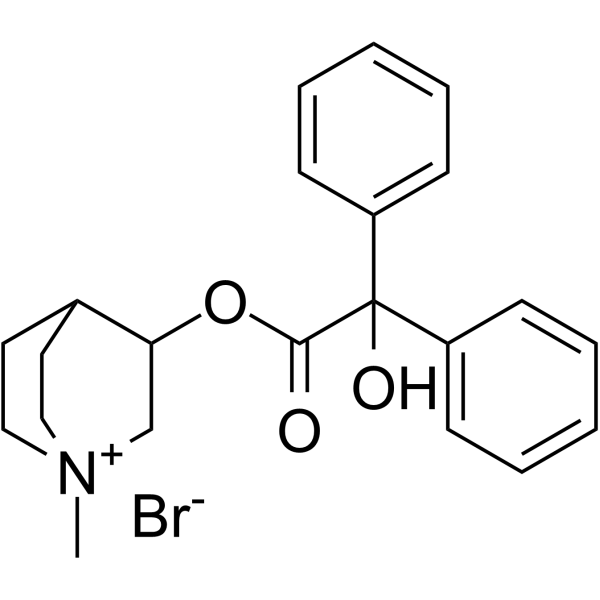
Clidinium bromide is a quaternary amine antimuscarinic agent. Clidinium bromide may help symptoms of cramping and abdominal/stomach pain by decreasing stomach acid, and slowing the intestines in vivo .
loading...
    loading...
Cat. No.: HY-W423191
CAS No.: 534-42-9
Synonyms: 4-O-α-D-Glucopyranosyl-D-gluconic acid
Maltobionic acid (4-O-α-D-Glucopyranosyl-D-gluconic acid) is an orally active oligosaccharide and iron chelator with antibacterial activity. Maltobionic acid inhibits the expression of NFATc1, suppresses osteoclast differentiation, inhibits bone resorption, and increases serum calcitonin levels. Maltobionic acid protects mammalian cells from hydrogen peroxide (H2O2)-induced oxidative damage; resists fermentation by the gut microbiota; and exhibits anti-digestive and anti-fermentative properties. Maltobionic acid can be used in research related to osteoporosis, bacterial infections, and constipation .
loading...
    loading...
Cat. No.: HY-B2134
CAS No.: 8024-48-4
Casanthranol is a naturally derived, orally active mixture of anthraquinone glycosides that exhibits inhibitory activity against α-synuclein and bioactivities related to laxation . Casanthranol inhibits seed-induced α-synuclein fibrillation in cell-free systems and rescues preformed fibril-induced cytotoxicity in differentiated N2a cells. Casanthranol promotes intestinal transit in both the small and large intestines of mice with experimental constipation. Casanthranol can be used in research related to constipation .
loading...
    loading...
Cat. No.: HY-106584
CAS No.: 89419-40-9
Synonyms: Clospipramine
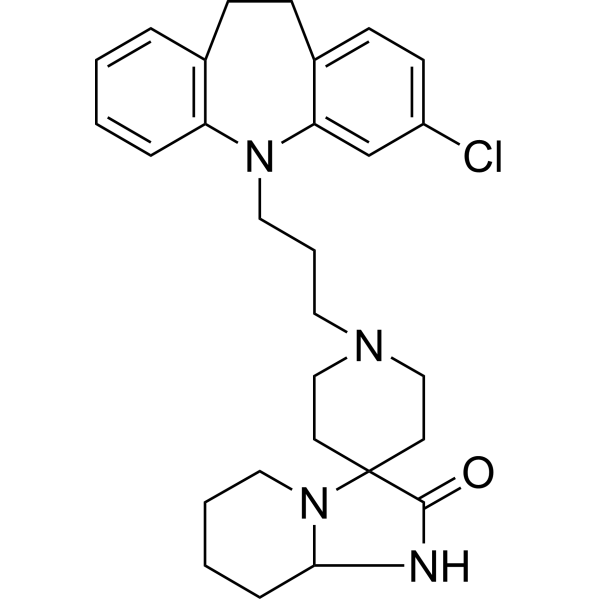
Mosapramine (Clospipramine) is an orally active antipsychotic agent and one of the metabolites of Clocapramine (HY-B2073) after oral absorption. Mosapramine exerts its effects by specifically binding to striatal dopamine D2 receptors and frontal lobe 5-HT2 receptors, with a D2/5-HT2 receptor occupancy ratio of 7.4. Mosapramine induces typical neuropharmacological responses in rat brain regions, including extrapyramidal symptoms, hyperprolactinemia, increased salivation, constipation, and upregulated Fos protein expression. Mosapramine also features a reduced incidence of weight loss. Mosapramine is applicable to research related to schizophrenia .
loading...
    loading...
Cat. No.: HY-B0926B
CAS No.: 131-49-7
Synonyms: N-Methyl-D-glucamine diatrizoate
Diatrizoate meglumine (N-Methyl-D-glucamine diatrizoate) is an orally active, water-soluble, poorly absorbable iodinated contrast agent. Diatrizoate meglumine is widely used as an adjuvant for radiological diagnosis and can also be applied to studies of small bowel obstruction in non-malignant conditions .
loading...
    loading...
Cat. No.: HY-19627
CAS No.: 916072-89-4
Synonyms: S-297995
Target:  

Opioid Receptor

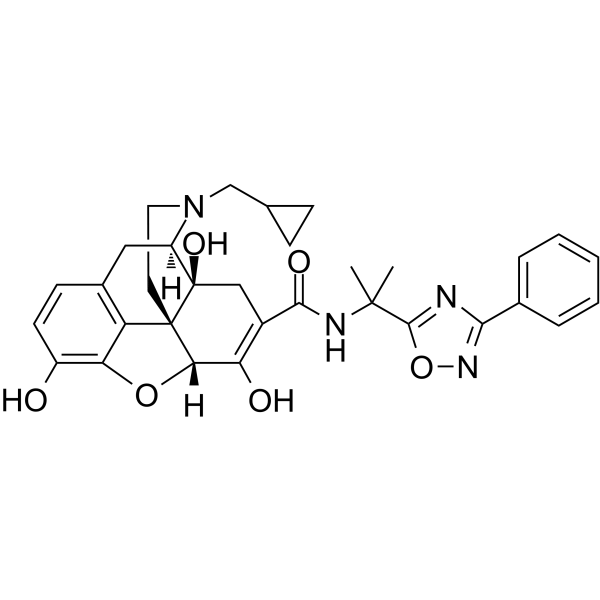
Naldemedine (S-297995) is an orally active μ-opioid receptor antagonist (PAMORA) . Naldemedine shows potent binding affinities (Ki=0.34, 0.43, 0.94 nM, respectively) and antagonist activities (IC50=25.57, 7.09, 16.1 nM, respectively) for recombinant human μ-, δ-, and κ- opioid receptors . Naldemedine can be used in opioid-induced constipation (OIC) research . Naldemedine is predicted to bind to 3CL pro encoded by SARS-CoV2 genome .
loading...
    loading...
Cat. No.: HY-N12281
CAS No.: 517-43-1
Sennoside is an orally active apoptosis inducer and stimulant laxative, found in Senna (Cassia angustifolia). Sennoside induces overexpression of wild-type p53 and p21/WAF as part of pathways mediating colonic epithelial cell apoptosis. Sennoside stimulates colonic peristalsis, reverses net water, sodium, chloride absorption to secretion and enhances potassium and calcium secretion. Sennoside increases paracellular permeability to small molecules, accelerates colon transit and softens fecal pellets. Sennoside can be used for the research of constipation, melanosis coli, and colorectal cancer .
loading...
    loading...
Cat. No.: HY-P3282
CAS No.: 1092457-78-7
Target:  

Guanylate Cyclase

Research Areas:  

Metabolic Disease

MM 419447, a linaclotide metabolite, is a guanylate cyclase-C agonist. MM 419447 has the potential for the research of the irritable bowel syndrome with constipation (IBS-C) .
loading...
    loading...
Cat. No.: HY-121826
CAS No.: 860174-12-5
Synonyms: ATI-7505
Target:  

5-HT Receptor

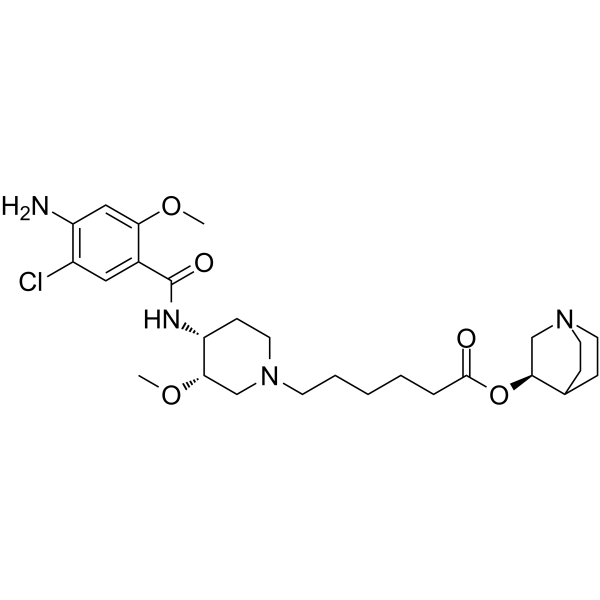
Naronapride (ATI-7505) is a potent prokinetic 5-HT4 receptor agonist. Naronapride can be used for gastrointestinal diseases research .
loading...
    loading...
Cat. No.: HY-135319
CAS No.: 517-46-4
Purity:  97.15%
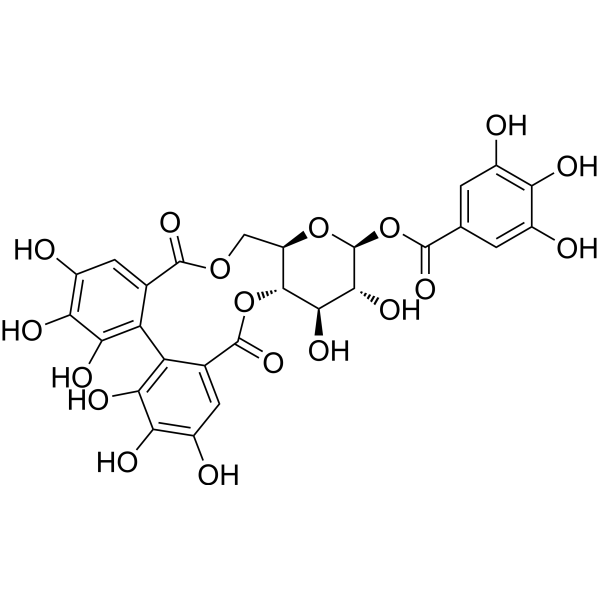
Strictinin is an orally active phenolic compound. Strictinin reduces xanthine oxidase activity, uric acid production, and the activation of ERK1/2, JNK, NF-κB, and NLRP3 inflammasome components in hepatocytes treated with Xanthine (HY-W017389). Strictinin decreases elevated serum uric acid levels and enhanced xanthine oxidase activity in mice treated with potassium oxonate. Strictinin acts as a ROR1 inhibitor and exhibits anticancer activity against highly aggressive non-androgen-dependent prostate cancer. Strictinin induces cancer cell apoptosis (apoptosis), arrests cell cycle, and inhibits cancer cell migration, invasion, and epithelial-mesenchymal transition. Strictinin modulates gut microbiota, inhibits bacterial growth and biofilm formation, accelerates small intestinal transit, and blocks viral entry and replication. Strictinin can be used in research related to hyperuricemia, androgen receptor-negative non-androgen-dependent prostate cancer, triple-negative breast cancer, bacterial infections, constipation, coronavirus infections, dental caries, and infections caused by influenza A, influenza B, and human parainfluenza virus type 1 .
loading...
    loading...
Cat. No.: HY-B0680
CAS No.: 333963-40-9
Synonyms: RU-0211 (hemiketal); SPI-0211 (hemiketal)
Target:  

Chloride Channel

Research Areas:  

Others Cancer

Lubiprostone (hemiketal) (RU-0211 (hemiketal)) is a selective chloride channel 2 (CLCN2) activator. Lubiprostone (hemiketal) is used to treat chronic idiopathic constipation and opioid-induced constipation by activating CLCN2 channels to increase chloride ion secretion in the intestine, thereby increasing intestinal fluid secretion and enhancing intestinal peristalsis. Lubiprostone (hemiketal) can be used in the study of chronic constipation and cancer .
loading...
    loading...

