
72 Results for "

generalized

" in MedChemExpress (MCE) Product Catalog:
Products (72)

72 Results for "generalized" in MCE Product Catalog:

Cat. No.: HY-122487
CAS No.: 1926203-09-9
Purity:  99.71%
Synonyms: BHV-4157
Target:  

mGluR

Research Areas:  

Neurological Disease Cancer

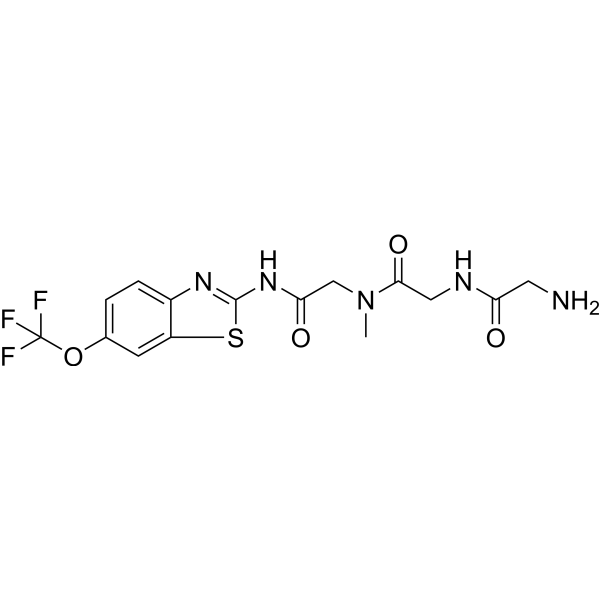
Troriluzole, a third-generation, tripeptide proagent of Riluzole (HY-B0211), is an orally active glutamate modulator. Troriluzole reduces synaptic glutamate level and increases the synaptic glutamate absorption. Troriluzole has the potential for Alzheimer disease and generalized anxiety disorder (GAD) .
loading...
    loading...
Cat. No.: HY-159819
CAS No.: 2392951-18-5
Target:  

Sodium Channel

Research Areas:  

Neurological Disease

Vormatrigine is an orally active sodium channel inhibitor with anti-epileptic activity. Vormatrigine can be used to study human focal and generalized epilepsy .
loading...
    loading...
Cat. No.: HY-P99659
CAS No.: 2102543-86-0
Synonyms: ANB 019

Target:  

Interleukin Related

Research Areas:  

Inflammation/Immunology

Imsidolimab (ANB 019) is a high-affinity, humanized monoclonal antibody of anti-IL-36R. Imsidolimab antagonizes IL-36 cytokine signal transduction. Imsidolimab has potential application in generalized pustular psoriasis (GPP) and other inflammatory skin diseases .
loading...
    loading...
Cat. No.: HY-W017500
CAS No.: 17833-53-3
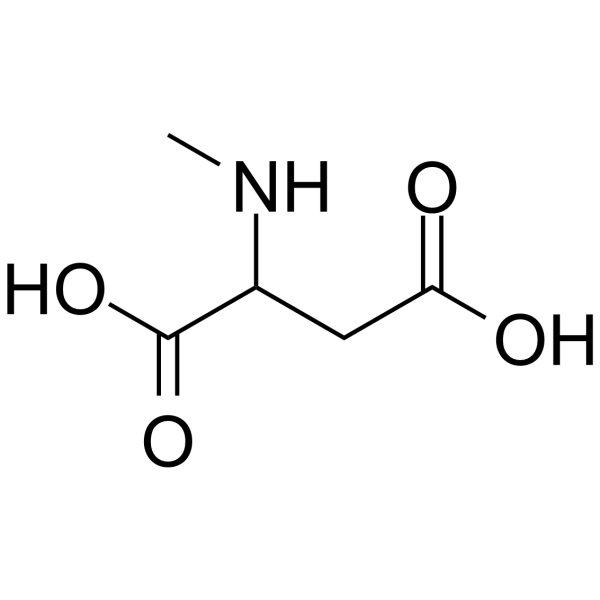
N-Methyl-DL-aspartic acid acts as an agonist for N-methyl-D-aspartic acid receptors and D-isomer-specific aspartate receptors. N-Methyl-DL-aspartic acid activates hypothalamic neurons that regulate gonadotropin-releasing hormone secretion, and stimulates prepubertal male rhesus monkeys to produce sustained intermittent gonadotropin-releasing hormone secretion and pulsatile luteinizing hormone secretion. N-Methyl-DL-aspartic acid activates excitatory effects mediated by N-methyl-D-aspartic acid receptors. N-Methyl-DL-aspartic acid exhibits convulsant effects, inducing clonic convulsions with loss of righting reflex, generalized tonic-clonic seizures or persistent clonic seizures. N-Methyl-DL-aspartic acid causes precocious puberty. N-Methyl-DL-aspartic acid can be used in studies related to convulsions and seizures .
loading...
    loading...
Cat. No.: HY-19686
CAS No.: 95847-70-4
Synonyms: TVX Q 7821 free base
Target:  

5-HT Receptor

Research Areas:  

Neurological Disease

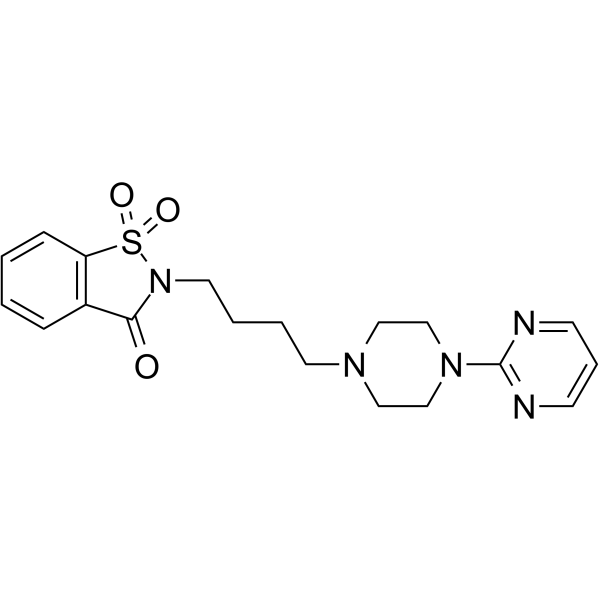
Ipsapirone (TVX Q 7821) is an anxiolytic compound and a 5-HT1A receptor partial agonist. Ipsapirone (TVX Q 7821) also exhibits 5-HT1A receptor antagonistic effect, and only at high doses it can also produce an inhibitory effect on 5-HT2 and the α1-adrenergic function .
loading...
    loading...
Cat. No.: HY-W001692
CAS No.: 96604-21-6
Synonyms: DOV 273547
Target:  

GABA Receptor

Research Areas:  

Neurological Disease

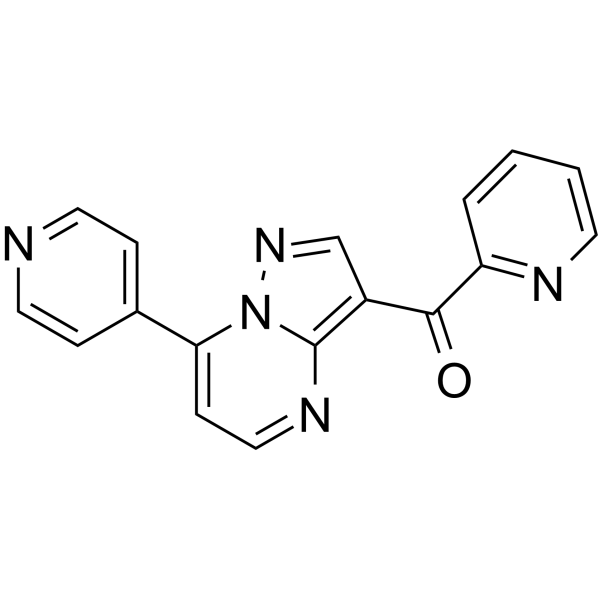
Ocinaplon (DOV 273547) is an orally active positive allosteric modulator of GABAA receptor, with an EC50 ranging from 3.07 μM (α1β2γ2 subtype) to 10.03 μM (α1β2γ3 subtype). Ocinaplon enhances GABA-stimulated chloride currents across multiple GABAA receptor subtypes, with varying potency between different subtypes. Ocinaplon exerts anxiolytic and anticonvulsant effects, and causes motor impairment at high doses. Ocinaplon can be used for research on generalized anxiety disorder .
loading...
    loading...
Cat. No.: HY-B0161S
CAS No.: 919514-01-5
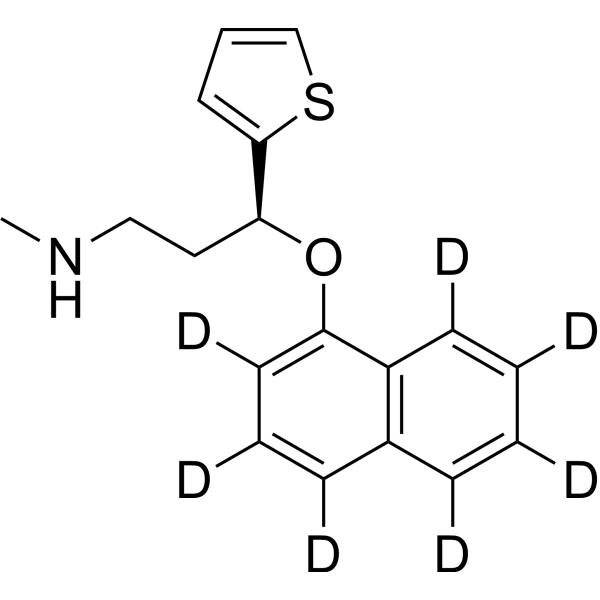
Duloxetine-d7 ((S)-Duloxetine-d7) is the deuterium labeled Duloxetine. Duloxetine is a serotonin-norepinephrine reuptake inhibitor with a Ki of 4.6 nM, used for treatment of major depressive disorder and generalized anxiety disorder (GAD) .
loading...
    loading...
Cat. No.: HY-122272R
CAS No.: 61869-08-7
Synonyms: BRL29060 (Standard)
Paroxetine (BRL29060) (Standard) is the analytical standard of Paroxetine (HY-122272). This product is intended for research and analytical applications. Paroxetine (BRL29060) is an orally active and selective serotonin reuptake inhibitor (SSRI) and apoptosis inducer with blood-brain barrier permeability. Paroxetine inhibits nitric oxide synthase and CYP2D6, induces desensitization of 5-HT1A/1B/1D autoreceptors, downregulates 5-HT2 receptors, and promotes the production of inflammatory cytokines. Paroxetine is a weak norepinephrine (NE) uptake inhibitor and possesses antitumor activity. Paroxetine is widely used in research concerning depression, obsessive-compulsive disorder, panic disorder, social phobia, generalized anxiety disorder, post-traumatic stress disorder, premenstrual dysphoric disorder, hot flashes, and related conditions .
loading...
    loading...
Cat. No.: HY-W039283
CAS No.: 345-24-4
Target:  

MCHR1 (GPR24)

Research Areas:  

Neurological Disease Cancer

MCH-1 antagonist 2 (l-BROMO-2,4-DIFLUORO-5-NITROBEN-ZENE) is a melanin concentrating hormone-1 (MCH1) receptor-selective 4-aryl piperidine. MCH-1 antagonist 2 can be used for the research of depression, anxiety, obesity, urge incontinence, urinary incontinence, major depression, bipolar disorder, agoraphobia, specific phobia, social phobia, obsessive-compulsive disorder, post-traumatic stress disorder, acute stress disorder, urinary frequency, urinary urgency, nocturia, enuresis, bulimia, bulimia nervosa, anorexia nervosa, major depressive disorder, dysthymic disorder, bipolar 1 and 2 disorders, schizoaffective disorder, cognitive disorders with depressed mood, personality disorders, insomnia, hypersomnia, narcolepsy, circadian rhythm sleep disorder, nightmare disorder, sleep terror disorder, sleepwalking disorder, panic disorder, social anxiety disorder, generalized anxiety disorder, overactive bladder .
loading...
    loading...
Cat. No.: HY-122487A
CAS No.: 1926204-76-3
Synonyms: BHV-4157 hydrochloride
Target:  

mGluR

Research Areas:  

Neurological Disease

Troriluzole hydrochloride is a third-generation peptide precursor of Riluzole (HY-B0211) and is an orally active glutamate modulator. Troriluzole hydrochloride can reduce synaptic glutamate levels and enhance the uptake of synaptic glutamate. Troriluzole hydrochloride shows potential for treating Alzheimer's disease and Generalized Anxiety Disorder (GAD) .
loading...
    loading...
Cat. No.: HY-19046
CAS No.: 103353-87-3
Synonyms: SC 48274 hydrochloride; BTG 1501 hydrochloride
Research Areas:  

Neurological Disease

AGN‑2979 hydrochloride (SC 48274 hydrochloride; BTG 1501 hydrochloride) is an orally active and selective tryptophan hydroxylase inhibitor with antidepressant-like and anxiolytic-like activities. AGN‑2979 hydrochloride inhibits stress-induced activation of tryptophan hydroxylase, thereby limiting the biosynthesis of 5-hydroxytryptamine in the brain. AGN-2979 hydrochloride possesses non-sedative anxiolytic and cognitive-enhancing properties. AGN-2979 hydrochloride is applicable to research related to depression and generalized anxiety disorder .
loading...
    loading...
Cat. No.: HY-N16300
CAS No.: 3091879-75-0
Target:  

Fluorescent Dye

Research Areas:  

Others

Mito-laurdan (bromide) is a Fluorescent dye for mitochondrial membrane fluidity and packing measurement. It depends on membrane potential for targeting: it contains a cationic triphenylphosphonium moiety that accumulates at the inner mitochondrial membrane due to the membrane's negative potential, connected via a 3-carbon linker. As a solvatochromic dye derived from Laurdan (HY-D0080), it retains the characteristic mechanism where fluorescence emission shifts based on membrane packing: in more fluid, loosely packed membranes, greater water penetration leads to increased dipolar relaxation and a bathochromic red shift in emission, while more ordered membranes show a blue-shifted emission; these shifts are quantified using generalized polarization, calculated from emission intensities in ordered and disordered spectral windows. Its excitation wavelength is 352 nm, with emission detected in ordered (409-463 nm) and disordered (473-516 nm) spectral windows. It localizes specifically to mitochondria in HeLa cells, showing high signal overlap with MitoTracker Deep Red, and can detect changes in inner mitochondrial membrane fluidity .
loading...
    loading...
Cat. No.: HY-124044
CAS No.: 1177148-36-5
Target:  

Phosphatase

Research Areas:  

Cardiovascular Disease

ML 086 is a highly selective PHOSPHO1 phosphatase inhibitor (IC50=0.14 μM). ML 086 is promising for research of hereditary vascular calcification disorders (e.g., generalized arterial calcification of infancy) and spinal ligament ossification .
loading...
    loading...
Cat. No.: HY-B1115AR
CAS No.: 36505-84-7
Buspirone (Standard) is the analytical standard of Buspirone. This product is intended for research and analytical applications. Buspirone is an orally active 5-HT1A receptor agonist, and a dopamine D2 autoreceptorsant antagonist. Buspirone is an anxiolytic agent, and can be used for the generalized anxiety disorder research .
loading...
    loading...
Cat. No.: HY-19545
CAS No.: 87075-17-0
Synonyms: R-(+)-SCH-23390
Target:  

Dopamine Receptor

Research Areas:  

Neurological Disease

SCH-23390 is a dopamine D1-like receptor antagonist (with Ki values of 0.2 nM and 0.3 nM for the D1 and D5 receptor subtypes, respectively). SCH-23390 can shorten the latency period for cocaine-induced lever pressing behavior in rats. SCH-23390 can also eliminate generalized seizures caused by chemical convulsants, such as arecoline (HY-B0726A) and strychnine, and is used in research on neurological disorders related to the dopamine system .
loading...
    loading...
Cat. No.: HY-W052508R
CAS No.: 5747-48-8
Synonyms: N-Desalkylquetiapine (Standard)
Research Areas:  

Neurological Disease

Norquetiapine is an antidepressant and neuroprotective agent and is the active metabolic component of Quetiapine (HY-14544). Norquetiapine is also a partial 5-HT1A receptor agonist, and a presynaptic α2, 5-HT2C and 5-HT7 b> Receptor antagonist. Norquetiapine can also selectively inhibit norepinephrine transporter (NET), inhibit norepinephrine reuptake, and has potential inhibitory effects on bipolar depression, major depressive disorder, and generalized anxiety disorder. Norquetiapine demonstrated in vivo activity in forced swimming in mice and learned helplessness tests in rats .
loading...
    loading...
Cat. No.: HY-B0773
CAS No.: 217797-14-3
Synonyms: BRL29060 mesylate
Paroxetine (BRL29060) mesylate is an orally active and selective serotonin reuptake inhibitor (SSRI) and apoptosis inducer with blood-brain barrier permeability. Paroxetine mesylate inhibits nitric oxide synthase and CYP2D6, induces desensitization of 5-HT1A/1B/1D autoreceptors, downregulates 5-HT2 receptors, and promotes the production of inflammatory cytokines. Paroxetine mesylate is a weak norepinephrine (NE) uptake inhibitor and possesses antitumor activity. Paroxetine mesylate is widely used in research concerning depression, obsessive-compulsive disorder, panic disorder, social phobia, generalized anxiety disorder, post-traumatic stress disorder, premenstrual dysphoric disorder, hot flashes, and related conditions .
loading...
    loading...
Cat. No.: HY-B0161AS
CAS No.: 1435727-97-1
Synonyms: (S)-Duloxetine D3 hydrochloride; LY248686 D3 hydrochloride
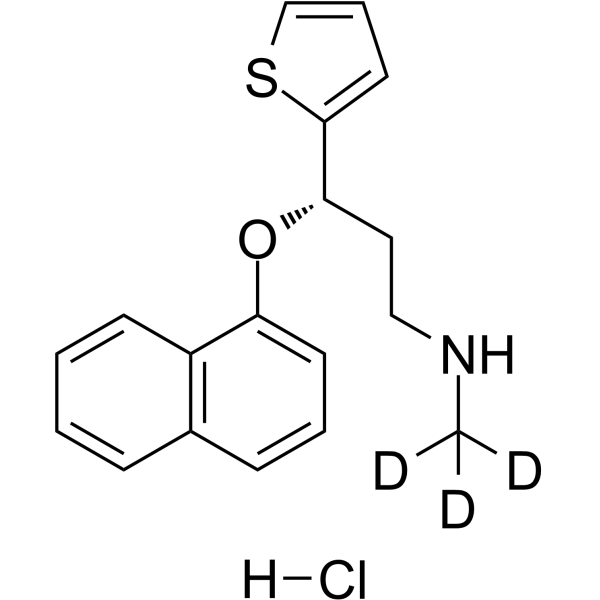
Duloxetine-d3 (hydrochloride) is a deuterium labeled Duloxetine hydrochloride. Duloxetine hydrochloride is a serotonin-norepinephrine reuptake inhibitor (SNRI) with a Ki of 4.6 nM, used for treatment of major depressive disorder and generalized anxiety disorder (GAD) .
loading...
    loading...
Cat. No.: HY-118901A
CAS No.: 909-39-7
Synonyms: Ensidon dihydrochloride; G-33040 dihydrochloride
Target:  

Sigma Receptor

Research Areas:  

Neurological Disease

Opipramol (Ensidon) is an atypical tricyclic antidepressant (TCA). Opipramol acts primarily as a sigma (σ) receptor agonist and can potently interact with sigma recognition sites with a Ki value of 50 nM. Opipramol can be used for the research of generalized anxiety disorder (GAD) .
loading...
    loading...
Cat. No.: HY-118901R
CAS No.: 315-72-0
Synonyms: Ensidon (Standard); G-33040 (Standard)
Research Areas:  

Neurological Disease

Opipramol (Standard) is the analytical standard of Opipramol. This product is intended for research and analytical applications. Opipramol (Ensidon) is an atypical tricyclic antidepressant (TCA). Opipramol acts primarily as a sigma (σ) receptor agonist and can potently interact with sigma recognition sites with a Ki value of 50 nM. Opipramol can be used for the research of generalized anxiety disorder (GAD) .
loading...
    loading...

