
78 Results for "

tau aggregation

" in MedChemExpress (MCE) Product Catalog:
Products (78)

78 Results for "tau aggregation" in MCE Product Catalog:

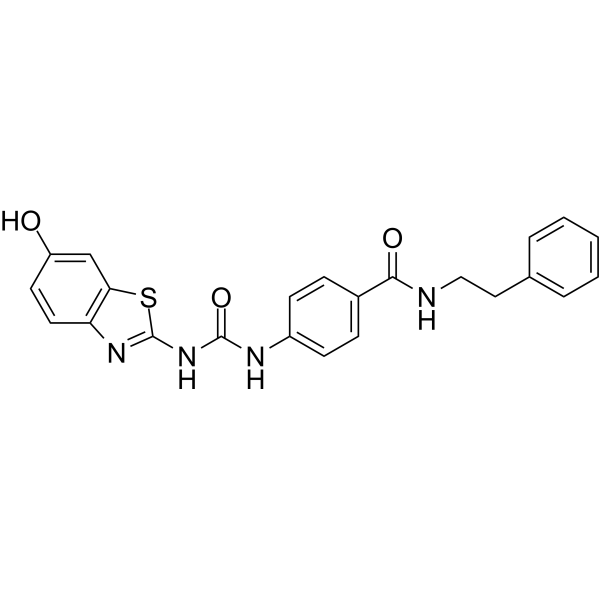
Cat. No.: HY-153427
CAS No.: 916179-45-8
Target:  

Tau Protein

Research Areas:  

Neurological Disease

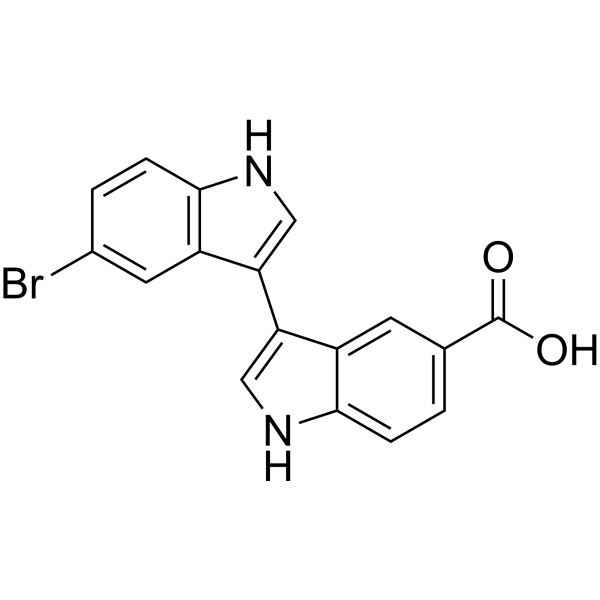
Tau protein aggregation-IN-1 (Compound 0c) is a Tau protein aggregation inhibitor. Tau protein aggregation-IN-1 can be used in the study of protein folding disorders such as Alzheimer's disease, dementia, Parkinson's disease, Huntington's disease and prion-based spongiform encephalopathies .
loading...
    loading...
Cat. No.: HY-P4808A
Target:  

Amyloid-β Autophagy

Research Areas:  

Neurological Disease

PHF6 (VQIVYK) TFA is a self-assembly sequence capable of initiating the full-length tau protein aggregation. PHF6 TFA is mapped to the third microtubule-binding repeat region of the tau protein .
loading...
    loading...
Cat. No.: HY-P4933
CAS No.: 2022995-68-0
Synonyms: tau-F protein (255-314)
Target:  

Tau Protein

Research Areas:  

Neurological Disease

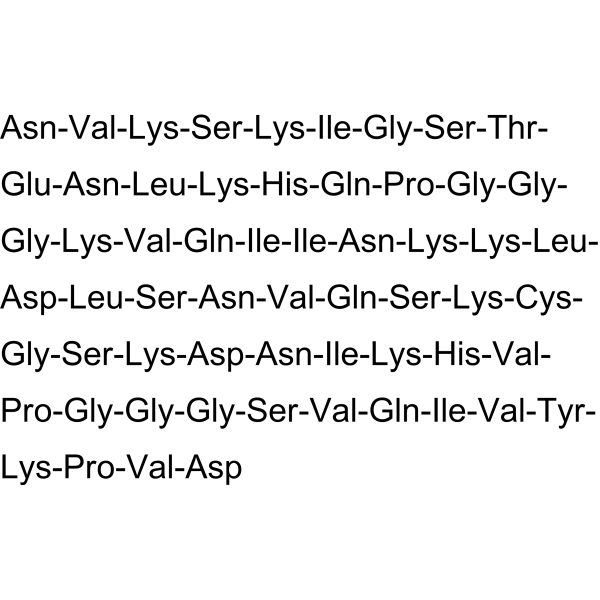
Tau Peptide (255-314) (Repeat 2 Domain) (human) (Tau-F protein (255-314)) is a polypeptide. Tau Peptide (255-314) (human) is the 255-314 fragment of Tau-F (also known as Tau-4, the 2N4 isoform), a major isoform of the Tau protein. Tau Peptide (255-314) (human) contains two core driving sequences for Tau aggregation, namely PHF6* (275-280, VQIINK) and PHF6 (306-311, VQIVYK), and spans the C-terminal half of repeat domain R1, the entire repeat domain R2, and the N-terminal half of repeat domain R3 within the microtubule-binding region (MTBR).
loading...
    loading...
Cat. No.: HY-138643
CAS No.: 185351-23-9
Purity:  99.97%
Target:  

Amyloid-β

Research Areas:  

Neurological Disease

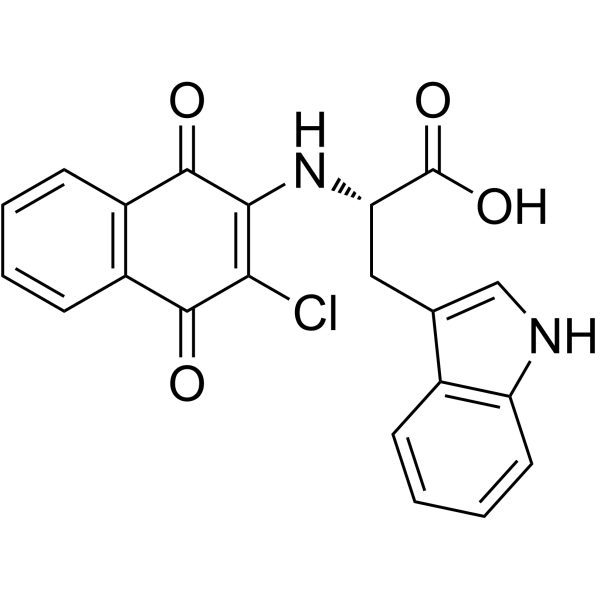
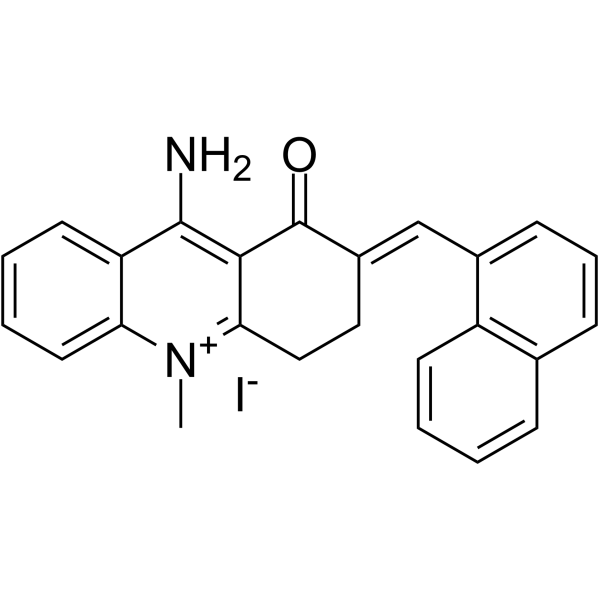
Cl-NQTrp signifcantly disrupts the preformed fbrillar aggregates of Tau-derived PHF6 (VQIVYK) peptide and full-length tau protein .
loading...
    loading...
Cat. No.: HY-151335
CAS No.: 1160952-43-1
Target:  

HSP

Research Areas:  

Cancer

KU-177 is a potent inhibitor of Hsp90 ATPase homologue 1 (Aha1), ablates Aha1-driven enhancement of Hsp90-dependent tau aggregation. KU-177 also disrupts Aha1/Hsp90 interactions (IC50=4.08 μM) without inhibition of Hsp90’s ATPase activity. KU-177 can be used for tauopathies research .
loading...
    loading...
Cat. No.: HY-159083
CAS No.: 937012-09-4
Purity:  99.01%
Target:  

Amyloid-β

Research Areas:  

Neurological Disease

DN5355 is a small molecule compound that targets amyloid β protein () and hyperphosphorylated tau protein. DN5355 can inhibit the aggregation of and tau protein and disaggregate the formed and tau protein fibers. DN5355 can be used in the study of Alzheimer's disease .
loading...
    loading...
Cat. No.: HY-111935
CAS No.: 3065-79-0
Target:  

Microtubule/Tubulin

Research Areas:  

Neurological Disease

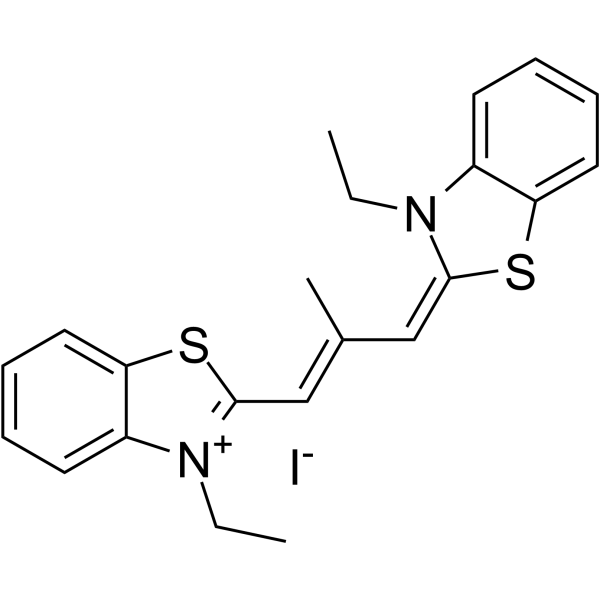
3,3'-Diethyl-9-methylthiacarbocyanine iodide is a cyanine dye, also a tau aggregation inhibitor, with an IC50 value of 0.28 μM for tau. 3,3'-Diethyl-9-methylthiacarbocyanine iodide can cause misfunction of the microtubule cytoskeleton. 3,3'-Diethyl-9-methylthiacarbocyanine iodide can be used for researching Alzheimer’s disease .
loading...
    loading...
Cat. No.: HY-141661
CAS No.: 2252162-81-3
Purity:  98.10%
Target:  

Amyloid-β

Research Areas:  

Neurological Disease

Aβ/tau aggregation-IN-1 is a potent 1-42 β-sheets formation and tau aggregation inhibitor. The KD values of Aβ/tau aggregation-IN-1 with 1-42 and tau are 160 μM and 337 μM, respectively. Aβ/tau aggregation-IN-1 can permeate the blood-brain barrier .
loading...
    loading...
Cat. No.: HY-172973
CAS No.: 2109305-45-3
Target:  

Tau Protein

Research Areas:  

Neurological Disease

TAU-IN-4 (compound I1.21) is a potent Tau aggregation inhibitor with a KD of 1.58 μM. TAU-IN-4 can be used in the study of Alzheimer’s disease .
loading...
    loading...
Cat. No.: HY-14536R
CAS No.: 61-73-4
Synonyms: Basic Blue 9 (Standard); CI-52015 (Standard); Methylthioninium chloride (Standard)
Methylene Blue (Standard) is the analytical standard of Methylene Blue. This product is intended for research and analytical applications. Methylene blue (Basic Blue 9) is a guanylyl cyclase (sGC), monoamine oxidase A (MAO-A) and NO synthase (NOS) inhibitor. Methylene blue is a vasopressor and is often used as a dye in several medical procedures. Methylene blue through the nitric oxide syntase/guanylate cyclase signalling pathway to reduce prepulse inhibition. Methylene blue is a REDOX cycling compound and able to cross the blood-brain barrier. Methylene blue is a Tau aggregation inhibitor. Methylene blue reduces cerebral edema, attenuated microglial activation and reduced neuroinflammation .
loading...
    loading...
Cat. No.: HY-W835959
CAS No.: 2361566-66-5
Target:  

Tau Protein

Research Areas:  

Neurological Disease

ACI-3024 is an an orally active and highly selective Tau protein aggregation inhibitor. ACI-3024 decrease the β-sheet content and seeding properties of pathological Tau from different Tauopathies, leading to a significant rescue of the Tau-induced neurodegeneration and neuroinflammation in a cellular model. ACI-3024 is promising for research of neurodegenerative diseases .
loading...
    loading...
Cat. No.: HY-15136B
CAS No.: 193275-86-4
Synonyms: Sch66336 racemate
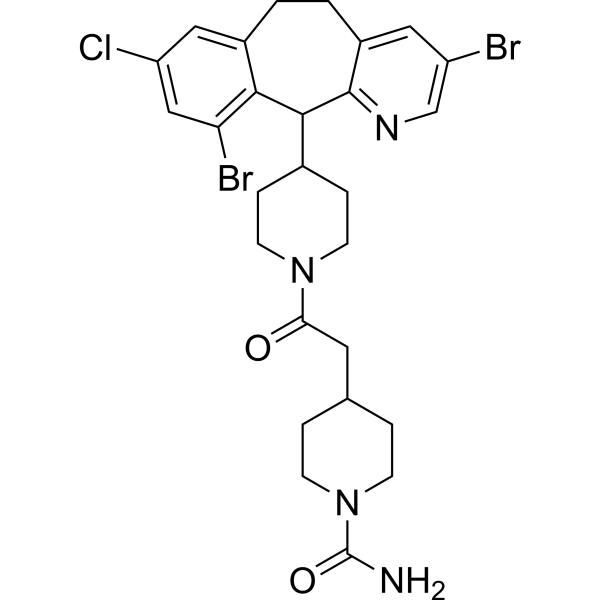
(Rac)-Lonafarnib (Sch66336 racemate) is an isomer of Lonafarnib (HY-15136). Lonafarnib (Sch66336) is an orally active, blood-brain barrier penetrant farnesyltransferase (FPTase) inhibitor. Lonafarnib increases the phosphorylation levels of Akt, CaMKII and CREB, upregulates BDNF expression in the hippocampus, elevates the content of α7nAChR on cell membranes, and blocks the isoprenylation of H-Ras. Lonafarnib repairs synapses and reverses spatial memory deficits in Aβ1-42 model mice. Lonafarnib inhibits RSV fusion and replication, and alleviates virus-induced lung injury. Lonafarnib activates the lysosomal and autophagic pathways, and reduces the phosphorylation and aggregation of tau. Lonafarnib acts synergistically with Sorafenib (HY-10201) to promote apoptosis, and inhibits the proliferation and invasion of melanoma cells. Lonafarnib inhibits the farnesylation of progerin, repairs nuclear membrane defects, and activates the cGAS-STING-STAT1 signaling pathway. Lonafarnib can be used in research related to diseases including Alzheimer's disease, viral infections, melanoma, and progeria .
loading...
    loading...
Cat. No.: HY-146135
CAS No.: 1619269-19-0
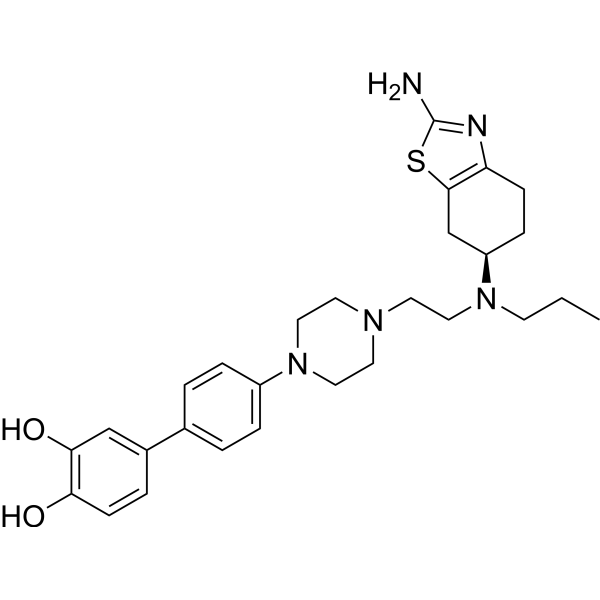
Tau-aggregation-IN-1 (Compound D-519) is a tau441 protein aggregation inhibitor with an IC50 of 21 µM. Tau-aggregation-IN-1 is also a dopamine D2 and D3 receptor agonist .
loading...
    loading...
Cat. No.: HY-139830
CAS No.: 2858696-72-5
Target:  

DYRK

Research Areas:  

Neurological Disease

Dyrk1A-IN-1 is a triple inhibitor of Dyrk1A kinase activity (IC50 = 119 nM) and the aggregation of tau and α-syn oligomers.
loading...
    loading...
Cat. No.: HY-P2516
CAS No.: 330456-25-2
Target:  

Tau Protein

Research Areas:  

Neurological Disease

Tau Peptide (275-305) (Repeat 2 domain) is the Alzheimer's Tau fragment R2, corresponding to the second repeat unit of the microtubule-binding domain, which is believed to be pivotal to the biochemical properties of full tau protein. Tau Peptide (275-305) specifically coordinates with group IIB metal ions (Zn²⁺, Cd²⁺, Hg²⁺), which can induce their conformational changes and significantly promote their pathological accumulation. Tau Peptide (275-305) can be used to study the role of heavy metals in neurodegenerative diseases .
loading...
    loading...
Cat. No.: HY-102086
CAS No.: 261717-23-1
Research Areas:  

Neurological Disease

MSX3 is an orally active, selective A2a adenosine receptor antagonist and a prodrug of MSX2 (HY-117184). MSX3 reduces hyperphosphorylation of Tau at specific epitopes in mice without altering total Tau levels, Tau fragments, or Tau aggregation in these animals. MSX3 enhances spatial memory. MSX3 regulates effort-related decision-making behaviors. MSX3 reverses D2 antagonist-induced suppression of lever pressing, increased Chow feed intake, reduced selection of high-barrier arms, and prolonged response latency, and also slightly attenuates effects induced by D1 antagonists. MSX3 can be used in the research of Tauopathies (Alzheimer's disease-related), depression, and Parkinsonism .
loading...
    loading...
Cat. No.: HY-109116A
CAS No.: 951131-15-0
Synonyms: Leukomethylene blue dihydrobromide; LMTM dihydrobromide
Target:  

Tau Protein

Research Areas:  

Neurological Disease

Hydromethylthionine dihydrobromide (Leukomethylene blue dihydrobromide) is a potent inhibitor of TAU protein aggregation. Hydromethylthionine dihydrobromide reduces neurodegeneration by interacting with TAU proteins and preventing them from forming neurotoxic aggregates. Hydromethylthionine dihydrobromide can be used in the study of Alzheimer's disease and other TAU related disorders .
loading...
    loading...
Cat. No.: HY-161448
CAS No.: 3032869-59-0
Target:  

Tau Protein

Research Areas:  

Neurological Disease

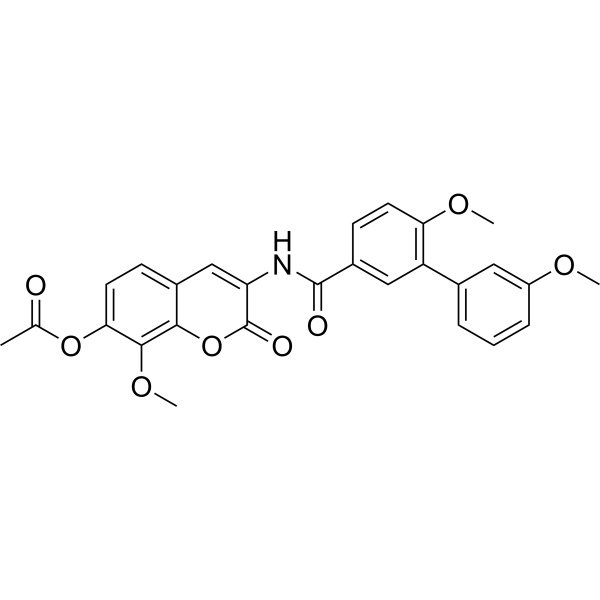
Tau-aggregation-IN-3 (compound 9) a Tau protein aggregation inhibitor (TAI). Tau-aggregation-IN-3 shows activity in cell-based aggregation inhibition experiments (EC50=4.816 μM). Tau-aggregation-IN-3 can be used in Alzheimer's disease research .
loading...
    loading...
Cat. No.: HY-176936
CAS No.: 1283397-08-9
Target:  

Tau Protein

Research Areas:  

Neurological Disease

Tau-aggregation-IN-5 is a Tau-aggregation inhibitor (EC50 = 0.31 μM). Tau-aggregation-IN-5 targets P4HB covalently and activates mild ER stress. Tau-aggregation-IN-4 can be used for the study of neurodegenerative disorders such as Alzheimer’s and Pick’s diseases .
loading...
    loading...
Cat. No.: HY-178927
Target:  

Tau Protein

Research Areas:  

Neurological Disease

Tau-aggregation-IN-4 is a Tau-aggregation inhibitor (EC50 = 2.99 μM). Tau-aggregation-IN-4 can be used for the study of neurodegenerative disorders such as Alzheimer’s and Pick’s diseases .
loading...
    loading...

