392 Results for "

Sodium acetate buffer

" in MedChemExpress (MCE) Product Catalog:
Products (392)

392 Results for "Sodium acetate buffer" in MCE Product Catalog:

Cat. No.: HY-W251598J
CAS No.: 144-55-8
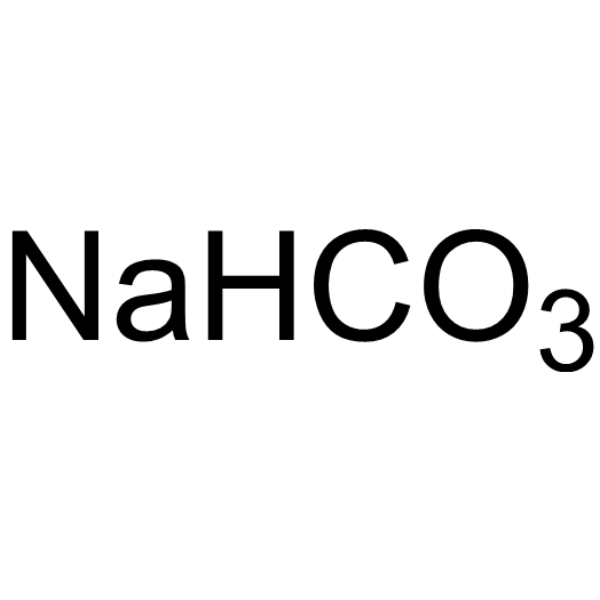
Synonyms: Sodium hydrogen carbonate (Pharmaceutical primary standard, USP); Soda bicarbonate (Pharmaceutical primary standard, USP)
Sodium bicarbonate, United States Pharmacopeia (USP) Reference Standard is an inorganic salt. Sodium bicarbonate, United States Pharmacopeia (USP) Reference Standard can maintain the pH of the culture medium, thereby affecting the expression of inducible nitric oxide synthase (iNOS) and nitric oxide (NO) production in macrophages and reversing the acidosis of the tumor microenvironment. Sodium bicarbonate, United States Pharmacopeia (USP) Reference Standard is widely used in the fields of food, cosmetics, etc. Its main uses include buffers, flavoring agents, disinfectants, pharmaceuticals, and proton gradient regulators. Sodium bicarbonate, United States Pharmacopeia (USP) Reference Standard is also commonly used as an antacid to inhibit gastrointestinal diseases, neutralize gastric acid, and reduce gastric discomfort .
loading...
    loading...
Cat. No.: HY-W251598S
CAS No.: 87081-58-1
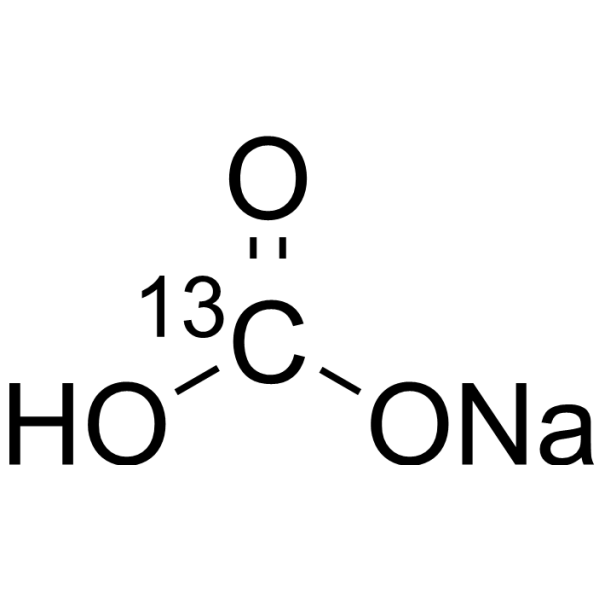
Bicarbonate- 13C sodium is the 13C-labeled Sodium bicarbonate (HY-Y0756). Sodium bicarbonate is an inorganic salt that is neutral to slightly alkaline and easily decomposes when exposed to moisture in the air. Sodium bicarbonate can maintain the pH of the culture medium, thereby affecting the expression of inducible nitric oxide synthase (iNOS) and nitric oxide (NO) production in macrophages and reversing the acidosis of the tumor microenvironment. Sodium bicarbonate is widely used in the fields of food, medicine, cosmetics, etc. Its main uses include buffers, flavoring agents, disinfectants, pharmaceuticals, and proton gradient regulators. Sodium bicarbonate is also commonly used as an antacid to inhibit gastrointestinal diseases, neutralize gastric acid, and reduce gastric discomfort .
loading...
    loading...
Cat. No.: HY-D3441
Research Areas:  

Others

LumiPK is an environment-sensitive probe that specifically targets the liver isoform of pyruvate kinase (PKL). LumiPK exhibits high affinity for PKL with a Kd of 37 nM. LumiPK integrates the 4-sulfonamido-7-aminobenzoxadiazole (SBD) fluorophore into a phthalazine scaffold, and its fluorescence intensity changes with the polarity of the chemical environment, thereby directly reflecting protein occupancy. LumiPK binds only to the tetrameric form of PKL, with the binding site being an allosteric pocket formed at the subunit interface, and key water-mediated interactions enhance its potency; in polar environments such as buffer, its fluorescence is significantly quenched, whereas upon binding to the nonpolar allosteric pocket of PKL, its fluorescence is enhanced. In fluorescence detection, its excitation/emission wavelengths are Ex/Em = 450/550 nm .
loading...
    loading...
Cat. No.: HY-K0360

MCE Mouse CD4+ CD25+ Regulatory T Cell Positive Selection Kit is designed for the isolation of CD4+ CD25+ regulatory T cells (Tregs) from mouse splenic single-cell suspensions. The kit utilizes a two-step isolation strategy. First, CD4 Enrichment Beads are used to deplete non-target cells and enrich CD4+ T cells. Subsequently, CD25 Capture Antibody specifically binds to CD25+ cells, which are then captured by Releasable Magnetic Beads. Following isolation, the magnetic beads are gently detached from the cell surface using Magnetic Beads Release Buffer, yielding label-free CD4+ CD25+ regulatory T cells with no residual magnetic beads.

loading...
    loading...
Cat. No.: HY-138660
CAS No.: 2376841-30-2
Synonyms: HM-JF526 NHS
Target:  

Fluorescent Dye

Research Areas:  

Others

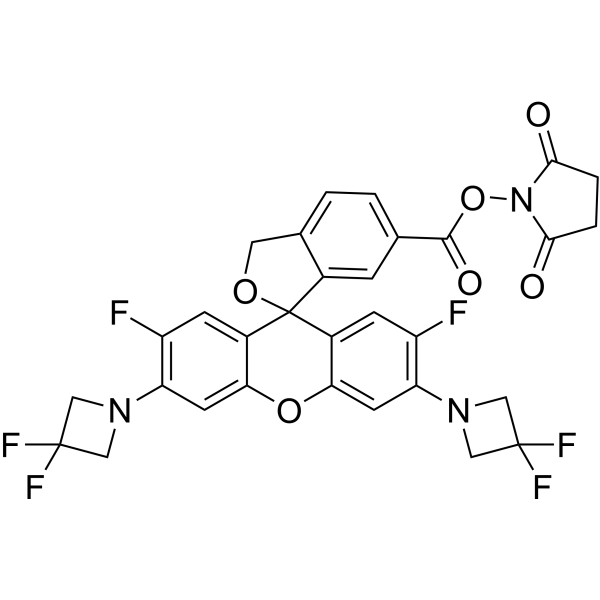
HM Janelia Fluor 526, SE (HM-JF526 NHS) is a derivative of hydroxymethyl JF526 (HM-JF526). SMLM (single-molecule localization microscopy) imaging in standard phosphate-buffered saline (pH 7.4) revealed that the HM-JF526 label showed spontaneous blinking behavior throughout the imaging session and did not require short-wavelength activation light . Janelia Fluor fluorescent dyes can be chemically conjugated to the specific HaloTag substrate (a chloroalkane ligand) to form a fluorescent ligand, rather than binding directly to the HaloTag protein itself. Janelia Fluor products are licensed under U.S. Pat. Nos. 9,933,417, 10,018,624 and 10,161,932 and other patents from Howard Hughes Medical Institute.
loading...
    loading...
Cat. No.: HY-Y0308D
CAS No.: 7558-79-4
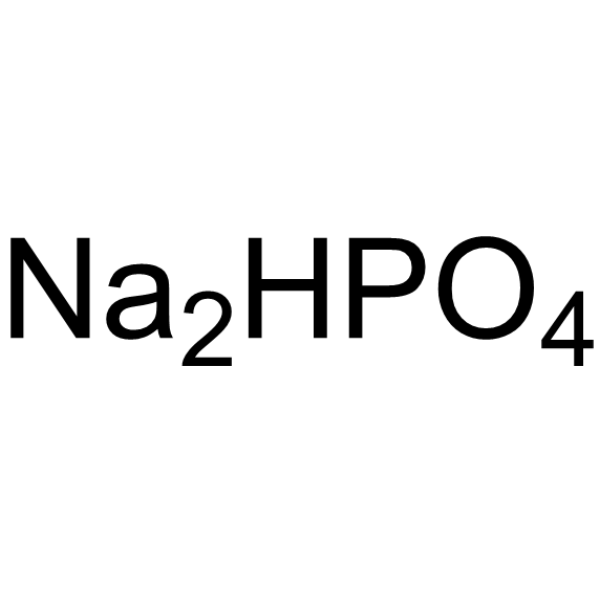
Synonyms: DiSodium hydrogen phosphate, meets analytical specification of Ph. Eur. BP USP FCC E339
Sodium phosphate dibasic (Disodium hydrogen phosphate), meets analytical specification of Ph. Eur. BP USP FCC E339 is an inorganic dibasic phosphate that functions as an electrolyte supplement, a buffer carrier for injectable drugs, while also exhibiting nephrotoxicity. Sodium phosphate dibasic, meets analytical specification of Ph. Eur. BP USP FCC E339 induces extensive nephrotic syndrome-like changes, including systemic symptoms such as persistent proteinuria, lipemia, hypercholesterolemia, and anemia, and causes severe renal pathological alterations such as renal enlargement, glomerular calcification, podocyte injury, and tubulointerstitial lesions. Sodium phosphate dibasic, meets analytical specification of Ph. Eur. BP USP FCC E339 has the ability to induce phosphate-induced nephropathy and glomerular calcification, and can be widely used in studies on nephrotic syndrome and related renal pathological mechanisms .
loading...
    loading...
Cat. No.: HY-D2984
CAS No.: 1308789-62-9
Synonyms: SNAP-PEG-NH2
Target:  

Fluorescent Dye

Research Areas:  

Others

BG-PEG-NH2 (SNAP-PEG-NH2) is an amino-terminal fluorescent probe building block and a precursor for site-specific labeling of SNAP-tag fusion proteins. BG-PEG-NH2 undergoes one-step coupling with activated carboxyl esters to form customized SNAP-tag substrates, which covalently bind to SNAP tags via a thioether bond formed at the Cys145 site. After coupling with a caged carboxyfluorescein, BG-PEG-NH2 forms a probe with Ex/Em = 500/524 nm following ultraviolet uncaging. Coupling of BG-PEG-NH2 with SeTau-647-NHS enables visualization of GPCR signal transduction. BG-PEG-NH2 is suitable for coupling reactions in aqueous phases or buffers, conjugation of labels, and labeling of intracellular or cell-surface proteins .
loading...
    loading...
Cat. No.: HY-D3090
CAS No.: 2757682-04-3
Target:  

Fluorescent Dye

Research Areas:  

Others

NRLD is a lipid droplet-targeting solvatochromic fluorescent probe developed based on Nile Red (HY-D0718), which can target lipid droplets and sense the non-polar lipid microenvironment inside lipid droplets. NRLD exhibits superior lipid droplet-targeting selectivity compared to the parent Nile Red dye in HeLa cell imaging. NRLD achieves detection relying on the solvatochromic effect generated by excited-state charge transfer, and its emission wavelength shifts according to the local polarity changes of the microenvironment it locates in: the more compact and ordered the lipid packing and the lower the environmental polarity, the more blue-shifted the emission; the looser the lipid packing or the stronger the hydration and the higher the environmental polarity, the more red-shifted the emission. NRLD shows blue shift in the non-polar oil core of lipid droplets and red shift in high-polarity environments such as phosphate buffer .
loading...
    loading...
Cat. No.: HY-Y0286
CAS No.: 506-87-6
Synonyms: Hartshorn salt, 99%
Ammonium carbonate (Ammonium carbonate), 99% is a solid amino compound that functions as a buffer, pH regulator, pore-forming agent, and electrocatalytic oxidation substrate. Ammonium carbonate, 99% is a GRAS-grade direct food additive with no restricted daily intake specified by FAO/WHO, and it shows no acute skin toxicity, clinical signs of toxicity, or effects on body weight in rats. Ammonium carbonate, 99% undergoes electrocatalytic oxidation in alkaline solutions with a Pt/C catalyst (carbonate adsorption interferes with activity). Ammonium carbonate, 99% can serve as a fuel for low-temperature polymer fuel cells and anion exchange membrane fuel cells (with performance superior to pure ammonia), and can also form pores in the carrier-free Pt cathode catalyst layer after low-temperature decomposition, thereby enhancing catalyst activity under low-humidity conditions and the performance of proton exchange membrane fuel cells .
loading...
    loading...
Cat. No.: HY-D3119
CAS No.: 2246946-49-4
Research Areas:  

Others

MitoAIE1 is a Fluorescent probe for mitochondrial viscosity detection. MitoAIE1 contains a pyridinium structural unit, which endows it with mitochondria-targeting specificity. The detection mechanism of this probe is based on aggregation-induced emission (AIE): in low-viscosity media such as PBS buffer, intramolecular rotation leads to non-radiative energy dissipation, resulting in only weak fluorescence; however, in high-viscosity environments such as the mitochondrial matrix or the vicinity of the inner mitochondrial membrane, such intramolecular motion is restricted, thereby significantly enhancing its fluorescent signal; in addition, this probe is not interfered by changes in microenvironment polarity and pH. Its emission wavelength is 625 nm, with absorption peaks at 325 nm and 450 nm; when transferred from low-viscosity PBS to high-viscosity 99% glycerol, its fluorescence intensity at 625 nm can be increased by 38-fold. It can be used to monitor changes in mitochondrial viscosity during processes such as Stauroporine (HY-15141)-induced apoptosis and starvation-induced mitophagy in live cells, and has good biocompatibility .
loading...
    loading...
Cat. No.: HY-134096
CAS No.: 78323-98-5
Synonyms: DNS-M
Target:  

Fluorescent Dye

Research Areas:  

Others

Dansyl-morpholine (DNS-M) is a Fluorescent probe for lipid droplet imaging, cancer cell discrimination, and real-time tracking of lipid droplet dynamics. As a solvatochromic probe with a donor-π-acceptor structure, it relies on hydrophobic interaction for its mechanism of action: its good lipophilicity, confirmed by an oil-water partition coefficient LogP = 2.35, allows it to rapidly penetrate cell membranes, and it specifically localizes to the hydrophobic core of lipid droplets; its fluorescence is strongly enhanced in the nonpolar environment of lipid droplets, while it emits very weak fluorescence in polar environments like PBS buffer, and it exhibits a bathochromic shift in emission wavelength with increasing solvent polarity. It has negligible cytotoxicity, with cell viability remaining over 95% after 24-hour incubation with 100 μM of the probe, and it possesses excellent photostability, retaining over 97% of initial fluorescence intensity after 60 continuous laser scans. For cell imaging applications, its excitation/emission wavelengths for lipid droplet labeling are Ex/Em = 405/480−540 nm, and in a simulative lipid environment O/W emulsion, it has an excitation wavelength of ~346 nm and emission wavelength of ~500 nm, giving a Stokes shift of 154 nm[1].
loading...
    loading...
Cat. No.: HY-D0186R
CAS No.: 951-78-0
2'-Deoxyuridine (Standard) is the analytical standard of 2'-Deoxyuridine. This product is intended for research and analytical applications. 2’-deoxyuridine is a brain-penetrant pyrimidines nucleotide that is associated with nervous system diseases. 2'-Deoxyuridine could increase chromosome breakage and results in a decreased thymidylate synthetase activity. 2'-Deoxyuridine is a precursor in the synthesis of Edoxudine (HY-B1011) and also an analogue of 5-ethynyl-2'-deoxyuridine, EdU (HY-118411). 2’-deoxyuridine reduces microglial activation and improve oxidative stress damage by modulating glycolytic metabolism on the Aβ25-35-induced brain injury, which is promising for research of Alzheimer’s disease (AD) . In Vitro:The interaction between the 2-deoxyuridine and the column increases the duration of retention of 2-deoxyuridine .
Gradient elution with sodium acetate buffer-ACN eluent on two ZIC-HILIC homemade columns separates 2-deoxyuridine in under 9 min .
In Vivo:2'-Deoxyuridine (34.42 ng/mL, gavage, 15 min) passes the blood-brain barrier (BBB) to enter the hippocampus of mice brain .
2'-Deoxyuridine (20 mg/kg, gavage, daily for 4 weeks) improves cognition and memory loss and attenuates the damage to the hippocampus in Aβ25-35-induced mice model .
loading...
    loading...

