431 Results for "

iBH3 profiling

" in MedChemExpress (MCE) Product Catalog:
Products (431)

431 Results for "iBH3 profiling" in MCE Product Catalog:

Cat. No.: HY-180261
CAS No.: 3107761-81-6
Target:  

PROTACs mTOR PI3K Apoptosis

Research Areas:  

Cancer

GP262 is a PI3K/mTOR PROTAC degrader targeting PI3Kγ, PI3Kα and mTOR with DC50 values of 42.23 nM, 227.4 nM and 45.4 nM, respectively in MDA-MB-231 cells. GP262 induces degradation of p110α and p110γ with a DC50 of 227.4 and 42.23 nM. GP262 efficient modulates the PI3K/AKT/mTOR pathway, achieving degradation through the ubiquitin-proteasome system (UPS). GP262 also exhibits robust antiproliferative activity and induces apoptosis in vitro. GP262 exhibits tumor growth suppression capability and biosafety profile. GP262 can be used for leukemia and triple-negative breast cancer (TNBC) .
loading...
    loading...
Cat. No.: HY-180976
Target:  

PROTACs α-synuclein

Research Areas:  

Neurological Disease

Arg-PEG1-Tαsyn is an α-syn PROTAC degrader with a DC50 of 0.28 μM in U251 cells. Arg-PEG1-Tαsyn employs the amino acid arginine (Arg) as the E3 ligase UBR1 ligand and a benzothiazole-aniline variant as the warhead for α-syn. Arg-PEG1-Tαsyn significantly reduces α-syn aggregates and improves the dopaminergic neuronal impairment and the locomotion with safety profile in vivo.Arg-PEG1-Tαsyn shows the high degradation effect in mammalian cells for both wild-type α-syn and the α-syn (A53T) mutant. Arg-PEG1-Tαsyn can be used for Parkinson’s disease research .
loading...
    loading...
Cat. No.: HY-182287
PRDX1-IN-4 is a PRDX1 inhibitor with an IC50 of 122 nM against human targets and high subtype selectivity. PRDX1-IN-4 covalently binds to PRDX1 to promote ROS accumulation. PRDX1-IN-4 inhibits NLRP3 inflammasome activation, blocks hepatic stellate cell activation and reduces collagen deposition. PRDX1-IN-4 induces apoptosis in activated hepatic stellate cells. PRDX1-IN-4 has good safety profile, with no significant body weight loss or hepatotoxicity observed in mice at a dose of 20 mg/kg. PRDX1-IN-4 ameliorates CCl4-induced liver injury and liver fibrosis in mice at a dose of 1 mg/kg. PRDX1-IN-4 can be used for the research of liver fibrosis .
loading...
    loading...
Cat. No.: HY-N9362R
CAS No.: 491-60-1
Synonyms: EmodAN (Standard)
Pro-xylane (Standard) is the analytical standard of Pro-xylane. This product is intended for research and analytical applications. Emodinanthrone (EmodAn) is a MARCH7 stabilizer that inhibits ferroptosis (EC50=70 nM). Emodinanthrone is also a precursor to Emodin (HY-14393) and possesses antibiotic activity. Emodinanthrone directly binds to MARCH7 and blocks its ubiquitination-mediated degradation at the K608 site; this action enhances MARCH7-mediated K48 ubiquitination and degradation of NCOA4, as well as its regulation of the intracellular localization of TFR1 via K63 ubiquitination, thereby reducing the intracellular labile iron pool and blocking ferroptosis. Emodinanthrone demonstrates in vivo cardioprotective effects and exhibits a favorable safety profile. Emodinanthrone is applicable to research on ferroptosis-related cardiovascular diseases, including Doxorubicin (HY-15142A)-induced cardiomyopathy and myocardial ischemia-reperfusion injury [3] .
loading...
    loading...
Cat. No.: HY-P11617
CLP-d2 is a multi-target anti-inflammatory agent, osteoclastogenesis inhibitor and immunomodulator with superior pharmacokinetic properties to Daptomycin (HY-B0108) and good safety profiles. CLP-d2 inhibits the NF-κB and MAPK signaling pathways by reducing the expression levels of c-Fos and NFATc1, and decreasing the phosphorylation levels of IκBα, p65, ERK and JNK, thereby reducing the secretion of pro-inflammatory cytokines such as IL-6, TNF-α and IL-1β to exert anti-inflammatory activity. CLP-d2 inhibits intra-articular osteoclastogenesis in mice, alleviates bone erosion and joint swelling, reduces synovial hyperplasia and inflammatory cell infiltration, and decreases serum rheumatoid factor (RF) levels. CLP-d2 is applicable to related research on rheumatoid arthritis .
loading...
    loading...
Cat. No.: HY-P991547
CAS No.: 922534-56-3

Target:  

CD20 Apoptosis

Research Areas:  

Inflammation/Immunology Cancer

Anti-CD20 Antibody (mAb 1.5.3) is a fully human IgG1 anti-CD20 antibody. Anti-CD20 Antibody (mAb 1.5.3) evokes enhanced pro-apoptotic activity in vitro. Anti-CD20 Antibody (mAb 1.5.3) mediated both complement-dependent cytotoxicity and antibody-dependent cellular cytotoxicity. Anti-CD20 Antibody (mAb 1.5.3) demonstrates enhanced anti-tumor activity in various tumor xenograft models. Anti-CD20 Antibody (mAb 1.5.3) produces a superior B-cell depletion profile in lymph node organs and bone marrow in a primate pharmacodynamic model. Anti-CD20 Antibody (mAb 1.5.3) can be studied in research for B-cell maglignancies .
loading...
    loading...
Cat. No.: HY-P991959

Target:  

CTLA-4

Research Areas:  

Inflammation/Immunology Cancer

JMW-3B3 is a humanized IgG1λ monoclonal antibody targeting CTLA-4. JMW-3B3 selectively binds the unique C-terminal sequence of sCTLA-4 to block its immunoregulatory and immunosuppressive activity without cross-reacting with full-length CTLA-4 receptor. JMW-3B3 enhances cytokine profiles in PBMC cultures responding to lupus autoantigen-derived peptides. JMW-3B3 enhances IFN-γ production in anti-CD3 stimulated PBMC from melanoma patients at low anti-CD3 doses. JMW-3B3 can be used for the research of systemic lupus erythematosus and malignant melanoma.
loading...
    loading...
Cat. No.: HY-W1128879
CAS No.: 2271314-01-1
Synonyms: SKPer1
Research Areas:  

Cancer

XMU-MP-8 (SKPer1) is a potent molecular glue degrader that targets the oncoprotein SKP2. XMU-MP-8 simultaneously binds to the F-box domain of SKP2 (Kd ≈ 36 μM) and the N-terminal TPR domain of the E3 ligase STUB1 (Kd ≈ 2.5 μM), forming a stable SKP2-SKPer1-STUB1 ternary complex (Kd ≈ 8.9 nM) that induces SKP2 ubiquitination and proteasomal degradation. XMU-MP-8 selectively eliminates SKP2-expressing cancer cells. XMU-MP-8 exhibits substantial tumour suppression with good safety profiles in vivo. XMU-MP-8 can be used for cancer research, such as non-small cell lung adenocarcinoma (NSCLC) and prostatic adenocarcinoma .
loading...
    loading...
Cat. No.: HY-L0121V
10,000 compounds

Natural products are an attractive source with varied structures that exhibit potent biological activities, and desirable pharmacological profiles. The core scaffold of a natural product can also provide a biologically validated framework upon which to display diverse functional groups. Inspired by bioactive natural products, natural product-like compounds, occupying the same chemical space, are ideally suited to explore and to facilitate understanding of biological pathways.

MCE 10K Natural Product-like Compound Library consists of 10,000 natural product-like compounds. Each compound has scaffold of natural products or Tanimoto coefficient >0.6 with natural products. The natural-likeness scoring of these compounds is >-2. What’s more, compounds in the library are drug-like and readily available for re-supply, making it a powerful tool for new drug research and development. It can be widely applied in high-throughput screening (HTS) and high-content screening (HCS).

Cat. No.: HY-L905
4,813 compounds

Natural products are an attractive source with varied structures that exhibit potent biological activities, and desirable pharmacological profiles. The core scaffold of a natural product can also provide a biologically validated framework upon which to display diverse functional groups. Inspired by bioactive natural products, natural product-like compounds, occupying the same chemical space, are ideally suited to explore and to facilitate understanding of biological pathways.

MCE 5K Natural Product-like Compound Library consists of 4,813 natural product-like compounds. Each compound has scaffold of natural products or Tanimoto coefficient >0.6 with natural products. The natural-likeness scoring of these compounds is >-2. What’s more, compounds in the library are drug-like and readily available for re-supply, making it a powerful tool for new drug research and development. It can be widely applied in high-throughput screening (HTS) and high-content screening (HCS).

Cat. No.: HY-L192
69 compounds

Dietary supplement, also known as nutritional supplement or food supplement, include dietary components such as vitamins, minerals, and amino acids. The unique value of dietary supplement is particularly significant in the post-pandemic era. Compared to traditional medication, dietary supplement is often more readily accepted by the public due to their higher safety profile and the natural origin. By orally supplementing essential nutrients and bioactive substances, dietary supplement can help to enhance the body's health level and reduce the risk of diseases. For certain chronic conditions, proper dietary supplement can also serve as a powerful adjunct to conventional medical treatment, enhancing the effectiveness of medication.

MCE has included 69 dietary supplements, whose ingredients are all derived from the official lists published by authoritative organizations such as the FDA, EFSA, NMPA, etc. These compounds can be utilized in the development of health food products and for the mechanistic research of certain chronic diseases.
Cat. No.: HY-L241
674 compounds

Chinese Baijiu is one of the oldest alcoholic beverages in the world, with a history of over 2,000 years. It can be classified into 12 aroma types based on its fragrance and flavor characteristics. The specific flavor profile of Baijiu is determined by the composition and concentration of certain compounds. These trace compounds, present in low concentrations yet rich in esters, alcohols, acids, lactones, aldehydes, ketones, acetals, alkenes, and others, significantly influence the flavor of Baijiu. Additionally, some active components in Baijiu possess antioxidant properties, and moderate consumption may help reduce the risk of cardiovascular diseases, dementia, and insulin resistance. Therefore, studying the chemical composition of Baijiu is crucial for promoting its fermentation process and enhancing its flavor and quality.

MCE has compiled included 674 Chinese Baijiu components, which can be used for drug development, Baijiu fermentation, and research related to Baijiu flavor and aroma.

Cat. No.: HY-101448R
CAS No.: 287403-39-8
Synonyms: WAY-171318 (Standard)
TMI-1 (Standard) is the analytical standard of TMI-1 (HY-101448). This product is intended for research and analytical applications. TMI-1 (WAY-171318) inhibits TNF converting enzyme (TACE) (IC50 of 8.4 nM), ADAM-TS-4, ADAM-17 and various MMPs with oral activity. TMI-1 significantly suppresses the secretion of TNF-α , alleviating collagen-induced arthritis in mice. TMI-1 inhibits cancer cell proliferation, induces apoptosis through a caspase-dependent pathway. TMI-1 also reverses TRPV1 upregulation and lowers the levels of inflammatory factors (TNF-α、IL-1β、IL-6) in nerve cells, protecting against paclitaxel-induced neurotoxicity. TMI-1 leads to changes in pro-atherogenic lipoprotein profiles, but does not affect the progression of early lesions [3] .
loading...
    loading...
Cat. No.: HY-113302
CAS No.: 510-64-5
Purity:  99.11%
19-Hydroxyandrost-4-ene-3,17-dione is an endogenous adrenal C19 steroid and also an agonist of the olfactory receptor OR51E2, with an EC50 of 0.15 nM. 19-Hydroxyandrost-4-ene-3,17-dione activates G protein-coupled receptor signaling pathways, drives neuroendocrine transdifferentiation, induces G0/G1 cell cycle arrest, reduces apoptosis and anabolic signaling, decreases cell viability, and reprograms cell metabolic profiles. 19-Hydroxyandrost-4-ene-3,17-dione induces sodium retention and hypertension, and its secretion is regulated by ACTH and the renin-angiotensin system. 19-Hydroxyandrost-4-ene-3,17-dione can be used in research related to prostate cancer, metastatic breast cancer, and hypertension .
loading...
    loading...
Cat. No.: HY-135283
CAS No.: 212481-66-8
Synonyms: A-216546
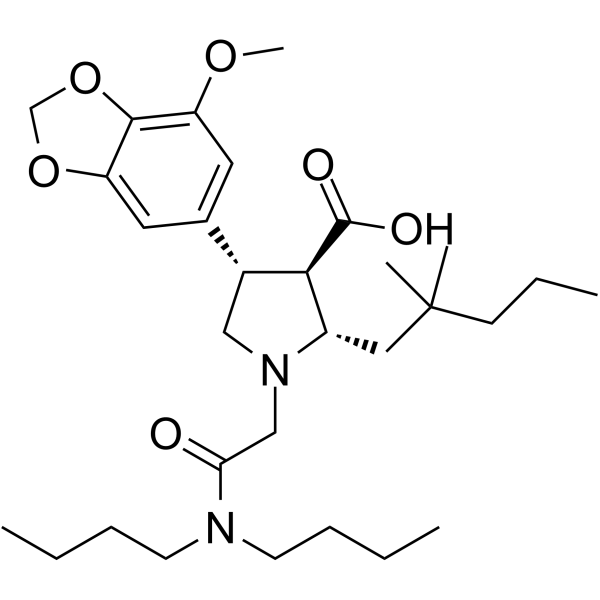
ABT-546 (A-216546) is an orally active ETA receptor antagonist, with Ki values of 0.46 nM and 13000 nM for human ETA and ETB receptors, respectively, and exhibits >25000-fold selectivity over the ETB receptor. ABT-546 effectively inhibits ET-1 (HY-P0202)-induced phosphoinositide hydrolysis (IC50 = 0.59 nM) and arachidonic acid release (IC50 = 3.03 nM), and antagonizes ET-1-induced contraction in isolated vascular rings. ABT-546 crosses the placental barrier but shows extremely low fetal exposure, with a favorable safety profile. ABT-546 inhibits ET-1-induced pressor response and downregulates the NLRP3/ROS/GSDMD-mediated pyroptosis pathway. ABT-546 can be used for research on abdominal aortic aneurysm [3] .
loading...
    loading...
Cat. No.: HY-14744C
CAS No.: 865430-78-0
Synonyms: (S)-Amlodipine hydrobromide; Levoamlodipine hydrobromide
Target:  

Calcium Channel MMP

Research Areas:  

Cardiovascular Disease Others

Levamlodipine ((S)-Amlodipine; Levoamlodipin) hydrobromide is an orally active L-type calcium channel blocker and MMP-9 modulator with high permeability and retention properties. Levamlodipine hydrobromide significantly enhances plaque stability and improves lipid profiles by reducing blood pressure, decreasing systolic blood pressure variability, and inhibiting MMP-9 expression in atherosclerotic plaques. Levamlodipine hydrobromide not only alleviates cardiac and aortic hypertrophy and prevents renal atrophy, but also produces synergistic effects in blood pressure reduction and organ protection when combined with bisoprolol (HY-129029). Levamlodipine hydrobromide exerts no significant inhibitory effect on abdominal aortic intimal hyperplasia. When excessively accumulated in the epidermis, Levamlodipine hydrobromide may induce changes in keratin structure, impair the skin barrier and trigger inflammation; long-term use further exacerbates skin irritation caused by local administration. Levamlodipine hydrobromide can be used in research related to hypertension and atherosclerosis [3].
loading...
    loading...
Cat. No.: HY-14744D
CAS No.: 884648-62-8
Levamlodipine besylate Hemipentahydrate is an orally active L-type calcium channel blocker and MMP-9 modulator with high permeability and retention properties. Levamlodipine besylate Hemipentahydrate significantly enhances plaque stability and improves lipid profiles by reducing blood pressure, decreasing systolic blood pressure variability, and inhibiting MMP-9 expression in atherosclerotic plaques. Levamlodipine besylate Hemipentahydrate not only alleviates cardiac and aortic hypertrophy and prevents renal atrophy, but also produces synergistic effects in blood pressure reduction and organ protection when combined with bisoprolol (HY-129029). Levamlodipine besylate Hemipentahydrate exerts no significant inhibitory effect on abdominal aortic intimal hyperplasia. When excessively accumulated in the epidermis, Levamlodipine besylate Hemipentahydrate may induce changes in keratin structure, impair the skin barrier and trigger inflammation; long-term use further exacerbates skin irritation caused by local administration. Levamlodipine besylate Hemipentahydrate can be used in research related to hypertension and atherosclerosis [3].
loading...
    loading...
Cat. No.: HY-14744S
CAS No.: 1346617-19-3
Purity:  99.74%
Synonyms: (S)-Amlodipine-d4; Levoamlodipine-d4
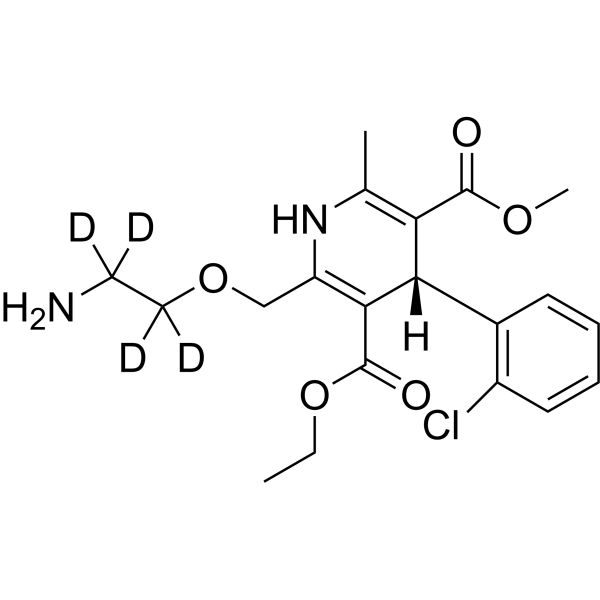
Levamlodipine-d4 is the deuterium labeled Levamlodipine. Levamlodipine ((S)-Amlodipine; Levoamlodipin) is an orally active L-type calcium channel blocker and MMP-9 modulator with high permeability and retention properties. Levamlodipine significantly enhances plaque stability and improves lipid profiles by reducing blood pressure, decreasing systolic blood pressure variability, and inhibiting MMP-9 expression in atherosclerotic plaques. Levamlodipine not only alleviates cardiac and aortic hypertrophy and prevents renal atrophy, but also produces synergistic effects in blood pressure reduction and organ protection when combined with bisoprolol (HY-129029). Levamlodipine exerts no significant inhibitory effect on abdominal aortic intimal hyperplasia. When excessively accumulated in the epidermis, Levamlodipine may induce changes in keratin structure, impair the skin barrier and trigger inflammation; long-term use further exacerbates skin irritation caused by local administration. Levamlodipine can be used in research related to hypertension and atherosclerosis [3].
loading...
    loading...
Cat. No.: HY-164899
CAS No.: 2765091-45-8
Synonyms: 2-aminopyridine-3-carboxylic acid imidazolide
Target:  

DNA/RNA Synthesis

Research Areas:  

Infection

2A3 (2-aminopyridine-3-carboxylic acid imidazolide) is a covalent probe reagent for Selective 2'-Hydroxyl Acylation analyzed by Primer Extension (SHAPE) that targets the RNA ribose 2'-OH group. 2A3 efficiently permeates the biological membranes of Gram-negative bacteria, Gram-positive bacteria, and mammalian cells. 2A3 exhibits no base bias and specifically labels conformationally flexible, unpaired regions within RNA. 2A3 forms covalent adducts by acylating the 2'-OH groups of flexible RNA residues. When combined with SHAPE-MaP (mutational profiling) sequencing technology, these modification sites are converted into detectable mutational signals, thereby accurately reflecting local RNA backbone flexibility and base-pairing status. 2A3 is primarily utilized in molecular biology and transcriptomics research, including the resolution of RNA structuromes in living cells, the study of RNA folding regulatory mechanisms, and the investigation of non-coding RNA functions .
loading...
    loading...
Cat. No.: HY-180556
Target:  

mTOR PI3K

Research Areas:  

Inflammation/Immunology

PI3K/mTOR-IN-20 is a selective dual PI3K/mTOR inhibitor. PI3K/mTOR-IN-20 demonstrates nanomolar antiproliferative effects with IC50s of 0.380 and 0.090 μM for MRC-5 and Mlg2908 cells. PI3K/mTOR-IN-20 reduces Ashcroft scores, hydroxyproline content, collagen deposition, and downregulates fibrosis-related proteins, while restoring lung architecture in a Bleomycin-induced pulmonary fibrosis model. PI3K/mTOR-IN-20 shows a favorable safety profile with steady weight recovery and no distinct liver or kidney toxicity. PI3K/mTOR-IN-20 can be used for fetal lung fibroblasts research .
loading...
    loading...

