523 Results for "

Pathogen

" in MedChemExpress (MCE) Product Catalog:
Products (523)

523 Results for "Pathogen" in MCE Product Catalog:

Cat. No.: HY-116541R
CAS No.: 135158-54-2
Synonyms: ASM (Standard)
Acibenzolar-S-methyl (Standard) (ASM (Standard)) is the analytical standard of Acibenzolar-S-methyl (HY-116541). This product is intended for research and analytical applications. Acibenzolar-S-methyl (ASM) is a synthetic analog of Salicylic acid (HY-B0167) and a plant activator. Acibenzolar‑S‑methyl induces increased activities of defense-related enzymes such as peroxidase and chitinase, activates stomatal defense responses and PR defense gene expression, induces the production of ROS, triggers local and systemic acquired resistance, and inhibits the proliferation of bacterial and fungal pathogens in plants. Acibenzolar‑S‑methyl can be used in studies related to plant infection .
loading...
    loading...
Cat. No.: HY-121628
CAS No.: 106917-52-6
Target:  

Fungal

Research Areas:  

Infection

Flusulfamide is a sulfonanilide Fungicide that effectively inhibits the germination of resting spores of Plasmodiophora brassicae, the pathogen causing clubroot in cruciferous crops. Flusulfamide blocks the developmental process of resting spores from stage 1 to stage 2. By downregulating germination-related genes and upregulating immunophilin genes (such as PbCyp3), it induces abnormal accumulation of the PbCYP3 protein, thereby causing the spores to deplete energy in a state of continuous energy consumption without germination, and reducing their infectivity. Flusulfamide reduces soil ATP content in the early stage of application, but soil microbial biomass gradually recovers 3 days later. Flusulfamide is widely used in research on clubroot control .
loading...
    loading...
Cat. No.: HY-144255
Research Areas:  

Infection

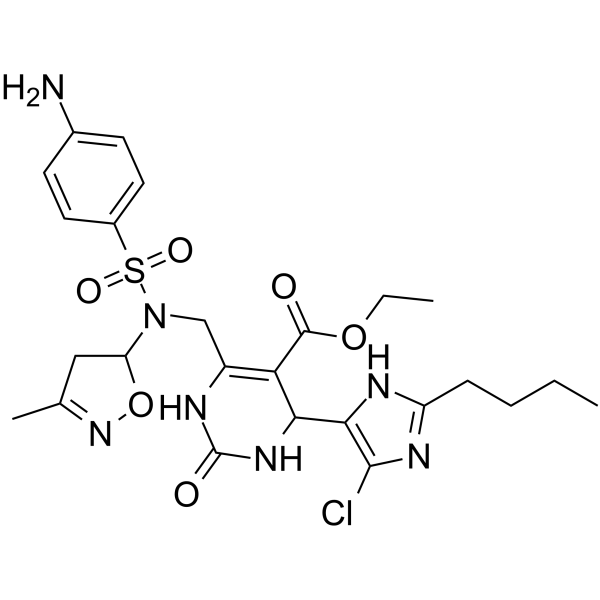
Antibacterial agent 70 is an antibacterial agent that interacts with DNA, with a MIC value of 0.5 μg/mL against K. pneumonia and A. baumanii. Antibacterial agent 70 exhibits rapid bactericidal activity, low cytotoxicity to mammalian cells, and low tendency to induce drug resistance. Antibacterial agent 70 intercalates into DNA, disrupts bacterial membrane integrity, increases intracellular ROS production, reduces GSH activity, regulates membrane depolarization, enhances outer membrane permeability, and induces inner membrane damage. Antibacterial agent 70 can be used in studies related to multidrug-resistant bacterial infections and infections caused by drug-resistant Gram-negative pathogens .
loading...
    loading...
Cat. No.: HY-149155
CAS No.: 39660-61-2
Target:  

Bacterial

Research Areas:  

Infection

o-Cymen-5-ol is a broad-spectrum antimicrobial agent with direct antimicrobial activity. o-Cymen-5-ol showed effective minimum inhibitory concentrations (MICs) against a variety of bacteria and fungi, such as Streptococcus mutans and Candida albicans. The combination of o-Cymen-5-ol and zinc showed synergistic effects, enhancing the inhibitory effect against oral pathogens. o-Cymen-5-ol was able to inhibit the glycolysis process and co-enhanced this effect with zinc. o-Cymen-5-ol showed a stronger antibacterial effect in toothpaste than placebo .
loading...
    loading...
Cat. No.: HY-P10134
CAS No.: 335080-41-6
Target:  

Bacterial

Research Areas:  

Infection

Salivaricin B is a broad-spectrum bacteriocin produced by Lactobacillus M7. Salivaricin B reduces cell wall thickness, induces abnormal septum formation, and exerts rapid bactericidal activity against susceptible Gram-positive bacteria without disrupting cytoplasmic membrane integrity or dissipating membrane potential. Salivaricin B inhibits the growth of oral, upper respiratory tract and food-related Gram-positive pathogens, spoilage bacteria, lactobacilli, and SboB-non-producing Streptococcus salivarius strains. Its activity is strain-dependent, and it has no effect on Gram-negative bacteria. Salivaricin B can be used in studies related to bacterial infections .
loading...
    loading...
Cat. No.: HY-W011654
CAS No.: 5094-33-7
Synonyms: 4-Aminophenyl-beta-D-galactopyranoside, 98%
4-Aminophenyl-β-D-galactopyranoside, 98% is a highly efficient substrate for β-galactosidase. It is specifically hydrolyzed by this enzyme to release galactose and electroactive p-aminophenol. 4-Aminophenyl-β-D-galactopyranoside, 98% is widely used in colorimetric and electrochemical assays for detecting β-galactosidase activity and determining enzyme kinetics, such as in biosensing fields including cellular senescence, pathogen and contaminant detection. In addition, since β-galactosidase is often overexpressed in primary ovarian cancer, 4-Aminophenyl-β-D-galactopyranoside, 98% can also be applied to related research on primary ovarian cancer .
loading...
    loading...
Cat. No.: HY-Y1826R
CAS No.: 92-55-7
Research Areas:  

Infection

IITR01324 (Standard) is the analytical standard of IITR01324. This product is intended for research and analytical applications. IITR01324 is an antimicrobial agent. IITR01324 has antimicrobial activity against Escherichia coli (MIC=3.58 mg/L) and other Gram-negative bacteria (Shigella flexneri: MIC=3.58 mg/L; Cronobacter sakazakii: MIC=28.63 mg/L). IITR01324 exerts its antimicrobial activity by destroying bacterial DNA after activation of intracellular reductases. IITR01324 can be used to study the development of new antimicrobial drugs, especially against multidrug-resistant (MDR) pathogens .
loading...
    loading...
Cat. No.: HY-144002
CAS No.: 216014-46-9
Synonyms: RC-529
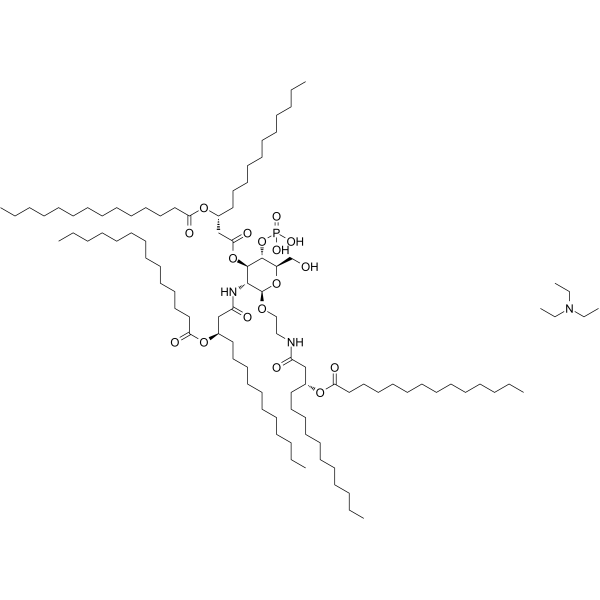
RIBI-529 (RC-529) is a fully synthetic, low-toxicity TLR4 agonist vaccine adjuvant. RIBI-529 upregulates cell surface co-stimulatory molecules, receptors, cytokines and chemokines, and activates the innate immune system. RIBI-529 enhances short-term CD4 + T cell clonal expansion, division, and ex vivo survival under growth factor withdrawal conditions. RIBI-529 enhances humoral and cell-mediated adaptive immune responses, induces non-specific resistance against viral and bacterial pathogens, and skews responses toward a Th1 type, accompanied by Th2 responses .
loading...
    loading...
Cat. No.: HY-B0506R
CAS No.: 124858-35-1
Synonyms: OPC7251 (Standard)
Nadifloxacin (Standard) is the analytical standard of Nadifloxacin (HY-B0506). This product is intended for research and analytical applications. Nadifloxacin (OPC7251) is a broad-spectrum quinolone antibiotic. Nadifloxacin inhibits bacterial DNA gyrase and topoisomerase IV, interfering with DNA replication. It also suppresses the production of proinflammatory cytokines (such as IL-1α, IL-6, and IL-8). Nadifloxacin exhibits antibacterial activity against various pathogens, including Propionibacterium acnes and Staphylococcus aureus. Nadifloxacin also exhibits anti-inflammatory activity. Nadifloxacin can be used in the research of skin infections such as acne vulgaris, folliculitis, and impetigo .
loading...
    loading...
Cat. No.: HY-N2620
CAS No.: 33237-37-5
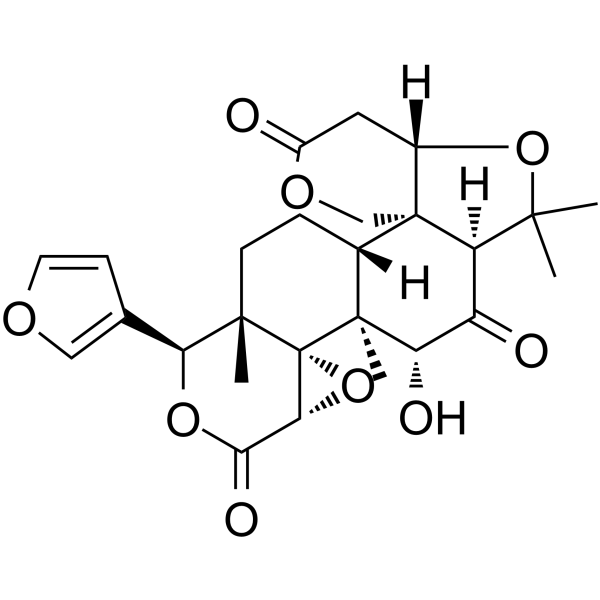
Rutaevin is an antifungal toxin and CYP3A4 inactivator. Rutaevin requires NADPH-dependent bioactivation to generate cis-but-2-ene-1,4-dial, which then covalently modifies and mechanism-based inactivates human CYP3A4 (IC50=4.48 μM, Ki=15.98 μM), and interacts with substances such as glutathione. Rutaevin disrupts the cellular structure of Sirococcus conigenus, accumulates linearly in resistant larch after pathogen exposure, and induces liver toxicity in mice via oral administration. Rutaevin can be applied to research in fields related to larch shoot blight and other associated areas .
loading...
    loading...
Cat. No.: HY-N4285
CAS No.: 29550-13-8
Synonyms: 5,6-Dihydroxy-7-methoxyflavone
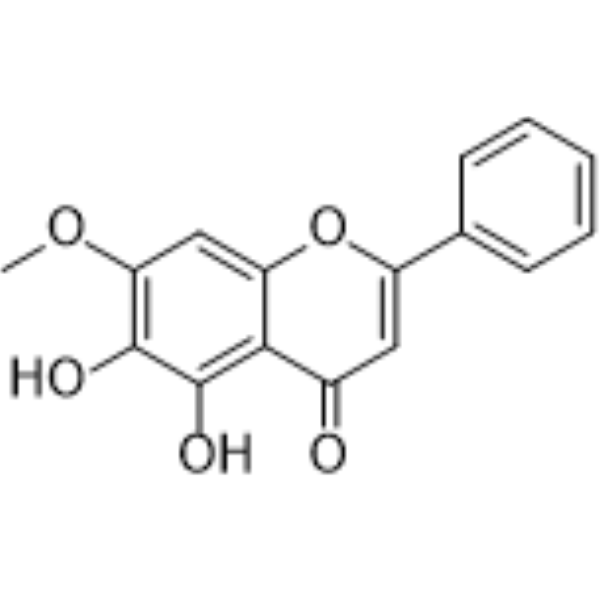
Negletein (5,6-Dihydroxy-7-methoxyflavone) is a flavone found in Scutellaria. Negletein shows anti-inflammatory activity via inhibiting TNF-α and IL-1β with IC50 values of 16.4 and 6.4 μM, respectively. Negletein can activate Nrf2 and inhibit ROS production. Negletein can enhance the neuroprotective effect of nerve growth factor. Negletein can inhibit amyloid beta-peptide release and accumulation. Negletein can inhibit pathogens biofilms formation. Negletein can be used for the researches of cancer, infection, inflammation and neurological disease, such as colon cancer and Alzheimer's disease .
loading...
    loading...
Cat. No.: HY-P1743
CAS No.: 66851-75-0
Target:  

Inhibitory Antibodies

Research Areas:  

Infection

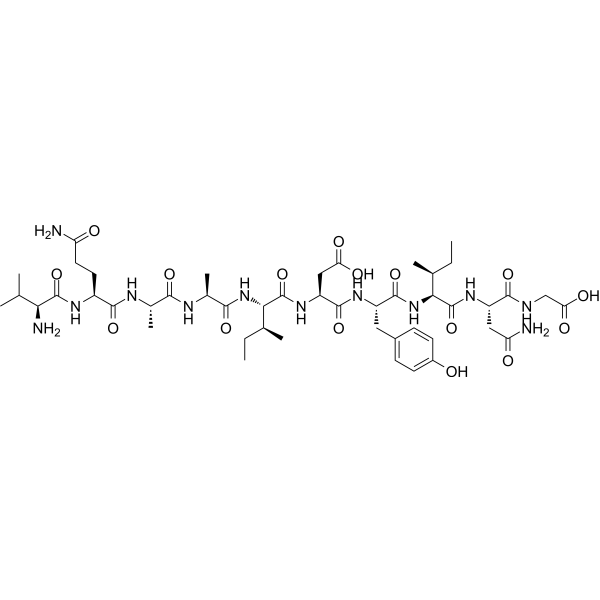
Acyl Carrier Protein (ACP) (65-74) is a key coenzyme fragment of fatty acid synthase (FAS) and participates in fatty acid synthesis as an acyl carrier. Acyl Carrier Protein (ACP) (65-74) mediates condensation, reduction and other cyclic reactions in fatty acid synthesis by covalently binding to acyl chains to form acyl-ACP intermediates, promoting acyl chain extension. Acyl Carrier Protein (ACP) (65-74) can regulate the synthesis ratio of saturated and unsaturated fatty acids. Acyl Carrier Protein (ACP) (65-74) can be used to study the mechanism of bacterial fatty acid synthesis and is a potential target for antibiotics (such as inhibiting the FAS system of pathogens) .
loading...
    loading...
Cat. No.: HY-W069974
CAS No.: 79932-56-2
Target:  

Calcium Channel

Research Areas:  

Inflammation/Immunology

Ca2+-Langerin-IN-1 (Compound 3) is a allosteric Langerin inhibitor. Langerin is a C-type lectin that is expressed on Langerhans cells and plays a crucial role in pathogen recognition and innate immune activation. The KD value of the CRD domain of murine Langerin protein for Ca2+-Langerin-IN-1 is 17 μM under the presence of Ca²⁺ and 53 μM under the absence of Ca²⁺ competition. Ca2+-Langerin-IN-1 induces conformational changes and competitively replaces Ca²⁺, thereby inhibiting the carbohydrate recognition function of the protein. Ca2+-Langerin-IN-1 can be used in the research of immunomodulatory therapy .
loading...
    loading...
Cat. No.: HY-L926
2,109 compounds

Cysteine proteases (CPs), a key enzyme family regulating physiological metabolism and mediating pathological processes (e.g., abnormal bone resorption, tumour invasion, and pathogen infection), represent a core therapeutic target for disease intervention via the development of specific inhibitors. Currently reported CP covalent inhibitors encompass diverse structural types, including epoxides, aziridine, and activated double bonds (vinyl sulphones, α,β-unsaturated ketones), providing clear structural references for the development of novel CP covalent inhibitors.

This compound library contains multiple warheads that specifically target cysteine proteases, serving as a powerful tool for the efficient discovery of novel covalent inhibitors against this enzyme family.

Cat. No.: HY-171699
CAS No.: 126221-77-0
Target:  

Bacterial

Research Areas:  

Infection

Antibacterial agent 339 is an antibacterial agent. Antibacterial agent 339 inhibits the growth of Fusarium oxysporum f.sp.cubense Race 4 with a MIC of 50.5 μM. Antibacterial agent 339 shows low toxicity in mice. FLT3-IN-30 can be used for the research of banana wilt .
loading...
    loading...
Cat. No.: HY-45588
CAS No.: 6246-48-6
Geranylamine is an acyclic monoterpene amine that serves as a drug intermediate for the synthesis of a series of TRP channel modulators and antibacterial agents.
loading...
    loading...
Cat. No.: HY-178919
CAS No.: 2996841-28-0
N-19004 is a FPR1 antagonist. N-19004 shows broad-spectrum antibacterial effects against a variety of pathogens. N-19004 exhibits significant retinal protective effects in the rd10 mouse model of retinitis pigmentosa (RP). N-19004 can attenuate retinal dysfunction, mitigate rod and cone degeneration, and reduce immune cell activation, gliosis, inflammation, oxidative stress, and apoptosis. N-19004 can reduce the size of laser-induced choroidal lesions and promote edema absorption through dual anti-inflammatory and anti-angiogenic effects. N-19004 can be used for the research of retinal degenerative diseases such as retinitis pigmentosa .
loading...
    loading...
Cat. No.: HY-185215
CAS No.: 1770840-57-7
Target:  

DNA/RNA Synthesis RSV

Research Areas:  

Infection

GS-646089 is a broad-spectrum antiviral nucleoside analog that exhibits significant inhibitory activity against respiratory syncytial virus (RSV), human metapneumovirus (hMPV), rhinovirus (enterovirus) and enteroviruses. The IC50 of GS-646089 targeting RNA-dependent RNA polymerase (RdRp) ranges from 43 to 46 nM. GS-646089 blocks viral replication by being converted into a triphosphate metabolite intracellularly, which competes with ATP for incorporation into nascent RNA strands and acts as an immediate chain terminator. GS-646089 is the parent compound of the double prodrug GS-7682 (HY-161877), and is used in studies of acute respiratory viral infections and infections caused by related pathogens .
loading...
    loading...
Cat. No.: HY-B0506S1
Synonyms: OPC7251-d5
Nadifloxacin-d5 (OPC7251-d5) is deuterium labeled Nadifloxacin (HY-B0506). Nadifloxacin (OPC7251) is a broad-spectrum quinolone antibiotic. Nadifloxacin inhibits bacterial DNA gyrase and topoisomerase IV, interfering with DNA replication. It also suppresses the production of proinflammatory cytokines (such as IL-1α, IL-6, and IL-8). Nadifloxacin exhibits antibacterial activity against various pathogens, including Propionibacterium acnes and Staphylococcus aureus. Nadifloxacin also exhibits anti-inflammatory activity. Nadifloxacin can be used in the research of skin infections such as acne vulgaris, folliculitis, and impetigo .
loading...
    loading...
Cat. No.: HY-135258
CAS No.: 1217474-91-3
Purity:  ≥98.0%
Target:  

Galectin Fungal

Research Areas:  

Others

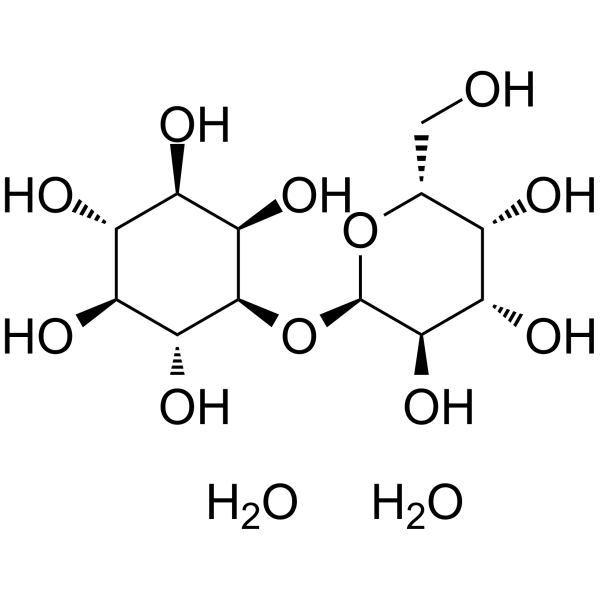
Galactinol dihydrate is a disaccharide carbohydrate serving as a galactosyl donor, which belongs to the raffinose family oligosaccharide pathway and acts as an important osmoprotectant. Galactinol dihydrate not only induces disease resistance in plants against fungal and bacterial pathogens, but also significantly enhances plant tolerance to abiotic stresses such as drought, high salinity, low temperature and oxidative damage. In addition, Galactinol dihydrate has the ability to scavenge hydroxyl radicals, can act as a signaling component for root colonization-induced systemic resistance, and is positively correlated with seed longevity in various crops, making it a potential biomarker for evaluating seed vigor. Therefore, Galactinol dihydrate can be used in the research of various plant diseases including fungal leaf spot, bacterial angular leaf spot, gray mold and soft rot .
loading...
    loading...

