5494 Results for "

analysis

" in MedChemExpress (MCE) Product Catalog:
Products (5494)

5494 Results for "analysis" in MCE Product Catalog:

Cat. No.: HY-120964
CAS No.: 63155-80-6
Purity:  99.00%
Target:  

Endogenous Metabolite

Research Areas:  

Metabolic Disease

Several different arachidonoyl amino acids, including N-arachidonoyl dopamine (NADA) and N-arachidonoyl serine (ARA-S), have been isolated and characterized from bovine brain.1 During mass spectral lipidomic analysis of rat brain, a series of fatty acyl amides of a third amino acid, taurine, is discovered.2 This novel class of compounds is present in kidney and activates members of the transient receptor potential (TRP) family of calcium channels.3 N-Stearoyl taurine is a prominent amino-acyl endocannabinoid isolated from rat brain during lipidomics profiling.
loading...
    loading...
Cat. No.: HY-177058
Research Areas:  

Inflammation/Immunology

DSP30 is a phosphorothioate cpG-oligodeoxynucleotide and a TLR9 agonist. DSP30 can activate immune system cells, including B cells and dendritic cells, by inducing proliferation and cytokine production.DSP30 can enhance the immunosuppressive function of bone marrow-multipotent mesenchymal stromal cells (BM-MSC). DSP30 combined with interleukin 2 (IL2) is an effective mitotic stimulant in B-cell disorders. DSP30 can be used for the genetic characteristic research and analysis of chronic lymphocytic leukemia (CLL) .
loading...
    loading...
Cat. No.: HY-D0293
CAS No.: 116-95-0
Synonyms: Xylene blue free acid; C.I. Acid blue 1 free acid
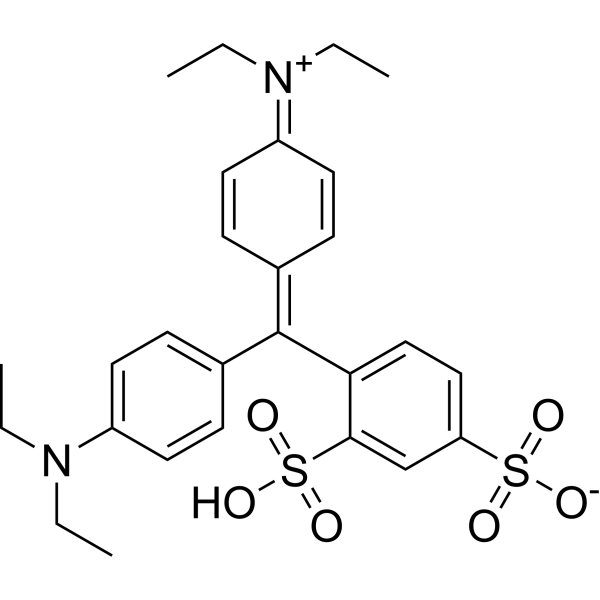
Acid blue 1 free acid (Patent Blue V) is a novel biological dye that can be used as an intraocular dye for retinectomy. Retinectomy refers to the removal of the translucent inner limiting membrane (ILM). The application of appropriate dyes in vitreoretinal surgery can achieve the purpose of complete removal. Acid blue 1 free acid can be used to stain retinal premembranous structures. Spectral analysis shows that Acid blue 1 free acid has strong absorption below 450 nm and above 600 nm, showing a blue-green color. Acid blue 1 free acid is also used as a marker in lymphangiography for resection of neoplastic lymph nodes .
loading...
    loading...
Cat. No.: HY-DY1034
CAS No.: 76204-02-9
4-MUNANA (solution) is a substrate of influenza virus neuraminidase (NA) with high selectivity and irreversible reaction. In the enzymatic reaction, 4-MUNANA is hydrolyzed by NA to generate fluorescent 4-methylumbelliferone (4-MU). By detecting the fluorescence intensity of 4-MU, quantitative analysis of NA activity can be achieved. 4-MUNANA can be used in influenza-related research, such as screening NA inhibitors, developing new anti-influenza drugs, and studying the infection mechanism of influenza viruses .
Solvent and Concentration: Sterile water: 10 mM
loading...
    loading...
Cat. No.: HY-P11934
Research Areas:  

Others

TPE-GGH is a water-soluble aggregation-induced emission (AIE)-active fluorescent probe composed of tetraphenylethylene (TPE)-modified tripeptide (Gly-Gly-His-NH2). TPE-GGH detects Cu 2+ with high selectivity and sensitivity, with a limit of detection of 28.5 nM. TPE-GGH exhibits low toxicity and favorable membrane permeability, and can be used for Cu 2+ imaging in living cells (LLC) and zebrafish, as well as for Cu 2+ detection in environmental water samples and semi-quantitative analysis via portable test strips/smartphone RGB technology .
loading...
    loading...
Cat. No.: HY-W008425
CAS No.: 10160-24-4
Synonyms: 7-Bromoheptan-1-ol
Research Areas:  

Cancer

7-Bromo-1-heptanol (7-Bromoheptan-1-ol) acts as a HaloTag-GPSM2 inhibitor and an organic synthesis intermediate. It forms a covalent irreversible bond with HaloTag-GPSM2, thereby blocking the subsequent labeling effect of fluorescent HaloTag ligands and enabling pulse-chase analysis of protein turnover. 7-Bromo-1-heptanol can be used to synthesize PROTAC BET degraders and multivalent glycoporphyrin antiviral compounds. It is applicable to cancer-related research .
loading...
    loading...
Cat. No.: HY-W127770
CAS No.: 569-61-9
Synonyms: Basic red 9
Target:  

Fluorescent Dye

Research Areas:  

Infection

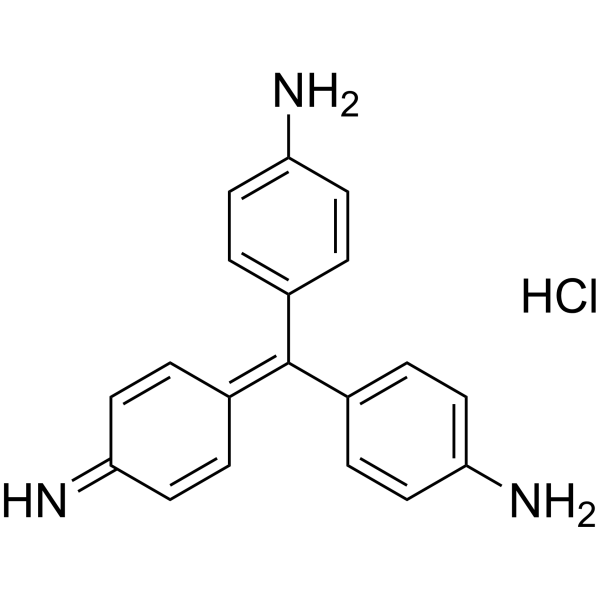
Pararosaniline hydrochloride (Basic red 9) is a pH-responsive basic dye, as a biological stain to track certain proteins. The pH of the acidified Pararosaniline hydrochloride reagent has a significant effect on the color and the maximum absorption wavelength (λmax) of the reaction system, with its optimum pH 0.48 and a λmax at 549 nm. Pararosaniline hydrochloride is also a strong modifier of RNA splicing. Pararosaniline hydrochloride has been used in the analysis of SO2 and formaldehyde and staining of bacteria or other organisms. Pararosaniline hydrochloride is extensively used in industries like textile, printing, paper, cosmetic, and leather .
loading...
    loading...
Cat. No.: HY-W131302
CAS No.: 5657-17-0
Synonyms: N,N-Ethylenediglycine
Target:  

Endogenous Metabolite

Research Areas:  

Cancer

Ethylenediaminediacetic acid (N,N-Ethylenediglycine) is an important ligand that enhances the antiproliferative activity of metal complexes. The complexes formed by ethylenediacetic acid and metal ions exhibited significant antiproliferative properties in MCF-7 cancer cell line. The metal complexes of ethylenediacetic acid were able to interact with DNA and were studied by CD and EPR spectroscopy techniques. Ethylenediaminediacetic acid and its metal complexes were able to induce cell cycle arrest at the G(0)/G(1) phase. The crystal structure analysis of ethylenediacetic acid provided important structural information for understanding its biological activity .
loading...
    loading...
Cat. No.: HY-W250171
CAS No.: 5698-39-5
Synonyms: Polyoxyethylene (10) cetyl ether
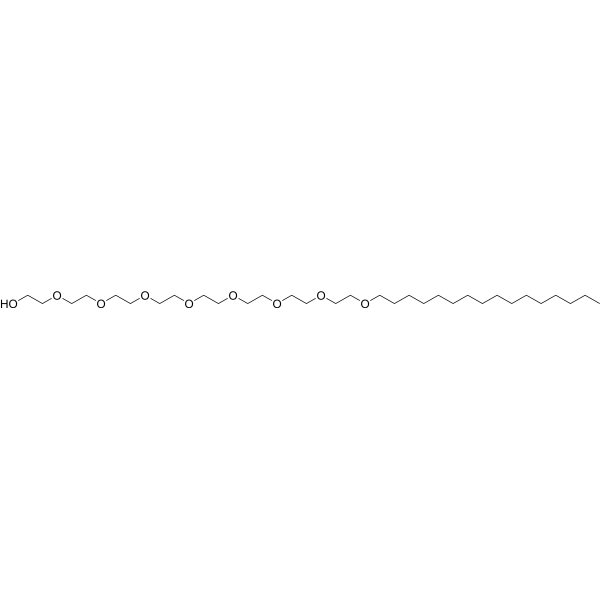
Octaethylene glycol monohexadecyl ether, is a nonionic surfactant commonly used in various industrial and research applications. Octaethylene glycol monohexadecyl ether belongs to the family of polyethylene glycol (PEG) ethers with a hydrophilic head and lipophilic tail, suitable for use in lotions, detergents and solubilizers. Octaethylene glycol monohexadecyl ether is particularly useful in the study of membrane proteins, where it is used to solubilize and stabilize proteins for structural analysis techniques. In addition, Octaethylene glycol monohexadecyl ether has the ability to interact with and penetrate cell membranes, so it has potential applications in drug delivery and other medical fields.
loading...
    loading...
Cat. No.: HY-W667746
CAS No.: 386297-97-8
DPA-713 is a blood-brain barrier-permeable, specific translocator protein (TSPO) ligand. DPA-713 binds exclusively to TSPO without interacting with central benzodiazepine receptors; its binding can be competitively displaced by excess unlabeled TSPO ligands. After 11C labeling, DPA-713 enables sensitive quantitative analysis of TSPO expression associated with microglial activation, allowing differentiation between normal and pathological brain tissues. DPA-713 can be used in studies related to neuroinflammation, neurodegenerative diseases, and recently onset schizophrenia .
loading...
    loading...
Cat. No.: HY-K3124

MCE Macrofungal-Derived Extracellular Vesicle Isolation and Purification Kit is specifically optimized for fungal fruiting body samples. The optimized extraction system facilitates the release of EVs from fungal tissues, while the purification system effectively removes polysaccharides, proteins, phenolic compounds, terpenoids, and other non-vesicular components, enabling efficient isolation and purification of fungal EVs. The isolated macrofungal-derived vesicles can be used for downstream applications including transmission electron microscopy (TEM), nanoparticle tracking analysis (NTA), Western blotting, qPCR, cell-based studies, and animal experiments.

loading...
    loading...
Cat. No.: HY-179631
Target:  

Apoptosis

Research Areas:  

Cancer

2DG-ODDA is a 2-deoxyglucose (2-DG) (HY-13966) derivative with potent antitumor activity. 2DG-ODDA induces apoptosis, and reduces ATP production. 2DG-ODDA is taken up through both fatty acid and glucose transporters and is cleaved by α-Mannosidase (HY-P2950), releases 2DG to inhibit N-glycosylation and disrupt cellular metabolism. 2DG-ODDA inhibits tumor growth in a 4T1 mouse model. 2DG-ODDA can be used for the research of triple-negative breast cancer (TNBC) .
loading...
    loading...
Cat. No.: HY-116163
CAS No.: 1565852-90-5
Synonyms: CYM50202
Target:  

Endogenous Metabolite

Research Areas:  

Others

ML350 (CYM50202) is a highly potent OPRK1 antagonist with selectivity and broad biological applications. With IC50 values of 9-16 nM, ML350 shows high selectivity for OPRK1, with selectivity of 219-382-fold and 20-35-fold relative to OPRD1 and OPRM1, respectively. ML350 exhibited favorable characteristics in in vivo pharmacokinetic analysis, including high passive membrane permeability and moderate human plasma protein binding. Extensive screening of ML350 against multiple ion channels, receptors, and transporters showed that it does not have adverse off-target effects .
loading...
    loading...
Cat. No.: HY-129836R
CAS No.: 26889-93-0
Research Areas:  

Infection

L-Amoxicillin (Standard) is the analytical standard of L-Amoxicillin. This product is intended for research and analytical applications. L-Amoxicillin is an antibiotic with activity against a wide range of bacterial infections. L-Amoxicillin is commonly used in antibacterial combinations when used in combination with the β-lactamase inhibitor potassium clavulanic acid. The related substances analysis method for L-Amoxicillin has been developed and validated according to the International Conference on Harmonization (ICH) guidelines, ensuring its effectiveness and accuracy in mixtures. L-Amoxicillin and some of its impurities have been further analyzed in stress testing and stability studies, providing support for optimizing its application .
loading...
    loading...
Cat. No.: HY-134524
CAS No.: 5306-85-4
Purity:  99.64%
Synonyms: Dimethyl isosorbide; O,O-Dimethylisosorbide
Research Areas:  

Others

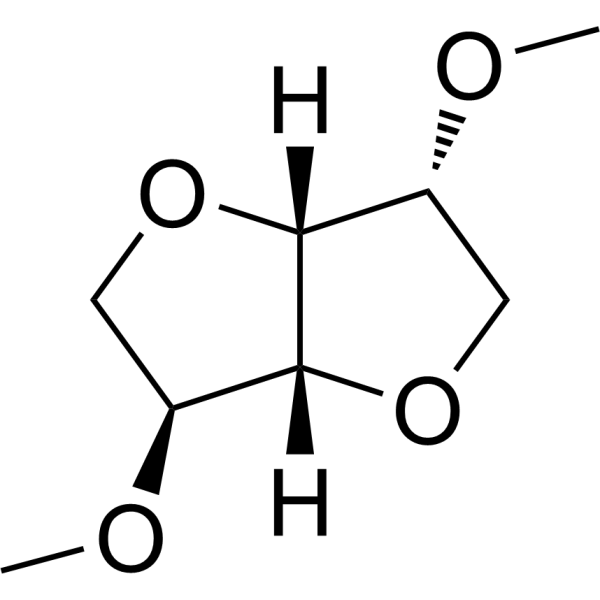
Isosorbide dimethyl ether (Dimethyl isosorbide) is a bio-based green solvent. Isosorbide dimethyl ether is used for the preparation of sustainable ultrafiltration and microfiltration membranes. Isosorbide dimethyl ether can serve as an eco-friendly eluent for liquid chromatography. When used as a liquid chromatography mobile phase at a ratio of 50% (v/v) under 40 °C, with a system back pressure of 160-300 bar and an ultraviolet cutoff wavelength of 240 nm, Isosorbide dimethyl ether enables the quantitative analysis of Methylparaben (HY-W016806) and Propylparaben (HY-N2026) in biological preparations .
loading...
    loading...
Cat. No.: HY-79647
CAS No.: 82911-69-1
Synonyms: N-(Fmoc-oxy)succinimide
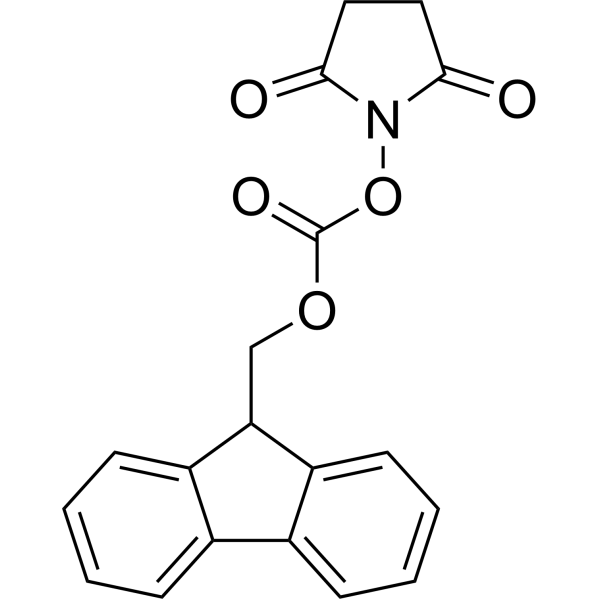
Fmoc-OSu (N-(Fmoc-oxy)succinimide) is an acylating agent that targets amino groups (-NH2). It can selectively protect the amino groups of amino acids by covalently binding with primary or secondary amines through nucleophilic substitution reactions. Fmoc-OSu forms a stable amide bond with the amino group to avoid side reactions of the amino group in peptide synthesis. It can also be used as a fluorescent labeling reagent to react with glycosylamines for efficient labeling of N-sugar chains. Fmoc-OSu can be used as an Fmoc protection strategy in peptide synthesis, and as a fluorescent labeling and analysis method for N-sugar chains .
loading...
    loading...
Cat. No.: HY-D3417
CAS No.: 157199-57-0
Target:  

Fluorescent Dye

Research Areas:  

Others

BO-TAP-1 is a cell-impermeable cyan fluorescent carbocyanine monomeric nucleic acid dye that can be used for microarray nucleic acid staining, multicolor fluorescent labeling of cell nuclei and chromosomes, cell detection and counting, and flow cytometry. BO-TAP-1 is non-fluorescent in the absence of nucleic acids, but its fluorescence is significantly enhanced upon binding to double-stranded DNA. The maximum excitation and emission wavelengths of the BO-TAP-1–DNA complex are 454 nm and 487 nm, respectively. BO-TAP-1 can be used in research related to nucleic acid detection and cell analysis.
loading...
    loading...
Cat. No.: HY-W040144
CAS No.: 76-60-8
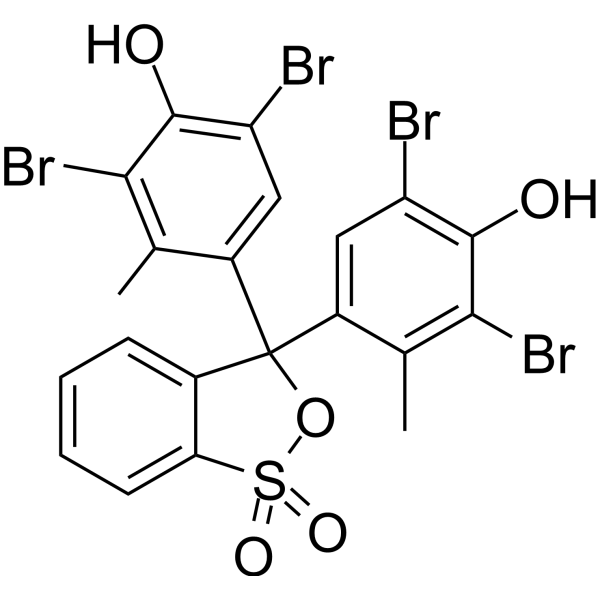
Bromocresol green is a pH-sensitive triphenylmethane dye commonly used for the determination of protein and albumin in serum. Bromocresol green is a bio-based dye with a yellow-green to blue-green color. Bromocresol green turns yellow (λmax=435 nm, protonated form) when placed in acidic solution (e.g. pH=4.15), and turns blue in basic solution (λmax=615 nm, deprotonated form). Bromocresol green is widely used as a pH indicator in the field of biochemical analysis. In addition, Bromocresol green is also used to detect the concentration of molecules such as creatinine, and to judge the viability of cells .
loading...
    loading...
Cat. No.: HY-W743258
L-Amoxicillin-d4 sodium is the deuterium labeled L-Amoxicillin (HY-129836). L-Amoxicillin is an antibiotic with activity against a wide range of bacterial infections. L-Amoxicillin is commonly used in antibacterial combinations when used in combination with the β-lactamase inhibitor potassium clavulanic acid. The related substances analysis method for L-Amoxicillin has been developed and validated according to the International Conference on Harmonization (ICH) guidelines, ensuring its effectiveness and accuracy in mixtures. L-Amoxicillin and some of its impurities have been further analyzed in stress testing and stability studies, providing support for optimizing its application .
loading...
    loading...
Cat. No.: HY-175132
Synonyms: NBD L-threo cer (d18:1/12:0); NBD L-threo ceramide (d18:1/12:0); N-Dodecanoyl-NBD L-threo-sphingosine
Target:  

Fluorescent Dye

Research Areas:  

Others

C12 NBD L-threo Ceramide (d18:1/12:0) (NBD L-threo cer (d18:1/12:0); NBD L-threo ceramide (d18:1/12:0); N-Dodecanoyl-NBD L-threo-sphingosine) is an NBD fluorescently labeled ceramide analog. C12 NBD L-threo Ceramide (d18:1/12:0) is an isomer of C12 NBD ceramide. C12 NBD L-threo Ceramide (d18:1/12:0) can be used for fluorescence detection, imaging, and kinetic analysis.
loading...
    loading...

