1075 Results for "

detect

" in MedChemExpress (MCE) Product Catalog:
Products (1075)

1075 Results for "detect" in MCE Product Catalog:

8
8 Cited Publications
Cat. No.: HY-15908
CAS No.: 979-88-4
Purity:  99.52%
Synonyms: Disodium bicinchoninate
Research Areas:  

Others

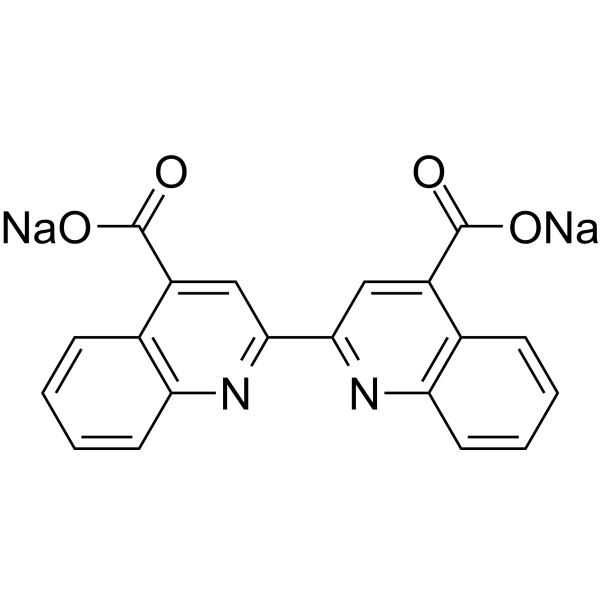
BCA is a chelating agent targeting Cu I. BCA forms a water-soluble complex with Cu I at a 2:1 stoichiometric ratio, which not only inhibits its oxidation and disproportionation reactions, but also mediates the Cu I-catalyzed azide-alkyne cycloaddition click chemistry reaction to achieve bioconjugation of fluorophores or biotin with functionalized proteins. BCA chelates Cu + from proteins that reduce Cu 2+, forming a purple compound detectable by colorimetry, and thus is used to determine the total protein concentration in solution. BCA is a potential small-molecule candidate for AHAS inhibitors .
loading...
    loading...
8
8 Cited Publications
Cat. No.: HY-W004599
CAS No.: 1245-13-2
Research Areas:  

Others

Bicinchoninic acid is a chelating agent targeting Cu I. Bicinchoninic acid forms a water-soluble complex with Cu I at a 2:1 stoichiometric ratio, which not only inhibits its oxidation and disproportionation reactions, but also mediates the Cu I-catalyzed azide-alkyne cycloaddition click chemistry reaction to achieve bioconjugation of fluorophores or biotin with functionalized proteins. Bicinchoninic acid chelates Cu + from proteins that reduce Cu 2+, forming a purple compound detectable by colorimetry, and thus is used to determine the total protein concentration in solution. Bicinchoninic acid is a potential small-molecule candidate for AHAS inhibitors .
loading...
    loading...
8
8 Cited Publications
Cat. No.: HY-15908A
CAS No.: 63451-34-3
Research Areas:  

Others

Dipotassium [2,2'-biquinoline]-4,4'-dicarboxylate is a chelating agent targeting Cu I. Dipotassium [2,2'-biquinoline]-4,4'-dicarboxylate forms a water-soluble complex with Cu I at a 2:1 stoichiometric ratio, which not only inhibits its oxidation and disproportionation reactions, but also mediates the Cu I-catalyzed azide-alkyne cycloaddition click chemistry reaction to achieve bioconjugation of fluorophores or biotin with functionalized proteins. Dipotassium [2,2'-biquinoline]-4,4'-dicarboxylate chelates Cu + from proteins that reduce Cu 2+, forming a purple compound detectable by colorimetry, and thus is used to determine the total protein concentration in solution. Dipotassium [2,2'-biquinoline]-4,4'-dicarboxylate is a potential small-molecule candidate for AHAS inhibitors .
loading...
    loading...
7
7 Cited Publications
Cat. No.: HY-K0552

MCE Mycoplasma Detection Kit (PCR) is a diagnostic kit that utilizes the PCR method to detect mycoplasma contamination in biological materials such as cultured cells.

loading...
    loading...
7
7 Cited Publications
Cat. No.: HY-K1079

MCE One Step TUNEL Apoptosis Detection Kit (Cyanine 3) provides a rapid and convenient method to detect cell apoptosis. After staining cells with this kit, live cells have no fluorescence, apoptosis cells show red fluorescence.

loading...
    loading...
7
7 Cited Publications
Cat. No.: HY-D2295
Mito-FerroGreen is a mitochondria-specific Fluorescent indicator used to detect mitochondrial Fe 2+ levels (excitation: 488 nm; emission: 500-550 nm). Mito-FerroGreen can be applied to research related to colorectal cancer and chronic heart failure .
loading...
    loading...
7
7 Cited Publications
Cat. No.: HY-12649
CAS No.: 429653-73-6
Purity:  98.10%
Target:  

Ras

Research Areas:  

Cancer

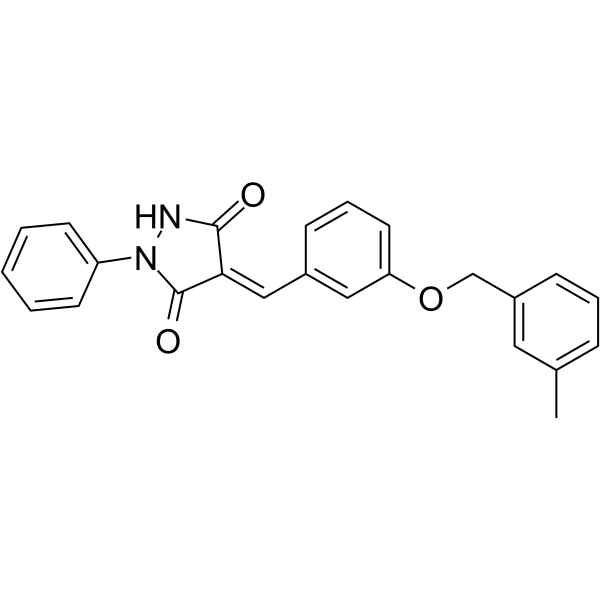
Y16 is a specific inhibitor of Leukemia-associated Rho guanine nucleotide exchange factor (LARG) with a Kd value of 76 nM. Y16 is active in blocking the interaction of LARG and related G-protein-coupled Rho GEFs with RhoA. Y16 shows no detectable effect on other diffuse B-cell lymphoma (Dbl) family Rho GEFs, Rho effectors, or a RhoGAP .
loading...
    loading...
7
7 Cited Publications
Cat. No.: HY-14521
CAS No.: 106400-81-1
Purity:  98.96%
Synonyms: DDATHF
Research Areas:  

Cancer

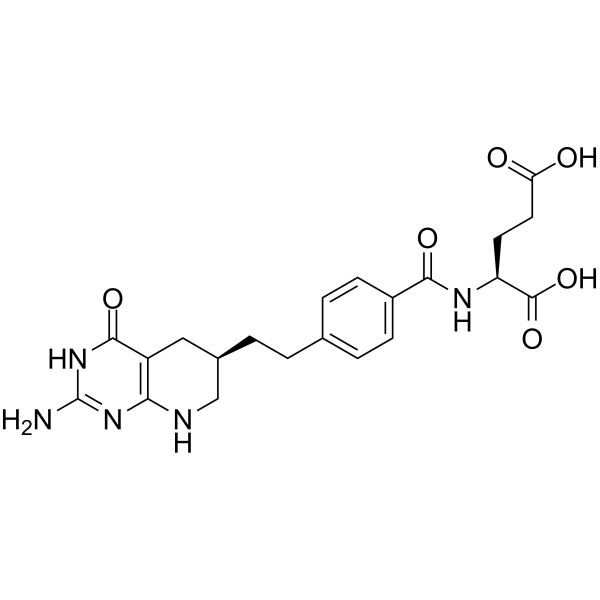
Lometrexol (DDATHF), an antipurine antifolate, can inhibit the activity of glycinamide ribonucleotide formyltransferase (GARFT) but do not induce detectable levels of DNA strand breaks. Lometrexol can further inhibit de novo purine synthesis, causing abnormal cell proliferation and apoptosis, even cell cycle arrest. Lometrexol has anticancer activity. Lometrexol also is a potent human Serine hydroxymethyltransferase1/2 (hSHMT1/2) inhibitor .
loading...
    loading...
7
7 Cited Publications
Cat. No.: HY-14521B
CAS No.: 1435784-14-7
Synonyms: DDATHF hydrate
Research Areas:  

Cancer

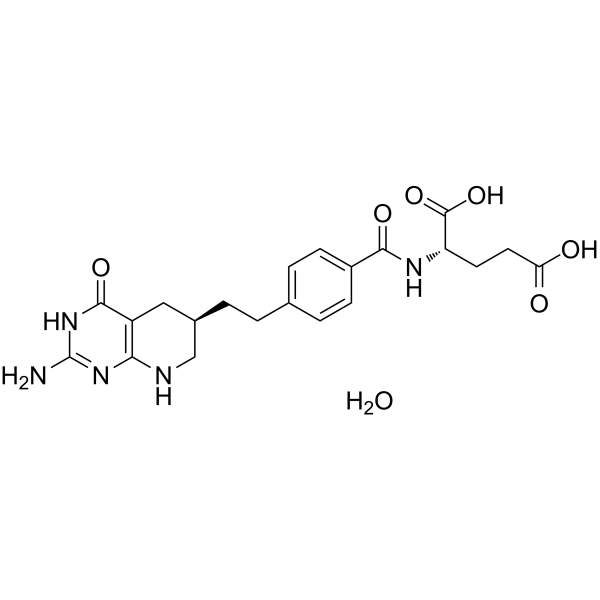
Lometrexol (DDATHF) hydrate, an antipurine antifolate, can inhibit the activity of glycinamide ribonucleotide formyltransferase (GARFT) but do not induce detectable levels of DNA strand breaks. Lometrexol hydrate can further inhibit de novo purine synthesis, causing abnormal cell proliferation and apoptosis, even cell cycle arrest. Lometrexol hydrate has anticancer activity. Lometrexol hydrate also is a potent human Serine hydroxymethyltransferase1/2 (hSHMT1/2) inhibitor .
loading...
    loading...
7
7 Cited Publications
Cat. No.: HY-14521A
CAS No.: 120408-07-3
Purity:  ≥98.0%
Synonyms: DDATHF disodium
Research Areas:  

Cancer

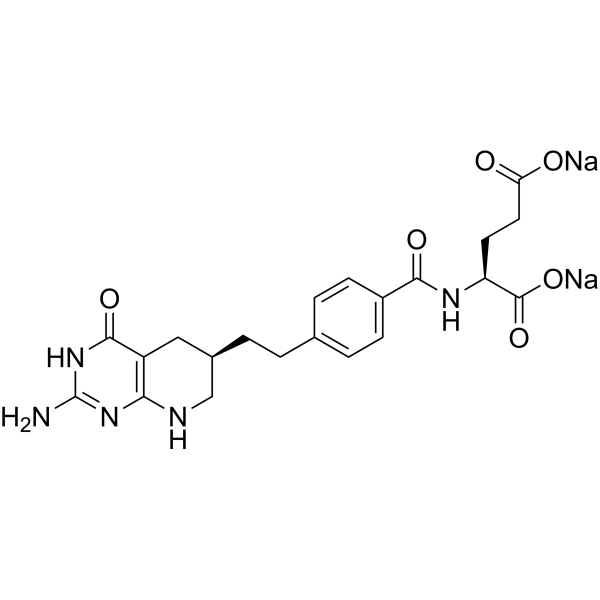
Lometrexol (DDATHF) disodium, an antipurine antifolate, can inhibit the activity of glycinamide ribonucleotide formyltransferase (GARFT) but do not induce detectable levels of DNA strand breaks. Lometrexol disodium can further inhibit de novo purine synthesis, causing abnormal cell proliferation and apoptosis, even cell cycle arrest. Lometrexol disodium has anticancer activity. Lometrexol disodium also is a potent human Serine hydroxymethyltransferase1/2 (hSHMT1/2) inhibitor .
loading...
    loading...
7
7 Cited Publications
Cat. No.: HY-145923
CAS No.: 2489404-97-7
Purity:  99.38%
Synonyms: ABBV-CLS-484
Target:  

Phosphatase STAT JAK

Research Areas:  

Cancer

Osunprotafib (ABBV-CLS-484) is an orally active and selective active site PTPN1 (IC50: 2.5 nM) and PTPN2(IC50: 1.8 nM) inhibitor. Osunprotafib has 6-8-fold weaker activity on PTPN9 and no detectable activity on SHP-1 or SHP-2. Osunprotafib increases the sensitivity of human cancer cell lines to IFNγ. Osunprotafib generates robust anti-tumor immunity by enhancing JAK-STAT signalling and reducing T cell dysfunction .
loading...
    loading...
6
6 Cited Publications
Cat. No.: HY-18743
CAS No.: 55779-48-1
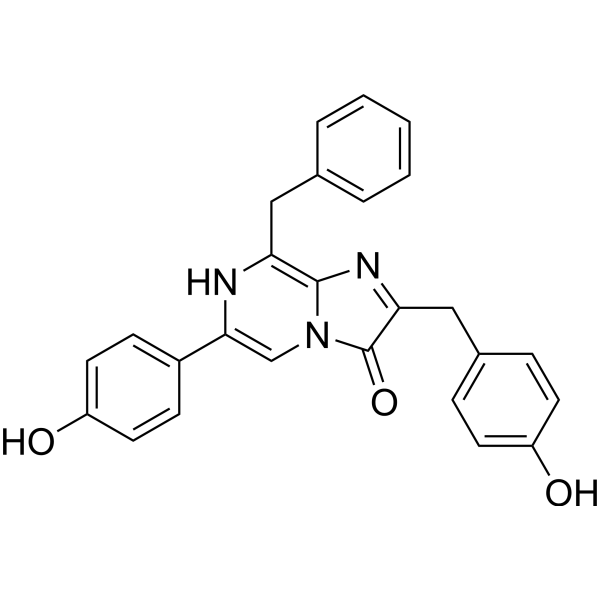
Coelenterazine is a luminescent enzyme substrate for apoaequorin and Renilla luciferase. Renilla luciferase and substrate coelenterazine has been used as the bioluminescence donor in bioluminescence resonance energy transfer (BRET) to detect protein-protein interactions. Coelenterazine is a superoxide anion-sensitive chemiluminescent probe and it can also be used in chemiluminescent detection of peroxynitrite (Ex/Em = 429/466 nm) .
loading...
    loading...
6
6 Cited Publications
Cat. No.: HY-18743A
Research Areas:  

Cancer

Coelenterazine TFA is a luminescent enzyme substrate for apoaequorin and Renilla luciferase. Renilla luciferase and substrate Coelenterazine TFA has been used as the bioluminescence donor in bioluminescence resonance energy transfer (BRET) to detect protein-protein interactions. Coelenterazine TFA is a superoxide anion-sensitive chemiluminescent probe and it can also be used in chemiluminescent detection of peroxynitrite (Ex/Em = 429/466 nm) .
loading...
    loading...
6
6 Cited Publications
Cat. No.: HY-15934
CAS No.: 7240-90-6
Synonyms: BCIG
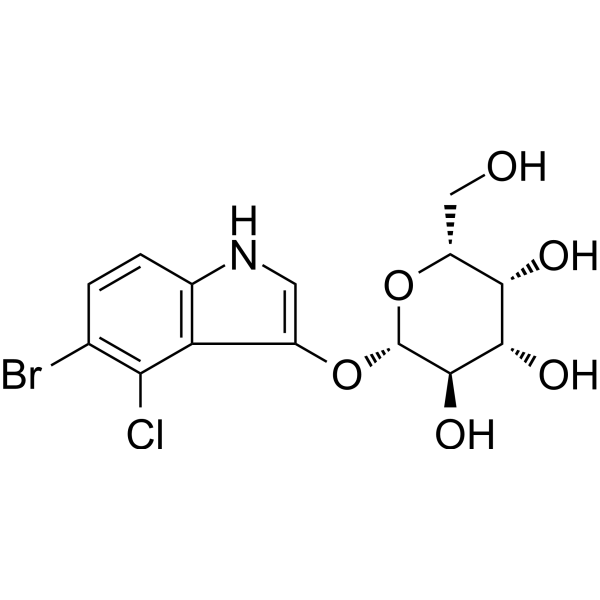
X-GAL (BCIG) is a widely used chromogenic β-galactosidase substrate. X-GAL is a colorless compound until cleaved by β-galactosidase, at which point X-GAL turns to an insoluble and detectable blue compound, making X-GAL particularly useful in techniques such as blue-white screening for cloning in bacteria. X-GAL can also be used for detection of β-galactosidase activity .
loading...
    loading...
5
5 Cited Publications
Cat. No.: HY-K1070

MCE Apoptosis and Necrosis Assay Kit provides a rapid and convenient method to detect cell apoptosis and necrosis.


loading...
    loading...
5
5 Cited Publications
Cat. No.: HY-K2611

MCE Caspase 3 Activity Assay Kit provides a simple and convenient way for detecting the activity of detection of Caspase 3 activity that based on the spectrophotometric.

loading...
    loading...
5
5 Cited Publications
Cat. No.: HY-D0913
CAS No.: 73043-80-8
Synonyms: 1M7
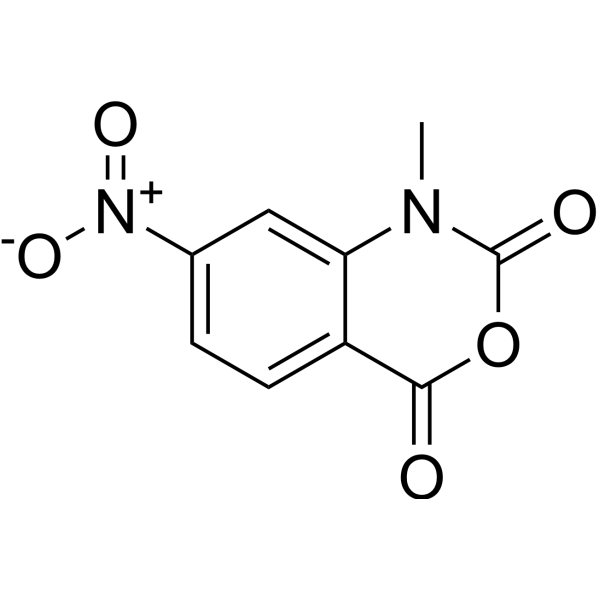
1-Methyl-7-nitroisatoic anhydride (1M7) is a reagent that detects local nucleotide flexibility, for probing 2'-hydroxyl reactivity, can be used for RNA structure analysis .
loading...
    loading...
5
5 Cited Publications
Cat. No.: HY-D0098
CAS No.: 75350-46-8
Synonyms: N-(5-Fluoresceinyl)maleimide
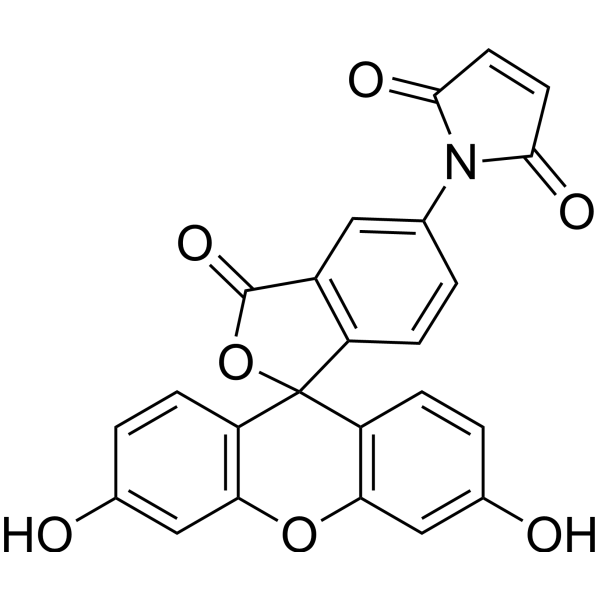
Fluorescein-5-maleimide (N-(5-Fluoresceinyl)maleimide) is a fluorescent dye. Fluorescein-5-maleimide can be used to detect the redox state of thiols in eukaryotic cells. Fluorescein-5-maleimide can label peptides and is used to detect negatively charged nanoparticles. Fluorescein-5-maleimide can also label actin to explore its interaction with cardiac myosin-binding protein C (cMyBP-C), which helps in developing small molecule modulators for heart failure. Fluorescein-5-maleimide can screen mutant proteins that contain cysteine residues. The excitation wavelength of Fluorescein-5-maleimide is 494 nm, and the emission wavelength is 519 nm .
loading...
    loading...
5
5 Cited Publications
Cat. No.: HY-125623
CAS No.: 1392820-50-6
Purity:  98.14%
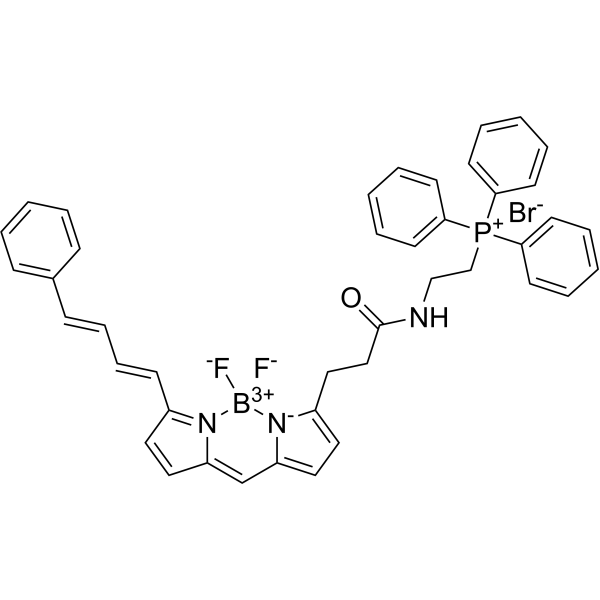
MitoPerOx is a mitochondrial-targeted, lipid peroxidation-indicating fluorescent probe with BODIPY581/591 fluorophores. The triphenylphosphine cation (TPP+) of MitoPerOx can be selectively enriched in mitochondria (depending on membrane potential) and can be used to detect lipid peroxidation in the inner mitochondrial membrane. Under the action of lipid peroxides, the BODIPY581/591 fluorophores of MitoPerOx shift their emission wavelength from 590 nm (reduced state) to 520 nm (oxidized state), and ratiometric detection can be performed at an excitation wavelength of 488 nm. MitoPerOx can specifically monitor the peroxidation of mitochondrial phospholipids (especially cardiolipin) and is used in the study of oxidative stress-related diseases (such as aging, neurodegenerative diseases, and mitochondrial dysfunction)[1][2].
loading...
    loading...
5
5 Cited Publications
Cat. No.: HY-D0093
CAS No.: 61926-22-5
Synonyms: EthD-1
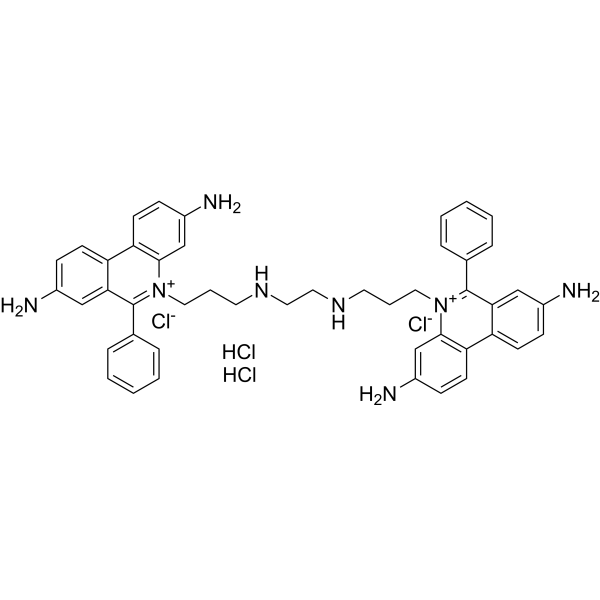
Ethidium homodimer (EthD-1) is a high-affinity fluorescent nucleic acid dye commonly used to stain mammals, bacteria, yeast, and fungi. Ethidium homodimer binds to DNA or RNA, enhancing fluorescence more than 30 times. The Ethidium homodimer has a strong positive charge, so it cannot cross cell membranes and stain living cells; But the Ethidium homodimer can cross the disordered region of the dead cell membrane to reach the nucleus and embed the DNA double strand to produce red fluorescence. Therefore, Ethidium homodimer is a relatively sensitive nucleic acid stain that can accurately detect nucleic acids in solution or in decomposing cells. Ethidium homodimer binds DNA, Ex/Em=528/617 nm .
loading...
    loading...