143 Results for "

mice behavior

" in MedChemExpress (MCE) Product Catalog:
Products (143)

143 Results for "mice behavior" in MCE Product Catalog:

Cat. No.: HY-W021450A
CAS No.: 100929-81-5
Research Areas:  

Neurological Disease

DL-Fluorocitric acid barium is a glial cell metabolic inhibitor. DL-Fluorocitric acid barium inhibits mechanical hyperalgesia induced by subcutaneous injection of complete Freund's adjuvant in rats. DL-Fluorocitric acid barium inhibits nociceptive behaviors induced by Histamine (HY-B1204) in mice and blocks the phosphorylation of the NMDA receptor NR1 subunit in the lumbar spinal cord of mice. DL-Fluorocitric acid (barium) can be used in the research of mechanical hyperalgesia and nociceptive pain .
loading...
    loading...
Cat. No.: HY-117924
CAS No.: 1783800-77-0
Purity:  97.14%
Synonyms: Autophagy enhancer-67
Target:  

Autophagy

Research Areas:  

Neurological Disease

AUTEN-67 (Autophagy enhancer-67) is an orally active autophagy enhancer and MTMR14 inhibitor. AUTEN-67 has anti-aging and neuroprotective effects. AUTEN-67 protects neurons from stress-induced cell death. AUTEN-67 also restores nesting behavior in a mice model of Alzheimer disease .
loading...
    loading...
Cat. No.: HY-145153
CAS No.: 885496-53-7
Purity:  98.83%
Target:  

Cannabinoid Receptor

Research Areas:  

Neurological Disease

S-777469 is a selective and orally available cannabinoid type 2 receptor (CB2) agonist with a Ki of 36 nM. S-777469 significantly suppresses compound 48/80-induced scratching behavior in mice in a dose-dependent manner. S-777469 produces its antipruritic effects by inhibiting itch signal transmission through CB2 agonism .
loading...
    loading...
Cat. No.: HY-117771A
CAS No.: 2098969-71-0
Purity:  98.42%
Target:  

DAGL

DO34 analog is a structural analog of DO34 (HY-117771). DO34 is a selective DAGL inhibitor, with an IC50 of 6 nM for DAGLα conversion of SAG to 2-AG. DO34 blocks de novo 2-AG synthesis, and suppresses tonic CB1 receptor activation. DO34 blocks depolarization-induced suppression of excitation and inhibition in the cerebellum and hippocampus. DO34 regulates feeding behavior and locomotor activity in mice. DO34 abolishes AM251-mediated enhancement of parallel fiber-evoked excitatory postsynaptic currents in cerebellar slices from MAGL global knockout mice. DO34 can be used for the research of energy balance disorder and neuroinflammation .
loading...
    loading...
Cat. No.: HY-W674241A
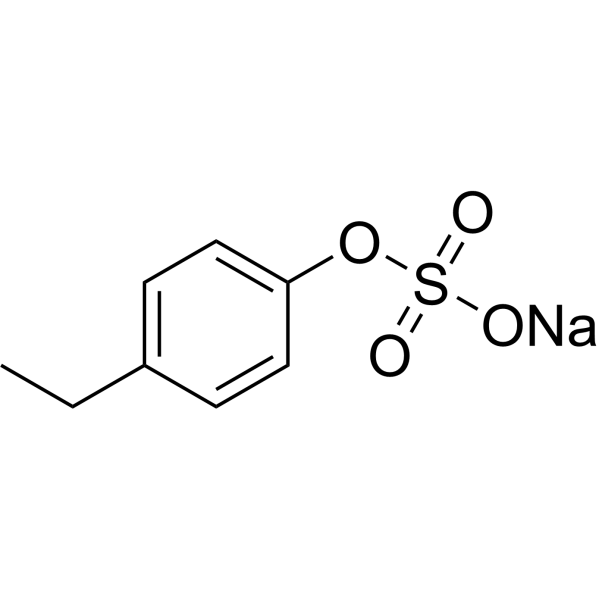
4-Ethylphenyl sulfate sodium is an orally active and brain-penetrant gut microbial metabolite. 4-Ethylphenyl sulfate sodium downregulates Bcl2 expression, upregulates Bax expression, and induces cancer cell apoptosis via the endogenous apoptotic pathway. 4-Ethylphenyl sulfate sodium induces G2/M cell cycle arrest and reactive oxygen species (ROS) production. 4-Ethylphenyl sulfate sodium impairs oligodendrocyte maturation, reduces oligodendrocyte-neuron interactions, decreases axonal myelination levels, and shifts the oligodendrocyte population toward immature precursor cells. 4-Ethylphenyl sulfate sodium alters brain region-specific neural activity and functional connectivity in mice, and correlates with anxiety-like behaviors in mice .
loading...
    loading...
Cat. No.: HY-W743888
CAS No.: 65527-61-9
Synonyms: 6-Allyl-6-nor-LSD
Research Areas:  

Neurological Disease

AL-LAD is a 5-HT2A receptor ligand with rat Ki values of 8.1 nM and 3.4 nM. AL-LAD mediates behavioral responses characteristic of serotonergic psychedelics. AL-LAD induces the head-twitch response in male C57BL/6J mice in an inverted-U-shaped dose-dependent manner. AL-LAD exhibits LSD-like behavioral effects in male C57BL/6J mice .
loading...
    loading...
Cat. No.: HY-119468
CAS No.: 32359-34-5
Purity:  99.34%
Target:  

Dopamine Transporter

Research Areas:  

Neurological Disease

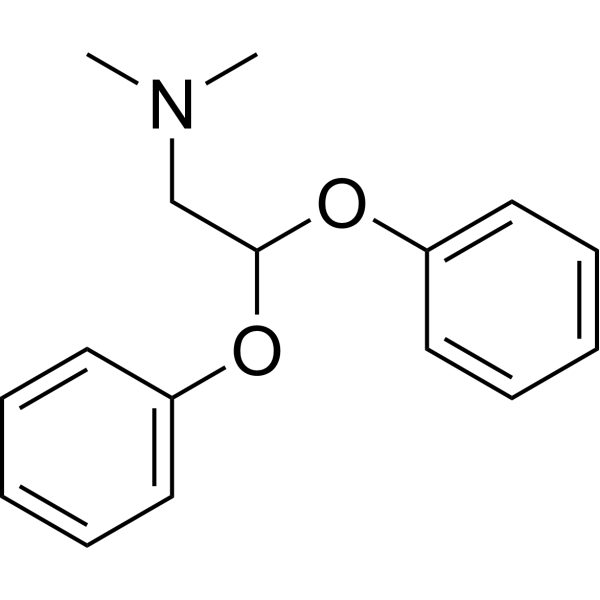
Medifoxamine is an orally active monoamine reuptake inhibitor and antidepressant. Medifoxamine preferentially inhibits presynaptic dopamine reuptake. Medifoxamine acts as an intraocular pressure-lowering agent to reduce intraocular pressure, and also functions as a miotic agent to decrease pupil diameter. Medifoxamine exhibits characteristic properties of antidepressant compounds, including preventing hypothermia induced by Reserpine (HY-N0480) or Apomorphine (HY-12723), potentiating the toxic effects of Yohimbine (HY-N0127) in mice, and reducing immobility behavior in mice and rats in the "behavioral despair" model. Medifoxamine has no anticholinergic activity. Medifoxamine can be used in research related to depression .
loading...
    loading...
Cat. No.: HY-143312E
Purity:  99.71%
Target:  

GLP Receptor

Research Areas:  

Metabolic Disease

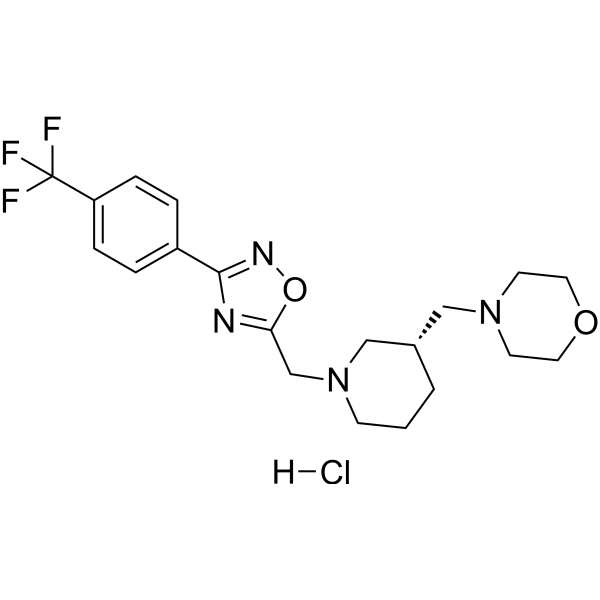
(S)-V-0219 hydrochloride is an enantiomer of V-0219 (HY-143312). V-0219 is an orally active and positive allosteric modulator (PAM) of the GLP Receptor-1 (GLP-1R). (S)-V-0219 hydrochloride activates calcium fluxes in HEK cells stably expressing hGLP-1R. (S)-V-0219 hydrochloride is orally active and ameliorates high glucose levels in mice and inhibits feeding behavior in fasted mice .
loading...
    loading...
Cat. No.: HY-B1192R
CAS No.: 50-50-0
Synonyms: β-Estradiol 3-benzoate (Standard); 17β-Estradiol 3-benzoate (Standard)
Estradiol benzoate (Standard) is the analytical standard of Estradiol benzoate. This product is intended for research and analytical applications. Estradiol benzoate (β-Estradiol 3-benzoate) is a HBx protein inhibitor and inhibits androgen and hepatitis B virus (HBV) transcription, replication. Estradiol benzoate shows antifertility effects, anti- Toxoplasma gondii activity and can improve memory behavior of Ovariectomy (Ovx) female mice .
loading...
    loading...
Cat. No.: HY-P2707
CAS No.: 74504-53-3
Synonyms: α-DTX
Research Areas:  

Neurological Disease

α-Dendrotoxin (α-DTX) is a voltage-gated K + channel blocker and an acid-sensing ion channel (ASIC) inhibitor. α-Dendrotoxin blocks Kv1.1, Kv1.2, Kv1.6 and D-type (ID) voltage-gated K + channels, and reversibly inhibits slowly inactivating potassium currents. α-Dendrotoxin induces epilepsy-related behaviors in mice. α-Dendrotoxin can be used in studies related to tonic-clonic seizures .
loading...
    loading...
Cat. No.: HY-W007223
CAS No.: 4350-07-6
Synonyms: D-5-HTP; 5-Hydroxy-D-tryptophan
Target:  

5-HT Receptor

Research Areas:  

Neurological Disease

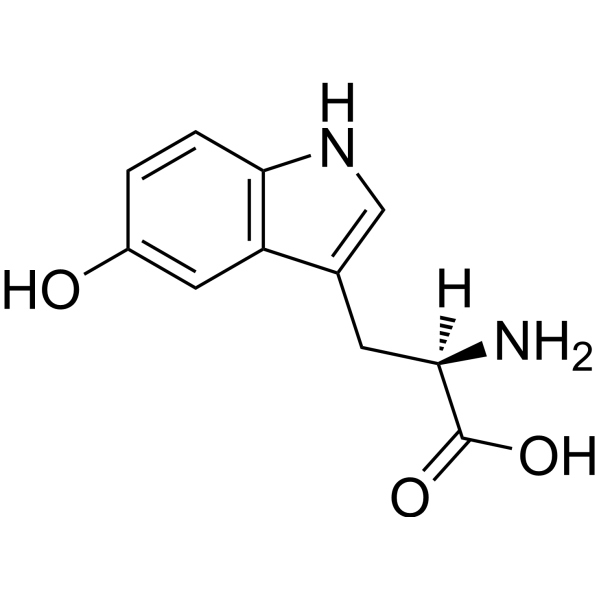
D-5-Hydroxytryptophan (D-5-HTP) is the D-isomer of 5-HTP and can be isolated from DL-5-hydroxytryptophan by continuous separation. Compared with intraperitoneal administration of L-5-Hydroxytryptophan, which can induce dose-dependent backward walking behavior in mice, D-5-Hydroxytryptophan has no significant effect on mouse behavior and is a negative control. D-5-Hydroxytryptophan is also a 5-HT ligand, capable of binding to the 5-HT site with affinity in the micromolar range .
loading...
    loading...
Cat. No.: HY-P1216
CAS No.: 207678-81-7
Target:  

Melanocortin Receptor

Research Areas:  

Neurological Disease

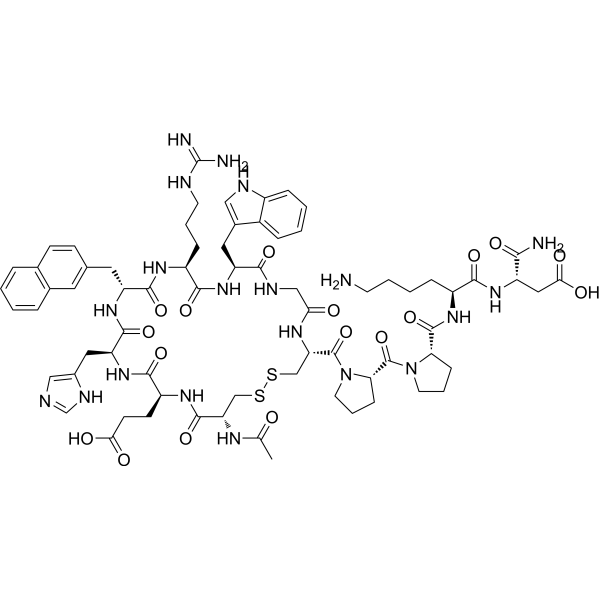
HS014 is a potent and selective melanocortin-4 (MC4) receptor antagonist, with Kis of 3.16, 108, 54.4 and 694 nM for human MC4, MC1, MC3 and MC5 receptors, respectively. HS014 modulates the behavioral effects of morphine in mice. HS014 increases food intake in free-feeding rats .
loading...
    loading...
Cat. No.: HY-W115718R
CAS No.: 370-81-0
Cuprizone is a copper chelating agent that forms a deep blue copper ketone complex with copper (II). The copper ketone reaction can be used in colorimetric tests for the presence of trace copper. Cuprizone can be used to induce some schizophrenia-like behavior in mice. Cuprizone acts on copper enzymes, including SOD1, cytochrome oxidase, and DβH, thereby causing oxidative stress and increasing DA levels in certain brain regions such as the medial prefrontal cortex (PFC) .
loading...
    loading...
Cat. No.: HY-146619
CAS No.: 2766739-35-7
Research Areas:  

Neurological Disease

RAGE/SERT-IN-1 is a potent and orally active advanced glycation end products (RAGE) and serotonin transporter (SERT) inhibitor with IC50s of 8.26 μM and 31.09 nM, respectively. RAGE/SERT-IN-1 exhibits significant neuroprotective effect against Aβ25-35-induced neuronal damage and alleviates depressive behavior of mice. RAGE/SERT-IN-1 can be used for researching the comorbidity of Alzheimer's disease and depression .
loading...
    loading...
Cat. No.: HY-143880
CAS No.: 2764889-60-1
MRGPRX1 agonist 4 (compound 1t) is a potent and orally active Mas-related G protein-coupled receptor X1 (MRGPRX1) positive allosteric modulator with an EC50 value of 0.1 μM. MRGPRX1 agonist 4 has good metabolic stability and oral bioavailability. MRGPRX1 agonist 4 can reduce behavioral heat hypersensitivity in a neuropathic pain model humanized MRGPRX1 mice. MRGPRX1 agonist 4 can be used for researching neuropathic pain .
loading...
    loading...
Cat. No.: HY-105879
CAS No.: 72808-81-2
Synonyms: HR-592 free base
Target:  

Drug Derivative

Research Areas:  

Neurological Disease

Tepirindole (HR-592 free base) is an orally active Indole (HY-W001132) derivative. Tepirindole reduces incidence of catalepsy induced by Haloperidol (HY-14538). Tepirindole suppresses the turning behavior induced by Methamphetamine .
loading...
    loading...
Cat. No.: HY-B1198R
CAS No.: 51-03-6
Synonyms: ENT-14250 (Standard)
Research Areas:  

Infection Cancer

Piperonyl butoxide (Standard) is the analytical standard of Piperonyl butoxide. This product is intended for research and analytical applications. Piperonyl butoxide (ENT-14250) is a pesticide synergist and food additive. Piperonyl butoxide has adverse effects on reproduction, development and behavior in mice. Piperonyl butoxide can activate c-Jun and ATF-2 in mouse hepatocytes. Piperonyl butoxide is a liver cancer carcinogen in rats and mice .
loading...
    loading...
Cat. No.: HY-W018475
CAS No.: 144034-80-0
Synonyms: MK 462 free base
Target:  

5-HT Receptor

Research Areas:  

Neurological Disease

Rizatriptan (MK 462 free base) is an orally active 5-HT1B/5-HT1D receptor agonist, with BBB permeability. Rizatriptan exerts significant anti-migraine effects by constricting intracranial and extracranial blood vessels and inhibiting neuropeptide release. Rizatriptan exhibits species- and tissue-specific metabolic characteristics; for example, it undergoes oxidative deamination mainly by MAO-A in the liver of brown rats, so co-administration with MAO-A inhibitors is prohibited. Rizatriptan may also exacerbate nitroglycerin-induced cutaneous allodynia, prolong the duration of central sensitization, and increase anxiety-like behavior and active drug-seeking behavior in mice. Rizatriptan has been widely used in studies related to migraine and medication-overuse headache .
loading...
    loading...
Cat. No.: HY-A0139
CAS No.: 5591-45-7
Synonyms: NSC 108165; Navan; Navane
Thiothixene is a typical antipsychotic. It selectively binds to dopamine D2 over D1, D3, and D4 receptors (Kis=0.417, 338, 186.2, and 363.1 nM, respectively). Thiothixene also binds to various serotonin (5-HT), histamine H1, α1- and α2-adrenergic, muscarinic acetylcholine, and sigma receptors (Kis=15-5,754 nM) as well as the dopamine, norepinephrine, and serotonin transporters (Kis=3.16-30 μM). In vivo, thiothixene reduces spontaneous and amphetamine-induced locomotor activity in rats. It enhances latent inhibition, as measured by a decreased lick latency in response to light and foot shock stimuli, which is a measure of selective attention in rats.3 Thiothixene also increases competitive behavior in submissive mice, indicating antidepressant-like behavior.
loading...
    loading...
Cat. No.: HY-B0168S
CAS No.: 1217774-40-7
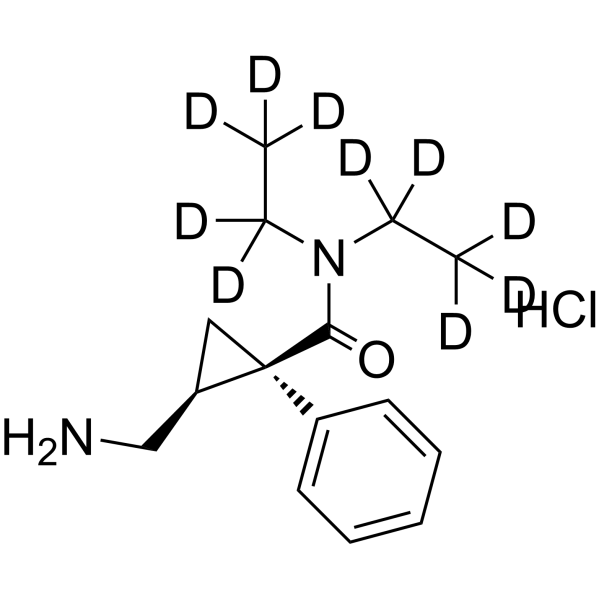
Milnacipran-d10 (hydrochloride) is the deuterium labeled Milnacipran hydrochloride (HY-B0168A). Milnacipran hydrochloride is an orally active Serotonin (HY-B1473A) and Norepinephrine (HY-13715) reuptake inhibitor. Milnacipran hydrochloride inhibits monoamine transporters, especially the norepinephrine transporter and the serotonin transporter (Ki values of 31 and 8.5 nM, respectively). Milnacipran hydrochloride inhibits pERK1/2 activation. Milnacipran hydrochloride has antidepressant, anxiolytic and analgesic properties. Milnacipran hydrochloride inhibits biting behavior in mice. Milnacipran hydrochloride can be used in the study of major depressive disorder, anxiety disorders, and neuropathic pain (e.g., fibromyalgia) .
loading...
    loading...

