300 Results for "

randomized crossover trial

" in MedChemExpress (MCE) Product Catalog:
Products (300)

300 Results for "randomized crossover trial" in MCE Product Catalog:

Cat. No.: HY-P5496
CAS No.: 872141-80-5
Target:  

Inhibitory Antibodies

Research Areas:  

Others

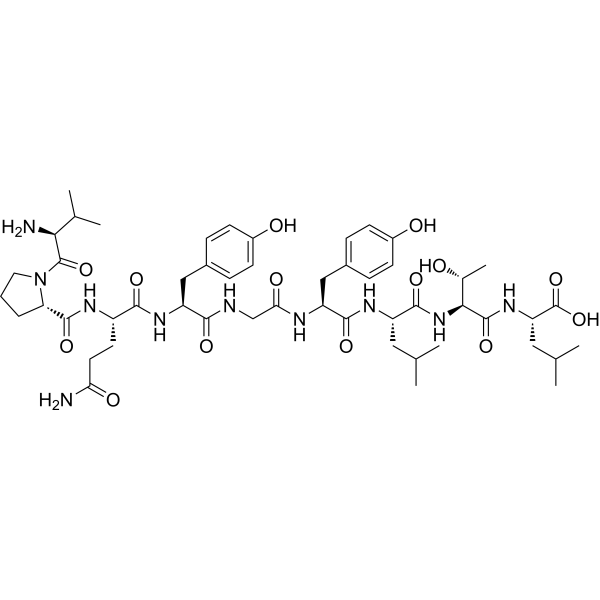
AAV2 Epitope is a biological active peptide. (This peptide is the capsid derived immunodominant adeno-associated virus 2 (AAV2), CD8 T cell epitope. Liver toxicity observed in a clinical trial of AAV2 delivered systemically to patients with hemophilia was ascribed to killing of vector-transduced hepatocytes by capsid-specific T-cells.)
loading...
    loading...
Cat. No.: HY-123016
CAS No.: 143442-54-0
Target:  

Endogenous Metabolite

Research Areas:  

Cardiovascular Disease

9(S)-HODE cholesteryl ester is originally extracted from atherosclerotic lesions. It remains uncertain whether the oxidized fatty acid portion of the molecule results from enzymatic lipoxygenation or from random lipid peroxidation.2 9(S)-HODE cholesteryl ester can be used as a standard for analysis of chiral HODE cholesteryl esters.
loading...
    loading...
Cat. No.: HY-125394
CAS No.: 330800-93-6
Target:  

Endogenous Metabolite

Research Areas:  

Cardiovascular Disease

9(R)-HODE cholesteryl ester is originally extracted from atherosclerotic lesions. It remains uncertain whether the oxidized fatty acid portion of the molecule results from enzymatic lipoxygenation or from random lipid peroxidation.2 9(R)-HODE cholesteryl ester can be used as a standard for analysis of chiral HODE cholesteryl esters.
loading...
    loading...
Cat. No.: HY-169823
CAS No.: 218936-13-1
Research Areas:  

Infection

BAS-118 is a benzamide derivative with antibacterial activity. The MIC50, MIC90 and MIC ranges of BAS-118 for 100 randomly selected isolates of Helicobacter pylori are ≤0.003, 0.013 and ≤0.003-0.025 mg/L, respectively. BAS-118 is promising for research of anti-H. pylori agent .
loading...
    loading...
Cat. No.: HY-W710697
CAS No.: 64700-56-7
Synonyms: Triclopyr 2-butoxyethylester
Target:  

Herbicide

Research Areas:  

Others

Triclopyr ester (Triclopyr 2-butoxyethylester) is a bioactive substance with activity in controlling harmful woody plants. Triclopyr ester showed toxicity to honeybees (Apis mellifera) in greenhouse trials. Triclopyr ester in combination with other herbicides is effective in removing the canopy of plants such as honey trees and whitebrush. Triclopyr ester can quickly assess its weeding effectiveness when treating trees in greenhouses, providing potential treatment options for field experiments .
loading...
    loading...
Cat. No.: HY-153840B
Research Areas:  

Inflammation/Immunology

ODN INH-18 triethylamine is a linear 24-mer class B INH-ODN in which the 5' INH-ODN 4084-F sequence was followed by a random stretch of 12 nucleotides lacking the ability to form significant secondary structures. ODN INH-18 triethylamine showes inhibitory potency for TLR9 ligand-induced IFN-α production.
loading...
    loading...
Cat. No.: HY-W710915
Aprindine hydrochloride-d10 is the deuterium labeled Aprindine hydrochloride (HY-A0236A). Aprindine hydrochloride is a class I-b anti-arrhythmic agent and a hERG channel blocker with an IC50 of 0.23 μM. Aprindine hydrochloride has inhibitory effects on Na+/Ca2+ exchanger currents, which is partly responsible for their antiarrhythmic and cardioprotective effects. Aprindine hydrochloride is widely used for trial and ventricular tachyarrhythmias research research.
loading...
    loading...
Cat. No.: HY-118326
CAS No.: 1190379-37-3
Target:  

Autophagy

Research Areas:  

Cancer

MRT 68601 is a potent TBK1 inhibitor with the activity of inhibiting autophagosome formation in lung cancer cells. MRT 68601 may have potential effects against targets associated with host-dependent factors identified in SARS-CoV-2 infection. The drug targets involved in MRT 68601 are related to existing FDA-approved drugs and compounds in clinical trials, which can provide support for the development of broad-spectrum antiviral therapies .
loading...
    loading...
Cat. No.: HY-125316
CAS No.: 1138669-65-4
Synonyms: ARRY-403
Target:  

Endogenous Metabolite

Research Areas:  

Metabolic Disease

AMG-151 (ARRY-403) is a glucokinase agonist with fasting plasma glucose (FPG) lowering activity. AMG-151 showed a significant linear dose-response trend compared with placebo in a randomized, placebo-controlled Phase IIa study. The use of AMG-151 was associated with a higher incidence of hypoglycemia and hypertriglyceridemia. AMG-151 may serve as a potential compound for the inhibition of type 1 diabetes .
loading...
    loading...
Cat. No.: HY-169115A
CAS No.: 313651-02-4
Target:  

Calcium Channel

Research Areas:  

Inflammation/Immunology

(Rac)-PD0299685 is a Ca(2+) channel α2δ ligand that was investigated for relieving interstitial cystitis pain in a randomized, double-blind, placebo-controlled phase IIa study. (Rac)-PD0299685 demonstrated a clinically significant reduction in daily worst pain severity scores at the 60 mg dose compared to placebo. (Rac)-PD0299685 is also a potent voltage-dependent calcium channel inhibitor for the study of retina-related diseases.
loading...
    loading...
Cat. No.: HY-14915
CAS No.: 194785-19-8
Target:  

Adrenergic Receptor

Research Areas:  

Endocrinology

Bedoradrine is a highly selective β2-adrenergic agonist with activity in suppressing asthma and chronic obstructive pulmonary disease (COPD). Bedoradrine is administered by intravenous infusion and is specifically indicated for the suppression of acute asthma attacks. Bedoradrine has shown good safety and preliminary efficacy in clinical trials, especially in patients with stable moderate to severe asthma. The results of Bedoradrine studies have shown that it can provide clinical benefits without increasing clinical risks, especially for patients who are unable to use inhalation or nebulization suppression .
loading...
    loading...
Cat. No.: HY-19904A
CAS No.: 872260-47-4
Synonyms: (+/-)-LY2409021
Target:  

Endogenous Metabolite

Research Areas:  

Metabolic Disease

(+/-)-Adomeglivant ((+/-)-LY2409021) is a potent and selective glucagon receptor antagonist with hypoglycemic activity. (+/-)-Adomeglivant is effective in lowering blood sugar levels in both healthy people and people with type 2 diabetes. (+/-)-Adomeglivant is well tolerated by glucagon signaling blockade in patients with type 2 diabetes and significantly reduces fasting and postprandial blood glucose with a concomitant reversible elevation of aminotransferases. Glucagon signaling inhibition by (+/-)-Adomeglivant is a promising potential inhibitory approach for patients with type 2 diabetes and warrants further evaluation of its benefits and risks in longer clinical trials .
loading...
    loading...
Cat. No.: HY-16633
CAS No.: 1444006-79-4
Target:  

γ-secretase Amyloid-β

Research Areas:  

Metabolic Disease

ELND 007 (Compound 34) is a metabolically stable γ-secretase inhibitor designed to selectively inhibit amyloid beta (Aβ) generation while minimizing Notch inhibition. Developed alongside ELND 006 (Compound 30), it underwent human clinical trials following a synthetic strategy emphasizing diversity and chirality. In preclinical studies, ELND 007 showed promising in vitro and in vivo characteristics, effectively reducing Aβ levels. Comparative studies with other γ-secretase inhibitors like Semagacestat, Begacestat, and Avagacestat highlighted its efficacy in lowering Aβ production, particularly demonstrated by reduced Aβ levels in the cerebrospinal fluid (CSF) of healthy human volunteers, suggesting potential therapeutic benefit for Alzheimer's disease .
loading...
    loading...
Cat. No.: HY-135752
CAS No.: 99827-19-7
Target:  

Bacterial

Research Areas:  

Infection

Carbendazim mixture with flusilazole is a fungicide used to control sooty mold caused by Botrytis narcissicola. The disease is the most common foliar disease of daffodils (Narcissus cultivars) in the UK and causes significant losses in bulb and flower production. Carbendazim mixture with flusilazole was found to be effective in reducing lesion size and significantly reducing symptoms of secondary sooty mold after spraying when used in combination with several other fungicides. In field trials in Cambridgeshire and Lincolnshire, a spraying program using this fungicide mixture was effective in controlling sooty mold. In addition, alternating four to six sprays using two or three fungicides with different modes of action not only reduced disease damage but also increased bulb production. The study discusses the selection of appropriate fungicides and control methods that may reduce the number of spraying applications.
loading...
    loading...
Cat. No.: HY-13590
CAS No.: 402857-58-3
Target:  

VEGFR

Research Areas:  

Cancer

CEP-7055 (compound 21) is a novel vascular endothelial growth factor R2 (VEGF-R2) tyrosine kinase inhibitor with potent inhibitory activity. Studies have found that the inhibitor activity can be significantly improved by optimizing the R9 substituent. Compound 21 has potent low nanomolar inhibition of human VEGF-R tyrosine kinase and shows good selectivity against multiple tyrosine and serine/threonine kinases. N,N-dimethylglycine ester 40 was prepared to improve its water solubility and oral bioavailability. In animal pharmacokinetic studies, a significant increase in the plasma level of 21 was observed after oral administration of 40. Compound 21 showed significant in vivo antitumor activity in multiple tumor models and has entered phase I clinical trials as a water-soluble N,N-dimethylglycine ester proagent of 40 (CEP-7055).
loading...
    loading...
Cat. No.: HY-15334
CAS No.: 402857-39-0
Target:  

VEGFR

Research Areas:  

Cancer

CEP-5214, derived from a new indenopyrrolocarbazole template, is a potent inhibitor of vascular endothelial growth factor R2 (VEGF-R2) tyrosine kinase. Structurally, it features optimal substitutions at positions 9 (ethoxymethyl) and 12 (hydroxypropyl) on the indeno[2,1-a]pyrrolo[3,4-c]carbazole-5-one scaffold, leading to high potency against VEGF-R2 (IC50 8 nM). Compound 21 (CEP-5214) exhibits low-nanomolar inhibition of human VEGF-R tyrosine kinases (IC50 4 nM for VEGF-R2/KDR), with good selectivity over other kinases. The compound demonstrated significant cellular and in vivo antitumor activity across various models and advanced into phase I clinical trials as a water-soluble prodrug (CEP-7055) to enhance oral bioavailability .
loading...
    loading...
Cat. No.: HY-P89662
Synonyms: crossover junction endonuclease MUS81, MUS81

Host:  

Mouse

Application:  

WB, ICC/IF, IF-Tissue, IP, ELISA

Reactivity:  

human, mouse, rat

loading...
    loading...
Cat. No.: HY-KE8005

T7 Endonuclease I can recognize and cleave incompletely paired DNA, cruciform structure DNA, Holliday structure or crossover DNA, heterologous double-stranded DNA, or cleave nicked double-stranded DNA at a slower rate.

loading...
    loading...
Cat. No.: HY-L104
712 compounds

The lack of availability of appropriate medicines for children is an extensive and urgent problem. A variety of obstacles hinder children's drug development, including the limited commercial interest, lack of suitable infrastructure and competence for conducting paediatric clinical trials, difficulties in trial design, ethical worries and many others. Because of these factors, unlicensed and off-label prescribing is very common in children which may lead to safety concern.

MCE offers a unique collection of 712 Pediatric medicines, all of which have been approved or studied in clinical trials for children diseases. MCE children’s drug library is a useful tool for drug repurposing to discover new children’s indications.

Cat. No.: HY-P2858D
Research Areas:  

Metabolic Disease

β-Mannanase, Clostridium thermocellum (EC 3.2.1.78) catalyses the following chemical reaction: Random hydrolysis of (1->4)-beta-D-mannosidic linkages in mannans, galactomannans and glucomannans.
loading...
    loading...

