673 Results for "

RAS

" in MedChemExpress (MCE) Product Catalog:
Products (673)

673 Results for "RAS" in MCE Product Catalog:

Cat. No.: HY-176288
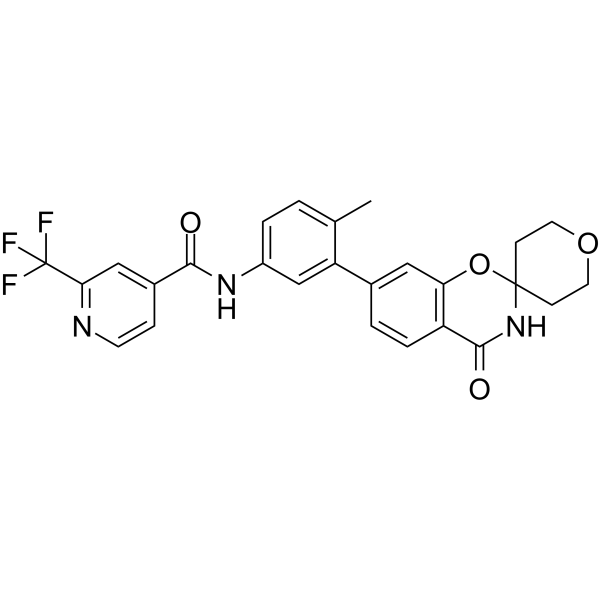
eIF4E/eIF4G PPI-IN-1 is an eIF4E/eIF4G interaction inhibitor with a KD of 20.2 μM for eIF4E protein. eIF4E/eIF4G PPI-IN-1 plays an antitumor role in multiple modes of action including regulating the activity of eIF4E by inhibiting the Ras/MAPK/eIF4E signaling pathway, apoptosis and cell migration. eIF4E/eIF4G PPI-IN-1 suppresses the growth of HepG2 xenografts in nude mice and was relatively nontoxic to mice .
loading...
    loading...
Cat. No.: HY-B0627A
CAS No.: 121369-64-0
Synonyms: 1,1-Dimethylbiguanide (glycinate)
Metformin (1,1-Dimethylbiguanide) glycinate inhibits the mitochondrial respiratory chain in the liver, leading to AMPK activation and enhancing insulin sensitivity, and can be used in the study of type 2 diabetes. Metformin glycinate exerts central glucose-lowering effects by inhibiting Ras-related protein 1 (Rap1) in SF1 hypothalamic neurons. Metformin glycinate also inhibits liver oxidative stress, nitrosative stress, inflammation, and apoptosis caused by liver ischemia/reperfusion injury. In addition, Metformin glycinate regulates the expression of autophagy-related proteins by activating AMPK and inhibiting the mTOR signaling pathway, thereby inducing tumor cell autophagy and inhibiting the growth of renal cell carcinoma in vitro and in vivo .
loading...
    loading...
Cat. No.: HY-P82687
Synonyms: G3BP1; G3BP; RAS GTPase-activating protein-binding protein 1; G3BP-1; ATP-dependent DNA helicase VIII; hDH VIII; GAP SH3 domain-binding protein 1

Host:  

Rabbit

Application:  

WB, IHC-P, ICC/IF, IP, FC

Reactivity:  

Human, Mouse, Rat

loading...
    loading...
Cat. No.: HY-105854A
CAS No.: 23744-24-3
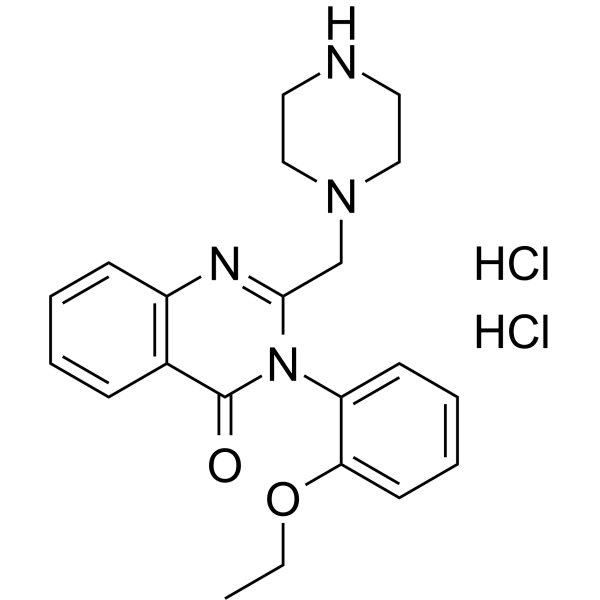
Pipoxolan is an orally active smooth muscle relaxant, anti-inflammatory agent and anticancer agent. Pipoxolan modulates PI3K/AKT signaling pathways, and reduces the levels of Ras/MEK/p-ERK, MMP-2 and MMP-9. Pipoxolan inhibits pro-inflammatory transcription factor pathways, activates Nrf2/HO-1, and suppresses the production of pro-inflammatory mediators. Pipoxolan induces ROS generation, endogenous mitochondrial Apoptosis, and G0/G1 cell cycle arrest. Pipoxolan reduces cerebral infarction size and inhibits intimal hyperplasia. Pipoxolan can be used in research related to cerebral ischemia, intimal hyperplasia, oral squamous cell carcinoma, leukemia and lung cancer .
loading...
    loading...
Cat. No.: HY-145737A
Purity:  99.38%
Target:  

PROTACs SOS1 Ras PERK

Research Areas:  

Cancer

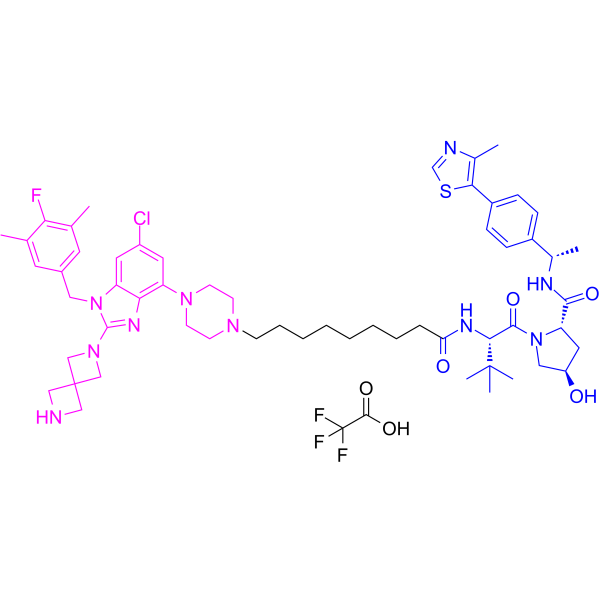
PROTAC SOS1 degrader-1 TFA is a degrader of SOS1 PROTAC, with a DC50 of 98.4 nM and a Kd value of 44 nM. PROTAC SOS1 degrader-1 TFA induces the formation of a ternary complex with SOS1 and the VCB E3 ubiquitin ligase complex, thereby promoting the ubiquitination and proteasomal degradation of SOS1. PROTAC SOS1 degrader-1 TFA reduces KRAS-GTP levels, inhibits the phosphorylation of ERK in the RAS-RAF-MEK-ERK pathway, and suppresses the proliferation of cancer cells carrying KRAS mutations. PROTAC SOS1 degrader-1 TFA inhibits tumor growth in mouse xenograft models. PROTAC SOS1 degrader-1 TFA can be used for the research of KRAS-driven cancers .
loading...
    loading...
Cat. No.: HY-17471AR
CAS No.: 1115-70-4
Synonyms: 1,1-Dimethylbiguanide hydrochloride (Standard)
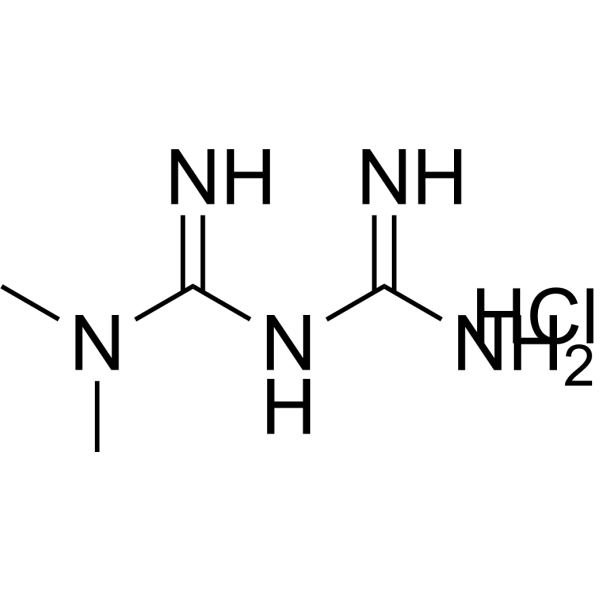
Metformin hydrochloride (Standard) is the analytical standard of Metformin hydrochloride (HY-17471A). This product is intended for research and analytical applications. Metformin (1,1-Dimethylbiguanide) hydrochloride inhibits the mitochondrial respiratory chain in the liver, leading to AMPK activation and enhancing insulin sensitivity, and can be used in the study of type 2 diabetes. Metformin hydrochloride exerts central glucose-lowering effects by inhibiting Ras-related protein 1 (Rap1) in SF1 hypothalamic neurons. Metformin hydrochloride also inhibits liver oxidative stress, nitrosative stress, inflammation, and apoptosis caused by liver ischemia/reperfusion injury. In addition, Metformin hydrochloride regulates the expression of autophagy-related proteins by activating AMPK and inhibiting the mTOR signaling pathway, thereby inducing tumor cell autophagy and inhibiting the growth of renal cell carcinoma in vitro and in vivo .
loading...
    loading...
Cat. No.: HY-177008
CAS No.: 2897640-93-4
Target:  

PROTACs EGFR ERK Akt Apoptosis

Research Areas:  

Cancer

PROTAC HER2 degrader-1 is a selective HER2 PROTAC degrader with a DC50 of 69 nM. PROTAC HER2 degrader-1 induces ubiquitination and degradation of HER2 via the ubiquitin-proteasome system, thereby inhibiting the downstream PI3K/AKT/mTOR and RAS/RAF/MEK/ERK signaling pathways. PROTAC HER2 degrader-1 inhibits the proliferation of HER2-positive cancer cells, induces apoptosis and arrests the cell cycle. PROTAC HER2 degrader-1 suppresses the growth of HER2-positive xenografts. PROTAC HER2 degrader-1 can be used in HER2-positive cancer-related research .
loading...
    loading...
Cat. No.: HY-B0515R
CAS No.: 138926-19-9
Synonyms: BM-210955 (Standard); RPR-102289A (Standard)
Research Areas:  

Cancer

Ibandronate Sodium Monohydrate (BM-210955; RPR-102289A) (Standard) is the analytical standard of Ibandronate Sodium Monohydrate (HY-B0515). This product is intended for research and analytical applications. Ibandronate Sodium Monohydrate (BM-210955; RPR-102289A) is an orally active, selective inhibitor of farnesyl pyrophosphate synthase (FPP synthase). Ibandronate Sodium Monohydrate can block the mevalonate pathway to inhibit the isoprenylation modification of small GTPases (such as RAS, RHO family proteins), induce tumor cell apoptosis and inhibit bone resorption. Ibandronate Sodium Monohydrate inhibits tumor cell proliferation (such as ER + breast cancer cells), promotes the expression of the pro-apoptotic gene FAS, and can produce synergistic anti-tumor effects with anti-estrogen compounds. Ibandronate Sodium Monohydrate is used in the study of osteoporosis and bone metastatic tumors (such as breast cancer bone metastasis) .
loading...
    loading...
Cat. No.: HY-P704032
Purity:  ≥ 90%, as determined by reducing SDS-PAGE.
Synonyms: CSDE1; N-RAS Upstream Gene Protein; Cold Shock Domain Containing E1; Upstream Of NRAS; D1S155E; NRAS-Related; UNR; Protein UNR; Cold Shock Domain-Containing Protein E1; KIAA0885; Cold Shock Domain Containing E1, RNA Binding; NRU
Species:  
Mouse
Source:  
E. coli
loading...
    loading...
Cat. No.: HY-P87058
Synonyms: Cell migration inducing gene 5 protein antibody; EN 7 antibody; OTTMUSP00000004488 antibody; p21 Rac3 antibody; p21-Rac3 antibody; Rac1B antibody; RAC3 antibody; RAC3_HUMAN antibody; RAS related C3 botulinum substrate 3 antibody; RAS related C3 botulinum toxin substrate 3 (rho family small GTP binding protein Rac3) antibody; Cell migration inducing gene 5 protein antibody; EN 7 antibody; OTTMUSP00000004488 antibody; p21 Rac3 antibody; p21-Rac3 antibody; Rac1B antibody

Host:  

Rabbit

Application:  

WB, ICC/IF, IF-Tissue, IHC-P

Reactivity:  

Human, Mouse, Rat

loading...
    loading...
Cat. No.: HY-144271
CAS No.: 2695505-82-7
Target:  

Raf

Research Areas:  

Cancer

RAF-IN-1 is a RAF inhibitor with IC50 values ​​of 29.4 nM, 3.8 nM, and 36 nM against human recombinant bRAF V600E, cRAF, and bRAF WT enzymes, respectively. RAF-IN-1 suppresses RAF enzymatic activity and reduces cancer cell proliferation. RAF-IN-1 can be used for cancer research .
loading...
    loading...
Cat. No.: HY-10966R
CAS No.: 405554-55-4
Research Areas:  

Cancer

SB-590885 (Standard) is the analytical standard of SB-590885 (HY-10966). This product is intended for research and analytical applications. SB-590885 is a BRAF/c-Raf kinase inhibitor that selectively targets B-Raf, and it amplifies the ERK/MAPK signaling pathway in RAS-activated cells. SB-590885 effectively inhibits the malignant proliferation, transformation and tumorigenicity of oncogenic B-Raf cells; it also induces the proliferation of erythroid progenitor cells, delays their differentiation and promotes hemoglobin synthesis, thereby improving ineffective erythropoiesis and reducing apoptosis. SB-590885 exerts a synergistic effect with TGF-β inhibitors and glucocorticoids, significantly promoting the formation of erythroid colonies in cells from patients with Diamond-Blackfan anemia (DBA). SB-590885 is mainly used in relevant studies on DBA, cisplatin-induced myelosuppression-related anemia, and pan-cancers such as melanoma and colorectal cancer .
loading...
    loading...
Cat. No.: HY-119264
CAS No.: 903499-49-0
PRLX-93936 is a molecular Glues that binds to and reprograms the TRIM21 ubiquitin ligase to degrade nuclear pore complexes. PRLX-93936 binds to TRIM21, forms a ternary complex with TRIM21 and NUP98, and mediates the ubiquitination and proteasomal degradation of NUP98 and other nuclear pore complex proteins. PRLX-93936 induces the loss of short-lived cytoplasmic mRNA transcripts, triggers cancer cell apoptosis (Apoptosis), and inhibits the activated Ras pathway. PRLX-93936 inhibits HIF-1 under hypoxic conditions (IC50 = 0.09 μM in cell-based reporter gene assay). PRLX-93936 suppresses tumor growth in mouse models and improves survival rates in mouse models of multiple myeloma. PRLX-93936 is applicable to research related to pancreatic cancer and multiple myeloma .
loading...
    loading...
Cat. No.: HY-119264A
CAS No.: 1094210-96-4
Purity:  99.83%
PRLX-93936 dihydrochloride is a molecular Glues that binds to and reprograms the TRIM21 ubiquitin ligase to degrade nuclear pore complexes. PRLX-93936 dihydrochloride binds to TRIM21, forms a ternary complex with TRIM21 and NUP98, and mediates the ubiquitination and proteasomal degradation of NUP98 and other nuclear pore complex proteins. PRLX-93936 dihydrochloride induces the loss of short-lived cytoplasmic mRNA transcripts, triggers cancer cell apoptosis (Apoptosis), and inhibits the activated Ras pathway. PRLX-93936 dihydrochloride inhibits HIF-1 under hypoxic conditions (IC50 = 0.09 μM in cell-based reporter gene assay). PRLX-93936 dihydrochloride suppresses tumor growth in mouse models and improves survival rates in mouse models of multiple myeloma. PRLX-93936 dihydrochloride is applicable to research related to pancreatic cancer and multiple myeloma .
loading...
    loading...
Cat. No.: HY-135700
CAS No.: 19115-49-2
Purity:  ≥98.0%
Mevalonolactone is an intermediate metabolite in the eukaryotic mevalonate pathway, serving as the stable δ-lactone form of mevalonate with oral activity. Mevalonolactone exhibits binding affinity for ZNF384 (Ka = 12.6 μM) and inhibitory activity against aconitase (aconitase). Mevalonolactone promotes the nuclear localization of ZNF384 and enhances its binding to the GGPPS promoter. Mevalonolactone induces insulin resistance, disrupts glucose and lipid metabolism, enhances the isoprenylation of K-Ras, and inhibits the activation of the insulin signaling pathway. Mevalonolactone inhibits polypeptide synthesis of HMG-CoA reductase in isolated rat hepatocytes, promotes its degradation, and reduces its enzymatic activity. Mevalonolactone impairs mitochondrial function in rat brains. Mevalonolactone promotes the development of metabolically unhealthy obesity. Mevalonolactone can be used in research related to metabolically abnormal obesity, mevalonic aciduria, HMGCR-related limb-girdle myopathy, and statin-induced myopathy .
loading...
    loading...
Cat. No.: HY-186321
CAS No.: 501124-40-9
Synonyms: KF25706
Target:  

HSP Raf Src CDK MDM-2/p53 Ras

Research Areas:  

Cancer

Radicicol 6-oxime (KF25706) is an Hsp90 inhibitor with an EC50 of 5.5 nM against human Hsp90. Radicicol 6-oxime binds to Hsp90 and disrupts its chaperone function, leading to destabilization and depletion of Hsp90-associated signaling molecules. Radicicol 6-oxime depletes Hsp90-associated signaling proteins such as Raf-1, v-src, p185erbB2, Cdk4, and mutant p53, thereby inhibiting K-ras and v-src signaling pathways. Radicicol 6-oxime exhibits antiproliferative activity against various tumor cells. Radicicol 6-oxime inhibits tumor growth in mouse tumor xenograft models. Radicicol 6-oxime can be used for research on breast cancer, colon cancer, and vulvar epidermoid carcinoma .
loading...
    loading...
Cat. No.: HY-B0627S
CAS No.: 1185512-92-8
Synonyms: 1,1-Dimethylbiguanide-d6
Metformin-d6 (1,1-Dimethylbiguanide-d6) is a deuterated labeled Metformin (HY-B0627). Metformin (1,1-Dimethylbiguanide) inhibits the mitochondrial respiratory chain in the liver, leading to AMPK activation and enhancing insulin sensitivity, and can be used in the study of type 2 diabetes. Metformin exerts central glucose-lowering effects by inhibiting Ras-related protein 1 (Rap1) in SF1 hypothalamic neurons. Metformin also inhibits liver oxidative stress, nitrosative stress, inflammation, and apoptosis caused by liver ischemia/reperfusion injury. In addition, Metformin regulates the expression of autophagy-related proteins by activating AMPK and inhibiting the mTOR signaling pathway, thereby inducing tumor cell autophagy and inhibiting the growth of renal cell carcinoma in vitro and in vivo .
loading...
    loading...
Cat. No.: HY-B0627S1
Synonyms: 1,1-Dimethylbiguanide-13C2 hydrochloride
Metformin- 13C2 (1,1-Dimethylbiguanide- 13C2) hydrochloride is the 13C-labeled Metformin hydrochloride (HY-17471A). Metformin (1,1-Dimethylbiguanide) hydrochloride inhibits the mitochondrial respiratory chain in the liver, leading to AMPK activation and enhancing insulin sensitivity, and can be used in the study of type 2 diabetes. Metformin hydrochloride exerts central glucose-lowering effects by inhibiting Ras-related protein 1 (Rap1) in SF1 hypothalamic neurons. Metformin hydrochloride also inhibits liver oxidative stress, nitrosative stress, inflammation, and apoptosis caused by liver ischemia/reperfusion injury. In addition, Metformin hydrochloride regulates the expression of autophagy-related proteins by activating AMPK and inhibiting the mTOR signaling pathway, thereby inducing tumor cell autophagy and inhibiting the growth of renal cell carcinoma in vitro and in vivo .
loading...
    loading...
Cat. No.: HY-P87343
Synonyms: ARHE antibody; memB antibody; Protein MemB antibody; RAS homolog gene family member E antibody; Rho family GTPase 3 antibody; Rho-related GTP-binding protein Rho8 antibody; Rho-related GTP-binding protein RhoE antibody; Rho8 antibody; RhoE antibody; Rnd3 antibody

Host:  

Mouse

Application:  

WB, ICC/IF, IHC-P, FC

Reactivity:  

Human

loading...
    loading...
Cat. No.: HY-10966G
CAS No.: 405554-55-4
SB-590885 GMP is SB-590885 (HY-10966) produced by using GMP guidelines. GMP small molecules works appropriately as an auxiliary reagent for cell therapy manufacture. SB-590885 is a BRAF/c-Raf kinase inhibitor that selectively targets B-Raf, and it amplifies the ERK/MAPK signaling pathway in RAS-activated cells. SB-590885 effectively inhibits the malignant proliferation, transformation and tumorigenicity of oncogenic B-Raf cells; it also induces the proliferation of erythroid progenitor cells, delays their differentiation and promotes hemoglobin synthesis, thereby improving ineffective erythropoiesis and reducing apoptosis. SB-590885 exerts a synergistic effect with TGF-β inhibitors and glucocorticoids, significantly promoting the formation of erythroid colonies in cells from patients with Diamond-Blackfan anemia (DBA). SB-590885 is mainly used in relevant studies on DBA, cisplatin-induced myelosuppression-related anemia, and pan-cancers such as melanoma and colorectal cancer .
loading...
    loading...

