
741 Results for "

partial

" in MedChemExpress (MCE) Product Catalog:
Products (741)

741 Results for "partial" in MCE Product Catalog:

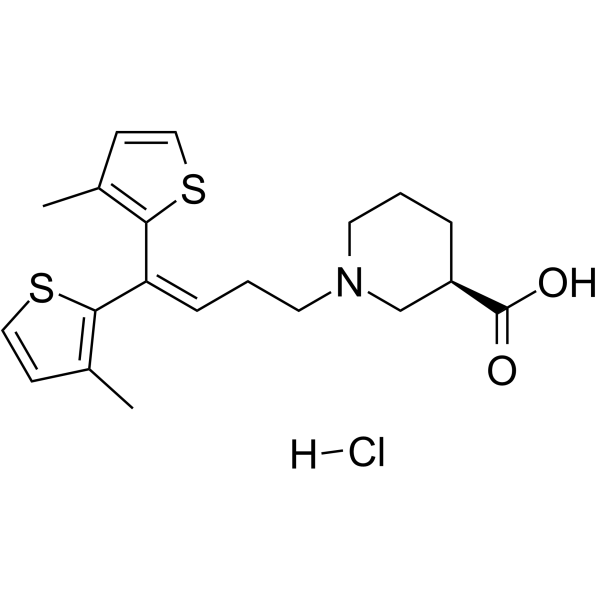
Cat. No.: HY-B0696A
CAS No.: 145821-59-6
Synonyms: NO050328 hydrochloride; NO328 hydrochloride; TGB hydrochloride
Target:  

GABA Receptor

Research Areas:  

Neurological Disease

Tiagabine hydrochloride (NO050328; NO328; TGB) is an orally active, highly selective, and reversible GAT-1 inhibitor and anticonvulsant that crosses the blood-brain barrier. By blocking the reuptake of GABA in neurons and glial cells, tiagabine increases extracellular GABA levels to enhance inhibitory signal transduction, thereby exerting multiple activities such as anticonvulsant, neuroprotective, and antioxidant effects. Tiagabine hydrochloride exhibits linear pharmacokinetic properties. Although it is metabolized by CYP3A and has a high protein binding rate, it carries a low risk of cognitive impairment. Tiagabine hydrochloride is widely used in research on related diseases including epilepsy (including refractory partial seizures), alcohol withdrawal symptoms, and Huntington's disease .
loading...
    loading...
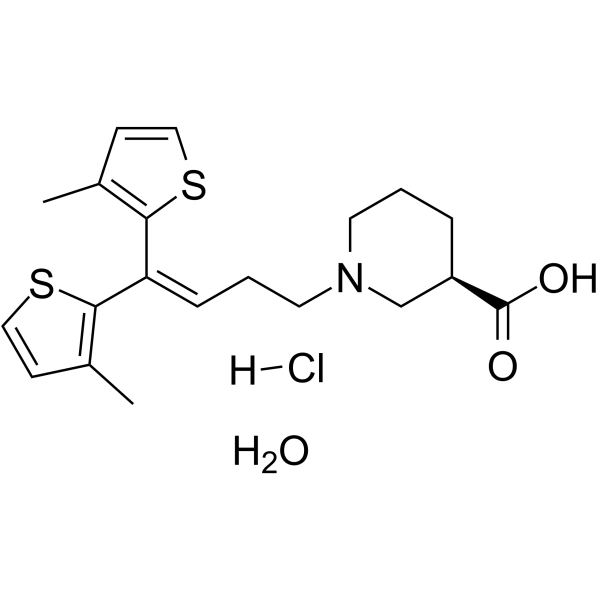
Cat. No.: HY-B0696B
CAS No.: 145821-57-4
Synonyms: NO050328 hydrochloride hydrate; NO328 hydrochloride hydrate; TGB hydrochloride hydrate
Target:  

GABA Receptor

Research Areas:  

Neurological Disease

Tiagabine (NO050328; NO328; TGB) hydrochloride hydrate is an orally active, highly selective, and reversible GAT-1 inhibitor and anticonvulsant that crosses the blood-brain barrier. By blocking the reuptake of GABA in neurons and glial cells, tiagabine increases extracellular GABA levels to enhance inhibitory signal transduction, thereby exerting multiple activities such as anticonvulsant, neuroprotective, and antioxidant effects. Tiagabine hydrochloride hydrate exhibits linear pharmacokinetic properties. Although it is metabolized by CYP3A and has a high protein binding rate, it carries a low risk of cognitive impairment. Tiagabine hydrochloride hydrate is widely used in research on related diseases including epilepsy (including refractory partial seizures), alcohol withdrawal symptoms, and Huntington's disease .
loading...
    loading...
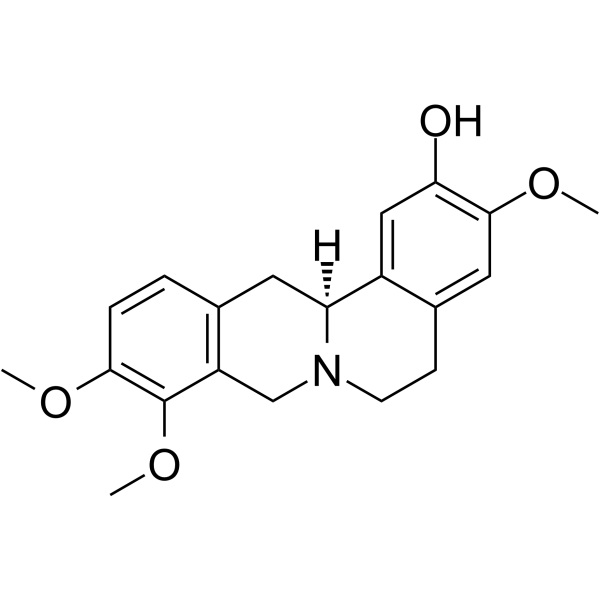
Cat. No.: HY-N0927
CAS No.: 483-34-1
Synonyms: Tetrahydrocolumbamine; (S)-Tetrahydrocolumbamine
(-)-Isocorypalmine (Tetrahydrocolumbamine; (S)-Tetrahydrocolumbamine) is a dopamine receptor ligand and modulator capable of crossing the blood-brain barrier. (-)-Isocorypalmine exhibits receptor selectivity, acting as a partial agonist of dopamine D1 and D5 receptors (coupled via Gs proteins), as well as an antagonist of D2, D3 and D4 receptors (by blocking Gi protein-mediated signaling). (-)-Isocorypalmine shows no significant binding to various non-dopamine receptors, ion channels and transporters. (-)-Isocorypalmine is metabolically stable in vivo, effectively inhibits spontaneous and cocaine-induced hyperlocomotion, sensitization and conditioned place preference in mice, and does not induce addictive place preference when administered alone. (-)-Isocorypalmine can be used in addiction research .
loading...
    loading...
Cat. No.: HY-P1650
CAS No.: 215713-39-6
Synonyms: B 9870
Target:  

Bradykinin Receptor ERK

Research Areas:  

Cancer

Breceptin (B 9870) is an antagonist of the bradykinin B1/B2 receptor (B1/B2R). Breceptin exhibits an irreversible antagonist effect on B2R, inhibiting the vasodilation induced by Bradykinin (HY-P0206) in the rabbit carotid vein contraction experiment. B-9870 shows partial agonist properties in HEK 293 cells with high expression of B2R, and can activate ERK1/2 phosphorylation, calcium ion mobilization, arachidonic acid release, and receptor internalization. Breceptin can be used in research to inhibit breast cancer and non-small cell lung cancer .
loading...
    loading...
Cat. No.: HY-W009009
CAS No.: 286456-42-6
Target:  

GABA Receptor

Research Areas:  

Neurological Disease

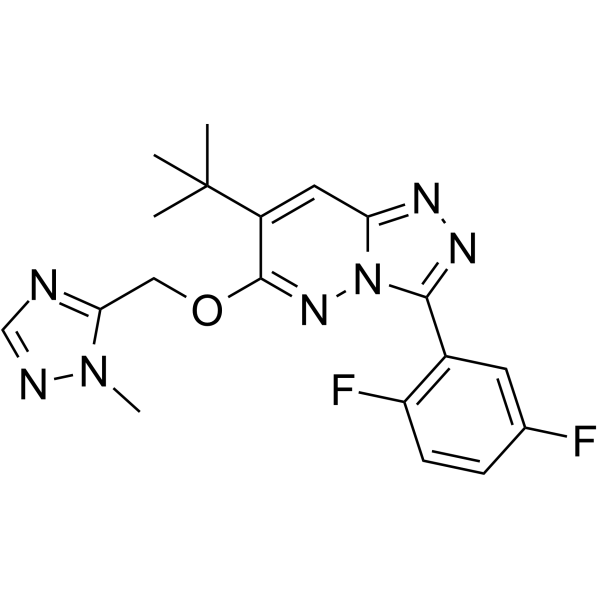
L-838417 is a selective partial agonist at the α2, α3 and α5 subtypes of the GABAA receptor and an antagonist at the α1, with binding Ki values of 0.79 nM, 0.67 nM, 1.67 nM, 267 nM, 2.25 nM and 2183 nM for α1β3γ2, α2β3γ2, α3β3γ2, α4β3γ2, α5β3γ2 and α6β3γ2. L-838417 has anti-anxiety activity .
loading...
    loading...
Cat. No.: HY-W040176
CAS No.: 799268-45-4
Synonyms: N-Palmitoyl-tyrosine phosphoric acid ammonium
N-PTyrosine PA (N-Palmitoyl-tyrosine phosphoric acid) ammonium is a lysophosphatidic acid (LPA) receptor modulator, which exhibits weak inhibitory activity against LPA1 and partial agonist properties towards LPA5. N-PTyrosine PA ammonium inhibits the activation of LPA receptors and downstream responses by competing with agonists for binding sites. N-PTyrosine PA ammonium can induce morphological changes and aggregation, and also inhibit LPA-induced morphological changes through receptor desensitization caused by pre-incubation. N-PTyrosine PA ammonium can be used in the research of related diseases such as atherosclerosis and acute ischemic syndromes (e.g., unstable angina, myocardial infarction, stroke) .
loading...
    loading...
Cat. No.: HY-100658S
CAS No.: 1308279-08-4
Didesmethyl cariprazine-d8 is the deuterium labeled Didesmethyl cariprazine (HY-100658). Didesmethyl cariprazine is an orally active, BBB-permeable metabolite of Cariprazine (HY-14763). Didesmethyl cariprazine is a partial agonist at the D2 and D3 receptors, full agonist at the 5-HT1A receptor, and antagonist at the human 5-HT2B receptor (Ki: 1.41 nM (human D2L), 0.056 nM (human D3), 1.7 nM (human 5-HT1A), 0.52 nM (human 5-HT2B)). Didesmethyl cariprazine dose-dependently inhibits the spontaneous activity of rat midbrain dopaminergic neurons.
loading...
    loading...
Cat. No.: HY-108548
CAS No.: 185246-32-6
Synonyms: Rp-8-Bromo-PET-cGMPS
Target:  

PKG

Research Areas:  

Inflammation/Immunology

Rp-8-Br-PET-cGMPS sodium (Rp-8-Bromo-PET-cGMPS) is an analog of cyclic GMP (cGMP). It is a cell permeable, competitive, and reversible inhibitor of cGMP-dependent protein kinases (cGKs) that blocks activation of cGKI and cGKII by cGMP (Kis=35 and 30 nM). It less potently inhibits protein kinase A (Ki=11 μM) and cGMP-induced activation of cyclic nucleotide-gated channels (IC50=25 μM). In the absence of cGMP stimulation, Rp-8-bromo-PET-cGMPS can act as a partial agonist of cGKI (Ki=1 μM). Rp-8-bromo-PET-cGMPS is resistant to hydrolysis by phosphodiesterase 11.
loading...
    loading...
Cat. No.: HY-115857
CAS No.: 872874-00-5
Target:  

GABA Receptor

Research Areas:  

Neurological Disease

SH-053-S-CH3-2'F is a selective positive allosteric modulator that produces mild to partial agonistic activity at α(1) GABA(A) receptors. SH-053-S-CH3-2'F showed anxiety-relieving effects at a dose of 30 mg/kg. SH-053-S-CH3-2'F completely avoids the memory impairment commonly caused by benzodiazepine site agonists. SH-053-S-CH3-2'F shows strong selectivity at GABA(A) receptors, which could potentially be used to develop more selective anti-anxiety drugs .
loading...
    loading...
Cat. No.: HY-116982
CAS No.: 21102-94-3
BMY 7378 (free base) is a selective antagonist of α1D-adrenoceptor (α1D-AR). BMY 7378 (free base) binds to membranes expressing the cloned rat α1D-AR with a >100-fold higher affinity (Ki=2 nM) than binding to either the cloned rat α1A-AR (Ki=800 nM) or the hamster α1B-AR (Ki=600 nM). BMY 7378 (free base) is a 5-HT1A receptor partial agonist .
loading...
    loading...
Cat. No.: HY-158252S
CAS No.: 1253297-72-1
Synonyms: NO050328-d5 hydrochloride; NO328-d5 hydrochloride; TGB-d5 hydrochloride
Tiagabine-d5 (hydrochloride) is deuterium labeled Tiagabine (hydrochloride). Tiagabine hydrochloride (NO050328; NO328; TGB) is an orally active, highly selective, and reversible GAT-1 inhibitor and anticonvulsant that crosses the blood-brain barrier. By blocking the reuptake of GABA in neurons and glial cells, tiagabine increases extracellular GABA levels to enhance inhibitory signal transduction, thereby exerting multiple activities such as anticonvulsant, neuroprotective, and antioxidant effects. Tiagabine hydrochloride exhibits linear pharmacokinetic properties. Although it is metabolized by CYP3A and has a high protein binding rate, it carries a low risk of cognitive impairment. Tiagabine hydrochloride is widely used in research on related diseases including epilepsy (including refractory partial seizures), alcohol withdrawal symptoms, and Huntington's disease .
loading...
    loading...
Cat. No.: HY-174423
CAS No.: 1994348-72-9
Synonyms: NC-656
Target:  

Herbicide HPPD

Research Areas:  

Others

Iptriazopyrid is a 4-hydroxyphenylpyruvate dioxygenase (HPPD) inhibitor, with a Ki value of 24.3 nM against Arabidopsis thaliana and 33.3 nM against Oryza sativa. Iptriazopyrid binds to the active pocket of HPPD, occupies the catalytic site, inhibits carotenoid biosynthesis, prevents chloroplast formation, and induces albino and chlorotic symptoms in sensitive plants. Used as a herbicide, Iptriazopyrid can control barnyardgrass when applied alone, and its efficacy does not decrease when mixed with labeled residual herbicides. When Iptriazopyrid is mixed with 2,4-D or triclopyr, its barnyardgrass control effect shows an antagonistic effect. Iptriazopyrid is a triazole carboxamide herbicide that exhibits selectivity for Oryza sativa over Echinochloa crus-galli, and has partial tank-mix compatibility with synthetic auxin herbicides registered for rice .
loading...
    loading...
Cat. No.: HY-175070
Synonyms: Ins(2,4,5)P3 sodium salt; 2,4,5-IP3 sodium salt
Target:  

Calcium Channel

Research Areas:  

Metabolic Disease

D-myo-Inositol-2,4,5-triphosphate (Ins(2,4,5)P3) (sodium salt) is a second messenger produced in cells by phospholipase C-mediated hydrolysis of phosphatidylinositol-4,5-biphosphate. D-myo-Inositol-2,4,5-triphosphate (sodium salt) can open calcium channels and increase intracellular calcium upon binding to its receptors on the endoplasmic reticulum. D-myo-Inositol-2,4,5-triphosphate (sodium salt) also acts as a partial agonist at rat hepatic IP3 receptors. D-myo-Inositol-2,4,5-triphosphate (sodium salt) can be studied in research on calcium ions signaling pathway .
loading...
    loading...
Cat. No.: HY-176287
ARN25657 is a dual-acting D3R/GSK-3β modulator. ARN25657 has both partial D3R agonist activity (EC50 = 15.2 nM, Ki =1.5 nM) and potent GSK-3β inhibitor activity (IC50 = 19.3 nM). ARN25657 exhibits excellent GSK-3β selectivity over FYN, PKA, and CDK5/p35. ARN25657 inhibits P-glycoprotein (P-gP)-mediated acetoxymethyl calcein efflux and improves in vitro ADME properties while maintaining a balanced dual-target profile. ARN25657 is useful for studying bipolar disorder and related neuropsychiatric disorders .
loading...
    loading...
Cat. No.: HY-186075
CAS No.: 1822320-58-0
Research Areas:  

Infection

PS1097 is a broad-spectrum antiviral inhibitor with a BVDV RdRp IC50 of 0.64 μM. PS1097 selectively reduces RTN3 protein levels, causes partial RTN3 mRNA reduction, and leaves other endoplasmic reticulum-resident proteins unaffected. PS1097 inhibits replication of Zika virus and multiple viruses that use the endoplasmic reticulum as a replication hub. PS1097 inhibits BVDV RdRp enzymatic activity and exerts activity against Bovine Viral Diarrhea Virus. PS1097 can be used for the research of zika virus infection, usutu virus infection, west nile virus infection, COVID-19, coxsackie b virus 5 infection, chikungunya virus infection, vaccinia virus infection .
loading...
    loading...
Cat. No.: HY-P2917
CAS No.: 9030-66-4
Synonyms: GyK
Glycerol kinase, microorganism (GyK) acts as a NR4A1 inhibitor with enzymatic activity. It directly binds to and inhibits the transcription factor NR4A1, thereby negatively regulating hepatic gluconeogenesis and reducing blood glucose levels. Glycerol kinase, microorganism positively regulates UCP1 expression via partial dependence on the β-adrenergic receptor-cAMP-CREB pathway, promotes browning of white adipose tissue and thermogenesis, and further modulates intracellular fatty acid composition and energy metabolism. In diabetic mouse models, overexpression of Glycerol kinase effectively antagonizes NR4A1-induced hyperglycemia, demonstrating potential for improving glucose homeostasis. Glycerol kinase, microorganism can be used for studies on diabetes and obesity .
loading...
    loading...
Cat. No.: HY-W027553
CAS No.: 62732-44-9
Synonyms: NIK-247 free base; Amiridine free base
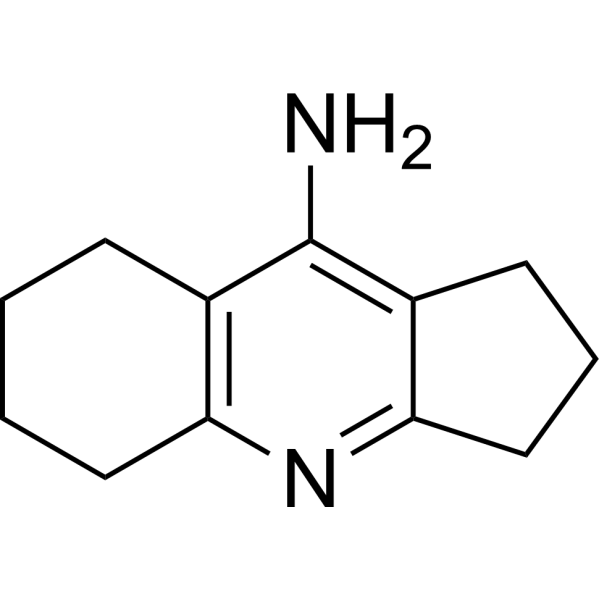
Ipidacrine is orally active and brain-penetrant AChE and BuChE inhibitors with IC50 values of 1 μM and 1.9 μM, respectively, which is also a partial agonist of M2-cholinergic receptors and a reversible cholinesterase inhibitor. Ipidacrine has a stimulating effect on neuromuscular transmission and excitation along the nerve fibres with a moderately anti-pain effect. Ipidacrine is an aminopyridines and is structurally similar to Tacrine (HY-111338). Ipidacrine is effective in various amnesia models, improves erectile function and inhibits K + and Na +-channels in the neuronal membrane in diabetic rats. Ipidacrine is promising for research of Alzheimer’s disease, ischaemic stroke, idiopathic neuropathy of the facial nerve, diabetes mellitus-induced erectile dysfunction and other deficits in central or peripheral cholinergic deseases .
loading...
    loading...
Cat. No.: HY-100554R
CAS No.: 21102-95-4
BMY 7378 (Standard) is the analytical standard of BMY 7378 (HY-100554). This product is intended for research and analytical applications. BMY 7378 is a selective antagonist of α1D-adrenoceptor (α1D-AR). BMY 7378 binds to membranes expressing the cloned rat α1D-AR with a >100-fold higher affinity (Ki=2 nM) than binding to either the cloned rat α1A-AR (Ki=800 nM) or the hamster α1B-AR (Ki=600 nM). BMY 7378 is a 5-HT1A receptor partial agonist .
loading...
    loading...
Cat. No.: HY-100658R
CAS No.: 839712-25-3
Didesmethyl cariprazine (Standard) is the analytical standard of Didesmethyl cariprazine (HY-100658). This product is intended for research and analytical applications. Didesmethyl cariprazine is an orally active, BBB-permeable metabolite of Cariprazine (HY-14763). Didesmethyl cariprazine is a partial agonist at the D2 and D3 receptors, full agonist at the 5-HT1A receptor, and antagonist at the human 5-HT2B receptor (Ki: 1.41 nM (human D2L), 0.056 nM (human D3), 1.7 nM (human 5-HT1A), 0.52 nM (human 5-HT2B)). Didesmethyl cariprazine dose-dependently inhibits the spontaneous activity of rat midbrain dopaminergic neurons .
loading...
    loading...
Cat. No.: HY-101341R
CAS No.: 168986-60-5
Research Areas:  

Neurological Disease

RS 67333 (hydrochloride) (Standard) is the analytical standard of RS 67333 (hydrochloride) (HY-101341). This product is intended for research and analytical applications. RS 67333 hydrochloride is a potent and selective 5-HT4 receptor (5-HT4R) partial agonist with a pKi of 8.7 in guinea-pig striatum. RS 67333 hydrochloride exhibits lower affinities at several other receptors including 5-HT1A, 5-HT1D, 5-HT2A, 5-HT2C, dopamine D1, D2 and muscarinic M1-M3 receptors. RS 67333 hydrochloride has neuroprotective effects, and can be used for Alzheimer's disease research .
loading...
    loading...

