777 Results for "

Stat3

" in MedChemExpress (MCE) Product Catalog:
Products (777)

777 Results for "Stat3" in MCE Product Catalog:

  • Isoforms Recommended:
  • Targets Recommended:
Cat. No.: HY-129138R
CAS No.: 2611-67-8
Cyanidin 3,5-diglucoside (chloride) (Standard) is the analytical standard of Cyanidin 3,5-diglucoside (chloride) (HY-129138). This product is intended for research and analytical applications. Cyanidin 3,5-diglucoside chloride is an anthocyanin. Cyanidin 3,5-diglucoside chloride inhibits inflammatory cytokines (IL-1α, IL-1β, and IL-6) expression and NO production. Cyanidin 3,5-diglucoside chloride inhibits the phosphorylation of STAT3, IκB, ERK, p38, and AKT. Cyanidin 3,5-diglucoside chloride inhibits high pressure-induced decrease in GLAST. Cyanidin 3,5-diglucoside chloride exerts anti-inflammatory and skin barrier modulating effects. Cyanidin 3,5-diglucoside chloride can be used in retinal research [3].
loading...
    loading...
Cat. No.: HY-153858
CAS No.: 2470433-36-2
PHI-501 is a dual inhibitor targeting RAF/DDR. PHI-501 exhibits significant anti-proliferative effects in melanoma cell lines and significantly inhibits the colony formation of drug-resistant cells. PHI-501 strongly inhibits ERK and AKT phosphorylation. PHI-501 downregulates the gene sets in drug-resistant cells of TNFA-NFKB, IL6-JAK-STAT3, and KRAS signaling pathways as well as the epithelial-mesenchymal transition (EMT) signaling pathways. PHI-501 demonstrates significant anti-tumor effects in the SK-MEL3DR xenograft model. PHI-501 can be used for research on the problem of drug resistance in melanoma .
loading...
    loading...
Cat. No.: HY-161923
Target:  

EGFR Apoptosis Akt ERK

Research Areas:  

Cancer

EGFR-IN-120 (Compound 11eg) is an orally active EGFR inhibitor. EGFR-IN-120 inhibits EGFR L858R/T790M/C797S with an IC50 value of 0.053 μM, and has a relatively weak effect on EGFR WT (IC50: 1.05 μM). EGFR-IN-120 inhibits the phosphorylation of EGFR and main downstream effectors (STAT3, AKT, and Erk). EGFR-IN-120 induces cell cycle arrest and cell apoptosis in EGFR mutant cells. EGFR-IN-120 inhibits the proliferation of the NSCLC cells harboring EGFR L858R/T790M/C797S with an IC50 of 0.052 μM .
loading...
    loading...
Cat. No.: HY-168954
Target:  

c-Fms Apoptosis Akt ERK STAT

Research Areas:  

Inflammation/Immunology Cancer

CSF1R-IN-26 (Compound III-1) is the inhibitor for CSF-1R with an IC50 of 20.07 nM. CSF1R-IN-26 promotes the polarization of M2 macrophages to M1 macrophages, thereby inducing apoptosis in MC-38 cancer cell. CSF1R-IN-26 inhibits the activation of AKT/ERK/STAT3 signaling pathway. CSF1R-IN-26 reconstructs the tumor immune microenvironment and exhibits antitumor activity in mouse models. CSF1R-IN-26 exhibits pharmacokinetics characteristics in SD rats with a half-life 1.86 hours, and an oral bioavailability of 79.22% .
loading...
    loading...
Cat. No.: HY-B1114S
Synonyms: AR-DF 26-d6
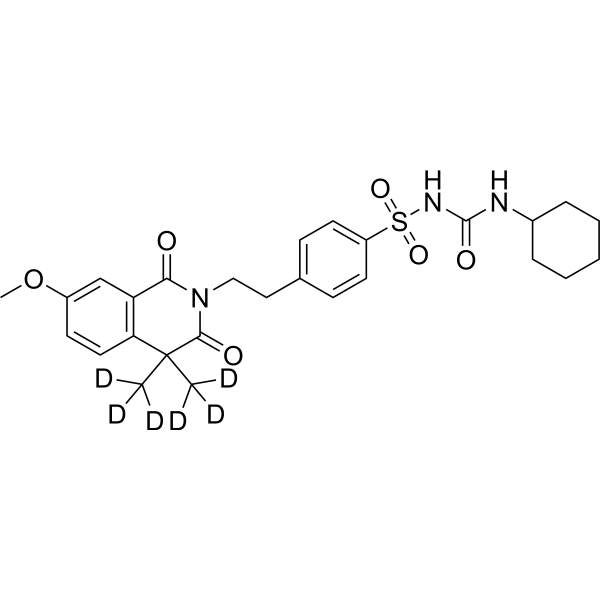
Gliquidone-d6 (AR-DF 26-d6) is the deuterated-labeled Gliquidone (HY-B1114). Gliquidone can bind to the pancreatic β-cells and increases insulin release to regulate blood glucose levels. Gliquidone significantly decreases LPS (HY-D1056)-induced proinflammatory responses and inhibits ERK/STAT3/NF-κB phosphorylation in BV2 microglial cells. Gliquidone can suppress microgliosis, microglial hypertrophy mediated by LPS, and proinflammatory cytokine COX-2 and IL-6 levels in murine model. Gliquidone also exhibits good anticancer activity in lung carcinoma cells. Gliquidone has antioxidant property. Gliquidone can be studied in research for type 2 diabetes and cancers .
loading...
    loading...
Cat. No.: HY-N0143R
CAS No.: 60-81-1
Synonyms: Floridzin (Standard)
Phlorizin (Floridzin) (Standard) is the analytical standard of Phlorizin. This product is intended for research and analytical applications. Phlorizin is an orally active non-selective sodium-glucose cotransporter (SGLT) inhibitor, with an IC50 of 0.04 μM and a Ki of 39 nM against hSGLT2, and an IC50 of 0.17 μM and a Ki of 0.31 μM against hSGLT1. Phlorizin promotes GLUT4 translocation, inhibits gluconeogenesis and promotes glycogen synthesis by activating the PI3K/Akt/mTOR pathway. Phlorizin reduces DNA damage and apoptosis (apoptosis) by inhibiting the NF-κB inflammatory pathway. Phlorizin induces apoptosis via activating the Caspase pathway by antagonizing the JAK/STAT3 and PCK pathways. Phlorizin also exhibits antibacterial, anti-inflammatory and neuroprotective activities [3] .
loading...
    loading...
Cat. No.: HY-N16465
CAS No.: 97233-06-2
Cinnamtannin D1 is an orally active polyphenolic compound with immunosuppressive activity. Cinnamtannin D1 regulates the balance of Th17/Treg cells by inhibiting AHR expression. Cinnamtannin D1 reduces apoptosis and ROS in INS-1 cells and primary cultured murine islets induced by Palmitic acid (PA) (HY-N0830). Cinnamtannin D1 reduces Th17 cell differentiation via downregulating p-STAT3/RORγt and promotes Treg cell differentiation via upregulating p-STAT5/Foxp3. Cinnamtannin D1 exerts excellent anti-arthritic efficacy in collagen-induced arthritis (CIA) model of mice. Cinnamtannin D1 can be used for the study of rheumatoid arthritis (RA) .
loading...
    loading...
Cat. No.: HY-N20711
CAS No.: 1428417-60-0
Usenamine A is an orally active natural dibenzofuran compound with multiple biological activities such as anti-inflammatory and anticancer effects. Usenamine A inhibits the AKT/mTOR/STAT3/ID1 signaling axis and induces ubiquitin-proteasome degradation of ID1. Usenamine A targets the TNF-TNFR2 complex, inhibits RGS2, and interferes with Myosin-9/actin cytoskeleton remodeling. Usenamine A induces apoptosis, autophagy and ROS-mediated endoplasmic reticulum stress in cancer cells, inhibits cancer cell proliferation and invasion, and reduces the production of pro-inflammatory cytokines. Usenamine A alleviates arthritis-related symptoms. Usenamine A can be used in studies related to liver cancer, non-small cell lung cancer, rheumatoid arthritis and ankylosing spondylitis [3] .
loading...
    loading...
Cat. No.: HY-W753956
CAS No.: 3044090-39-0
Iminostilbene-d10 is the deuterium labeled Iminostilbene (HY-N7064). Iminostilbene is a chemical precursor of carbamazepine. Additionally, Iminostilbene is an orally active inhibitor of PKM2 (Pyruvate Kinase M2) and COX2 (Cyclooxygenase-2). Iminostilbene exerts its effects by inhibiting PKM2 and its interaction with HIF-1α and STAT3, reducing COX2 and iNOS expression, and decreasing LPS-induced release of IL-1β, IL-6, TNF-α, and MCP-1, thereby suppressing macrophage-mediated inflammatory responses and improving myocardial ischemia/reperfusion (MI/R) injury. Iminostilbene holds promise for research in inflammation regulation, cardiovascular diseases (such as MI/R injury), and macrophage-mediated immune-related diseases .
loading...
    loading...
Cat. No.: HY-172200
CAS No.: 2834094-36-7
Target:  

PD-1/PD-L1 HDAC

Research Areas:  

Inflammation/Immunology Cancer

PD-L1/HDAC6-IN-1 is an orally active dual inhibitor of PD-L1 and HDAC6, with IC50 values of 26.8 nM and 78 nM, respectively. PD-L1/HDAC6-IN-1 binds to human and murine PD-L1 proteins with high affinity, while it reduces STAT3 phosphorylation and downregulates PD-L1 expression by inhibiting HDAC6, thus blocking the PD-1/PD-L1 interaction. PD-L1/HDAC6-IN-1 exhibits potent anti-tumor activity in a mouse melanoma model. PD-L1/HDAC6-IN-1 is suitable for research on tumor immune regulation related to melanoma .
loading...
    loading...
Cat. No.: HY-172200A
Target:  

PD-1/PD-L1 HDAC

Research Areas:  

Inflammation/Immunology Cancer

PD-L1/HDAC6-IN-1 TFA is an orally active dual inhibitor of PD-L1 and HDAC6, with IC50 values of 26.8 nM and 78 nM, respectively. PD-L1/HDAC6-IN-1 TFA binds to human and murine PD-L1 proteins with high affinity, while it reduces STAT3 phosphorylation and downregulates PD-L1 expression by inhibiting HDAC6, thus blocking the PD-1/PD-L1 interaction. PD-L1/HDAC6-IN-1 TFA exhibits potent anti-tumor activity in a mouse melanoma model. PD-L1/HDAC6-IN-1 is suitable for research on tumor immune regulation related to melanoma .
loading...
    loading...
Cat. No.: HY-176535
CAS No.: 2648377-08-4
Synonyms: BBC0115
KB-0118 (BBC0115) is an orally active BET bromodomain inhibitor. KB-0118 selective binds to BRD2 and BRD4 over BRD3, with Kd values of 36.7 μM for BRD2 BD1 and 47.4 μM for BRD4 BD1. KB-0118 inhibits pro-inflammatory cytokines, including TNF, IL-1β, and IL-23a and selectively suppresses Th17 cell differentiation. KB-0118 modulates Th17-driven inflammation occurs through epigenetic suppression of BRD4, confirmed by downregulation of STAT3 and BRD4 target genes. KB-0118 has immunomodulatory effects in inflammatory bowel disease (IBD) model.
loading...
    loading...
Cat. No.: HY-179715
PROTAC JAK1/2 degrader-1 is an orally active JAK1/JAK2 PROTAC degrader, with DC50 values of 1.4 μM and 0.92 μM against JAK1 and JAK2, respectively. PROTAC JAK1/2 degrader-1 triggers degradation via a CRBN- and proteasome-dependent pathway. PROTAC JAK1/2 degrader-1 inhibits the secretion of tumor necrosis factor-α (TNF-α) and interleukin-6 (IL-6). PROTAC JAK1/2 degrader-1 alleviates inflammatory responses and colon injury by inhibiting the JAK/STAT3 signaling pathway. PROTAC JAK1/2 degrader-1 can be used for the research of inflammatory bowel disease .
loading...
    loading...
Cat. No.: HY-181587
Research Areas:  

Cancer

PDGFRA/CAIX/XII-IN-1 is an inhibitor of PDGFRA, CA IX and CA XII, with an IC50 of 20 nM against PDGFRA, a Ki of 93.3 nM against CA IX, and a Ki of 80.0 nM against CA XII. PDGFRA/CAIX/XII-IN-1 binds to the ATP-binding pocket of PDGFRA and blocks the downstream STAT3, AKT and ERK1/2 signaling pathways. PDGFRA/CAIX/XII-IN-1 induces G0/G1 cell cycle arrest and endogenous apoptosis (Apoptosis), including cleavage of PARP-1, caspase-9 and caspase-3, activation of caspase 3/7, and down-regulation of Mcl-1. PDGFRA/CAIX/XII-IN-1 exhibits antiproliferative activity in eosinophilic leukemia cells. PDGFRA/CAIX/XII-IN-1 can be used for the research of leukemia .
loading...
    loading...
Cat. No.: HY-N0732R
CAS No.: 37905-08-1
Jolkinolide B (Standard) is the analytical standard of Jolkinolide B (HY-N0732). This product is intended for research and analytical applications. Jolkinolide B is a bioactive diterpene isolated from the roots of Euphorbia fischeriana Steud with oral activity. Jolkinolide B downregulates XIAP, cIAP1, cIAP2, and phosphorylated Akt, upregulates Smac, activates caspase-3 and caspase-9, and inhibits NF-κB, TGFβ/smad3 and JAK/STAT3 pathways. Jolkinolide B exerts comprehensive biological effects including inducing cancer cell apoptosis, suppressing inflammatory responses, improving lung function, alleviating hepatic steatosis and eliminating intracellular Mycobacterium tuberculosis. Jolkinolide B can be used for the research of leukemia, histiocytic lymphoma, asthma, metabolic dysfunction-associated steatotic liver disease and tuberculosis [3] .
loading...
    loading...
Cat. No.: HY-10201S4
CAS No.: 1333386-17-6
Synonyms: Donafenib tosylate; Bay 43-9006-d3 tosylate
Sorafenib-d3 (Donafenib) tosylate is the deuterated-labeled Sorafenib tosylate (HY-10201A). Sorafenib (Bay 43-9006) tosylate is a potent oral active multikinase inhibitor. Sorafenib blocks autophosphorylation and activity of receptor tyrosine kinases (VEGFR-2, VEGFR-3) and RAF family kinases, thereby suppressing the RAF/MEK/ERK and PI3K/Akt pathways, inhibiting STAT3 phosphorylation, and selectively inhibiting the MAPK pathway in cancer cells. Sorafenib tosylate induces cell cycle arrest, autophagy, apoptosis, and PARP cleavage, reduces Bcl-2, Bcl-XL, cyclin D1 levels, and activates Bak and Bax. Sorafenib tosylate inhibits tumor growth and metastasis in mouse and rat models. Sorafenib tosylate can be used for cancer research, such as colon, breast, non-small-cell lung cancer (NSCLC), ovarian, pancreatic, melanoma, colorectal and hepatocellular carcinoma [3] .
loading...
    loading...
Cat. No.: HY-16142
CAS No.: 188969-00-8
Synonyms: EMD 121974 hydrochloride
Cilengitide hydrochloride (EMD 121974 hydrochloride) is an integrin (integrin) inhibitor with blood-brain barrier permeability, with IC50 values against human targets as follows: 0.61 nM for αvβ3, 8.4 nM for αvβ5, 14.9 nM for α5β1, 5400 nM for αIIbβ3, 2050 nM for αvβ6, 2350 nM for αvβ8. Cilengitide hydrochloride inhibits the binding of integrins to vitronectin, fibronectin, fibrinogen and LAP (TGF-β), and serves as an internal standard for solid-phase integrin binding assays. Cilengitide hydrochloride inhibits tumor cell viability, induces apoptosis, reduces the phosphorylation levels of STAT3, AKT and mTOR, downregulates the expression of PD-L1, inhibits cell viability and angiogenesis, regulates anti-tumor immune responses and slows tumor growth. Cilengitide hydrochloride can be used in research related to glioblastoma, melanoma, advanced solid tumors and refractory brain tumors [3] .
loading...
    loading...
Cat. No.: HY-171807
CAS No.: 189274-78-0
Target:  

nAChR STAT

TC-2559 free base is a α4β2 nicotinic acetylcholine receptor (nAChR) agonists with an EC50 of 0.18 μM. TC-2559 free base shows much weaker potencies on the group of b4-containing nAChR subtypes, α2β4, α4β4 and α3β4 receptors, with EC50s in the range of 10-30 µM. TC-2559 free base can increase the discharge of dopamine cells in the ventral tegmental area (VTA) of rats in vitro, enhancing the excitability and aggressive behavior of VTA dopamine neurons. TC-2559 free base inhibits STAT3 to exert anti-inflammatory properties and relieves mice mechanical allodynia and improve rats cognitive deficits. TC-2559 free base can be used for the study of nerve pain [3] .
loading...
    loading...
Cat. No.: HY-179535
CAS No.: 1958081-87-2
Axl-IN-21 is an orally active and selective AXL inhibitor (Kd = 2.7 nM, IC50 = 4.0 nM). Axl-IN-21 displays kinase selectivity and retains strong activity against cancer-related mul-kinases (Mer with Kd = 1.4 nM, DDR1 with IC50 = 22.2 nM, HIPK4 with Kd = 11.0 nM and LOK with Kd =10 nM). Axl-IN-21 overcomes tumor microenvironment-driven resistance by blocking CAF-derived GAS6-induced AXL/STAT3/ABCG1 signaling, restoring chemosensitivity and inhibiting drug efflux in gastric cancer (GC). Axl-IN-21 suppresses TGF-β1-induced epithelial-mesenchymal transition (EMT), migration, and invasion in MDA-MB-231 cells. Axl-IN-21 exhibits no significant cytotoxicity in non-cancerous cells. Axl-IN-21 can be research for triple negative breast cancer and gastric cancer [1] [2] .
loading...
    loading...
Cat. No.: HY-P1615
CAS No.: 1006388-38-0
Synonyms: UPARANT
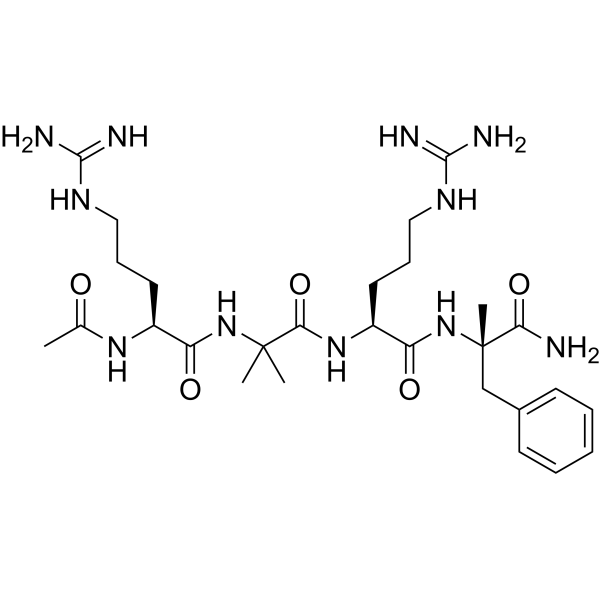
Cenupatide (UPARANT) is a uPAR and FPR antagonist with anti-angiogenic, anti-inflammatory, and vascular barrier regulatory activities, as well as high stability and resistance to enzymatic degradation in blood/plasma. Cenupatide blocks the uPAR-FPR interaction, reduces VEGF-induced phosphorylation levels of AKT, VEGFR-2, STAT3, JNK, p38 MAPK, ERK1/2, and NF-κB p65, and inhibits αvβ3 integrin activation. Cenupatide suppresses endothelial cell migration, invasion, tube formation, and angiogenic signaling pathways, restores tight junctions and blood-retinal barrier integrity, reduces pro-inflammatory marker levels, and inhibits apoptosis. Cenupatide reduces retinal neovascularization, renal fibrosis, and vascular leakage, and restores visual function in preclinical models. Cenupatide is applicable to research related to retinopathy, diabetic complications, ocular diseases, cancer, and inflammatory diseases [3] .
loading...
    loading...

