93 Results for "

conduction

" in MedChemExpress (MCE) Product Catalog:
Products (93)

93 Results for "conduction" in MCE Product Catalog:

Cat. No.: HY-B1319R
CAS No.: 637-58-1
Synonyms: Pramoxine hydrochloride (Standard)
Research Areas:  

Neurological Disease

Pramocaine (Pramoxine) hydrochloride (Standard) is the analytical standard of Pramocaine hydrochloride (HY-B1319). This product is intended for research and analytical applications. Pramocaine hydrochloride is a topical surface anesthetic and antipruritic agent. Pramocaine hydrochloride reversibly inhibits voltage-gated sodium channel, reduces transmembrane permeability of sodium ions, stabilizes cell membranes, prevents depolarization, blocks action potential conduction, and inhibits peripheral slow C-fiber pathways associated with pain, pruritus and thermoception. Pramocaine hydrochloride can be used in research related to chronic pruritus, renal pruritus, atopic dermatitis, xerotic pruritus, uremic pruritus, and cutaneous hyperalgesia/pain .
loading...
    loading...
Cat. No.: HY-B1319S1
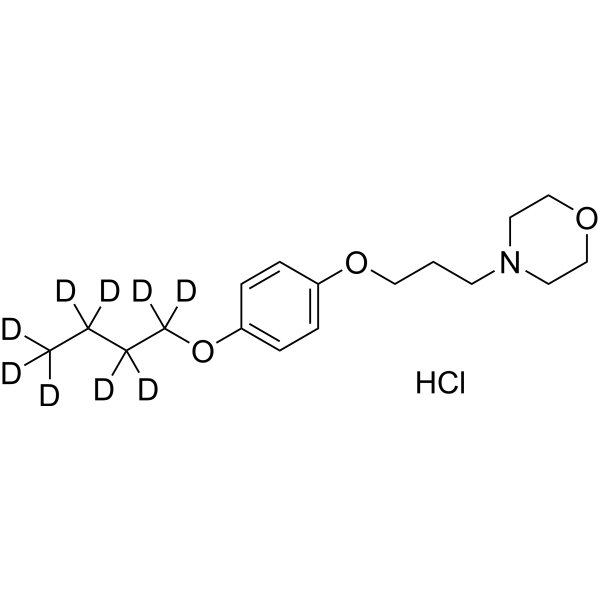
Synonyms: Pramoxine-d9 hydrochloride
Pramocaine-d9 (Pramoxine-d9) hydrochloride is the d9-labeled Pramocaine hydrochloride (HY-B1319). Pramocaine hydrochloride is a topical surface anesthetic and antipruritic agent. Pramocaine hydrochloride reversibly inhibits voltage-gated sodium channel, reduces transmembrane permeability of sodium ions, stabilizes cell membranes, prevents depolarization, blocks action potential conduction, and inhibits peripheral slow C-fiber pathways associated with pain, pruritus and thermoception. Pramocaine hydrochloride can be used in research related to chronic pruritus, renal pruritus, atopic dermatitis, xerotic pruritus, uremic pruritus, and cutaneous hyperalgesia/pain .
loading...
    loading...
Cat. No.: HY-B1440R
CAS No.: 985-13-7
Ethaverine hydrochloride (Standard) is the analytical standard of Ethaverine hydrochloride (HY-B1440). This product is intended for research and analytical applications. Ethaverine hydrochloride is a Papaverine derivative and vasodilator. Ethaverine hydrochloride inhibits Phosphodiesterase, Tyrosine hydroxylase, and MAO-B. Ethaverine hydrochloride blocks L-type Ca 2+ channels, reduces intracellular Ca 2+ levels, inhibits platelet adhesion and aggregation, regulates cardiac conduction and heart rate, and increases peripheral and cerebral blood flow. Ethaverine hydrochloride alters cochlear microcirculation, intracochlear Po2, CM potential, and EP in guinea pigs, and induces transient hypotension. Ethaverine hydrochloride is used in the research of peripheral vascular diseases .
loading...
    loading...
Cat. No.: HY-B0653AS
Synonyms: (S)-(–)-Bupivacaie-d9hydrochloride
Levobupivacaine-d9 ((S)-(–)-Bupivacaie-d9) hydrochloride is deuterium labeled Levobupivacaine hydrochloride (HY-B0653A). Levobupivacaine hydrochloride ((S)-(-)-Bupivacaine monohydrochloride) is a long-acting amide local agent that can suppress or relieve pain. Levobupivacaine hydrochloride exerts agent that can suppress or relieve pain. and analgesic effects through reversible blockade of neuronal sodium channel. Levobupivacaine hydrochloride can inhibit impulse transmission and conduction in cardiovascular and other tissues, possessing certain cardiac and CNS toxicity. Levobupivacaine hydrochloride is metabolized by hepatic cytochrome P450 (CYP450) enzymes in vivo. Levobupivacaine hydrochloride can also induce ferroptosis by miR-489-3p/SLC7A11 signaling in gastric cancer .
loading...
    loading...
Cat. No.: HY-B0516AR
CAS No.: 23964-58-1
Synonyms: Hoe-045 free base (Standard)
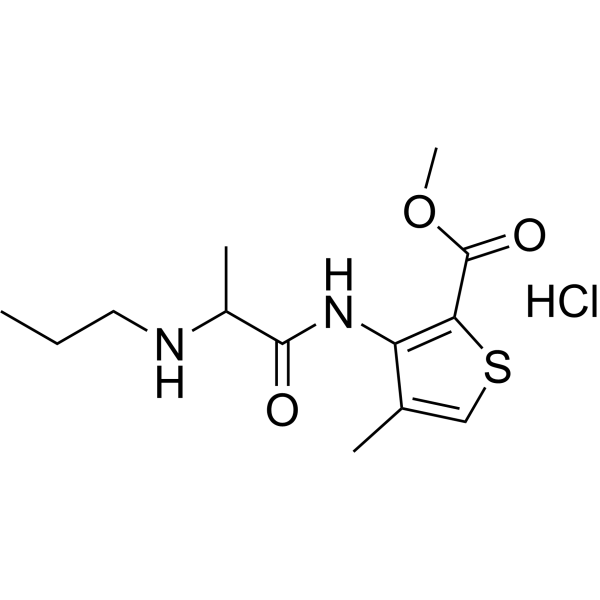
Articaine (Standard) is the analytical standard of Articaine (HY-B0516A). This product is intended for research and analytical applications. Articaine (Hoe-045) hydrochloride is a selective inhibitor of voltage-gated sodium channels (such as rNav1.4, hNav1.7, and rNav1.8), with an IC50 of 15.8 μM for open-state Na + channels, and IC50 of 40.6 μM and 378 μM for inactivated and resting-state Na + channels, respectively. Articaine hydrochloride exerts local anesthetic activity by inhibiting Na + influx to block nerve impulse conduction, and can also inhibit NF-κB activation and NLRP3 inflammasome pathways, exhibiting anti-inflammatory function. Articaine hydrochloride can be used in the study of dental local anesthesia and inflammatory-related diseases (such as acute kidney injury) .
loading...
    loading...
Cat. No.: HY-B0516R
CAS No.: 23964-57-0
Synonyms: Hoe-045 (Standard)
Articaine (Hoe-045) hydrochloride (Standard) is the analytical standard of Articaine hydrochloride (HY-B0516). This product is intended for research and analytical applications. Articaine (Hoe-045) hydrochloride is a selective inhibitor of voltage-gated sodium channels (such as rNav1.4, hNav1.7, and rNav1.8), with an IC50 of 15.8 μM for open-state Na + channels, and IC50 of 40.6 μM and 378 μM for inactivated and resting-state Na + channels, respectively. Articaine hydrochloride exerts local anesthetic activity by inhibiting Na + influx to block nerve impulse conduction, and can also inhibit NF-κB activation and NLRP3 inflammasome pathways, exhibiting anti-inflammatory function. Articaine hydrochloride can be used in the study of dental local anesthesia and inflammatory-related diseases (such as acute kidney injury) .
loading...
    loading...
Cat. No.: HY-106198R
CAS No.: 245116-90-9
Synonyms: IDD-676 (Standard)
Research Areas:  

Metabolic Disease

Lidorestat (Standard) is the analytical standard of Lidorestat (HY-106198). This product is intended for research and analytical applications. Lidorestat (IDD-676) is a potent, selective and orally active aldose reductase inhibitor with an IC50 of 5 nM. Lidorestat can be used for chronic diabetes complications. Lidorestat also improves nerve conduction and reduces cataract formation .
loading...
    loading...
Cat. No.: HY-130456
CAS No.: 96436-73-6
Target:  

Sodium Channel

Research Areas:  

Cardiovascular Disease

AHR 10718 is an antiarrhythmic agent that suppresses cardiac arrhythmias induced by digitalis intoxication and myocardial infarction in the intact dog. AHR 10718 also depresses membrane responsiveness and conduction, shortens the effective refractory period of specialized conducting fibers less than action potential duration .
loading...
    loading...
Cat. No.: HY-P11450
CAS No.: 3084349-53-8
Target:  

Inhibitory Antibodies

Research Areas:  

Others

MGCVQCKDKEA is an 11-residue membrane-anchoring motif derived from the Src kinase Fyn. MGCVQCKDKEA can promote the cell surface expression of TMC1/2 proteins. MGCVQCKDKEA can be used in the research of inner ear mechanical conduction channel-related diseases .
loading...
    loading...
Cat. No.: HY-187768
CAS No.: 90326-85-5
Target:  

Calcium Channel

Research Areas:  

Cardiovascular Disease

Nesapidil is an antiarrhythmic agent and calcium channel blocker. Nesapidil slows calcium channel activity, which in turn causes slowing of atrioventricular conduction and sinus heart rate. Nesapidil alters preload, afterload, contractility, and coronary blood flow. Nesapidil can be used in research related to arrhythmia and hypertension .
loading...
    loading...
Cat. No.: HY-118968
CAS No.: 112946-90-4
Research Areas:  

Cardiovascular Disease

(-)-SA2572 is an orally active Ca 2+ inward channel inhibitor. (-)-SA2572 inhibits the slow Ca 2+ inward channel and the fast Na + inward channel. (-)-SA2572 inhibits depolarization-induced contraction of gastrointestinal smooth muscle and vascular smooth muscle, prolongs atrioventricular nodal conduction time, and inhibits His bundle-ventricular conduction time. (-)-SA2572 reduces systolic blood pressure in spontaneously hypertensive rats. (-)-SA2572 can be used in the research of hypertension .
loading...
    loading...
Cat. No.: HY-115839
CAS No.: 47719-70-0
Synonyms: Tachmalcor free base
Target:  

Sodium Channel

Research Areas:  

Others

Detajmium (Tachmalcor free base) is a Na?-channel blocker with activity to inhibit ventricular conduction and refractoriness. Detajmium (0.3μM) prolongs intraventricular conduction time comparable to propafenone (0.3μM) during sinus rhythm, but the time constant for reaching steady state during rapid ventricular pacing is significantly longer for Detajmium, indicating a unique temporal profile for its heart rate-dependent effects.
loading...
    loading...
Cat. No.: HY-66012A
CAS No.: 499-67-2
Synonyms: Proxymetacaine
Target:  

Sodium Channel

Research Areas:  

Neurological Disease

Proparacaine (Proxymetacaine) is a local anesthetic. Proparacaine blocks voltage-gated sodium channels on neuronal cell membranes, thereby inhibiting signal conduction and nociceptive signal transmission. Proparacaine blocks nociceptive signals in the eye and induces ocular muscle relaxation to reduce eye movement during surgery. Proparacaine is used in research related to cataracts .
loading...
    loading...
Cat. No.: HY-185388
Synonyms: Liposomal bupivacaine
Bupivacaine liposome is a liposome-encapsulated form of Bupivacaine (HY-B0405). Bupivacaine is an NMDA receptor inhibitor. During the action potential, Bupivacaine blocks sodium channels, thereby inhibiting the generation and conduction of nerve impulses induced by painful stimuli. Bupivacaine liposome reduces the release rate of Bupivacaine, thus achieving a long-lasting pain relief effect.
loading...
    loading...
Cat. No.: HY-165571
CAS No.: 378242-00-3
Target:  

Carboxypeptidase

Research Areas:  

Neurological Disease

E2072 is a selective, orally active competitive inhibitor of glutamate carboxypeptidase II (GCPII) with a Ki of 10 nM. E2072 alleviates established thermal hyperalgesia in a rat model of chronic constriction injury. E2072 prevents oxaliplatin-induced reductions in nerve conduction velocity and amplitude in mice. E2072 is applicable to research related to neuropathic pain and neuropathy .
loading...
    loading...
Cat. No.: HY-180382
CAS No.: 14149-43-0
Target:  

Cholinesterase (ChE)

Research Areas:  

Cardiovascular Disease

Trimethidinium methosulfate is an orally active ganglionic blocker with central antihypertensive activity. Trimethidinium methosulfate inhibits the conduction of sympathetic ganglia and reduces vascular contraction. Trimethidinium methosulfate acts on the cerebrovascular motor center and lowers peripheral vascular resistance. Trimethidinium methosulfate has cholinergic nerve inhibitory side effects, but they are relatively mild. Trimethidinium methosulfate can be used in hypertension research .
loading...
    loading...
Cat. No.: HY-B2052A
CAS No.: 29547-00-0
Synonyms: Monosultap
Thiosultap monosodium (Monosultap) is a broad-spectrum insecticide and a competitive inhibitor of acetylcholine. Thiosultap monosodium exerts contact and stomach poisoning effects through systemic conduction in field pests. Thiosultap monosodium has teratogenic effects, induces notochord malformations in zebrafish embryos, and causes apoptosis and abnormally elevated cell proliferation in partial notochord tissues of zebrafish. Thiosultap monosodium is applicable to the research of controlling rice stem borers .
loading...
    loading...
Cat. No.: HY-181063
CAS No.: 899207-91-1
Target:  

Sodium Channel

Research Areas:  

Cardiovascular Disease

Nav1.5-IN-1 is a selective Nav1.5 inhibitor with an IC50 of 1.38 μM. Nav1.5-IN-1 shows selectivity over other Nav subtypes. Nav1.5-IN-1 reduces cardiac conduction in isolated rat hearts.Nav1.5-IN-1 can be used for the research of arrhythmias .
loading...
    loading...
Cat. No.: HY-182831
CAS No.: 1432512-70-3
Target:  

Sodium Channel

Research Areas:  

Neurological Disease

Nav1.7-IN-22 (P58 13-2) is a selective inhibitor of voltage-gated sodium channel Nav1.7. Nav1.7-IN-22 inhibits abnormal electrical signal generation and conduction in sensory neurons by blocking Nav1.7 channel activity. Nav1.7-IN-22 can be used for the study of pain .
loading...
    loading...
Cat. No.: HY-19066
CAS No.: 115750-37-3
Target:  

Potassium Channel

Research Areas:  

Cardiovascular Disease

KW-3407 is an antiarrhythmic agent. KW-3407 can inhibit two-stage (24 and 48 h) coronary ligation-, digitalis- and adrenaline-induced spontaneously occurring arrhythmias with IC50 values of 18.1, 14.4, 18.3 and 21.4 μg/mL. KW-3407 can decrease the sinoatrial rate and contractile force, and increase the coronary blood flow and AV conduction times .
loading...
    loading...

