
172 Results for "

immune cell function

" in MedChemExpress (MCE) Product Catalog:
Products (172)

172 Results for "immune cell function" in MCE Product Catalog:

Cat. No.: HY-P991395

Target:  

Tim3

Research Areas:  

Cancer

TQB2618 is a human IgG4 monoclonal antibody (mAb) targeting TIM-3/HAVCR2/CD366. TQB2618 activates immune cell function and induces significant anti-tumor activity when used in combination with anti-PD-1 agents .
loading...
    loading...
Cat. No.: HY-P990031
CAS No.: 2649362-29-6
Synonyms: M-6223
Dargistotug (M-6223) is a fully human IgG1 monoclonal antibody targeting TIGIT (T cell immune receptor with Ig domain and ITIM). TIGIT is an inhibitory immune checkpoint that promotes NK cell depletion and reduces the secretion of cytokines by binding to CD155 and other antibodies. It can also directly or indirectly inhibit effector T cells and upregulate Tregs cells, thereby exerting immunosuppression. Function .
loading...
    loading...
Cat. No.: HY-P99660
CAS No.: 2573121-53-4
Synonyms: IGM-2323

Target:  

CD20 CD3

Research Areas:  

Inflammation/Immunology Cancer

Imvotamab (IGM-2323) is a CD20 and CD3 bispecific IGM antibody with dual action mechanism. Imvotamab is used to induce physiological T cell activation to prevent over-stimulation and subsequent down-regulation of immune function. Imvotamab can be used for the study of B-cell malignant tumors, multiple myeloma (MM) and non-Hodgkin's lymphoma (NHL) .
loading...
    loading...
Cat. No.: HY-172350
Research Areas:  

Infection

WEHI-P8 is an orally active SARS-CoV-2 papain-like protease (PLpro) inhibitor with an IC50 of 12 nM and a Kd of 9.0 nM. WEHI-P8 reduces viral load, body weight loss, pulmonary inflammation, immune cell infiltration and pro-inflammatory mediator levels in SARS-CoV-2-infected mice. WEHI-P8 prevents pulmonary hemorrhage, immune cell infiltration, fibrotic remodeling and neuroinflammation, and improves cognitive function in a mouse model of post-acute sequelae of SARS-CoV-2 infection (PASC). WEHI-P8 is applicable for the research of COVID-19 and PASC .
loading...
    loading...
Cat. No.: HY-143712S1
Synonyms: 3α-hydoxy-5α-Cholaoic Acid-d4, allo-LCA-d4
Allolithocholic Acid-d4 (3α-hydoxy-5α-Cholaoic Acid-d4, allo-LCA-d4) is deuterium labeled Allolithocholic acid (HY-143712). Allolithocholic acid is an orally active metabolite of Lithocholic acid (HY-B0172). Allolithocholic acid is a dual GPBAR1 agonist (EC50 = 2.7 μM) and RORγt inverse agonist (IC50 = 3.4 μM). Allolithocholic acid modulates immune and metabolic pathways, regulates immune cell polarization, prevents M1 macrophage and Th17 CD4 cell polarization. Allolithocholic acid improves insulin sensitivity, reduces liver lipid accumulation, reverses liver immunological, inflammatory and metabolic signaling dysregulation, restores bile acid homeostasis, adipose tissue histopathology/function, and intestinal microbiota composition, modulates intestinal immunity. Allolithocholic acid can be used for the researches of cancer, inflammayion, immunology and metabolic disease .
loading...
    loading...
Cat. No.: HY-P11340
CAS No.: 202657-61-2
Target:  

MHC

Research Areas:  

Infection Inflammation/Immunology

VMAPRTLFL is a 9-mer peptide derived from the signal peptide of HLA-G and can serve as a peptide ligand for HLA-E. VMAPRTLFL plays a crucial role in regulating the functions of adaptive natural killer (NK) cells. Specifically, VMAPRTLFL enriches FcεRγ - adaptive NK cells, upregulates the expression of CD25, and enhances their proliferative activity, antibody-dependent cellular cytotoxicity (ADCC), and IFN-γ release. VMAPRTLFL can be used in research related to human cytomegalovirus (HCMV) infection, transplant rejection, and pregnancy immunity .
loading...
    loading...
Cat. No.: HY-NP0194B
C1q Protein (rabbit) is a complement protein and is a recognition molecule of the classical pathway, performs a diverse range of complement and non-complement functions. C1q Protein (rabbit) binds various ligands derived from self, non-self, and altered self and modulate the functions of immune
and non-immune cells. C1q Protein (rabbit) can be used for the research of mutiple disease .
loading...
    loading...
Cat. No.: HY-W297348
CAS No.: 1965308-76-2
Research Areas:  

Others

(Rac)-Cl-amidine is an orally active peptidyl arginine deimidase (PAD) inhibitor with the property of inhibiting PAD activity. (Rac)-Cl-amidine exhibits enhanced efficacy in cells and can be used to study PAD function. (Rac)-Cl-amidine can effectively regulate gene transcription, cell differentiation and innate immune response .
loading...
    loading...
Cat. No.: HY-174568
Target:  

mRNA

Research Areas:  

Inflammation/Immunology

Human NFKB2 mRNA encodes the human nuclear factor kappa B subunit 2 (NFKB2) protein, a subunit of the transcription factor complex nuclear factor-kappa-B (NFkB). The NFkB complex is expressed in numerous cell types and functions as a central activator of genes involved in inflammation and immune function. NFKB2 can function as either a transcriptional activator or repressor depending on its dimerization partner.
loading...
    loading...
Cat. No.: HY-113008BR
CAS No.: 3465-72-3
Synonyms: (E)-Urocanic acid (Standard); trans-UCA (Standard)
trans-Urocanic acid (Standard) is the analytical standard of trans-Urocanic acid. This product is intended for research and analytical applications. trans-urocanic acid (trans-UCA), a natural epidermal constituent, inhibits human natural killer cell (NK) activity in vitro. trans-urocanic acid is active in regulating an immune function .
loading...
    loading...
Cat. No.: HY-D0195R
CAS No.: 55589-62-3
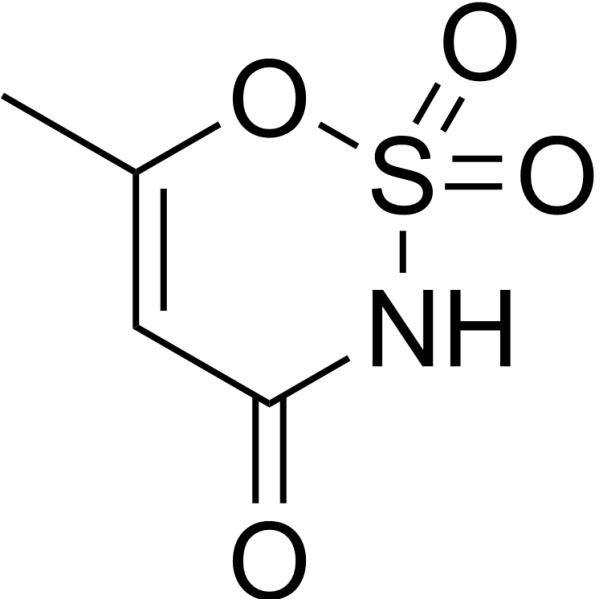
Acesulfame potassium (Standard) is the analytical standard of Acesulfame potassium (HY-D0195). This product is intended for research and analytical applications. Acesulfame potassium is a synthetic sweetener. Long-term use of Acesulfame potassium can affect cognitive function, possibly by altering the neurometabolic functions in mice. Acesulfame potassium can suppress autophagic degradation of PD-L1 in RIL-175 and SK-Hep1 cells through the ERK1/2-mTORC1-ULK1 pathway, which may be related to immune evasion in cancer cells. Acesulfame potassium can be used in research on neurological diseases, metabolic disorders, cancer, and immune evasion .
loading...
    loading...
Cat. No.: HY-W550739
CAS No.: 33665-90-6
Acesulfame is a synthetic sweetener. Long-term use of Acesulfame can affect cognitive function. Acesulfame potassium can suppress autophagic degradation of PD-L1 in RIL-175 and SK-Hep1 cells through the ERK1/2-mTORC1-ULK1 pathway, which may be related to immune evasion in cancer cells. Acesulfame can be used in research on neurological diseases, metabolic disorders, cancer, and immune evasion .
loading...
    loading...
Cat. No.: HY-156573
CAS No.: 2830643-06-4
Target:  

DGK

Research Areas:  

Cancer

DGKα/ζ-IN-1 (Compound II) is a DGK target inhibitor. DGKα/ζ-IN-1 can enhance the function of T cells, and has a synergistic effect with PD-1, which has therapeutic effects IN both immune and tumor .
loading...
    loading...
Cat. No.: HY-174713
Target:  

mRNA

Research Areas:  

Inflammation/Immunology

Human FASLG mRNA encodes the human Fas ligand (FASLG) protein, a member of the tumor necrosis factor superfamily. The primary function of the FASLG is the induction of apoptosis triggered by binding to FAS. The FAS/FASLG signaling pathway is essential for immune system regulation, including activation-induced cell death (AICD) of T cells and cytotoxic T lymphocyte induced cell death. It has also been implicated in the progression of several cancers.
loading...
    loading...
Cat. No.: HY-173311
Cbl-b-IN-28 (Compound B2) is an orally active Cbl-b inhibitor. Cbl-b-IN-28 promotes the secretion of cytokines such as IL-2 and enhances the function of immune cells by regulating the phosphorylation levels of key proteins in the T-cell receptor signaling pathway. Cbl-b-IN-28 can be used in research in the field of cancer immunology .
loading...
    loading...
Cat. No.: HY-104037A
CAS No.: 2055538-47-9
Synonyms: LYC-55716 sodium
Target:  

ROR

Research Areas:  

Cancer

Cintirorgon sodium is a first-in-class, selective and orally bioavailable RORγ agonist. Cintirorgon sodium (LYC-55716) modulates gene expression of RORγ expressing T lymphocyte immune cells, resulting in enhanced effector function, as well as decreased immunosuppression, resulting in decreased tumor growth, and improved survival .
loading...
    loading...
Cat. No.: HY-N0454R
CAS No.: 7200-25-1
Synonyms: (±)-Arginine (Standard)
DL-Arginine (Standard) is the analytical standard of DL-Arginine. This product is intended for research and analytical applications. DL-Arginine is the racemic compound of L-Arginine (HY-N0455) and D-Arginine (HY-W016781). Arginine is an essential amino acid that requires additional supplementation in traumatic or diseased conditions. Arginine is involved in T cell activation, proliferation, and differentiation, and affects the function of immune cells .
loading...
    loading...
Cat. No.: HY-143712R
CAS No.: 2276-94-0
Allolithocholic acid (Standard) is the analytical standard of Allolithocholic acid (HY-143712). This product is intended for research and analytical applications. Allolithocholic acid is an orally active metabolite of Lithocholic acid (HY-B0172). Allolithocholic acid is a dual GPBAR1 agonist (EC50 = 2.7 μM) and RORγt inverse agonist (IC50 = 3.4 μM). Allolithocholic acid modulates immune and metabolic pathways, regulates immune cell polarization, prevents M1 macrophage and Th17 CD4 cell polarization. Allolithocholic acid improves insulin sensitivity, reduces liver lipid accumulation, reverses liver immunological, inflammatory and metabolic signaling dysregulation, restores bile acid homeostasis, adipose tissue histopathology/function, and intestinal microbiota composition, modulates intestinal immunity. Allolithocholic acid can be used for the researches of cancer, inflammayion, immunology and metabolic disease .
loading...
    loading...
Cat. No.: HY-W014375S3
Synonyms: (±)-Arginine-d7 hydrochloride
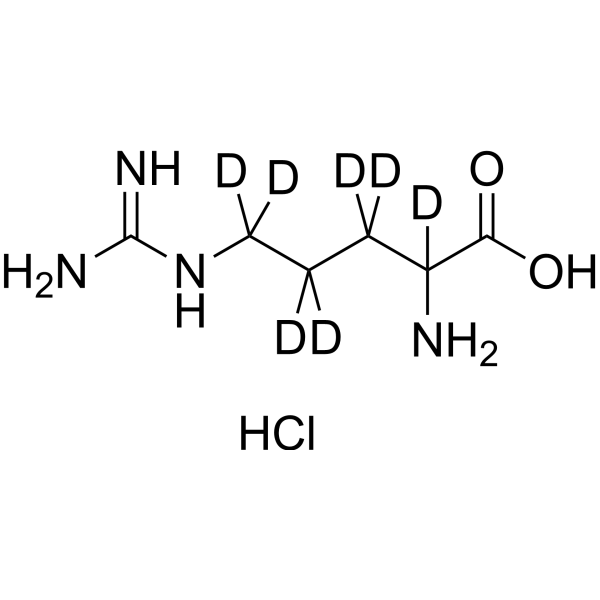
DL-Arginine-d7 hydrochloride is deuterium labeled DL-Arginine hydrochloride (HY-W014375). DL-Arginine ((±)-Arginine) hydrochloride is the racemic compound of L-Arginine (HY-N0455) and D-Arginine (HY-W016781). Arginine is an essential amino acid that requires additional supplementation in traumatic or diseased conditions. Arginine is involved in T cell activation, proliferation, and differentiation, and affects the function of immune cells .
loading...
    loading...
Cat. No.: HY-156085
CAS No.: 3008239-25-3
Target:  

PD-1/PD-L1

Research Areas:  

Cancer

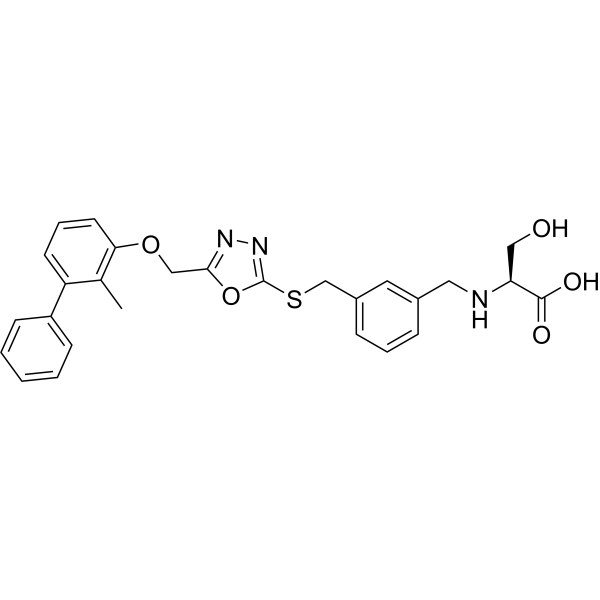
LP23 is a non-arylmethylamine PD-1/PD-L1 inhibitor (IC50: 16.7 nM) with anti-tumor activity. LP23 restores immune cell function in HepG2/Jurkat T cells and promotes HepG2 cell death. LP23 is active in vivo in the B16-F10 tumor model (TGI=88.6% at 30 mg/kg) .
loading...
    loading...

