1112 Results for "

basic

" in MedChemExpress (MCE) Product Catalog:
Products (1112)

1112 Results for "basic" in MCE Product Catalog:

Cat. No.: HY-P85195
Synonyms: HAND1; BHLHA27; EHAND; Heart- and neural crest derivatives-expressed protein 1; Class A basic helix-loop-helix protein 27; bHLHa27; Extraembryonic tissues; heart, autonomic nervous system and neural crest derivatives-expressed protein 1; eH

Host:  

Mouse

Application:  

FC, ELISA

Reactivity:  

Human

loading...
    loading...
Cat. No.: HY-P85476
Synonyms: ERCC3; XPB; XPBC; TFIIH basal transcription factor complex helicase XPB subunit; basic transcription factor 2 89 kDa subunit; BTF2 p89; DNA excision repair protein ERCC-3; DNA repair protein complementing XP-B cells; TFIIH basal transcripti

Host:  

Mouse

Application:  

WB

Reactivity:  

Human, Mouse, Rat, Bovine, Dog

loading...
    loading...
Cat. No.: HY-100027
CAS No.: 127500-84-9
Research Areas:  

Neurological Disease

Ro 41-1049 is a highly selective, reversible MAO-A inhibitor. Ro 41-1049 effectively blocks the Quinpirole (HY-B1752)-induced increase in dopamine D2-like receptor density in the nucleus accumbens and alters the pattern of behavioral sensitization, shifting animals' responses from enhanced motor activity to immobile self-directed gaping behavior. Tritium-labeled Ro 41-1049 serves as a high-affinity radioligand, enabling accurate mapping of the distribution and abundance of MAO-A in the central nervous system, peripheral organs, and human brain via quantitative enzyme autoradiography. Ro 41-1049 can be used for basic research on depression and other related diseases .
loading...
    loading...
Cat. No.: HY-100027A
CAS No.: 127917-66-2
Purity:  99.96%
Research Areas:  

Neurological Disease

Ro 41-1049 hydrochloride is a highly selective, reversible MAO-A inhibitor. Ro 41-1049 hydrochloride effectively blocks the Quinpirole (HY-B1752)-induced increase in dopamine D2-like receptor density in the nucleus accumbens and alters the pattern of behavioral sensitization, shifting animals' responses from enhanced motor activity to immobile self-directed gaping behavior. Tritium-labeled Ro 41-1049 hydrochloride serves as a high-affinity radioligand, enabling accurate mapping of the distribution and abundance of MAO-A in the central nervous system, peripheral organs, and human brain via quantitative enzyme autoradiography. Ro 41-1049 hydrochloride can be used for basic research on depression and other related diseases .
loading...
    loading...
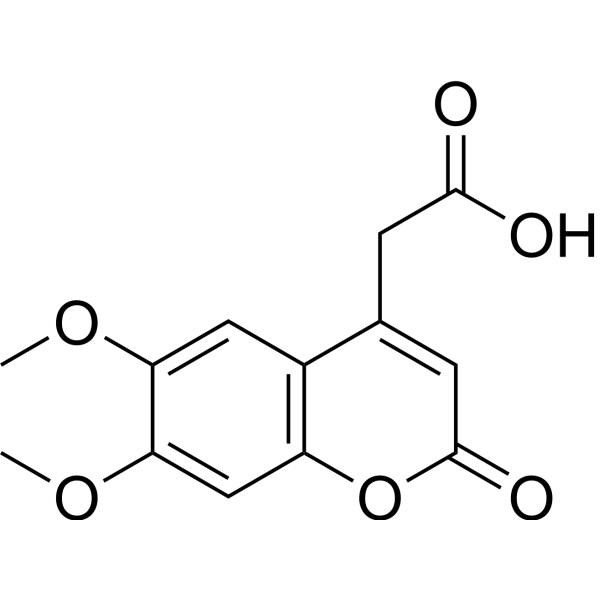
Cat. No.: HY-D0065
CAS No.: 88404-26-6
Synonyms: 2-(6,7-Dimethoxy-2-oxo-2H-chromen-4-yl)acetic acid
6,7-Dimethoxy-4-coumarinylacetic acid (2-(6,7-Dimethoxy-2-oxo-2H-chromen-4-yl)acetic acid) is a multifunctional dye. Dyes are important tools in biological experiments. They can help researchers observe and analyze cell structures, track biomolecules, evaluate cell functions, distinguish cell types, detect biomolecules, study tissue pathology and monitor microorganisms. Their applications range from basic scientific research to clinical A wide range of diagnostics. Dyes are also widely used in traditional fields such as textile dyeing, as well as in emerging fields such as functional textile processing, food pigments and dye-sensitized solar cells.
loading...
    loading...
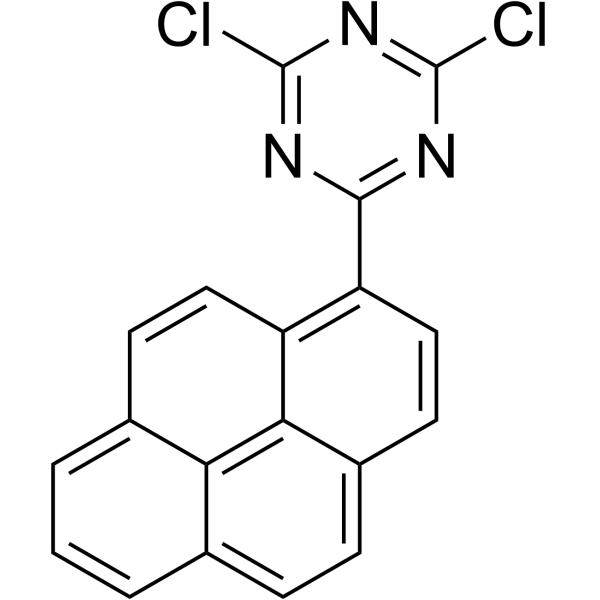
Cat. No.: HY-D0072
CAS No.: 3224-36-0
Synonyms: 1-(4,6-Dichloro-1,3,5-triazin-2-yl)pyrene
1-(Dichloro-1,3,5-triazinyl)-pyrene (1-(4,6-Dichloro-1,3,5-triazin-2-yl)pyrene) is a multifunctional dye. Dyes are important tools in biological experiments. They can help researchers observe and analyze cell structures, track biomolecules, evaluate cell functions, distinguish cell types, detect biomolecules, study tissue pathology and monitor microorganisms. Their applications range from basic scientific research to clinical A wide range of diagnostics. Dyes are also widely used in traditional fields such as textile dyeing, as well as in emerging fields such as functional textile processing, food pigments and dye-sensitized solar cells.
loading...
    loading...
Cat. No.: HY-N18868
CAS No.: 1070166-56-1
Synonyms: PC(16:0/8:0)
1-Palmitoyl-2-capryloyl-sn-glycero-3-phosphocholine (PC(16:0/8:0)) is a phosphatidylcholine glycerophospholipid. 1-Palmitoyl-2-capryloyl-sn-glycero-3-phosphocholine promotes platelet aggregation and flow-induced platelet-dependent thrombus formation. 1-Palmitoyl-2-capryloyl-sn-glycero-3-phosphocholine is a valid biomarker for CAD risk, severity, and subtype differentiation. 1-Palmitoyl-2-capryloyl-sn-glycero-3-phosphocholine is suitable for basic research on various types of coronary artery disease .
loading...
    loading...
Cat. No.: HY-W768213
2'-Deoxyguanosine monohydrate- 13C5 is the 13C-labeled 2'-Deoxyguanosine monohydrate (HY-D0185). 2'-Deoxyguanosine monohydrate is a nucleoside composed of guanine and deoxyribose, and is one of the basic building blocks of DNA. In the oxidation reaction mediated by singlet oxygen 1O2, the guanine base of 2'-Deoxyguanosine is easily oxidized to generate two major products, 4,8-dihydro-4-hydroxy-8-oxodG and 7,8-dihydro-8-oxodG. The oxidation products of 2'-Deoxyguanosine monohydrate may participate in DNA damage, which may affect gene expression or induce cancer .
loading...
    loading...
Cat. No.: HY-P700621
Purity:  ≥ 90%, as determined by reducing SDS-PAGE.
Synonyms: PCSK6; SPC4; Prev. PACE4; Paired basic Amino Acid Cleaving System 4; Subtilisin-Like Proprotein Convertase 4; Alternative Protein PCSK6; Subtilisin/Kexin-Like Protease PACE4; Subtilisin-Like Protease; Proprotein Convertase Subtilisin/Kexin Type 6; Paired
Species:  
Human
Source:  
HEK293
loading...
    loading...
Cat. No.: HY-P701533
Purity:  ≥ 85%, as determined by reducing SDS-PAGE.
Synonyms: BACH2; BTB And CNC Homology 1, basic Leucine Zipper Transcription Factor 2; BACH Transcriptional Regulator 2; BTB Domain And CNC Homolog 2; Transcription Regulator Protein BACH2; BTB And CNC Homolog 2; BTBD25; IMD60
Species:  
Human
Source:  
Sf9 insect cells
loading...
    loading...
Cat. No.: HY-P85195A
Synonyms: HAND1; BHLHA27; EHAND; Heart- and neural crest derivatives-expressed protein 1; Class A basic helix-loop-helix protein 27; bHLHa27; Extraembryonic tissues; heart, autonomic nervous system and neural crest derivatives-expressed protein 1; eH

Host:  

Mouse

Application:  

FC, ELISA

Reactivity:  

Human

loading...
    loading...
Cat. No.: HY-111772A
CAS No.: 2229860-99-3
Purity:  99.44%
Synonyms: (R)-VX-445
Target:  

Drug Isomer CFTR

Research Areas:  

Inflammation/Immunology

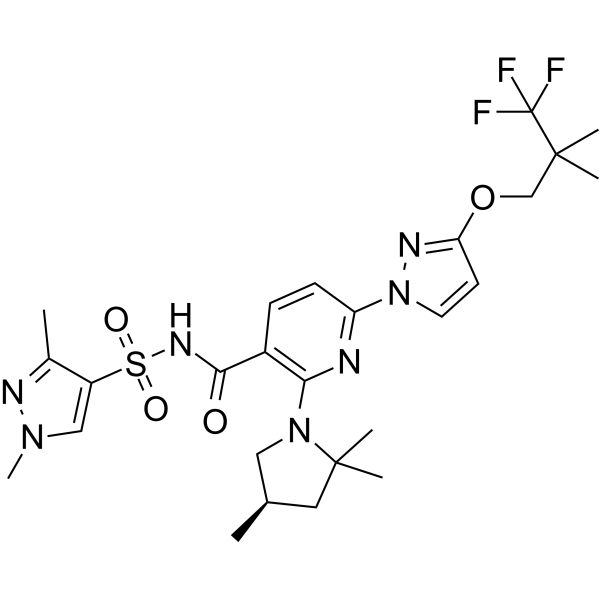
(R)-Elexacaftor ((R)-VX-445) is the enantiomer of Elexacaftor (HY-111772). Elexacaftor is an orally active CFTR modulator that targets nucleotide-binding domain 1. Elexacaftor stabilizes misfolded F508del-CFTR protein, enhances its trafficking to the plasma membrane, and significantly improves metabolic stability, thermal stability and ion conductivity. Elexacaftor not only restores chloride transport function in nasal epithelial cells and rescues multiple CFTR mutation subtypes, but also exerts multiplicative synergistic effects with Ivacaftor (HY-13017), and is often used in a triple combination therapy with Tezacaftor (HY-15448). Elexacaftor is widely used in basic and clinical translational research on cystic fibrosis .
loading...
    loading...
Cat. No.: HY-167262
CAS No.: 156691-86-0
Target:  

RAR/RXR

Research Areas:  

Metabolic Disease Cancer

AGN-191659 is an orally active RAR/RXR agonist with EC50 values of 11 nM, 23 nM, and 37 nM for RXRα, RARβ, and RARγ, respectively. AGN-191659 activates RXRα, RARβ and RARγ to induce gene transcription. AGN-191659 induces tissue transglutaminase activity, inhibits ornithine decarboxylase activity induced by tumor promoters, and suppresses chondrogenesis. AGN-191659 reverses basic fibroblast growth factor-induced endothelial cell proliferation. AGN-191659 induces hypertriglyceridemia in rat models. AGN-191659 inhibits total heparin-releasable lipase activity. AGN-191659 can be used in research related to promyelocytic leukemia and hypertriglyceridemia .
loading...
    loading...
Cat. No.: HY-DY2050
Methylene Blue Staining Solution (1%) (Basic Blue 9) is a guanylyl cyclase (sGC), monoamine oxidase A (MAO-A) and NO synthase (NOS) inhibitor. Methylene Blue Staining Solution (1%) is a vasopressor and is often used as a dye in several medical procedures. Methylene Blue Staining Solution (1%) through the nitric oxide syntase/guanylate cyclase signalling pathway to reduce prepulse inhibition. Methylene Blue Staining Solution (1%) is a REDOX cycling compound and able to cross the blood-brain barrier. Methylene Blue Staining Solution (1%) is a Tau aggregation inhibitor. Methylene Blue Staining Solution (1%) is a photosensitizer and redox agent. Methylene Blue Staining Solution (1%) reduces cerebral edema, attenuated microglial activation and reduced neuroinflammation .
loading...
    loading...
Cat. No.: HY-L097
52 compounds

Animal disease models are used in a variety of settings in basic research, such as studies on mechanisms of disease progression and evaluation new drugs. Animal models can be broadly classified into five categories: 1) experimental, 2) spontaneous, 3) negative, 4) orphan, 5) genetically engineered. Experimental models, which are induced artificially in the laboratory, are most common. Some small molecular compounds are usually used as inducers for animal models, such as Ceruletide for inflammatory model, Azoxymethane for tumor model. These inducers are useful tool in building animal models.

MCE offers a unique collection of 52 animal model inducers, involving inflammatory model, tumor model, nervous disease model, etc. MCE Animal Disease Model library is a powerful tool for the establishment of animal disease models.

Cat. No.: HY-L189
352 compounds

Amino acids, as one of the most fundamental organic compounds in living organisms, serve not only as the basic building blocks of proteins but also but also undertake the functions of energy supply, neurotransmitter synthesis, and maintenance of internal environment stability.Amino acid metabolic enzymes are a class of enzymes involved in the metabolic processes of amino acids, catalyzing their synthesis, breakdown, transformation, and interactions with other metabolic pathways. Abnormalities in amino acid metabolic enzymes can lead to various metabolic diseases, such as phenylketonuria and hyperammonemia, etc. Therefore, actively exploring and regulating the processes of amino acid metabolism is crucial for the development of drugs related to these diseases.

MCE designs a unique collection of 352 small molecules target amino acid metabolizing enzymes, which is an important tool for studying studying amino acid metabolism processes or metabolism-related drug development.

Cat. No.: HY-P73055
Purity:  ≥ 95%, as determined by reducing SDS-PAGE.
Synonyms: FGFR1; H3; Prev. FLT2; H5; Prev. KAL2; Heparin-Binding Growth Factor Receptor; BFGFR; Fibroblast Growth Factor Receptor; CEK; Receptor Protein-Tyrosine Kinase; FLG; FMS-Like Tyrosine Kinase 2; basic Fibroblast Growth Factor Receptor 1; Hydroxyaryl-Protein
Species:  
Human
Source:  
HEK293
loading...
    loading...
Cat. No.: HY-P75767
Purity:  ≥ 95%, as determined by reducing SDS-PAGE.
Synonyms: FGFR1; H3; Prev. FLT2; H5; Prev. KAL2; Heparin-Binding Growth Factor Receptor; BFGFR; Fibroblast Growth Factor Receptor; CEK; Receptor Protein-Tyrosine Kinase; FLG; FMS-Like Tyrosine Kinase 2; basic Fibroblast Growth Factor Receptor 1; Hydroxyaryl-Protein
Species:  
Mouse
Source:  
HEK293
loading...
    loading...
Cat. No.: HY-P75768
Purity:  ≥ 95%, as determined by reducing SDS-PAGE.
Synonyms: FGFR1; H3; Prev. FLT2; H5; Prev. KAL2; Heparin-Binding Growth Factor Receptor; BFGFR; Fibroblast Growth Factor Receptor; CEK; Receptor Protein-Tyrosine Kinase; FLG; FMS-Like Tyrosine Kinase 2; basic Fibroblast Growth Factor Receptor 1; Hydroxyaryl-Protein
Species:  
Mouse
Source:  
HEK293
loading...
    loading...
Cat. No.: HY-P75769
Purity:  ≥ 95%, as determined by reducing SDS-PAGE.
Synonyms: FGFR1; H3; Prev. FLT2; H5; Prev. KAL2; Heparin-Binding Growth Factor Receptor; BFGFR; Fibroblast Growth Factor Receptor; CEK; Receptor Protein-Tyrosine Kinase; FLG; FMS-Like Tyrosine Kinase 2; basic Fibroblast Growth Factor Receptor 1; Hydroxyaryl-Protein
Species:  
Rhesus Macaque
Source:  
HEK293
loading...
    loading...

