125 Results for "

broad-leaf

" in MedChemExpress (MCE) Product Catalog:
Products (125)

125 Results for "broad-leaf" in MCE Product Catalog:

Cat. No.: HY-W008484
CAS No.: 150114-71-9
Research Areas:  

Infection

Aminopyralid is a synthetic auxin herbicide. Aminopyralid provides foliar and soil residual weed control, and also increases forage yield in bahiagrass pastures. When present as a soil residue, Aminopyralid causes phytotoxicity, reduced plant height, decreased flower number and fruit yield loss in rotated vegetable crops. Aminopyralid is registered for the control of annual and perennial broadleaf weeds in pastures, permanent grasslands and non-cropped areas .
loading...
    loading...
Cat. No.: HY-B2050
CAS No.: 1582-09-8
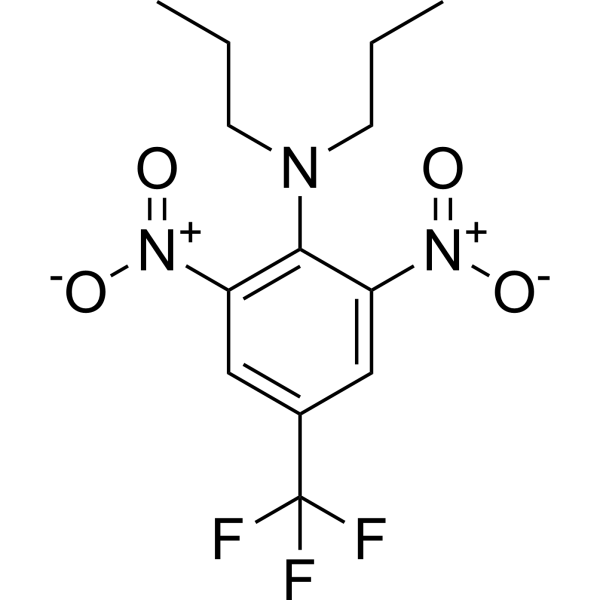
Trifluralin is a selective, preemergence, soil-applied herbicide providing control of many important annual grass and broadleaf weed species. Trifluralin prevents weed growth by inhibiting root development through the interruption of mitosis. Trifluralin binds to tubulin and results in the failure of spindle apparatus and cell plate formation. Trifluralin inhibits radicle development on roots. Trifluralin inhibits cell mitosis. Trifluralin is considered to be neurotoxic and haematotoxic .
loading...
    loading...
Cat. No.: HY-184988
CAS No.: 3123222-14-7
Target:  

Herbicide HPPD

Research Areas:  

Metabolic Disease

HPPD-IN-10 is an inhibitor of Arabidopsis thaliana 4-hydroxyphenylpyruvate dioxygenase (HPPD), with an IC50 of 0.06 μM and a Kd of 0.265 μM. HPPD-IN-10 blocks the HPPD-mediated catalytic conversion of 4-hydroxyphenylpyruvate, downregulates the biosynthesis of plastoquinone and tocopherol, induces weed bleaching, and inhibits root and shoot growth. HPPD-IN-10 can be used in herbicide-related research on gramineous and broadleaf weeds in farmlands, such as barnyard grass and purslane .
loading...
    loading...
Cat. No.: HY-B0859S1
CAS No.: 352431-14-2
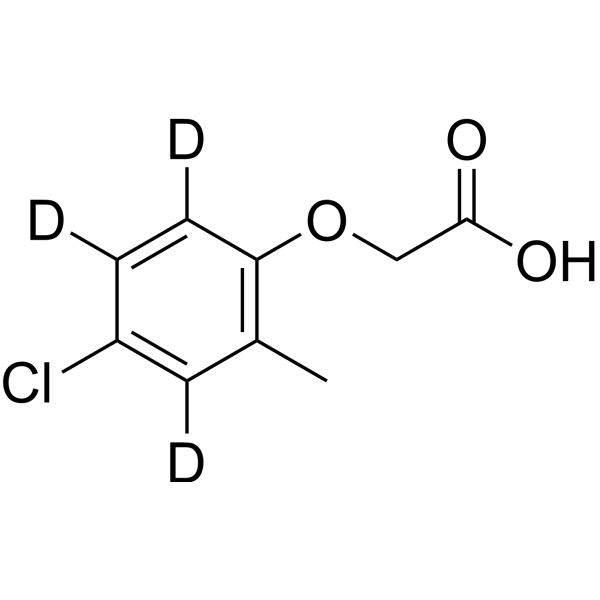
MCPA-d3 is the deuterium labeled MCPA (HY-B0859). MCPA is an orally active phenoxyacetic acid herbicide. MCPA interferes with membrane integrity, energy metabolism (decreases ATP levels), and redox balance in plant cells. MCPA increases hepatic cytochrome P-450 levels and increases aniline hydroxylase and 7-ethoxycoumarin O-deethylase activities. MCPA can be used to control broadleaf weeds .
loading...
    loading...
Cat. No.: HY-B2010R
CAS No.: 72178-02-0
Fomesafen (Standard) is the analytical standard of Fomesafen (HY-B2010). This product is intended for research and analytical applications. Fomesafen is an orally active herbicide. Fomesafen inhibits protoporphyrinogen oxidase (PPO). Fomesafen induces Apoptosis and increases ROS. Fomesafen exhibits developmental toxicity, immunotoxicity, and neurotoxicity. It induces precancerous lesions in the liver and hepaturoporphyria in mice. Fomesafen is used to control broadleaf weeds in soybean fields, rubber plantations, and orchards .
loading...
    loading...
Cat. No.: HY-B2039R
CAS No.: 25057-89-0
Research Areas:  

Others

Bentazone (Standard) is the analytical standard of Bentazone (HY-B2039). This product is intended for research and analytical applications. Bentazone is a selective post-emergence herbicide and a Photosystem II inhibitor targeting the quinone B binding site, with activity against broadleaf weeds. Bentazone interferes with photosynthetic electron transport, blocks sunlight-dependent energy production, and acts as a phytotoxin to induce leaf damage, growth inhibition, lipid peroxidation, and reduced chlorophyll content .
loading...
    loading...
Cat. No.: HY-B2050S
CAS No.: 347841-79-6
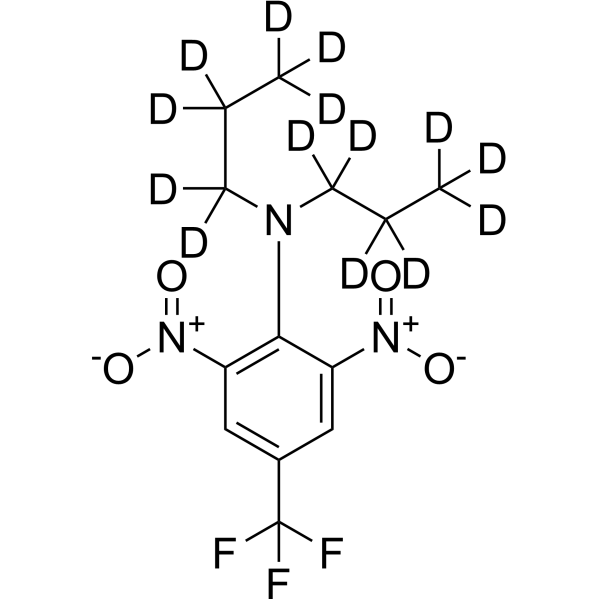
Trifluralin-d14 is the deuterium labeled Trifluralin. Trifluralin is a selective, preemergence, soil-applied herbicide providing control of many important annual grass and broadleaf weed species. Trifluralin prevents weed growth by inhibiting root development through the interruption of mitosis. Trifluralin binds to tubulin and results in the failure of spindle apparatus and cell plate formation. Trifluralin inhibits radicle development on roots. Trifluralin inhibits cell mitosis. Trifluralin is considered to be neurotoxic and haematotoxic .
loading...
    loading...
Cat. No.: HY-W040194
CAS No.: 81777-89-1
Research Areas:  

Metabolic Disease

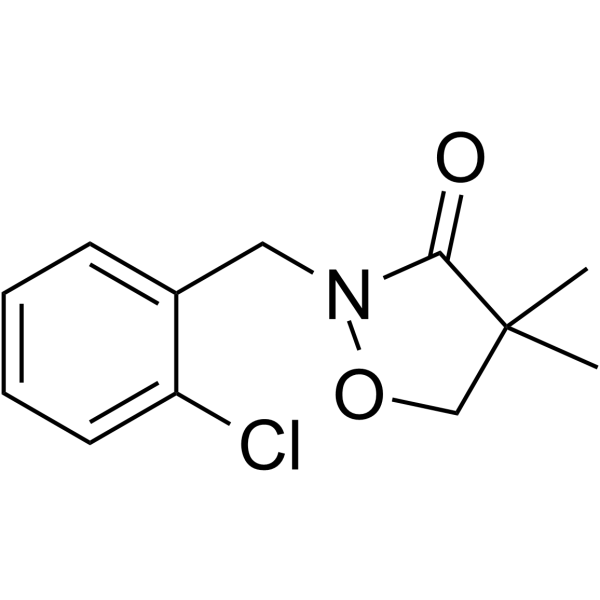
Clomazone is a broad spectrum herbicide, mainly used to control annual broadleaf weeds and grass weeds in various crops such as rice, soybeans, and peanuts. Clomazone inhibits carotenoid biosynthesis, and treated plants show typical "albinism" symptoms due to the destruction of chloroplast membrane structure leading to chlorophyll degradation. Clomazone exhibits multiple toxic effects on non-target organisms, including aquatic lethality, developmental malformations, liver damage, mitochondrial dysfunction, and hematotoxicity .
loading...
    loading...
Cat. No.: HY-W713900
CAS No.: 2469242-78-0
MCPA-d3-1 is the deuterium labeled MCPA (HY-B0859). MCPA is an orally active phenoxyacetic acid herbicide. MCPA interferes with membrane integrity, energy metabolism (decreases ATP levels), and redox balance in plant cells. MCPA increases hepatic cytochrome P-450 levels and increases aniline hydroxylase and 7-ethoxycoumarin O-deethylase activities. MCPA can be used to control broadleaf weeds .
loading...
    loading...
Cat. No.: HY-178165
Target:  

Drug Derivative

Research Areas:  

Others

PPO-IN-22 (Compound B-04) is a benzothiazol-2(3H)-one derivative. PPO-IN-22 is a herbicide. PPO-IN-22 exhibits excellent post-emergence herbicidal activity against broadleaf weeds. PPO-IN-22 demonstrates potent pre-emergence activity against both dicotyledonous and monocotyledonous weeds. PPO-IN-22 exhibits favorable crop safety as a selective pre-emergence herbicide in soybean, peanut, and cotton cultivation systems .
loading...
    loading...
Cat. No.: HY-B0859R
CAS No.: 94-74-6
MCPA (Standard) is the analytical standard of MCPA (HY-B0859). This product is intended for research and analytical applications. MCPA is an orally active phenoxyacetic acid herbicide. MCPA interferes with membrane integrity, energy metabolism (decreases ATP levels), and redox balance in plant cells. MCPA increases hepatic cytochrome P-450 levels and increases aniline hydroxylase and 7-ethoxycoumarin O-deethylase activities. MCPA can be used to control broadleaf weeds .
loading...
    loading...
Cat. No.: HY-B0859S
Synonyms: 4-Chloro-2-Methylphenoxyacetic acid-13C8
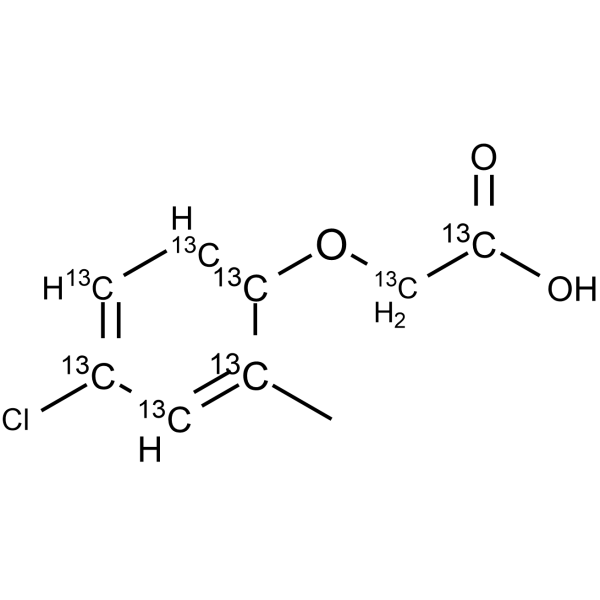
MCPA- 13C8 is the 13C-labeled MCPA (HY-B0859). MCPA is an orally active phenoxyacetic acid herbicide. MCPA interferes with membrane integrity, energy metabolism (decreases ATP levels), and redox balance in plant cells. MCPA increases hepatic cytochrome P-450 levels and increases aniline hydroxylase and 7-ethoxycoumarin O-deethylase activities. MCPA can be used to control broadleaf weeds .
loading...
    loading...
Cat. No.: HY-B0869AR
CAS No.: 125401-92-5
Bispyribac (sodium) (Standard) is the analytical standard of Bispyribac sodium (HY-B0869A). This product is intended for research and analytical applications. Bispyribac sodium is a selective, orally active, systemic and post-emergence herbicide. Bispyribac sodium reduces SOD levels and inhibits ALS activity. Bispyribac sodium blocks the biosynthesis of branched-chain amino acids, resulting in growth retardation, chlorosis and necrosis of weeds. Bispyribac sodium exerts herbicidal activity against grass, sedge and broadleaf weeds in rice fields. Bispyribac sodium is hepatotoxic and genotoxic .
loading...
    loading...
Cat. No.: HY-B2050R
CAS No.: 1582-09-8
Research Areas:  

Others

Trifluralin (Standard) is the analytical standard of Trifluralin. This product is intended for research and analytical applications. Trifluralin is a selective, preemergence, soil-applied herbicide providing control of many important annual grass and broadleaf weed species. Trifluralin prevents weed growth by inhibiting root development through the interruption of mitosis. Trifluralin binds to tubulin and results in the failure of spindle apparatus and cell plate formation. Trifluralin inhibits radicle development on roots. Trifluralin inhibits cell mitosis. Trifluralin is considered to be neurotoxic and haematotoxic .
loading...
    loading...
Cat. No.: HY-W040279
CAS No.: 94125-34-5
Research Areas:  

Others

Prosulfuron is a fluorinated sulfonylurea herbicide with a reported acute oral LD50 of 546 mg/kg in female rats. Prosulfuron acts by inhibiting acetolactate synthase (ALS) to block the biosynthesis of branched-chain amino acids (valine, leucine and isoleucine) in plants, thereby suppressing weed growth. Prosulfuron may disrupt the soil microbial community balance in alkaline soils with minimal chemical degradation. Prosulfuron has low toxicity to humans and mammals, and can be used for the research of broadleaf weed control in maize and sweet corn .
loading...
    loading...
Cat. No.: HY-116653
CAS No.: 96525-23-4
Target:  

Herbicide

Research Areas:  

Others

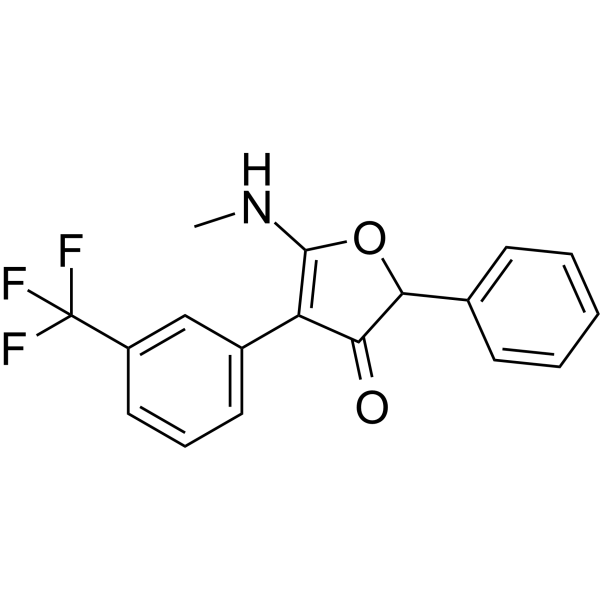
Flurtamone is a herbicide that interferes with carotenoid biosynthesis by inhibiting phytoene desaturase, blocking the conversion of phytoene to ζ-carotene. Flurtamone can cause the accumulation of phytoene, leading to photooxidative destruction of chlorophyll and plant albinism . Flurtamone comprises a pair of chiral enantiomers, R-flurtamone and S-flurtamone, with R-flurtamone exhibiting significantly stronger herbicidal activity against target weeds. Flurtamone is toxic to Selenastrum capricornutum. Flurtamone can control broadleaf weeds and grass weeds as well as various weeds, and can be used in herbicide-related research .
loading...
    loading...
Cat. No.: HY-B0860S
CAS No.: 1007536-67-5
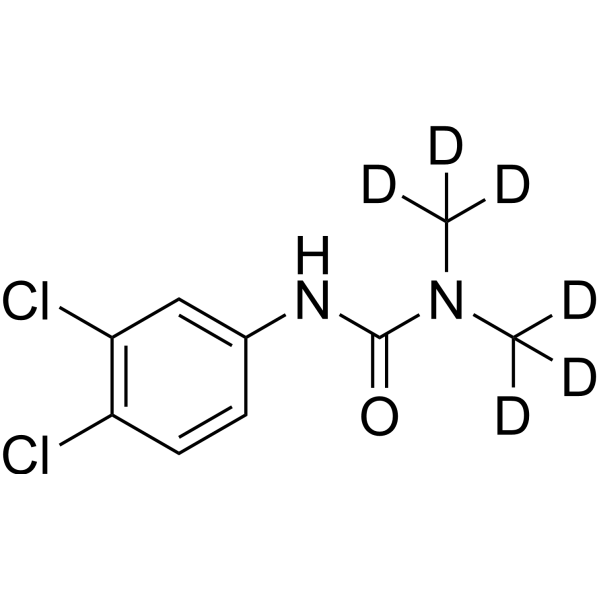
Diuron-d6 is the deuterium labeled Diuron (HY-B0860). Diuron is an orally active phenylurea herbicide. Diuron inhibits photosynthesis in plants by blocking the formation of ATP and NADH. Diuron increases the production of ROS. Diuron increases expression of p53 in certain cell lines. Diuron has herbicidal activity against annual and perennial broadleaf weeds and grass weeds. Diuron promotes DMBA/BBN-induced bladder cancer. Diuron can be used in breast cancer research .
loading...
    loading...
Cat. No.: HY-B0867R
CAS No.: 94-80-4
2,4-D Butyl ester (Standard) is the analytical standard of 2,4-D Butyl ester (HY-B0867). This product is intended for research and analytical applications. 2,4-D Butyl ester is a phenoxyacetic acid herbicide used to control woody broadleaf weeds. 2,4-D Butyl ester shows high toxicity to fish and aquatic invertebrates. In animals, 2,4-D Butyl ester hydrolyzes to produce n-butanol, which further induces neurobehavioral toxicity such as ataxia in rats .
loading...
    loading...
Cat. No.: HY-B0868
CAS No.: 25168-26-7
Target:  

Herbicide

Research Areas:  

Others

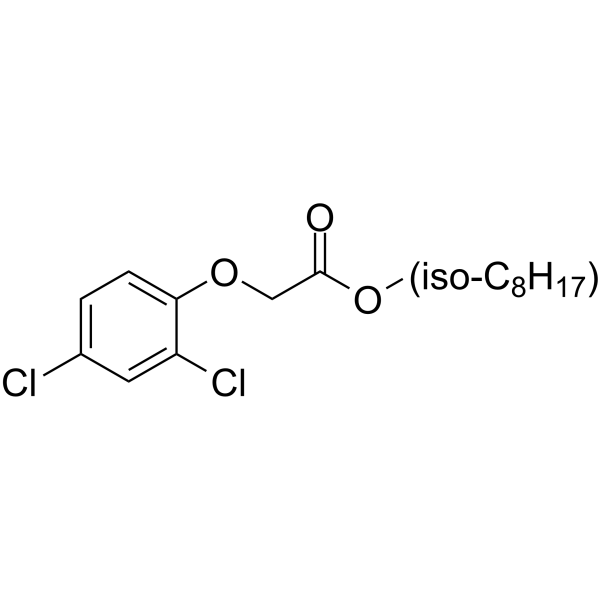
2,4-D isooctyl ester, a synthetic auxin herbicide, is a TIR1 protein transport inhibitor. 2,4-D isooctyl ester interacts with TIR1 to facilitate auxin signal transduction, activating auxin-mediated growth responses. 2,4-D isooctyl ester functions as a pro-herbicide bio-transformed into phytotoxic 2,4-D post-plant absorption, disrupting normal plant growth. 2,4-D isooctyl ester can be used to control broadleaf weeds .
loading...
    loading...
Cat. No.: HY-W040194R
CAS No.: 81777-89-1
Research Areas:  

Metabolic Disease

Clomazone (Standard) is the analytical standard of Clomazone (HY-W040194). This product is intended for research and analytical applications. Clomazone is a broad spectrum herbicide, mainly used to control annual broadleaf weeds and grass weeds in various crops such as rice, soybeans, and peanuts. Clomazone inhibits carotenoid biosynthesis, and treated plants show typical "albinism" symptoms due to the destruction of chloroplast membrane structure leading to chlorophyll degradation. Clomazone exhibits multiple toxic effects on non-target organisms, including aquatic lethality, developmental malformations, liver damage, mitochondrial dysfunction, and hematotoxicity.
loading...
    loading...

