169 Results for "

allosteric binding

" in MedChemExpress (MCE) Product Catalog:
Products (169)

169 Results for "allosteric binding" in MCE Product Catalog:

Cat. No.: HY-179650
CAS No.: 217798-45-3
Research Areas:  

Cancer

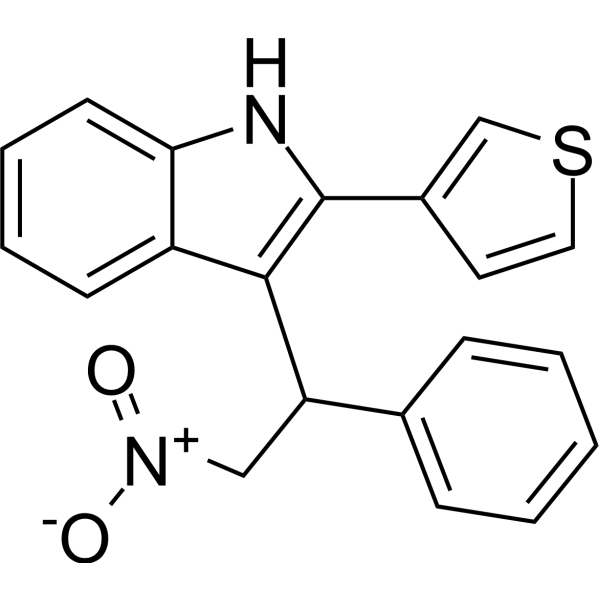
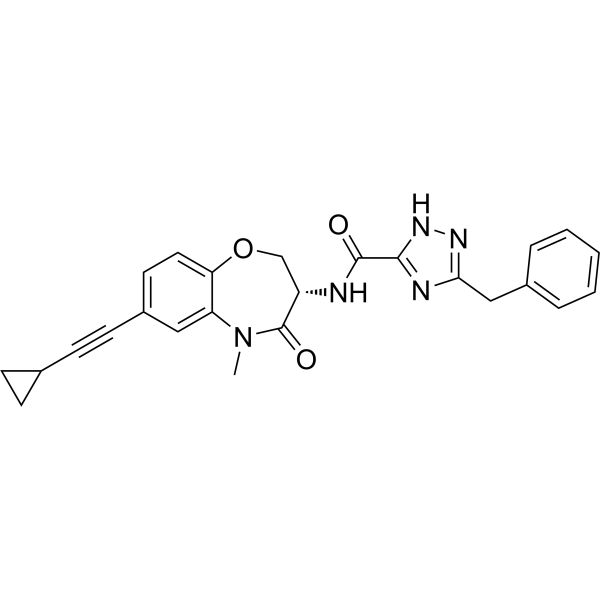
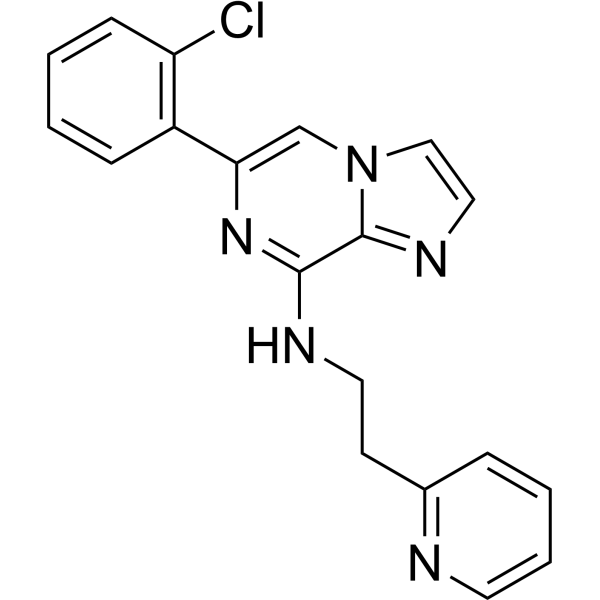
NSD2-PWWP1-IN-5 (Compound 13) is an effective NSD2-PWWP1 inhibitor with a Kd value of 78 nM. NSD2-PWWP1-IN-5 competitively blocks the recognition of H3K36me2 and DNA by NSD2-PWWP1, thereby weakening its binding ability to nucleosomes. NSD2-PWWP1-IN-5 inhibits the proliferation of U2OS osteosarcoma cells and induces cell cycle arrest and apoptosis. NSD2-PWWP1-IN-5 can be used for the study of osteosarcoma .
loading...
    loading...
Cat. No.: HY-W471288
CAS No.: 30479-81-3
Synonyms: JFD 00458
Target:  

AP-1

Research Areas:  

Neurological Disease

JPC0661 is a direct and allosteric ΔFOSB inhibitor. JPC0661 inhibits the binding of ΔFOSB/JUND and ΔFOsB to DNA with IC50 values in the micromolar range (9-52 uM), directly inhibits ΔFOSB-mediated transcription with IC50 of 0.82 μM in vitro. JPC0661 significantly reduces ΔFOSB occupancy at genomic AP1 sites in vivo. JPC0661 binds to a novel groove outside the DNA-binding cleft of ΔFOSB and disrupt the formation of the ΔFOSB/JUND-DNA complex. JPC0661 can be used for Alzheimer's disease research .
loading...
    loading...
Cat. No.: HY-184485
Research Areas:  

Infection

MB-32 is a potent and selective allosteric inhibitor of human angiotensin-converting enzyme 2 (hACE2) with a Kd value of 7.078 μM. MB-32 binds to a non-catalytic surface pocket on the N-terminal helix of ACE2, disrupts the interaction between ACE2 and the receptor-binding domain of SARS-CoV-2 spike protein through allosteric action, and preserves the enzymatic activity of ACE2 across different species. MB-32 achieves high concentrations in the airway via intranasal administration, with no detected cardiovascular toxicity. MB-32 can be used for research on coronavirus disease 2019 .
loading...
    loading...
Cat. No.: HY-187382
Target:  

HDAC

Research Areas:  

Cancer

HDAC8-IN-17 is a histone deacetylase 8 inhibitor with human IC50 values of 0.08 μM, 0.44 μM, and 1.9 μM, and high selectivity over HDAC1, HDAC2, HDAC3, and HDAC6. HDAC8-IN-17 exhibits slow-binding, reversible uncompetitive inhibition via allosteric binding to the enzyme-substrate complex. HDAC8-IN-17 induces selective hyperacetylation of SMC3. HDAC8-IN-17 can be used for the research of cancer .
loading...
    loading...
Cat. No.: HY-L928
7,106 compounds

G protein-coupled receptors (GPCRs) are membrane proteins in humans and one of the most important targets in drug discovery. Approximately 35% of launched drugs are targeted GPCRs, making them a crucial class of targets in drug discovery.

The orthosteric site of a GPCR is its endogenous ligand’s (such as neurotransmitters or hormones) binding site. This site plays a central role in signal transduction. Small molecules binding to this site typically contain a protonatable amino group, enabling the formation of salt bridges or hydrogen bonds with acidic residues in the binding pocket. In contrast, the allosteric site does not directly initiate signaling but modulates the signal intensity of the GPCR by altering or stabilizing the conformation of the orthosteric site. Small molecules binding to the allosteric site often contain multiple aromatic rings to occupy hydrophobic pockets and achieve their functional effects.

MCE has collected over 7,106 reported bioactive molecules targeting GPCRs, covering Class A, B, and C GPCRs. These small molecules were subjected to AI representation to extract 2D and 3D features. Subsequently, we do screening by AI score based on similarity to identify molecules in diversity library highly similar to the reported bioactive molecules in both 2D and 3D, with a threshold greater than 0.7. Further screening based on cLogP was applied to select molecules with good lipophilicity, which facilitates the binding of small molecules to GPCRs. This diversity library can be widely applied to the discovery of compounds targeting GPCR proteins.

Cat. No.: HY-W069974
CAS No.: 79932-56-2
Target:  

Calcium Channel

Research Areas:  

Inflammation/Immunology

Ca2+-Langerin-IN-1 (Compound 3) is a allosteric Langerin inhibitor. Langerin is a C-type lectin that is expressed on Langerhans cells and plays a crucial role in pathogen recognition and innate immune activation. The KD value of the CRD domain of murine Langerin protein for Ca2+-Langerin-IN-1 is 17 μM under the presence of Ca²⁺ and 53 μM under the absence of Ca²⁺ competition. Ca2+-Langerin-IN-1 induces conformational changes and competitively replaces Ca²⁺, thereby inhibiting the carbohydrate recognition function of the protein. Ca2+-Langerin-IN-1 can be used in the research of immunomodulatory therapy .
loading...
    loading...
Cat. No.: HY-103423R
CAS No.: 114200-31-6
PAOPA (Standard) is the analytical standard of PAOPA (HY-103423). This product is intended for research and analytical applications. PAOPA, an analog of L-proline-l-leucine-glycine amide (PLG) peptide, is an allosteric modulator of Dopamine D2 Receptor. PAOPA can effectively reduce behavioral abnormalities in rodent models of schizophrenia. PAOPA increases the high affinity dopamine D2 receptor and promotes its binding to agonists .
loading...
    loading...
Cat. No.: HY-103552
CAS No.: 353229-59-1
Target:  

mGluR

Research Areas:  

Neurological Disease

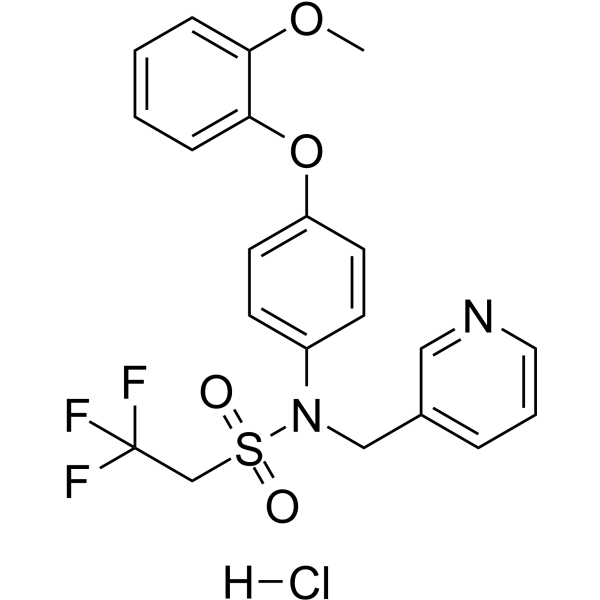
LY487379 hydrochloride is a selective human mGluR2 positive allosteric modulator (PAM). LY487379 hydrochloride potentiates glutamate-stimulated [ 35S]GTPγS binding with EC50 values of 1.7 μM and >10 μM for mGlu2 and mGlu3 receptors respectively. LY487379 hydrochloride promotes cognitive flexibility and facilitates behavioral inhibition in a rat model. LY487379 hydrochloride can be used for schizophrenia research .
loading...
    loading...
Cat. No.: HY-122255
CAS No.: 353231-17-1
Purity:  98.92%
Target:  

mGluR

Research Areas:  

Neurological Disease

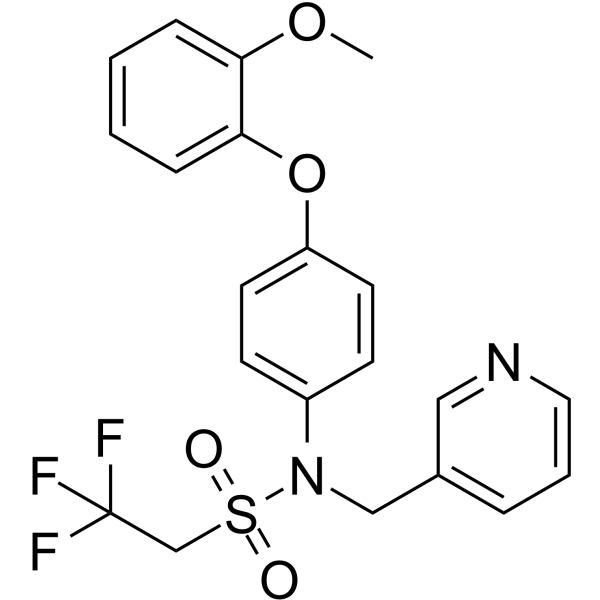
LY487379 is a selective human mGluR2 positive allosteric modulator (PAM). LY487379 potentiates glutamate-stimulated [ 35S]GTPγS binding with EC50 values of 1.7 μM and >10 μM for mGlu2 and mGlu3 receptors respectively. LY487379 promotes cognitive flexibility and facilitates behavioral inhibition in a rat model. LY487379 can be used for schizophrenia research .
loading...
    loading...
Cat. No.: HY-124308
CAS No.: 1221964-50-6
Target:  

PKC

Research Areas:  

Cancer

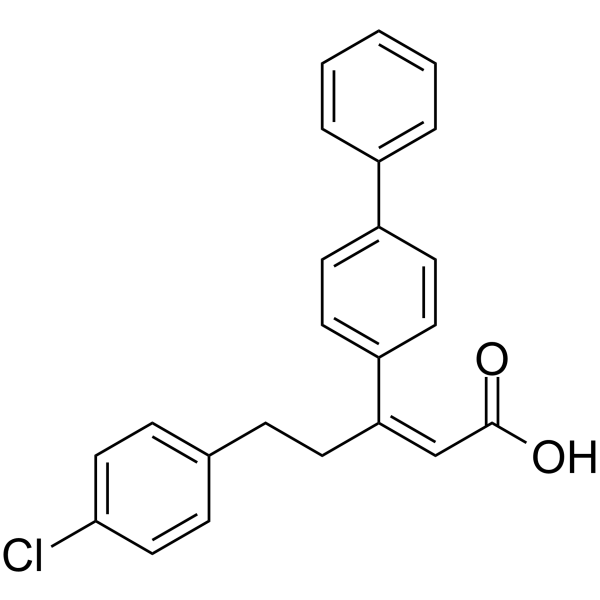
PS315, a derivative of PS48 (HY-15967), is an allosteric PKC inhibitor by binding to the PIF-pocket of aPKC and inducing a displacement of the active site residue Lys111. PS315 inhibits the full-length and catalytic domain constructs of PKCζ (IC50=10 μM) and PKCη (IC50=30 μM). PS315 has anti-cancer activity .
loading...
    loading...
Cat. No.: HY-13856
CAS No.: 1410101-89-1
Purity:  98.09%
Target:  

PDK-1

Research Areas:  

Cancer

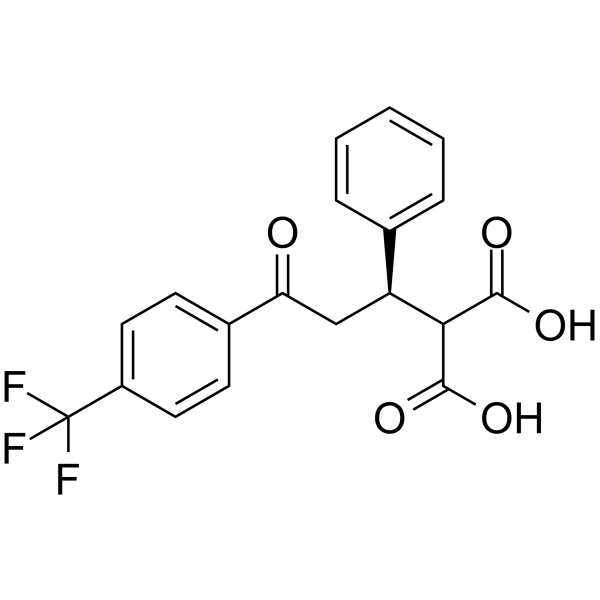
(R)-PS210, the R enantiomer of PS210 (compound 4h-eutomer), is a substrate-selective allosteric activator of PDK1 with an AC50 value of 1.8 μM. (R)-PS210 targets to the PIF-binding pocket of?PDK1. PIF: The protein kinase C-related kinase 2 (PRK2)-interacting fragment .
loading...
    loading...
Cat. No.: HY-165474
CAS No.: 2231103-08-3
Target:  

iGluR

Research Areas:  

Neurological Disease

TDPAM01 is a positive allosteric modulator of AMPA receptor GluA2. TDPAM01 can specifically bind to the ligand-binding domain (LBD) of GluA2 and shows an IC50 of 13.4 nM for the GluA2 flop subtype. TDPAM01 can stabilize the activated conformation of GluA2 receptors, delay the receptor deactivation or desensitization process, maintaining the rapid excitatory synaptic transmission in the central nervous system .
loading...
    loading...
Cat. No.: HY-165475
CAS No.: 2231101-34-9
Target:  

iGluR

Research Areas:  

Neurological Disease

TDPAM02 is a positive allosteric modulator of AMPA receptor GluA2. TDPAM02 can specifically bind to the ligand-binding domain (LBD) of GluA2 and shows an IC50 of 1.4 nM for the GluA2 flop subtype. TDPAM02 can stabilize the activated conformation of GluA2 receptors, delay the receptor deactivation or desensitization process, maintaining the rapid excitatory synaptic transmission in the central nervous system .
loading...
    loading...
Cat. No.: HY-182750
Target:  

ATP Citrate Lyase

Research Areas:  

Inflammation/Immunology

ACLY-IN-3 is an ATP-citrate lyase (ACLY) inhibitor with an IC50 of 0.036 μM and a target Kd of 0.54 μM. ACLY-IN-3 interacts with the allosteric binding site of ACLY to inhibit its activity. ACLY-IN-3 exhibits excellent lipid-lowering effects and alleviates hepatic inflammation and liver fibrosis. ACLY-IN-3 can be used for the research of metabolic dysfunction-associated steatohepatitis .
loading...
    loading...
Cat. No.: HY-189013
CAS No.: 832082-44-7
Target:  

mAChR

Research Areas:  

Neurological Disease

THRX160209 is a dual-site antagonist of the M2 muscarinic acetylcholine receptor with M2 receptor subtype selectivity. THRX160209 binds simultaneously to the orthosteric site and a spatially distinct allosteric site, competitively inhibiting receptor activation at the acetylcholine binding pocket. THRX160209 exhibits affinity for all five muscarinic receptor subtypes. THRX160209 can be used in research related to neurological disorders .
loading...
    loading...
Cat. No.: HY-144705
CAS No.: 2851895-01-5
Target:  

Cannabinoid Receptor

Research Areas:  

Neurological Disease

GAT564 (Compound 15d) is a potent allosteric modulator of cannabinoid 1 receptor (CB1R) with EC50s of 87 and 320 nM respectively for cAMP and β-arrestin2. GAT564 markedly promotes orthosteric ligand binding to hCB1R. GAT564 is efficacious as a topical agent that significantly reduces intraocular pressure (IOP) in the ocular normotensive murine model of glaucoma .
loading...
    loading...
Cat. No.: HY-161059
CAS No.: 2416593-55-8
Target:  

RIP kinase Necroptosis

Research Areas:  

Infection Inflammation/Immunology

ZB-R-55 is an orally active and selective dual-mode RIPK1 inhibitor with RIPK1 IC50 values of 5.7 nM. ZB-R-55 occupies both the allosteric and ATP binding sites of RIPK1. ZB-R-55 inhibits necroptosis in cancer cells. ZB-R-55 can be used for the research of systemic inflammatory response syndrome and sepsis .
loading...
    loading...
Cat. No.: HY-161296
Target:  

Bacterial HIV

Research Areas:  

Infection

TH6342 is a SAMHD1 modulator that binds to pretetrameric SAMHD1 and prevents its oligomerization and allosteric activation. SAMHD1 is a dNTP triphosphohydrolase and an HIV-1 restriction factor. SAMHD1 can limit the replication of retroviruses and DNA viruses and has antiviral effects. The inhibitory mechanism of TH6342 does not occupy the SAMHD1 nucleotide-binding pocket, gently binds the target, and functions as a chemical probe .
loading...
    loading...
Cat. No.: HY-187591
CAS No.: 1158221-32-9
D-159404 is an orally active, blood-brain barrier-permeable, selective allosteric PDE4D inhibitor. It partially inhibits cAMP hydrolysis by binding to the UCR2 regulatory domain, elevates intracellular cAMP levels, and triggers calcium influx, thereby improving working memory and episodic memory consolidation. D-159404 is used in research on asthma, chronic obstructive pulmonary disease, and cognitive impairment .
loading...
    loading...
Cat. No.: HY-163735
CAS No.: 609335-29-7
Target:  

Potassium Channel

Research Areas:  

Cardiovascular Disease

BA6b9 is an allosteric inhibitor of SK4 channels that targets the CaM–PIP2-binding domain with a IC50 value of 8.6 µM (WT SK4). BA6b9 inhibits SK4 channels by interacting with two specific residues, Arg191 and His192 in the S4–S5 linker. BA6b9 significantly prolongs atrial and atrioventricular effective refractory period (ERP) and reduces atrial fibrillation (AF) induction in rat isolated hearts, which has the potential to be used for the research of arrhythmia .
loading...
    loading...

