1289 Results for "

EGF-R

" in MedChemExpress (MCE) Product Catalog:
Products (1289)

1289 Results for "EGF-R" in MCE Product Catalog:

Art. -Nr.: HY-113239S1
CAS. Nr.: 159956-78-2
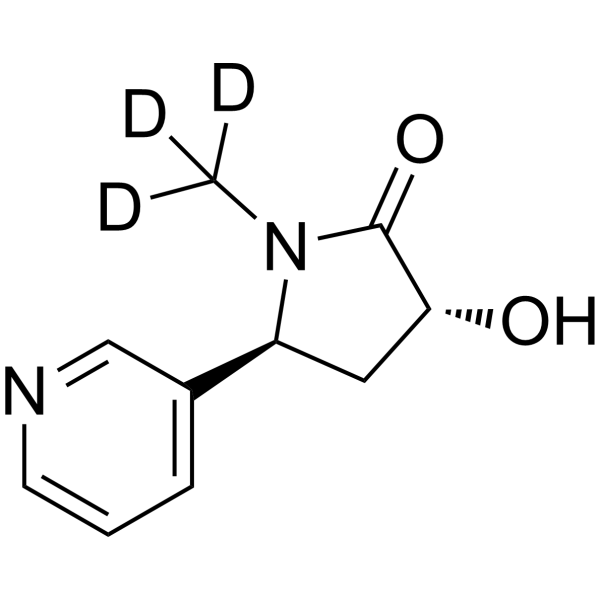
rel-Hydroxycotinine-d3 is the d3-labeled Hydroxycotinine (HY-113239). Hydroxycotinine is a nicotine metabolite commonly found in the urine of smokers. Hydroxycotinine is the primary biomarker of tobacco/nicotine vapor exposure, formed from the conversion of nicotine via cotinine. Hydroxycotinine serum levels in rodents are influenced by sex and co-exposure to nicotine vapor and ethanol. Hydroxycotinine elevation is associated with decreased eGFR and increased risk of chronic kidney disease. Hydroxycotinine can be used in research related to chronic kidney disease .
loading...
    loading...
Art. -Nr.: HY-138627AR
CAS. Nr.: 2929417-90-1
Forschungsgebiete:  

Cancer

AST5902 trimesylate (Standard) is the analytical standard of AST5902 trimesylate (HY-138627A). This product is intended for research and analytical applications. AST5902 trimesylate is the active metabolite of Furmonertinib (HY-112870) with antitumor activity, and acts as a EGFR inhibitor. AST5902 trimesylate inhibits CYP3A4 mRNA transcription at low concentrations and induces CYP3A4 mRNA expression at high concentrations. AST5902 trimesylate can be used in research related to non-small cell lung cancer .
loading...
    loading...
Art. -Nr.: HY-165060
CAS. Nr.: 848667-56-1
Synonyms: (±)2-14,15-EG
Target:  

DNA/RNA Synthesis

Forschungsgebiete:  

Metabolic Disease

(±)2-(14,15-Epoxyeicosatrienoyl) glycerol ((±)2-14,15-EG) is a novel CYP450 metabolite of 2-Arachidonoyl glycerol (2-AG) in the kidney. (±)2-(14,15-Epoxyeicosatrienoyl) glycerol is a potent mitogen for renal epithelial cells, increasing DNA synthesis in LLCPKcl4 cells. (±)2-(14,15-Epoxyeicosatrienoyl) glycerol activates the metalloprotease ADAM17, which cleaves proTGF-α and releases TGF-α as a ligand that initiates the EGFR-ERK signalling pathway .
loading...
    loading...
Art. -Nr.: HY-16558R
CAS. Nr.: 487-52-5
Synonyms: 2’,3,4,4’-tetrahydroxy Chalcone (Standard)
Butein (Standard) is the analytical standard of Butein. This product is intended for research and analytical applications. Butein is a cAMP-specific PDE inhibitor with an IC50 of 10.4 μM for PDE4 . Butein is a specific protein tyrosine kinase inhibitor with IC50s of 16 and 65 μM for EGFR and p60c-src in HepG2 cells . Butein sensitizes HeLa cells to Cisplatin through AKT and ERK/p38 MAPK pathways by targeting FoxO3a . Butein is a SIRT1 activator (STAC).
loading...
    loading...
Art. -Nr.: HY-169216
Target:  

EGFR VEGFR CDK

Forschungsgebiete:  

Cancer

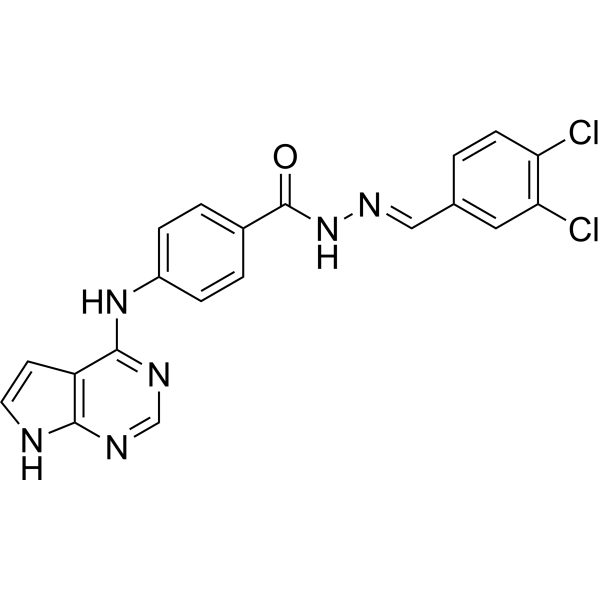
Multi-target kinase inhibitor 3 (compund 6i) is a multi-kinase target inhibitor with anticancer activity. Multi-target kinase inhibitor 3 inhibits EGFR, HER2, VEGFR-2, and CDK2 with IC50s of 0.063 μM, 0.054 μM, 0.119 μM, and 0.448 μM, respectively. Multi-target kinase inhibitor 3 has a good inhibitory effect on breast cancer cells MCF-7, with an IC50 of 6.10 μM .
loading...
    loading...
Art. -Nr.: HY-175009
Target:  

EGFR JAK STAT Apoptosis

Forschungsgebiete:  

Cancer

MRC-G-001 is a Genipin (HY-17389) derivative with an IC50 of 117 μM against A549 cancer cells. MRC-G-001 inhibits the phosphorylation of EGFR, JAK1, and STAT3, and modulates epithelial-mesenchymal transition (EMT)-related protein expression, thereby attenuating cell migration and invasion. MRC-G-001 induces cell cycle arrest and cell apoptosis. MRC-G-001 can be used for the study of cancers such as non-small-cell lung cancer .
loading...
    loading...
Art. -Nr.: HY-181923
Target:  

EGFR CDK Cytochrome P450

Forschungsgebiete:  

Cancer

IMP-Zn is a pyrazole-hydrazone Schiff base zinc (II) complex. IMP-Zn exhibits significant antiproliferative activity against human colorectal cancer cells and induces cell cycle arrest. IMP-Zn shows stronger binding affinity than its free ligand IMP towards three cancer-related protein targets: EGFR kinase 1M17, cytochrome P450 3RUK, and CDK inhibitor 6GUE. IMP-Zn can be used in studies related to colorectal cancer .
loading...
    loading...
Art. -Nr.: HY-184720
Target:  

VEGFR c-Met/HGFR EGFR PDGFR

Forschungsgebiete:  

Cancer

VEGFR-2-IN-89 is a VEGFR-2 inhibitor with an IC50 of 77 nM. VEGFR-2-IN-89 potently inhibits c-Met kinase activity with an IC50 of 0.152 μM, and also exhibits good inhibitory activity against EGFR (IC50 = 0.269 μM) and PDGFR-β kinase (IC50 = 0.301 μM). VEGFR-2-IN-89 displays anticancer activity against liver cancer. VEGFR-2-IN-89 can be used in the research of hepatocellular carcinoma .
loading...
    loading...
Art. -Nr.: HY-187330
Target:  

Drug Derivative

Forschungsgebiete:  

Cancer

Anticancer agent 356 is a phthaloyl derivative with anticancer activity. Molecular docking results of Anticancer agent 356 show that it binds to the EGFR tyrosine kinase domain, KRIT1-Rap1-HEG1 ternary complex and EF-Pyl-GMPPNP complex, thereby stabilizing the complexes and reducing the flexibility of residues at the binding sites. Anticancer agent 356 exhibits cytotoxicity against prostate cancer cells and breast cancer cells. Anticancer agent 356 can be used in the research of prostate cancer and breast cancer .
loading...
    loading...
Art. -Nr.: HY-N2510R
CAS. Nr.: 607-91-0
Synonyms: Myristicine (Standard)
Myristicin (Standard) is the analytical standard of Myristicin. This product is intended for research and analytical applications. Myristicine is an orally bioavailable serotonin receptor antagonist and weak monoamine oxidase (MAO) inhibitor. Myristicine also exerts anti-cancer effects on gastric cancer cells by inhibiting the EGFR/ERK signaling pathway. Myristicine is the main component of nutmeg essential oil and has anti-cancer, anti-proliferative, antibacterial, anti-inflammatory and apoptosis-inducing effects. Myristicine abuse can produce hallucinogenic effects, organ damage, etc .
loading...
    loading...
Art. -Nr.: HY-P10408
CAS. Nr.: 1906866-53-2
Candidalysin is a cytolytic peptide toxin secreted by the fungus Candida albicans. Candidalysin drives epithelial immune responses by activating the EGFR-MAPK signaling pathway, inducing MMP expression and calcium influx, and regulating the c-Fos transcription factor and MKP1 via p38 MAPK and ERK1/2 respectively. Candidalysin is essential for mucosal and systemic infections, activating NLRP3 to promote inflammatory responses, neutrophil recruitment, and Th17 immunity. Candidalysin activates LDH causing membrane damage and exhibiting cytotoxicity
loading...
    loading...
Art. -Nr.: HY-P11781A
CAS. Nr.: 1848230-00-1
Target:  

Drug Derivative

Forschungsgebiete:  

Cancer

Cys-HW12 is a random peptide containing an N-terminal cysteine and derivative of HW12 (HY-P11781). Cys-HW12 can be coupled via the thiol group of Cys. Cys-HW12 can serve as a control for GE11 (HY-P10128)-conjugated mixed micelles targeting EGFR, and also functions as a cytotoxic agent, cellular uptake inhibitor, and tumor growth inhibitor. Cys-HW12 is applicable to pancreatic cancer-related research .
loading...
    loading...
Art. -Nr.: HY-W007977
CAS. Nr.: 183322-18-1
Target:  

Drug Intermediate

Forschungsgebiete:  

Cancer

4-Chloro-6,7-bis(2-methoxyethoxy)quinazoline (Compound 11 and 15) is a building block and synthetic intermediate, which can be used as a precursor in the synthesis of receptor tyrosine kinase (RTK) inhibitors, dual RTK and histone deacetylase (HDAC) inhibitors, and anticancer agents. 4-Chloro-6,7-bis(2-methoxyethoxy)quinazoline can also be used to synthesize EGFR inhibitors, including Erlotinib (HY-50896), with antiproliferative activity .
loading...
    loading...
Art. -Nr.: HY-10261R
CAS. Nr.: 850140-72-6
Synonyms: BIBW 2992 (Standard)
Afatinib (Standard) is the analytical standard of Afatinib. This product is intended for research and analytical applications. Afatinib (BIBW 2992) is an orally active, potent and irreversible dual specificity inhibitor of ErbB family (EGFR and HER2), with IC50 values of 0.5 nM, 0.4 nM, 10 nM and 14 nM for EGFRwt, EGFRL858R, EGFRL858R/T790M and HER2, respectively. Afatinib can be used for the research of esophageal squamous cell carcinoma (ESCC), non-small cell lung cancer (NSCLC) and gastric cancer .
loading...
    loading...
Art. -Nr.: HY-107367AR
CAS. Nr.: 2071195-74-7
Synonyms: S-22611 hydrochloride (Standard)
Forschungsgebiete:  

Cancer

Epertinib hydrochloride (Standard) (S-22611 hydrochloride (Standard)) is the analytical standard of Epertinib (hydrochloride) (HY-107367A). This product is intended for research and analytical applications. Epertinib (S-22611) hydrochloride is a potent, orally active, reversible, and selective tyrosine Kinase inhibitor of EGFR, HER4 and HER2, with IC50s of 1.48 nM, 2.49 nM and 7.15 nM, respectively. Epertinib hydrochloride shows potent antitumor activity . Epertinib (hydrochloride) is a click chemistry reagent, it contains an Alkyne group and can undergo copper-catalyzed azide-alkyne cycloaddition (CuAAc) with molecules containing Azide groups.
loading...
    loading...
Art. -Nr.: HY-112345
CAS. Nr.: 179343-17-0
Reinheit:  98.07%
Target:  

FGFR PDGFR EGFR Src

Forschungsgebiete:  

Cancer

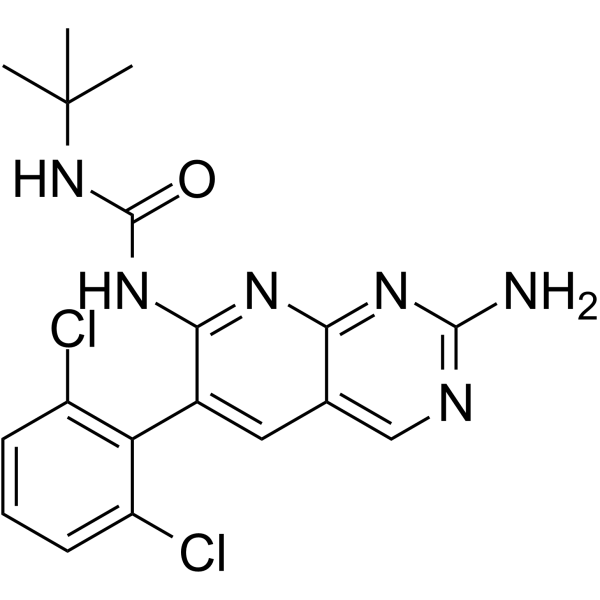
PD-089828 is an ATP competitive inhibitor of FGFR-1, PDGFR-β and EGFR (IC50s=0.15, 1.76, and 5.47 µM, respectively) and a noncompetitive inhibitor of c-Src tyrosine kinase (IC50=0.18 µM). PD-089828 also inhibits MAPK with an IC50 of 7.1 µM. PD-089828 inhibits PDGF-, EGF- and bFGF-mediated tyrosine kinase receptor autophosphorylation in vitro. PD-089828 has a long-lasting cellular activity .
loading...
    loading...
Art. -Nr.: HY-12965B
CAS. Nr.: 1265965-19-2
Target:  

TAM Receptor

Forschungsgebiete:  

Cancer

(Z)-S49076 hydrochloride is an orally active inhibitor of MET and AXL that blocks the downstream signaling of these receptors both in vitro and in vivo, inhibiting the proliferation and migration of tumor cells and suppressing tumor growth in xenograft models. (Z)-S49076 hydrochloride is capable of overcoming the resistance to epidermal growth factor receptor (EGFR) tyrosine kinase inhibitors (TKIs) due to MET amplification in Erlotinib (HY-50896)-resistant cell lines both in vitro and in vivo. (Z)-S49076 hydrochloride can be used for research in non-small cell lung cancer (NSCLC) .
loading...
    loading...
Art. -Nr.: HY-131710
CAS. Nr.: 2538149-57-2
Forschungsgebiete:  

Cancer

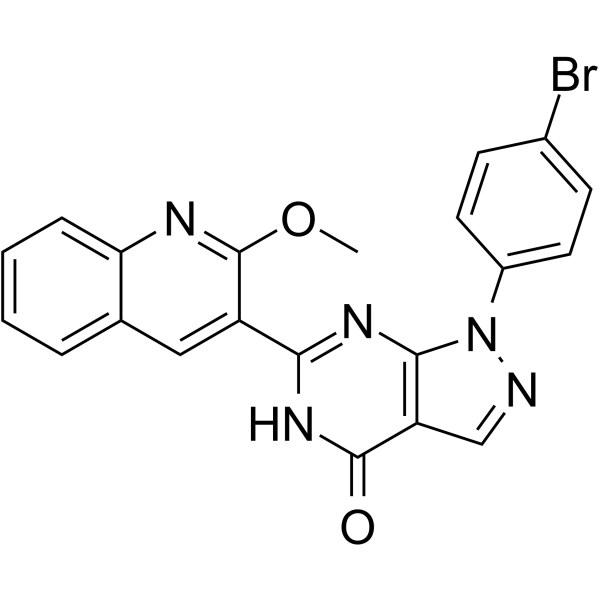
PDE5-IN-3 (compound 11j) is a potent PDE5 inhibitor with an IC50 of 1.57 nM. PDE5-IN-3 shows moderate EGFR inhibition with IC50 of 5.827 µM. PDE5-IN-3 significantly inhibits the Wnt/β-catenin pathway (IC50=1286.96 ng/mL). PDE5-IN-3 induces the intrinsic apoptotic mitochondrial pathway in HepG2 cells. PDE5-IN-3 has strong antitumor activity .
loading...
    loading...
Art. -Nr.: HY-149636
Reinheit:  99.82%
Target:  

EGFR CDK VEGFR Apoptosis

Forschungsgebiete:  

Cancer

Multi-target kinase inhibitor 2 is a multi-targeted kinase inhibitor, and exhibits activity against EGFR, Her2, VEGFR2, and CDK2 enzymes, with IC50 values of 79 nM, 40 nM,136 nM, and 204 nM, respectively. Multi-target kinase inhibitor 2 shows cytotoxic effects were observed against HepG2, HeLa , MDA-MB-231 and MCF-7, with IC50 of 41, 57, 51 and 59 μM. Multi-target kinase inhibitor 2 induces cell cycle arrest and apoptosis in HepG2 cells .
loading...
    loading...
Art. -Nr.: HY-160053
Target:  

PDGFR

Forschungsgebiete:  

Cancer

Gint4.T aptamer sodium is a nuclease-resistant RNA aptamer-based antagonist targeting platelet-derived growth factor receptor beta (PDGFRβ) (Kd: 9.6 nM). Gint4.T aptamer sodium inhibits PDGFRβ heterodimerization and EGFR transactivation. It can significantly inhibit cell migration and proliferation, induce differentiation and prevent tumor growth in vivo. Gint4.T aptamer sodium specifically inhibits PDGFRβ-mediated tropism of mesenchymal stem cells (MSCs) toward the tumor microenvironment .
loading...
    loading...

