1296 Results for "

reverse

" in MedChemExpress (MCE) Product Catalog:
Products (1296)

1296 Results for "reverse" in MCE Product Catalog:

Cat. No.: HY-168739
CAS No.: 2413582-45-1
Topoisomerase I inhibitor 17 (Compound 7h) is a Topoisomerase I (Top1) inhibitor. Topoisomerase I inhibitor 17 reduces DDX5 and reverses the locking of Top1 activity by DDX5. Topoisomerase I inhibitor 17 induces Top1-mediated DNA damage and promotes reactive oxygen species (ROS) production. Topoisomerase I inhibitor 17 induces Apoptosis (reduces antiapoptotic proteins XIAP, Bcl-2, Survivin and up-regulates pro-apoptotic proteins Bax, γH2AX). Topoisomerase I inhibitor 17 also blocks the progression of the G2/M checkpoint and induces cell cycle arrest. Topoisomerase I inhibitor 17 significantly inhibits colony formation and cell migration in colorectal cancer cells. Topoisomerase I inhibitor 17 effectively reduces tumors in human PDX tumor mice .
loading...
    loading...
Cat. No.: HY-169433
Naph-Se-TMZ is a PROTAC-like HDAC1 degrader. Naph-Se-TMZ induces ROS-dependent reduction in HDAC1 protein expression and total HDAC activity, and decreases cell viability in a dose-dependent manner. Naph-Se-TMZ exhibits activity in both TMZ-sensitive and TMZ-resistant glioma cells, and its cytotoxicity is reversed by the ROS scavenger N-acetylcysteine (HY-B0215). Naph-Se-TMZ can be used in studies related to glioblastoma .
Naph-Se-TMZ consists of a target protein ligand (red segment): Temozolomide (HY-17364), a DNA intercalator (blue segment): Nitro-Naphthalimide-C2-acylamide (HY-169437), and a molecular linker (black segment). Meanwhile, the activity control for the target protein ligand is Temozolomide-amino hydrochloride (HY-169439), and the DNA intercalator+linker is NNISC-2 (HY-169438).
loading...
    loading...
Cat. No.: HY-169480
CAS No.: 3003022-09-8
Target:  

Liposome

Research Areas:  

Infection Cancer

Lipid C2 is an ionizable cationic lipid that has been used in the formation of lipid nanoparticles (LNP) for mRNA delivery in vivo. LNPs containing Lipid C2 and encapsulating an mRNA reporter selectively accumulate in the liver and spleen but not the heart, lungs, or kidneys in mice. LNP containing Lipid C2 and encapsulating mRNA encoding the Epstein-Barr virus (EBV) protein latent membrane protein 2 (LMP-2), in combination with an anti-programmed cell death protein 1 (PD-1) antibody, decrease tumor volume and reverse T cell exhaustion, as well as increase the percentage of CD3 +CD8 + central and CD3 +CD8 + effector memory T cells and decrease the percentage of CD3 + T cells expressing Pd-1, in the spleen in a CT26 murine EBV-infected colon cancer model .
loading...
    loading...
Cat. No.: HY-181164
Research Areas:  

Infection

PROTAC BRD4 Degrader-43 is a BRD4 PROTAC degrader. PROTAC BRD4 Degrader-43 recruits the DCAF1-DDB1-Cul4A E3 ligase complex via a Vpr-derived peptide moiety to induce BRD4 ubiquitination and degradation through the ubiquitin-proteasome system. PROTAC BRD4 Degrader-43 exhibits potent HIV latency-reversing activity. PROTAC BRD4 Degrader-43 can be used for the research of HIV-1 latent infection . (Pink: BRD4 ligand (HY-13030); Blue: Cul4A-DDB1-DCAF1 ligand (HY-P11640); Black: conjugate of PEG linker + cell-penetrating peptide (HY-P2483))
loading...
    loading...
Cat. No.: HY-18234
CAS No.: 55123-66-5
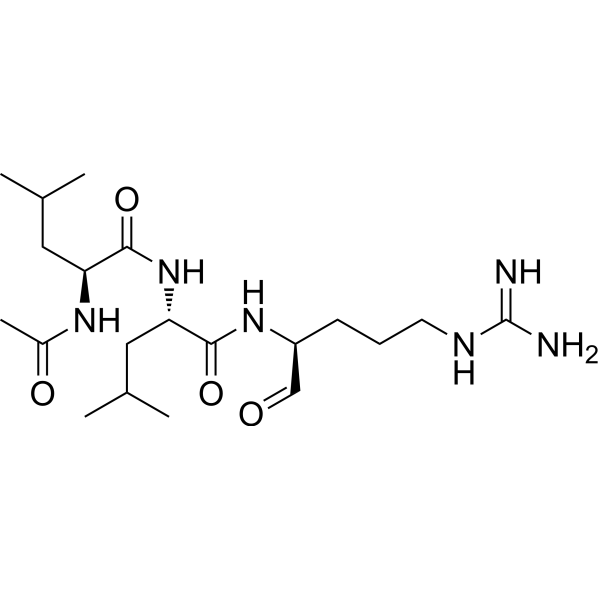
Leupeptin is a broad-spectrum protease inhibitor . By inhibiting the activation of the PTEN/PI3K/Akt/NF-κB/ERK1/2/p38 signaling pathway, Leupeptin significantly reduces LPS-induced NO and ROS production, mitochondrial membrane potential hyperpolarization, phagocytic activity, pro-inflammatory cytokine release, and M1 polarization in mouse peritoneal macrophages, and reverses autophagic flux impairment. It also decreases Concanavalin A (HY-P2149)-induced proliferation index of mouse splenic lymphocytes and the Th1/IL-10 and Th2/IL-10 cytokine ratios, thereby modulating innate and adaptive immune responses. Leupeptin inhibits blood coagulation and tumorigenesis in mouse skin. Leupeptin can be used in research on chronic inflammatory diseases and skin tumorigenesis .
loading...
    loading...
Cat. No.: HY-183478
CAS No.: 39740-82-4
Leupeptin hydrochloride is a broad-spectrum protease inhibitor . By inhibiting the activation of the PTEN/PI3K/Akt/NF-κB/ERK1/2/p38 signaling pathway, Leupeptin hydrochloride significantly reduces LPS-induced NO and ROS production, mitochondrial membrane potential hyperpolarization, phagocytic activity, pro-inflammatory cytokine release, and M1 polarization in mouse peritoneal macrophages, and reverses autophagic flux impairment. It also decreases Concanavalin A (HY-P2149)-induced proliferation index of mouse splenic lymphocytes and the Th1/IL-10 and Th2/IL-10 cytokine ratios, thereby modulating innate and adaptive immune responses. Leupeptin hydrochloride inhibits blood coagulation and tumorigenesis in mouse skin. Leupeptin hydrochloride can be used in research on chronic inflammatory diseases and skin tumorigenesis .
loading...
    loading...
Cat. No.: HY-184119
CAS No.: 3061276-55-6
Synonyms: IM502
Pabgraminone C (IM502) is a Fungal metabolite and PI3Kγ inhibitor with an IC50 of 61.7 nM against PI3Kγ. Pabgraminone C shifts the STAT signaling pathway in cells from an immunosuppressive STAT3/STAT6-dominant profile to an immunostimulatory STAT1/STAT2-dominant profile, driving cells toward a pro-inflammatory phenotype. Pabgraminone C reprograms cells from an immunosuppressive state to an immunostimulatory state, reversing their suppressive effect on anti-tumor immunity. Pabgraminone C inhibits established tumor growth and metastasis across multiple cancer types. Pabgraminone C overcomes resistance to PD-1 checkpoint blockade strategies. Pabgraminone C can be used in research related to liver cancer, melanoma, and colorectal cancer .
loading...
    loading...
Cat. No.: HY-184299
Research Areas:  

Cancer

PD-1/PD-L1-IN-65 is a PD-1/PD-L1 checkpoint inhibitor, with an EC50 of 6.06 μM for blocking the PD-1/PD-L1 interaction and a Kd of 1.43 μM for PD-L1. PD-1/PD-L1-IN-65 upregulates pro-inflammatory cytokines IFN-γ, IL-1α, IL-1β and the cytolytic protein perforin, and reverses T cell exhaustion. PD-1/PD-L1-IN-65 enhances T cell-mediated cancer cell lysis. PD-1/PD-L1-IN-65 can be used in the research of breast cancer .
loading...
    loading...
Cat. No.: HY-184587
Antibacterial agent 356 is an orally active antibacterial agent. Antibacterial agent 356 binds to the Mrr1 transcription factor, inhibits the expression of the MDR1 efflux pump gene, reduces the efflux of Rhodamine 123, and increases the accumulation of intracellular substrates in drug-resistant Candida albicans cells. Antibacterial agent 356 induces mitochondrial membrane potential reduction and ROS accumulation in Candida albicans, inhibits the yeast-hypha transition process, and suppresses its biofilm formation. Antibacterial agent 356 reverses efflux pump-mediated drug resistance in azole-resistant Candida albicans with overexpressed Mdr1. Antibacterial agent 356 improves the survival rate of Galleria mellonella larvae infected with azole-resistant Candida albicans*CA632, and reduces the renal fungal load and renal tissue damage in infected BALB/c mice. Antibacterial agent 356 can be used for the research of Candida albicans infection .
loading...
    loading...
Cat. No.: HY-184964
CAS No.: 3041997-77-4
Research Areas:  

Cancer

NF-κB-IN-22 is an inhibitor targeting IKKβ, IκBα and NF-κB p65. NF-κB-IN-22 selectively inhibits the proliferation, migration and invasion of various cancer cells, arrests the cell cycle, and suppresses tumor growth in vivo, while exhibiting low toxicity to normal cells. NF-κB-IN-22 induces DNA damage, ROS production and apoptosis through endoplasmic reticulum stress and mitochondrial apoptotic pathways. NF-κB-IN-22 inhibits the phosphorylation of IKKβ, IκBα and NF-κB p65, blocks the NF-κB signaling pathway, and suppresses the nuclear translocation of NF-κB p65. NF-κB-IN-22 reverses the resistance to cisplatin (HY-17394). NF-κB-IN-22 can be used in research related to lung cancer, gastric cancer and liver cancer .
loading...
    loading...
Cat. No.: HY-A0169AR
CAS No.: 79416-27-6
Methyl aminolevulinate hydrochloride (Standard) is the analytical standard of Methyl aminolevulinate hydrochloride. This product is intended for research and analytical applications. Methyl aminolevulinate hydrochloride is a sensitizer used in photodynamic therapy (PDT). Methyl aminolevulinate hydrochloride penetrates the skin and induces the production of photoactive porphyrins including protoporphyrin IX in cells; upon exposure to appropriate light, it generates ROS, which triggers cellular oxidation and cell death. Methyl aminolevulinate hydrochloride acts as a photo-damage reversing agent through epidermal reconstruction, cytokine-mediated activation of dermal fibroblasts, elastin breakdown, new collagen formation, and compression of dilated capillaries. Methyl aminolevulinate hydrochloride reduces the expression of the proliferation marker Ki-67 and the early skin carcinogenesis marker TP53. Methyl aminolevulinate hydrochloride delays the onset of ultraviolet-induced skin tumors and reduces tumor burden in hairless mice. Methyl aminolevulinate hydrochloride is applicable to research related to actinic keratosis and basal cell carcinoma .
loading...
    loading...
Cat. No.: HY-B1203
CAS No.: 127-31-1
Synonyms: 9α-Fludrocortisone; 9α-Fluorcortisol
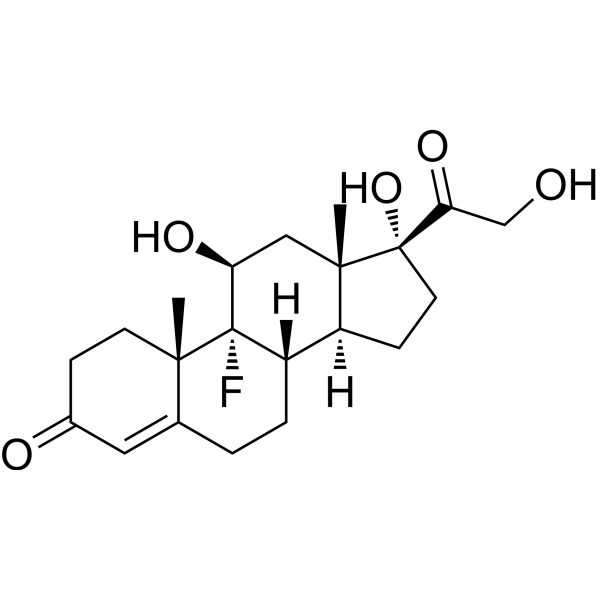
Fludrocortisone (9α-Fludrocortisone) is an orally active mineralocorticoid and glucocorticoid receptor agonist. Fludrocortisone suppresses pro-inflammatory cytokine expression, reduces CCL2, IL-6, IL-8 levels, upregulates mineralocorticoid receptor (MR) expression, induces PI3K/Akt, GSK-3β, CREB, ERK1/2, mTOR phosphorylation, blocks Tau hyperphosphorylation, prevents apoptosis, promotes survival and proliferation, enhances renal sodium and water transport, increases plasma volume and blood pressure, reduces plasma potassium and renin activity, stimulates erythropoietin expression, modulates uterine receptivity genes, and reverses PP242-induced MUC1 upregulation. Fludrocortisone can be used for the research of congenital adrenal hyperplasia, postural hypotension, and adrenal insufficiency .
loading...
    loading...
Cat. No.: HY-B1311R
CAS No.: 62-68-0
Synonyms: SKF-525A (Standard); U-5446 (Standard); RP-5171 (Standard)
Proadifen (hydrochloride) (Standard) is the analytical standard of Proadifen (hydrochloride). This product is intended for research and analytical applications. Proadifen (SKF-525A) hydrochloride is a non-competitive Cytochrome P450 inhibitor with an IC50 value of 19 μM. Proadifen hydrochloride reduces monoamine oxidase A (MAO-A) activity and reverses the antidepressantlike behavioral effect of Imipramine (HY-B1490A) and Desipramine (HY-B1272A) in rats. Proadifen hydrochloride also reduces N, N-dimethyltryptamine (DMT) metabolism in liver microsomes and inhibits N-demethylationand Acridone (HY-W007771) formation. Proadifen hydrochloride augments Lipopolysaccharide (LPS) (HY-D1056)-induced fever and exacerbates Prostaglandin E2 (PGE2) (HY-101952) levels in the rat. Proadifen hydrochloride is promising for research of metabolism-related deseases, ovarian carcinoma, inflammation and dopamine neurons-related deseases [4] .
loading...
    loading...
Cat. No.: HY-G0007S
CAS No.: 2749628-17-7
Synonyms: Omeprazole sulfone-d3; Omeprazole sulphone-d3
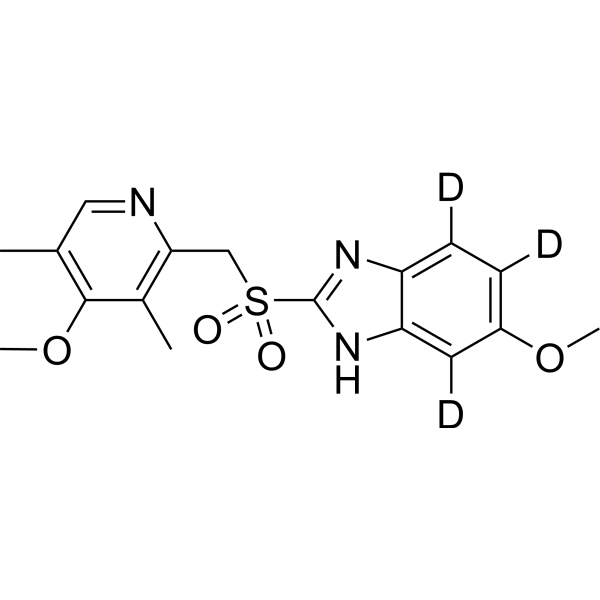
Omeprazole sulfone-d3 is the deuterium labeled Omeprazole sulfone. Omeprazole sulfone (Omeprazole sulphone) is one of the major circulating metabolites of Omeprazole (HY-B0113) in vivo, and belongs to class 4 non-mutagenic impurities. Omeprazole sulfone does not bind to the aryl hydrocarbon receptor (AhR), nor does it induce the expression of CYP1A1 or CYP1A2. However, Omeprazole sulfone promotes the migration of gastric epithelial cells under basal conditions and reverses the inhibitory effect of Indomethacin (HY-14397) on cell migration. Omeprazole sulfone does not promote cell proliferation, nor does it upregulate COX-2 expression or activate signaling pathways such as ERK, P38 MAPK and PI3K. Omeprazole sulfone maintains basal ulcer healing under non-acid-dependent conditions and can be used in studies related to gastric ulcer repair .
loading...
    loading...
Cat. No.: HY-N20719
CAS No.: 3162-56-9
Vulgarin is an orally active, naturally occurring eudesmane sesquiterpene with multiple biological activities including anti-inflammatory and antioxidant properties. Vulgarin targets and inhibits HMGB1, NF-κB and iNOS, while regulating key genes involved in hepatic gluconeogenesis; it also blocks inflammatory signaling pathways and inhibits the production and release of pro-inflammatory cytokines such as TNF-α and IL-1β. Vulgarin effectively alleviates pancreatic oxidative stress by reducing lipid peroxidation levels and restoring antioxidant enzyme activity. Vulgarin reverses abnormally elevated serum pancreatic enzyme levels, preserves the integrity of pancreatic acinar cells, and reduces pancreatic edema, hemorrhage and inflammatory infiltration. Vulgarin remodels the function of pancreatic endocrine cells, restores insulin content in β cells, and downregulates glucagon levels in α cells and somatostatin levels in δ cells. Vulgarin can be used in studies related to pancreatic injury and diabetes .
loading...
    loading...
Cat. No.: HY-N6013
CAS No.: 8015-61-0
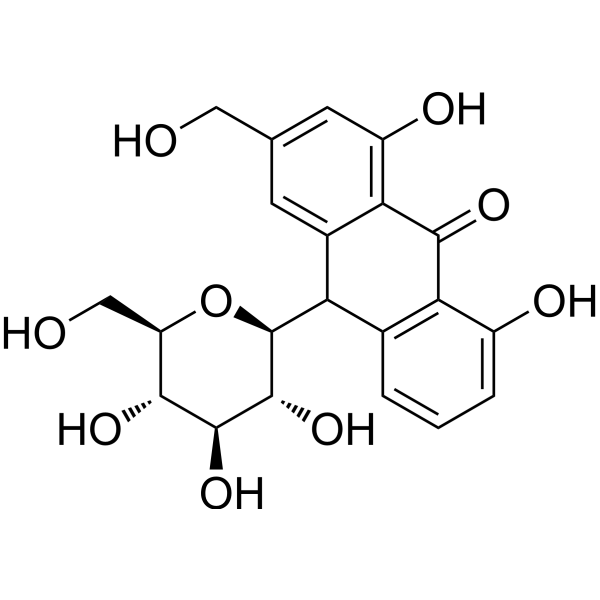
Aloin (mixture of A&B) is an orally active anthraquinone derivative isolated from Aloe vera. Aloin (mixture of A&B) mitigates airway impairment and exerts neuroprotective, anti-inflammatory, antioxidant, antibacterial, antifungal, antiviral and antitumor effects. Aloin (mixture of A&B) inhibits Clostridium histolyticum collagenase, granulocyte matrix metalloproteinases and human 20S proteasome. Aloin (mixture of A&B) upregulates the Nrf2/HO-1 pathway, suppresses the TGF-β/Smad2/3 pathway. Aloin (mixture of A&B) reduces IL-4/IL-5/IL-13 levels, and reverses oxidative stress markers (MDA, SOD, GSH). Aloin (mixture of A&B) can be used for research on chronic ulcers, burns, wounds, inflammatory and degenerative disorders, asthma and neuroblastoma .
loading...
    loading...
Cat. No.: HY-P990795

Target:  

Osteopontin

Research Areas:  

Inflammation/Immunology Cancer

Anti-Mouse osteopontin/SPP1 Antibody (100D3) is an anti-mouse osteopontin/SPP1 IgG2c monoclonal antibody. Anti-Mouse osteopontin/SPP1 Antibody (100D3) can reverse the inhibition of osteopontin (OPN) on T cells and enhance cytotoxic T lymphocyte (CTL) killing ability. Anti-Mouse osteopontin/SPP1 Antibody (100D3) can improve dentin density. Anti-Mouse osteopontin/SPP1 Antibody (100D3) can be used for researches on cancer and dental related conditions such as colon cancer. The recommend isotype control of Anti-Mouse osteopontin/SPP1 Antibody (100D3): Mouse IgG2c kappa, Isotype Control (HY-P99981) .
loading...
    loading...
Cat. No.: HY-P990961
CAS No.: 2850355-87-0
Synonyms: IMM-2510; SYN-2510
Palverafusp alfa (IMM-2510; SYN-2510) is a PD-L1/VEGF-targeting IgG1κ type humanized antibody. Palverafusp alfa blocks PD-1/PD-L1 binding, relieves immune suppression, mediates PD-L1-directed antibody-dependent cellular cytotoxicity (ADCC). Palverafusp alfa blocks VEGF/VEGFR binding, inhibits angiogenic signaling, relieves VEGF-induced immune suppression. Palverafusp alfa reduces endothelial cell proliferation, enhances ADCC and antibody-dependent cellular phagocytosis (ADCP), inhibits tumor growth, reverses T cell immune suppression. Palverafusp alfa exhibits immune stimulatory, antiangiogenic, and anti-tumor activity in the tumor microenvironment. Palverafusp alfa can be used for the research of cancer, such as solid tumors, non-small cell lung cancer .
loading...
    loading...
Cat. No.: HY-P991193

Target:  

TNF Receptor

Research Areas:  

Cancer

NGM-438 is a humanized monoclonal antibody antagonist of LAIR1, with a Ka of 0.26 nM for human LAIR1 and 4.28 nM for cynomolgus monkey LAIR1. NGM-438 blocks the binding of LAIR1 to its Collagen ligand and antagonizes the Collagen-induced LAIR1 signaling pathway. NGM-438 reverses FcγR signaling inhibition in myeloid cells, induces dendritic cells to secrete TNFα, promotes T cell proliferation, and triggers myeloid inflammation and allogeneic T cell responses. NGM-438 sensitizes refractory mouse lung cancer to PD-1 blockade, increases the content of intratumoral CD8 + T cells and the expression of inflammatory genes. NGM-438 is applicable to research related to solid tumors, refractory solid tumors and non-small cell lung cancer .
loading...
    loading...
Cat. No.: HY-101448R
CAS No.: 287403-39-8
Synonyms: WAY-171318 (Standard)
TMI-1 (Standard) is the analytical standard of TMI-1 (HY-101448). This product is intended for research and analytical applications. TMI-1 (WAY-171318) inhibits TNF converting enzyme (TACE) (IC50 of 8.4 nM), ADAM-TS-4, ADAM-17 and various MMPs with oral activity. TMI-1 significantly suppresses the secretion of TNF-α , alleviating collagen-induced arthritis in mice. TMI-1 inhibits cancer cell proliferation, induces apoptosis through a caspase-dependent pathway. TMI-1 also reverses TRPV1 upregulation and lowers the levels of inflammatory factors (TNF-α、IL-1β、IL-6) in nerve cells, protecting against paclitaxel-induced neurotoxicity. TMI-1 leads to changes in pro-atherogenic lipoprotein profiles, but does not affect the progression of early lesions .
loading...
    loading...

