151 Results for "

cognitive function

" in MedChemExpress (MCE) Product Catalog:
Products (151)

151 Results for "cognitive function" in MCE Product Catalog:

Cat. No.: HY-W283930
CAS No.: 132858-26-5
YHV98-4 is a selective, blood-brain barrier-permeable Hv1 inhibitor with an IC50 of 0.7 μM. YHV98-4 reduces ROS production and restores the SHP-1-pAKT signaling pathway. YHV98-4 decreases the spread of hyperphosphorylated Tau protein. YHV98-4 alleviates inflammation and produces analgesic effects. YHV98-4 improves cognitive function in mouse models of Alzheimer's disease. YHV98-4 can be used in research related to inflammatory pain, neuropathic pain and Alzheimer's disease .
loading...
    loading...
Cat. No.: HY-182028
17β-HSD10-IN-4 is a selective brain-penetrant 17β-HSD10 inhibitor with an IC50 of 6.33 μM. 17β-HSD10-IN-4 forms key interactions with the 17β-HSD10 catalytic triad to functionally inhibit the enzyme, without altering its protein levels. 17β-HSD10-IN-4 restores mitochondrial function, reduces ROS levels, increases ATP production, and suppresses cytochrome c release. 17β-HSD10-IN-4 attenuates CDK5/p25 activation, reduces Tau hyperphosphorylation, plaque load and restores brain-derived neurotrophic factor levels. 17β-HSD10-IN-4 improves cognitive function.17β-HSD10-IN-4 can be used for the research of Alzheimer's disease .
loading...
    loading...
Cat. No.: HY-165492
CAS No.: 103233-65-4
OPC-14117 is an orally active superoxide radical scavenger that can cross the blood-brain barrier. OPC-14117 inhibits the oxidative stress cascade reaction, significantly reducing the increase in tissue osmotic pressure and alleviating brain edema in the brain contusion model. OPC-14117 blocks the NF-κB-dependent apoptotic pathway in the striatum neuron apoptosis model induced by Quinolinic acid (HY-100807). OPC-14117 can reduce the necrotic volume, protect hippocampal CA3 neurons and restore cognitive function. OPC-14117 can be used to study secondary brain injury and improve neurological prognosis .
loading...
    loading...
Cat. No.: HY-169156
HDAC6-IN-49 (Compound 3) is an inhibitor for HDAC with IC50 of 0.012 and 0.735 μM for HDAC6 and HDAC1. HDAC6-IN-49 also exhibits inhibitory activities against MAO-B, cholinesterase (ChE), histamine receptor (H3R) and serotonin 6 receptor (5-HT6R). HDAC6-IN-49 exhibits neuroprotective efficacy on SH-SY5Y cell. HDAC6-IN-49 improves cognitive function and locomotor ability in Drosophila Parkinson's disease models and in C. elegans Alzheimer's disease models .
loading...
    loading...
Cat. No.: HY-171472
CAS No.: 171961-95-8
Target:  

Dopamine Receptor

Research Areas:  

Neurological Disease

A-86929 is a highly potent and selective dopamine D1 receptor agonist with a pKi value of 7.3. In the 6-OHDA (HY-B1081)-induced unilateral nigrostriatal lesion rat model, A-86929 significantly induces rotational behavior. It also improves motor function in the MPTP (HY-15608)-induced Parkinson's disease marmoset model. Additionally, A-86929 demonstrates potential therapeutic value in reducing cocaine-seeking behavior in rats and reversing Haloperidol (HY-14538)-induced cognitive deficits in rhesus monkeys. A-86929 can be used for research in neurological disorders .
loading...
    loading...
Cat. No.: HY-172350
Research Areas:  

Infection

WEHI-P8 is an orally active SARS-CoV-2 papain-like protease (PLpro) inhibitor with an IC50 of 12 nM and a Kd of 9.0 nM. WEHI-P8 reduces viral load, body weight loss, pulmonary inflammation, immune cell infiltration and pro-inflammatory mediator levels in SARS-CoV-2-infected mice. WEHI-P8 prevents pulmonary hemorrhage, immune cell infiltration, fibrotic remodeling and neuroinflammation, and improves cognitive function in a mouse model of post-acute sequelae of SARS-CoV-2 infection (PASC). WEHI-P8 is applicable for the research of COVID-19 and PASC .
loading...
    loading...
Cat. No.: HY-D3069
CAS No.: 2892545-08-1
Research Areas:  

Neurological Disease

DNTPH is a near-infrared (NIR) aggregation-induced emission (AIE) fluorescent probe used for imaging β-amyloid (Aβ) aggregates. Designed by balancing hydrophobic and hydrophilic groups, DNTPH achieves selective binding to Aβ42 fibrils and generates a near-infrared fluorescent signal with high signal-to-noise ratio. Upon binding to Aβ42 fibrils, DNTPH exhibits enhanced fluorescence, while also inhibiting Aβ42 fibril formation, promoting fibril depolymerization, attenuating Aβ-induced neurotoxicity, and improving cognitive function in Alzheimer's disease (AD) mice. DNTPH can be used in Alzheimer's disease research .
loading...
    loading...
Cat. No.: HY-W1133231
CAS No.: 1879038-73-9
CE-103 is a selective, blood-brain barrier-permeable dopamine transporter (DAT) inhibitor with an IC50 of 14.73 μM. CE-103 blocks DAT-mediated dopamine reuptake and exhibits antagonistic activity against 5-HT1A. CE-103 reduces working memory errors in the radial arm maze test of rats, decreases the levels of complexes containing phosphorylated DAT (pDAT) and D1R in the hippocampus of rats, and increases the levels of complexes containing D2R and D3R simultaneously. CE-103 can be used in studies related to dopaminergic neurotransmission, working memory and cognitive function .
loading...
    loading...
Cat. No.: HY-149010
CAS No.: 2254492-08-3
Purity:  98.18%
Target:  

Keap1-Nrf2

Research Areas:  

Neurological Disease

NXPZ-2 is an orally active Keap1-Nrf2 protein–protein interaction (PPI) inhibitor with a Ki value of 95 nM, EC50 value of 120 and 170 nM. NXPZ-2 can dose-dependently ameliorate Aβ[1-42]-Induced cognitive dysfunction, improve brain tissue pathological changes in Alzheimer’s disease (AD) mouse by increasing neuron quantity and function. NXPZ-2 can inhibit oxidative stress by increasing Nrf2 expression levels and promoting its cytoplasm to nuclear translocation, which is helpful for Keap1-Nrf2 PPI inhibitors and AD associated disease research .
loading...
    loading...
Cat. No.: HY-159838
CAS No.: 2222689-47-4
Synonyms: EI‐1071
Target:  

c-Fms Amyloid-β

Research Areas:  

Neurological Disease Cancer

Enrupatinib (EI‐1071) is a potent, orally active, CNS-penetrant and selective CSF1R inhibitor. Enrupatinib inhibits macrophage proliferation and osteoclast differentiation in vitro. Enrupatinib preserves microglia distal to plaques. Enrupatinib mitigates Alzheimer's disease (AD)-related pathologies by reducing neuroinflammation, preserving neuronal integrity, lowering disease-associated microglia gene expression, and enhancing cognitive function in 5xFAD and J20 mouse models. Enrupatinib reduces tumor-associated macrophage infiltration and enhances antitumor activity of anti-PD-1 antibody in murine colorectal cancer and breast cancer models. Enrupatinib can be used for the research of AD, colorectal cancer, and breast cancer .
loading...
    loading...
Cat. No.: HY-N4157R
CAS No.: 5171-37-9
Isopteropodine (Standard) is the analytical standard of Isopteropodine (HY-N4157). This product is intended for research and analytical applications. Isopteropodine is a positive modulator that selectively acts on muscarinic M1 and 5-HT2 receptors. Isopteropodine has an EC50 of 9.92 μM for acetylcholine and 14.5 μM for 5-HT. Isopteropodine also has antibacterial activity against Gram-positive bacteria, with MICs of 150 μg/mL and 250 μg/mL for Staphylococcus aureus and Bacillus subtilis, respectively. Isopteropodine enhances receptor function by increasing the affinity of agonists for receptors and can also inhibit the growth of specific Gram-positive bacteria, and can be used in cognitive impairment and antibacterial research .
loading...
    loading...
Cat. No.: HY-P10887
CAS No.: 2988012-71-9
Synonyms: AV-001
Pegevongitide (AV-001) is a Tie2 agonist. Pegevongitide resists the increased endothelial cell permeability induced by SARS-CoV-2 infection. Pegevongitide activates the angiogenin (angiogenin)/Tie2 signaling pathway. Pegevongitide reduces perivascular space dilation and upregulates perivascular Aquaporin-4 expression. Pegevongitide decreases the expression of TNF-α, PAI-1, CXCL9 and P-selectin, improves white matter integrity, enhances cognitive function and exerts neuroprotective effects. Pegevongitide improves white matter integrity in middle-aged rats with vascular dementia induced by multiple microinfarctions . Pegevongitide can be used in related research on diseases such as COVID-19 and vascular dementia .
loading...
    loading...
Cat. No.: HY-W017424
CAS No.: 136-95-8
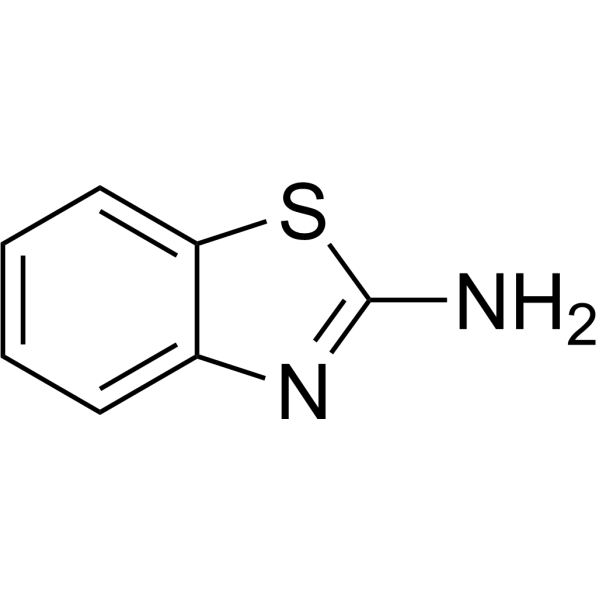
2-Aminobenzothiazole acts as a caspase 3/7 activator, an anticancer cytotoxic agent, and also exhibits neurotoxicity. 2-Aminobenzothiazole drives the apoptotic pathway by activating caspase 3/7, induces mitochondrial inner membrane depolarization, and triggers both early and late apoptosis via a caspase-dependent pathway. In zebrafish models, 2-Aminobenzothiazole induces oxidative damage in brain tissues and inhibits genes related to GABA and 5-HT synthesis pathways. Long-term exposure to 2-Aminobenzothiazole impairs motor ability, social behavior, anxiety-like state and cognitive function. 2-Aminobenzothiazole can be used in studies of human laryngeal carcinoma and related neurotoxicity .
loading...
    loading...
Cat. No.: HY-165527
CAS No.: 200398-40-9
Research Areas:  

Neurological Disease

S18327 is a multi-target antipsychotic agent. S18327 exerts its efficacy by acting on multiple neurotransmitter systems in the brain, and it has antagonistic effects on dopamine receptors (particularly the D2 receptor) and 5-hydroxytryptamine 2A receptors (5-HT2A receptor). S18327 can counteract excessive dopamine activity and hypo-function of glutamate. S18327 exhibits a multi-parameter pharmacological profile that is highly similar to that of Clozapine (HY-14539). S18327 can produce the same discriminative stimulus as Clozapine, improve cognitive filtering deficits associated with schizophrenia, and display anxiolytic properties. S18327 has relatively weak affinity for histaminergic receptors and muscarinic receptors, which avoids the side effects of Clozapine .
loading...
    loading...
Cat. No.: HY-N6043
CAS No.: 69039-02-7
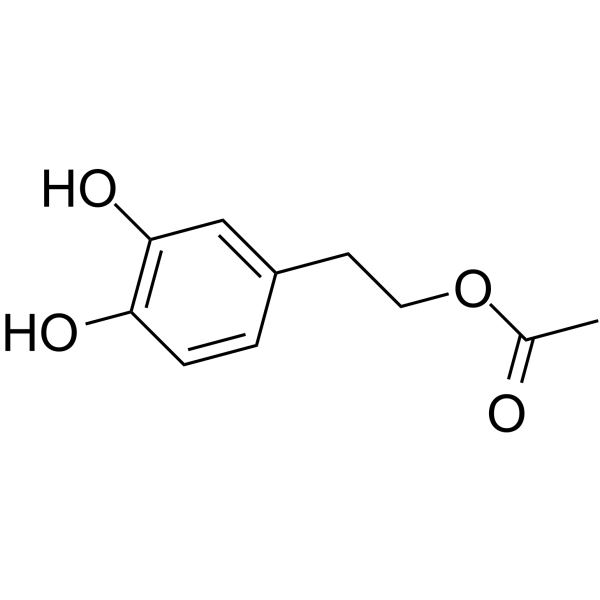
Hydroxytyrosol acetate is an orally active, blood-brain barrier-permeable multi-active compound with multiple effects including antibacterial, antioxidant, anti-platelet aggregation, and neuroprotective activities. Hydroxytyrosol acetate not only inhibits the growth of Vibrio by increasing bacterial membrane permeability, but also interacts with DNA and mediates supercoiled DNA relaxation. Meanwhile, Hydroxytyrosol acetate effectively reduces thrombosis and inhibits lipid oxidation by inhibiting COX activity and promoting vascular nitric oxide production. In terms of neuroprotection, Hydroxytyrosol acetate significantly alleviates neuronal apoptosis and inflammatory responses by up-regulating the expression level of ERβ, thereby improving cognitive function in Alzheimer's disease models. Hydroxytyrosol acetate has been widely used in scientific research related to Vibrio infection, arterial thrombosis, Alzheimer's disease and other related fields .
loading...
    loading...
Cat. No.: HY-103127
CAS No.: 1539266-32-4
Target:  

5-HT Receptor

Research Areas:  

Neurological Disease

25CN-NBOH hydrochloride exhibits agonist activity at the 5-HT2a receptor, shows 90- to 100-fold selectivity over the 5-HT2c receptor, and possesses blood-brain barrier permeability . 25CN-NBOH hydrochloride acts as an interoceptive agent with partial agonist-like properties . 25CN-NBOH hydrochloride serves as a pharmacological tool for 5-HT2A receptor research, and its tritiated form functions as a selective agonist radioligand . 25CN-NBOH hydrochloride can be used to investigate diseases characterized by cognitive rigidity, schizophrenia, obsessive-compulsive disorder, depression, pain, inflammation, migraine, and cluster headache .
loading...
    loading...
Cat. No.: HY-N1414
CAS No.: 139891-98-8
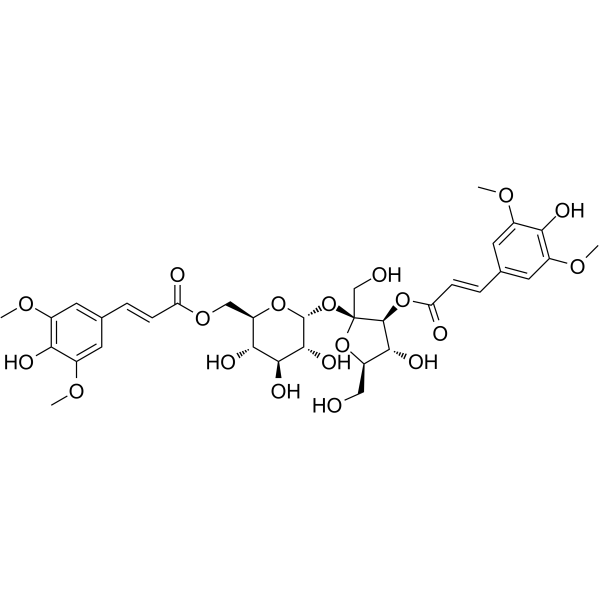
(E)-3',6-Disinapoylsucrose is an orally active, blood-brain barrier permeable neuroprotective agent that inhibits protein aggregation. (E)-3',6-Disinapoylsucrose exerts anxiolytic, anti-inflammatory and cognitive-enhancing effects. (E)-3',6-Disinapoylsucrose regulates the TrkB/BDNF signaling pathway, inhibits the expression of NF-κB p65, reduces pro-inflammatory cytokine levels, and alleviates neuronal damage. (E)-3',6-Disinapoylsucrose also enhances the functions of central 5-HT and noradrenergic systems, thereby improving spatial learning and memory abilities and reducing anxiety-like behaviors. (E)-3',6-Disinapoylsucrose can be used for the research of related diseases such as Alzheimer's disease, depression, memory impairment and anxiety disorder .
loading...
    loading...
Cat. No.: HY-N2515R
CAS No.: 494753-69-4
Ginsenoside Rk1 (Standard) is the analytical standard of Ginsenoside Rk1. This product is intended for research and analytical applications. Ginsenoside Rk1 is a unique component created by processing the ginseng plant (mainly Sung Ginseng, SG) at high temperatures . Ginsenoside Rk1 has anti-inflammatory effect, suppresses the activation of Jak2/Stat3 signaling pathway and NF-κB . Ginsenoside Rk1 has anti-tumor effect, antiplatelet aggregation activities, anti-insulin resistance, nephroprotective effect, antimicrobial effect, cognitive function enhancement, lipid accumulation reduction and prevents osteoporosis . Ginsenoside Rk1 induces cell apoptosis by triggering intracellular reactive oxygen species (ROS) generation and blocking PI3K/Akt pathway .
loading...
    loading...
Cat. No.: HY-P992426

Target:  

Tau Protein

Research Areas:  

Neurological Disease

NS101 is an anti-FAM19A5 antibody with an IC50 of 0.2 nM and a Kd of 111 pM, as well as blood-brain barrier permeability. NS101 binds to key amino acid residues of FAM19A5, thereby blocking the interaction of LRRC4B and disrupting the FAM19A5-LRRC4B complex. NS101 increases the dendritic spine density in hippocampal neurons and the prefrontal cortex, normalizes the dendritic spine elimination rate, elevates the frequencies of mEPSC and fEPSP, and promotes the transport of brain-derived FAM19A5 into the peripheral circulation. NS101 improves cognitive function in mouse models of Alzheimer's disease. NS101 can be used for research on Alzheimer's disease. The recommended isotype control is human IgG1 kappa (HY-P99001) .
loading...
    loading...
Cat. No.: HY-W017424R
CAS No.: 136-95-8
2-Aminobenzothiazole (Standard) is the analytical standard of 2-Aminobenzothiazole. This product is intended for research and analytical applications. 2-Aminobenzothiazole acts as a caspase 3/7 activator, an anticancer cytotoxic agent, and also exhibits neurotoxicity. 2-Aminobenzothiazole drives the apoptotic pathway by activating caspase 3/7, induces mitochondrial inner membrane depolarization, and triggers both early and late apoptosis via a caspase-dependent pathway. In zebrafish models, 2-Aminobenzothiazole induces oxidative damage in brain tissues and inhibits genes related to GABA and 5-HT synthesis pathways. Long-term exposure to 2-Aminobenzothiazole impairs motor ability, social behavior, anxiety-like state and cognitive function. 2-Aminobenzothiazole can be used in studies of human laryngeal carcinoma and related neurotoxicity .
loading...
    loading...

