205 Results for "

DNA binding activity

" in MedChemExpress (MCE) Product Catalog:
Products (205)

205 Results for "DNA binding activity" in MCE Product Catalog:

Referencia número: HY-153202
No. CAS: 1826116-38-4
Pureza:  99.96%
Target:  

MDM-2/p53 Apoptosis

Áreas de investigación:  

Cancer

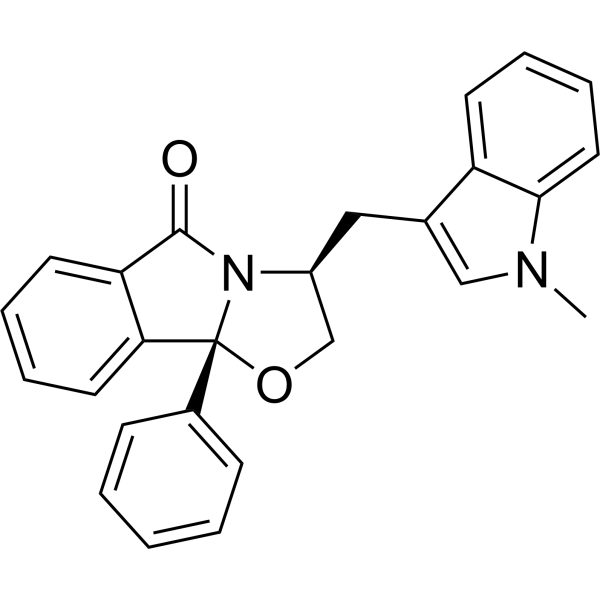
SLMP53-2 is a mutant p53 reactivator. SLMP53-2 restores wild-type-like conformation and DNA-binding ability of mutp53-Y220C by enhancing its interaction with the Hsp70, leading to the reestablishment of p53 transcriptional activity. SLMP53-2 can induce cell cycle arrest, apoptosis and endoplasmic reticulum (ER) stress. SLMP53-2 exhibits antitumor activity .
loading...
    loading...
Referencia número: HY-175219
Target:  

Carbonic Anhydrase

Áreas de investigación:  

Cancer

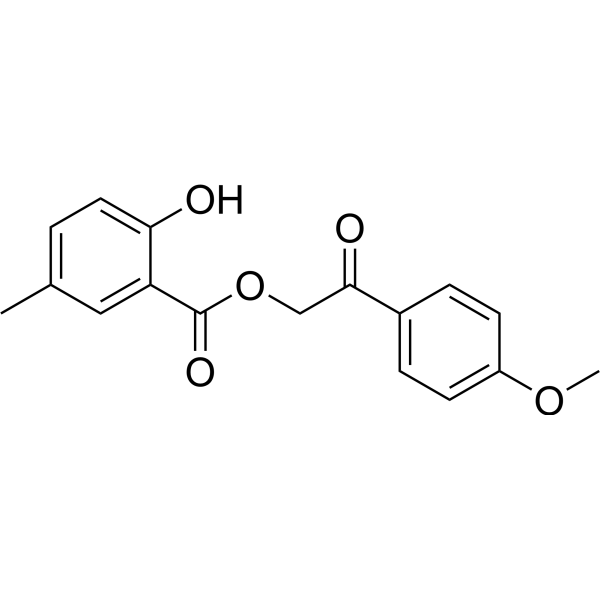
CA-II/Dkk1-IN-1 (Compound 5d) is a dual-functional inhibitor of CA-II and Dkk1 with a IC50 of 6.90  nM for CA-II. CA-II/Dkk1-IN-1 has significantly antioxidant activity and superior DNA binding capacity. CA-II/Dkk1-IN-1 can be used for cancers research, such as esophageal, renal, and lung cancer .
loading...
    loading...
Referencia número: HY-B0268AR
No. CAS: 84294-96-2
Synonyms: Enoxacin sesquihydrate (Standard); AT-2266 hydrate (Standard); CI-919 hydrate (Standard)
Enoxacin (hydrate) (Standard) is the analytical standard of Enoxacin (hydrate). This product is intended for research and analytical applications. Enoxacin hydrate (Enoxacin sesquihydrate), a fluoroquinolone, interferes with DNA replication and inhibits bacterial DNA gyrase (IC50=126 μg/ml) and topoisomerase IV (IC50=26.5 μg/ml). Enoxacin hydrate is a miRNA processing activator and enhances siRNA-mediated mRNA degradation and promotes the biogenesis of endogenous miRNAs. Enoxacin hydrate has potent activities against gram-positive and -negative bacteria. Enoxacin hydrate is a cancer-specific growth inhibitor that acts by enhancing TAR RNA-binding protein 2 (TRBP)-mediated microRNA processing [4].
loading...
    loading...
Referencia número: HY-W012817R
No. CAS: 95-71-6
Methylhydroquinone (Standard) is the analytical standard of Methylhydroquinone. This product is intended for research and analytical applications. Methylhydroquinone is an orally active COX inhibitor with IC50s of 480.7 μM and 52.2 μM for ovine COX-1 and human recombinant COX-2, respectively. Methylhydroquinone has potential DNA damaging effects: 1) inhibiting COX-1 to reduce prostaglandin synthesis and exert anti-inflammatory activity; 2) inducing DNA single-strand breaks. Methylhydroquinone exerts its effects by competitively binding to the active sites of COX-1 (such as Tyr385, Met522) and non-covalent interactions[1][2].
loading...
    loading...
Referencia número: HY-N17442
No. CAS: 75410-53-6
Echinoside A is a saponin. Echinoside A can be isolated from sea cucumber. Echinoside A inhibits the catalytic activity of Top2α, reduces the noncovalent binding of Top2α to DNA. Echinoside A activates Caspase-3 and induces PARP cleavage. Echinoside A induces Apoptosis. Echinoside A has anticancer activity against prostate cancer, hepatocellular carcinoma, and S-180 sarcoma. Echinoside A exhibits antifungal activity against a variety of fungi, with a minimum growth inhibitory concentration range of 3.12 to 50.0 μg/mL, including potent activity against Aspergillus and Penicillium species .
loading...
    loading...
Referencia número: HY-182392
No. CAS: 925644-66-2
Target:  

DNA/RNA Synthesis

Áreas de investigación:  

Inflammation/Immunology

NFYi5 is a nuclear transcription factor-Y (NF-Y) inhibitor. NFYi5 disrupts the binding of NF-Y to DNA, accelerates the ubiquitin-independent degradation of the NF-YA subunit, and reduces the transcriptional activity of NF-Y. As an antimitotic agent, NFYi5 decreases the mRNA levels of NF-Y target genes without affecting the expression of housekeeping genes, and inhibits cell proliferation. NFYi5 can be used in the research of tissue fibrosis .
loading...
    loading...
Referencia número: HY-185344
No. CAS: 2929236-94-0
Synonyms: TRX01
Target:  

NF-κB

Áreas de investigación:  

Cancer

Ratutrelvir is a NF-κB p65 inhibitor. Ratutrelvir blocks the translocation of NF-κB p65 from the cytoplasm to the nucleus, reduces the phosphorylation levels of NF-κB p65 and IκBα, and inhibits the DNA-binding activity of NF-κB p65. Ratutrelvir inhibits the migration and invasion abilities of breast cancer cells, and reduces their viability and colony-forming capacity. Ratutrelvir can be used for the research of luminal A breast cancer .
loading...
    loading...
Referencia número: HY-173318
Target:  

Bacterial

Áreas de investigación:  

Infection

Anti-MRSA agent 25 (Compound 10c) is an antibacterial agent with a MIC of 0.25 μg/mL against methicillin-resistant Staphylococcus aureus (MRSA). Anti-MRSA agent 25 exerts its antibacterial activity by inhibiting biofilm formation, disrupting the cell wall (interacting with peptidoglycan and lipoteichoic acids), acting on the cell membrane (causing depolarization, increasing permeability, and disrupting integrity), reducing metabolic activity, interfering with cellular redox homeostasis, and binding to DNA. Anti-MRSA agent 25 is expected to be used in the research of the anti-infection field .
loading...
    loading...
Referencia número: HY-W181026
No. CAS: 1197834-98-2
Target:  

Fluorescent Dye

Áreas de investigación:  

Inflammation/Immunology

KLF10-IN-1 (#48-15) is a KLF10 inhibitor with an IC50 value of 40 μM for KLF10 reporter gene. KLF10-IN-1 can inhibit KLF10-DNA binding and transcriptional activity, block the conversion of CD4+CD25 T cells to CD4+CD25+T regulatory cells, and inhibit the expression of KLF10 target genes. KLF10-IN-1 can be used as a useful mechanistic probe to study KLF10-mediated effects and T regulatory cell biology .
loading...
    loading...
Referencia número: HY-184294
No. CAS: 3037598-39-0
Áreas de investigación:  

Cancer

ZH25 is an ATR kinase inhibitor with antiproliferative activity against ATM-deficient cancer cells. ZH25 induces DNA damage, reduces G2/M phase cell proportion, upregulates γH2AX, Cleaved-Caspase3, and Cleaved-PARP. ZH25 functions as an ATR kinase binding ligand for ATR-PROTAC degrader design. ZH25 can be used for the research of atm-deficient cancer .
loading...
    loading...
Referencia número: HY-W264454
No. CAS: 5342-95-0
Target:  

Bacterial

Áreas de investigación:  

Infection

Antibacterial agent 303 (compound 3) is an antibacterial agent exhibiting potent antibacterial activity against MDR strains, with MICs of 10 and 100 µg/mL against Pseudomonas aeruginosa MDR1 and Staphylococcus aureus MDR strains, respectively. Antibacterial agent 303 displays strong binding affinities to E. coli DNA gyrase and Candida albicans lanosterol 14α-demethylase. Antibacterial agent 303 can be used for drug-resistant infections research .
loading...
    loading...
Referencia número: HY-N21818
No. CAS: 172854-76-1
Cacospongionolide B is an orally active sesterterpene compound that can be isolated from Fasciospongia cavernosa. Cacospongionolide B is a secreted phospholipase A2 (sPLA2) inhibitor with an IC50 of 4.3 μM. Cacospongionolide B exhibits antibacterial activity. Cacospongionolide B downregulates the expression of iNOS, COX-2 and TNF-α by inhibiting NF-κB nuclear translocation and its DNA binding, and simultaneously selectively and irreversibly inhibits sPLA2 enzymatic activity. Cacospongionolide B can be used in studies related to bacterial infection and adjuvant arthritis .
loading...
    loading...
Referencia número: HY-181421
No. CAS: 2929223-36-7
Target:  

SF3B1

Áreas de investigación:  

Cancer

WX-02-43 is a weak covalent inhibitor of SF3B1, and is the (1S,3R) enantiomer of WX-02-23 (HY-168534). WX-02-43 cannot effectively covalently modify the C258 site in the DNA-binding domain of FOXA1, and its inhibitory activity against SF3B1 is also weaker than that of WX-02-23. WX-02-43 serves as a negative control probe that fails to remodel the chromatin binding pattern and transcriptional activity of FOXA1. WX-02-43 can be used in studies on cancers such as prostate cancer to verify the specific effects of WX-02-23 on FOXA1 and SF3B1 targets .
loading...
    loading...
Referencia número: HY-N3989
No. CAS: 5876-17-5
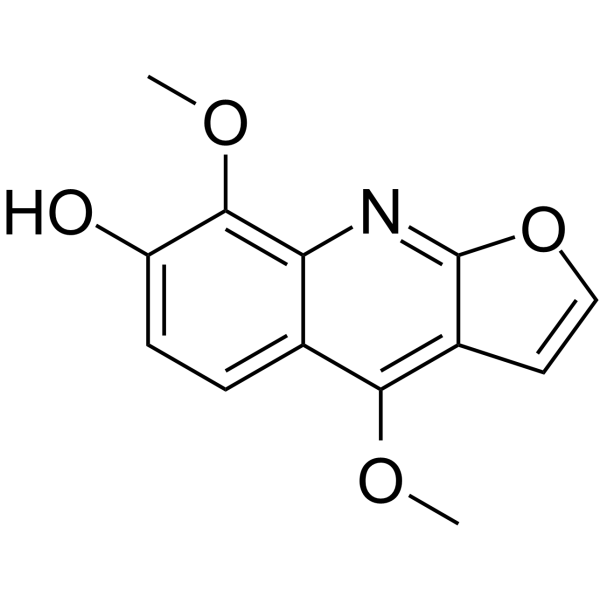
Haplopine is a substance with anti-inflammatory, antioxidant and photoactivated antibacterial activities. It also acts as an inhibitor of UGT1A7 and a photoactivated restriction endonuclease inhibitor. Haplopine inhibits the mRNA/protein expression of IL-6, TSLP, GM-CSF, G-CSF, IL-4, IL-13 and COX-2, while upregulating the mRNA/protein expression of SOD, CAT and HO-1. Haplopine inhibits the glucuronidation reaction catalyzed by UGT1A7 through competitive hydrophobic binding. Haplopine exerts photoactivated restriction endonuclease inhibitory effects by binding to DNA. Haplopine exhibits photoactivated activity against methicillin-resistant Staphylococcus aureus. Haplopine alleviates symptoms of atopic dermatitis. Haplopine can be used in research related to atopic dermatitis and methicillin-resistant Staphylococcus aureus infections .
loading...
    loading...
Referencia número: HY-P1758
No. CAS: 153840-64-3
Synonyms: IRRP1
Target:  

IFNAR STAT Influenza Virus

Áreas de investigación:  

Infection

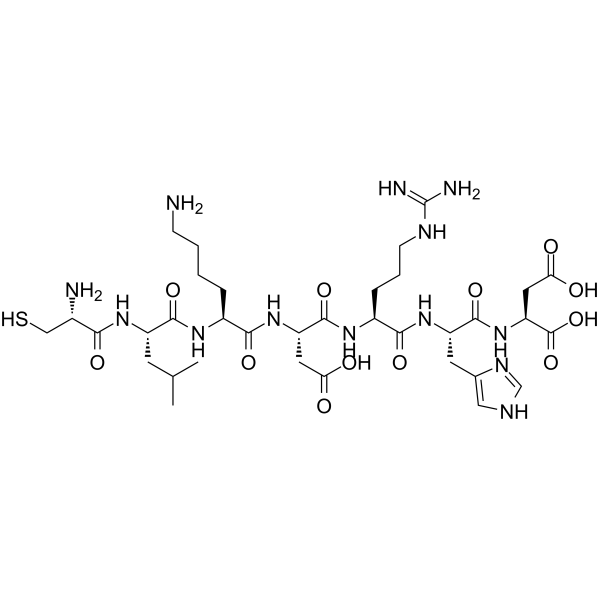
IFN-α Receptor Recognition Peptide 1 (IRRP1) is an amino acid synthetic peptide and also a regulator of IFN-α Receptor. IFN-α Receptor Recognition Peptide 1 binds to IFNAR2, enhances the binding capacity of IFN-α receptor, and slightly increases the IFN-α-induced growth inhibitory activity. IFN-α Receptor Recognition Peptide 1 inhibits IFN-α-induced STAT1 phosphorylation and STAT-DNA binding by blocking the activation of IFNAR by IFN-α. IFN-α Receptor Recognition Peptide 1 increases the occupancy of IFN-α on cell surface receptors, enhances the phosphorylation activation of ISGF3, and elevates IFN-α-induced antiviral activity. IFN-α Receptor Recognition Peptide 1 can be used in studies related to encephalomyocarditis virus infection .
loading...
    loading...
Referencia número: HY-P1758A
Synonyms: IRRP1 acetate
Target:  

IFNAR STAT Influenza Virus

Áreas de investigación:  

Infection

IFN-α Receptor Recognition Peptide 1 acetate (IRRP1 acetate) is an amino acid synthetic peptide and also a regulator of IFN-α Receptor. IFN-α Receptor Recognition Peptide 1 acetate binds to IFNAR2, enhances the binding capacity of IFN-α receptor, and slightly increases the IFN-α-induced growth inhibitory activity. IFN-α Receptor Recognition Peptide 1 acetate inhibits IFN-α-induced STAT1 phosphorylation and STAT-DNA binding by blocking the activation of IFNAR by IFN-α. IFN-α Receptor Recognition Peptide 1 acetate increases the occupancy of IFN-α on cell surface receptors, enhances the phosphorylation activation of ISGF3, and elevates IFN-α-induced antiviral activity. IFN-α Receptor Recognition Peptide 1 acetate can be used in studies related to encephalomyocarditis virus infection .
loading...
    loading...
Referencia número: HY-128744R
No. CAS: 4408-78-0
Phosphonoacetic acid Standard is the analytical standard of Phosphonoacetic acid (HY-128744). This product is intended for research and analytical applications. Phosphonoacetic acid is a potent antiviral agent. Phosphonoacetic acid inhibits a variety of herpesviruses, orthopoxviruses, and retroviruses. Phosphonoacetic acid strongly inhibits viral and cellular DNA polymerase, reverse transcriptase, and terminal deoxynucleotidyl transferase activities in a non-competitive or uncompetitive manner by binding to the pyrophosphate site of the enzyme. Phosphonoacetic acid is useful for research related to lymphoid leukemia, herpesvirus infection, and vaccinia virus skin lesions .
loading...
    loading...
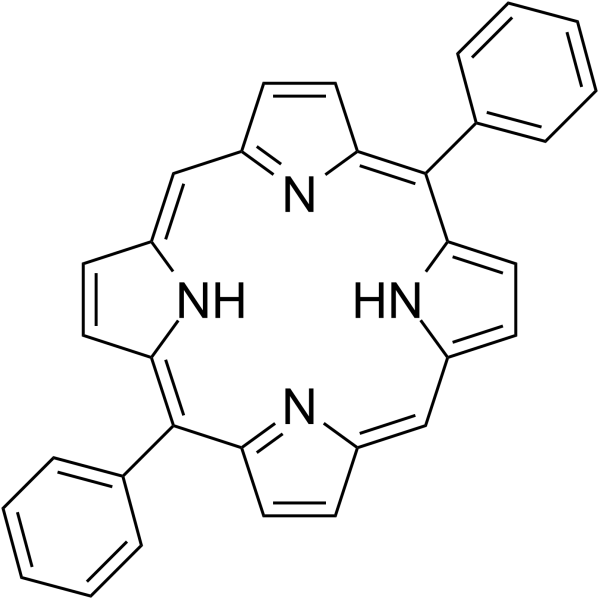
Referencia número: HY-W035137
No. CAS: 22112-89-6
Synonyms: 5,15-DPP
Target:  

STAT

Áreas de investigación:  

Cancer

5,15-Diphenylporphyrin (5,15-DPP) is an inhibitor of the oncogenic transcription factor STAT3. 5,15-Diphenylporphyrin specifically binds to the SH2 domain of STAT3, blocking the pTyr-SH2 interaction, thereby inhibiting the dimerization, nuclear translocation and DNA binding activity of STAT3, and ultimately inhibiting the expression of cancer cell-related genes. 5,15-Diphenylporphyrin can be used in research fields related to the development of anticancer drugs[1][2].
loading...
    loading...
Referencia número: HY-170965
Target:  

CDK DNA/RNA Synthesis

Áreas de investigación:  

Cancer

Anticancer agent 264 (Compound 5w) is an anticancer agent that exhibits significant antiproliferative activity across tumor cell lines, with an IC50 range of 7.5-33.67 μM. Anticancer agent 264 significantly induces G2/M phase arrest in MDA-MB-231, MIA PaCa-2, and DU-145 cell lines. Anticancer agent 264 reduces the expression of key cell cycle proteins, including CDK1, CDK2, and Cyclin B1, in a dose-dependent manner, and shows strong binding affinity with inhibitor of differentiation (ID) proteins and DNA-binding proteins. Anticancer agent 264 can be used for research in the field of cancer-related diseases .
loading...
    loading...

