205 Results for "

DNA binding activity

" in MedChemExpress (MCE) Product Catalog:
Products (205)

205 Results for "DNA binding activity" in MCE Product Catalog:

Cat. No.: HY-156789
CAS No.: 524055-93-4
Target:  

CD38

Research Areas:  

Neurological Disease Cancer

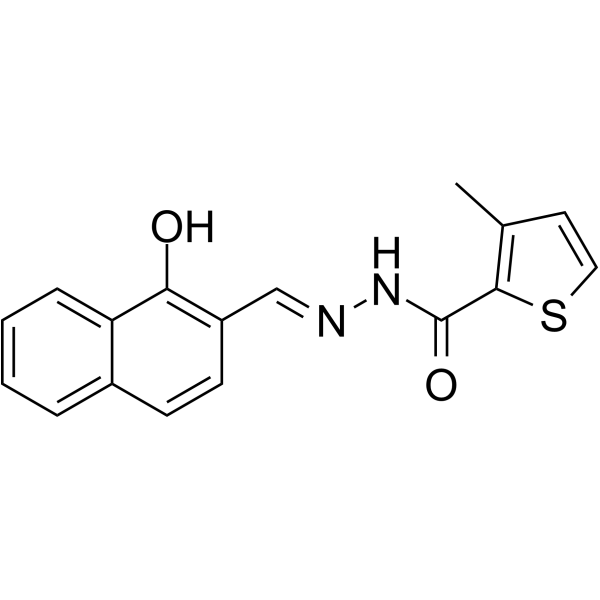
CD38-IN-4 is a CD38 inhibitor. CD38-IN-4 inhibits CD38 hydrolase enzymatic activity through mixed inhibition kinetics, binding partially inside and partially outside the NAD + catalytic pocket. CD38-IN-4 acts as a DNA-binding agent . CD38-IN-4 can be used for research on neuroblastoma .
loading...
    loading...
Cat. No.: HY-124693
CAS No.: 869767-86-2
Target:  

Apoptosis

Research Areas:  

Cancer

DB1055 is a HOXA9 inhibitor that competes with HOXA9 binding to DNA (blocking its DNA interaction activity). DB1055 induces in vitro cell growth reduction, cell apoptosis, and differentiation in human acute myeloid leukemia (AML) cells. DB1055 leads to monocyte-to-macrophage differentiation and exhibits antileukemic activities in a human THP-1 AML in vivo model. DB1055 does not impact human CD34+ bone marrow cells. DB1055 can be used for the research of acute myeloid leukemia[1].
loading...
    loading...
Cat. No.: HY-133240
CAS No.: 1109241-72-6
trans-AzoTAB is a photoresponsive potassium/sodium/calcium channel modulator and DNA-binding agent. trans-AzoTAB undergoes trans-cis isomerization driven by light, with variable polarity and DNA affinity. trans-AzoTAB also enhances voltage-gated potassium currents and inhibits sodium and calcium currents in cardiomyocytes, thereby reducing spontaneous electrical activity and excitation conduction velocity. In addition, trans-AzoTAB induces compaction and frozen conformation of λ-phage DNA, and non-sequence-dependently inhibits transcription and translation processes in the dark; its activity can be reversed and restored by visible light after activation with ultraviolet irradiation. trans-AzoTAB can serve as a probe for two-photon optical regulation of myocardial excitability, and is used to construct photoresponsive interfacial polymer structures .
loading...
    loading...
Cat. No.: HY-148014
CAS No.: 1415648-20-2
TH7299 is a TbFolD inhibitor with antiparasitic activity. TH7299 binds the tetrahydrofolate-binding pocket of MTHFD2, and inhibits MTHFD2L and the dehydrogenase/cyclohydrolase domain of MTHFD1. TH7299 reduces cancer cells viability, induces apoptosis, DNA damage. TH7299 can be used for the researches of african trypanosomiasis and acute myeloid leukemia.
loading...
    loading...
Cat. No.: HY-128744A
CAS No.: 36983-81-0
Phosphonoacetic acid sodium is a potent antiviral agent. Phosphonoacetic acid sodium inhibits a variety of herpesviruses, orthopoxviruses, and retroviruses. Phosphonoacetic acid sodium strongly inhibits viral and cellular DNA polymerase, reverse transcriptase, and terminal deoxynucleotidyl transferase activities in a non-competitive or uncompetitive manner by binding to the pyrophosphate site of the enzyme. Phosphonoacetic acid sodium is useful for research related to lymphoid leukemia, herpesvirus infection, and vaccinia virus skin lesions .
loading...
    loading...
Cat. No.: HY-124012
CAS No.: 444930-42-1
Purity:  99.20%
Research Areas:  

Cancer

PCNA-I1 is a selective small molecule inhibitor targeting proliferating cell nuclear antigen (PCNA) with anticancer activity. PCNA-I1 can stabilize the PCNA trimer structure (Kd=0.14-0.41μM), reduce its binding to chromatin, induce tumor cell cycle arrest, inhibit DNA replication and repair, and enhance the anti-tumor effect of DNA damaging agents. PCNA-I1 can be used in the study of targeted therapy for prostate cancer, lung cancer and other tumors .
loading...
    loading...
Cat. No.: HY-180324
CAS No.: 77727-18-5
Candidone is a type of flavanone phenolic compound with anti-cancer and antibacterial activities. Candidone inhibits the proliferation of hepatoblastoma and cholangiocarcinoma cells and induces their apoptosis by up-regulating p21, Bax, and caspase 3/9, and down-regulating Bcl-2 and survivin. It reduces the metastatic ability of cancer cells by inhibiting the expression of phosphorylated p38 and matrix metalloproteinase MMP-9. Candidone has inhibitory effects on multidrug-resistant bacterial strains. Candidone binds to the base pairs of DNA in a groove-binding manner, thereby slightly altering the conformation of DNA .
loading...
    loading...
Cat. No.: HY-W012817
CAS No.: 95-71-6
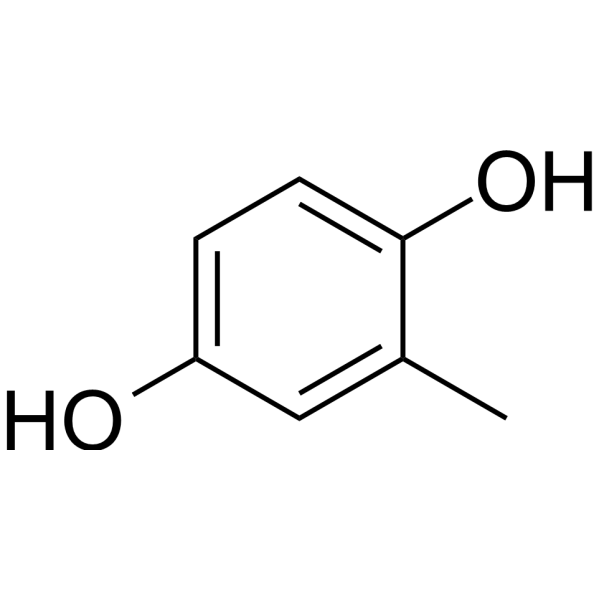
Methylhydroquinone is an orally active COX inhibitor with IC50s of 480.7 μM and 52.2 μM for ovine COX-1 and human recombinant COX-2, respectively. Methylhydroquinone has potential DNA damaging effects: 1) inhibiting COX-1 to reduce prostaglandin synthesis and exert anti-inflammatory activity; 2) inducing DNA single-strand breaks. Methylhydroquinone exerts its effects by competitively binding to the active sites of COX-1 (such as Tyr385, Met522) and non-covalent interactions .
loading...
    loading...
Cat. No.: HY-182037
Research Areas:  

Cancer

Multi-target kinase-IN-9 is a multi-target enzyme inhibitor with antiproliferative and antiangiogenic activities, and exhibits remarkable selectivity against hepatocellular carcinoma cells. By broadly binding to the active sites or ATP-binding regions of multiple key enzymes including DNA polymerase β, Pyruvate Kinase M2 (PKM2), Multi-target kinase-IN-9 comprehensively disrupts DNA repair and replication, glycolysis, chromatin dynamics and transcriptional programs, and blocks the self-renewal of cancer stem cells. Multi-target kinase-IN-9 induces genomic instability, lysosomal dysfunction and autophagic flux impairment, thereby triggering tumor cell death, effectively inhibiting tumor proliferation, invasion, metastasis and angiogenesis, and significantly reducing tumor volume in xenograft models. Multi-target kinase-IN-9 is applicable to hepatocellular carcinoma-related research .
loading...
    loading...
Cat. No.: HY-12684R
CAS No.: 301326-22-7
Research Areas:  

Cancer

CH-223191 (Standard) is the analytical standard of CH-223191 (HY-12684). This product is intended for research and analytical applications. CH-223191 is a potent and specific antagonist of aryl hydrocarbon receptor (AhR). CH-223191 inhibits TCDD-mediated nuclear translocation and DNA binding of AhR, and inhibits TCDD-induced luciferase activity with an IC50 of 0.03 μM .
loading...
    loading...
Cat. No.: HY-176727
Target:  

DNA/RNA Synthesis

Research Areas:  

Cancer

WRN inhibitor 19 (Compound 40) is a WRN helicase inhibitor (IC50: 3.7 nM). WRN inhibitor 19 exhibits selective antiproliferative activity in WRN-dependent cancer cells. WRN inhibitor 19 inhibits WRN helicase function by competitively binding to the ATP site and induces DNA damage and cell cycle arrest. WRN inhibitor 19 can be used in the study of WRN-dependent cancers .
loading...
    loading...
Cat. No.: HY-P11600
SGNLTKYWKKIWKPGIKKWIK is a thymidylate kinase (TMK)-targeting antimicrobial peptide with a KD value of 4.721 μM. SGNLTKYWKKIWKPGIKKWIK exerts antimicrobial effects through multiple mechanisms, including membrane disruption, induction of ROS, and DNA binding. SGNLTKYWKKIWKPGIKKWIK shows remarkable activity against Gram-negative bacteria, possesses good biocompatibility, and rarely induces drug resistance. SGNLTKYWKKIWKPGIKKWIK can be used for research on Gram-negative bacterial infections .
loading...
    loading...
Cat. No.: HY-119009
CAS No.: 1103745-28-3
Target:  

JAK STAT NF-κB Bcl-2 Family

Research Areas:  

Cancer

TM-233 is an inhibitor of the JAK/STAT and NF-κB signaling pathways, exhibiting significant antitumor activity. TM-233 reduces the expression of the anti-apoptotic protein Mcl-1 by inhibiting the phosphorylation of JAK2 and STAT3, and regulates its transcription by directly binding to the Mcl-1 gene promoter. Additionally, TM-233 prevents the translocation of NF-κB from the cytoplasm to the nucleus by inhibiting its DNA-binding activity, thereby reducing nuclear NF-κB expression. TM-233 shows potential in overcoming Bortezomib (HY-10227) resistance and can be applied in research related to multiple myeloma .
loading...
    loading...
Cat. No.: HY-120105
CAS No.: 170747-33-8
NSC666715 is a DNA polymerase β (Pol-β) inhibitor. NSC666715 directly and specifically interacts with Pol-β, interferes with its binding to damaged DNA, blocks its dRP lyase activity, and inhibits Pol-β-mediated SN- and LP-BER. NSC666715 induces AP site accumulation and S-phase cell cycle arrest, and triggers senescence and apoptosis (apoptosis) via the p53/p21 pathway in colorectal cancer cells. NSC666715 enhances TMZ (HY-17364)-induced DNA damage, senescence and apoptosis, and potentiates the cytotoxicity of TMZ. NSC666715 inhibits tumor growth in colon cancer xenograft models. NSC666715 can be used in research related to colorectal cancer .
loading...
    loading...
Cat. No.: HY-117802
CAS No.: 1363454-18-5
Research Areas:  

Infection

CID-50930756 is an HCV NS3 helicase inhibitor with an IC50 of 22 μM.CID-50930756 inhibits HCV NS3 helicase-catalyzed nucleic acid unwinding.CID-50930756 inhibits HCV replication in hepatoma cells harboring a stably transfected subgenomic HCV replicon.CID-50930756 does not exhibit toxicity to hepatoma cells at 10 μM.CID-50930756 shows weak DNA-binding activity, displacing less than 20% of SYBR Green I from DNA at 100 μM.CID-50930756 can be used for the research of hepatitis c .
loading...
    loading...
Cat. No.: HY-125918
CAS No.: 55658-47-4
Synonyms: Pingyangmycin hydrochloride
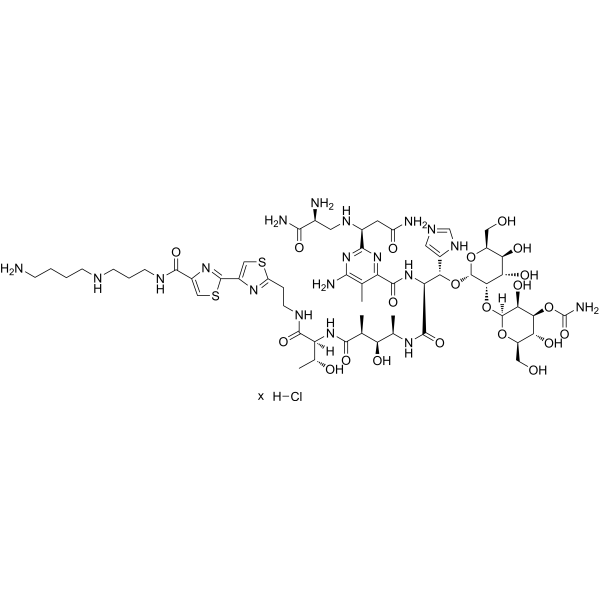
Bleomycin A5 (Pingyangmycin) hydrochloride is a glycopeptide antibiotic with multiple biological activities, which can be isolated from Streptomyces. Bleomycin A5 hydrochloride exerts cytotoxic effects by binding to Fe 2+ to form a complex, inducing single-strand and double-strand DNA breaks, and inhibiting DNA replication. Bleomycin A5 hydrochloride inhibits Drp1-mediated mitochondrial fission and suppresses PINK1/Parkin pathway-mediated mitophagy, ultimately triggering mitochondria-mediated cellular apoptosis. Bleomycin A5 hydrochloride can be used in cancer research .
loading...
    loading...
Cat. No.: HY-181840
CAS No.: 1846587-13-0
Target:  

Endonuclease

Research Areas:  

Cancer

MU262 is a MUS81 inhibitor with an IC50 value of 0.87 μM. MU262 directly inhibits the catalytic activity of MUS81 without interfering with DNA binding, induces genomic instability in tumor cells, and specifically inhibits the HR/BIR repair pathway. The combination of MU262 with Cisplatin (HY-17394) significantly enhances the chemotherapeutic killing effect. MU262 serves as a chemical biology tool for studying MUS81 function, and also acts as a lead compound for the development of anticancer therapies that exploit DNA repair defects in cancer cells .
loading...
    loading...
Cat. No.: HY-B0268S1
CAS No.: 2930288-95-0
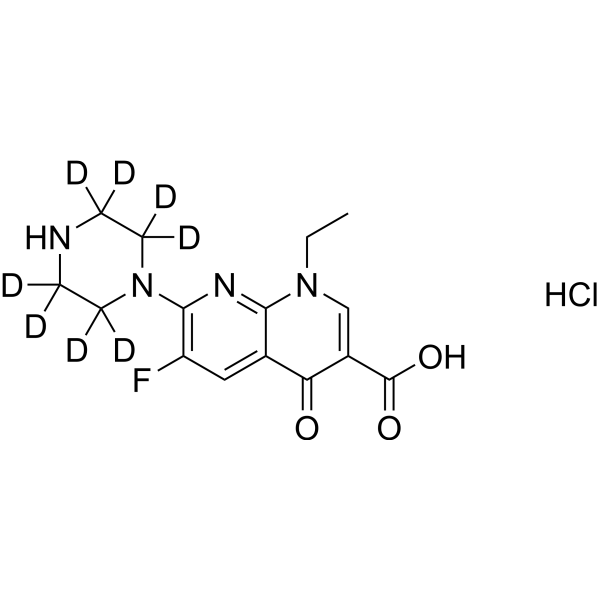
Enoxacin-d8 (hydrochloride) is deuterium labeled Enoxacin. Enoxacin (AT 2266), a fluoroquinolone, interferes with DNA replication and inhibits bacterial DNA gyrase (IC50=126 μg/ml) and topoisomerase IV (IC50=26.5 μg/ml). Enoxacin is a miRNA processing activator and enhances siRNA-mediated mRNA degradation and promotes the biogenesis of endogenous miRNAs. Enoxacin has potent activities against gram-positive and -negative bacteria. Enoxacin is a cancer-specific growth inhibitor that acts by enhancing TAR RNA-binding protein 2 (TRBP)-mediated microRNA processing .
loading...
    loading...
Cat. No.: HY-B0268S2
Enoxacin-d8 (hydrate) is deuterium labeled Enoxacin. Enoxacin (AT 2266), a fluoroquinolone, interferes with DNA replication and inhibits bacterial DNA gyrase (IC50=126 μg/ml) and topoisomerase IV (IC50=26.5 μg/ml). Enoxacin is a miRNA processing activator and enhances siRNA-mediated mRNA degradation and promotes the biogenesis of endogenous miRNAs. Enoxacin has potent activities against gram-positive and -negative bacteria. Enoxacin is a cancer-specific growth inhibitor that acts by enhancing TAR RNA-binding protein 2 (TRBP)-mediated microRNA processing .
loading...
    loading...
Cat. No.: HY-177119
Research Areas:  

Infection

ZBP1 Covalent PROTAC-1 is a covalent PROTAC degrader targeting ZBP1, with a DC50 of 25.69 nM. ZBP1 Covalent PROTAC-1 integrates a ZBP1-binding DNA aptamer, a linker containing covalent NASA, and an E3 ligase-recruiting moiety to guide ubiquitin-proteasome system-mediated degradation of ZBP1. ZBP1 Covalent PROTAC-1 exhibits inhibitory activity against necroptosis signaling pathways and inflammatory responses. ZBP1 Covalent PROTAC-1 can be used for research on viral pneumonia .
loading...
    loading...

