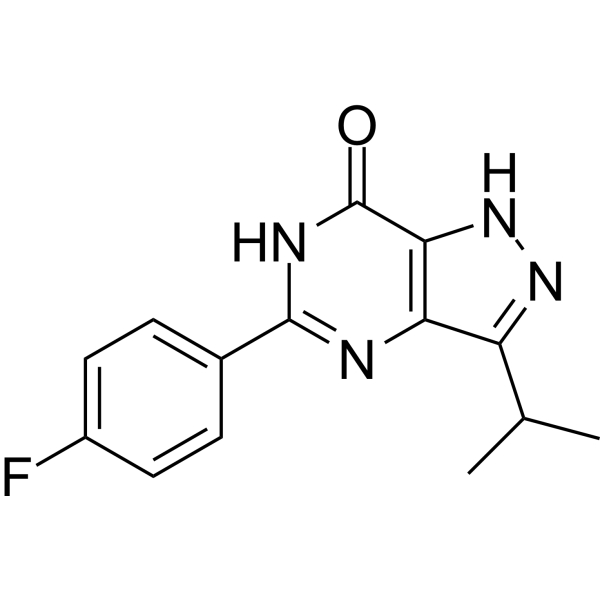
213 Results for "

Toxicity Model

" in MedChemExpress (MCE) Product Catalog:
Products (213)

213 Results for "Toxicity Model" in MCE Product Catalog:

Referencia número: HY-W585827S1
No. CAS: 1216764-05-4
Synonyms: 2-MCPD-d5 (major)
2-Chloro-1,3-propanediol-d5 (major) (2-MCPD-d5 (major)) is the deuterated-labeled 2-Chloro-1,3-propanediol (HY-W585827). 2-Chloro-1,3-propanediol (2-MCPD) is a pharmaceutical intermediate. 2-Chloro-1,3-propanediol is a common glycerol-derived chemical intermediate and also a food processing contaminant. 2-Chloro-1,3-propanediol can cross the intestinal barrier model via paracellular diffusion. 2-Chloro-1,3-propanediol induces renal and testicular toxicity in animal models. 2-Chloro-1,3-propanediol can be used in research related to organic synthesis .
loading...
    loading...
Referencia número: HY-118722
No. CAS: 108307-65-9
Áreas de investigación:  

Cancer

RB-90740 is a type of biological reducing agent. RB-90740 is activated through metabolic reduction and generates cytotoxic products, thereby selectively killing tumor cells (usually in a hypoxic environment). RB-90740 has selective toxicity towards hypoxic cells, which is mainly achieved by causing DNA strand breaks and activating reducing enzymes (such as Cytochrome P450). RB-90740 does not initially exhibit cytotoxicity similar to its in vitro properties in hypoxic cells in mouse models. RB-90740 can be used to study the tumor physiological environment
loading...
    loading...
Referencia número: HY-138967
No. CAS: 2095489-35-1
BRF110 is an orally active, blood-brain barrier-penetrant Nurr1-RXRα heterodimer activator with an EC50 of 0.9 μM in human systems. BRF110 increases the mRNA level of BDNF, upregulates the transcription of TH, AADC and GCH1 to elevate striatal dopamine levels. BRF110 exhibits neuroprotective activity against MPP +-induced cytotoxicity. BRF110 prevents dopaminergic neuron death, protects nerve cells from toxic damage, and improves motor coordination in mouse models. BRF110 can be used in research related to Parkinson's disease .
loading...
    loading...
Referencia número: HY-155732
No. CAS: 3032452-65-3
Target:  

Parasite

Áreas de investigación:  

Infection

NPD-2975 (compound 30) is an orally active antitrypanosomal agent, against Human African Trypanosomiasis (HAT). NPD-2975 has low toxicity potential against human MRC-5 lung fibroblasts, and acute mouse model of T. b. brucei infection. NPD-2975 shows acceptable metabolic stability, inhibits T. b. brucei with IC500 of 70 nM in vitro. NPD-2975 also inhibits CYP enzymes resulted in IC50 values of 0.16 and 0.42 μM against CYP1A2 and CYP2C19, respectively .
loading...
    loading...
Referencia número: HY-168102
Áreas de investigación:  

Cancer

Antiproliferative agent-59 (Compound 14u) is an inhibitor for tubulin polymerization. Antiproliferative agent-59 exhibits antiproliferative activities against cancer cells Huh7, SGC-7901, and MCF-7 with IC50 of 0.03, 0.18, and 0.13μM. Antiproliferative agent-59 arrests the cell cycle at G2/M phase and induces apoptosis in Huh7 cell. Antiproliferative agent-59 exhibits antitumor efficacy against liver cancer in Huh7 xenograft mouse models, without significant toxicity .
loading...
    loading...
Referencia número: HY-181490
Target:  

PROTACs CDK Apoptosis

Áreas de investigación:  

Cancer

WWZ-11-098 is a selective CDK6 PROTAC degrader with DC50 of 2.6 nM. WWZ-11-098 induces degradation of CDK6 in a CRBN-dependent manner, while sparing CDK1, CDK2, CDK4, and CDK9. WWZ-11-098 induces apoptosis, G1-S cell cycle arrest and shows anti-proliferative activity in cancer cells. WWZ-11-098 exhibits antitumor efficacy in a xenograft model without signs of toxicity. WWZ-11-098 can be used for the research of leukemia .
loading...
    loading...
Referencia número: HY-182016
No. CAS: 3126270-11-6
PROTAC ATR degrader-3 is a potent CRBN-based ATR PROTAC degrader with a DC50 of 127 nM. PROTAC ATR degrader-3 also degrades CHK1 with an DC50 of 135 nM. PROTAC ATR degrader-3 inhibits cancer cells proliferation, migration and invasion, triggers apoptosis and induces S phase arrest and DNA damage. PROTAC ATR degrader-3 achieves tumor growth inhibition in LoVo xenograft mouse model without apparent toxicity. PROTAC ATR degrader-3 can be used for the research of colorectal cancer .
loading...
    loading...
Referencia número: HY-183325
No. CAS: 1434867-98-7
FTO-IN-17 is an orally active and brain-penetrant FTO (m6A RNA demethylase) inhibitor with an IC50 of 1.1 μM. FTO-IN-17 stably binds the FTO catalytic pocket. FTO-IN-17 protects against Aβ1-42-induced toxicity while increasing global m6A levels and dampening pro-inflammatory gene (CXCL10, TNF-α) expression. FTO-IN-17 ameliorates anxiety-like behavior and rescues hippocampal-dependent spatial, recognition memory and neuroinflammation in Alzheimer's disease mice models .
loading...
    loading...
Referencia número: HY-184396
Áreas de investigación:  

Cancer

GR2-128 is a dual inhibitor targeting MLK3 and NAMPT with IC50 values of 84 nM and 14 nM, respectively. GR2-128 inhibits downstream JNK/c‑Jun signaling and reduces NAD + levels. GR2-128 exhibits antiproliferative and pro-apoptotic activities in triple-negative breast cancer cells without significant toxicity to normal cells. GR2-128 suppresses tumor growth, reduces macrophage and neutrophil infiltration, and increases tumor T-cell markers in a syngeneic mouse model, and can be used for triple-negative breast cancer research .
loading...
    loading...
Referencia número: HY-184662
Ferroptosis inducer-17 is a ferroptosis inducer that downregulates GPX4 and activates the CTSB and cGAS-STING pathways. Ferroptosis inducer-17 exhibits cytotoxicity against cancer cells but low toxicity toward normal cells. Ferroptosis inducer-17 accumulates in mitochondria and lysosomes, thereby inducing ROS production, lipid peroxidation, mitochondrial membrane depolarization, lysosomal iron accumulation, increased membrane permeability, and enhanced oxidative stress. Ferroptosis inducer-17 inhibits tumor growth in cisplatin-resistant xenograft models. Ferroptosis inducer-17 can be used for cancer-related research .
loading...
    loading...
Referencia número: HY-P11232
No. CAS: 1969250-99-4
Áreas de investigación:  

Infection

NAB815 is a specific inhibitor of the Stx2a (Kd = 0.01 μM)/TLR4 interaction. NAB815 inhibits the neutrophil/Stx2a interaction (IC50 = 0.057 μg/mL). NAB815 inhibits the formation of Stx2-containing extracellular vesicles (EVs) produced by leukocytes and platelets and reduces their toxic effects in cellular (Vero cells) and animal models (CD-1 mice). NAB815 reduces bacterial loads in the kidneys, urine, and bladders of Escherichia coli-infected mice. NAB815 is useful in the study of hemolytic uremic syndrome (HUS) .
loading...
    loading...
Referencia número: HY-119468
No. CAS: 32359-34-5
Pureza:  99.34%
Target:  

Dopamine Transporter

Áreas de investigación:  

Neurological Disease

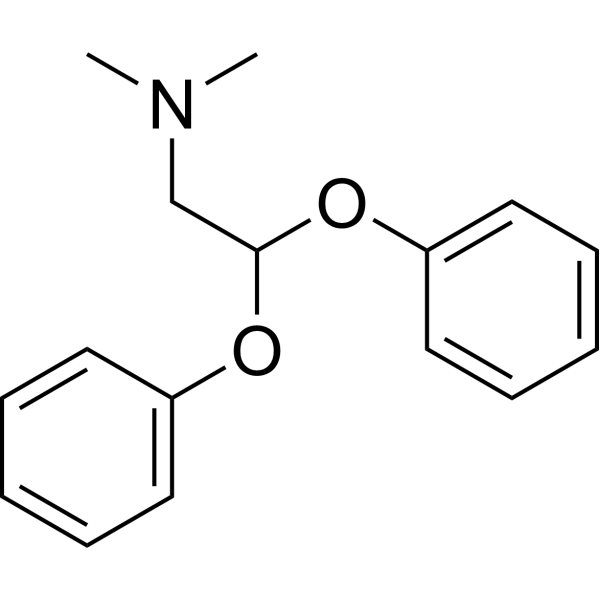
Medifoxamine is an orally active monoamine reuptake inhibitor and antidepressant. Medifoxamine preferentially inhibits presynaptic dopamine reuptake. Medifoxamine acts as an intraocular pressure-lowering agent to reduce intraocular pressure, and also functions as a miotic agent to decrease pupil diameter. Medifoxamine exhibits characteristic properties of antidepressant compounds, including preventing hypothermia induced by Reserpine (HY-N0480) or Apomorphine (HY-12723), potentiating the toxic effects of Yohimbine (HY-N0127) in mice, and reducing immobility behavior in mice and rats in the "behavioral despair" model. Medifoxamine has no anticholinergic activity. Medifoxamine can be used in research related to depression .
loading...
    loading...
Referencia número: HY-176194
Target:  

Collagen c-Fms PDGFR Src

Áreas de investigación:  

Inflammation/Immunology

Antifibrotic agent 1 is an orally active anti-idiopathic pulmonary fibrosis (IPF) agent. Antifibrotic agent 1 effectively attenuates IPF-related processes, including TGF-β induced EMT and FMT processes, as well as pro-fibrotic M2 polarization. Antifibrotic agent 1 selectively inhibits CSF-1R, PDGFR-α and Src family kinases (SFKs), while sparing VEGFRs, FGFRs and Abl to minimize off-target toxicity. Antifibrotic agent 1 has potent anti-fibrotic activity in Bleomycin (BLM) (HY-108345)-induced pulmonary fibrosis mice model .
loading...
    loading...
Referencia número: HY-177796
No. CAS: 2923531-50-2
Target:  

Apoptosis CDK Caspase PARP

Áreas de investigación:  

Cancer

TMLB-C16 is a potent and orally active B3GAT3 inhibitor with a KD of 3.962 μM. TMLB-C16 suppresses proliferation and migration, and induces cell cycle arrest and apoptosis in MHCC-97H (IC50 = 6.53 μM) and HCCLM3 cells (IC50 = 6.22 μM). TMLB-C16 inhibits tumor growth in both MHCC-97H and HCCLM3 xenograft tumor mouse models without causing obvious toxicity. TMLB-C16 can be used for hepatocellular carcinoma research .
loading...
    loading...
Referencia número: HY-178453
Target:  

VEGFR Apoptosis

Áreas de investigación:  

Cancer

VEGFR-2-IN-74 (compound 55) is a potent VEGFR-2 inhibitor (IC50 = 0.035 µM). VEGFR-2-IN-74 exhibits good anti proliferative activity and can induce apoptosis in various cancer cells, such as A549 (IC50 = 2.67 µM) and HCT116 (IC50 = 10.87 µM) cells. VEGFR-2-IN-74 has low toxicity to normal cells. VEGFR-2-IN-74 shows significant anti angiogenic effects in chicken embryo models. VEGFR-2-IN-74 can be used in the research of cancer .
loading...
    loading...
Referencia número: HY-179394
Target:  

Proteasome

Áreas de investigación:  

Inflammation/Immunology

Immunoproteasome-IN-2 is selective immunoproteasome inhibitor with IC50 = 232.3 nM for LMP7, IC50 = 9384.9 nM for β5. Immunoproteasome-IN-2 exhibits ancillary inhibitory activity against LMP2 and MECL-1 subunits. Immunoproteasome-IN-2 demonstrates anti-inflammatory efficacy in a mouse model of arthritis and shows a favorable safety profile in toxicological studies with reduced hepatotoxicity and hematotoxicity. Immunoproteasome-IN-2 has LMP7/β5 selectivity directly correlated with lower systemic toxicity. Immunoproteasome-IN-2 can be employed for research in arthritis .
loading...
    loading...
Referencia número: HY-181167
Áreas de investigación:  

Neurological Disease

AChE/BChE-IN-34 is an acetylcholinesterase (AChE) and butyrylcholinesterase (BChE) inhibitor with IC50s of 5.97 μM and 4.57 μM, respectively. AChE/BChE-IN-34 functions as an antioxidant, oxidative stress inhibitor, reduces MDA levels, and elevates SOD and catalase in hippocampal tissue. AChE/BChE-IN-34 acts as a cognitive function enhancer, improves learning and memory in a Scopolamine (HY-N0296)-induced animal model. AChE/BChE-IN-34 is non-toxic in neuroblastoma cells across a specified concentration range. AChE/BChE-IN-34 can be used for the research of Alzheimer's disease .
loading...
    loading...
Referencia número: HY-N11736
No. CAS: 37394-32-4
12-O-Tiglyl-phorbol 13-dodecanoate (TD13) is a potential inhibitor with anti-hepatic fibrosis activity, and it belongs to a series of derivatives of oral APOL2 inhibitors and anti-hepatic fibrosis agents. It shows no obvious toxicity in preclinical models. Compounds of the 12-O-Tiglyl-phorbol 13-dodecanoate series inhibit the expression of fibronectin, type I collagen and α-smooth muscle actin in hepatic stellate cells. 12-O-Tiglyl-phorbol 13-dodecanoate can be isolated from the Euphorbiaceae plant Euphorbia fischeriana, and it is applicable to the research of hepatic fibrosis .
loading...
    loading...
Referencia número: HY-143881
No. CAS: 2760970-10-1
Target:  

FGFR

Áreas de investigación:  

Cancer

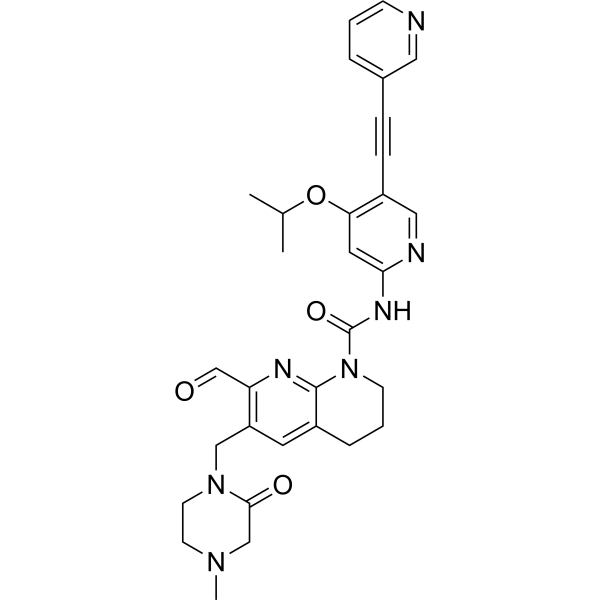
FGFR4-IN-6 (Compound 9ka) is a covalently reversible FGFR4 inhibitor with an IC50 value of 5.4 nM. FGFR4-IN-6 also exhibits good oral pharmacokinetic properties. FGFR4-IN-6 induces significant tumor regressions in a xenograft mouse model of Hep3B2.1-7 HCC cell line without an obvious sign of toxicity . FGFR4-IN-6 is a click chemistry reagent, it contains an Alkyne group and can undergo copper-catalyzed azide-alkyne cycloaddition (CuAAc) with molecules containing Azide groups.
loading...
    loading...
Referencia número: HY-169914
No. CAS: 130152-35-1
Synonyms: JO 1784 hydrochloride
Target:  

Sigma Receptor

Igmesine hydrochloride (JO 1784 hydrochloride) is a selective σ-1 receptor agonist (IC50 = 39 nM) with oral activity and blood-brain barrier penetration. Igmesine hydrochloride stimulates duodenal bicarbonate secretion in rats via a σ1/vagal/CCK-A-dependent pathway, without antisecretory activity. Igmesine hydrochloride centrally blocks CRF-mediated gastrin-inhibitory effects, and in TMT toxicity and MCAO focal ischemia models, it downregulates PTBBS, reduces NOS, and modulates M1/M2 density. Igmesine hydrochloride is used in research on duodenal ulcers, Alzheimer's disease, and related diseases .
loading...
    loading...

