204 Results for "

surface activity

" in MedChemExpress (MCE) Product Catalog:
Products (204)

204 Results for "surface activity" in MCE Product Catalog:

Cat. No.: HY-178169
CAS No.: 2773475-11-7
ETI60 is an orally active, selective TLR inhibitor that targets the nucleoside-binding Site I on TLR7 (IC50 = 0.68 μM) and TLR9 (IC50 = 0.12 μM), sparing surface TLRs (including TLR1/TLR2, TLR2/TLR6, TLR4 and TLR5). ETI60 potently inhibits endosomal TLR-mediated pro-inflammatory signaling with nanomolar activity in cellular, biophysical and in vivo assays. ETI60 modulates the expression of genes associated with inflammation. ETI60 effectively ameliorates symptoms in mouse models of psoriasis, and systemic lupus erythematosus (SLE). ETI60 can be used for autoimmune and inflammatory diseases research .
loading...
    loading...
Cat. No.: HY-181967
Research Areas:  

Cancer

PROTAC PARP1 degrader-5 is a PARP1 PROTAC degrader with a DC50 of 0.12 μM. PROTAC PARP1 degrader-5 hijacks the ubiquitin-proteasome system via catalytic ternary complex formation to drive sustained PARP1 degradation. PROTAC PARP1 degrader-5 induces DNA damage, drives marginal cytosolic double-stranded DNA accumulation in tumor cells, and up-regulates PD-L1 surface expression in tumor cells. PROTAC PARP1 degrader-5 shows tumor growth inhibition activity in murine melanoma models when encapsulated in lipid nanoparticles. PROTAC PARP1 degrader-5 can be used for the research of cancer, such as melanoma .
loading...
    loading...
Cat. No.: HY-B0507AR
CAS No.: 144-74-1
Research Areas:  

Endocrinology Cancer

Sulfathiazole sodium (Standard) is the analytical standard of Berberine sodium (HY-B0507A). This product is intended for research and analytical applications. Sulfathiazole sodium is an orally active, endocrine disruptor targeting the steroidogenic pathway, specifically enhancing the activity of CYP19 in human adrenal cancer cells (H295R) and upregulating the mRN expression of CYP17, CYP19, and 3β-HSD. Sulfathiazole sodium increases the production of 17-estradiol (E2) and has endocrine disrupting effects on aquatic organisms such as the Japanese medaka fish. Sulfathiazole sodium is also a cathodic corrosion inhibitor. Sulfathiazole sodium inhibits the corrosion of copper by chloride ions through chemical and physical adsorption on the copper surface, reduces the corrosion current density and shifts the corrosion potential negatively .
loading...
    loading...
Cat. No.: HY-D3330
APC-Cy7 is an APC-tandem fluorochrome (allophycocyanin-cyanine 7) and degradable fluorochrome, with maximum absorption at ~650 nm, peak emission at 767 nm when excited by a 633 nm red laser, and cell-dependent degradation. APC-Cy7 undergoes time-dependent degradation (decoupling) when bound to peripheral blood leukocytes, leading to nonspecific APC channel signal, with degradation cell type-dependent. APC-Cy7 shows reduced degradation when immunolabeled cells have inhibited metabolic activity or are incubated with vitamin C. APC-Cy7 serves as a tandem fluorochrome in multiparametric flow cytometry for detection of leukocyte surface proteins when conjugated to specific antibodies (Ex/Em = 650 nm/778 nm) .
loading...
    loading...
Cat. No.: HY-P991029
CAS No.: 2933972-64-4
Synonyms: HMB-001
Sutacimig (HMB-001) is a humanized antibody of the (H-γ4_L-κ)_(H-γ4_L-κ) format that targets FⅦa/TREML1. One arm of Sutacimig binds to endogenous FVIIa, thereby prolonging the half-life of FVIIa and increasing its accumulation in the bloodstream, while the other arm binds to TLT-1, which is exclusively expressed on the surface of activated platelets. This localizes endogenous FVIIa to activated platelets, further enhancing the activity of FVIIa. Sutacimig enhances Thrombin generation, fibrin formation, and the formation of stable fibrin-platelet networks at sites of vascular injury. Sutacimig can be used in studies related to Glanzmann thrombasthenia .
loading...
    loading...
Cat. No.: HY-Y1219C
CAS No.: 112926-00-8
Silica gel, high-purity grade, 220-440 mesh is a low-density, high-surface-area, high-purity inert additive that can be used to prepare chromatographic column sieve plates based on the sol-gel method. Silica gel, high-purity grade prevents DNA degradation by absorbing water from plant leaves, and is suitable for the preservation of field-collected samples for subsequent DNA extraction, restriction endonuclease digestion, PCR amplification and gene sequencing. It can also be reused after being saturated with water. Silica gel, high-purity grade can provide a non-toxic, inert aquatic environment for embedded cells, allowing nutrients, oxygen and metabolic waste to diffuse freely and blocking external pollution, thereby maintaining the activity of fibroblasts and epithelial cells .
loading...
    loading...
Cat. No.: HY-Y1219D
CAS No.: 112926-00-8
Silica gel, high-purity grade, 35-70 mesh is a low-density, high-surface-area, high-purity inert additive that can be used to prepare chromatographic column sieve plates based on the sol-gel method. Silica gel, high-purity grade prevents DNA degradation by absorbing water from plant leaves, and is suitable for the preservation of field-collected samples for subsequent DNA extraction, restriction endonuclease digestion, PCR amplification and gene sequencing. It can also be reused after being saturated with water. Silica gel, high-purity grade can provide a non-toxic, inert aquatic environment for embedded cells, allowing nutrients, oxygen and metabolic waste to diffuse freely and blocking external pollution, thereby maintaining the activity of fibroblasts and epithelial cells .
loading...
    loading...
Cat. No.: HY-Y1219E
CAS No.: 112926-00-8
Silica gel, high-purity grade, 130-270 mesh is a low-density, high-surface-area, high-purity inert additive that can be used to prepare chromatographic column sieve plates based on the sol-gel method. Silica gel, high-purity grade prevents DNA degradation by absorbing water from plant leaves, and is suitable for the preservation of field-collected samples for subsequent DNA extraction, restriction endonuclease digestion, PCR amplification and gene sequencing. It can also be reused after being saturated with water. Silica gel, high-purity grade can provide a non-toxic, inert aquatic environment for embedded cells, allowing nutrients, oxygen and metabolic waste to diffuse freely and blocking external pollution, thereby maintaining the activity of fibroblasts and epithelial cells .
loading...
    loading...
Cat. No.: HY-Y1219H
CAS No.: 112926-00-8
Silica gel, high-purity grade, 200-400 mesh is a low-density, high-surface-area, high-purity inert additive that can be used to prepare chromatographic column sieve plates based on the sol-gel method. Silica gel, high-purity grade prevents DNA degradation by absorbing water from plant leaves, and is suitable for the preservation of field-collected samples for subsequent DNA extraction, restriction endonuclease digestion, PCR amplification and gene sequencing. It can also be reused after being saturated with water. Silica gel, high-purity grade can provide a non-toxic, inert aquatic environment for embedded cells, allowing nutrients, oxygen and metabolic waste to diffuse freely and blocking external pollution, thereby maintaining the activity of fibroblasts and epithelial cells .
loading...
    loading...
Cat. No.: HY-Y1219I
CAS No.: 112926-00-8
Silica gel, high-purity grade, 70-230 mesh is a low-density, high-surface-area, high-purity inert additive that can be used to prepare chromatographic column sieve plates based on the sol-gel method. Silica gel, high-purity grade prevents DNA degradation by absorbing water from plant leaves, and is suitable for the preservation of field-collected samples for subsequent DNA extraction, restriction endonuclease digestion, PCR amplification and gene sequencing. It can also be reused after being saturated with water. Silica gel, high-purity grade can provide a non-toxic, inert aquatic environment for embedded cells, allowing nutrients, oxygen and metabolic waste to diffuse freely and blocking external pollution, thereby maintaining the activity of fibroblasts and epithelial cells .
loading...
    loading...
Cat. No.: HY-181588
NR4A agonist-2 is a selective pan-NR4A agonist designed based on Vidofludimus (HY-14908), with a Kd of 0.10 μM against NR4A1, and EC50 values of 0.098 μM, 0.092 μM and 0.09 μM against Nur77, Nurr1, NOR-1, respectively. NR4A agonist-2 exhibits 47-fold selectivity over DHODH, and shows no cytotoxic activity at concentrations up to 10 μM. By binding to a specific surface pocket in the ligand-binding domain of Nurr1, NR4A agonist-2 inhibits the formation of Nurr1 homodimers, activates response elements such as NBRE, NurRE, DR5, and then potently induces the expression of neuroprotective genes including BDNF, SOD2, thereby exerting neuroprotective activity. NR4A agonist-2 can be used in the research of neurodegenerative diseases such as Parkinson's disease, dementia and multiple sclerosis .
loading...
    loading...
Cat. No.: HY-NP143
CAS No.: 93928-24-6
Nerve Growth Factor 2.5S,murine submaxillary gland is a neurotrophic polypeptide and protein growth factor isolated from murine submaxillary glands. Nerve Growth Factor 2.5S,murine submaxillary gland increases the survival rate, phagocytic capacity and superoxide anion production level of mouse cells. Nerve Growth Factor 2.5S,murine submaxillary gland acts through cell membrane surface receptors to mediate the differentiation and maintenance of adrenergic neurons in the sympathetic nervous system. Nerve Growth Factor 2.5S,murine submaxillary gland loses its activity and undergoes dimer dissociation due to oxidation; it remains active after modification of specific tryptophan residues, while its tyrosine residues are not essential for activity. Nerve Growth Factor 2.5S,murine submaxillary gland may play a role in the inflammatory process .
loading...
    loading...
Cat. No.: HY-P5832
CAS No.: 836606-84-9
Target:  

TGF-beta/Smad RUNX

Research Areas:  

Metabolic Disease

BMP2-derived peptide is an osteogenic inducer and BMP receptor ligand. BMP2-derived peptide binds to BMP receptors on the cell surface to form a complex, activates the downstream Smad signaling pathway, and regulates the expression of osteogenic transcription factors. BMP2-derived peptide effectively promotes the adhesion, proliferation, osteogenic differentiation and mineralization of bone marrow mesenchymal stem cells, significantly up-regulates the mRNA levels of OCN, Runx2 and type I collagen, and increases alkaline phosphatase activity and calcium deposition. BMP2-derived peptide induces osteoblast differentiation and ectopic bone regeneration, and improves cranial bone defect repair. Meanwhile, BMP2-derived peptide enhances the cytocompatibility of mesoporous silica nanoparticles, synergistically increases osteogenic activity with Dexamethasone (HY-14648), serving as an important tool for bone defect repair research .
loading...
    loading...
Cat. No.: HY-W062109S
CAS No.: 1231979-85-3
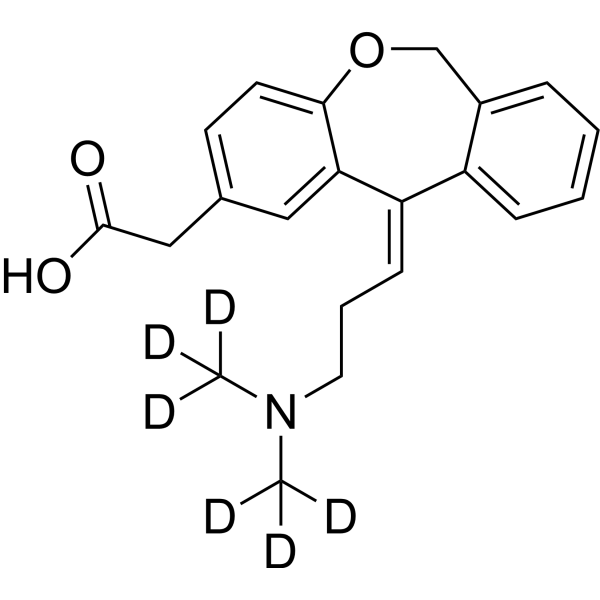
Olopatadine-d6 is the deuterium labeled Olopatadine. Olopatadine hydrochloride (ALO4943A; KW4679) is an orally active histamine H1 receptor antagonist and mast cell stabilizer. Olopatadine hydrochloride exerts antiallergic effects by blocking histamine H1 receptor-mediated activities. Olopatadine hydrochloride inhibits exocytosis, chemokine release, F-actin polymerization, CXCL10-induced calcium influx, and T cell chemotactic activity. Olopatadine hydrochloride also reduces the expression levels of CXCR3 on the surface of CD4 + and CD8 + T cells. Olopatadine hydrochloride inhibits scratching behavior, improves dermatitis scores, and suppresses intraepidermal neurite outgrowth. Olopatadine hydrochloride simultaneously decreases the levels of inflammatory markers, growth factors, histamine, and specific IgE, while increasing the expression of ErbB3A/HER3A. Olopatadine hydrochloride can be used in research related to seasonal pollinosis, chronic rhinitis, urticaria, allergic conjunctivitis, alopecia areata, and atopic dermatitis .
loading...
    loading...
Cat. No.: HY-106055
CAS No.: 74817-61-1
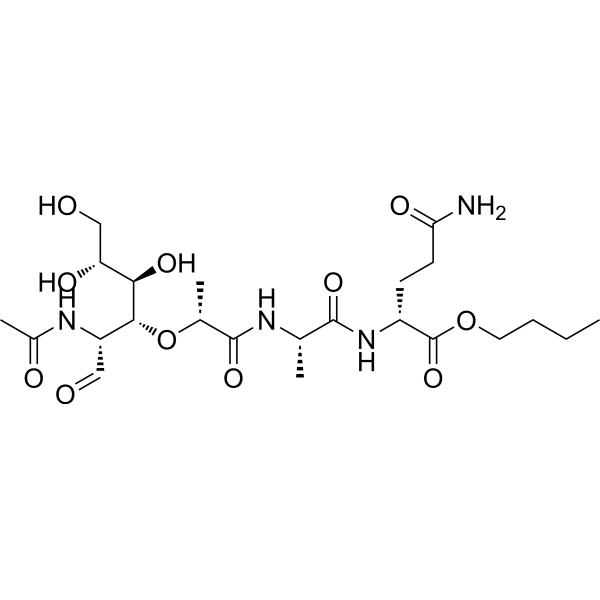
Murabutide is an immunomodulator and also a NOD2 receptor agonist . Murabutide enhances the signal transduction of ATR and NOD2, mediates the activation of the DDR pathway, and thereby repairs radiation-induced DNA double-strand breaks. Murabutide inhibits radiation-induced cell apoptosis and protects cells and mice from radiation-induced toxic damage. Murabutide induces the expression and DNA-binding activity of Oct-1 in macrophages, thereby inhibiting the transcription and replication of HIV-1. Murabutide reduces the expression levels of CD4 and CCR5 on the surface of macrophages, and induces the secretion of β-chemokines, TNF-α and IL-6. Murabutide enhances non-specific viral resistance and targets reticuloendothelial cells. Murabutide can be used in research related to radiation-induced damage and human immunodeficiency virus type 1 infection .
loading...
    loading...
Cat. No.: HY-N0699R
CAS No.: 2034-69-7
Synonyms: Dephnoretin (Standard); Thymelol (Standard)
Daphnoretin (Dephnoretin; Thymelol) (Standard) is the analytical standard of Daphnoretin (HY-N0699). This product is used for research and analytical applications. Daphnoretin is a protein kinase C (PKC) activator that can inhibit the expression of hepatitis B virus (HBV) surface antigen (HBsAg) and has antiviral activity. Daphnoretin exerts its anti-tumor effect by inhibiting the activation of the PI3K/AKT signaling pathway, triggering the mitochondrial apoptosis pathway. Daphnoretin alleviates chondrocyte apoptosis and inflammatory responses by inhibiting endoplasmic reticulum stress and the activation of the NLRP3 inflammasome. Daphnoretin can regulate the differentiation and maturation of dendritic cells, by down-regulating the phosphorylation level of JNK, inhibiting its immune stimulating function, thereby playing a protective role in skin transplant rejection reactions.
loading...
    loading...
Cat. No.: HY-P12127
CAS No.: 233273-63-7
Synonyms: BF2-B
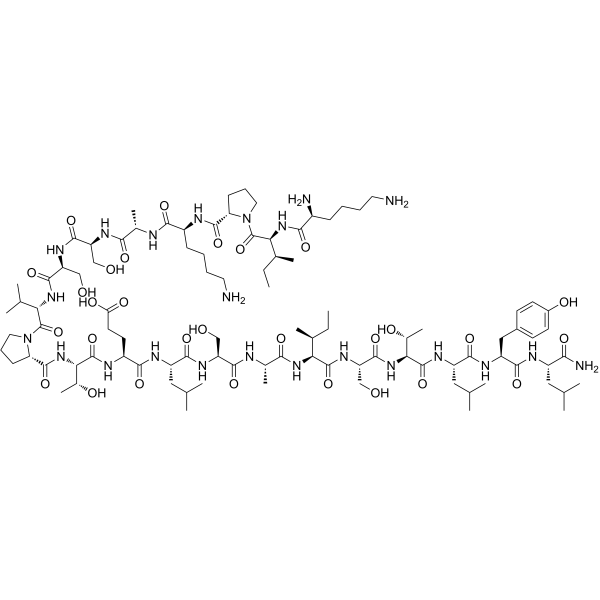
Buforin IIb (BF2-B) is an anticancer peptide, as well as an Antibacterial and Antifungal agent. Buforin IIb is derived from histone H2A. Buforin IIb activates SAPK/JNK and p38 MAPK. Buforin IIb induces mitochondria-dependent Apoptosis . Buforin IIb achieves selective targeting by interacting with gangliosides on the surface of cancer cells, and can penetrate cancer cell membranes without causing damage. Buforin IIb exhibits antibacterial activity against Gram-negative bacteria, Gram-positive bacteria and fungi. Buforin IIb can be used in the research of cervical cancer, as well as cancers including leukemia, central nervous system cancer, ovarian cancer, breast cancer, melanoma, colon cancer, non-small cell lung cancer, renal cancer and prostate cancer .
loading...
    loading...
Cat. No.: HY-B0426AR
CAS No.: 140462-76-6
Synonyms: ALO4943A (Standard); KW4679 (Standard)
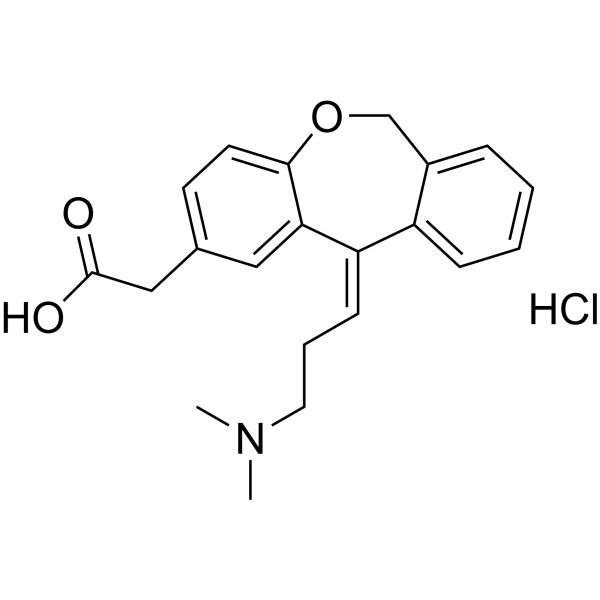
Olopatadine (hydrochloride) (Standard) is the analytical standard of Olopatadine (hydrochloride). This product is intended for research and analytical applications. Olopatadine hydrochloride (ALO4943A; KW4679) is an orally active histamine H1 receptor antagonist and mast cell stabilizer. Olopatadine hydrochloride exerts antiallergic effects by blocking histamine H1 receptor-mediated activities. Olopatadine hydrochloride inhibits exocytosis, chemokine release, F-actin polymerization, CXCL10-induced calcium influx, and T cell chemotactic activity. Olopatadine hydrochloride also reduces the expression levels of CXCR3 on the surface of CD4 + and CD8 + T cells. Olopatadine hydrochloride inhibits scratching behavior, improves dermatitis scores, and suppresses intraepidermal neurite outgrowth. Olopatadine hydrochloride simultaneously decreases the levels of inflammatory markers, growth factors, histamine, and specific IgE, while increasing the expression of ErbB3A/HER3A. Olopatadine hydrochloride can be used in research related to seasonal pollinosis, chronic rhinitis, urticaria, allergic conjunctivitis, alopecia areata, and atopic dermatitis .
loading...
    loading...
Cat. No.: HY-B0426AS
CAS No.: 1331635-21-2
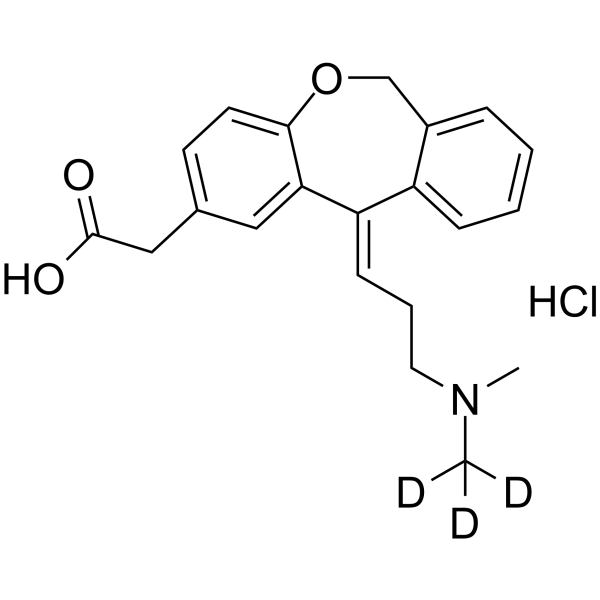
Olopatadine-d3 hydrochloride (ALO4943A-d3) is the deuterium labeled Olopatadine hydrochloride. Olopatadine hydrochloride (ALO4943A; KW4679) is an orally active histamine H1 receptor antagonist and mast cell stabilizer. Olopatadine hydrochloride exerts antiallergic effects by blocking histamine H1 receptor-mediated activities. Olopatadine hydrochloride inhibits exocytosis, chemokine release, F-actin polymerization, CXCL10-induced calcium influx, and T cell chemotactic activity. Olopatadine hydrochloride also reduces the expression levels of CXCR3 on the surface of CD4 + and CD8 + T cells. Olopatadine hydrochloride inhibits scratching behavior, improves dermatitis scores, and suppresses intraepidermal neurite outgrowth. Olopatadine hydrochloride simultaneously decreases the levels of inflammatory markers, growth factors, histamine, and specific IgE, while increasing the expression of ErbB3A/HER3A. Olopatadine hydrochloride can be used in research related to seasonal pollinosis, chronic rhinitis, urticaria, allergic conjunctivitis, alopecia areata, and atopic dermatitis .
loading...
    loading...
Cat. No.: HY-N4246R
CAS No.: 382148-47-2
Bacopaside I (Standard) is the analytical standard of Bacopaside I. This product is intended for research and analytical applications. Bacopaside I is an orally active aquaporin AQP1 inhibitor and PKC modulator with neuroprotective and anticancer activities. Bacopaside I specifically blocks the water channel and cGMP-gated ion channel activities of AQP1 without affecting AQP4, thereby inhibiting the migration of colon cancer cells expressing AQP1. Bacopaside I activates the Akt pathway by interacting with PI3K, specifically inhibits MAO-A, effectively alleviates neuron necrosis and apoptosis induced by oxygen-glucose deprivation, reduces oxidative stress, and regulates the surface expression of neuroreceptors. When combined with Bacopaside II (HY-N6016), Bacopaside I significantly reduces the viability, proliferation and invasion ability of breast cancer cells, and binds to the pregnane X receptor (PXR). Bacopaside I is applicable to the research of colon cancer, breast cancer, vascular dementia, cerebral ischemia and other related diseases .
loading...
    loading...

