
172 Results for "

side-chain

" in MedChemExpress (MCE) Product Catalog:
Products (172)

172 Results for "side-chain" in MCE Product Catalog:

Cat. No.: HY-P1372
Target:  

PKC

Research Areas:  

Others

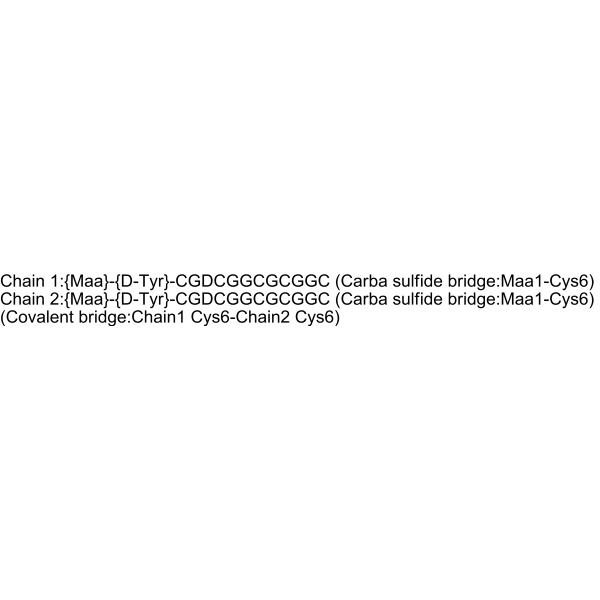
PKC ζ pseudosubstrate, a PKC ζ inhibitor peptide, can be attached to cell permeabilization vector peptide .
loading...
    loading...
Cat. No.: HY-D1320
CAS No.: 1267539-32-1
Target:  

Fluorescent Dye

Research Areas:  

Others

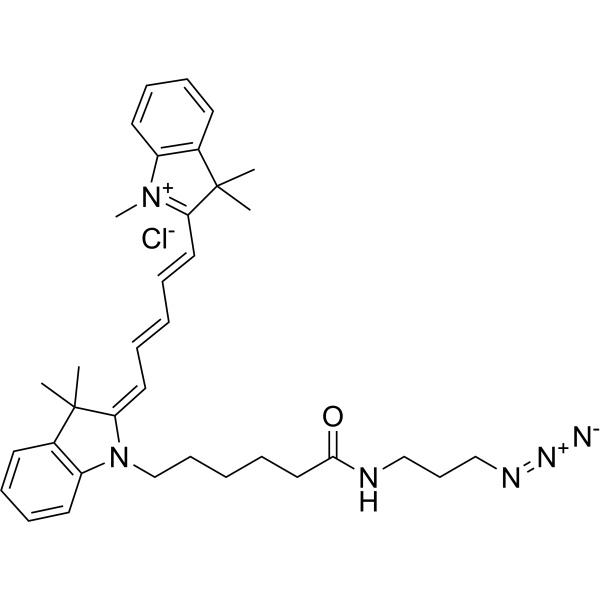
Cyanine5 azide chloride is a Fluorescent probe for cell-selective bacterial protein labeling, as well as a fluorescent dye for single-molecule imaging and dynamic tracking of intracellular organelles. Cyanine5 azide chloride can conjugate with the alkynyl side chain of propargylglycine incorporated into bacterial proteins by the engineered methionyl-tRNA synthetase variant PraRS via copper (I)-catalyzed azide-alkyne [3+2] cycloaddition reaction, thereby enabling in-gel fluorescent visualization of labeled proteins. Cyanine5 azide chloride can diffuse across cell membranes and undergo copper-free click reaction with DBCO-functionalized scAVD pre-bound to DBCO-functionalized biotin, forming fluorescent nanoprobes with enhanced brightness, photostability and localization accuracy, and exhibiting discrete photobleaching steps. The excitation wavelength of Cyanine5 azide chloride is Ex = 633 nm .
loading...
    loading...
Cat. No.: HY-E70115
CAS No.: 134712-49-5
Target:  

Fungal Bacterial

Research Areas:  

Infection

Feruloyl esterase is a subclass of carboxylesterases that hydrolyzes the ester linkages between hydroxycinnamic acids and arabinoxylan/pectin polysaccharides in plant cell walls. Feruloyl esterase can hydrolyze ethyl ferulate to release ferulic acid, disrupt plant cell wall structure, promote fiber swelling, and facilitate cellulase hydrolysis. Feruloyl esterase synergizes with xylanase by removing ferulic acid side chains, thereby promoting efficient hydrolysis of xylan into monomers. Feruloyl esterase acts as a virulence factor for Verticillium dahliae VdFAE and Magnaporthe oryzae Fae1, facilitating host infection and colonization. Feruloyl esterase promotes the degradation of cotton GhDFR through binding to its NADPH domain, thereby inhibiting flavonoid-mediated innate immunity and inducing cell death in Nicotiana benthamiana. Feruloyl esterase can be used in studies related to verticillium wilt and rice blast .
loading...
    loading...
Cat. No.: HY-W012166
CAS No.: 42014-51-7
Synonyms: NHS-Bromoacetate
Research Areas:  

Infection

N-Succinimidyl bromoacetate (NHS-Bromoacetate) is a heterobifunctional crosslinking reagent, mainly used to modify the ɛ-amino group of lysine side chains. By covalently linking its bromoacetyl moiety to the ɛ-amino group of lysine in peptidomimetics, N-Succinimidyl bromoacetate enables their conjugation with thiol-modified nanoparticles via thioether bonds. N-Succinimidyl bromoacetate also performs bromoacetylation modification on carrier proteins, which then forms stable thioether bonds with the thiol groups of cysteine in peptides, thus efficiently preparing soluble peptide-protein conjugates with high substitution ratios. N-Succinimidyl bromoacetate can be used to prepare activated Sepharose derivatives for affinity chromatography, protein affinity labeling reagents, and peptide-protein immunogen conjugates with non-immunogenic linkages. N-Succinimidyl bromoacetate is applicable to studies related to HIV-1 infection and glioblastoma multiforme .
loading...
    loading...
Cat. No.: HY-P10014
CAS No.: 153507-46-1
Target:  

Inhibitory Antibodies

Research Areas:  

Cardiovascular Disease

Bibapcitide, a 26 amino acid, inhibits thrombosis .
loading...
    loading...
Cat. No.: HY-P3432
CAS No.: 2035480-78-3
Research Areas:  

Others

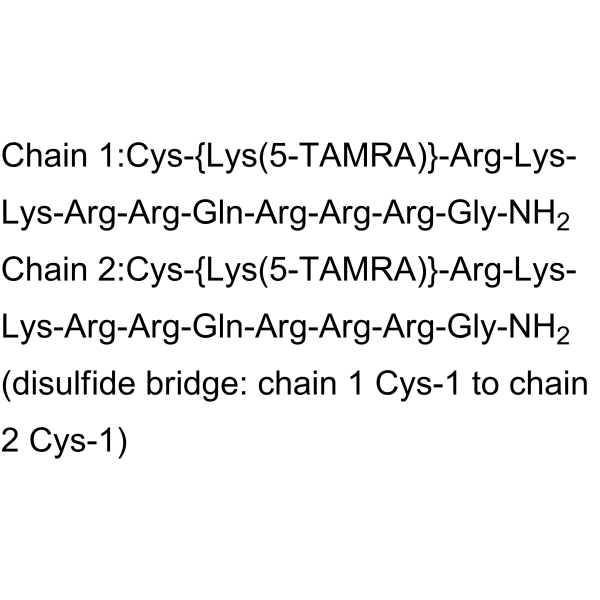
DfTat is a dimer of the prototypical cell-penetrating peptide TAT. DfTat can deliver small molecules, peptides and proteins into live cells with a particularly high efficiency. DfTat labeled with the rhodamine can be used as a tracer for easy detection .
loading...
    loading...
Cat. No.: HY-L0119V
3,253 compounds

Protein protein interactions (PPI) have pivotal roles in life processes. The studies showed that aberrant PPI are associated with various diseases. However, the design of modulators targeting PPI still faces tremendous challenges, such the difficult PPI interfaces for the drug design, lack of ligands reference, lack of guidance rules for the PPI modulators development and high-resolution PPI proteins structures.

The PPI Library comprises molecules of various sizes, frameworks, and shapes ranging from fragment-like entities to macrocyclic derivatives designed as secondary structure mimetics or as epitope mimetics. The designs cover β-turn / loop mimetics and α-helix mimetics. Since helices present at the interface in 62% of all protein-protein interactions. This library focused on designs including mimics with the substitution geometry of an a-helices, as well as designs that mimic the location of “hot-spot” side chains in helix-mediated PPIs.

Cat. No.: HY-E70115A
Target:  

Fungal Bacterial

Research Areas:  

Infection

Feruloyl esterase, Acetivibrio cellulolyticus is a subclass of carboxylesterases that hydrolyzes the ester linkages between hydroxycinnamic acids and arabinoxylan/pectin polysaccharides in plant cell walls. Feruloyl esterase, Acetivibrio cellulolyticus can hydrolyze ethyl ferulate to release ferulic acid, disrupt plant cell wall structure, promote fiber swelling, and facilitate cellulase hydrolysis. Feruloyl esterase, Acetivibrio cellulolyticus synergizes with xylanase by removing ferulic acid side chains, thereby promoting efficient hydrolysis of xylan into monomers. Feruloyl esterase, Acetivibrio cellulolyticus acts as a virulence factor for Verticillium dahliae VdFAE and Magnaporthe oryzae Fae1, facilitating host infection and colonization. Feruloyl esterase, Acetivibrio cellulolyticus promotes the degradation of cotton GhDFR through binding to its NADPH domain, thereby inhibiting flavonoid-mediated innate immunity and inducing cell death in Nicotiana benthamiana. Feruloyl esterase, Acetivibrio cellulolyticus can be used in studies related to verticillium wilt and rice blast .
loading...
    loading...
Cat. No.: HY-118156
CAS No.: 155238-60-1
Target:  

Others

Research Areas:  

Others

L-699333 is a 5-lipoxygenase (5-LO) inhibitor belonging to the thieno[2,3,4-cd]indole class. This compound has a 2-ethoxybutyric acid side chain and is a potent inhibitor of the biosynthesis of 5-HPETE and LTB4 produced from human 5-LO, with ICm values of 22 nM, 7 nM, and 3.8 pM for human neutrophils and whole blood, respectively. L-699333 has shown anti-inflammatory and antiasthmatic effects in a variety of animal models, including rat pleurisy models, antigen-induced wheezing models, and awake macaque and sheep asthma models. Its inhibition of 5-LO is highly selective, with higher ICm values or stronger competitive inhibition in FLAP binding assays compared to inhibition of human 15-LO, porcine 12-LO, and ram epididymal cyclooxygenase. The racemic enantiomer 14g of L-699333 is the most potent enantiomer to date, with inhibitory effects similar to those of the known MK-0591, which has been shown in clinical trials to inhibit the biochemical effects of LTB4 biosynthesis in vitro and LTE4 excretion in urine.
loading...
    loading...
Cat. No.: HY-W594061
CAS No.: 1811541-14-6
Target:  

Fluorescent Dye

Research Areas:  

Others

JF635-HTL is a Fluorescent dye for spatiotemporally controlled live cell imaging and single-molecule localization microscopy SMLM. Its detection mechanism depends on the conformational change of a photoswitchable HaloTag psHaloTag, which integrates the light-responsive AsLOV2 domain: in the dark state, the folded Jα helix of AsLOV2 maintains the dye in a predominantly closed, non-fluorescent form; upon 450 nm illumination, a metastable photo-adduct forms between a cysteine side chain and the FMN cofactor of AsLOV2, causing undocking and unfolding of the Jα helix, which propagates a conformational change to the HaloTag near the dye binding site, shifting the dye's equilibrium to the open, fluorescent form; this process is fully reversible in the dark as the Jα helix refolds spontaneously, returning the dye to the closed, non-fluorescent state. For psHaloTag1a labeled with JF635-HTL, the excitation/emission wavelengths for the ON state are Ex/Em = 642/655 nm, while for psHaloTag1b labeled with JF635-HTL, the wavelengths are Ex/Em = 639/655 nm; when bound to wild-type HaloTag, the wavelengths are Ex/Em = 640/656 nm .
loading...
    loading...
Cat. No.: HY-P11823
Target:  

Fluorescent Dye

Research Areas:  

Inflammation/Immunology Cancer

FAPα/DPP4 fluorogenic substrate-1 is a fluorogenic macrocyclic peptide substrate that can be cleaved by FAPα and DPP4. FAPα/DPP4 fluorogenic substrate-1 can be used in the research of cancer and type 2 diabetes .
loading...
    loading...
Cat. No.: HY-W127487
CAS No.: 479050-96-9
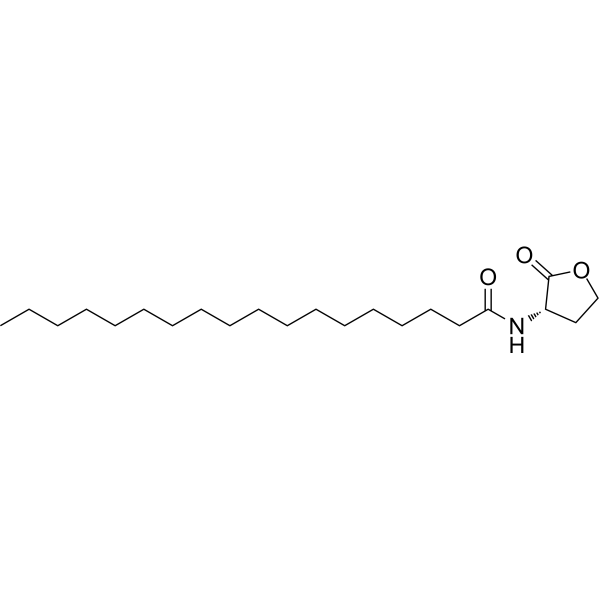
Quorum sensing is a regulatory system used by bacteria to control gene expression in response to increased cell density. This regulatory process manifests itself in a variety of phenotypes, including biofilm formation and virulence factor production. Coordinated gene expression is achieved through the production, release and detection of small diffusible signaling molecules called autoinducers. N-acylated homoserine lactones (AHLs) comprise a class of such autoinducers, each of which generally consists of a fatty acid coupled to a homoserine lactone (HSL). Modulation of bacterial quorum-sensing signaling systems to suppress pathogenesis represents a new approach to antimicrobial research for infectious diseases. AHLs differ in acyl length (C4-C18), C3 substitution (hydrogen, hydroxyl, or oxo group), and the presence or absence of one or more carbon-carbon double bonds in the fatty acid chain. These differences confer signaling specificity through the affinity of the LuxR family of transcriptional regulators. C18-HSL, one of four lipophilic long acyl side chain AHLs produced by the LuxI AHL synthase homolog SinI, is involved in quorum-sensing signaling in strains of Rhizobium meliloti (a nitrogen-fixing bacterial symbiont of the legume M. sativa) . C18-HSL and other hydrophobic AHLs tend to localize in the relatively lipophilic environment of bacterial cells and cannot diffuse freely across the cell membrane. Long-chain N-acyl homoserine lactones can be exported from cells by efflux pumps, or can be transported between communicating cells by extracellular outer membrane vesicles.
loading...
    loading...

