
172 Results for "

side-chain

" in MedChemExpress (MCE) Product Catalog:
Products (172)

172 Results for "side-chain" in MCE Product Catalog:

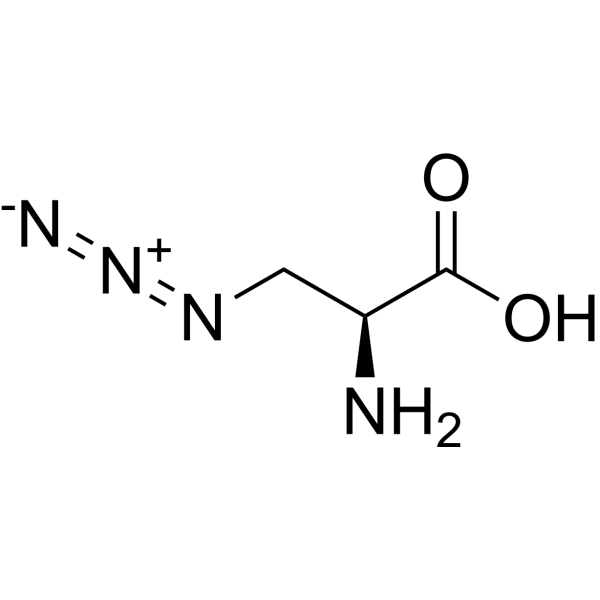
Cat. No.: HY-151641
CAS No.: 105661-40-3
Research Areas:  

Others

3-Azido-L-alanine is an aliphatic functionalized amino acid with side chain lengths of up to four carbons . 3-Azido-L-alanine is a click chemistry reagent, it contains an Azide group and can undergo copper-catalyzed azide-alkyne cycloaddition reaction (CuAAc) with molecules containing Alkyne groups. It can also undergo strain-promoted alkyne-azide cycloaddition (SPAAC) reactions with molecules containing DBCO or BCN groups.
loading...
    loading...
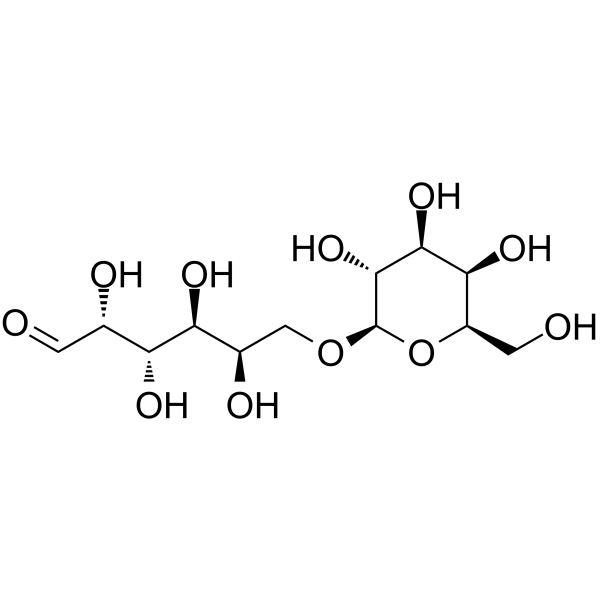
Cat. No.: HY-N9439
CAS No.: 5077-31-6
6-O-β-D-Galactopyranosyl-D-galactose, a disaccharide, is a part of the polysaccharide main chain with β-(1→6)-glycoside bonds with a side chain bonded to the main one by the β-(1→3) bond. 6-O-β-D-Galactopyranosyl-D-galactose can be isolated from enzyme-hydrolyzed peach gum .
loading...
    loading...
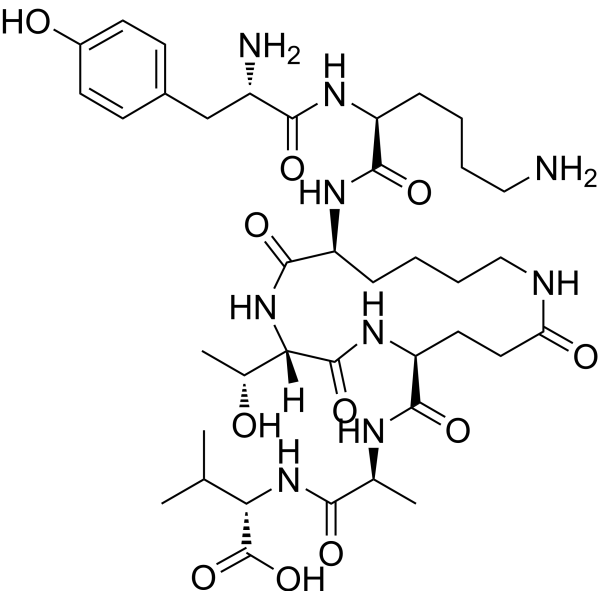
Cat. No.: HY-P1195
CAS No.: 1315378-73-4
Target:  

iGluR

Research Areas:  

Neurological Disease

PDZ1 Domain inhibitor peptide, a cyclic peptide, incorporates a β-Ala lactam side chain linker and targets the PDZ1 domains of the postsynaptic density protein 95 (PSD-95). PDZ1 Domain inhibitor peptide disrupts the GluR6/PSD-95 interaction and is very efficient in competing against the C terminus of GluR6 for the PDZ1 domain .
loading...
    loading...
Cat. No.: HY-W190920
CAS No.: 2411681-93-9
Research Areas:  

Others

t-Butoxycarbonyl-PEG2-NHS ester has a t-Boc protecting group and an NHS ester moiety. The t-butyl group can be deprotected under acidic conditions. NHS ester can react specifically and efficiently with primary amines such as the side chain of lysine residues or aminosilane-coated surfaces at neutral or slightly basic condition to form a covalent bond. The hydrophilic PEG linker increases the water solubility of the compound in aqueous media.
loading...
    loading...
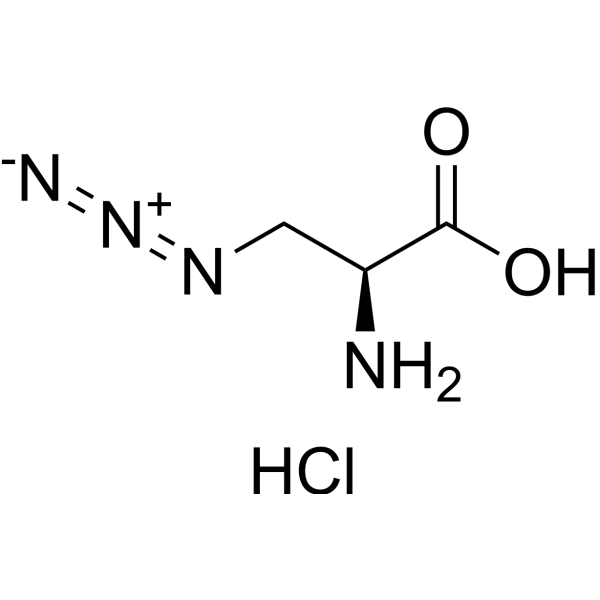
Cat. No.: HY-W336328
CAS No.: 1620171-64-3
Research Areas:  

Others

3-Azido-L-alanine hydrochloride is an aliphatic functionalized amino acid with side chain lengths of up to four carbons . 3-Azido-L-alanine (hydrochloride) is a click chemistry reagent, it contains an Azide group and can undergo copper-catalyzed azide-alkyne cycloaddition reaction (CuAAc) with molecules containing Alkyne groups. It can also undergo strain-promoted alkyne-azide cycloaddition (SPAAC) reactions with molecules containing DBCO or BCN groups.
loading...
    loading...
Cat. No.: HY-P11246
CAS No.: 3057097-31-8
Target:  

RXFP Receptor

Research Areas:  

Metabolic Disease

A13:B7-24-GG is an engineered analogue of insulin-like peptide 5 (INSL5), a selective RXFP4 agonist with a Ki value of 2.29 nM. A13:B7-24-GG has an extremely low binding affinity for RXFP3 (Ki = 602.56 nM) and an inhibitory effect on cAMP (EC50) of 1.17 nM. Activation of RXFP4 by A13:B7-24-GG leads to the recruitment of β-Arrestin2, with an EC50 of 22.39 nM. A13:B7-24-GG can be used for research on chronic constipation .
loading...
    loading...
Cat. No.: HY-114841
CAS No.: 27376-74-5
Synonyms: 13,14-Dihydrodinoprost; 13,14-dihydro PGF2α
Research Areas:  

Endocrinology

13,14-dihydro Prostaglandin F2α (13,14-dihydro PGF2α) is the analog of PGF2α which has no unsaturation in the lower side chain. It causes luteolysis in hamsters with a potency five times higher than PGF2α. The ED50 value for 13,14-dihydro PGF2α as a luteolytic agent in hamsters is 1.5 μg/100 g.
loading...
    loading...
Cat. No.: HY-P1195A
Target:  

iGluR

Research Areas:  

Neurological Disease

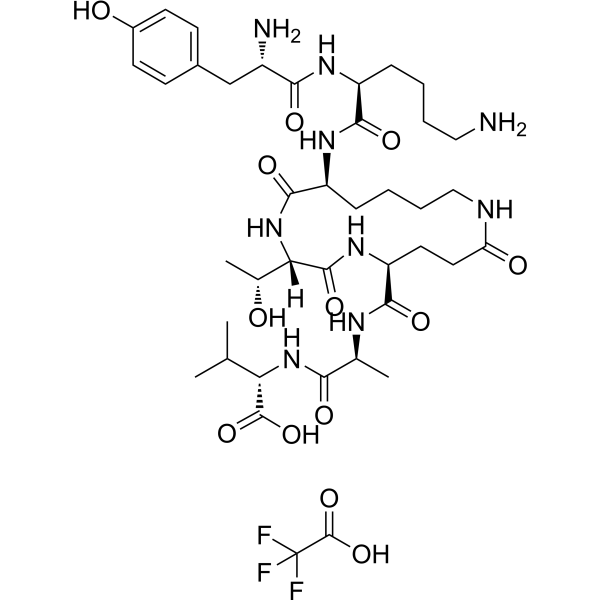
PDZ1 Domain inhibitor peptide TFA, a cyclic peptide, incorporates a β-Ala lactam side chain linker and targets the PDZ1 domains of the postsynaptic density protein 95 (PSD-95). PDZ1 Domain inhibitor peptide TFA disrupts the GluR6/PSD-95 interaction and is very efficient in competing against the C terminus of GluR6 for the PDZ1 domain .
loading...
    loading...
Cat. No.: HY-118112
CAS No.: 64191-06-6
Research Areas:  

Others

4-N-Maleimidobenzoicacid-NHS is a PEG linker that finds utility in bioconjugation endeavors and protein labeling ventures. Specifically designed for selective reaction with thiol groups, the maleimide group establishes covalent linkages, thereby facilitating the coupling of proteins, peptides, or diverse molecules to thiol-bearing biomolecules. The NHS ester is able to react specifically and efficiently with primary amines (e.g. the side chain of lysine residues or aminosilane-coated surfaces) at neutral or slightly basic conditions to form a covalent bond.
loading...
    loading...
Cat. No.: HY-119847
CAS No.: 129639-79-8
Purity:  99.10%
Synonyms: BAY-W-6341
Target:  

Fungal

Research Areas:  

Infection

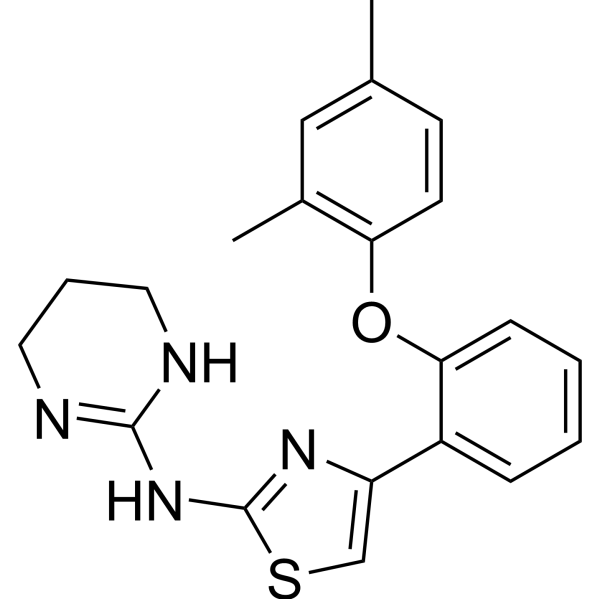
Abafungin (BAY-W-6341) is a broad-spectrum fungicidal arylguanidine compound and a selective inhibitor of sterol-C-24-methyltransferase. Abafungin blocks the transmethylation reaction at the C-24 position of the sterol side chain during the ergosterol biosynthesis pathway. Abafungin directly disrupts fungal cell membrane integrity, and diminishes fungal viability independent of the fungal growth state. Abafungin can be applied to the research of fungal infections, particularly dermatomycoses .
loading...
    loading...
Cat. No.: HY-160773
Research Areas:  

Others

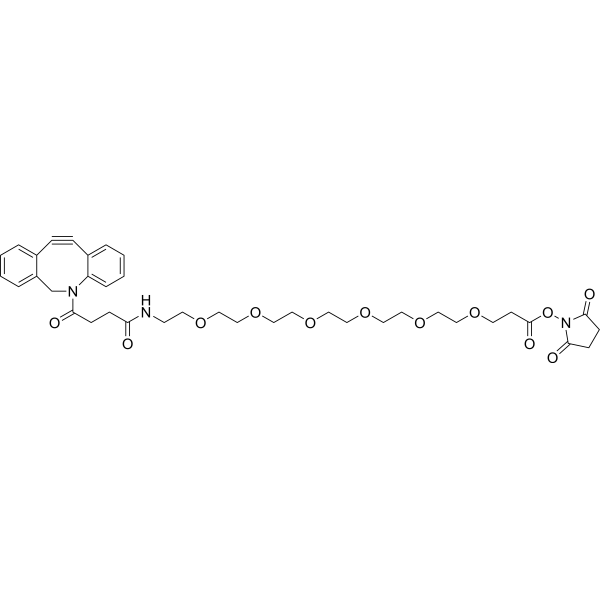
DBCO-PEG6-NHS ester is a click chemistry PEG reagent containing an NHS ester that reacts specifically with primary amines, such as side chains of lysine residues or aminosilane-coated surfaces, under neutral or slightly alkaline conditions. , efficient reaction to form covalent bonds. DBCO-PEG6-NHS ester also contains a DBCO group that can undergo strain-promoted alkyne-azide cycloaddition (SPAAC) with molecules containing Azide groups .
loading...
    loading...
Cat. No.: HY-175453
CAS No.: 3050683-03-6
Target:  

Molecular Glues

Research Areas:  

Cancer

MRT-23227 is a CRBN-recruiting molecular glue degrader targeting VAV1. MRT-23227 binds to the tryptophan triad pocket of CRBN, forms a ternary complex with the SH3c domain of VAV1, and induces proteasomal degradation of VAV1 through hydrogen-bond interactions between CRBN residues and the RT loop and side chains of VAV1. MRT-23227 can be used in the research of T-cell leukemia and lymphoma .
loading...
    loading...
Cat. No.: HY-187163
CAS No.: 78831-35-3
Target:  

DNA/RNA Synthesis

Research Areas:  

Cancer

Anticancer agent 355 is a highly selective and potent anticancer agent, with IC50 values of 64.66 μM and 13.35 μM against HeLa and MDA-MB-231 cancer cells, respectively. Anticancer agent 355 induces plasmid DNA degradation via intercalation or minor groove binding, and disrupts the tertiary structure of BSA by interfering with the interactions of amino acid side chains. Anticancer agent 355 can be used in the research of cervical cancer and breast cancer .
loading...
    loading...
Cat. No.: HY-A0114
CAS No.: 103775-14-0
Synonyms: RS 10029
Moexiprilat is an inhibitor of angiotensin-converting enzyme (ACE; IC50=2.1 nM) and an active metabolite of the prodrug Moexipril (HY-117281). It is formed from moexipril in vivo by side chain ester hydrolysis. Moexiprilat (10 nM) prevents the estrone- or angiotensin II-stimulated proliferation of primary neonatal rat cardiac fibroblasts. It reduces mean arterial blood pressure and increases the levels of atrial natriuretic peptide, a marker of hypertension, in ovariectomized mice when administered at a dose of 50 mg/kg per day.
loading...
    loading...
Cat. No.: HY-P1708
CAS No.: 139601-96-0
Synonyms: BRN 537924; NSC 657143
Target:  

Bacterial

Research Areas:  

Infection

Enopeptin A, originally isolated from a culture broth of Streptomyces sp. RK-1051, is a depsipeptide antibiotic that contains two unusual amino acids (N-methylalanine and 4-methylproline) and features a pentaenone side chain. It is effective against Gram-positive bacteria, including methicillin-resistant S. aureus (MIC=25 μg/mL), and Gram-negative bacteria, including mutant forms of E. coli and P. aeruginosa (MICs=200 μg/mL); however, it is not inhibitory to fungi.
loading...
    loading...
Cat. No.: HY-P3479
CAS No.: 12584-58-6
Target:  

Insulin Receptor

Research Areas:  

Metabolic Disease

Insulin (swine) is an orally active insulin derived from pigs. Insulin (swine) when administered orally acts as an antigen to reduce the severity of pancreatic lymphocyte infiltration, but has no metabolic effect on blood glucose levels. Insulin (swine) increases glucose oxidation, stimulates lipogenesis, and lowers blood glucose levels. Insulin (swine) can be used in diabetes research .
loading...
    loading...
Cat. No.: HY-130666
CAS No.: 81050-71-7
Target:  

Endogenous Metabolite

Research Areas:  

Cardiovascular Disease

Chlorambucyl-proline is a chloroplatinyl amino acid derivative with inhibitory activity against bovine pulmonary vasoconstrictor enzyme. Chlorambucyl-proline reacts with the convertase in a 1:1 ratio, and the removal of its radiolabel indicates that the compound has an irreversible inhibitory effect on the enzyme activity. Chlorambucyl-proline binds to the aspartic acid or glutamic acid side chain of the enzyme by forming an ester bond, resulting in irreversible inactivation of the enzyme. The inactivation rate constant of chlororambucyl-proline increases in the pH range of 5-8, indicating that its effect on the enzyme activity is affected by the pH environment .
loading...
    loading...
Cat. No.: HY-146660
CAS No.: 2451219-73-9
Research Areas:  

Cancer

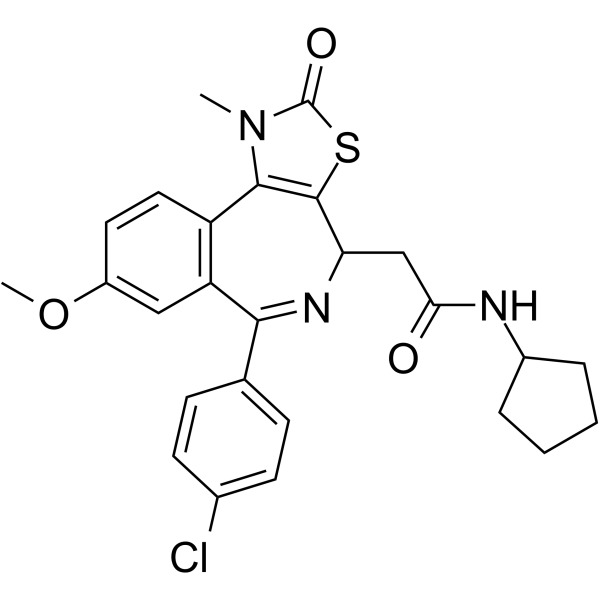
BRD4 Inhibitor-18 is a highly potent BRD4 inhibitor with an IC50 value of 110 nM. BRD4 Inhibitor-18 has a hydrophobic acetylcyclopentanyl side chain. BRD4 Inhibitor-18 can significantly suppress the proliferation of MV-4-11 cells with high BRD4 level. BRD4 Inhibitor-18 has apoptosis-promoting and G0/G1 cycle-arresting activity .
loading...
    loading...
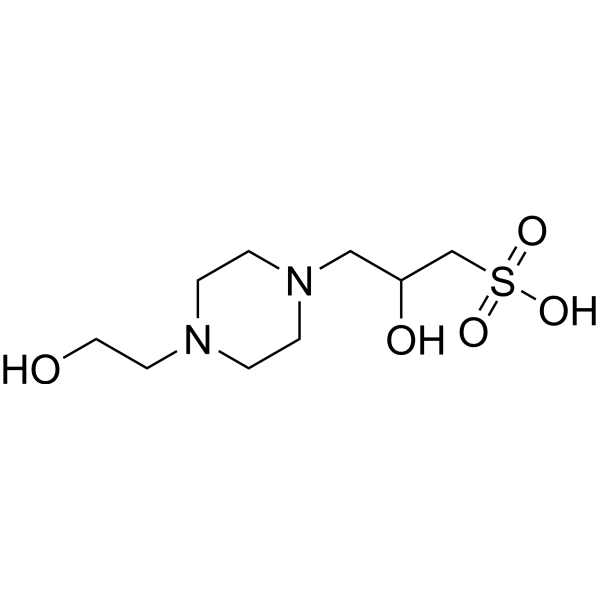
Cat. No.: HY-D0874
CAS No.: 68399-78-0
HEPPSO is a zwitterionic Good's buffer suitable for physiological pH conditions. HEPPSO forms high-order oligomers in aqueous solutions and can form a 1:1 complex with Cu 2+ via its hydroxyalkyl and tertiary amine groups. However, HEPPSO contains a structurally similar trace impurity lacking an alkanesulfonic acid side chain. The complex formed by this impurity and Cu 2+ has a very low Ka; therefore, HEPPSO may interfere with studies on copper speciation analysis in natural water bodies .
loading...
    loading...
Cat. No.: HY-N20697
Ariestatin A is an antibacterial agent that exhibits significant inhibitory effects against a variety of Gram-positive bacteria, including Bacillus subtilis, Staphylococcus aureus, and methicillin-resistant Staphylococcus aureus. Ariestatin A is extracted from the fungus Austroacremonium gemini MST-FP2131, and it is a glycosylated hybrid polyketide with a saturated C15 alkyl side chain. Ariestatin A shows no cytotoxic activity against mammalian cells and does not affect the growth of Saccharomyces cerevisiae. Ariestatin A can be used for bacterial infections caused by the aforementioned Gram-positive bacteria .
loading...
    loading...

