2097 Results for "

multiple

" in MedChemExpress (MCE) Product Catalog:
Products (2097)

2097 Results for "multiple" in MCE Product Catalog:

Cat. No.: HY-175021
HDAC-IN-91 is a multiple inhibitor of HDAC (IC50 = 134.22 nM for HDAC1, 66.29 nM for HDAC2), carbonic anhydrase (CA) (Ki = 72.03 nM for CA IX, 50.76 nM for XII), and tubulin polymerization ( IC50 = 2.56 μM). HDAC-IN-91 inhibits PARP1 and increases the Bax/Bcl-2 ratio. HDAC-IN-91 blocks the cell cycle at the G2/M phase and induces apoptosis through a mitochondrial apoptosis activation mechanism. HDAC-IN-91 can exert potent cytotoxic activity through tubulin polymerization inhibition. HDAC-IN-91 can be used in breast, colorectal, cervical and lung cancer research .
loading...
    loading...
Cat. No.: HY-175286
Target:  

Integrin ERK

Research Areas:  

Inflammation/Immunology Cancer

α4β1 antagonist-1 (Compound 4) is a highly selective α4β1 integrin antagonist (IC50=15 nM). α4β1 antagonist-1 inhibits integrin-mediated cell adhesion and ERK1/2 signaling activation. α4β1 antagonist-1 also exhibits partial agonism toward αMβ2 integrin (EC50=23 nM). α4β1 antagonist-1 is promising for research of chronic inflammatory diseases (e.g., rheumatoid arthritis, multiple sclerosis) and cancers .
loading...
    loading...
Cat. No.: HY-175713
CAS No.: 3050832-41-9
Tubulin/CDC5L-IN-1 is a Tubulin/CDC5L dual inhibitor. Tubulin/CDC5L-IN-1 targets to CDCL5 with a KD of 103.7 μM. Tubulin/CDC5L-IN-1 can inhibit multiple cancer cell proliferation and induce G2/M phase arrest. Tubulin/CDC5L-IN-1 induce cell apoptosis and ROS production. Tubulin/CDC5L-IN-1 exhibits antiangiogenic effects. Tubulin/CDC5L-IN-1 can be used for the research of cancer, such as colon carcinoma .
loading...
    loading...
Cat. No.: HY-175874
CAS No.: 353258-94-3
Research Areas:  

Cancer

Tubulin-IN-55 is a tubulin inhibitor. Tubulin-IN-55 disrupts the PI3K/Akt signaling pathway in cancer cells. Tubulin-IN-55 exerts broad-spectrum anti-proliferative activity against multiple tumor cells (HeLa, HCT116, 4T1, A549, H1299, MDA-MB231). Tubulin-IN-55 induces G2/M phase arrest and apoptosis, and inhibits tumor cell migration/invasion in cancer cells. Tubulin-IN-55 demonstrates potent antitumor efficacy in orthotopic autologous transplantation mice. Tubulin-IN-55 can be used for the study of cancer .
loading...
    loading...
Cat. No.: HY-176701
CAS No.: 3025838-18-7
Research Areas:  

Cancer

PRMT5-MTA-IN-4 (Compound 30) is a potent irreversible protein arginine methyltransferase 5 (PRMT5) inhibitor (IC50=8 nM). PRMT5-MTA-IN-4 blocks arginine methylation, inhibiting ribosomal RNA processing and cell cycle-related protein expression. PRMT5-MTA-IN-4 exhibits antiproliferative activity in multiple tumor cell lines (e.g., IC50=0.3 μM in DLD-1 cells). PRMT5-MTA-IN-4 is promising for research of hematological malignancies, such as acute myeloid leukemia, diffuse large B-cell lymphoma .
loading...
    loading...
Cat. No.: HY-178030
CAXII-IN-3 is an effective carbonic anhydrase (CA XII) inhibitor with a Ki of 53 nM. CAXII-IN-3 exhibits selective inhibition against multiple human CA subtypes with Kis of 5.3 μM, 75 nM, 1.9 μM, > 10 μM against CA I, CA II, CA IV and CA IX. CAXII-IN-3 mainly inhibits CA II and XII, and reduces aqueous humor production. CAXII-IN-3 exhibits β3-AR agonistic activity, can dilate retinal blood vessels, and improve optic nerve perfusion. CAXII-IN-3 can be used in the research of ocular disorders such as glaucoma .
loading...
    loading...
Cat. No.: HY-179571
CAS No.: 1048-17-5
Synonyms: PPTD
Research Areas:  

Cancer

ZIP 14-IN-1 (PPTD) is a selective and orally active ZIP14 inhibitor. ZIP 14-IN-1 inhibits ZIP14 while sparing ZIP8 (SLC39A8). ZIP 14-IN-1 efficiently blocks ZIP14-mediated uptake of multiple divalent metals (zinc, iron, manganese and cadmium). ZIP 14-IN-1 binds to a pocket formed at the dimer interface of ZIP14, obstructing the metal transport pathway. ZIP 14-IN-1 effectively reverses the consequent elevation of reactive oxygen species (ROS) and lipid peroxidation, attenuating metal-induced cytotoxicity. ZIP 14-IN-1 can be uses for cancer cachexia research .
loading...
    loading...
Cat. No.: HY-182600
CAS No.: 2370980-52-0
KLK6-IN-1 is a reversible small‑molecule inhibitor of KLK6, KLK1, and plasmin. KLK6-IN-1 shows IC50 values of 1.57 μM (KLK6), 5.1 μM (KLK1), 7.4 μM (plasmin), and Ki values of 0.8 μM (KLK6), 2.4 μM (KLK1), 1.3 μM (plasmin). KLK6-IN-1 is highly selective for KLK6 and its proteolytic network. KLK6-IN-1 induces oligodendrocyte differentiation by promoting oligodendrocyte precursor cell maturation. KLK6-IN-1 can be used for the research of multiple sclerosis .
loading...
    loading...
Cat. No.: HY-182700
CAS No.: 717863-53-1
Target:  

Complement System VEGFR

Research Areas:  

Cancer

NRPa-308 is a potent and orally active Neuropilin-1 (NRP-1) antagonist with an IC50 of 42 μM for inhibiting VEGF-A165 binding to NRP-1. NRPa-308 blocks the specific interaction between VEGF-A165 and NRP-1. NRPa-308 effectively suppresses angiogenesis in vitro and in vivo and reduces the viability of a broad spectrum of human solid and haematological cancer cells. NRPa-308 inhibits tumor growth and prolongs median survival in a human breast cancer xenograft mouse model. NRPa-308 can be used for the research of multiple human malignancies including solid tumors and hematological cancers .
loading...
    loading...
Cat. No.: HY-189372
CAS No.: 3117572-66-1
Target:  

Drug Derivative Fungal

Research Areas:  

Infection

Antifungal agent 180 is a pyrazole-oxadiazole-linked 1,2,4-triazole derivative and a broad-spectrum antifungal agent. Antifungal agent 180 disrupts fungal cellular homeostasis through multiple pathways, damaging the integrity of fungal hyphal cell membranes, increasing membrane permeability, and causing leakage of intracellular nucleic acids and proteins; it induces hyphal shrinkage, collapse, and organelle disintegration; and it causes widespread dysregulation of sterol/lipid metabolism, carbohydrate utilization, mitochondrial respiration, and stress response pathways at both the transcriptomic and proteomic levels. Antifungal agent 180 exhibits protective and curative efficacy against rice blast in vivo. Antifungal agent 180 can be used in research on rice blast and gray mold .
loading...
    loading...
Cat. No.: HY-20888
CAS No.: 145370-39-4
Synonyms: MNF
3'-Methoxy-4'-nitroflavone (MNF) is a specific aryl hydrocarbon receptor (AhR) antagonist. 3'-Methoxy-4'-nitroflavone activates AhR by inhibiting CYP1, the metabolic enzyme of the endogenous ligand FICZ (HY-12451), leading to the accumulation of FICZ. 3'-Methoxy-4'-nitroflavone reverses the anti-apoptotic effect of TCDD, attenuates the activation of Akt and Erk1/2 kinases and the expression of TGFα induced by TCDD. 3'-Methoxy-4'-nitroflavone can be used in research related to breast tumor promotion, rheumatoid arthritis, multiple sclerosis and inflammatory bowel disease .
loading...
    loading...
Cat. No.: HY-B0696
CAS No.: 115103-54-3
Synonyms: NO050328; NO328; TGB
Target:  

GABA Receptor

Research Areas:  

Neurological Disease

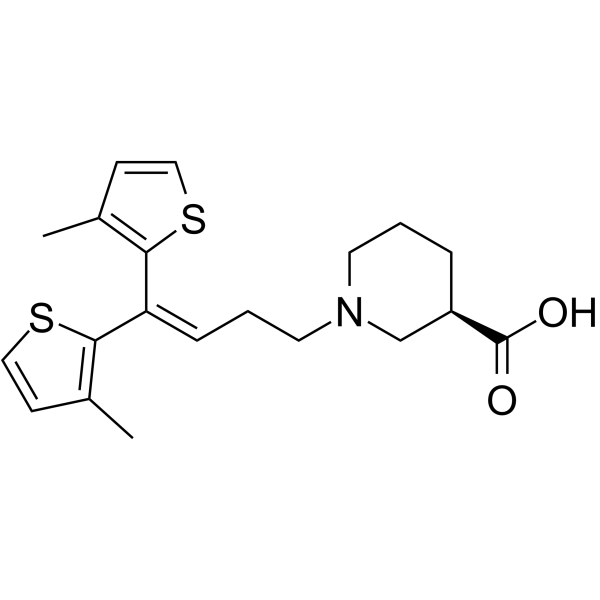
Tiagabine (NO050328; NO328; TGB) is an orally active, highly selective, and reversible GAT-1 inhibitor and anticonvulsant that crosses the blood-brain barrier. By blocking the reuptake of GABA in neurons and glial cells, tiagabine increases extracellular GABA levels to enhance inhibitory signal transduction, thereby exerting multiple activities such as anticonvulsant, neuroprotective, and antioxidant effects. Tiagabine exhibits linear pharmacokinetic properties. Although it is metabolized by CYP3A and has a high protein binding rate, it carries a low risk of cognitive impairment. Tiagabine is widely used in research on related diseases including epilepsy (including refractory partial seizures), alcohol withdrawal symptoms, and Huntington's disease .
loading...
    loading...
Cat. No.: HY-B0696A
CAS No.: 145821-59-6
Synonyms: NO050328 hydrochloride; NO328 hydrochloride; TGB hydrochloride
Target:  

GABA Receptor

Research Areas:  

Neurological Disease

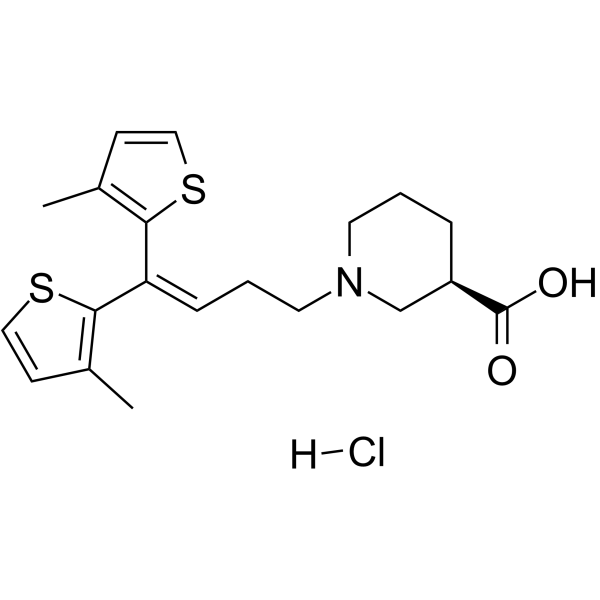
Tiagabine hydrochloride (NO050328; NO328; TGB) is an orally active, highly selective, and reversible GAT-1 inhibitor and anticonvulsant that crosses the blood-brain barrier. By blocking the reuptake of GABA in neurons and glial cells, tiagabine increases extracellular GABA levels to enhance inhibitory signal transduction, thereby exerting multiple activities such as anticonvulsant, neuroprotective, and antioxidant effects. Tiagabine hydrochloride exhibits linear pharmacokinetic properties. Although it is metabolized by CYP3A and has a high protein binding rate, it carries a low risk of cognitive impairment. Tiagabine hydrochloride is widely used in research on related diseases including epilepsy (including refractory partial seizures), alcohol withdrawal symptoms, and Huntington's disease .
loading...
    loading...
Cat. No.: HY-B0696B
CAS No.: 145821-57-4
Synonyms: NO050328 hydrochloride hydrate; NO328 hydrochloride hydrate; TGB hydrochloride hydrate
Target:  

GABA Receptor

Research Areas:  

Neurological Disease

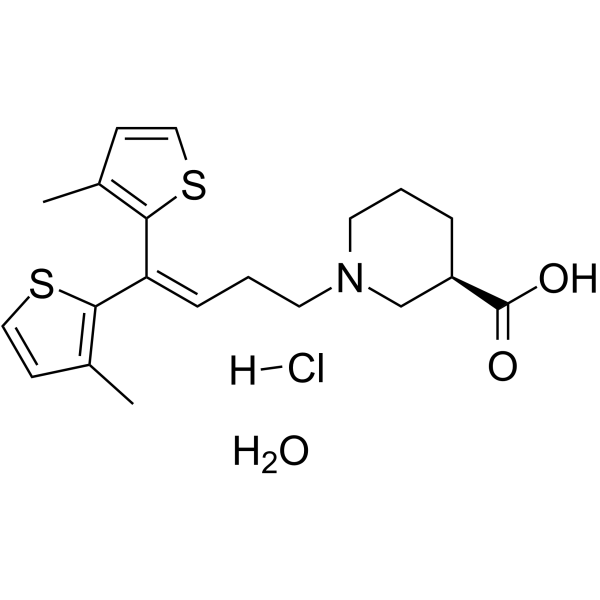
Tiagabine (NO050328; NO328; TGB) hydrochloride hydrate is an orally active, highly selective, and reversible GAT-1 inhibitor and anticonvulsant that crosses the blood-brain barrier. By blocking the reuptake of GABA in neurons and glial cells, tiagabine increases extracellular GABA levels to enhance inhibitory signal transduction, thereby exerting multiple activities such as anticonvulsant, neuroprotective, and antioxidant effects. Tiagabine hydrochloride hydrate exhibits linear pharmacokinetic properties. Although it is metabolized by CYP3A and has a high protein binding rate, it carries a low risk of cognitive impairment. Tiagabine hydrochloride hydrate is widely used in research on related diseases including epilepsy (including refractory partial seizures), alcohol withdrawal symptoms, and Huntington's disease .
loading...
    loading...
Cat. No.: HY-B0984R
CAS No.: 13636-18-5
Fendiline (hydrochloride) (Standard) is the analytical standard of Fendiline (hydrochloride). This product is intended for research and analytical applications. Fendiline hydrochloride, a diphenylalkylamine type of antianginal agent, is an L-type calcium channel blocker (IC50 of 17 µM). Fendiline hydrochloride is also a selective K-Ras inhibitor, and has no effect on H-Ras and N-Ras. Fendiline hydrochloride inhibits K-Ras plasma membrane localization (IC50 of 9.64 μM), inhibits K-Ras signal output and blocks the proliferation of pancreatic, colon, lung, and endometrial cancer cell lines expressing oncogenic mutant K-Ras. Fendiline hydrochloride is a STING agonist and is able to inhibit the growth of multiple refractory cold tumors (MC38, CT26 and B16F10) .
loading...
    loading...
Cat. No.: HY-E70241
CAS No.: 157786-88-4
Research Areas:  

Infection Metabolic Disease

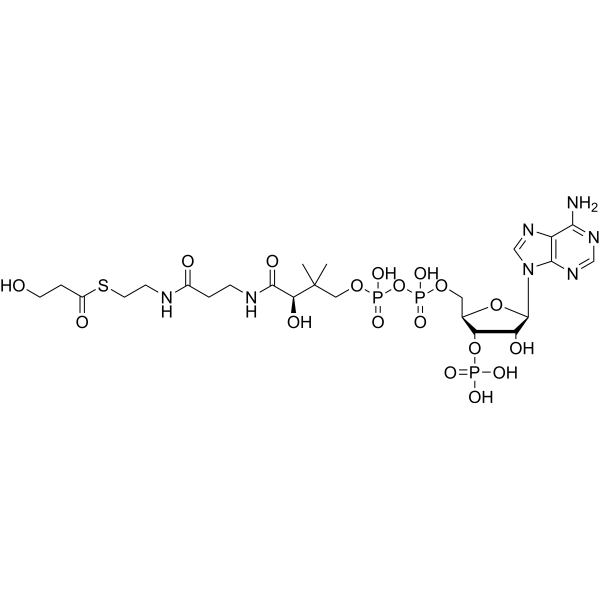
3-Hydroxypropionyl-CoA is a metabolic intermediate and enzyme substrate/product that functions in multiple metabolic pathways. 3-Hydroxypropionyl-CoA serves as a substrate for 3-Hydroxypropionyl-CoA dehydratase (HY-E71752), a product of 3-hydroxypropionyl-CoA synthetase, and a hydrolysis substrate for Ehd3p. 3-Hydroxypropionyl-CoA participates in autotrophic CO2 fixation, modified β-oxidation, and reverse hydration reactions. Accumulation of 3-Hydroxypropionyl-CoA inhibits fatty acid β-oxidation at the Fox2p site and induces metabolic toxicity. 3-Hydroxypropionyl-CoA can be used in studies of hematogenously disseminated candidiasis .
loading...
    loading...
Cat. No.: HY-E70696
Target:  

EGFR

Research Areas:  

Cancer

EGFR is a driver of tumorigenesis. EGFR is mainly found in an auto-inhibited, dimerization-incompetent, state at the plasma membrane (PM). Ligand binding promotes receptor dimerization, which determines a series of structural rearrangements that are conveyed to the cytoplasmic domain allowing the formation of asymmetric dimers between the two juxtaposed catalytic domains. EGFR has multiple mutants. EGFR C797S/L858R Recombinant Human Active Protein Kinase is a recombinant EGFR C797S/L858R protein that can be used to study EGFR C797S/L858R-related functions .
loading...
    loading...
Cat. No.: HY-E70698
Target:  

EGFR

Research Areas:  

Cancer

EGFR is a driver of tumorigenesis. EGFR is mainly found in an auto-inhibited, dimerization-incompetent, state at the plasma membrane (PM). Ligand binding promotes receptor dimerization, which determines a series of structural rearrangements that are conveyed to the cytoplasmic domain allowing the formation of asymmetric dimers between the two juxtaposed catalytic domains. EGFR has multiple mutants. EGFR d746-750/C797S Recombinant Human Active Protein Kinase is a recombinant EGFR d746-750/C797S protein that can be used to study EGFR d746-750/C797S-related functions .
loading...
    loading...
Cat. No.: HY-E70702
Target:  

EGFR

Research Areas:  

Cancer

EGFR is a driver of tumorigenesis. EGFR is mainly found in an auto-inhibited, dimerization-incompetent, state at the plasma membrane (PM). Ligand binding promotes receptor dimerization, which determines a series of structural rearrangements that are conveyed to the cytoplasmic domain allowing the formation of asymmetric dimers between the two juxtaposed catalytic domains. EGFR has multiple mutants. EGFR d747-752/P753S Recombinant Human Active Protein Kinase is a recombinant EGFR d747-752/P753S protein that can be used to study EGFR d747-752/P753S-related functions .
loading...
    loading...
Cat. No.: HY-E71860
Research Areas:  

Others

4-Hydroxy-tetrahydrodipicolinate reductase (EC 1.17.1.8) is an oxidoreductase that can catalyze multiple reactions, including reaction 1: convert (S)-2,3,4,5-tetrahydrodipicolinate, NAD + and H2O into (2S,4S)-4-hydroxy-2,3,4,5-tetrahydrodipicolinate, NADH and H +; reaction 2: convert (S)-2,3,4,5-tetrahydrodipicolinate, NADP + and H2O into (2S,4S)-4-hydroxy-2,3,4,5-tetrahydrodipicolinate, NADPH and H +.
loading...
    loading...

