25 Results for "

δ-Lactone

" in MedChemExpress (MCE) Product Catalog:
Products (25)

25 Results for "δ-Lactone" in MCE Product Catalog:

Cat. No.: HY-135755
CAS No.: 64053-02-7
Target:  

Drug Intermediate

Research Areas:  

Others

δ-Lactone, an A-ring degradation product, is also an important intermediate in the synthesis of Estrone (HY-B0234), Estradiol (HY-B0141), and their derivatives .
loading...
    loading...
1
1 Cited Publications
Cat. No.: HY-107855
CAS No.: 674-26-0
Purity:  99.15%
Synonyms: (±)-MevalonoLactone; MevaloLactone
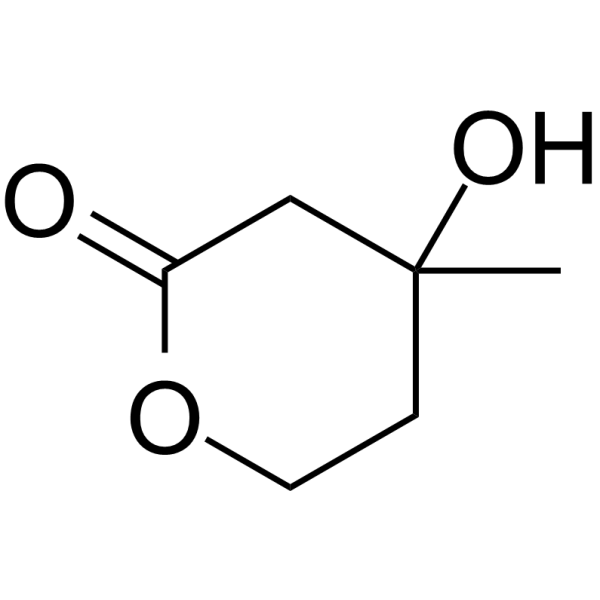
DL-Mevalonolactone ((±)-Mevalonolactone;Mevalolactone) is the δ-lactone form of mevalonic acid, a precursor in the mevalonate pathway. DL-Mevalonolactone is orally active against HMGCR mutation and statin caused myopathy . DL-Mevalonolactone induces inflammation and oxidative stress response with decreased mitochondrial membrane potential (MMP) and induces mitochondrial swelling [2][4].
loading...
    loading...
Cat. No.: HY-132184
CAS No.: 87173-80-6
Purity:  ≥99.0%
Synonyms: 5,6-EET; (±)5,6-EpETrE
Research Areas:  

Endocrinology

5,6-Epoxyeicosatrienoic acid (5,6-EET; (±)5,6-EpETrE) is a fully racemic version of the enantiomeric forms biosynthesized from arachidonic acid by cytochrome P450 enzymes. In solution, 5,6-Epoxyeicosatrienoic acid degrades into 5,6-DiHET and 5,6-δ-lactone, which can be converted to 5,6-DiHET and quantified by GC-MS. In neuroendocrine cells, such as the anterior pituitary and pancreatic islets, 5,6-Epoxyeicosatrienoic acid has been implicated in the mobilization of calcium and hormone secretion. 5,6-Epoxyeicosatrienoic acid is an inhibitor of T-type voltage-gated calcium channels (Cav3) that inhibits isoforms Cav3.1, Cav3.2 (IC50=0.54 μM), and Cav3. and decreases nifedipine-resistant phenylephrine-induced vasoconstriction in isolated mouse mesenteric arteries via Cav3.2 blockade when used at a concentration of 3 μM. In addition, it is a substrate of COX-1 and COX-2.
loading...
    loading...
Cat. No.: HY-W587796
CAS No.: 2641-81-8
Synonyms: 6-PGδL; 6-Phosphonoglucono-D-Lactone
6-Phosphoglucono-δ-lactone (6-PGδL), a reversal substrate of glucose-6-phosphate dehydrogenase (G6PD), is an intermediate compound in the oxidative branch of the pentose phosphate pathway (PPP). 6-Phosphoglucono-δ-lactone produced from D-glucose-6-phosphate by glucose-6-phosphate dehydrogenase (G6PDH) and is converted to 6-phosphoglutonate by lactonase. 6-Phosphoglucono-δ-lactone can be used for heart failure, type 2 diabetes and cancers research .
loading...
    loading...
Cat. No.: HY-135700
CAS No.: 19115-49-2
Purity:  ≥98.0%
Mevalonolactone is an intermediate metabolite in the eukaryotic mevalonate pathway, serving as the stable δ-lactone form of mevalonate with oral activity. Mevalonolactone exhibits binding affinity for ZNF384 (Ka = 12.6 μM) and inhibitory activity against aconitase (aconitase). Mevalonolactone promotes the nuclear localization of ZNF384 and enhances its binding to the GGPPS promoter. Mevalonolactone induces insulin resistance, disrupts glucose and lipid metabolism, enhances the isoprenylation of K-Ras, and inhibits the activation of the insulin signaling pathway. Mevalonolactone inhibits polypeptide synthesis of HMG-CoA reductase in isolated rat hepatocytes, promotes its degradation, and reduces its enzymatic activity. Mevalonolactone impairs mitochondrial function in rat brains. Mevalonolactone promotes the development of metabolically unhealthy obesity. Mevalonolactone can be used in research related to metabolically abnormal obesity, mevalonic aciduria, HMGCR-related limb-girdle myopathy, and statin-induced myopathy .
loading...
    loading...
Cat. No.: HY-125863C
CAS No.: 9001-40-5
Synonyms: G6PD, Bacillus sp.
Research Areas:  

Metabolic Disease

Glucose-6-phosphate dehydrogenase, Bacillus sp. (G6PD, Bacillus sp.) (EC 1.1.1.49) is an NADP-dependent antioxidant metabolic enzyme. Glucose-6-phosphate dehydrogenase, Bacillus sp. is induced by sublethal doses of Menadione (HY-B0332) and increasing concentrations of NaCl in Bacillus sp. F26. Glucose-6-phosphate dehydrogenase, Bacillus sp. catalyzes the oxidation of glucose-6-phosphate (G6P) to 6-phosphoglucono-δ-lactone, while reducing NADP + to NADPH, providing reducing power for the antioxidant defense system and cellular redox balance of Bacillus sp. F26. Glucose-6-phosphate dehydrogenase, Bacillus sp. is used in research related to diabetic complications .
loading...
    loading...
Cat. No.: HY-P3990
CAS No.: 1029227-48-2
Target:  

VEGFR Autophagy Apoptosis

Research Areas:  

Cancer

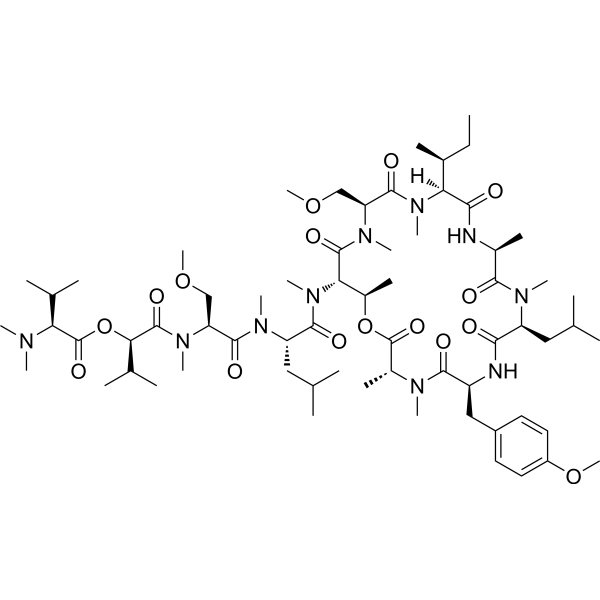
Coibamide A, an N-methyl-stabilized cytotoxic depsipeptide, shows potent antiproliferative activity. Coibamide A induces autophagosome accumulation via an mTOR-independent mechanism. Coibamide A induces apoptosis. Coibamide A inhibits VEGFA/VEGFR2 expression and suppresses tumor growth in glioblastoma xenografts .
loading...
    loading...
Cat. No.: HY-107855S
CAS No.: 347840-19-1
Purity:  99.27%
Synonyms: (±)-MevalonoLactone-d7; MevaloLactone-d7
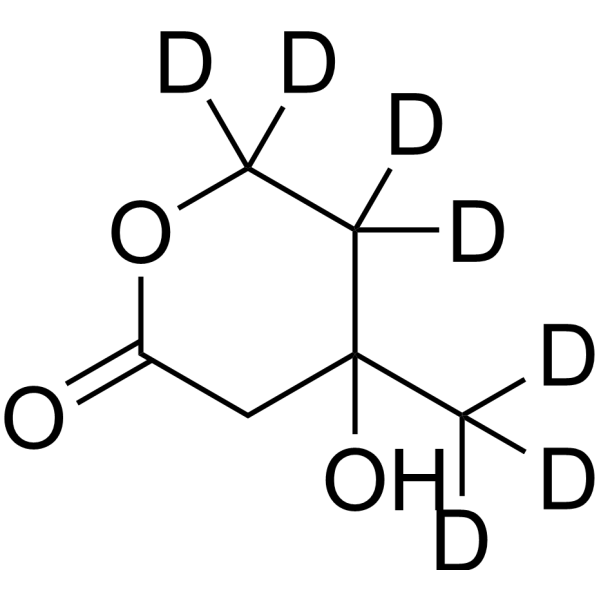
DL-Mevalonolactone-d7 is the deuterium labeled DL-Mevalonolactone. DL-Mevalonolactone ((±)-Mevalonolactone) is the δ-lactone form of mevalonic acid, a precursor in the mevalonate pathway. DL-Mevalonolactone (Mevalonolactone) decreases mitochondrial membrane potential (?Ψm), NAD(P)H content and the capacity to retain Ca2+ in the brain, besides inducing mitochondrial swelling .
loading...
    loading...
Cat. No.: HY-125863B
CAS No.: 9001-40-5
Synonyms: G6PD (yeast, recombinant)
Glucose 6-phosphate dehydrogenase (yeast, recombinant) (G6PD (yeast, recombinant)) is a recombinant enzyme requiring NADP + as a coenzyme. Glucose 6-phosphate dehydrogenase (yeast, recombinant) catalyzes the oxidative dehydrogenation of glucose-6-phosphate to form 6-phosphoglucono-δ-lactone, as well as the reduction of NADP + to NADPH. Glucose 6-phosphate dehydrogenase (yeast, recombinant) relies on the amino acid Arg-52 to bind NADP +. Glucose 6-phosphate dehydrogenase (yeast, recombinant) undergoes competitive inhibition by NADPH and strong inhibition by zinc ions (Zn 2+). Glucose 6-phosphate dehydrogenase (yeast, recombinant) is an enzyme in the pentose phosphate pathway, which is one of the glucose metabolic pathways. Glucose 6-phosphate dehydrogenase (yeast, recombinant) can be used for the quantitative detection of ATP, glucose and creatine kinase .
loading...
    loading...
Cat. No.: HY-125863A
CAS No.: 9001-40-5
Synonyms: G6PD (Leuconostoc sp., recombinant)
Research Areas:  

Metabolic Disease

Glucose-6-phosphate dehydrogenase (Leuconostoc sp., recombinant) (G6PD (Leuconostoc sp., recombinant)) (EC 1.1.1.49) is an NADP-dependent antioxidant metabolic enzyme. Glucose-6-phosphate dehydrogenase (Leuconostoc sp., recombinant) can be induced by sublethal doses of Menadione (HY-B0332) and increasing concentrations of NaCl. Glucose-6-phosphate dehydrogenase (Leuconostoc sp., recombinant) catalyzes the oxidation of glucose-6-phosphate (G6P) to 6-phosphoglucono-δ-lactone, while reducing NADP + to NADPH, providing reducing power for the antioxidant defense system and cellular redox balance of bacteria. Glucose-6-phosphate dehydrogenase (Leuconostoc sp., recombinant) is used in research related to diabetic complications .
loading...
    loading...
Cat. No.: HY-146970
Target:  

Antibiotic

Research Areas:  

Cancer

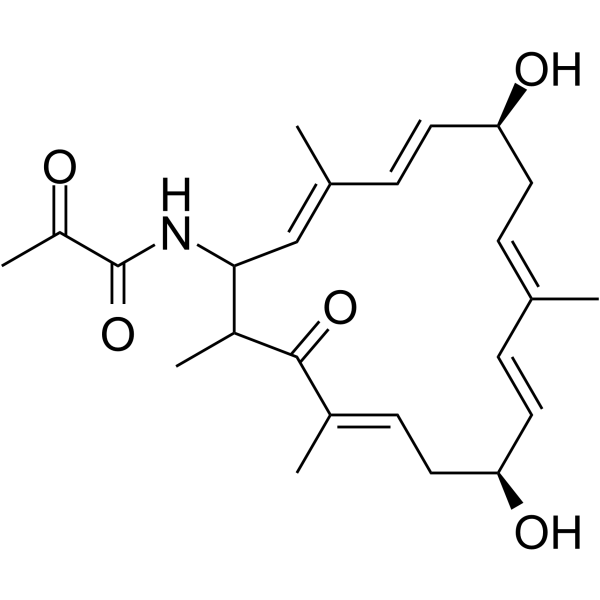
Lankacyclinone C is a lankacidin C congener lacking the δ-lactone moiety, with antitumor activity .
loading...
    loading...
Cat. No.: HY-P1720
CAS No.: 19246-24-3
Target:  

Antibiotic Bacterial

Research Areas:  

Infection

Telomycin is a calcium-dependent antibiotic, which can be produced by Streptomyces. Telomycin inhibits gram-positive bacteria, including multidrug-resistant (MDR) pathogens .
loading...
    loading...
Cat. No.: HY-N10391
CAS No.: 1003600-48-3
Synonyms: Cleistenolide
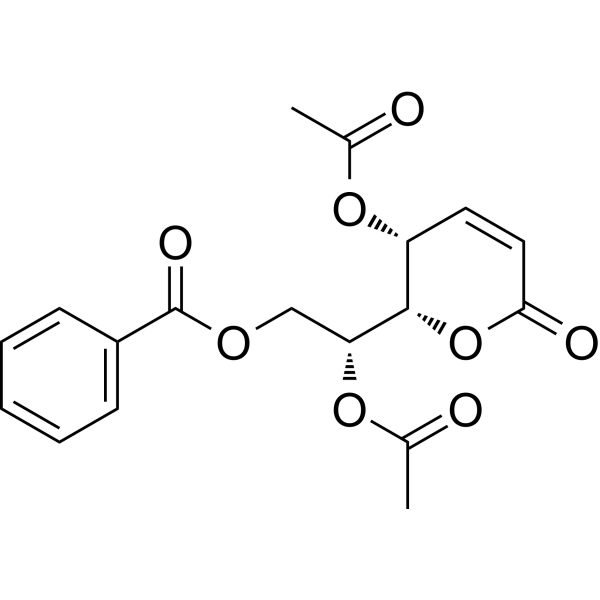
(-)-Cleistenolide is a α,β-unsaturated δ-lactone isolated from Cleistochlamys kirkii Oliver. (-)-Cleistenolide has antibacterial and antitumor activity .
loading...
    loading...
Cat. No.: HY-107855S1
CAS No.: 61219-76-9
Synonyms: (±)-MevalonoLactone-d3; MevaloLactone-d3
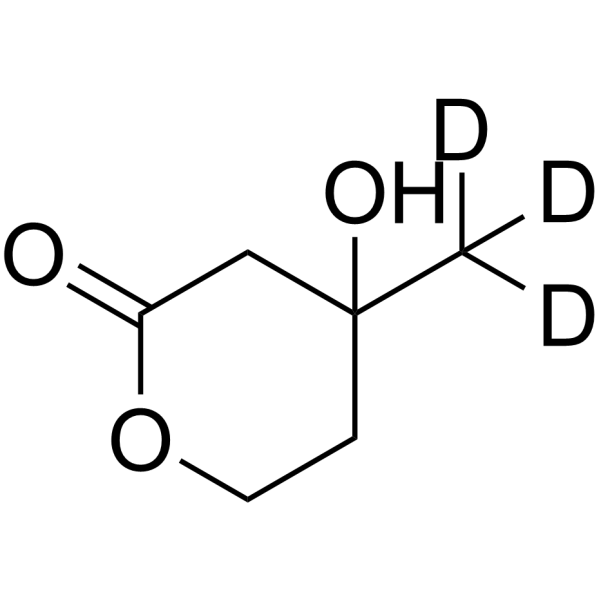
DL-Mevalonolactone-d3 is the deuterium labeled DL-Mevalonolactone . DL-Mevalonolactone ((±)-Mevalonolactone;Mevalolactone) is the δ-lactone form of mevalonic acid, a precursor in the mevalonate pathway. DL-Mevalonolactone (Mevalonolactone) decreases mitochondrial membrane potential ( Ψm), NAD(P)H content and the capacity to retain Ca2+ in the brain, besides inducing mitochondrial swelling .
loading...
    loading...
Cat. No.: HY-107855R
CAS No.: 674-26-0
Synonyms: (±)-MevalonoLactone (Standard); MevaloLactone (Standard)
DL-Mevalonolactone (Standard) is the analytical standard of DL-Mevalonolactone. This product is intended for research and analytical applications. DL-Mevalonolactone ((±)-Mevalonolactone;Mevalolactone) is the δ-lactone form of mevalonic acid, a precursor in the mevalonate pathway. DL-Mevalonolactone is orally active against HMGCR mutation and statin caused myopathy . DL-Mevalonolactone induces inflammation and oxidative stress response with decreased mitochondrial membrane potential (MMP) and induces mitochondrial swelling .
loading...
    loading...
Cat. No.: HY-130229
CAS No.: 213126-92-2
Synonyms: (±)5,6-DiHETrE Lactone
Target:  

Drug Derivative

Research Areas:  

Cardiovascular Disease

5,6-DiHET lactone ((±)5,6-DiHETrE lactone) is a lactonized form of 5,6-EET and 5,6-DiHET. In solution, 5(6)-EET degrades into 5(6)-DiHET and 5(6)-δ-lactone, which can be converted to 5(6)-DiHET and quantified by GC-MS.1 5,6-DiHET potently induces vasodilation of isolated canine coronary arterioles, with 41 and 100% inhibition occurring at 0.01 and 100 pM, respectively. It also induces vasodilation in isolated human microvessels and increases intracellular calcium levels in a dose-dependent manner, an effect that can be blocked by the nitric oxide scavenger L-NAME.
loading...
    loading...
Cat. No.: HY-P1709
CAS No.: 141912-59-6
Protactin is a pentapeptide lactone produced by Streptomyces cucumeris strain L703-4 (ATCC 53784) with significant antioxidant properties. Protactin can be converted to actinomycin Zp by ferrocyanide oxidation. Actinomycin Zp exhibits potent antibacterial activity in vitro and has significant antitumor effects against P-388 leukemia in a mouse model .
loading...
    loading...
Cat. No.: HY-N9310
CAS No.: 19131-13-6
6-Deoxy-3-O-methyl-beta-allopyranosyl(1-4)-beta-cymaronic acid delta-lactone is a natural product .
loading...
    loading...
Cat. No.: HY-107855S2
CAS No.: 53771-22-5
Synonyms: (±)-MevalonoLactone-13C; MevaloLactone-13C
DL-Mevalonolactone- 13C ((±)-Mevalonolactone- 13C) is the 13C-labeled DL-Mevalonolactone (HY-107855). DL-Mevalonolactone ((±)-Mevalonolactone;Mevalolactone) is the δ-lactone form of mevalonic acid, a precursor in the mevalonate pathway. DL-Mevalonolactone is orally active against HMGCR mutation and statin caused myopathy. DL-Mevalonolactone induces inflammation and oxidative stress response with decreased mitochondrial membrane potential (MMP) and induces mitochondrial swelling.
loading...
    loading...
Cat. No.: HY-107855S4
CAS No.: 287111-36-8
Synonyms: (±)-MevalonoLactone-13C2; MevaloLactone-13C2
DL-Mevalonolactone- 13C2 ((±)-Mevalonolactone- 13C2) is the 13C-labeled DL-Mevalonolactone (HY-107855). DL-Mevalonolactone ((±)-Mevalonolactone;Mevalolactone) is the δ-lactone form of mevalonic acid, a precursor in the mevalonate pathway. DL-Mevalonolactone is orally active against HMGCR mutation and statin caused myopathy . DL-Mevalonolactone induces inflammation and oxidative stress response with decreased mitochondrial membrane potential (MMP) and induces mitochondrial swelling [2][4].
loading...
    loading...

