1. Search Result
Search Result
Results for "

π-π

" in MedChemExpress (MCE) Product Catalog:

32

Inhibitors & Agonists

1

Fluorescent Dyes

2

Biochemical Assay Reagents

1

MCE Kits

3

Natural
Products

1

Isotope-Labeled Compounds

Cat. No. Product Name Target Research Areas Chemical Structure
  • HY-D0823
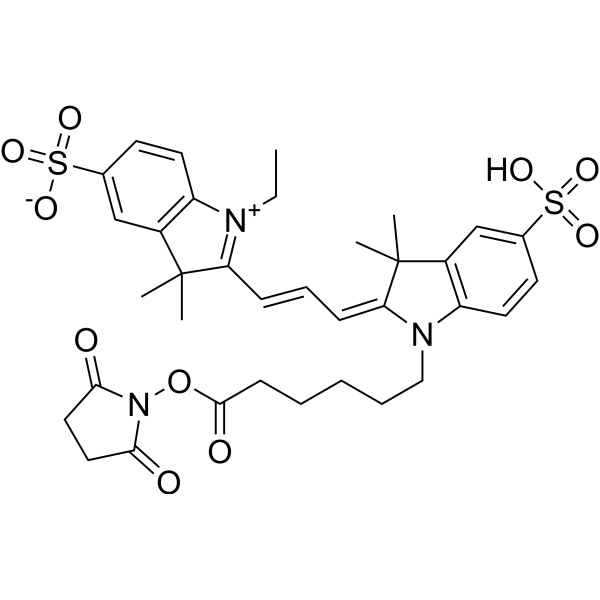
    CY3-SE
    1 Publications Verification

    Sulfo-Cy3 NHS ester; Sulfo Cyanine3 NHS ester

    Fluorescent Dye Others
    Cy3-SE (Sulfo-Cy3 NHS ester; Sulfo Cyanine3 NHS ester) is a sulfonated cyanine dye-derived fluorescent labeling reagent with λex of about 515 nm and λem of about 568 nm. Cy3-SE can interact with the π-π stacking of biomolecules (e.g., nucleoside monophosphates, proteins), inhibiting the photoisomerization process and increasing the fluorescence quantum yield and lifetime .
    CY3-SE
  • HY-151108
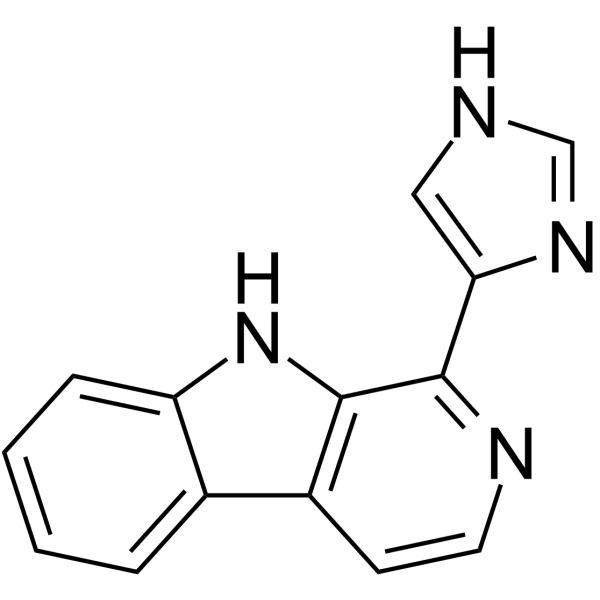
    IDO1/TDO-IN-4
    1 Publications Verification

    Indoleamine 2,3-Dioxygenase (IDO) Neurological Disease Inflammation/Immunology
    IDO1/TDO-IN-4 is a potent IDO1/TDO dual inhibitor, with IC50 values of 3.53 μM (IDO1) and 1.15 μM (TDO). IDO1/TDO-IN-4 forms hydrogen bond with IDO1, and π−π stacking interaction with TDO. IDO1/TDO-IN-4 can be used in the research of depression, and depression-induced infectious, metabolic, and autoimmune disorders .
    IDO1/TDO-IN-4
  • HY-107869

    Fluorescent Dye Cancer
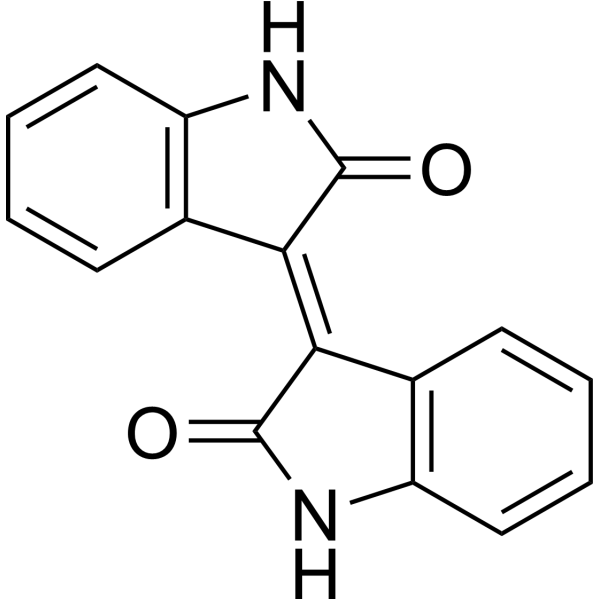
    Isoindigo acts as the acceptor unit in donor-acceptor (D-A) conjugated polymers and belongs to the indigo dye family. Isoindigo contains two lactam rings and exhibits strong electron-withdrawing properties. Isoindigo can be used in dyeing and pigment preparation. Isoindigo shows high mobility and excellent environmental stability in field-effect transistors (FETs). Isoindigo possesses the activity to inhibit tumor cell proliferation and has certain anti-tumor activity .
    Isoindigo
  • HY-113404

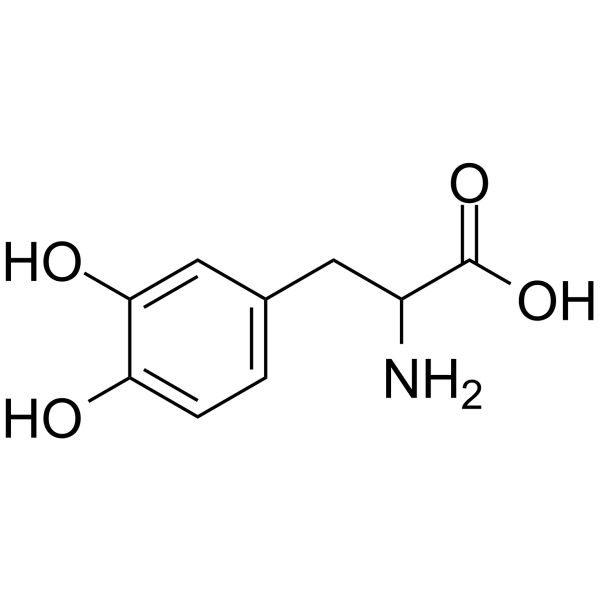
    Tyrosinase Dopamine Receptor Neurological Disease
    DL-Dopa is a dopamine precursor. It serves as a substrate for Mushroom Tyrosinase, which oxidizes it to dopaquinone, an intermediate in the DOPA-melanin polymerization process, and this reaction can be detected at 475 nm. DL-Dopa also forms synergistic hydrophobic and π-π stacking interactions with cationic surfactants. Its binding to cetylpyridinium chloride (HY-B1464) is stronger and exhibits better thermodynamic stability than its binding to benzalkonium chloride (HY-B2232). DL-Dopa can compensate for dopamine depletion in the brain and is applicable to research related to Parkinson's disease .
    DL-Dopa
  • HY-177063

    Interleukin Related Infection Inflammation/Immunology
    IL-6-IN-2 is an interleukin-6 (IL-6) inhibitor. IL-6-IN-2 binds to IL-6 at Lys66, Phe74, Gln175, Ser176, and Arg179 via π-π, π-alkyl, hydrogen bond, and hydrophobic interactions to block IL-6/IL-6R heterocomplex formation. IL-6-IN-2 exhibits low gastrointestinal absorption rate. IL-6-IN-2 can be used for the research of cytokine release syndrome, covid-19 .
    IL-6-IN-2
  • HY-78985

    Trimesic acid

    MOFs Biochemical Assay Reagents Others
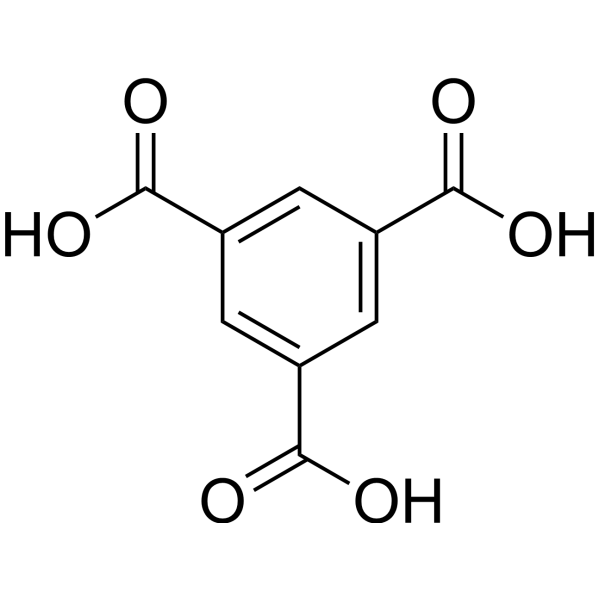
    Benzene-1,3,5-tricarboxylic acid (Trimesic acid) is a rigid planar small-molecule scaffold and crosslinker. Benzene-1,3,5-tricarboxylic acid induces bicyclic peptides to adopt a planar conformation, so as to maximize surface area and bind to the flat protein surfaces involved in protein-protein interactions. Benzene-1,3,5-tricarboxylic acid forms ionic crosslinks, hydrogen bonds and π-π bonds with chitosan, thereby constructing a hydrogel network. Benzene-1,3,5-tricarboxylic acid endows chitosan hydrogel systems with specific mechanical properties, enabling sustained release of cancer therapeutic drugs including 5-Fluorouracil (HY-90006) .
    Benzene-1,3,5-tricarboxylic acid
  • HY-W196368

    COX SARS-CoV Infection Inflammation/Immunology Cancer
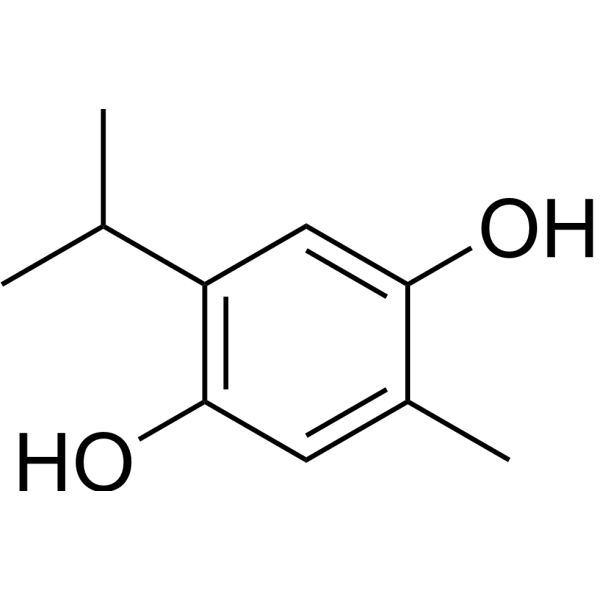
    Thymohydroquinone is a COX-2 inhibitor and anti-SARS-CoV-2 agent that induces cytotoxicity, antiproliferative effects and inhibits tumor growth. Thymohydroquinone cannot scavenge superoxide radicals via σ (hydrogen atom transfer) and π-π attacks with superoxide anions. Thymohydroquinone can be used in research related to squamous cell carcinoma, fibrosarcoma and coronavirus disease 2019 (SARS-CoV-2 infection) .
    Thymohydroquinone
  • HY-W012911

    Biochemical Assay Reagents Others
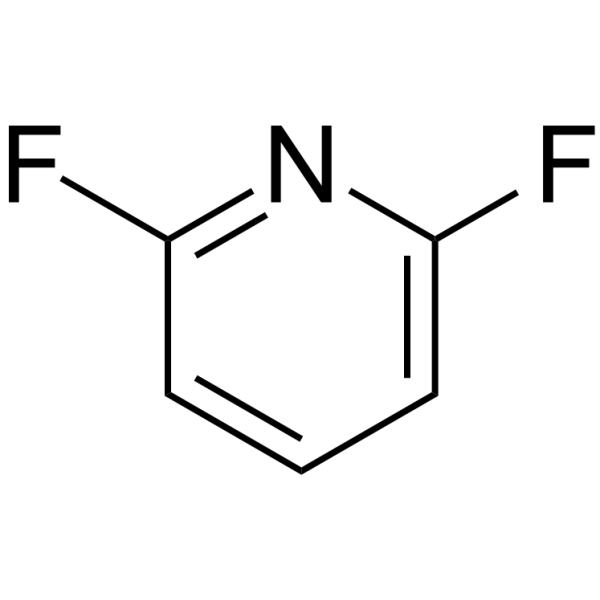
    2,6-Difluoropyridine is a fluorinated pyridine derivative. 2,6-Difluoropyridine adopts a planar conformation in its S0 electronic ground state and S1(π,π) excited state .
    2,6-Difluoropyridine
  • HY-W009641

    PyM; 1-HMP

    Biochemical Assay Reagents Others
    1-Pyrenemethanol is an organic compound that can be used to prepare graphene films with excellent thermal conductivity, flexibility and mechanical properties. 1-Pyrenemethanol binds to graphene oxide sheets through hydrogen bonds and π-π interactions to form GO-PyM films, increasing the dispersion and stability of the material .
    1-Pyrenemethanol
  • HY-179041

    PGE synthase Prostaglandin Receptor MDM-2/p53 Amino acid Transporter Glutathione Peroxidase Ferroptosis Metabolic Disease Endocrinology
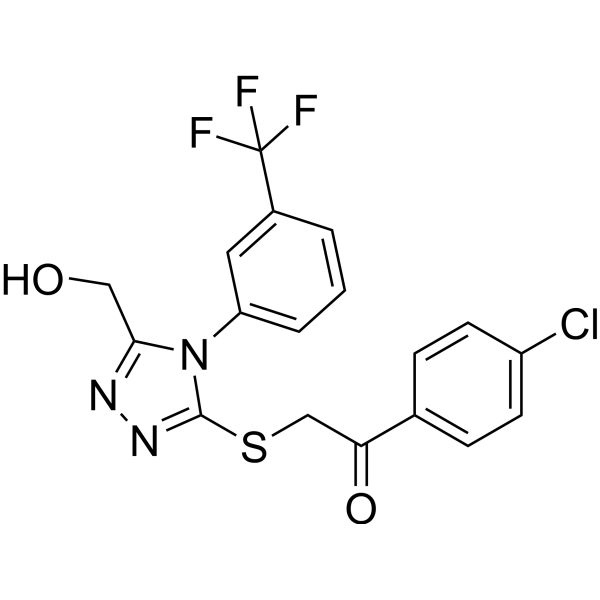
    SZ0232 is a selective mPGES-2 inhibitor. SZ0232 binds to the active site of mPGES-2 via hydrogen bonds and π-π stacking, reduces the production of prostaglandin E2 (PGE2) and blocks the PGE2-EP3 pathway. SZ0232 regulates Ferroptosis by activating the heme-dependent p53/SLC7A11/GPX4 axis, inhibits lipid peroxidation, and protects renal tubules. SZ0232 enhances glucose-stimulated insulin secretion, inhibits β-cell senescence, and improves glucose homeostasis. SZ0232 reduces renal lipid accumulation, alleviates fibrosis, and ameliorates renal dysfunction in diabetic mice. SZ0232 inhibits renal cyst growth in polycystic kidney disease models. SZ0232 exhibits an insulinotropic effect that strengthens with the increase of animal age. SZ0232 can be used in studies related to type 2 diabetes, acute kidney injury, diabetic kidney disease, and autosomal dominant polycystic kidney disease .
    SZ0232
  • HY-151095

    Reactive Oxygen Species (ROS) Others
    Phytoene desaturase-IN-1 is a potent phytoene desaturase (PDS) inhibitor (Kd: 65.9 μM) through π−π stacking effect with Phe301 residue. Phytoene desaturase-IN-1 shows broad spectrum of postemergence herbicidal activity. Phytoene desaturase-IN-1 induces PDS mRNA reduction, phytoene and reactive oxygen species (ROS) accumulation in albino leaves. Phytoene desaturase-IN-1 can be used in the area of agricultural production .
    Phytoene desaturase-IN-1
  • HY-33821

    LXR Others
    LXRβ ligand 1 is a LXR β ligand-binding domain agonist, with an EC50 of 57 μM and a Ki of 28 μM against human LXR β. LXRβ ligand 1 forms hydrogen bonds with His435, stabilizes the His-Trp activation switch, and locks the ligand-binding domain in an agonist conformation; its tert-butyl moiety occupies a hydrophobic subpocket, while its phenyl moiety forms a π-π stacking interaction with Phe329. LXRβ ligand 1 serves as a structural unit for the development of LXRβ modulators .
    LXRβ ligand 1
  • HY-169228

    Btk Cancer
    WS-11 is a non-covalent reversible BTK inhibitor with IC50s of 3.9 nM and 2.2 nM for wild type, C481S mutation BTK, respectively. WS-11 can form strong π-π interaction with PHE540 and form p-π interaction with LYS430 within the active pocket, besides the strong hydrogen bonds .
    WS-11
  • HY-178923

    HIV Reverse Transcriptase Infection
    NNRT-IN-14 is an HIV-1 reverse transcriptase inhibitor (IC50 = 0.175 µM). NNRT-IN-14 can form hydrogen bonds with LYS101, PRO225, and PHE227, and π–π stacking with TYR181 and TRP229. NNRT-IN-14 can be used for the study of HIV .
    NNRT-IN-14
  • HY-173462

    IKK Cancer
    TBK1-IN-2 (Compound A1) is a potent TBK1 inhibitor (IC50: 775 pM). TBK1-IN-2 binds to TBK1 through stable hydrogen bonds and π-π stacking, inhibiting IRF3 phosphorylation. TBK1-IN-2 synergizes with TNF/IFNγ to enhance immune-mediated tumor cell death. TBK1-IN-2 can be used in cancer immunotherapy research .
    TBK1-IN-2
  • HY-151209

    Monoamine Oxidase Neurological Disease
    MAO-B-IN-15 is a selective MAO-B inhibitor (IC50: 13.5 μM) that forms π-π interaction with Tyr 326 residue. MAO-B-IN-15 can be used in the research of Parkinson’s disease .
    MAO-B-IN-15
  • HY-151405

    Cholinesterase (ChE) Neurological Disease
    Z164597606 is a selective BChE inhibitor (IC50: 1.3 and 1.7 μM for eqBChE and hBChE). Z164597606 forms a π-π stacking interaction with the amino acid Trp82 of hBChE. Z164597606 can be used for the research of Alzheimer’s disease (AD) .
    Z164597606
  • HY-78985S

    Trimesic acid-d3

    Isotope-Labeled Compounds Biochemical Assay Reagents MOFs Others
    Benzene-1,3,5-tricarboxylic acid-d3 (Trimesic acid-d3) is the deuterium labeled Benzene-1,3,5-tricarboxylic acid (HY-78985). Benzene-1,3,5-tricarboxylic acid (Trimesic acid) is a rigid planar small-molecule scaffold and crosslinker. Benzene-1,3,5-tricarboxylic acid induces bicyclic peptides to adopt a planar conformation, so as to maximize surface area and bind to the flat protein surfaces involved in protein-protein interactions. Benzene-1,3,5-tricarboxylic acid forms ionic crosslinks, hydrogen bonds and π-π bonds with chitosan, thereby constructing a hydrogel network. Benzene-1,3,5-tricarboxylic acid endows chitosan hydrogel systems with specific mechanical properties, enabling sustained release of cancer therapeutic drugs including 5-Fluorouracil (HY-90006) .
    Benzene-1,3,5-tricarboxylic acid-d3
  • HY-181171

    Estrogen Receptor/ERR Cancer
    HIT-2 is an estrogen receptor alpha (ERα) inhibitor that can bind to the ERα ligand binding domain. HIT-2 forms stable interactions including hydrogen bonds, π-π stacking, and hydrophobic contacts to disrupt ERα-driven signaling. HIT-2 exhibits antineoplastic activity against breast cancer. HIT-2 can be used for the research of breast cancer .
    HIT-2
  • HY-173263

    Cholinesterase (ChE) Neurological Disease
    AChE-IN-86 (Compound 6f) is an inhibitor of enzyme acetylcholinesterase (AChE) with IC50 values of 25.33 μg/mL. AChE-IN-86 exerts inhibitory activity against AChE through forming hydrogen bonds, π-π and π-alkyl interactions with amino acid residues at the key catalytic sites of AChE. AChE-IN-86 can be used for Alzheimer's disease study .
    AChE-IN-86
  • HY-182783

    NTM-006

    Adenosine Receptor Neurological Disease Inflammation/Immunology
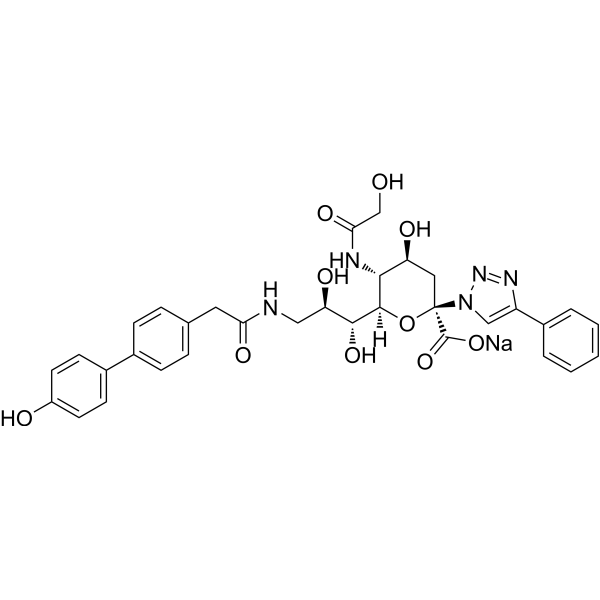
    NTM-006 is a selective and brain-penetrant adenosine A3 receptor (A3AR) agonist. NTM-006 selectively interacts with adenosine A3AR via π-π stacking with Phe168 and π-alkyl interactions receptor residues. NTM-006 inhibits Acetic acid (HY-Y0319)-induced writhing responses in mice. NTM-006 can be used for the research of chronic neuropathic pain, cancer-related pain, osteoarthritis-associated pain .
    JNJ-10450232
  • HY-N19818

    Phosphatase NF-κB Pregnane X Receptor (PXR) Cancer
    Glycybridin C is a Protein tyrosine phosphatase 1B (PTP1B) inhibitor and pregnane X receptor (PXR) ligand. Glycybridin C inhibits insulin and leptin signaling pathway negative regulation, LPS (HY-D1056)-induced NF-κB transcriptional activity. Glycybridin C forms hydrophobic and π-π stacking interactions with Met243, Phe288, Tyr306, and His407 residues of PXR. Glycybridin C can be used for the research of hepatocellular carcinoma, colorectal adenocarcinoma, breast carcinoma .
    Glycybridin C
  • HY-103084

    Phosphodiesterase (PDE) Cardiovascular Disease
    PDE5-IN-1 is an orally active, selective PDE5 inhibitor with an IC50 of 5.6 nM. PDE5-IN-1 forms hydrogen bond interactions with the Q817 residue in the catalytic domain of PDE5, and aromatic π-π stacking interactions with the F820 residue. PDE5-IN-1 exerts anti-cardiac hypertrophy and vasodilatory effects, reduces mean pulmonary arterial pressure and right ventricular hypertrophy index. PDE5-IN-1 can be used in the research of pulmonary arterial hypertension .
    PDE5-IN-1
  • HY-182030

    RSV Infection
    RSV fusion protein IN-1 is an orally active RSV pre-fusion F protein inhibitor with an IC50 of 0.10 nM against RSV. RSV fusion protein IN-1 forms stable hydrogen bonds and π-π stacking interactions with pre-fusion F protein to block viral fusion and entry. RSV fusion protein IN-1 suppresses RSV F protein expression in epithelial cells. RSV fusion protein IN-1 reduces viral burden in the lungs of RSV-infected murine models.RSV fusion protein IN-1 can be used for the research of respiratory syncytial virus (RSV) infection .
    RSV fusion protein IN-1
  • HY-183105

    Histone Demethylase Apoptosis Cancer
    DC551040 is an orally active and selective lysine demethylase 1 (LSD1) inhibitor with a human IC50 of 2.14 nM. DC551040 binds to LSD1 via π-π stacking with Trp552, polar interactions with Phe538, and covalent adduct formation with FAD, and disrupts the LSD1-GFI1B-CoREST complex. DC551040 induces H3K4me2 accumulation, apoptosis, and cell differentiation, activates STAT5, NF-κB, AKT, and IL6-STAT3 pathways, and upregulates IL6 expression. DC551040 can be used for the research of acute myeloid leukemia .
    DC551040
  • HY-182047

    PD-1/PD-L1 Cancer
    PD-1/PD-L1-IN-61 is a PD-1/PD-L1 interaction inhibitor with a human IC50 of 5.3 nM. PD-1/PD-L1-IN-61 embeds into the hydrophobic pocket at the PD-L1 dimer interface, stabilizing binding through hydrogen bonds and π-π stacking with PD-L1 residues. PD-1/PD-L1-IN-61 acts as an immune activator, enhances immune-killing activity of peripheral blood mononuclear cells against cancer cells, restores T-cell immune function, and promotes IFN-γ secretion. PD-1/PD-L1-IN-61 can be used for the research of triple-negative breast cancer .
    PD-1/PD-L1-IN-61
  • HY-181494

    FAP Cancer
    FAPI-X5 is a fibroblast activation protein (FAP) inhibitor. FAPI-X5 binds to the FAP catalytic domain, forming hydrogen bonds with key active residues and engaging in π-π stacking to drive functional inhibition. FAPI-X5 exhibits albumin binding activity to prolong systemic circulation half-life. FAPI-X5 induces cytostatic effects on glioblastoma tumors, slowing tumor growth without regression. FAPI-X5, when labeled with 68Ga, acts as a PET tracer with rapid tumor uptake and high-contrast imaging in glioblastoma tumor-bearing mice. FAPI-X5, when labeled with 177Lu or 47Sc, functions as a targeted radionuclide agent with prolonged tumor retention. FAPI-X5 can be used for the research of glioblastoma .
    FAPI-X5
  • HY-183701

    NTPDase CD73 Inflammation/Immunology Cancer
    CD73/NTPDase1-IN-1 is a dual NTPDase1 and CD73 inhibitor, with IC50 values of 2.20 μM and 1.70 μM against human targets, respectively. CD73/NTPDase1-IN-1 can be used in the research of diseases such as inflammation, immunity and tumors .
    CD73/NTPDase1-IN-1
  • HY-183335

    Smo Hedgehog Gli Apoptosis Caspase Cancer
    Anticancer agent 321 is a Smoothened (SMO) inhibitor with a human IC50 of 0.12 μM, enhanced aqueous solubility, good plasma and metabolic stability, moderate therapeutic index, preliminary safety profile, and moderate oral bioavailability in rats.Anticancer agent 321 binds to SMO’s 7-transmembrane helical channel, forming hydrogen bonds with Asp384 and hydrophobic/π-π interactions with His470, Phe391, Tyr394, stabilizing SMO’s inactive conformation to inhibit Hedgehog/GLI signaling.Anticancer agent 321 inhibits proliferation, suppresses colony formation, induces apoptosis, and downregulates Hedgehog/GLI pathway target genes GLI1, GLI2, Ptch1, HHip in cancer cells.Anticancer agent 321 inhibits tumor growth, downregulates Ki67 and SOX2, and upregulates cleaved-caspase 3 in tumor tissues.Anticancer agent 321 can be used for the research of cutaneous squamous cell carcinoma .
    SMO-IN-6
  • HY-107869R

    Reference Standards Fluorescent Dye Cancer
    Isoindigo (Standard) is the analytical standard of Isoindigo (HY-107869). This product is intended for research and analytical applications. Isoindigo acts as the acceptor unit in donor-acceptor (D-A) conjugated polymers and belongs to the indigo dye family. Isoindigo contains two lactam rings and exhibits strong electron-withdrawing properties. Isoindigo can be used in dyeing and pigment preparation. Isoindigo shows high mobility and excellent environmental stability in field-effect transistors (FETs). Isoindigo possesses the activity to inhibit tumor cell proliferation and has certain anti-tumor activity .
    Isoindigo (Standard)
  • HY-180425

    Amylin Receptor Apoptosis Metabolic Disease
    Cloridarol is a human islet amyloid peptide (hIAPP) inhibitor that prevents its abnormal misfolding and aggregation. Cloridarol can increase cell viability, inhibit apoptosis, and protect islet β-cells from hIAPP-induced cell toxicity. Cloridarol can be used for the research of type 2 diabetes (T2D) .
    Cloridarol
  • HY-179293

    SARS-CoV Virus Protease Infection
    SARS-CoV-2 PLpro-IN-3 (Compound 15) is a covalent inhibitor of the SARS-CoV-2 papain-like protease (PLpro), with an IC50 of 25 nM. SARS-CoV-2 PLpro-IN-3 has similar inhibitory activity against SARS-CoV PLpro (IC50 = 59 nM), but shows no inhibitory effect on human ubiquitin-specific protease 7 (USP7). The EC50 of SARS-CoV-2 PLpro-IN-3 in inhibiting SARS-CoV-2 replication in cells is 96 nM, significantly reducing the viral titer and viral RNA levels. SARS-CoV-2 PLpro-IN-3 can be used for studying SARS-CoV-2 drug resistance mutations .
    SARS-CoV-2 PLpro-IN-3

Inquiry Online

Your information is safe with us. * Required Fields.

Salutation


Country or Region *

Applicant Name *


Organization Name *

Department *


Email Address *


Product Name *

Cat. No.


Requested quantity *

Phone Number *


Remarks

Inquiry Online

Inquiry Information

Product Name:
Cat. No.:
Quantity:
MCE Japan Authorized Agent:

