
13 Results for "

Broilers

" in MedChemExpress (MCE) Product Catalog:
Products (13)

13 Results for "Broilers" in MCE Product Catalog:

1
1 Cited Publications
Cat. No.: HY-W021448
CAS No.: 352-97-6
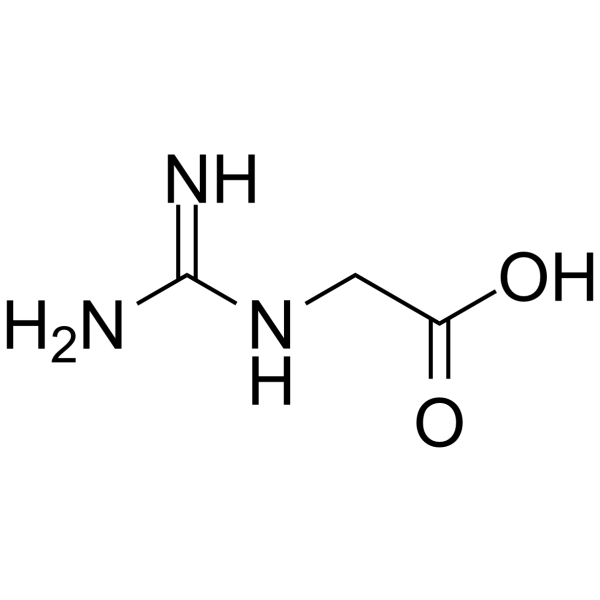
Synonyms: Guanidinoacetic acid
Glycocyamine (Guanidinoacetic acid) is a direct precursor of creatine and an orally active energy metabolism regulator and myogenic differentiation inducer. Glycocyamine can activate the Akt/mTOR/S6K signaling pathway via miR-133a-3p and miR-1a-3p, and stimulate the mRNA expression of myogenic differentiation factor 1 (MyoD) and myopoietin (MyoG). Glycocyamine can increase muscle creatine concentration and maintain ATP homeostasis through the creatine phosphate/creatine kinase system. Glycocyamine can be used in research on feed additives for poultry farming .
loading...
    loading...
1
1 Cited Publications
Cat. No.: HY-B0278
CAS No.: 1405-89-6
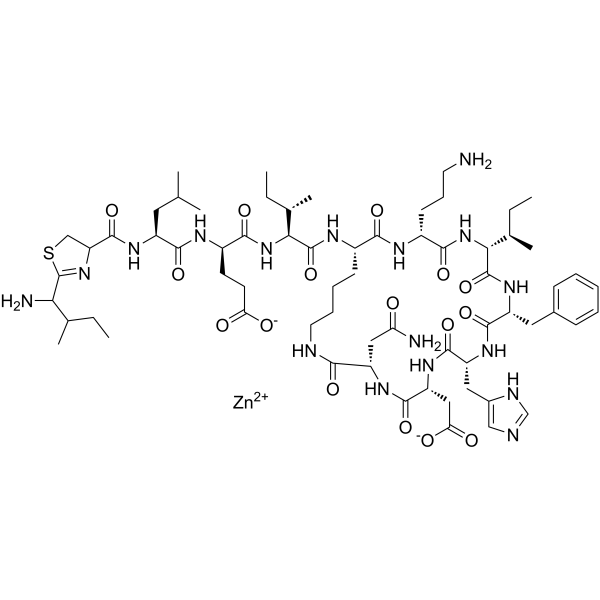
Synonyms: Zinc bacitracin
Research Areas:  

Infection

Bacitracin Zinc is a complex formed by the binding of Bacitracin (HY-107193) with zinc ions. Bacitracin Zinc is an orally active polypeptide antibiotic with bactericidal properties. Bacitracin Zinc can cause DNA and deoxyribose damage, as well as improve the gut microbiota of broiler and beef cattle .
loading...
    loading...
1
1 Cited Publications
Cat. No.: HY-B2138
CAS No.: 59-06-3
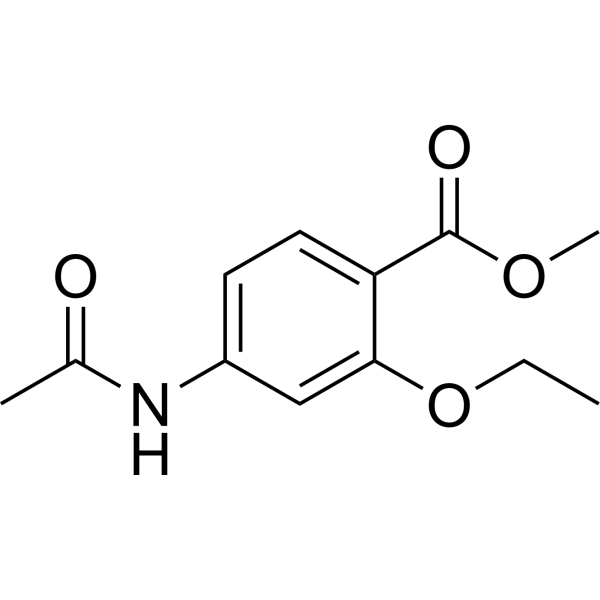
Synonyms: Ethyl pabate
Target:  

Parasite

Research Areas:  

Infection

Ethopabate (Ethyl pabate) is an orally active antiparasitic agent. Ethopabate is often used in combination with Amprolium hydrochloride (HY-B0937A) and others to prevent and treat poultry coccidiosis, leucosis, and other diseases .
loading...
    loading...
Cat. No.: HY-W004307
CAS No.: 638-66-4
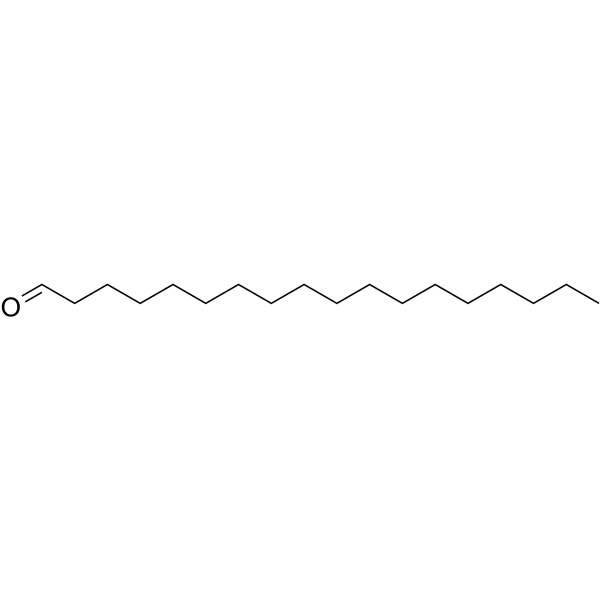
Synonyms: Stearyl aldehyde
Octadecanal (Stearyl aldehyde) is a long-chain aldehyde component. Octadecanal exists in the phospholipid fractions of thigh and breast muscles of broiler chickens .
loading...
    loading...
Cat. No.: HY-119826
CAS No.: 62265-68-3
Purity:  99.69%
Synonyms: WIN-40014
Target:  

Parasite

Research Areas:  

Infection

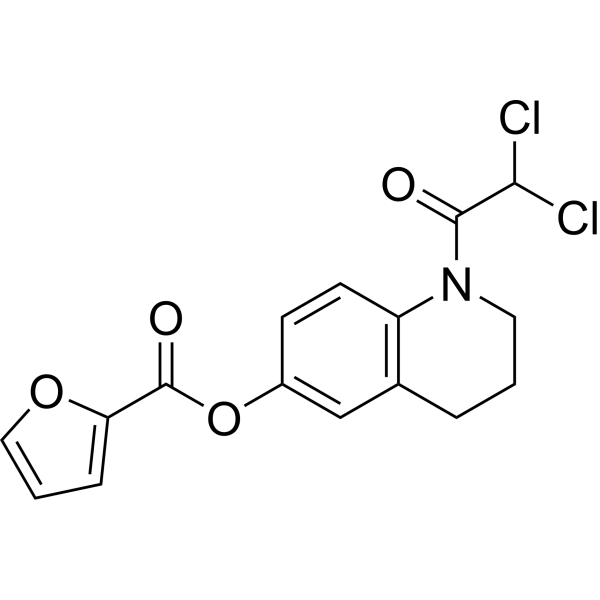
Quinfamide (WIN-40014) is an orally active class of dichloroacetyl derivative with significant anti-intestinal protozoan, particularly mmoeba histolytica activity. Quinfamide exhibits antiamoebic activity under solvent-free conditions with an IC50 of 28.15 μg/mL in a suspension condition. Quinfamide particles are actively engulfed by the amoebas, then cells are affected, and finally, amoebas are killed and lysed, and this process directly relies on the physical intake of the drug particles. Quinfamide can be used in the research of tropical parasitic infections such as amoebiasis and helminthiasis .
loading...
    loading...
Cat. No.: HY-W016289
CAS No.: 642-71-7
Synonyms: 3,4,5-Trimethoxyphenol
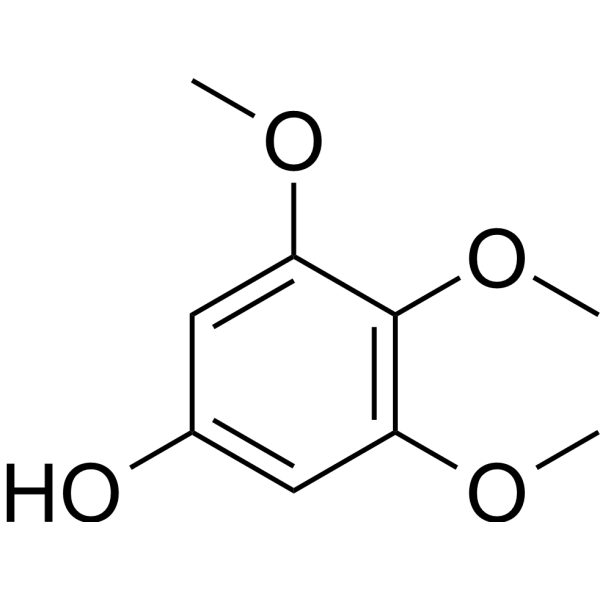
Antiarol (3,4,5-Trimethoxyphenol) is a phenolic compound present in the trunk of Coffea canephora. Antiarol is a metabolite produced by chicken cecal microbes, whose cecal content changes dynamically with the severity of wooden breast (WB; a muscle disease prevalent in broilers) and enters the plasma through circulation .
loading...
    loading...
Cat. No.: HY-N6799
CAS No.: 36519-25-2
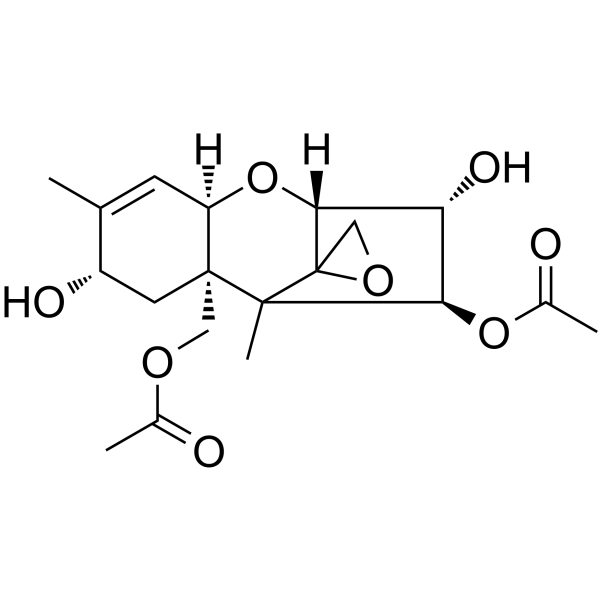
Neosolaniol is an orally active type A trichothecene mycotoxin, and it is a metabolite of T-2 Toxin (HY-N6792) in human cancer cells and renal epithelial cells. Neosolaniol targets Bax, Bcl-2, caspase 3, caspase 8, and cytochrome c, thereby inducing apoptosis, emesis and anorexia. Neosolaniol reduces intracellular ATP levels, elevates ROS levels, decreases mitochondrial membrane potential, induces mitochondrial damage, and exerts toxicity on Leydig cells. Neosolaniol downregulates the expression of intestinal tight junction proteins in broilers and increases the load of Salmonella enteritidis in the cecum of broilers. Neosolaniol can be used in research related to anorexia, lymphoma, Fusarium melonis rot, and Salmonella infection .
loading...
    loading...
Cat. No.: HY-E70193
CAS No.: 37341-53-0
Synonyms: KerA
Research Areas:  

Others

Keratinase (KerA) is an orally active proteolytic enzyme that specifically degrades keratin, and it is mainly secreted by microorganisms such as bacteria, fungi and actinomycetes. Keratinase degrades keratin via reducing disulfide bond cross-links and cleaving peptide bonds, and it can also degrade infectious prion proteins. Keratinase can improve the nutritional bioavailability of keratin-based feed, and it can also be applied in various fields including depilation, proteolytic cleaning, organic fertilizer precursor preparation, cosmetics, bioenergy production, wastewater decolorization, biomolecule extraction, bioremediation, textile biopretreatment and feed processing .
loading...
    loading...
Cat. No.: HY-B0278R
CAS No.: 1405-89-6
Synonyms: Zinc bacitracin (Standard)
Research Areas:  

Infection

Bacitracin Zinc (Standard) is the analytical standard of Bacitracin Zinc (HY-B0278). Bacitracin Zinc (Standard) is a complex formed by the binding of Bacitracin (HY-107193) with zinc ions. Bacitracin Zinc (Standard) is an orally active polypeptide antibiotic with bactericidal properties. Bacitracin Zinc (Standard) can cause DNA and deoxyribose damage, as well as improve the gut microbiota of broiler and beef cattle .
loading...
    loading...
Cat. No.: HY-121399
CAS No.: 89238-78-8
Target:  

Histamine Receptor

Research Areas:  

Neurological Disease

Gizzerosine is an H2 receptor agonist. It can stimulate the gastric acid secretion of broiler chickens, thus causing gizzard erosion in them. Gizzerosine has significant research value in the fields of agricultural farming and feed science .
loading...
    loading...
Cat. No.: HY-N6799R
CAS No.: 36519-25-2
Neosolaniol (Standard) is the analytical standard of Neosolaniol (HY-N6799). This product is intended for research and analytical applications. Neosolaniol is an orally active type A trichothecene mycotoxin, and it is a metabolite of T-2 Toxin (HY-N6792) in human cancer cells and renal epithelial cells. Neosolaniol targets Bax, Bcl-2, caspase 3, caspase 8, and cytochrome c, thereby inducing apoptosis, emesis and anorexia. Neosolaniol reduces intracellular ATP levels, elevates ROS levels, decreases mitochondrial membrane potential, induces mitochondrial damage, and exerts toxicity on Leydig cells. Neosolaniol downregulates the expression of intestinal tight junction proteins in broilers and increases the load of Salmonella enteritidis in the cecum of broilers. Neosolaniol can be used in research related to anorexia, lymphoma, Fusarium melonis rot, and Salmonella infection .
loading...
    loading...
Cat. No.: HY-183532
CAS No.: 189442-08-8
Target:  

Parasite

Research Areas:  

Infection

Anticoccidial agent-2 is an orally effective imidazole-based anticoccidial agent. Anticoccidial agent-2 exhibits activity against Eimeria tenella in chickens. Anticoccidial agent-2 can be used in research related to chicken cecal coccidiosis .
loading...
    loading...
Cat. No.: HY-N17269
CAS No.: 180346-59-2
3,4-Dimethyl-5-pentyl-2-furanpentadecanoic acid is a serum metabolic marker. Pre-treatment with lauric acid (HY-Y0366) can specifically increase the level of 3,4-Dimethyl-5-pentyl-2-furanpentadecanoic acid in the serum .
loading...
    loading...
  • 1

