1. Search Result
Search Result
Pathways Recommended: Metabolic Enzyme/Protease
Results for "

CYP450 enzymes

" in MedChemExpress (MCE) Product Catalog:

16

Inhibitors & Agonists

5

Natural
Products

1

Isotope-Labeled Compounds

Cat. No. Product Name Target Research Areas Chemical Structure
  • HY-B0653A
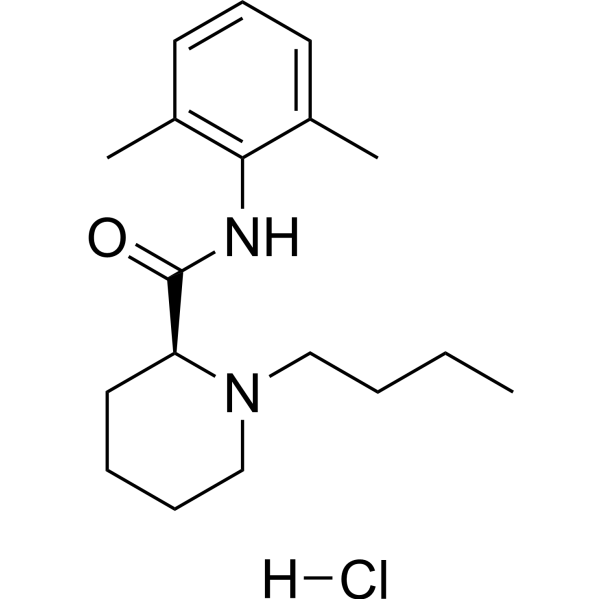
    Levobupivacaine hydrochloride
    2 Publications Verification

    (S)-(-)-Bupivacaine monohydrochloride

    Sodium Channel Ferroptosis Cardiovascular Disease Neurological Disease Cancer
    Levobupivacaine hydrochloride ((S)-(-)-Bupivacaine monohydrochloride) is a long-acting amide local agent that can suppress or relieve pain. Levobupivacaine hydrochloride exerts agent that can suppress or relieve pain. and analgesic effects through reversible blockade of neuronal sodium channel. Levobupivacaine hydrochloride can inhibit impulse transmission and conduction in cardiovascular and other tissues, possessing certain cardiac and CNS toxicity. Levobupivacaine hydrochloride is metabolized by hepatic cytochrome P450 (CYP450) enzymes in vivo. Levobupivacaine hydrochloride can also induce ferroptosis by miR-489-3p/SLC7A11 signaling in gastric cancer .
    Levobupivacaine hydrochloride
  • HY-113482

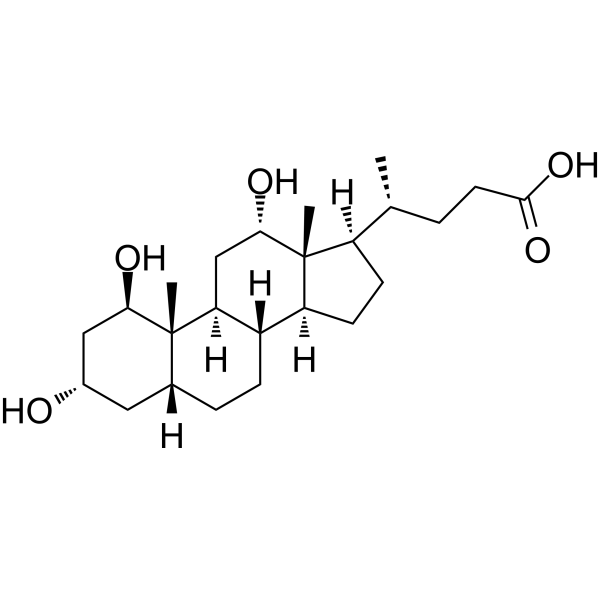
    1β-OH-DCA

    Endogenous Metabolite Cytochrome P450 Metabolic Disease
    1β-Hydroxydeoxycholic acid (1β-OH-DCA), a secondary bile acid, is a CYP3A biomarker. Deoxycholic acid is specifically metabolized into 1β-Hydroxydeoxycholic acid by CYP3A4 and CYP3A7 using recombinant human CYP450 enzymes .
    1β-Hydroxydeoxycholic acid
  • HY-N2071
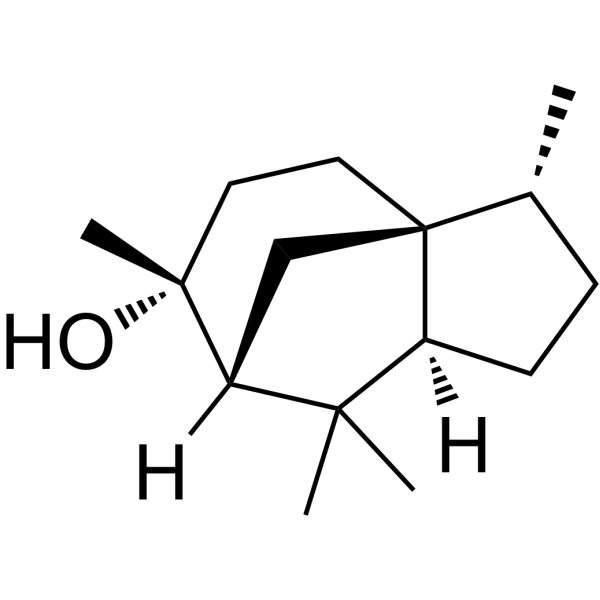
    Cedrol
    1 Publications Verification

    (+)-Cedrol; α-Cedrol

    Environmental Pollutants Cytochrome P450 Apoptosis Fungal Caspase Platelet-activating Factor Receptor (PAFR) Infection Neurological Disease Inflammation/Immunology Cancer
    Cedrol is a potent competitive inhibitor of cytochrome P-450(CYP) enzyme. Cedrol plays an anticancer role by inducing cell cycle arrest and Caspase-dependent apoptosis. Cedrol acts as a neutrophil agonist that can desensitize cells to subsequent stimulation of N-formyl peptides. Cedrol prevents neuropathic pain caused by chronic contractile injury by inhibiting oxidative stress and inflammation. In addition, Cedrol has antibacterial, hair loss prevention and anti-anxiety properties .
    Cedrol
  • HY-N1282

    Glutathione S-transferase Cytochrome P450 Cancer
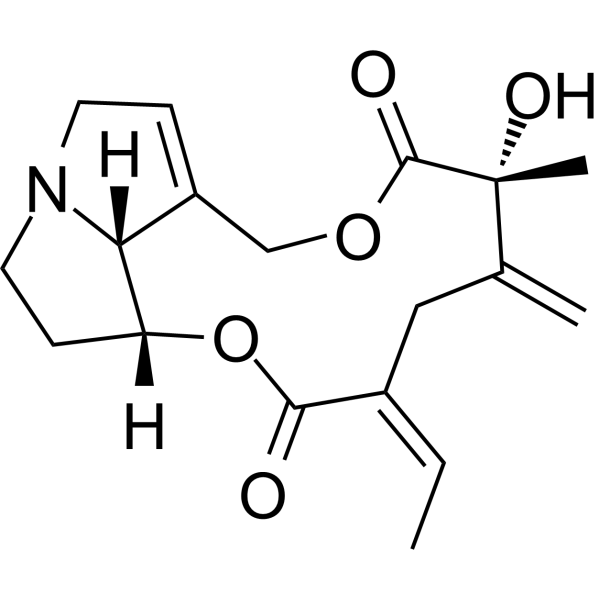
    Seneciphylline is an orally effective hepatotoxic inducer. Seneciphylline is metabolized by CYP450 enzymes into active intermediates, which covalently bind to intracellular biomacromolecules such as proteins and DNA to form adducts, which in turn trigger a series of toxic reactions, such as inducing cell apoptosis and damaging mitochondrial function. Seneciphylline can be used in hepatotoxicity research[1][2].
    Seneciphylline
  • HY-B0653
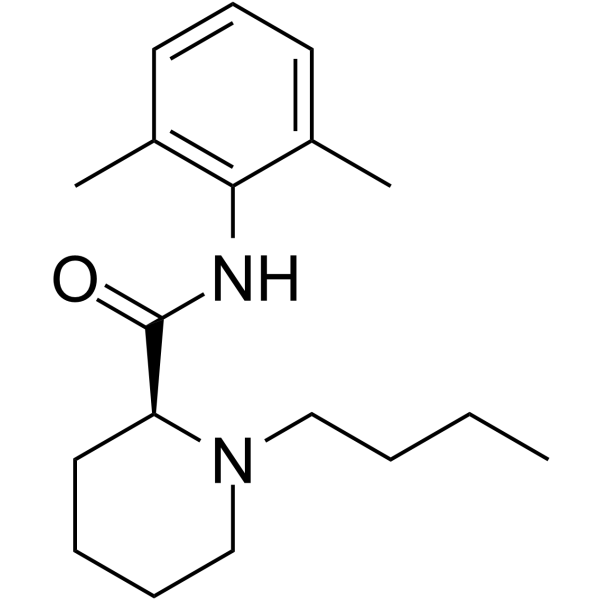
    Levobupivacaine
    2 Publications Verification

    (S)-(-)-Bupivacaine

    Sodium Channel Ferroptosis Neurological Disease Cancer
    Levobupivacaine ((S)-(-)-Bupivacaine) is a long-acting amide local agent that can suppress or relieve pain. Levobupivacaine exerts agent that can suppress or relieve pain. and analgesic effects through reversible blockade of neuronal sodium channel. Levobupivacaine can inhibit impulse transmission and conduction in cardiovascular and other tissues, possessing certain cardiac and CNS toxicity. Levobupivacaine is metabolized by hepatic cytochrome P450 (CYP450) enzymes in vivo. Levobupivacaine can also induce ferroptosis by miR-489-3p/SLC7A11 signaling in gastric cancer .
    Levobupivacaine
  • HY-N16478

    Cytochrome P450 Metabolic Disease
    Echihumiline is an alkaloid targeting hepatic cytochrome P450 enzymes (CYP450). Echihumiline induces DNA cross-linking and oxidative stress in hepatocytes, leading to liver necrosis and fibrosis. Echihumiline is promising for research of liver diseases .
    Echihumiline
  • HY-W803860

    Drug Metabolite Sodium Channel Cardiovascular Disease
    N-Depropylpropafenone is an active metabolite of Propafenone (HY-B0432), generated through the CYP450 enzyme system (mainly CYP2D6). It functions by blocking sodium ion channels, slowing myocardial conduction and exhibiting certain antiarrhythmic effects .
    N-Depropylpropafenone
  • HY-178479

    Indoleamine 2,3-Dioxygenase (IDO) Cytochrome P450 Inflammation/Immunology Cancer
    IDO1-IN-30 (Compound (R)-100) is a potent and highly selective IDO1 inhibitor. IDO1-IN-30 has an IC50 of 4.8 nM to IDO1 in SKOV3 cells. IDO1-IN-30 does not show significant cytotoxicity at 25 µM in HepG2 cells. IDO1-IN-30 can eliminate inhibition of CYP450 enzymes (such as 3A4, 2C9, 2D6). IDO1-IN-30 can be used for research on cancer and inflammatory conditions .
    IDO1-IN-30
  • HY-B0653AS

    (S)-(–)-Bupivacaie-d9hydrochloride

    Isotope-Labeled Compounds Ferroptosis Sodium Channel Cardiovascular Disease Neurological Disease Cancer
    Levobupivacaine-d9 ((S)-(–)-Bupivacaie-d9) hydrochloride is deuterium labeled Levobupivacaine hydrochloride (HY-B0653A). Levobupivacaine hydrochloride ((S)-(-)-Bupivacaine monohydrochloride) is a long-acting amide local agent that can suppress or relieve pain. Levobupivacaine hydrochloride exerts agent that can suppress or relieve pain. and analgesic effects through reversible blockade of neuronal sodium channel. Levobupivacaine hydrochloride can inhibit impulse transmission and conduction in cardiovascular and other tissues, possessing certain cardiac and CNS toxicity. Levobupivacaine hydrochloride is metabolized by hepatic cytochrome P450 (CYP450) enzymes in vivo. Levobupivacaine hydrochloride can also induce ferroptosis by miR-489-3p/SLC7A11 signaling in gastric cancer .
    Levobupivacaine-d9 hydrochloride
  • HY-175075

    Drug Metabolite Others
    (±)11(12)-EET Ethanolamide is a potential metabolite of Anandamide (HY-10863), and it is produced by the catalysis of cytochrome P450 (CYP450) enzymes .
    (±)11(12)-EET Ethanolamide
  • HY-181407

    Herbicide Glutathione S-transferase Cytochrome P450 SOD Others
    Herbicide safener-5 is a herbicide (Herbicide) safener. Herbicide safener-5 promotes plant growth recovery, enhances the activities of detoxifying enzymes (ALS, GST, CYP450, POD), and reduces SOD activity. Herbicide safener-5 is applicable to herbicide-related research .
    Herbicide safener-5
  • HY-N2071R

    (+)-Cedrol (Standard); α-Cedrol (Standard)

    Reference Standards Cytochrome P450 Fungal Apoptosis Caspase Infection Neurological Disease Inflammation/Immunology Cancer
    Cedrol (Standard) is the analytical standard of Cedrol. This product is intended for research and analytical applications. Cedrol is a potent competitive inhibitor of cytochrome P-450(CYP) enzyme. Cedrol plays an anticancer role by inducing cell cycle arrest and Caspase-dependent apoptosis. Cedrol acts as a neutrophil agonist that can desensitize cells to subsequent stimulation of N-formyl peptides. Cedrol prevents neuropathic pain caused by chronic contractile injury by inhibiting oxidative stress and inflammation. In addition, Cedrol has antibacterial, hair loss prevention and anti-anxiety properties.
    Cedrol (Standard)
  • HY-117593

    P-glycoprotein Cytochrome P450 Drug Isomer Cancer
    NSC 23925B is a P-glycoprotein (P-gp) inhibitor, as well as the most biologically active isomer of NSC23925 (HY-19626), which reverses and prevents P-glycoprotein-mediated multidrug resistance in cancer cells. NSC 23925B shows weak inhibition against most CYP450 enzymes (IC50 > 10 μM), and exhibits moderate inhibitory activity against CYP2B6 and CYP2D6 with IC50 values of 8.589 μM and 1.407 μM, respectively. NSC 23925B can be used for the research of multidrug-resistant cancers .
    NSC 23925B
  • HY-178479A

    Drug Isomer Others
    (Rac)-IDO1-IN-30 is the Rac isomer of IDO1-IN-30 (HY-178479). IDO1-IN-30 is a potent and highly selective IDO1 inhibitor. IDO1-IN-30 has an IC50 of 4.8 nM to IDO1 in SKOV3 cells. IDO1-IN-30 does not show significant cytotoxicity at 25 µM in HepG2 cells. IDO1-IN-30 can eliminate inhibition of CYP450 enzymes (such as 3A4, 2C9, 2D6). IDO1-IN-30 can be used for research on cancer and inflammatory conditions .
    (Rac)-IDO1-IN-30
  • HY-181543

    CD38 Neurological Disease
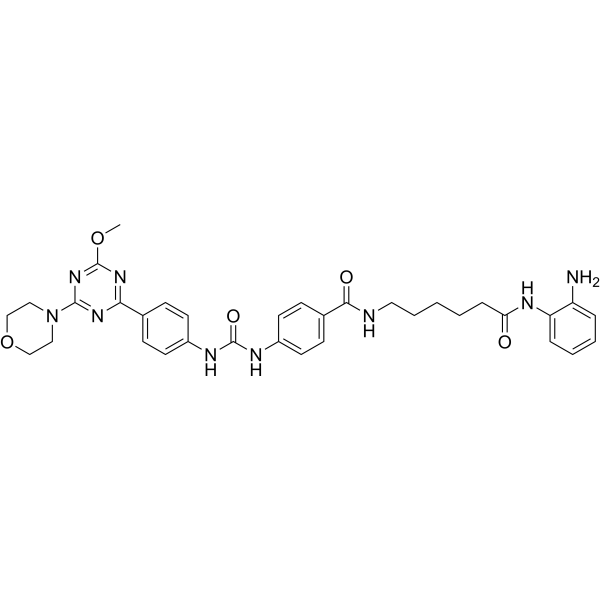
    CVN14 is a potent, selective and brain-penetrant CD38 inhibitor with human IC50 19 nM, mouse IC50 2.4 nM. CVN14 binds uncompetitively to form a complex with CD38 and ADPR, and inhibits CD38 enzymatic activity. CVN14 can be used for the research of neurodegenerative diseases .
    CVN14
  • HY-181662

    MAP3K Neurological Disease
    DLK-IN-2 is a selective inhibitor of DLK and neuroprotective agent. DLK-IN-2 shows no significant inhibition against CYPs 3A4, 2D6 and 2C9. DLK-IN-2 inhibits acute axonal palmitoylation of DLK, blocks DLK-dependent pro-degenerative axon-to-soma retrograde signaling and suppresses c-Jun phosphorylation. DLK-IN-2 can be used for the mechanistic study of neurodegenerative diseases .
    DLK-IN-2

Inquiry Online

Your information is safe with us. * Required Fields.

Salutation


Country or Region *

Applicant Name *


Organization Name *

Department *


Email Address *


Product Name *

Cat. No.


Requested quantity *

Phone Number *


Remarks

Inquiry Online

Inquiry Information

Product Name:
Cat. No.:
Quantity:
MCE Japan Authorized Agent:

