



Seneciphylline

Based on 1 Customer Validation
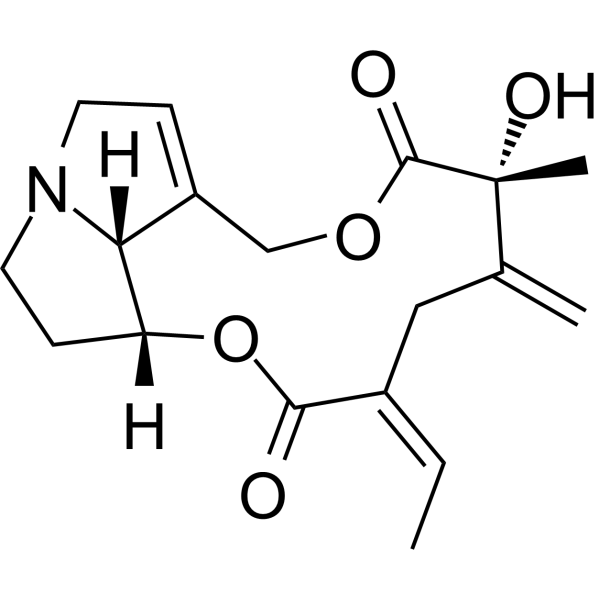
Seneciphylline is an orally effective hepatotoxic inducer. Seneciphylline is metabolized by CYP450 enzymes into active intermediates, which covalently bind to intracellular biomacromolecules such as proteins and DNA to form adducts, which in turn trigger a series of toxic reactions, such as inducing cell apoptosis and damaging mitochondrial function. Seneciphylline can be used in hepatotoxicity research
For research use only. We do not sell to patients.
- Purity : 99.93%
- CAS No.: 480-81-9
- Formula: C18H23NO5
- Molecular Weight:333.38
-
Storage:
4°C, protect from light
* In solvent : -80°C, 6 months; -20°C, 1 month (protect from light)

To place orders, for customer services and technical support, please contact: MedChemExpress USA
Tel: 609-228-6898 E-mail: [email protected] [email protected]


-
 Biological Activity
-
Chemical Information
-
Solvent & Solubility
- Protocols
- Purity & Documentation
- References
-
 Help & FAQs


-

HY-N1282R
Seneciphylline (Standard)Pyrrolizidine Alkaloid -
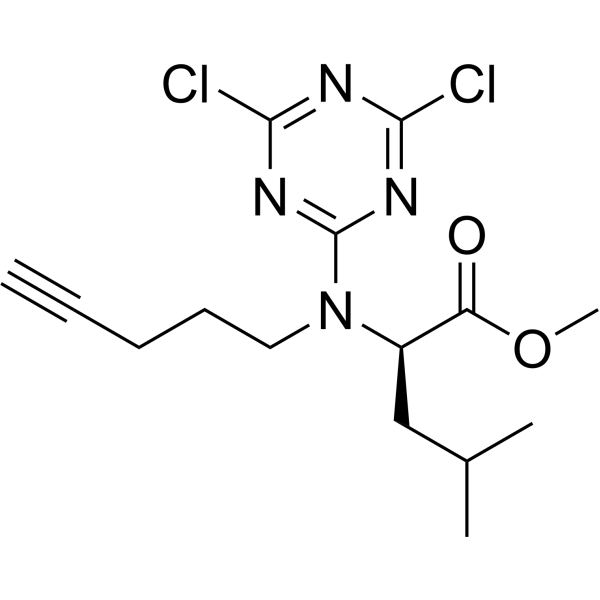
HY-115673
LAS17GSTP1 Inhibitor -
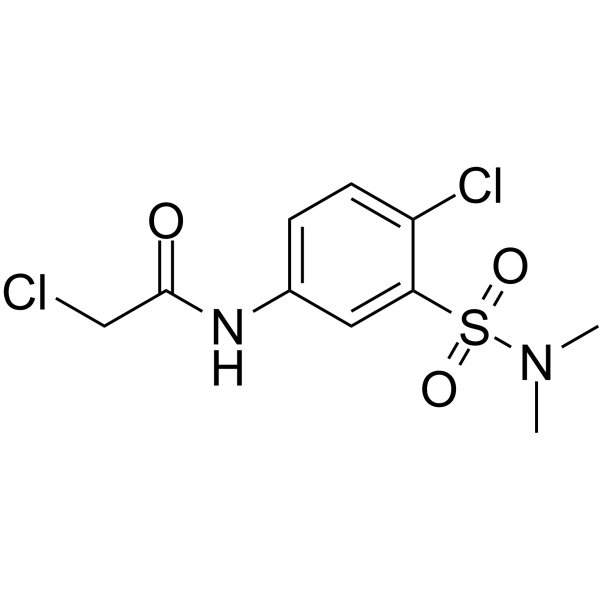
HY-111530
GSTO1-IN-1Gutathione S-transferase Inhibitor -
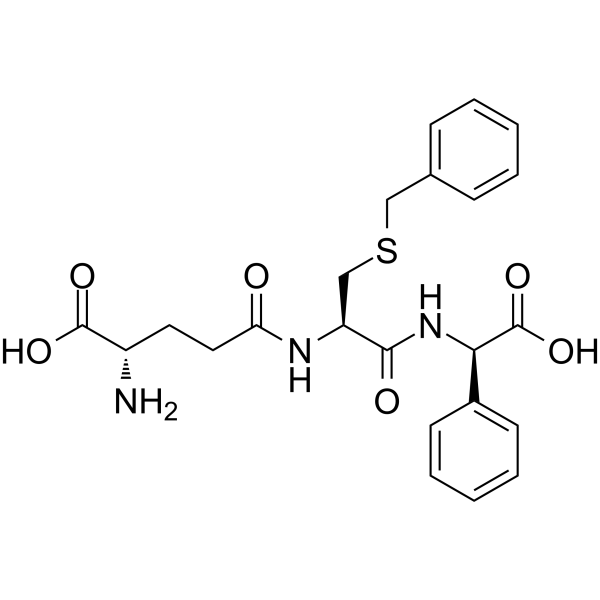
HY-13634B
TLK117GSTP1-1 Inhibitor -
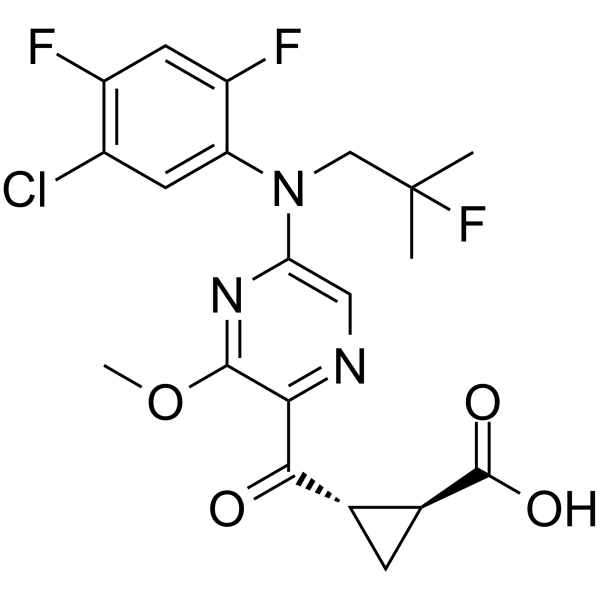
HY-126329
AZD9898Gutathione S-transferase Inhibitor -
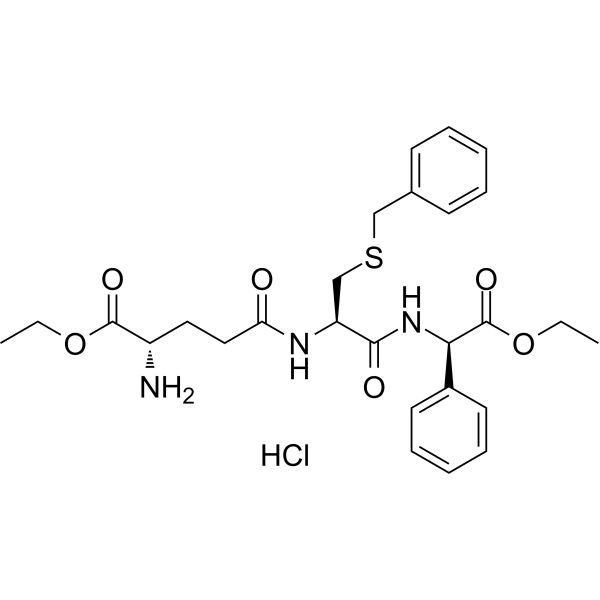
HY-13634
Ezatiostat hydrochlorideGSTP1 Inhibitor -
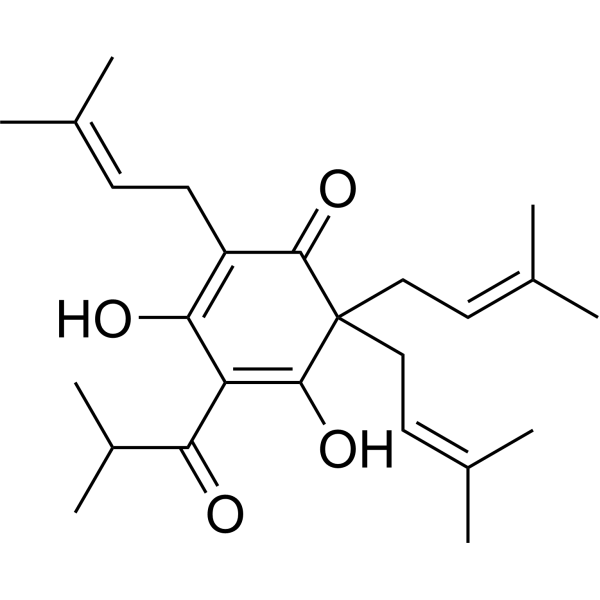
HY-N10867
β-Acids colupuloneBitter Substance -
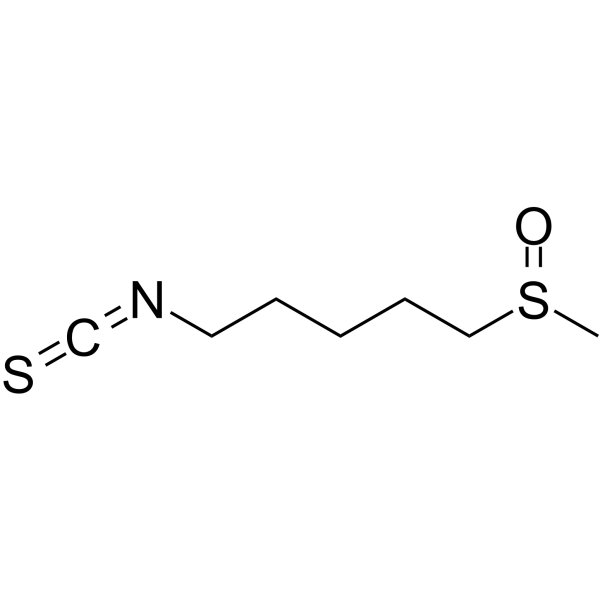
HY-116920
AlyssinBioactive Isothiocyanate


Biological Activity
Description
Cellular Effect
|
Cell Line

|
Type | Value | Description | References |
|---|---|---|---|---|
| CHO | EC50 |
>100 μg/mL
Compound: 5
|
Toxicity against Cricetulus griseus CHO (Chinese hamster ovary) cell by MTT assay
Toxicity against Cricetulus griseus CHO (Chinese hamster ovary) cell by MTT assay
|
10.1016/jbse.2007.08.015 |
| Sf9 | EC50 |
>100 μg/mL
Compound: 5
|
Toxicity against Spodoptera frugiperda (fall armyworm) Sf9 cells by MTT assay
Toxicity against Spodoptera frugiperda (fall armyworm) Sf9 cells by MTT assay
|
10.1016/jbse.2007.08.015 |
In Vitro
Seneciphylline (10-1000 μM) slightly stimulates rat liver microsomal epoxide hydrolase, has no significant effect on glutathione-S-transferase, and has no significant effect on the activities of aminopyrine demethylase and aryl hydrocarbon hydroxylase (AHH) [1].
Seneciphylline (5-50 μM; 6-24 h) reduces the viability of primary mouse and human hepatocytes and induces apoptosis in a time-and dose-dependent manner. Seneciphylline (5-20 μM; 6-12 h) increases the content of pyrrole-protein adducts (PPA) in primary mouse hepatocytes in a time-and dose-dependent manner[2].
In primary hepatocyte mitochondrial experiments, Seneciphylline (20 μM) induces changes in the morphology of primary mouse hepatocyte mitochondria, making them rounder and shorter, losing mitochondrial membrane potential (MMP),releasing cytochrome Cyt c from mitochondria to the cytoplasm, and increasing JNK phosphorylation levels[2].
Seneciphylline (20 μM; 24 hours) -induced apoptosis in primary mouse hepatocytes was effectively inhibited by 50 μM Mdivi-1 (HY-15886). Mdivi-1 also inhibits Seph-induced mitochondrial depolarization, reduces the number of apoptotic nuclei, reduces the proportion of cells with MMP loss, reduced the level of Cyt c protein in the cytoplasm, and inhibits the cleavage and activation of Caspase-3[2].
MedChemExpress (MCE) has not independently confirmed the accuracy of these methods. They are for reference only. Further protocols information, click here.
-
Cell Line:Primary mouse hepatocytes, Primary human hepatocytes
-
Concentration:5-50 μM for cell viability and apoptosis assays
-
Incubation Time:6-24 h for cell viability and apoptosis assays
-
Result:Decreased cell viability in a dose-and time-dependent manner.
Induced apoptosis in a time-and dose-dependent manner. After treatment with 5 μM for 24 h, the apoptotic cell rate was 26.6%, and it increased to 47.7% when treated with 20 μM Seph.
When treated with 20 μM Seph for 12 h, the apoptotic cell rate was 21.3%, and it was higher at 24 h.
In Vivo
MedChemExpress (MCE) has not independently confirmed the accuracy of these methods. They are for reference only.
-
Animal Model:Male C57BL/6 J mice (20-22 g)[2]
-
Dosage:70 mg/kg (dissolved in acidified 0.9% NaCl with pH 6.5).
-
Administration:Oral administration, single dose.
-
Result:Resulted severe liver injury. H&E staining of liver tissues revealed inflammation, apoptosis, and sinusoid hemorrhage.
Significantly elevated the serum levels of ALT, AST, TBIL, and TBA compared with the control group.
Increased pro-inflammatory cytokines, including TNF-α, IL-1β.
Resulted a dramatic increase in hepatic parenchymal cell apoptosis in TUNEL staining.
Increased cleaved Caspase-3 level, and caspase-3 activity in the liver, indicating that Seneciphylline induced apoptosis in the liver.


Chemical Information
-
CAS No. 480-81-9
-
Appearance Solid
-
Molecular Weight 333.38
-
Formula C18H23NO5
-
Color White to off-white
-
SMILES
O=C(O[C@]1([H])CCN2[C@]1([H])C(COC([C@](C)(O)C(C/3)=C)=O)=CC2)C3=C/C
-
Structure Classification
-
Shipping
Room temperature in continental US; may vary elsewhere.
-
Storage
4°C, protect from light
* In solvent : -80°C, 6 months; -20°C, 1 month (protect from light)


Solvent & Solubility
In Vitro:
DMSO : 7.69 mg/mL (23.07 mM; ultrasonic and warming and heat to 60°C; Hygroscopic DMSO has a significant impact on the solubility of product, please use newly opened DMSO)
Please refer to the solubility information to select the appropriate solvent. Once prepared, please aliquot and store the solution to prevent product inactivation from repeated freeze-thaw cycles.
Storage method and period of stock solution: -80°C, 6 months; -20°C, 1 month (protect from light). When stored at -80°C, please use it within 6 months. When stored at -20°C, please use it within 1 month.
Please refer to the solubility information to select the appropriate solvent. Once prepared, please aliquot and store the solution to prevent product inactivation from repeated freeze-thaw cycles.
Storage method and period of stock solution: -80°C, 6 months; -20°C, 1 month (protect from light). When stored at -80°C, please use it within 6 months. When stored at -20°C, please use it within 1 month.
Concentration (start) × Volume (start) = Concentration (final) × Volume (final)
In Vivo:
Select the appropriate dissolution method based on your experimental animal and administration route.
- For the following dissolution methods, please ensure to first prepare a clear stock solution using an In Vitro approach and then sequentially add co-solvents:
- To ensure reliable experimental results, the clarified stock solution can be appropriately stored based on storage conditions. As for the working solution for In Vivo experiments, it is recommended to prepare freshly and use it on the same day.
- The percentages shown for the solvents indicate their volumetric ratio in the final prepared solution. If precipitation or phase separation occurs during preparation, heat and/or sonication can be used to aid dissolution.
Add each solvent one by one: 10% DMSO 40% PEG300 5% Tween-80 45% Saline
Solubility: ≥ 0.77 mg/mL (2.31 mM); Clear solution
This protocol yields a clear solution of ≥ 0.77 mg/mL (saturation unknown).
Taking 1 mL working solution as an example, add 100 μL DMSO stock solution (7.7 mg/mL) to 400 μL PEG300, and mix evenly; then add 50 μL Tween-80 and mix evenly; then add 450 μL Saline to adjust the volume to 1 mL.
Preparation of Saline: Dissolve 0.9 g sodium chloride in ddH₂O and dilute to 100 mL to obtain a clear Saline solution.
Add each solvent one by one: 10% DMSO 90% (20% SBE-β-CD in Saline)
Solubility: ≥ 0.77 mg/mL (2.31 mM); Clear solution
This protocol yields a clear solution of ≥ 0.77 mg/mL (saturation unknown).
Taking 1 mL working solution as an example, add 100 μL DMSO stock solution (7.7 mg/mL) to 900 μL 20% SBE-β-CD in Saline, and mix evenly.
Preparation of 20% SBE-β-CD in Saline (4°C, storage for one week): 2 g SBE-β-CD powder is dissolved in 10 mL Saline, completely dissolve until clear.
In Vivo Dissolution Calculator
Please enter the basic information of animal experiments:
-
-
-
-
Recommended: Prepare an additional quantity of animals to account for potential losses during experiments.
Please enter your animal formula composition:
-
%DMSO +
Recommended: Keep the proportion of DMSO in working solution below 2% if your animal is weak.
-
%+
-
+%Tween-80 + +
-
%Saline +
The co-solvents required include: DMSO, . All of co-solvents are available by MedChemExpress (MCE). , Tween 80. All of co-solvents are available by MedChemExpress (MCE).
Working solution concentration: 0.22 mg/mL
Method for preparing stock solution: mg drug dissolved in μL DMSO. Stock solution concentration: mg/mL. * In solvent : -80°C, 6 months; -20°C, 1 month (protect from light)
1. Take μL DMSO stock solution;
2. Add μL .
μL , mix evenly;
3. Then add μL Tween 80, mix evenly;
4. Then add μL
Please ensure that the stock solution in the first step is dissolved to a clear state, and add co-solvents in sequence. You can use ultrasonic heating (ultrasonic cleaner, recommended frequency 20-40 kHz), vortexing, etc. to assist dissolution.

Protocols
-
Detection of Apoptosis
Apoptosis, also called programmed cell death, is generally characterized by distinct morphological characteristics.
-
TUNEL staining for apoptotic DNA fragmentation
TUNEL staining detects DNA strand breaks by using terminal deoxynucleotidyl transferase to add labeled nucleotides to exposed 3′-OH DNA termini, generating either microscopic staining in fixed cells or tissue sections, or fluorescence/cytometric signal in cell suspensions. TUNEL positivity reflects DNA fragmentation but should not be interpreted alone as definitive apoptosis, because TUNEL can also label necrotic, autolytic, mechanically damaged, or DNA-repair-associated DNA breaks.
-
Mitochondrial membrane-potential fluorescent assay
Mitochondrial membrane potential fluorescent assays estimate ΔΨm in living cells using lipophilic cationic dyes such as TMRM, TMRE, rhodamine 123, and JC-1, which accumulate in mitochondria according to membrane polarization; loss of signal after FCCP or CCCP treatment is interpreted as mitochondrial depolarization. TMRM/TMRE and rhodamine 123 are commonly used for semi-quantitative live-cell microscopy or flow cytometry, while JC-1 can report a shift from red aggregate fluorescence to green monomer fluorescence during depolarization; interpretation requires controls because dye concentration, quenching mode, cell type, dye efflux, and mitochondrial mass can affect fluorescence independently of ΔΨm.
-
Annexin V plus membrane-impermeant dye apoptosis staining
Annexin V-based apoptosis assays rely on the detection of phosphatidylserine (PS) externalization from the inner leaflet of the plasma membrane to the outer leaflet, an early biochemical hallmark of apoptosis. Fluorescently labeled Annexin V binds PS in a calcium-dependent manner, enabling identification of early apoptotic cells by flow cytometry or fluorescence microscopy. When combined with a membrane-impermeant DNA-binding dye (e. g. , propidium iodide), this approach allows discrimination between viable (Annexin V−/dye−), early apoptotic (Annexin V+/dye−), and late apoptotic or necrotic (Annexin V+/dye+) cell populations by assessing membrane integrity and PS exposure.
-
Mitochondrial membrane-potential and mitochondrial mass staining
Mitochondrial membrane potential staining measures the electrochemical polarization across the mitochondrial inner membrane in live cells using lipophilic cationic fluorescent probes; early rhodamine-based work showed that selective mitochondrial dye accumulation is lost when the mitochondrial transmembrane potential is dissipated. JC-1 reports mitochondrial polarization by shifting from green monomer fluorescence to red J-aggregate fluorescence as dye concentration increases within energized mitochondria; therefore, the red/green fluorescence ratio is used as a relative readout of mitochondrial membrane potential. TMRE or TMRM staining provides a single-channel relative readout because these cationic rhodamine esters accumulate in polarized mitochondria, and lower fluorescence indicates reduced mitochondrial polarization when acquisition and dye-loading conditions are controlled. Mitochondrial mass staining is commonly performed with MitoTracker Green FM or related MitoTracker dyes as
-
Apoptosis Solutions
Apoptosis is a regulated, generally non-lytic cell-death pathway that removes unwanted, damaged, infected, or abnormal cells through coordinated morphological changes, caspase activation, DNA fragmentation, and membrane remodeling. The intrinsic apoptosis pathway is controlled mainly by mitochondrial outer membrane permeabilization, BCL-2 family proteins, cytochrome c release, apoptosome formation, caspase-9 activation, and downstream executioner caspase-3/7 activation. The extrinsic apoptosis pathway is initiated by death receptors such as Fas, TNFR, and TRAIL receptors, which recruit adaptor proteins and activate caspase-8 before engaging executioner caspases or mitochondrial amplification through BID cleavage. Apoptosis is linked to many phenotypes, including cancer cell killing, tissue homeostasis, immune regulation, neurodegeneration, infection response, and treatment-induced cytotoxicity; unresolved questions include how apoptosis interacts with necroptosis, pyroptosis, ferroptos
-
Hepatotoxicity Study
This protocol evaluates hepatotoxicity using complementary in vivo mouse APAP acute liver injury and in vitro hepatocyte-based cytotoxicity readouts. In vivo APAP injury is assessed by serum ALT/AST, liver histology, hepatic glutathione, protein adducts, necrosis, inflammation, and regeneration-related endpoints. In vitro hepatotoxicity is assessed by loss of viability, leakage of ALT/AST/LDH, oxidative-stress markers, mitochondrial function, nuclear morphology, intracellular calcium, and high-content imaging endpoints.


Purity & Documentation
-
Data Sheet (289 KB)
-
SDS (480 KB)
- English - EN (480 KB)
- Français - FR (480 KB)
- Deutsch - DE (480 KB)
- Norwegian - NO (480 KB)
- Español - ES (480 KB)
- Swedish - SV (480 KB)
- Italian - IT (480 KB)
- Korean - KR (480 KB)
- Portuguese - PT (480 KB)
-
Handling Instructions (2659 KB)
References
[1]. Kakrani HK, et al. Effect of seneciphylline and senecionine on hepatic drug metabolizing enzymes in rats. J Ethnopharmacol. 1984 Dec;12 (3) :271-8. [Content Brief]
[2]. Wang W, et al. Seneciphylline, a main pyrrolizidine alkaloid in Gynura japonica, induces hepatotoxicity in mice and primary hepatocytes via activating mitochondria-mediated apoptosis. J Appl Toxicol. 2020 Nov;40 (11) :1534-1544. [Content Brief]


Complete Stock Solution Preparation Table
Please refer to the solubility information to select the appropriate solvent. Once prepared, please aliquot and store the solution to prevent product inactivation from repeated freeze-thaw cycles.
Storage method and period of stock solution: -80°C, 6 months; -20°C, 1 month (protect from light). When stored at -80°C, please use it within 6 months. When stored at -20°C, please use it within 1 month.
| Optional Solvent | Concentration Solvent Mass | 1 mg | 5 mg | 10 mg | 25 mg |
|---|---|---|---|---|---|
| DMSO | 1 mM | 2.9996 mL | 14.9979 mL | 29.9958 mL | 74.9895 mL |
| 5 mM | 0.5999 mL | 2.9996 mL | 5.9992 mL | 14.9979 mL | |
| 10 mM | 0.3000 mL | 1.4998 mL | 2.9996 mL | 7.4990 mL | |
| 15 mM | 0.2000 mL | 0.9999 mL | 1.9997 mL | 4.9993 mL | |
| 20 mM | 0.1500 mL | 0.7499 mL | 1.4998 mL | 3.7495 mL |


Seneciphylline Related Classifications
HY-N1282 Related Classifications
 Powered by Bioz