
1. Search Result
Search Result
Pathways Recommended: Cell Cycle/DNA Damage
Isoforms Recommended: DNA Polymerases
Results for "

DNA Polymerase

" in MedChemExpress (MCE) Product Catalog:

315

Inhibitors & Agonists

2

Screening Libraries

7

Fluorescent Dyes

22

Biochemical Assay Reagents

2

Peptides

9

MCE Kits

48

Natural
Products

6

Recombinant Proteins

24

Isotope-Labeled Compounds

11

Antibodies

3

Click Chemistry

27

Oligonucleotides

4

GMP Molecules

Cat. No. Product Name Target Research Areas Chemical Structure
  • HY-141520
    ART558
    45+ Cited Publications

    DNA/RNA Synthesis Cancer
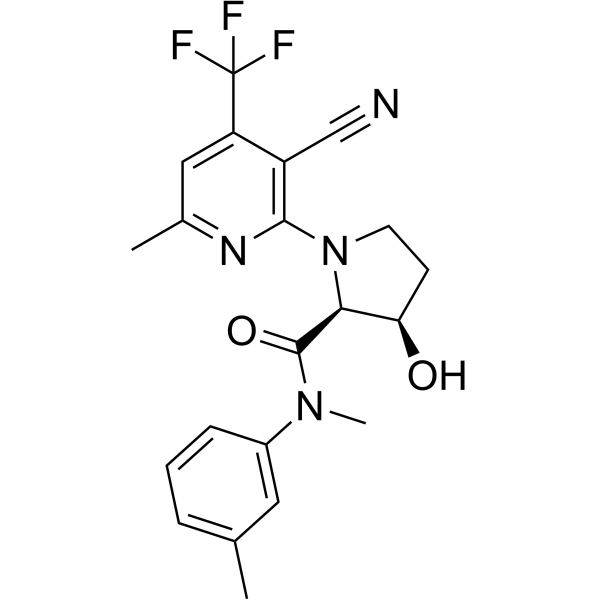
    ART558 is a potent, selective and allosteric DNA polymerase theta (Polθ) inhibitor (IC50=7.9 nM). ART558 elicits BRCA-gene synthetic lethality and DNA damage. ART558 can be used for the research of cancer, such as breast cancer .
    ART558
  • HY-N6733
    Aphidicolin
    10+ Cited Publications

    DNA/RNA Synthesis HSV Apoptosis Antibiotic Orthopoxvirus Infection Inflammation/Immunology
    Aphidicolin is an inhibitor of DNA polymerase α and δ, prevents mitotic cell division by interfering DNA polymerase activity. Aphidicolin is an antibiotic produced by mold Cephalosporium aphidicola, inhibits cellular deoxyribonucleic acid synthesis and the growth of herpes simplex virus. Aphidicolin exhibits anti-orthopoxvirus activity and potentiates apoptosis induced by arabinosyl nucleosides in a human promyelocytic leukemia cell line .
    Aphidicolin
  • HY-B0307
    Idoxuridine
    5+ Cited Publications

    5-Iodo-2′-deoxyuridine; 5-IUdR; IdUrd

    DNA/RNA Synthesis Phosphatase Orthopoxvirus Infection Cancer
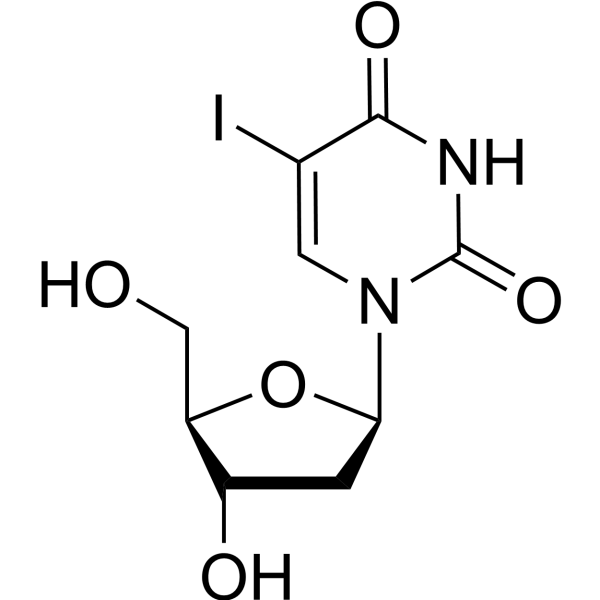
    Idoxuridine (5-Iodo-2′-deoxyuridine, 5-IUdR, IdUrd) is an iodinated thymidine analogue that competitively inhibits phosphorylases. Idoxuridine can inhibit viral activity, particularly viral eye infections, including herpes simplex keratitis, by inhibiting DNA polymerase and affecting viral replication. Idoxuridine against feline herpesvirus has the IC50 value of 4.3 μM . Idoxuridine shows anti-orthopoxvirus activity.
    Idoxuridine
  • HY-D1020
    7-Aminoactinomycin D
    5+ Cited Publications

    7-AAD

    DNA/RNA Synthesis Bacterial DNA Stain Antibiotic Infection Cancer
    7-Aminoactinomycin D (7-AAD) a cell-impermeant fluorescent DNA stain, is a potent RNA polymerase inhibitor. 7-Aminoactinomycin D selectively binds to GC regions of the DNA. 7-Aminoactinomycin D also has antibacterial effects .
    7-Aminoactinomycin D
  • HY-12484
    BMH-21
    10+ Cited Publications

    DNA/RNA Synthesis Cancer
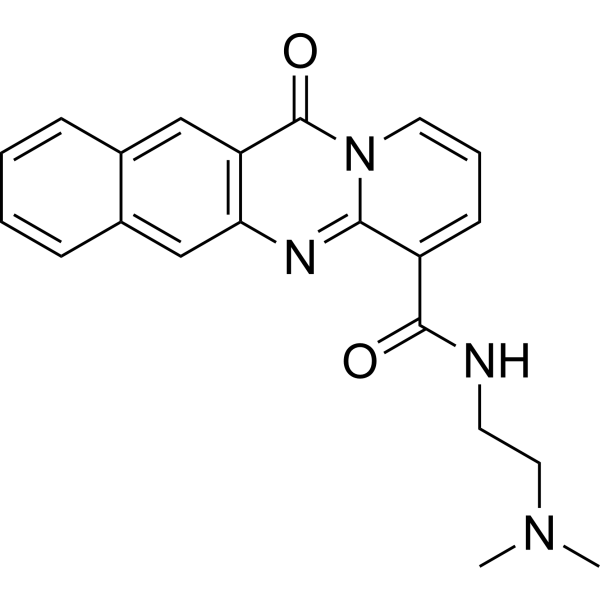
    BMH-21 is a first-in-class DNA intercalator which inhibits RNA polymerase I (Pol I) transcription. BMH-21 possesses anticancer activity .
    BMH-21
  • HY-137067
    IMT1B
    5+ Cited Publications

    LDC203974

    DNA/RNA Synthesis Cancer
    IMT1B (LDC203974) is an orally active, noncompetitive and specific allosteric inhibitor of mitochondrial RNA polymerase (POLRMT) and inhibits mitochondrial DNA (mtDNA) expression. IMT1B has anti-tumour effects .
    IMT1B
  • HY-N0720
    Neobavaisoflavone
    10+ Cited Publications

    Apoptosis DNA/RNA Synthesis Inflammation/Immunology Cancer
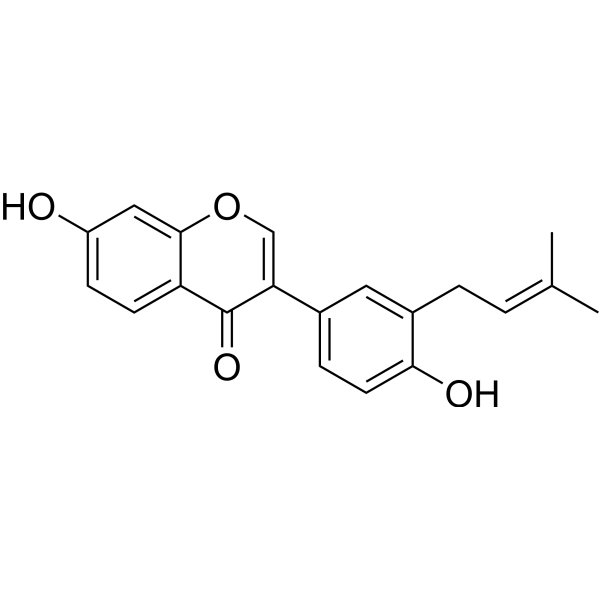
    Neobavaisoflavone, a flavonoid, is isolated from the seeds of Psoralea corylifolia. Neobavaisoflavone exhibits anti-inflammatory, anti-cancer and anti-oxidation activities. Neobavaisoflavone inhibits DNA polymerase at moderate to high concentrations. Neobavaisoflavone also inhibits platelet aggregation .
    Neobavaisoflavone
  • HY-W406070

    LNA-G

    Nucleoside Antimetabolite/Analog DNA/RNA Synthesis Others
    2′-O,4′-C-Methyleneguanosine (LNA-G) is a reverse guanine analog, where LNA (locked nucleic acid) is a nucleic acid analog. LNA modification can be widely used in various fields, such as effective binding affinity with complementary sequences and stronger nuclease resistance than natural nucleotides, providing great potential for application in disease diagnosis and research. 2'-O,4'-C-Methyleneguanosine is a substrate for KOD DNA polymerase, which incorporates LNA-G nucleotides into growing DNA strands, including consecutive incorporations , to generate full-length extension products .
    2'-O,4'-C-Methyleneguanosine
  • HY-W011725

    m6dA

    Nucleoside Antimetabolite/Analog Mitochondrial Metabolism DNA/RNA Synthesis Neurological Disease Cancer
    N-6-Methyl-2-deoxyadenosine (m6dA) is an adenine nucleoside analogue. N-6-Methyl-2-deoxyadenosine targets nuclear processes and DNA replication machineries including WER, SATB1, TFAM, Jumu, SSBP1, DNA polymerase η and phage polymerase Gp90 exo . N-6-Methyl-2-deoxyadenosine acts as a multifunctional epigenetic regulator that modulates transcription, DNA damage response, cell cycle, transposon silencing, stress adaptation, epigenetic crosstalk, and nucleosome organization in both prokaryotes and eukaryotes. N-6-Methyl-2-deoxyadenosine regulates mitochondrial epigenetic inheritance and is required for fear extinction memory in mice. N-6-Methyl-2-deoxyadenosine exhibits dysregulated levels in cancers. N-6-Methyl-2-deoxyadenosine can be used for the research of glioblastoma, triple negative breast cancer, and conditioned fear (fear extinction impairment) .
    N-6-Methyl-2-deoxyadenosine
  • HY-W001951

    Tetrakis(acetato)dirhodium(II); Rhodium(II) acetate dimer

    DNA/RNA Synthesis Cancer
    Dirhodium tetraacetate (Tetrakis (acetato) dirhodium (II)) is an anticancer agent. Dirhodium tetraacetate functionally inhibits the activities of DNA polymerase I and RNA polymerase. It also acts as a catalyst and can be used to construct rhodium-based artificial metalloenzymes .
    Dirhodium tetraacetate
  • HY-139289
    ART812
    3 Publications Verification

    DNA/RNA Synthesis Cancer
    ART812 is an orally active DNA polymerase Polθ inhibitor with an IC50 value of 7.6 nM. ART812 has an IC50 value of 240 nM for cell based microhomology-mediated end joining (MMEJ) .
    ART812
  • HY-W013715A

    dTTP trisodium solution (100 mM)

    DNA/RNA Synthesis Nucleoside Antimetabolite/Analog Endogenous Metabolite Others
    Deoxythymidine-5'-triphosphate (dTTP) (trisodium) solution (100 mM) is one of the raw materials used by DNA polymerase to synthesize long DNA strands during DNA replication. Deoxythymidine-5'-triphosphate (trisodium) solution (100 mM) is used in polymerase chain reaction (PCR) for DNA amplification. This product is supplied as an aqueous solution.
    Deoxythymidine-5'-triphosphate trisodium solution (100 mM)
  • HY-N0872

    (-)-Isosteviol; iso-Steviol

    Interleukin Related DNA/RNA Synthesis Reactive Oxygen Species (ROS) Topoisomerase Cardiovascular Disease Cancer
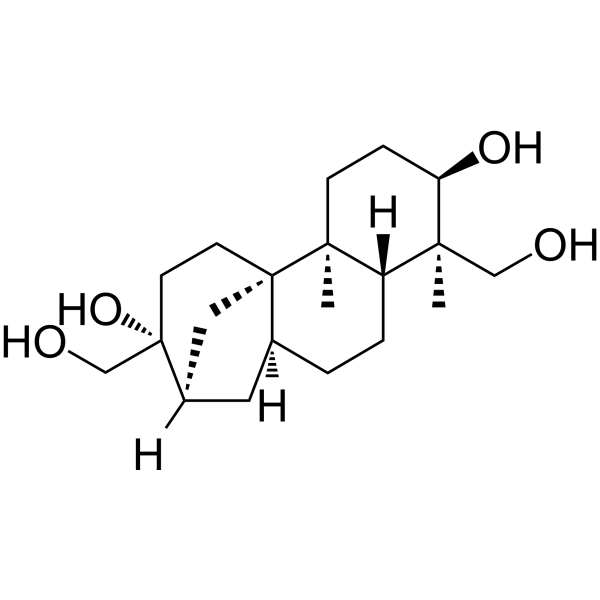
    Isosteviol ((-)-Isosteviol) is a derivative of Stevioside through acid catalyzed hydrolysis of Stevioside. Isosteviol inhibits DNA polymerase and DNA topoisomerase and has antibacterial, anticancer and anti-tuberculosis effects .
    Isosteviol
  • HY-128357
    Ibezapolstat
    4 Publications Verification

    ACX-362E; GLS-362E

    Bacterial DNA/RNA Synthesis Infection
    Ibezapolstat (ACX-362E) is a first-in-class, orally active DNA polymerase IIIC (pol IIIC) inhibitor, with a Ki of 0.325 μM for the DNA pol IIIC from C. difficile. Ibezapolstat is developed for the research of C. difficile infection(CDI) .
    Ibezapolstat
  • HY-17026A

    dFdCTP

    Drug Metabolite DNA/RNA Synthesis Apoptosis Cancer
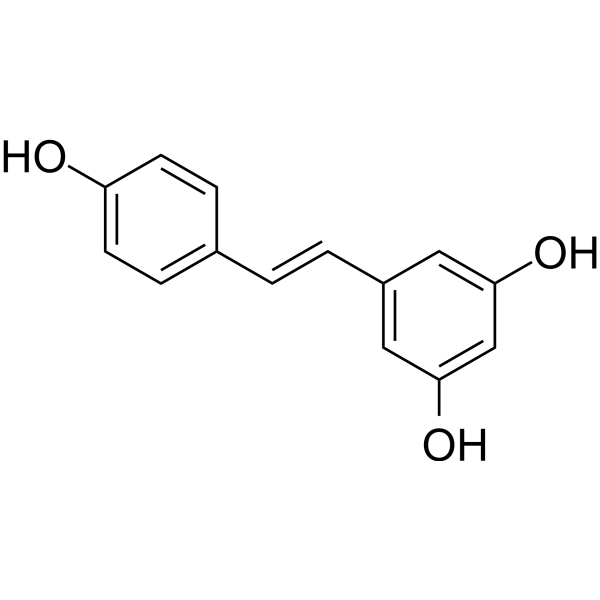
    Gemcitabine triphosphate (dFdCTP) is the active metabolite of Gemcitabine (HY-17026). The mechanism of Gemcitabine triphosphate cell-killing is its competition with cytidine triphosphate during DNA replication, which results in the inhibition of chain elongation. Gemcitabine triphosphate shows a Ki of 11.2 μM against DNA polymerase α and 14.4 μM against DNA polymerase ε. Gemcitabine triphosphate partially inhibits dCMP deaminase and acts as a substrate for DNA synthesis to incorporate into cellular DNA and RNA. Gemcitabine triphosphate disrupts DNA and RNA synthesis, arrests cell cycle in G0/G1 and S phases, triggers apoptosis, reduces tumor cell proliferation. Gemcitabine triphosphate can be used for the research of pancreatic cancer and non-small cell lung cancer .
    Gemcitabine triphosphate
  • HY-132142

    DNA/RNA Synthesis Others
    5-Propargylamino-dCTP is a sustrate for DNA polymerases. 5-Propargylamino-dCTP can conjugate to molecular markers for use in nucleic acid labeling or sequence analysis. 5-Propargylamino-dCTP is a click chemistry reagent, it contains an Alkyne group and can undergo copper-catalyzed azide-alkyne cycloaddition (CuAAc) with molecules containing Azide groups .
    5-Propargylamino-dCTP
  • HY-N2566
    Euscaphic acid
    1 Publications Verification

    DNA/RNA Synthesis PI3K Apoptosis Cancer
    Euscaphic acid, a DNA polymerase inhibitor, is a triterpene from the root of the R. alceaefolius Poir. Euscaphic inhibits calf DNA polymerase α (pol α) and rat DNA polymerase β (pol β) with IC50 values of 61 and 108 μM . Euscaphic acid induces apoptosis .
    Euscaphic acid
  • HY-E70086

    DNA/RNA Synthesis Infection
    Taq DNA polymerase is a thermostable DNA polymerase that can be used in PCR .
    Taq DNA polymerase
  • HY-134103A

    2′,3′-Dideoxyguanosine 5′-triphosphate trisodium

    DNA/RNA Synthesis Others
    ddGTP (2′,3′-Dideoxyguanosine 5′-triphosphate) trisodium (100 mM in water) is one of 2',3'-dideoxyribonucleoside 5'-triphosphates (ddNTPs) that acts as chain-elongating inhibitor of DNA polymerase for DNA sequencing. ddGTP trisodium acts as an inhibitor or a substrate for DNA polymerase α .
    ddGTP trisodium (100 mM in water)
  • HY-N3023
    3,4-Dihydroxybenzylamine hydrobromide
    1 Publications Verification

    NSC 263475 hydrobromide

    DNA/RNA Synthesis Cancer
    3,4-Dihydroxybenzylamine hydrobromide (NSC 263475 hydrobromide) is an improved dopamine analog cytotoxic and inhibits DNA polymerase activity in melanoma cells . 3,4-Dihydroxybenzylamine hydrobromide (NSC 263475 hydrobromide) displays growth inhibitory activity in melanoma cell lines with varying degrees of tyrosinase activity .
    3,4-Dihydroxybenzylamine hydrobromide
  • HY-161430

    DNA/RNA Synthesis Apoptosis PARP Cancer
    RTx-161 is a DNA polymerase θ inhibitor with an IC50 of 4.1 nM. RTx-161 induces DNA damage, PARP cleavage, apoptosis, and selectively kills homologous recombination-deficient (HRD) cells. RTx-161 acts synergistically with PARP inhibitors to suppress PARP inhibitor resistance in cancer cells. RTx-161 can be used for the research of BRCA G12C mutant cancer and HR-deficient cancers .
    RTx-161
  • HY-153118

    ctDNA sodium, Type I, fibers; DNA sodium, from calf thymus, Type I, fibers; Thymonucleic acid sodium, Type I, fibers

    Biochemical Assay Reagents Others Cancer
    Deoxyribonucleic acid sodium, from calf thymus, Type I, fibers is the sodium salts form of Calf thymus DNA (HY-109517). Calf thymus DNA is a double-stranded template DNA isolated from calf thymus. It can be used to study the interaction between DNA and DNA binding agents, as well as the structure and function of DNA, for DNA quantification and used as a substrate for DNA polymerase analysis, etc​ .
    Deoxyribonucleic acid sodium, from calf thymus, Type I, fibers
  • HY-145330
    NSC639828
    2 Publications Verification

    DNA/RNA Synthesis Cancer
    NSC639828 is a potent inhibitor of DNA polymerase α with an IC50 of 70 μM. NSC639828 has high antitumor activity. NSC639828 has the potential for researching cancer disease .
    NSC639828
  • HY-136650A
    Fludarabine triphosphate trisodium
    1 Publications Verification

    F-ara-ATP trisodium

    Nucleoside Antimetabolite/Analog Drug Metabolite DNA/RNA Synthesis Apoptosis Cancer
    Fludarabine triphosphate (F-ara-ATP) trisodium, the active metabolite of Fludarabine (HY-B0069), is a potent, noncompetitive and specific inhibitor of DNA primase, with an IC50 of 2.3 μM and a Ki of 6.1 μM. Fludarabine triphosphate trisodium inhibits DNA synthesis by blocking DNA primase and primer RNA formation. Fludarabine triphosphate trisodium inhibits ribonucleotide reductase and DNA polymerase and ultimately leads to cellular apoptosis .
    Fludarabine triphosphate trisodium
  • HY-136648B

    dATP trisodium,100 mM Solution,PCR Grade

    Biochemical Assay Reagents Others
    2'-Deoxyadenosine-5'-triphosphate (dATP) trisodium, 100 mM Solution, PCR Gradeis one of the raw materials used by DNA polymerase to synthesize long DNA strands during DNA replication. 2'-Deoxyadenosine-5'-triphosphate trisodium,100 mM Solution,PCR Grade is used in reverse transcription polymerase chain reaction (RT-PCR) for DNA amplification. This product is supplied in the form of an aqueous solution .
    2'-Deoxyadenosine-5'-triphosphate trisodium,100 mM Solution,PCR Grade
  • HY-N12540

    MGDG

    DNA/RNA Synthesis Apoptosis Others
    Monogalactosyldiacylglycerol (MGDG) is a galactolipid with anti-inflammatory and anticancer activities, which is found in photosynthetic organisms. Monogalactosyldiacylglycerol is a potent DNA polymerase inhibitor with pro-apoptotic activity. Monogalactosyldiacylglycerol inhibits the synthesis of LPS (HY-D1056)-induced inflammation-related proteins (Ex-FABP, Avidin, Serum Amyloid A). Monogalactosyldiacylglycerol exerts an anti-proliferative effect on chicken articular chondrocytes . Monogalactosyldiacylglycerol can be used in research related to osteoarthritis, cancer and inflammatory diseases .
    Monogalactosyldiacylglycerol
  • HY-E70090

    DNA/RNA Synthesis Infection
    T7 RNA polymerase is a polymerase expressed by Escherichia coli from the RNA polymerase gene of T7 bacteriophage. T7 RNA polymerase is highly specific and involved in in vitro transcription (IVT) of mRNA. In the presence of Mg 2+, T7 RNA polymerase only uses the single-stranded or double-stranded DNA containing the T7 promoter sequence as a template, and uses NTP as a substrate to synthesize RNA complementary to the single-stranded DNA downstream of the promoter .
    T7 RNA polymerase
  • HY-128917

    DNA/RNA Synthesis Infection
    DNA31 is a potent RNA polymerase inhibitor .
    DNA31
  • HY-E70376

    DNA/RNA Synthesis Others
    Pfu DNA Polymerase is an important enzyme in PCR-related experiments, which is initially found in Pyrococcus furiosus. Pfu DNA Polymerase exhibits thermostability and high fidelity .
    Pfu DNA Polymerase
  • HY-E70216

    Others Others
    Bsu DNA polymerase, Large fragment is a polymerase derived from Bacillus subtilis. Bsu DNA polymerase, Large fragment is a DNA isothermal amplification polymerase with chain replacement activity, which used in RPA recombinase polymerase amplification technology .
    Bsu DNA polymerase, Large fragment
  • HY-50735

    NSC 382097; FIAC; FOAC

    HSV EBV DNA/RNA Synthesis Infection
    Fiacitabine (NSC 382097; FIAC; FOAC) is a potent and highly selective anti-herpesvirus agent. Fiacitabine acts as an inhibitor of HSV DNA polymerase, with a Ki of 0.26 μM for HSV-1 and 0.42 μM for HSV-2, respectively. Fiacitabine can be efficiently phosphorylated by thymidine kinase encoded by the virus itself to generate FIACTP, an active triphosphate metabolite. Fiacitabine is applicable to research related to herpesvirus infections .
    Fiacitabine
  • HY-D1021

    Aminoallyl-dUTP sodium salt

    DNA/RNA Synthesis Others
    AA-dUTP (Aminoallyl-dUTP) sodium salt is a reverse transcriptase and DNA polymerase I substrate with probe precursor activity. AA-dUTP sodium salt undergoes enzymatic incorporation into DNA during cDNA synthesis and nick translation. AA-dUTP sodium salt generates amine-modified DNA, which can be used for labeling with amine-reactive fluorescent dyes .
    AA-dUTP sodium salt
  • HY-130801

    5-OHdU

    Endogenous Metabolite Metabolic Disease
    5-Hydroxy-2'-deoxyuridine (5-OHdU) is a major stable oxidation product of 2'-Deoxycytidine. 5-Hydroxy-2'-deoxyuridine can be incorporated into DNA in vitro by DNA polymerase .
    5-Hydroxy-2'-deoxyuridine
  • HY-160596

    5-Formyl-deoxycytidine lithium

    DNA/RNA Synthesis Others
    5-Formyl-dCTP (5-Formyl-deoxycytidine) lithium is a DCTPP1 substrate. 5-Formyl-dCTP lithium acts as a mutagen/epigenetic disruptor via DNA polymerase incorporation, mutagenic mispairings, and disturbed epigenetic programming. 5-Formyl-dCTP lithium can be used for research on genotoxicity .
    5-Formyl-dCTP lithium
  • HY-W048513

    DNA/RNA Synthesis Cancer
    7-Deaza-2'-deoxyadenosine is an isosteric dATP analog of 2'-deoxyadenosine. 7-Deaza-2'-deoxyadenosine is recognized by various DNA polymerases and incorporated into DNA strands as a substrate. 7-Deaza-2'-deoxyadenosine undergoes a bioorthogonal inverse electron demand Diels-Alder reaction with tetrazine-modified molecules, enabling site-specific labeling of DNA, surface antibody immobilization and intracellular fluorescent labeling. 7-Deaza-2'-deoxyadenosine reduces the DNA curvature of d(A6)·d(T6) fragments and the stability of DNA/RNA double helices, and leads to decreased antisense activity against SV40 T Antigen. 7-Deaza-2'-deoxyadenosine finds application in the research field of SV40 T Antigen-related cancers .
    7-Deaza-2'-deoxyadenosine
  • HY-W008661A

    dGTP trisodium,100 mM Solution,PCR Grade; 2'-Deoxyguanosine-5'-triphosphate trisodium,100 mM Solution,PCR Grade

    DNA/RNA Synthesis Others
    Deoxyguanosine triphosphate (dGTP) trisodium,100 mM Solution,PCR Grade is one of the raw materials used by DNA polymerases to synthesize long DNA strands during DNA replication. Deoxyguanosine triphosphate trisodium,100 mM Solution,PCR Grade is used in polymerase chain reaction (PCR) for DNA amplification. This product is supplied in the form of an aqueous solution .
    Deoxyguanosine triphosphate  trisodium,100 mM Solution,PCR Grade
  • HY-W013715B

    dTTP trisodium,100 mM Solution,PCR Grade

    DNA/RNA Synthesis Nucleoside Antimetabolite/Analog Endogenous Metabolite Others
    Deoxythymidine-5'-triphosphate (dTTP) trisodium, 100 mM Solution, PCR Grade is one of the raw materials used by DNA polymerase to synthesize long DNA strands during DNA replication. Deoxythymidine-5'-triphosphate trisodium, 100 mM Solution, PCR Grade is used in polymerase chain reaction (PCR) for DNA amplification. This product is supplied as an aqueous solution.
    Deoxythymidine-5'-triphosphate trisodium,100 mM Solution,PCR Grade
  • HY-162690

    VZV DNA/RNA Synthesis CMV Infection
    DNA polymerase-IN-5 (compound 42) is a broad-spectrum herpes antiviral. DNA polymerase-IN-5 against both CMV and VZV infection with IC50 values of 6.6 and 4.8 μM .
    DNA polymerase-IN-5
  • HY-115528

    Nucleoside Antimetabolite/Analog DNA/RNA Synthesis Cancer
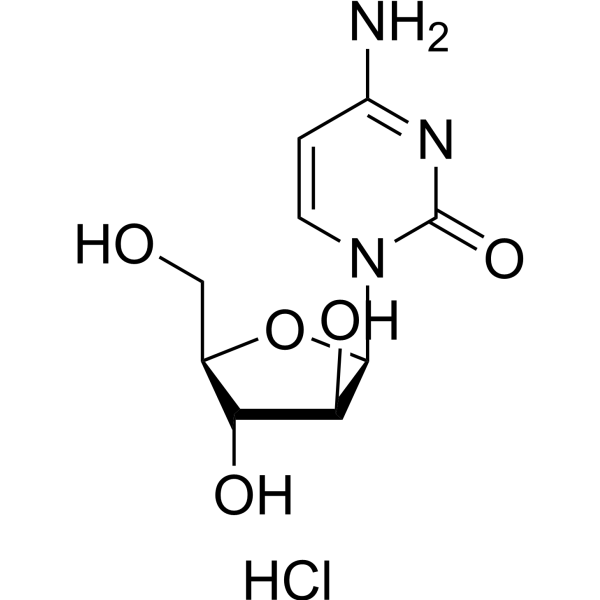
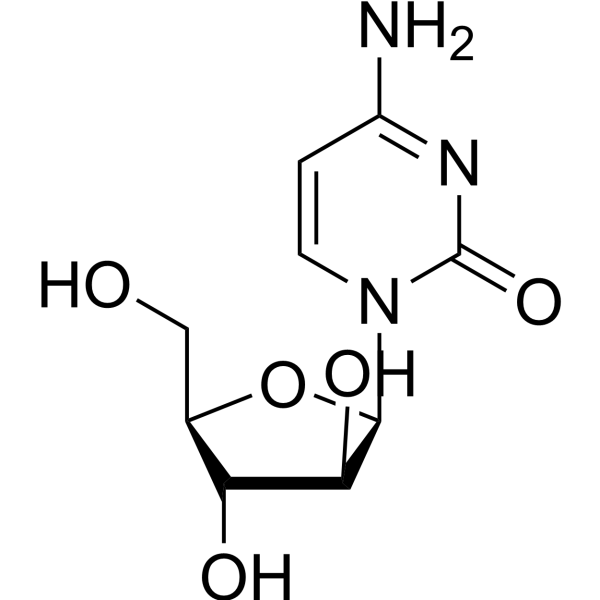
    FF-10502, a structural analog of Gemcitabine, is a pyrimidine nucleoside antimetabolite. FF-10502 inhibits DNA polymerase α and β. FF-10502 shows beneficial anticancer activity via a mechanism of action on dormant cells .
    FF-10502
  • HY-100513

    DNA/RNA Synthesis Apoptosis Antibiotic Cancer
    (±)-Dehydroaltenusin, an antibiotic, is a selective eukaryotic DNA polymerase α (pol α) inhibitor with an IC50 of 0.68 μM. (±)-Dehydroaltenusin can be isolated from fungus Alternaria tenuis. (±)-Dehydroaltenusin competitively inhibits the DNA template primer (Ki: 0.23 μM) and non-competitively suppresses the 2'-deoxyribonucleoside 5'-triphosphate substrate (Ki: 0.18 μM). (±)-Dehydroaltenusin induces the cancer cell S-phase cycle arrest and apoptosis. (±)-Dehydroaltenusin can be used for cancers like human adenocarcinoma research .
    (±)-Dehydroaltenusin
  • HY-160841

    DNA Stain DNA/RNA Synthesis Others
    Biotin-16-dCTP is a biotinylated deoxycytidine triphosphate that serves as an important DNA labeling substrate. Biotin-16-dCTP can be enzymatically incorporated into the 3' end of DNA probes via terminal deoxynucleotidyl transferase, forming a 1-3 nucleotide-long tail to achieve biotinylation of the probes. Biotin-16-dCTP enhances chemiluminescent detection of low-abundance targets such as specific tRNA isoacceptors through Northern blotting. Biotin-16-dCTP can also replace conventional dCTP to be integrated into single-stranded DNA generated by asymmetric polymerase chain reaction, which is applicable for bioconjugation or pull-down assays. Repeated freeze-thaw cycles of Biotin-16-dCTP should be avoided to prevent degradation of its function for probe biotinylation .
    Biotin-16-dCTP
  • HY-170547

    DNA/RNA Synthesis HSV EBV CMV Infection
    DNA polymerase-IN-6 is an antiviral agent and a DNA polymerase inhibitor. DNA polymerase-IN-6 inhibits the replication of HCMV, HSV-1, HSV-2 and EBV. DNA polymerase-IN-6 exhibits low cytotoxicity in mammalian cells. DNA polymerase-IN-6 can be used in research related to viral infections .
    DNA polymerase-IN-6
  • HY-131606

    HSV CMV DNA/RNA Synthesis Infection
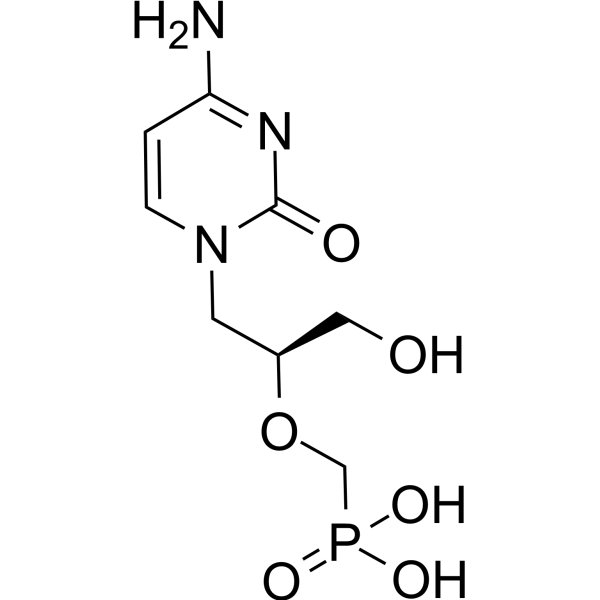
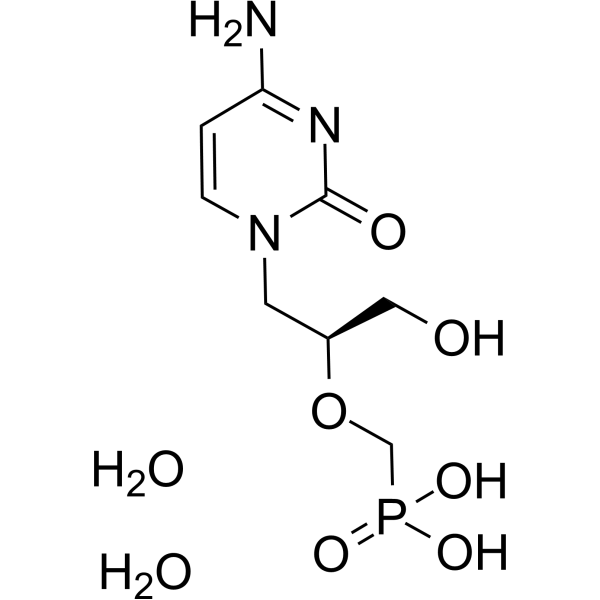
    Cidofovir diphosphate is an active intracellular metabolite of Cidofovir. Cidofovir diphosphate is a selective inhibitor of viral DNA polymerases with Ki values of 6.6, 0.86 and 1.4 μM for HCMV, HSV-1 and HSV-2 DNA polymerase, respectively .
    Cidofovir diphosphate
  • HY-120105

    DNA/RNA Synthesis Apoptosis MDM-2/p53 Bcl-2 Family Caspase PARP Cancer
    NSC666715 is a DNA polymerase β (Pol-β) inhibitor. NSC666715 directly and specifically interacts with Pol-β, interferes with its binding to damaged DNA, blocks its dRP lyase activity, and inhibits Pol-β-mediated SN- and LP-BER. NSC666715 induces AP site accumulation and S-phase cell cycle arrest, and triggers senescence and apoptosis (apoptosis) via the p53/p21 pathway in colorectal cancer cells. NSC666715 enhances TMZ (HY-17364)-induced DNA damage, senescence and apoptosis, and potentiates the cytotoxicity of TMZ. NSC666715 inhibits tumor growth in colon cancer xenograft models. NSC666715 can be used in research related to colorectal cancer .
    NSC666715
  • HY-E70404

    DNA/RNA Synthesis Biochemical Assay Reagents Others
    FastTaq DNA Polymerase (5'→3' exo-) is a modified DNA polymerase based on Taq DNA Polymerase. FastTaq DNA Polymerase (5'→3' exo-) lacks the 5'→3' exonuclease activity of wild-type Taq. It retains the 5'→3' DNA polymerase activity of wild-type Taq .
    FastTaq DNA Polymerase(5'→3' exo-)
  • HY-E70087

    DNA/RNA Synthesis Others
    Taq DNA polymerase 2.0 is a thermostable DNA polymerase that can be used in PCR .
    Taq DNA polymerase 2.0
  • HY-164018A

    DNA/RNA Synthesis Infection
    PMEG-DP disodium is a potent DNA polymerase inhibitor (IC50=2.5 μM), especially for DNA polymerase α and δ. PMEG-DP disodium acts as an active metabolite of G-9191, which effectively inhibits the growth of papillomavirus (HPV) -infected cell lines. PMEG-DP disodium can be used in the study of HPV-related diseases .
    PMEG-DP disodium
  • HY-136650

    F-ara-ATP

    Nucleoside Antimetabolite/Analog Drug Metabolite DNA/RNA Synthesis Apoptosis Cancer
    Fludarabine triphosphate (F-ara-ATP), the active metabolite of Fludarabine (HY-B0069), is a potent, noncompetitive and specific inhibitor of DNA primase, with an IC50 of 2.3 μM and a Ki of 6.1 μM. Fludarabine triphosphate inhibits DNA synthesis by blocking DNA primase and primer RNA formation. Fludarabine triphosphate inhibits ribonucleotide reductase and DNA polymerase and ultimately leads to cellular apoptosis .
    Fludarabine triphosphate
  • HY-P2937

    DNA/RNA Synthesis Cancer
    DNA polymerase is a polymerase agent targeting DNA templates. DNA polymerase catalyzes the polymerization of deoxyribonucleotides (dNTPs) to extend DNA strands with high fidelity and processivity. DNA polymerase is promising for research of cancers .
    DNA polymerase
  • HY-179219S

    DNA/RNA Synthesis Cancer
    RTx-303 is an orally active, selective DNA polymerase θ (Polθ) inhibitor (IC50 = 5.1 nM). RTx-303 exhibits significantly high cellular potency and strongly potentiates PARPi in BRCA1/2 mutant cells and patient-derived xenograft models. RTx-303 can be used for the study of BRCA2-mutated breast cancer .
    RTx-303

Inquiry Online

Your information is safe with us. * Required Fields.

Salutation


Country or Region *

Applicant Name *


Organization Name *

Department *


Email Address *


Product Name *

Cat. No.


Requested quantity *

Phone Number *


Remarks

Inquiry Online

Inquiry Information

Product Name:
Cat. No.:
Quantity:
MCE Japan Authorized Agent:

