5 Results for "

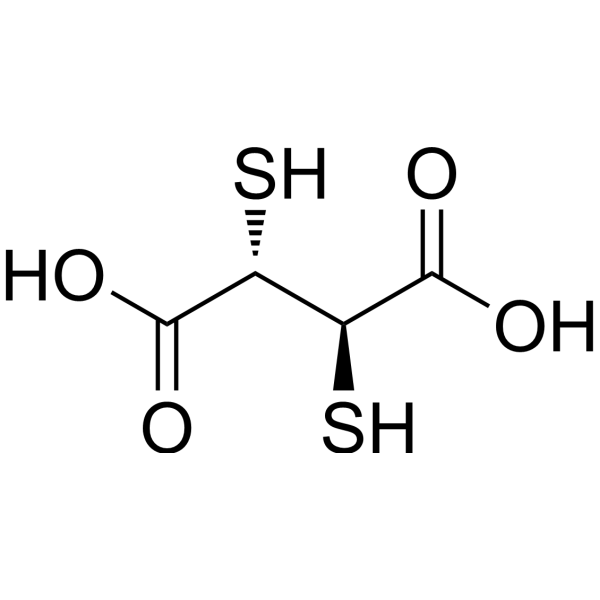
Dimercaptosuccinic acid

" in MedChemExpress (MCE) Product Catalog:
Products (5)

5 Results for "Dimercaptosuccinic acid" in MCE Product Catalog:

1
1 Cited Publications
Cat. No.: HY-B1768
CAS No.: 304-55-2
Synonyms: Dimercaptosuccinic acid; DMSA
Research Areas:  

Others Cancer

Succimer is a widely used chelating agent for the treatment of Pb poisoning.
loading...
    loading...
Cat. No.: HY-P1162
CAS No.: 73168-24-8
Synonyms: SKF 100273
Target:  

Vasopressin Receptor

Research Areas:  

Metabolic Disease

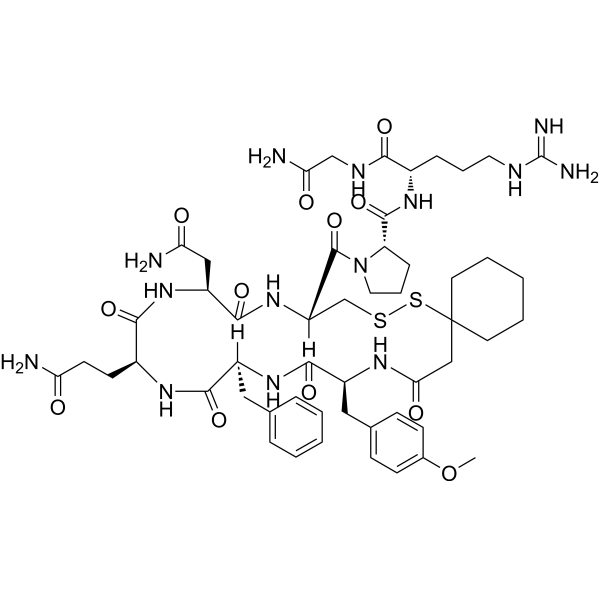
(d(CH2)51,Tyr(Me)2,Arg8)-Vasopressin (SKF 100273) is a vasopressin V1 receptor selective antagonist .
loading...
    loading...
Cat. No.: HY-B1768R
CAS No.: 304-55-2
Synonyms: Dimercaptosuccinic acid (Standard); DMSA (Standard)
Succimer (Standard) is the analytical standard of Succimer. This product is intended for research and analytical applications. Succimer is a widely used chelating agent for the treatment of Pb poisoning.
loading...
    loading...
Cat. No.: HY-177995
CAS No.: 142609-62-9
Synonyms: Monoisoamyl meso-2,3-Dimercaptosuccinic acid
MiADMSA (Monoisoamyl meso-2,3-dimercaptosuccinic acid) is an orally active thiol chelator that can effectively remove heavy metals such as arsenic and lead from the body of animals. Arsenic binds with two vicinal sulfhydryl groups available in MiADMSA leading to marked reduction in body arsenic burden and also marked reduction in various oxidative stress parameters and antioxidant enzymes like-ROS, nitrite, TBARS, GSH, SOD and catalase. MiADMSA attenuates urinary bladder carcinogenesis, protects against oxidative stress, ameliorates copper-induced histopathology, reverses neurotoxicity, and is safe in animals. MiADMSA can be used in studies of bladder cancer, arsenic, and lead-induced developmental neurotoxicity .
loading...
    loading...
Cat. No.: HY-P11882
CAS No.: 947545-69-9
Target:  

Fc Receptor (FcR)

Research Areas:  

Inflammation/Immunology

SYN1436 is a selective human neonatal Fc receptor (hFcRn) antagonist with an IC50 of 2.4 nM. SYN1436 binds to hFcRn and inhibits hFcRn-hIgG interaction. SYN1436 can be used for the research of autoimmune diseases .
loading...
    loading...

