8 Results for "

Hormone abscisic acid

" in MedChemExpress (MCE) Product Catalog:
Products (8)

8 Results for "Hormone abscisic acid" in MCE Product Catalog:

5
5 Cited Publications
Cat. No.: HY-100560
CAS No.: 21293-29-8
Purity:  99.64%
Synonyms: (S)​-​(+)​-​abscisic acid; ABA
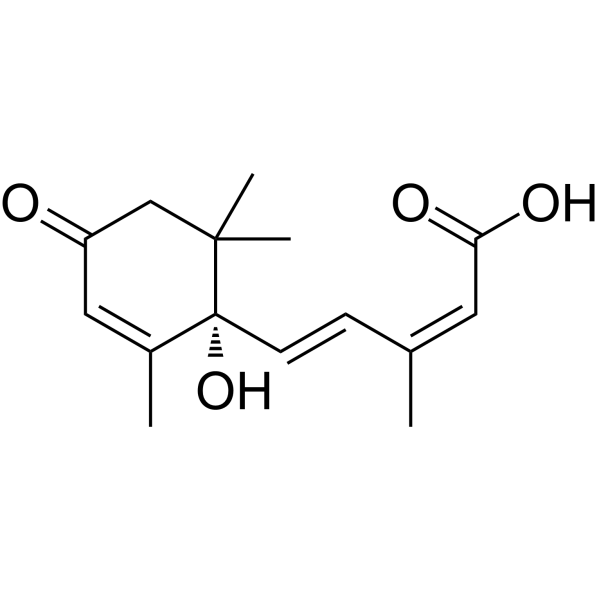
Abscisic acid ((S)-(+)-Abscisic acid), an orally active phytohormone in fruits and vegetables, is an endogenously produced mammalian hormone. Abscisic acid is a growth inhibitor and can regulate many aspects of plant growth and development. Abscisic acid inhibits proton pump (H +-ATPase) and leads to the plasma membrane depolarization in a Ca 2+-dependent manner. Abscisic acid, a LANCL2 natural ligand, is a potent insulin-sensitizing compound and has the potential for pre-diabetes, type 2 diabetes and metabolic syndrome .
loading...
    loading...
1
1 Cited Publications
Cat. No.: HY-111973
CAS No.: 24394-14-7
Purity:  98.76%
Target:  

Phytohormone iGluR

Research Areas:  

Neurological Disease

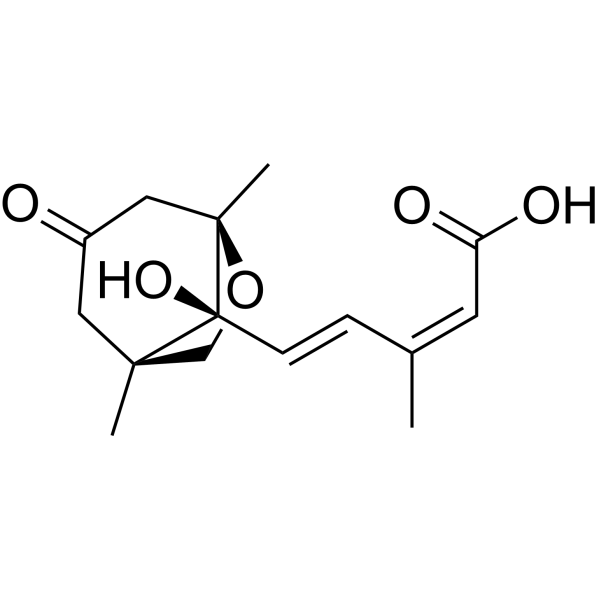
Phaseic acid is a Abscisic acid terpenoid catabolite that can able to activate a subset of Abscisic acid repectors. Phaseic acid is a plant hormone associated with photosynthesis arrest and abscission. Phaseic acid is the antagonist for NMDA-type glutamate receptor (NMDAR) that inhibits NMDAR currents with an IC50 of 34.37 μM. Phaseic acid reduces intracellular calcium influx, and exhibits neuroprotective effect .
loading...
    loading...
1
1 Cited Publications
Cat. No.: HY-116831
CAS No.: 41756-77-8
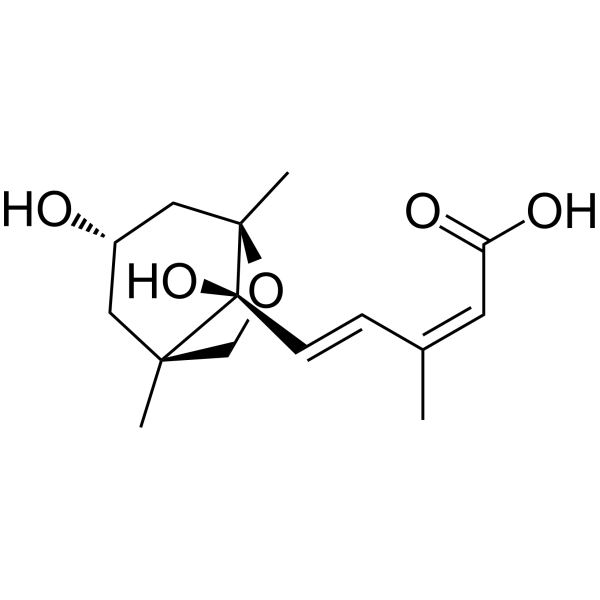
4′-Dihydrophaseic acid is a metabolite of the plant hormone abscisic acid and is present in legume seeds .
loading...
    loading...
Cat. No.: HY-N2549
CAS No.: 14375-45-2
Synonyms: (±)-ABA
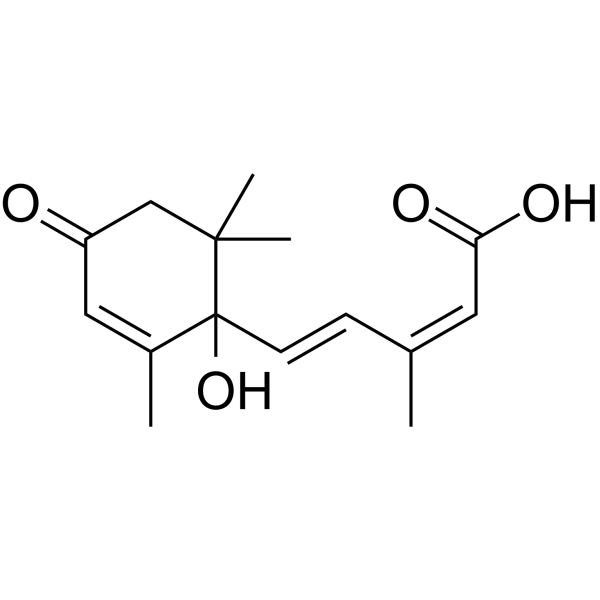
(±)-Abscisic acid is an orally active plant hormone that is present also in animals. (±)-Abscisic acid (ABA) contributes to the regulation of glycemia in mammals .
loading...
    loading...
Cat. No.: HY-100560R
CAS No.: 21293-29-8
Synonyms: (S)​-​(+)​-​abscisic acid (Standard); ABA (Standard)
Abscisic acid (Standard) is the analytical standard of Abscisic acid. This product is intended for research and analytical applications. Abscisic acid ((S)-(+)-Abscisic acid), an orally active phytohormone in fruits and vegetables, is an endogenously produced mammalian hormone. Abscisic acid is a growth inhibitor and can regulate many aspects of plant growth and development. Abscisic acid inhibits proton pump (H+-ATPase) and leads to the plasma membrane depolarization in a Ca2+-dependent manner. Abscisic acid, a LANCL2 natural ligand, is a potent insulin-sensitizing compound and has the potential for pre-diabetes, type 2 diabetes and metabolic syndrome .
loading...
    loading...
Cat. No.: HY-N7523
CAS No.: 14660-91-4
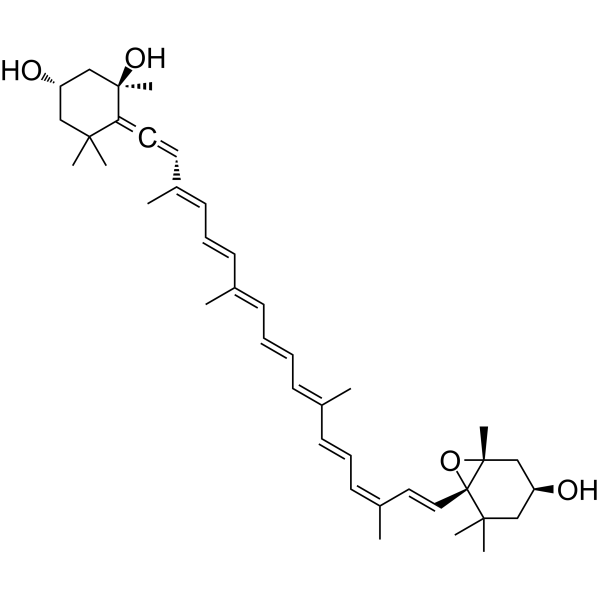
Neoxanthin is a major xanthophyll carotenoid and a precursor of the plant hormone abscisic acid in dark green leafy vegetables. Neoxanthin is a potent antioxidant and light-harvesting pigment. Neoxanthin induces apoptosis and has anticancer actions .
loading...
    loading...
Cat. No.: HY-W653739
CAS No.: 41944-86-9
Synonyms: abscisic aldehyde
Target:  

Drug Intermediate

Research Areas:  

Others

(+)-Abscisic Aldehyde (ABAld) is an intermediate in the biosynthesis of the plant hormone abscisic acid (ABA). (+)-Abscisic Aldehyde is produced by the dehydrogenation of xanthoxin by xanthoxin dehydrogenases, followed by selective oxidation by abscisic aldehyde oxygenase. (+)-Abscisic Aldehyde has an oxidizing PsAOγ activity and it correlates with ABA accumulation in the old leaves of pea plants with long exposure of salinity, ammonium or nitrogen deficiency. (+)-Abscisic Aldehyde can be used for plant growth and development research .
loading...
    loading...
Cat. No.: HY-L240
44 compounds

Plant hormones are natural signaling molecules synthesized by plants themselves, serving as crucial chemical messengers that exert physiological effects on plants at extremely low concentrations. They coordinate cellular growth, division, differentiation, and organ formation, helping plants adapt to environmental changes. Major categories include abscisic acid, auxins, gibberellins, cytokinins, ethylene, and brassinosteroids, among others.

MCE has included 44 plant hormones, which can be used for identification in plant metabolomics and related botanical research.

