22 Results for "

J774 cells

" in MedChemExpress (MCE) Product Catalog:
Products (22)

22 Results for "J774 cells" in MCE Product Catalog:

4
4 Cited Publications
Cat. No.: HY-B0388
CAS No.: 23288-49-5
Synonyms: DH-581
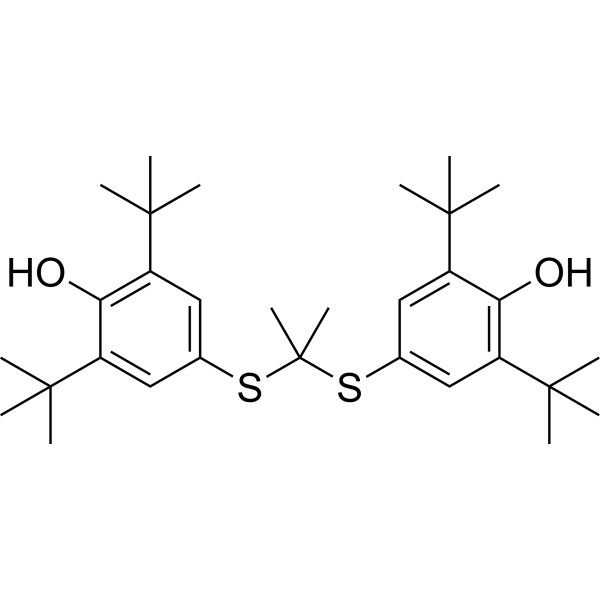
Probucol (DH-581) is an anti-hyperlipidemic agent. Probucol activates glutathione peroxidase. Probucol promotes low density lipoprotein (LDL) catabolism, inhibits ABCA1-dependent cholesterol efflux, and decreases HDL-C levels. Probucol also has anti-inflammatory, antioxidant and neuroprotective properties. Probucol can be used for researches on bone, cardiovascular, cancer, neurological, and metabolism-related diseases .
loading...
    loading...
Cat. No.: HY-123205
CAS No.: 60607-34-3
Purity:  99.56%
Synonyms: KW-4354
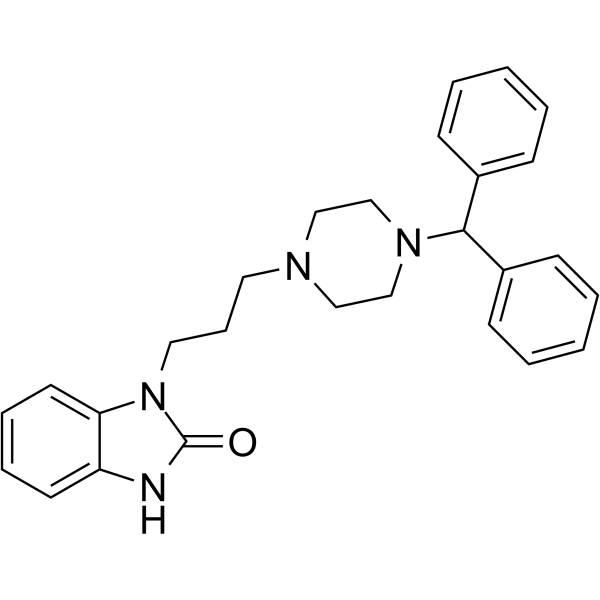
Oxatomide (KW-4354) is an orally active dual antagonist of the H1-histamine receptor and the P2X7 receptor, as well as an inhibitor of serotonin. Oxatomide possesses antihistaminic, antiallergic and anti-inflammatory activities. Oxatomide can be used in the research of allergic diseases .
loading...
    loading...
Cat. No.: HY-131521
CAS No.: 89304-26-7
Synonyms: Oxalomalate trisodium
Research Areas:  

Cancer

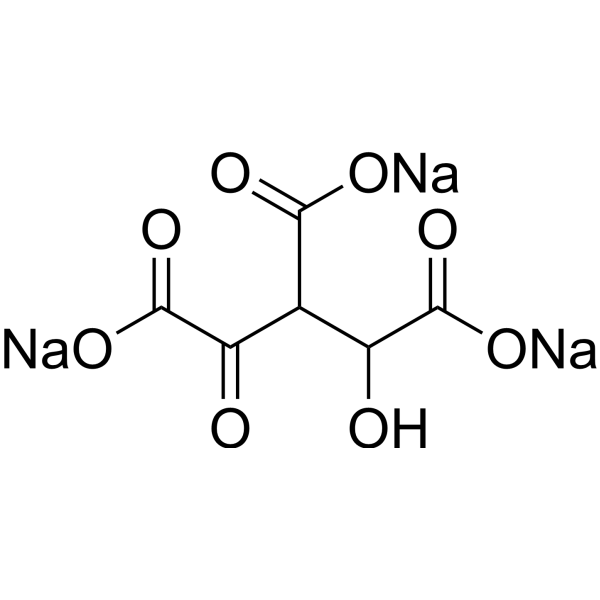
Oxalomalic acid (Oxalomalate) trisodium is a aconitase and NADP-dependent isocitrate dehydrogenase inhibitor. Oxalomalic acid trisodium inhibits nitrite production and iNOS protein expression in lipopolysaccharide (HY-D1056)-activated J774 macrophages .
loading...
    loading...
Cat. No.: HY-129959
CAS No.: 14154-42-8
Synonyms: AlClPc
Aluminum phthalocyanine chloride is a photosensitizer that effectively inhibits the parasite Leishmania amazonensis (the causative agent of cutaneous leishmaniasis) by light-mediated cytolysis. Aluminum phthalocyanine chloride causes parasite morphology and cytolysis of isolated amasilians, while higher photosensitizer concentrations and light intensities are required to induce lysis of mammalian cells. Aluminum phthalocyanine chloride lyses parasites within infected J774 macrophages and can be used to further investigate the study of leishmaniasis .
loading...
    loading...
Cat. No.: HY-N7700
CAS No.: 15769-56-9
Synonyms: G2013
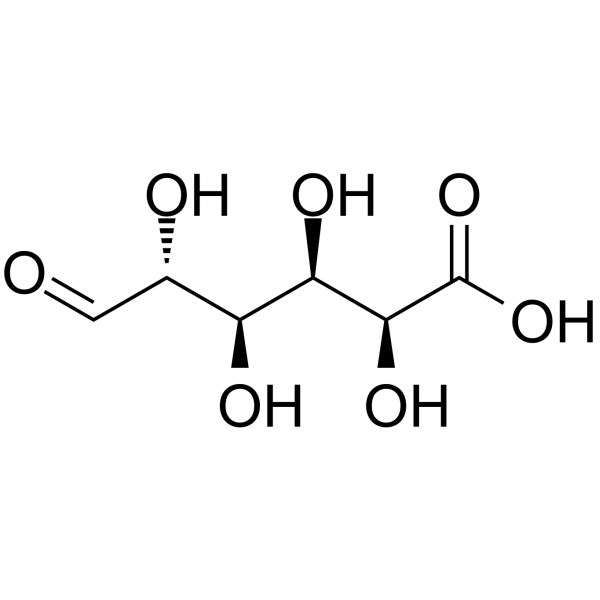
Guluronic acid (G2013) is an orally active oxidative stress regulator and anti-inflammatory agent that exerts pharmacological effects by down-regulating various pro-inflammatory and oxidative stress-related genes (such as TLR4, NF-κB, iNOS, etc.) and inhibiting the activities of COX-2, MMPs and VEGF. Low-dose Guluronic acid up-regulates the expression of immunoregulatory genes SHIP1 and SOCS1, thereby effectively inhibiting cancer-related inflammation, tumor angiogenesis, cell adhesion and metastasis, while reducing the accumulation of immunosuppressive cells. Guluronic acid significantly prolongs the survival time of tumor-bearing hosts within a concentration range without direct cytotoxicity, demonstrating favorable safety. Guluronic acid has involved in the research of multiple sclerosis, ankylosing spondylitis, breast cancer and other inflammatory diseases .
loading...
    loading...
Cat. No.: HY-N16039
CAS No.: 126221-76-9
TAN-1030A is an indolocarbazole alkaloid with macrophage-activating properties. TAN-1030A induces spreading of a murine macrophage cell line, Mm 1, and augmentes the phagocytic activity, Fc gamma receptor expression and β-glucuronidase activity of murine macrophage cell lines, Mm 1 and J774A.1. TAN-1030A can activate macrophage functions in mice .
loading...
    loading...
Cat. No.: HY-B2097
CAS No.: 138330-18-4
Synonyms: YM 175; Bisphonal
Target:  

Farnesyl Transferase

Research Areas:  

Metabolic Disease

Incadronate disodium (YM 175) is a bisphosphonate with strong inhibitory activity on bone resorption. Incadronate disodium indirectly stimulates renal 25-hydroxyvitamin D-1-hydroxylase by increasing circulating parathyroid hormone. Incadronate disodium, a cholesterol-lowering agent, is a potent inhibitor of rat liver microsomal squalene synthase (Ki=57 nM). Incadronate disodium inhibits sterol biosynthesis in mouse macrophage J774 cells (IC50=64 μM). Incadronate disodium has the potential for malignant tumors research .
loading...
    loading...
Cat. No.: HY-W088191
CAS No.: 619-57-8
Target:  

Drug Intermediate

Research Areas:  

Inflammation/Immunology Cancer

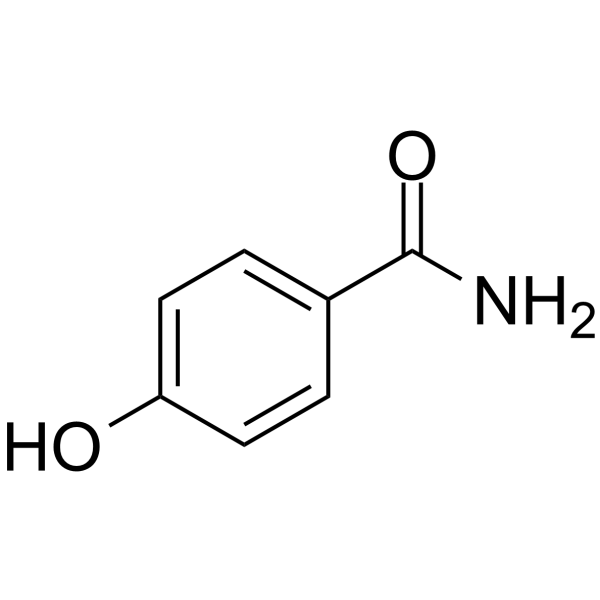
4-Hydroxybenzamide is an amide and intermediate. 4-Hydroxybenzamide can be isolated from the herb Berberis pruinosa. 4-Hydroxybenzamide derivatives exhibit anti-breast cancer activity. 4-Hydroxybenzamide can be used in atherosclerosis research .
loading...
    loading...
Cat. No.: HY-N0577R
CAS No.: 26544-34-3
Synonyms: Apigenin 7-O-apiosylglucoside (Standard); Apigenin 7-(2-O-apiosylglucoside) (Standard)
Apiin (Standard) is the analytical standard of Apiin. This product is intended for research and analytical applications. Apiin, a major constituent of Apium graveolens leaves with anti-inflammatory properties. Apiin shows significant inhibitory activity on nitrite (NO) production (IC50 = 0.08 mg/mL) in-vitro and iNOS expression (IC50 = 0.049 mg/ mL) in LPS-activated J774.A1 cells .
loading...
    loading...
Cat. No.: HY-133133
CAS No.: 4818-19-3
IIIM-1270is a NLRP3 inflammasome inhibitor. IIIM-1270 inhibits IL-1β release in mouse macrophages (J774A.1 cells) (IC50 = 3.5 μM) and significantly reduced the protein expression level of mature IL-1β. IIIM-1270 can be used for the study of inflammation .
loading...
    loading...
Cat. No.: HY-133132
CAS No.: 2468202-93-7
IIIM-1266 is a NLRP3 inflammasome inhibitor. IIIM-1266 inhibits IL-1β release in mouse macrophages (J774A.1 cells) (IC50 = 2.3 μM) and significantly reduced the protein expression level of mature IL-1β. IIIM-1266 can be used for the study of inflammation .
loading...
    loading...
Cat. No.: HY-126489
CAS No.: 180027-84-3
Target:  

Parasite

Research Areas:  

Infection

Tetromycin B is a cysteine protease inhibitor with Ki values of 0.62, 1.42, 32.5, and 1.59 μM for rhodesain, falcipain-2, cathepsin L, and cathepsin B, respectively. It inhibits the growth of T. brucei in vitro (IC50=30.87 μM). Tetromycin B is also cytotoxic to HEK293T kidney cells and J774.1 macrophages (IC50s=71.77 and 20.2 μM, respectively).
loading...
    loading...
Cat. No.: HY-149816
CAS No.: 2896204-90-1
Anti-inflammatory agent 41 (13a) significantly inhibit lipopolysaccharide (LPS)-induced expression of the proinflammatory cytokines IL-6 and TNF-α on J774A.1, THP-1 and LX-2 cells, and inhibits the activation of the NF-κB pathway .
loading...
    loading...
Cat. No.: HY-N12482
NLRP3-IN-27 (compound 1) is an inhibitor of NLRP3 with an IC50 value of 0.74 μM. NLRP3 reduces inflammasome-induced pyroptosis in J774A.1 cells. NLRP3-IN-27 can be isolated from Callicarpa arborea Rox .
loading...
    loading...
Cat. No.: HY-158111
CAS No.: 1392502-55-4
Research Areas:  

Inflammation/Immunology

NLRP3-IN-34 (Compound T10) is an inhibitor for NLRP3 inflammasome. NLRP3-IN-34 inhibits ROS production, NLRP3 inflammasome-dependent IL-1β production (IC50 is 0.48 μM in cells J774A.1), and inhibits pyroptosis. NLRP3-IN-34 exhibits anti-inflammatory activity against DSS-induced peritonitis .
loading...
    loading...
Cat. No.: HY-170228
Target:  

c-Kit

Research Areas:  

Inflammation/Immunology

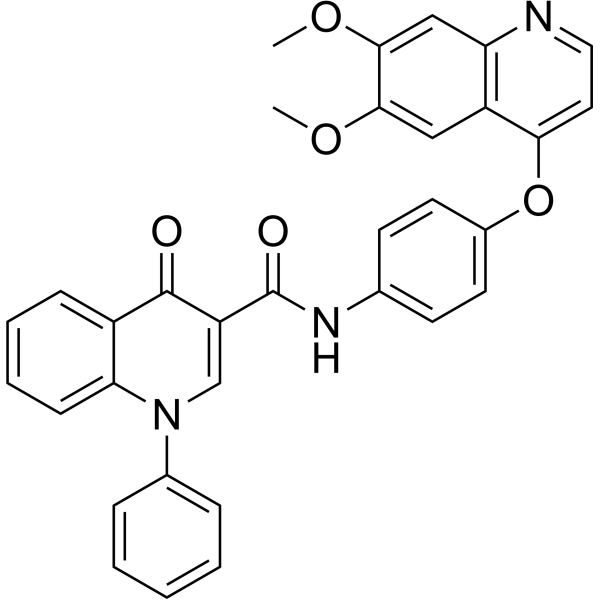
Kit-IN-9 (Compound D9) is an inhibitor of c-Kit. c-Kit-IN-9 inhibits the inflammatory responses in J774A.1, RAW264.7, MPMs cells and lung tissues by blocking the activation of the NF-κB pathway induced by LPS (HY-D1056). Meanwhile, c-Kit-IN-9 exhibits good anti-inflammatory activities in acute lung injury and sepsis mouse models. c-Kit-IN-9 can be used in the research of acute lung injury and related inflammatory diseases .
loading...
    loading...
Cat. No.: HY-158434
CAS No.: 3047343-70-1
Target:  

IRAK

Research Areas:  

Inflammation/Immunology

IRAK1-IN-1 (compound B8) is an orally active IRAK1 inhibitor. IRAK1-IN-1 inhibits the release of IL-6 with the IC50 values of 4.57 μM and 6.51 μM on mouse cells J774A. 1 and human cells THP-1, respectively. IRAK1-IN-1 alleviats LPS (HY-D1056)-induced acute lung injury (ALI) and DSS(HY-116282C)-induced colitis in mice .
loading...
    loading...
Cat. No.: HY-180830
CAS No.: 2361570-54-7
NLRP3-IN-86 (Compound 8a), a derivative of Songorine (HY-N2080), is a potent and selective NLRP3 inflammasome inhibitor. NLRP3-IN-86 can reduce LPS (HY-D1056)- and Nigericin (HY-127019)-stimulated lactate dehydrogenase (LDH) release (IC50 = 2.69 μM in THP-1 cells and 1.75 μ M in J774A.1 cells). NLRP3-IN-86 can inhibit gasdermin D (GSDMD) cleavage and IL-1β secretion. NLRP3-IN-86 can inhibit cell pyroptosis. NLRP3-IN-86 can be used for research of inflammation .
loading...
    loading...
Cat. No.: HY-182305
CAS No.: 2411865-57-9
Target:  

Bacterial

Research Areas:  

Infection

VKT-17-P4-23 is a blood-brain barrier-permeable DksA inhibitor. DksA is a highly conserved transcriptional regulator in Gram-negative bacteria, with a Kd of 124 μM. Through the DksA-regulated, SPI-2-dependent survival pathway, VKT-17-P4-23 exhibits antibacterial activity against both planktonic and intracellular pathogens such as Salmonella, and also effectively combats persistent bacteria that are difficult to eliminate. VKT-17-P4-23 can be used in studies of Salmonella infection .
loading...
    loading...
Cat. No.: HY-28911
CAS No.: 141-46-8
Target:  

LDLR

Research Areas:  

Others

2-Hydroxyacetaldehyde acts as a ribonucleotide synthesis precursor and a LDL modifier. 2-Hydroxyacetaldehyde specifically targets lysine residues of high-affinity LDL receptors and their apolipoproteins. By blocking the ε-amino groups of apolipoproteins, 2-Hydroxyacetaldehyde prevents receptor recognition, thereby reducing LDL degradation by macrophages. 2-Hydroxyacetaldehyde generates modified LDL, which serves as a probe for investigating non-receptor-dependent catabolic pathways .
loading...
    loading...

