1. Search Result
Search Result
Pathways Recommended: Stem Cell/Wnt Cell Cycle/DNA Damage
Results for "

Jurkat T-cell leukemia cells

" in MedChemExpress (MCE) Product Catalog:

8

Inhibitors & Agonists

1

Peptides

1

Natural
Products

Cat. No. Product Name Target Research Areas Chemical Structure
  • HY-13305

    HIV HIV Integrase Apoptosis PARP Infection
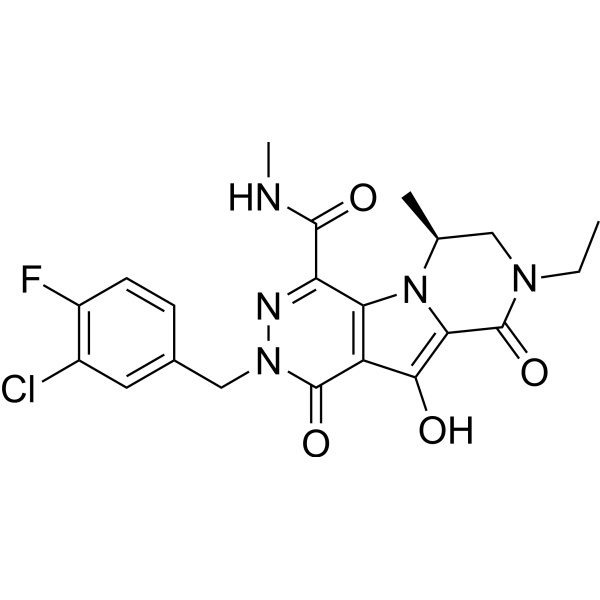
    MK-2048 is a HIV-1 and HIV-1 integrase inhibitor. MK-2048 shows selective activity against HTLV-1-infected cells and retained potency against HIV-1 variants. MK-2048 induces apoptosis, inhibits cell growth, reduces proviral loads, and blocks HTLV-1 transmission and immortalization. MK-2048 can be used for the research of HIV-1 infection .
    MK-2048
  • HY-P5640

    Bacterial Parasite Infection
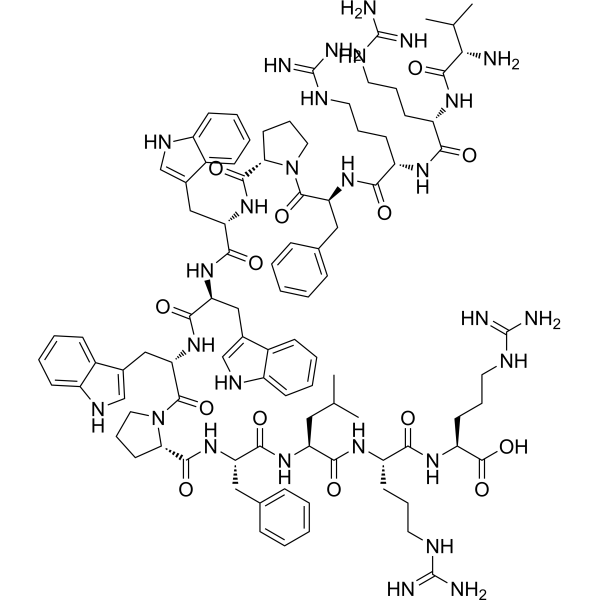
    Tritrpticin is a porcine-derived antimicrobial peptide with properties such as membrane disruption and hemolysis. Tritrpticin disrupts the cell membranes of bacteria, fungi and Jurkat T cell leukemia cells and induces their death. Tritrpticin also enhances the efficacy of Metronidazole (HY-B0318) against *Trichomonas vaginalis*, reduces plasma endotoxin and inflammatory cytokine levels, restricts bacterial growth in blood and visceral tissues, decreases the mortality rate of septic shock in rats and enhances the therapeutic effect of ertapenem. Tritrpticin exhibits selective cytotoxicity against Jurkat T cell leukemia cells, while showing low toxicity to normal peripheral blood mononuclear cells and red blood cells, and can serve as a template for antimicrobial peptide design. Tritrpticin can be applied to research related to bacterial infections, fungal infections, trichomoniasis, septic shock and leukemia .
    Tritrpticin
  • HY-175281

    PROTACs Src Discoidin Domain Receptor Bcr-Abl Apoptosis Cancer
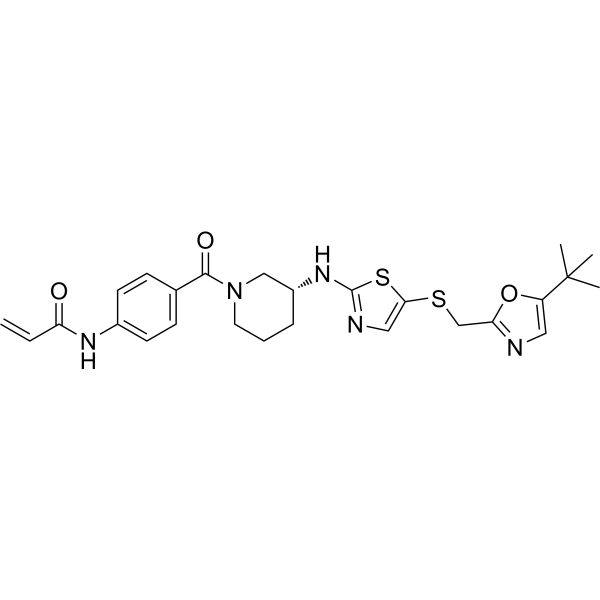
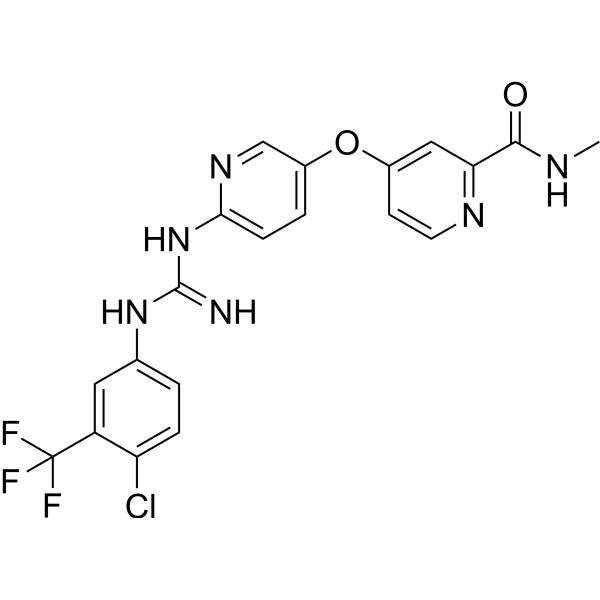
    SJ11646 is a Dasatinib (HY-10181)-based LCK PROTAC degrader with a DC50 of 0.00838 pM. SJ11646 has potent cytotoxicity against LCK-activated T-cell acute lymphoblastic leukemia (T-ALL) cells and primary leukemia samples with drastically prolonged suppression of LCK signaling, and induces T-ALL apoptosis. SJ11646 binds to 51 human kinases with a high affinity (particularly ABL1, KIT, and DDR1). SJ11646 has superior antileukemic efficacy in T-ALL mice model. . Pink: LCK ligand (HY-107447); Blue: CRBN ligase ligand (HY-163169); Black: linker (HY-76667)
    SJ11646
  • HY-114648

    Bacterial Infection Cancer
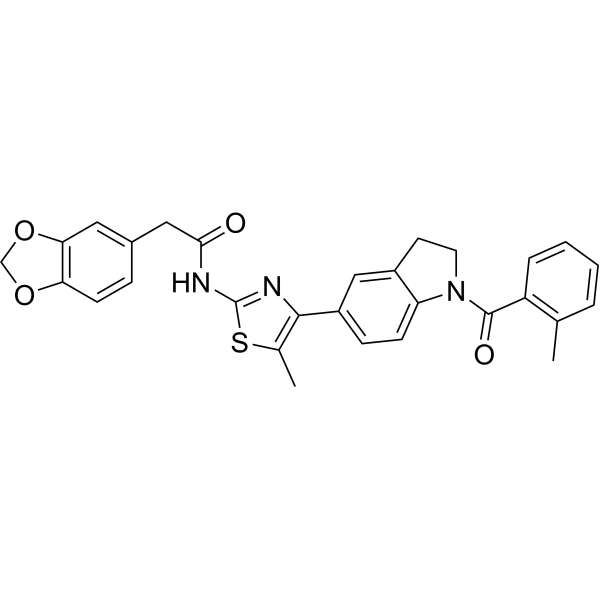
    AJI-9561 is a benzoxazole derivative produced by Streptomyces sp. AJI-9561 exhibits cytotoxicity and antibacterial activity. AJI-9561 inhibits the proliferation of Jurkat T cells and mouse P388 leukemia cells, with its IC50 being 0.88 and 1.63 μM respectively. AJI-9561 can be used for research on anti-cancer and antibacterial properties .
    AJI-9561
  • HY-125542

    Apoptosis JAK STAT ERK PI3K Akt Cancer
    DCZ3301 is an apoptosis inducer. DCZ3301 modulates JAK2/STAT3, ERK1/2, and PI3K/AKT pathways. DCZ3301 induces G2/M and M phase cell cycle arrest and inhibits cell proliferation and viability. DCZ3301 enhances DNA damage, inhibits DNA repair, and suppresses angiogenesis. DCZ3301 can be used for the research of diffuse large B-cell lymphoma, multiple myeloma and leukemia/lymphoma .
    DCZ3301
  • HY-N0990

    Others Cancer
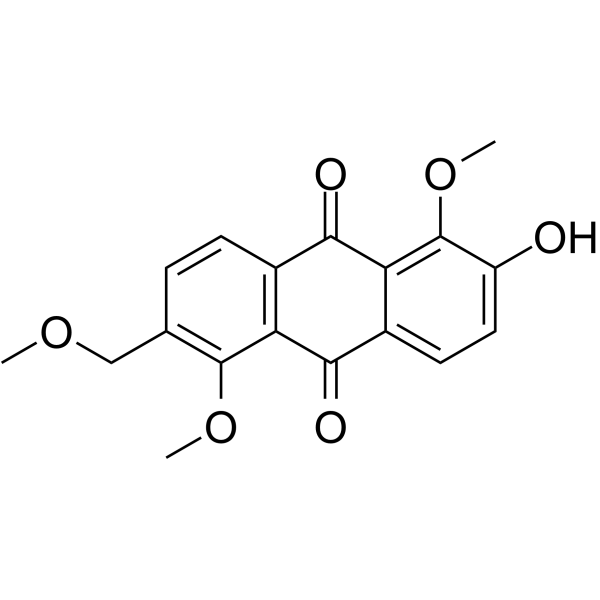
    1,5,15-Trimethylmorindol is an anthraquinone isolated from the leaves of Morinda citrifolia. 1,5,15- trimethylmorindol (25 μg/mL) does not show significant cytotoxic activity on the human T-cell leukemia cell line, Jurkat, by itself but it shows cytotoxicity (IC50 14.5-15.0 μg/mL) when combined with 0.5-1.5 μg/mL of TRAIL in the cell proliferation assay .
    1,5,15-Trimethylmorindol
  • HY-179372

    Microtubule/Tubulin Apoptosis Cancer
    Tubulin polymerization-IN-84 inhibits tubulin polymerization by targeting the colchicine-binding pocket, with anIC50 = 10.9 μM. Tubulin polymerization-IN-84 shows antiproliferative activity against Jurkat, B16-F10, HCT116, and MDA-MB-231 cells (IC50 = 60 nM, 380 nM, 138 nM, and 1.054 μM). Tubulin polymerization-IN-84 induces G2/M-phase arrest and apoptosis in B16-F10 cells. Tubulin polymerization-IN-84 suppresses tumor growth in a B16-F10 melanoma model and potentiates anti-tumor immunity in combination with a PD-L1 mAb for the research of T-cell acute lymphoblastic leukemia, melanoma, colon cancer, and breast cancer.
    Tubulin polymerization-IN-84
  • HY-185459

    PARP Epigenetic Reader Domain Cancer
    PCIP-1 is a PARP2 inhibitor. PCIP-1 recruits BET proteins to PARP2 to inhibit DNA repair, acts via event-driven pharmacology, and does not inhibit PARP-catalyzed PARylation. PCIP-1 inhibits DNA repair, thereby inducing synthetic lethality in homologous recombination-deficient cancer cells and increasing the sensitivity of PARP1-knockout cells. PCIP-1 can be used in the research of homologous recombination-deficient cancers, T-cell acute lymphoblastic leukemia, and BRCA-mutant cancers .
    PCIP-1

Inquiry Online

Your information is safe with us. * Required Fields.

Salutation


Country or Region *

Applicant Name *


Organization Name *

Department *


Email Address *


Product Name *

Cat. No.


Requested quantity *

Phone Number *


Remarks

Inquiry Online

Inquiry Information

Product Name:
Cat. No.:
Quantity:
MCE Japan Authorized Agent:

