1. Search Result
Search Result
Results for "

MCF-7 and MDA-MB-231

" in MedChemExpress (MCE) Product Catalog:

71

Inhibitors & Agonists

1

Biochemical Assay Reagents

2

Peptides

7

Natural
Products

1

Click Chemistry

1

Oligonucleotides

Cat. No. Product Name Target Research Areas Chemical Structure
  • HY-B1029
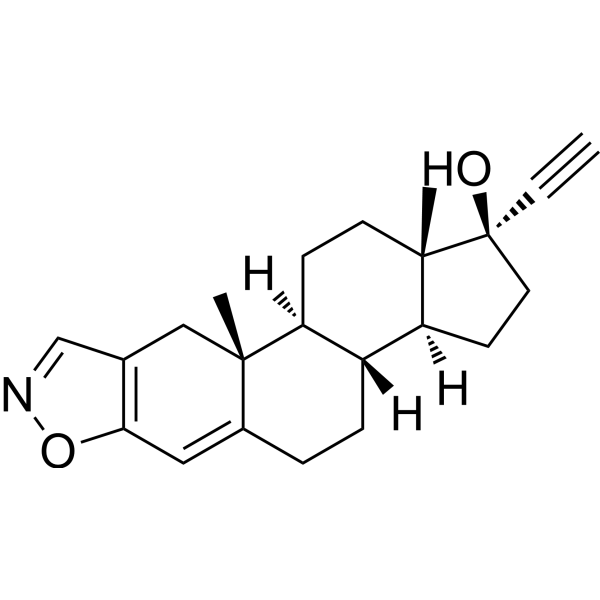
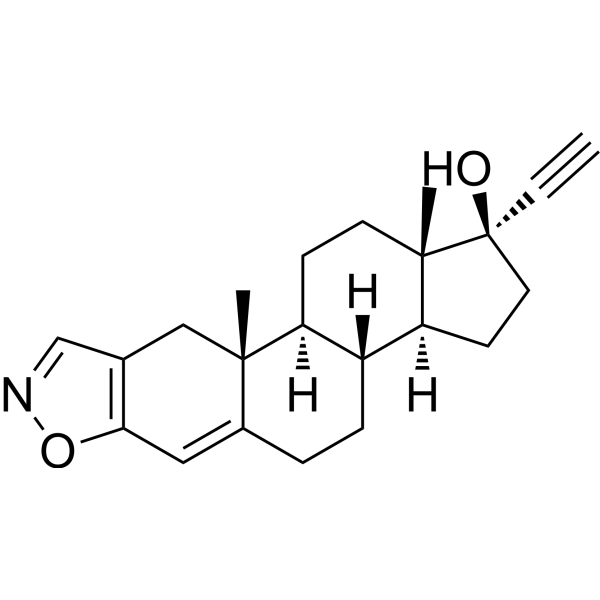
    Danazol
    4 Publications Verification

    PKC Apoptosis Tyrosinase Endocrinology Cancer
    Danazol inhibits the proliferation of cancer cell MDA-MB-231 and MCF-7 with IC50 of 65 µg/mL and 31 µg/mL. Danazol arrests the cell cycle at G1 phase, induces apoptosis in MDA-MB-231 through PKCα signaling pathway .
    Danazol
  • HY-126437

    Apoptosis Bcl-2 Family MDM-2/p53 VEGFR Cardiovascular Disease Cancer
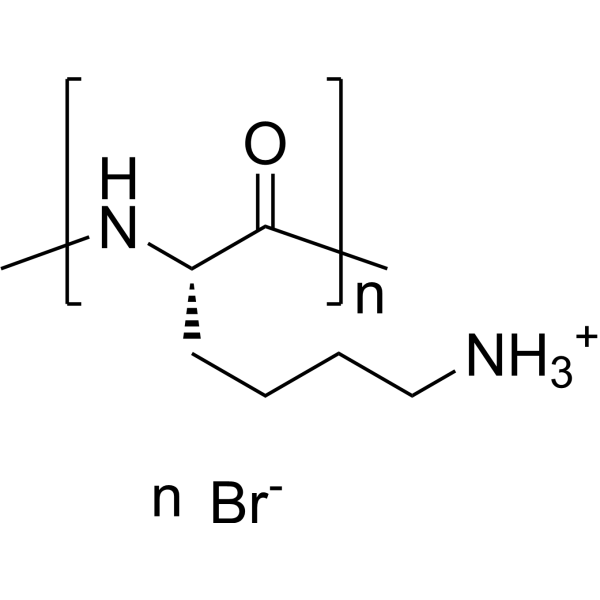
    Poly-L-lysine hydrobromide (MW 30000-70000) is a water-soluble synthetic polypeptide. Poly-L-lysine hydrobromide (MW 30000-70000) downregulates Bcl-2 and upregulates Bax and p53 proteins. Poly-L-lysine hydrobromide (MW 30000-70000) promotes Apoptosis and reduces VEGF expression. Poly-L-lysine hydrobromide (MW 30000-70000) shows anticancer activity against a variety of tumors. Poly-L-lysine hydrobromide (MW 30000-70000) can also be used as a coating material .
    Poly-L-lysine hydrobromide (MW 30000-70000)
  • HY-112589

    Bacterial Infection Cancer
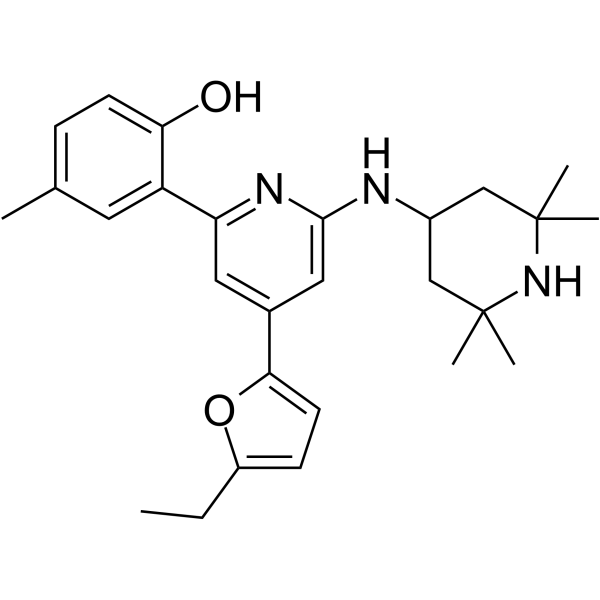
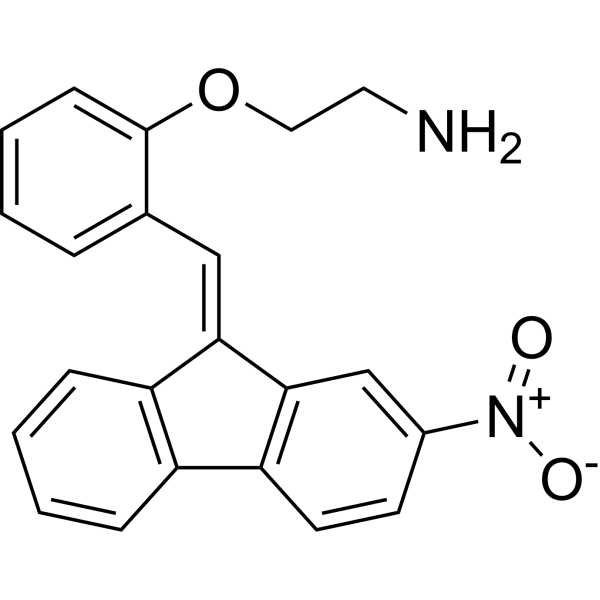
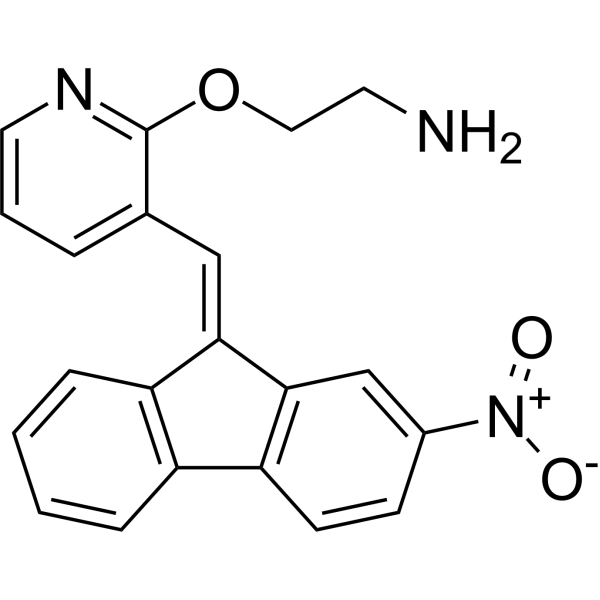
    BRITE-338733 is an inhibitor of E. coli RecA ATPase activity (IC50: 4.7 μM). BRITE-338733 also inhibits the ATP hydrolysis activity of RSC chromatin remodeling enzyme by binding to its ATP-binding pocket and DNA (IC50: 0.316 μM). BRITE-338733 exhibits cytotoxicity against MCF-7 and MDA-MB-231 breast cancer cells. BRITE-338733 can be used in studies on antibacterial adjuvants and anticancer research .
    BRITE-338733
  • HY-N6990

    Others Cancer
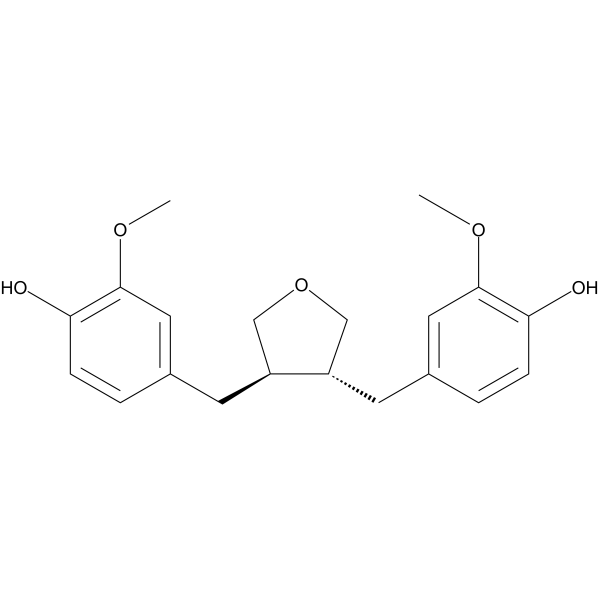
    Anhydrosecoisolariciresinol is from the flower of Wedelia biflora, has anti-tumor activities . Anhydrosecoisolariciresinol decreases the growth of human breast cancer MCF-7 and MDA-MB-231 cell lines .
    Anhydrosecoisolariciresinol
  • HY-N8146

    STAT Bcl-2 Family Ser/Thr Kinase Survivin c-Myc Apoptosis Necroptosis CDK Infection Cancer
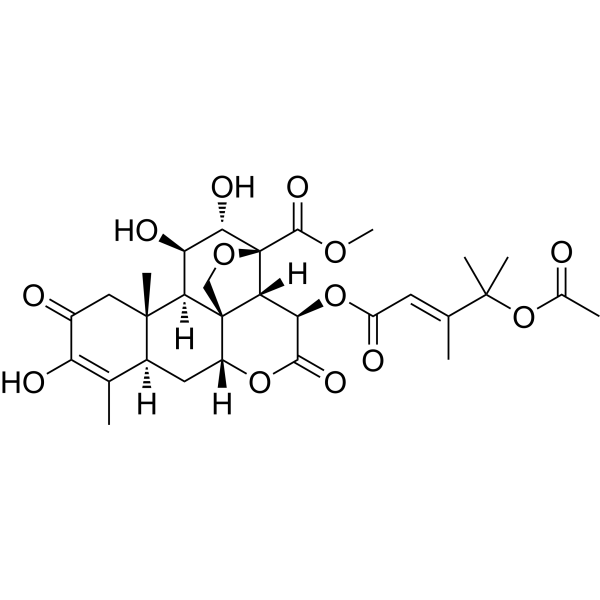
    Bruceantinol is a quassinoid that can be isolated from Brucea javanica, inhibits pepper mottle virus (PepMoV) in pepper. Bruceantinol is a STAT3 inhibitor demonstrating potent antitumor activity in in vitro and in vivo human colorectal cancer (CRC) models. Bruceantinol has potent anti-leukemic activity. Bruceantinol strongly inhibits STAT3 DNA-binding ability (IC50 = 2.4 pM), blocks the constitutive and IL-6-induced STAT3 activation, and suppresses transcription of MCL-1, PTTG1, survivin and c-Myc. Bruceantinol binds with CDK2/4/6 to facilitate protein degradation through proteasome pathway. Bruceantinol can dose- and time-dependently reduces the cell growth, impede cell proliferation, disrupts the cell cycle, and induces necrosis in MCF-7 cells and apoptosis in MDA-MB-231 cells .
    Bruceantinol
  • HY-120275

    Bcl-2 Family Apoptosis Cancer
    CYD-2-11 is a selective Bax agonist with a Ki value of 34.1 nM. CYD-2-11 induces cell apoptosis and shows antiproliferative activity to breast cancer MDA-MB-231 and MCF-7 cell lines with IC50 values of 3.22 and 3.81 μM, respectively. CYD-2-11 suppresses tumor growth in MDA-MB-231 tumor models. CYD-2-11 can be used for the research of breast and lung cancer .
    CYD-2-11
  • HY-148368

    Bcl-2 Family Apoptosis Cancer
    CYD-4-61 is a novel Bax activator used for breast cancer research. CYD-4-61 inhibits triple-negative breast cancer MDA-MB-231 and ER-positive breast cancer MCF-7 cell lines proliferation. CYD-4-61 activates Bax protein to induce cytochrome c release and regulate apoptotic biomarkers, leading to cancer cell apoptosis .
    CYD-4-61
  • HY-134008

    Apoptosis Bcl-2 Family Caspase Cancer
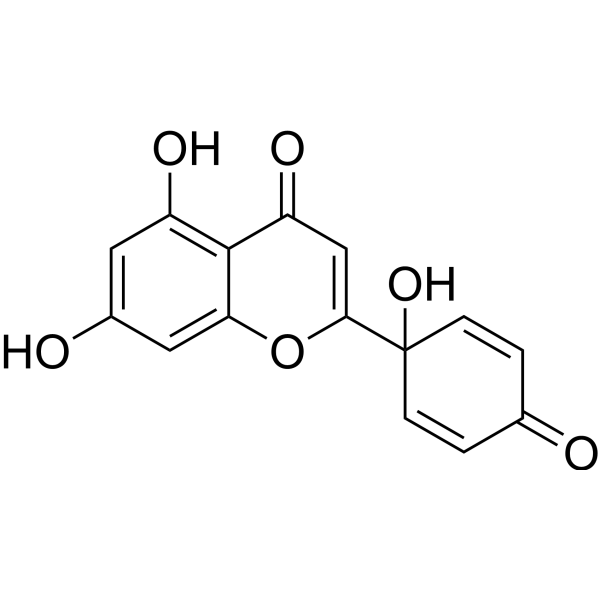
    Protoapigenone is an antineoplastic agent isolated from ferns. Protoapigenone has significant inhibitory activity against Hep G2, Hep 3B, MCF-7, A549 and MDAMB-231, with IC50s values of 1.60, 0.23, 0.78, 3.88 and 0.27 μg/mL respectively .
    Protoapigenone
  • HY-15668

    MMP Bcl-2 Family Caspase Apoptosis Drug Derivative Cancer
    ST09 is an efficient and low toxicity Curcumin (HY-N0005) derivative. ST09 significantly inhibits cell migration and downregulates the expression of MMP1, MMP2, and Vimentin. ST09 has strong cytotoxicity to breast cancer cells, such as MDA-MB-231, MCF7 and T47D cells. ST09 induces cell apoptosis by upregulating Bax and cleaved caspase-3/9. ST09 can be used in the research of cancer such as breast cancer .
    ST09
  • HY-Z12208

    Drug Derivative Cancer
    N1-Phenylsuberamide is an organic amide compound, and its structure can be regarded as a simplified analogue of Vorinostat (HY-10221). N1-Phenylsuberamide exhibits moderate anti-proliferative activity against MDA-MB-231 and MCF-7 cells. N1-Phenylsuberamide does not show significant HDAC inhibitory activity and can only weakly induce the expression of the p21 gene. N1-Phenylsuberamide has extremely low relative binding affinity of estrogen receptor. N1-Phenylsuberamide can be used as a control compound .
    N1-Phenylsuberamide
  • HY-178955

    EGFR HSP PI3K Caspase Apoptosis CDK ERK Akt Cancer
    EGFR-IN-182 (Compound 4) is an EGFR inhibitor with an IC50 value of 199 nM. EGFR-IN-182 inhibits HSP90 and PI3K, with IC50 values of 5.007 and 13.596 μM respectively. EGFR-IN-182 exhibits strong anti-proliferative activity against MCF-7 and MDA-MB-231 cells. EGFR-IN-182 downregulates Cyclin D1, inducing cell cycle arrest; it enhances the activity of caspase-9, inducing cell apoptosis. EGFR-IN-182 downregulates the expressions of ERK and AKT. EGFR-IN-182 can be used for research on breast cancer .
    EGFR-IN-182
  • HY-161769

    PROTACs Epigenetic Reader Domain Apoptosis Cancer
    HL435 is a heterobifunctional molecule that degrades BRD4 by linking to JQ1, with DC50 of 11.9 nM and 21.9 nM, in MDA-MB-231 and MCF-7 cells, respectively. HL435 inhibits the proliferation of MDA-MB-231, MCF-7, 22Rv1 and A549, arrests the cell cycle and induces apoptosis. HL435 exhibits antitumor activity in mouse model. (Pink: ligand for target protein JQ-1 (HY-78695); Black: linker (HY-W004640); blue: ligand for E3 ligase HL389 (HY-161770))
    HL435
  • HY-157151

    Histone Methyltransferase Cancer
    iPRMT1 is a potent and selective PRMT1 inhibitor for breast cancer research. iPRMT1 inhibits breast cancer cell growth in vitro and in vivo with EC50 values of 90, 70, and 9 nM in MCF7, T47D, and MDA-MB-231 cells, respectively .
    iPRMT1
  • HY-175269

    DNA Alkylator/Crosslinker DNA/RNA Synthesis Topoisomerase Cancer
    MGB1Y is a noncovalent DNA minor groove binder (MGB). MGB1Y potently inhibits cancer cells proliferation and topoisomerase I activity. MGB1Y downregulates their breast cancer-related genes in MCF7 and MDA-MB-231 cells. MGB1Y has a broad-spectrum anticancer activity, such as breast cancer, colon cancer, and leukemia .
    MGB1Y
  • HY-170955

    Transmembrane Glycoprotein Cancer
    HA-CD44 interaction inhibitor 3 (compound 5d) is a Hyaluronic acid (HY-B0633A) (HA)-CD44 interaction inhibitor with antiproliferative activities. HA-CD44 interaction inhibitor 3 inhibits MDA-MB-231 (CD44++) cells and MCF-7 cells (CD44--) with EC50s of 4.24 μM and 14.74 μM, respectively. HA-CD44 interaction inhibitor 3 shows the potential for cancer research .
    HA-CD44 interaction inhibitor 3
  • HY-149636

    EGFR CDK VEGFR Apoptosis Cancer
    Multi-target kinase inhibitor 2 is a multi-targeted kinase inhibitor, and exhibits activity against EGFR, Her2, VEGFR2, and CDK2 enzymes, with IC50 values of 79 nM, 40 nM,136 nM, and 204 nM, respectively. Multi-target kinase inhibitor 2 shows cytotoxic effects were observed against HepG2, HeLa , MDA-MB-231 and MCF-7, with IC50 of 41, 57, 51 and 59 μM. Multi-target kinase inhibitor 2 induces cell cycle arrest and apoptosis in HepG2 cells .
    Multi-target kinase inhibitor 2
  • HY-161687

    Src Cancer
    Cisplatin/Dasatinib prodrug-1 (Compound 3) is a prodrug of Cisplatin (HY-17394) and Dasatinib (HY-10181). Cisplatin/Dasatinib prodrug-1 exhibits antiproliferative activity against A2780, MDA-MB-231, MCF7, HCT116, RD, Thp1 and HL60 cancer cells with IC50s of 0.1, 0.1, 0.36, 2.0, 0.4, 0.3 and 0.25 μM, respectively .
    Cisplatin/Dasatinib prodrug-1
  • HY-B1029R

    Reference Standards Tyrosinase PKC Apoptosis Endocrinology Cancer
    Danazol standard inhibits the proliferation of cancer cell MDA-MB-231 and MCF-7 with IC50 of 65 µg/mL and 31 µg/mL. Danazol arrests the cell cycle at G1 phase, induces apoptosis in MDA-MB-231 through PKCα signaling pathway .
    Danazol (Standard)
  • HY-171777

    ErPC3; Erucylphosphohomocholine

    PI3K Akt Ras Raf p38 MAPK Cancer
    Erufosine is an inhibitor of PI3K/Akt and Ras/Raf/MAPK signaling pathways. Erufosine inhibits the activity of breast cancer cell lines MCF-7 and MDA-MB 231 (IC50: 40.95/40.8 μM). Erufosine reduces the phosphorylation of PI3K (p85), Akt (PKB), and cRaf. Erufosine can be used in the study of breast cancer and myeloid leukemia .
    Erufosine
  • HY-174232

    EGFR Carbonic Anhydrase Caspase Cancer
    EGFR/CA-IX-IN-1 (Compound 14) is a dual inhibitor against epidermal growth factor receptor (EGFR) and carbonic anhydrase IX (CA-IX) with IC50 values of 5.92 nM and 63 nM, respectively. EGFR/CA-IX-IN-1 shows strong cytotoxicity against breast cancer cells (MDA-MB-231, MCF-7) with IC50 values of 5.78 μM and 8.05 μM, respectively. EGFR/CA-IX-IN-1 inhibits the catalytic activity of CA-IX, up-regulates BAX/Bcl-2, activates caspases, and arrests the cell cycle at the G1 phase. EGFR/CA-IX-IN-1 is promising for research of breast cancer .
    EGFR/CA-IX-IN-1
  • HY-158388

    Topoisomerase Cancer
    Anticancer agent 215 (1) is a Camptothecin compound, with IC50 values of 5.2 nM and 8.2 nM in MCF-7 cells and MDA-MB-231 cells, respectively .
    Anticancer agent 215
  • HY-158389

    Topoisomerase Cancer
    Anticancer agent 216 (34A) is a Camptothecin compound, with IC50 values of 9.6 nM and 11.6 nM in MCF-7 cells and MDA-MB-231 cells, respectively .
    Anticancer agent 216
  • HY-158387

    Topoisomerase Cancer
    Anticancer agent 214 (2) is a Camptothecin compound, with IC50 values of 2.6 nM and 15.7 nM in MCF-7 cells and MDA-MB-231 cells, respectively .
    Anticancer agent 214
  • HY-158390

    Topoisomerase Cancer
    Anticancer agent 217 (35B) is a Camptothecin compound, with IC50 values of 6.2 nM and 7.1 nM in MCF-7 cells and MDA-MB-231 cells, respectively .
    Anticancer agent 217
  • HY-106159

    Reactive Oxygen Species (ROS) p38 MAPK JNK PERK Ferroptosis Cancer
    SB-T-101141 is a novel taxane. SB-T-101141 effectively induces a noncanonical ferroptosis to overcome Paclitaxel (HY-B0015) resistance of breast cancer. SB-T-101141 facilitates the production of iron and ferrous ions and ROS. SB-T-101141 stably binds to KHSRP to inhibit the iron-dependent expression of CISD1 related to iron homeostasis. SB-T-101141 synergistically enhances the iron-dependent activation of JNK and PERK pathways via KHSRP. SB-T-101141 suppresses breast tumor growth in MCF-7(PR)/MDA-MB-231(PR) or KHSRP knock-down MCF-7 xenograft mice model .
    SB-T-101141
  • HY-168720

    Apoptosis Cancer
    Apoptosis inducer 32 (Compound 7g) is an apoptosis inducer with a KD of 42 μM, showing anti-tumor activity. Apoptosis inducer 32 caused significant cellular morphological changes in MDA-MB-231 cells, including membrane bubbling, nuclear fragmentation, and apoptotic body formation. The IC50 of Apoptosis inducer 32 in MCF-7, MDA-MB-231, and HEK cells is 4.77, 6.56 and 337.8 μM respectively .
    Apoptosis inducer 32
  • HY-161868

    PARP HDAC Apoptosis Cancer
    DLC-50 is a dual inhibitor for PARP-1 and HDAC-1 with IC50 of 1.2 nM and 31 nM. DLC-50 inhibits the proliferation of cancer cells MDA-MB-436, MDA-MB-231, and MCF-7 with IC50 of 0.3, 2.7 and 2.41 μM. DLC-50 induces apoptosis in MDA-MB-231, arrests the cell cycle at G2 phase .
    DLC-50
  • HY-161995

    Apoptosis Necroptosis FGFR VEGFR PDGFR Cancer
    FGFR1/VEGFR2-IN-2 (compound 6l) is a VEGFR2/FGFR1 dual inhibitor. The IC50 values for VEGFR2 and FGFR1 are 0.025 µM and 0.026 µM respectively, and for EGFR and PDGFR-β, the IC50 values are 0.106 µM and 0.077 µM. FGFR1/VEGFR2-IN-2 showes significant anti-cancer activity (GI=60.38%) on NCI-60 cell line, with an IC50 of 8.51 µM in T-47D cell line and anti-migration. FGFR1/VEGFR2-IN-2 acts to arrest cells in the G1 phase and promote apoptosis and necrosis; the IC50 for MCF-7 cell line exceeds 100 µM, and the IC50 for MDA-MB-231 is 69.17 µM, non-toxic to normal cells .
    FGFR1/VEGFR2-IN-2
  • HY-162751

    HSP Apoptosis Cancer
    Anticancer agent 249 (Compound 89) is an inhibitor for Hsp90β with IC50 of 16.5 μM in PC3MM2 cell. Anticancer agent 249 inhibits proliferation of cancer cells MCF-7, T47D, MDA-MB-231, MDA-MB-468 and SKBr3 with IC50 of 1.8-5.3 μM. Anticancer agent 249 induces apoptosis in MDA-MB-231. Anticancer agent 249 exhibits antitumor efficacy in mice .
    Anticancer agent 249
  • HY-173075

    RIP kinase Mixed Lineage Kinase Necroptosis Cancer
    Anticancer agent 267 (Compound 5q) is the activator for RIPK3 and MLKL. Anticancer agent 267 inhibits the proliferation in a variety of cancer cell lines (IC50 for MDA-MB-231, MDA-MB-486 and MCF-7 is 9.79, 10.77 and 5.94 μM, respectively), arrests cell cycle at subG1 phase, and induces necroptosis in cell MDA-MB-231. Anticancer agent 267 exhibits antitumor activity in mouse xenograft models .
    Anticancer agent 267
  • HY-169408

    Cytochrome P450 EGFR Apoptosis Cancer
    EGFR-IN-137 (Compound 4c) is an inhibitor for aromatase and EGFR with IC50s of 1.67 μg/mL and 0.08 μg/mL. EGFR-IN-137 inhibits the proliferation of cancer cell MCF-7 and MDA-MB-231 with IC50s of 1.62 µM and 4.14 µM. EGFR-IN-137 arrests the cell cycle at G0/G1 phase in MDA-MB-231, and induces apoptosis through caspase-dependent pathway .
    EGFR-IN-137
  • HY-156378

    Aurora Kinase Cancer
    Aurora A inhibitor 3 (Compound 5h) inhibits Aurora-A kinase with an IC50 value of 0.78 μM. Aurora A inhibitor 3 is cytotoxic, with GI50 values of 0.12 μM and 0.63 μM for MCF-7 and MDA-MB-231 cells, respectively .
    Aurora A inhibitor 3
  • HY-161770

    Ligands for E3 Ligase Cancer
    HL389 inhibits proliferation of cancer cells MDA-MB-231 and MCF-7, with IC50 of 11.39 μM and 9.66 μM. HL389 can be utilized as the ligand for E3 ligase for the synthesis of PROTAC degrader HL435 (HY-161769) .
    HL389
  • HY-144306

    Estrogen Receptor/ERR Apoptosis Cancer
    ERα degrader 4 is an excellent and selective estrogen receptor α (ERα) degrader (IC50 of 0.31, 0.41 and 0.48 μM in MDA-MB-231, MCF-7 and MCF-7/ADR cells, respectively). ERα degrader 4 has potent inhibitory activity against MCF-7 cell lines. ERα degrader 4 is a potential SERDs candidate for the research of breast cancer .
    ERα degrader 4
  • HY-168901

    Src Cancer
    Hck-IN-2 (Compound 8e) is an HCK inhibitor. Hck-IN-2 is cytotoxic to tumor cells, with IC50 values of 19.58 μM and 1.42 μM against MDA-MB231 and MCF-7, respectively. Hck-IN-2 has anti-tumor activity .
    Hck-IN-2
  • HY-155969

    EGFR Apoptosis Cancer
    EGFR-IN-83 (Compound 9) is an EGFR inhibitor (IC50: 2.53 nM). EGFR-IN-83 has antiproliferative activity against MCF-7 and MDA-MB-231 cells, with IC50 of 2.50 μM and 1.96 μM. EGFR-IN-83 can induce cell apoptosis .
    EGFR-IN-83
  • HY-152945

    NF-κB Cancer
    Antiproliferative agent-22 (compound 2) is an anticancer agent. Antiproliferative agent-22 shoes anti-proliferative activities against MCF-7, MDA-MB-231 and MDA-MB-468 cells with IC50 values of 6.2 μM, 3.3 μM and 3.3 μM, respectively .
    Antiproliferative agent-22
  • HY-179062

    Apoptosis Cancer
    Anticancer agent 280 (Compound 65) is an anti-cancer agent targeting triple-negative breast cancer (TNBC). Anticancer agent 280 exhibits IC50 values of Anticancer agent 280 for MDA-MB-231, MDA-MB-231/LM2-4, Jurkat, and MCF-7 of 7.1, 11.65, 6.99, and 21.51 μM respectively. Anticancer agent 280 can cause significant arrest of cells in the S phase and induce cell apoptosis. Anticancer agent 280 can be used for the study of TNBC .
    Anticancer agent 280
  • HY-N2741

    Bcl-2 Family Cancer
    Vitexin B-1 is an inhibitor of Bcl-2 and the agonist of Caspase. Vitexin B-1 has cytotoxic effect and induces apoptosis in MCF-7, ZR-75-1, MDA-MB-231, and COC1 cells with IC50s of 3.2, 2.1, 1.8 and 0.39 μM, respectively .
    Vitexin B-1
  • HY-138210

    Fungal Infection
    N,O-Diacetyltyramine is a compound with antibacterial activity and cytotoxicity that can be isolated from the actinomycete Pseudonocardia endophytica VUK-10. N,O-Diacetyltyramine has antibacterial activity against Gram-positive and Gram-negative bacteria and fungi. N,O-Diacetyltyramine is cytotoxic to MDA-MB-231, HeLa, MCF-7 and OAW-42 cells .
    N,O-Diacetyltyramine
  • HY-159122

    Carbonic Anhydrase Reactive Oxygen Species (ROS) Apoptosis Cancer
    CA IX-IN-2 (Compound 9o) is an inhibitor for carbonic anhydrase (CA), that inhibits CA IX, CA XII and CA II with an IC50 of 5.6, 7.4 and 430 nM, respectively. CA IX-IN-2 inhibits the proliferation of cancer cell HCT-116, SW480, MDA-MB 231 and MCF-7, with IC50s of 14.63-29.33 μM. CA IX-IN-2 intercalates DNA, arrests cell cycle at G1/S phase, and induces apoptosis in MDA-MB-231. CA IX-IN-2 affects the mitochondrial membrane potential (MMP), increases the intracellular ROS levels, causes mitochondrial damage, and inhibits the cell migration of MDA-MB-231. CA IX-IN-2 exhibits antitumor efficacy in mouse models .
    CA IX-IN-2
  • HY-179070

    Apoptosis Cancer
    Anticancer agent 280 TFA (Compound 65) is an anti-cancer agent targeting triple-negative breast cancer (TNBC). Anticancer agent 280 TFA exhibits IC50 values of Anticancer agent 280 TFA for MDA-MB-231, MDA-MB-231/LM2-4, Jurkat, and MCF-7 of 7.1, 11.65, 6.99, and 21.51 μM respectively. Anticancer agent 280 TFA can cause significant arrest of cells in the S phase and induce cell apoptosis. Anticancer agent 280 TFA can be used for the study of TNBC .
    Anticancer agent 281 TFA
  • HY-175173

    EGFR Cancer
    EGFR-IN-166 (Compound 2) is a EGFR inhibitor. EGFR-IN-166 has potent anticancer activity against breast cancer cells with IC50s of 69.63 and 22.84 μM for MCF-7 and MDA-MB-231 cells, respectively. EGFR-IN-166 significantly inhibits cell migration and EGFR expression. EGFR-IN-166 can be used for breast cancer research .
    EGFR-IN-166
  • HY-116904

    Apoptosis Akt Cancer
    Anticancer agent 253 (Compound 26) has anti-cancer activity against breast cancer cells, with IC50s of 6 μM (MCF-7), 10 μM (MDA-MB-231) and 6.4 μM (4T1 cells). Anticancer agent 253 arrests cell cycle and induces mitochondria-mediated apoptosis in cancer cells. Anticancer agent 253 inhibits Akt phosphorylation in human breast and prostate cancer .
    Anticancer agent 253
  • HY-161855

    VEGFR Apoptosis Cancer
    VEGFR-2-IN-50 (Compound 10f) is a VEGFR-2 inhibitor and apoptosis inducer, with an IC50 value of 0.33 μM. VEGFR-2-IN-50 (Compound 10f) has growth inhibitory activity on MCF-7 and MDA-MB-231 breast cancer cell lines, with IC50 values of 19.86 μM and 10.88 μM, respectively, which is expected to be used in the study of breast cancer diseases .
    VEGFR-2-IN-50
  • HY-146103

    Apoptosis Reactive Oxygen Species (ROS) Cancer
    Antiproliferative agent-7 (compound 8f) is a potent anti-proliferative agent. Antiproliferative agent-7 has antiproliferative activity against cancer cell lines MCF-7, MDA-MB-231, HCT-116 and FR-2 with IC50s of 3.5 μM, 15.54 μM, 30.43 μM and 34.8 μM, respectively. Antiproliferative agent-7 can increase ROS production and induce apoptosis .
    Antiproliferative agent-7
  • HY-146452

    Apoptosis Cancer
    Anticancer agent 57 (compound 14) potently inhibits MDA-MB-231, MDA-MB-468, and MCF-7 cell lines, with IC50s of 6.43 ~ 8.00 μM. Anticancer agent 57 induces cell cycle arrest and significantly promotes apoptosis. Anticancer agent 57 inhibits tumor growth in nude mice xenografted with MADMB-231 cells. Anticancer agent 57 can be used for researching triple negative breast cancer (TNBC) .
    Anticancer agent 57
  • HY-175638

    Carbonic Anhydrase Apoptosis Bcl-2 Family CDK Cancer
    Carbonic anhydrase-IN-35 is a selective carbonic anhydrase (CA) inhibitor. Carbonic anhydrase-IN-35 potently inhibits tumor-associated hCA IX (Ki = 0.6 nM) and hCA XII (Ki = 2.2 nM). Carbonic anhydrase-IN-35 induces apoptosis in MCF-7 cells by elevating Bax, reducing Bcl-2, and downregulating CDK4/6. Carbonic anhydrase-IN-35 exhibits potent cytotoxicity against MCF-7 (IC50 = 0.3975 μM normoxic/0.6575 μM hypoxic), MCF-7-ADR (IC50> = 0.3975 μM normoxic/4.488 μM hypoxic), MDA-MB-231, and 4T1 breast cancer cells. Carbonic anhydrase-IN-35 can be used for the study of breast cancer .
    Carbonic anhydrase-IN-35
  • HY-171477

    Estrogen Receptor/ERR Cancer
    Metahexestrol is an estrogen receptor (E2R) inhibitor with antitumor activity. It significantly inhibits the proliferation of estrogen receptor-positive MCF-7 human breast cancer cells (ED50 = 1.0 μM). Additionally, Metahexestrol also exhibits inhibitory effects in estrogen receptor-negative MDA-MB-231 cells, and its antiproliferative activity cannot be reversed by estrogen, suggesting that its mechanism of action may be partially independent of the E2R pathway. Metahexestrol can be used in research on estrogen-dependent breast cancer .
    Metahexestrol
  • HY-N15636

    (-)-Coccinine

    Serotonin Transporter P-glycoprotein Neurological Disease Cancer
    Coccinine ((-)-Coccinine) is a weak inhibitor of SERT (IC50: 196.3 μM; Ki: 106.8 μM) and P-gp (IC50: 0.96 mM). Coccinine exhibits significant anti-tumor activity against various cancer cell lines, such as breast cancer (MCF7, Hs578T, MDA-MB-231), colon cancer (HCT-15), and lung cancer (A549). Coccinine can be used in the research of tumors and neurological diseases .
    Coccinine

Inquiry Online

Your information is safe with us. * Required Fields.

Salutation


Country or Region *

Applicant Name *


Organization Name *

Department *


Email Address *


Product Name *

Cat. No.


Requested quantity *

Phone Number *


Remarks

Inquiry Online

Inquiry Information

Product Name:
Cat. No.:
Quantity:
MCE Japan Authorized Agent:

