1. Search Result
Search Result
Pathways Recommended: Stem Cell/Wnt Cell Cycle/DNA Damage
Results for "

P-388 lymphocytic leukemia cells

" in MedChemExpress (MCE) Product Catalog:

8

Inhibitors & Agonists

5

Natural
Products

Cat. No. 상품명 Target 연구분야 Chemical Structure
  • HY-N6065
    Praeruptorin A
    3 Publications Verification

    (+)-Praeruptorin A

    Calcium Channel Drug Isomer Cytochrome P450 iGluR Apoptosis Cardiovascular Disease Neurological Disease
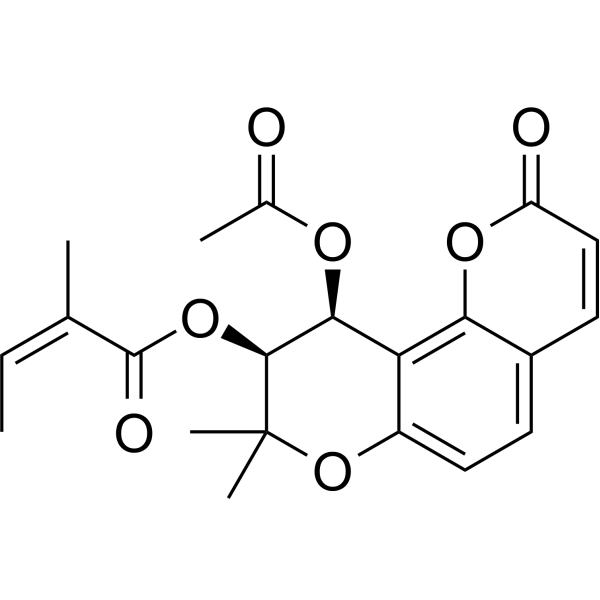
    Praeruptorin A ((+)-Praeruptorin A) is an orally active isomer of (±)-Praeruptorin A (HY-N0081). Praeruptorin A also acts as a Calcium channel blocker. Praeruptorin A can be isolated from Peucedanum. Praeruptorin A serves as a substrate for CYP3A4. Praeruptorin A downregulates NMDA receptors containing GluN2B and inhibits neuronal Apoptosis. Praeruptorin A mediates vasodilation, inhibits vascular hypertrophy and reduces blood pressure. Praeruptorin A can be used in research related to neurological diseases, myocardial ischemia, heart failure, exertional angina, renovascular hypertension and spontaneous hypertension .
    Praeruptorin A
  • HY-121123

    2-Aminoadamantane-2-carboxylic acid

    Aminopeptidase Cancer
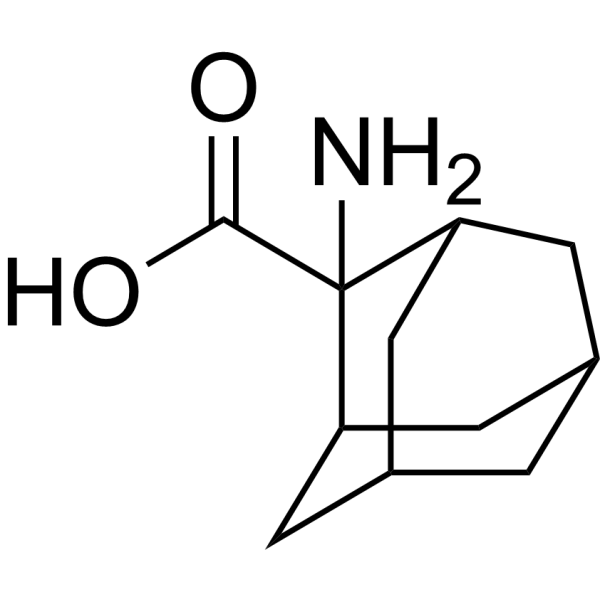
    Adamantanine (2-Aminoadamantane-2-carboxylic acid) inhibits the transport of methionine (Ki is 0.76 mM) and leucine into Ehrlich ascites carcinoma cells. Adamantanine inhibits proliferation of P388 lymphocytic leukemia cells with an IC50 of >1 mM. Adamantanine inhibits the leucine aminopeptidase with an I/S0.5 of 10.5 .
    Adamantanine
  • HY-N18086

    Others Cancer
    Bruceanic acid D is a quassinoid compound and cytotoxic agent that can be isolated from the xylem powder of Brucea antidysenterica. Bruceanic acid D specifically inhibits P-388 lymphocytic leukemia cells but shows no activity against human lung cancer cells and human colon cancer cells. Bruceanic acid D can be used in studies related to P-388 lymphocytic leukemia .
    Bruceanic acid D
  • HY-N9210

    Others Cancer
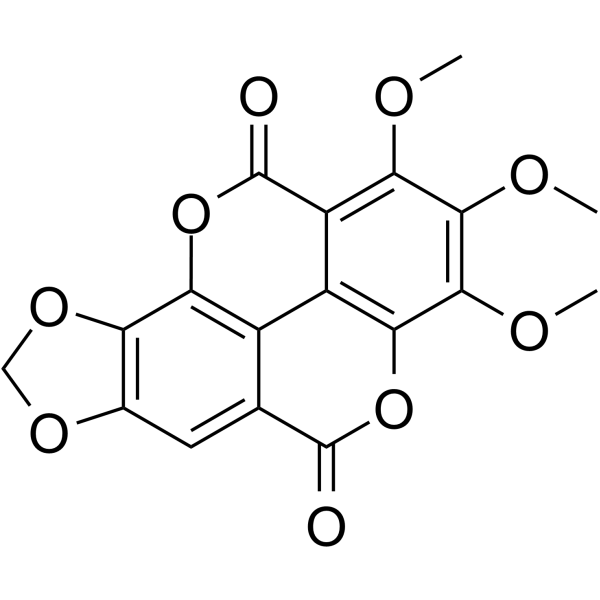
    1,2,3-Tri-O-methyl-7,8-methyleneflavellagic acid, a ellagic acid derivative of Agrostistachys hookeri, exhibits activity against cultured P-388 lymphocytic leukemia cells .
    1,2,3-Tri-O-methyl-7,8-methyleneflavellagic acid
  • HY-113578

    Antibiotic Bacterial Infection Cancer
    PD 116152 is a phenazine Antibiotic with antimicrobial and antitumor activity. PD 116152 possesses cytotoxic activity against L1210 lymphocytic leukemia and human colon adenocarcinoma (HCT-8) cells with IC50 values of 5.2 x 10 -7 M and 7.1 x 10 -7 M, respectively. PD 116152 is promising for research of P388 lymphocytic leukemia .
    PD 116152
  • HY-N1649

    Others Cancer
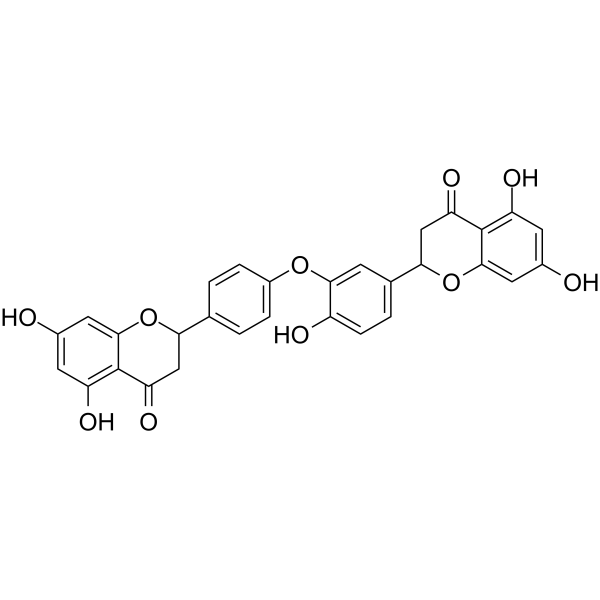
    2,3,2'',3''-Tetrahydroochnaflavone is a biflavonoid, which can be isolated from the leaves of Quintinia acutifolia. 2,3,2'',3''-Tetrahydroochnaflavone shows some cytotoxicity against P388 murine lymphocytic leukemia cells, with an IC50 of 8.2 µg/mL .
    2,3,2'',3''-Tetrahydroochnaflavone
  • HY-139090

    28-O-Acetyl-3-Oxobetulin; 3-oxo-28-O-Acetylbetulin

    Bacterial HIV Drug Derivative Cancer
    3-Oxobetulin acetate (28-O-Acetyl-3-Oxobetulin; 3-oxo-28-O-Acetylbetulin) is a derivative of betulin (HY-N0083), a cholesterol biosynthesis inhibitor. 3-Oxobetulin acetate inhibits the growth of P388 murine lymphocytic leukemia cells (EC50=0.12 μg/mL) and human MCF-7 breast cancer, SF-268 CNS cancer, H460 lung cancer, and KM20L2 colon cancer cells (GI50s=8, 10.6, 5.2, and 12.7 μg/mL), but not BxPC-3 pancreatic cancer cells or DU145 prostate cancer cells (GI50s=>10 μg/mL for both). 3-Oxobetulin acetate inhibits the replication of X4-tropic recombinant HIV (NL4.3-Ren) in MT-2 lymphoblastoid cells (IC50=13.4 μM). 3-Oxobetulin acetate is also effective against Listeria donovani amastigotes.
    3-Oxobetulin acetate
  • HY-N9784

    Others Cancer
    2′′,3′′-Dihydroochnaflavone is a flavonoid/flavanone-type ether-linked biflavonoid anti-leukemic compound. 2′′,3′′-Dihydroochnaflavone exhibits significant cytotoxicity against P388 murine lymphocytic leukemia cells (IC50 = 3.1 μg/mL). It can be naturally extracted from the dried leaves of Quintinia acutifolia and has also been previously isolated and identified from Ochna interrima and Luxemburgia nobilis (both Ochnaceae plants). 2′′,3′′-Dihydroochnaflavone can be used in research related to anti-tumor (especially leukemia) applications .
    2′′,3′′-Dihydroochnaflavone

온라인 문의

Your information is safe with us. * Required Fields.

호칭


Country or Region *

고객명 *


회사명 *

Department *


메일주소 *


상품명 *

Cat. No.


Requested quantity *

전화번호 *


비고

온라인 문의

Inquiry Information

상품명:
Cat. No.:
수량:
MCE Japan Authorized Agent:

